Contents
You’ve raised your tomato plants right: provided them with good quality potting mix, fertilized them with care, faithfully pinched off sucker shoots, and trimmed back low-hanging branches. So why do tomatoes split, even when we have spent so much time and effort making sure everything goes perfectly?
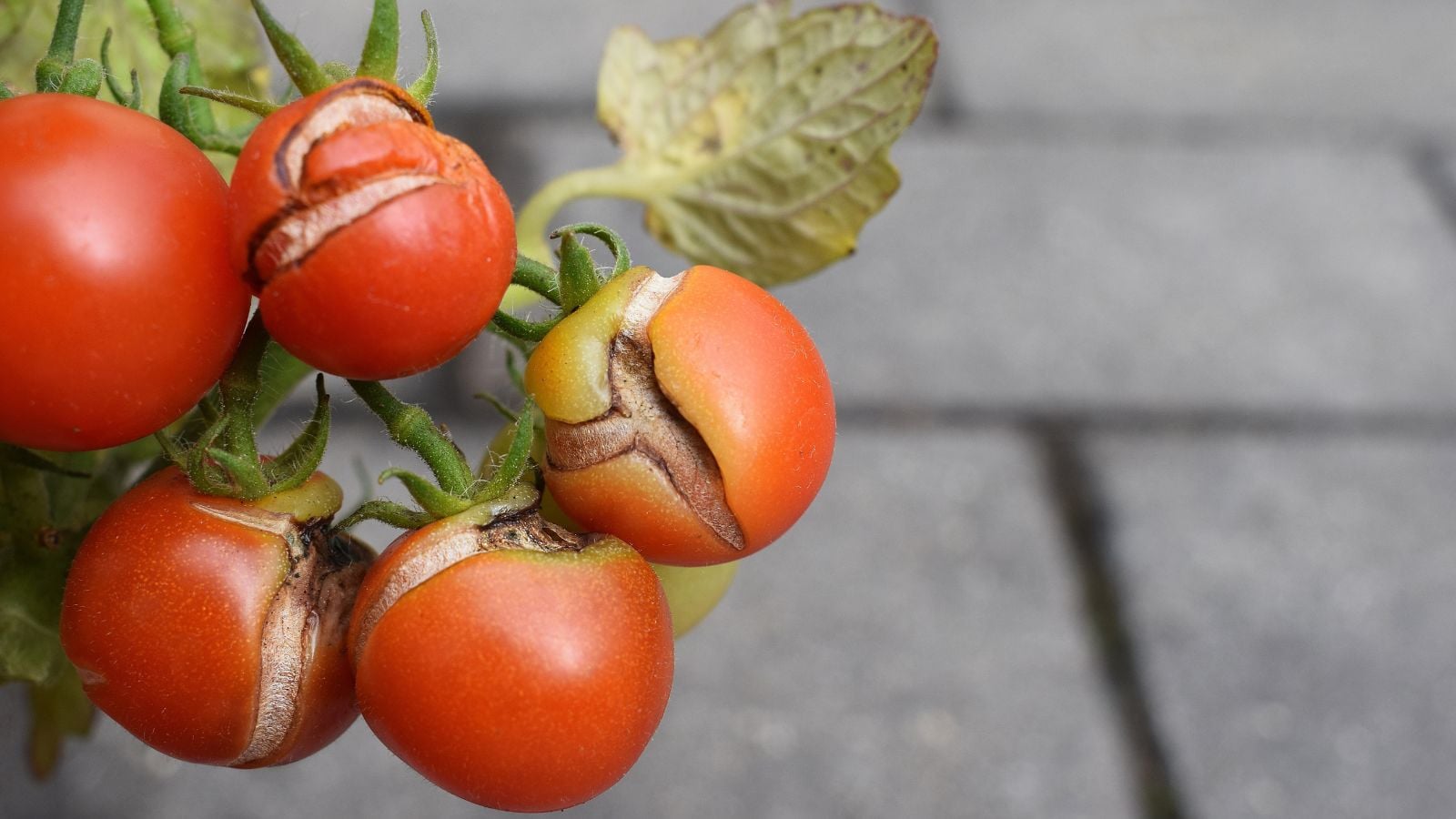
Tomato cracking and splitting usually appear in two forms. In one, concentric rings of cracks develop around the top of the fruit. In the other, lengthwise splits form down the sides of the fruit, either along the natural indents in heirloom tomatoes or along the surface of smooth varieties.
So is there a way to stop your tomatoes splitting before they are ripe? Let’s explore this tomato cracking problem in detail, go over what causes it, how to stop it from happening, and whether your split tomatoes are still safe to eat.


What Causes Tomatoes To Split?

In a nutshell, tomatoes split open when the fruit inside grows faster than the tomato’s skin. This usually happens after a sudden influx of water. If watering has been inconsistent, or if a heavy rain follows a long dry spell, the fruit absorbs water too quickly. The inside swells faster than the skin can stretch, and the tomato splits.
This problem is most common in tomatoes that are nearly ripe. As they approach maturity, the skin stops expanding as quickly, but the plant will still push excess water into the fruit. The result is cracking that exposes the flesh. This form of splitting is known as radial cracking.
With heirloom tomatoes, you may see a different type of splitting. All that incredible flavor comes with a tradeoff. Many heirloom varieties, especially large beefsteaks, naturally develop concentric cracks around the shoulders as they mature. These are usually shallow surface lines rather than deep cracks along the sides. Think of them as tomato stretch marks as the fruit grows plump and juicy. Some heirlooms do split along the sides as well.
Now that you know what causes tomatoes to crack, including why they split near the top, how do you prevent tomato cracking in your garden?
How To Stop Cracking In Tomatoes

Here, consistent moisture is the key. But that is not always as easy as it sounds. Everything depends on the level of watering your tomatoes are accustomed to.
Gardeners who grow tomatoes in well-draining soil are far less likely to deal with split fruit. Since excess water drains away quickly, an occasional downpour is less likely to overwhelm the roots and cause cracking.
Because most raised bed mixes have excellent drainage, many growers see fewer tomato splitting issues in raised beds. If you are planting in the ground, preparing your garden bed in advance is essential. Avoid hard-packed clay, which prevents proper drainage. Work the soil at least a foot deep and add plenty of compost and other organic matter to loosen it. A little perlite can improve aeration and drainage even further.
Most tomato cracking prevention starts before planting. Preparing the entire bed sets up your plants for success. Do not amend only the planting hole. Doing that creates an in-ground container that can fill with water and drown the roots. Instead, work the whole bed so moisture can spread out across a larger area. This also makes it easier to apply fertilizer at the soil surface later.
When planting your tomatoes, add some calcium beneath each transplant. Powdered eggshells or agricultural lime work well. One small dose is usually enough for the entire season. If you are using a tomato fertilizer, most already contain calcium, so placing a bit in the planting hole and fertilizing as usual is also effective.
After planting, mulch around the base of your tomato plants with wood chips. Aim for two to three inches and keep the layer topped up through the season. If you use a soaker hose, lay the mulch right on top. Mulch helps regulate moisture and reduces evaporation.
You can also look for crack-resistant tomato varieties when buying seeds or plants. Even so, non-resistant varieties are perfectly fine as long as you monitor them closely. If tomatoes begin splitting, harvest them right away.
Finally, water consistently and evenly. Avoid feast or famine watering. Allowing the soil to dry out completely between waterings can lead to issues like blossom end rot, while overwatering can cause fungal diseases. Keep moisture levels steady so your tomato plants stay healthy and productive.
Can You Eat Split Tomatoes?

If you catch them quickly enough, absolutely. When you are watching your tomato plants closely, you will notice fruit that has just begun to form radial cracks. Harvest those tomatoes immediately, even if they are not fully ripe. Tomatoes will continue to ripen off the vine.
If a tomato is oozing or has a sour smell, compost it. Those are no longer usable. Rotten tomatoes split as well, so if it feels soft or mushy, that is a clear sign it belongs in the compost. Off-color fruit for its variety is another red flag.
If the skin has only recently split and the fruit still smells sweet, it should be fine to eat. Cut off the cracked portion to be safe and compost that piece. The rest of the fruit should still be good.
For heirlooms that naturally develop concentric circles around the top, simply trim a little extra off the shoulder. You will still have plenty of tomato left to enjoy. If tomatoes crack or split radially, slice around the cracked area and remove the damaged portion. The remaining fruit should be perfectly fine.