What Is Soil? Everything Gardeners Need to Know
Exactly what is soil, anyway? You may assume it's an easy question to answer, but there's more to it than you might think. We take an introductory look at what soil is and isn't to try to clarify and answer this tricky question!


Contents
Soil is a hot topic among those interested in the environment. Home gardeners take pains to build a healthy soil profile that supports living organisms while providing adequate support to plant roots and overall plant growth. But what is soil, exactly?
Different people approach this question differently. While most gardeners think of potting soil or garden bed soil as the easy answer, the truth is much more nuanced. What we as gardeners call soil may not match the scientific definition at all. Ask soil scientists, and they’ll explain soil horizons and their role in soil formation.
Many gardeners hyperfocus on organic materials. They may see their annual addition of well-rotted compost as a key component of soil. While they’re not completely wrong, compost isn’t soil. Others might focus on soil organisms and soil microbes, but these aren’t strictly soil either.
Let’s break down the topic of soil and describe what it actually is. Do you need soil to grow things? In some cases, yes. In others, not so much!
Epic Organic Garden Straw

Epic Organic Garden Straw is a weed seed-free mulch that helps create a healthier, more resilient garden. It locks in moisture, blocks weeds, and regulates soil temperature, giving your plants the stable environment they need to thrive, without introducing unwanted seeds or chemicals.
Buy at Epic Gardening ShopWhat is Soil?
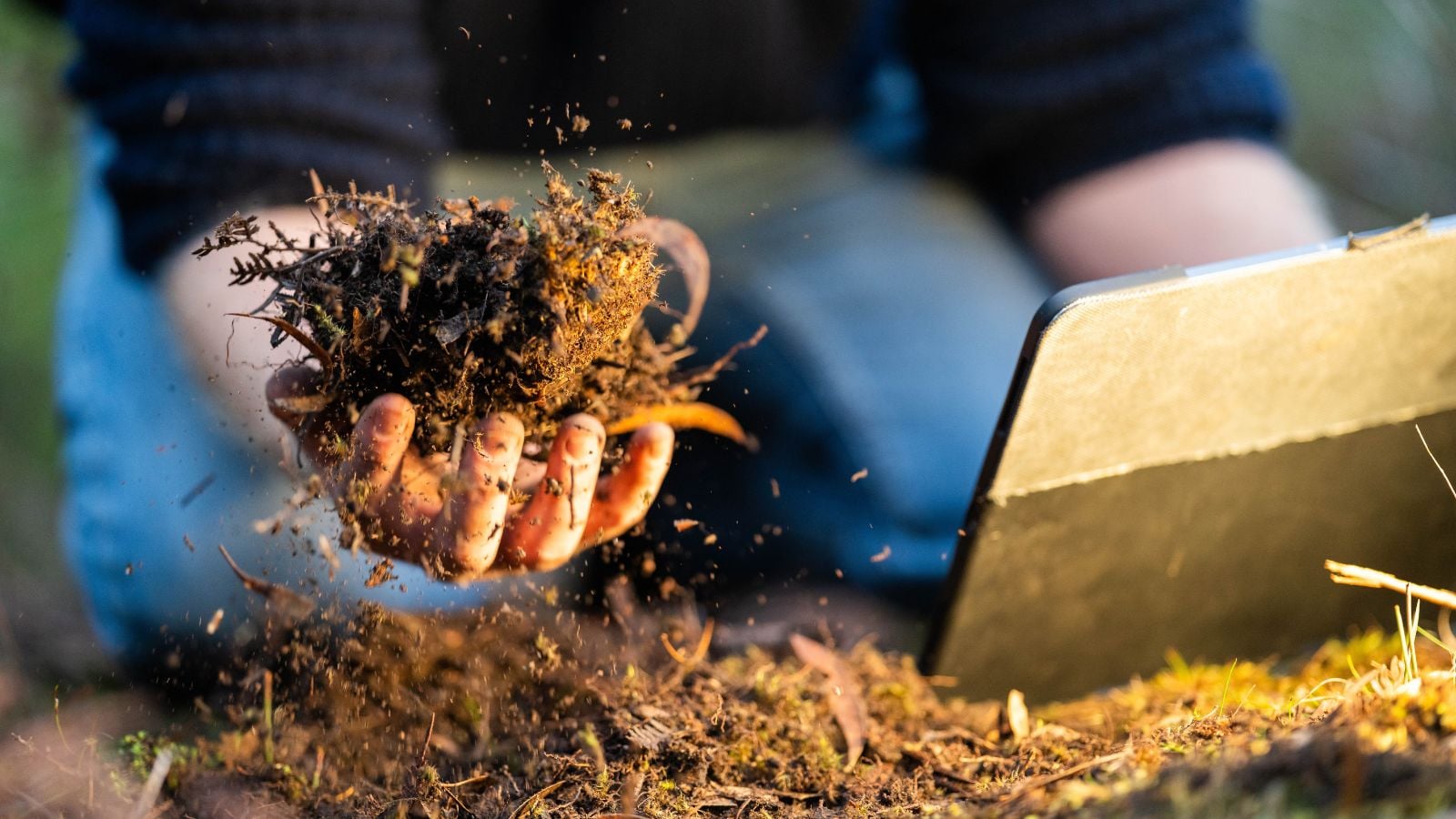
Soil is unconsolidated mineral particles that exist on the immediate earth’s surface. It supports plant growth and interacts directly with the geology below it.
In interaction with soil organisms, soil supports the food web, which provides nutrients that form the basis of all life on earth. Food webs transfer energy between species in an ecosystem. Soil transfers energy to producing plants, and these plants form the foundation of every ecosystem in existence.
Soil particles can be sandy, silty, or fine clay. The soil structure in a particular environment, combined with the climate, water content, and interaction with living organisms, relates directly to the condition of an ecosystem.
Certain areas might have silty soil, while others have purely sandy soil. In areas with clay soil, gardeners work to amend the soil structure toward a more nutrient-rich composition. While you can build your own soilless mix from different elements acquired at a nursery or big box store, soil formation also occurs naturally.
How Is Soil Formed?

To talk about soil formation, we have to get into the concept of soil horizons. A soil horizon comprises layers of organic matter through the earth’s strata. Each layer has its own soil profile, which combines with others to form one overarching profile. Most soils have three major horizons, and many have a top horizon of organic matter.
Bedrock
The bottommost horizon is bedrock, or a mass of granite, quartz, basalt, limestone, or sandstone. The type of rock present in the bedrock is determined by tectonic features occurring underneath and around its consolidated mass. If the bedrock sits close enough to the earth’s surface, it acts as the underlying parent material, a deposit where the bottommost layer of soil formation originates.
Subsoil
The next highest layer, called the B horizon or subsoil layer, acts as parent material when bedrock sits too far below it. The subsoil is made up of minerals that moved down from the upper soil structure due to erosion. Above the subsoil layer is the eluviated horizon, or A horizon. Eluviated horizons contain very little organic matter, and instead hold sand, silt, and clay particles composed of resistant minerals that don’t easily decompose with exposure to the elements.
Topsoil
On top of the eluviated horizon sits the topsoil layer. Topsoil consists chiefly of minerals from the parent material with organic material included. Among soil scientists, topsoil conservation is a critical priority. Good topsoils provide habitat for wildlife, but they also help farmers produce many of the crops we rely on today.
Topsoil is where soil microbes and soil organisms live. It reaches about one foot deep and contains organic matter, sand, silt, and clay particles.
Then there is the organic horizon, sitting on the land surface atop the A and B horizons. The forest is a good example of an environment with a robust O horizon, featuring a rich layer of dead organic matter. As leaves fall to the ground in autumn, they become surface litter that decomposes, feeding carbon dioxide sequestered in their once-living cells into the soil. These carbon sinks hold greenhouse gases within their microbial structure rather than releasing them into the atmosphere.
Not every region has a top organic layer. In areas where no organic layer is present, like the desert, organic content is lacking in relative proportion to other horizons. Because of this, desert soils are nutrient-poor and lack the water needed to move nutrients into the soil.
Soil Types

Soil scientists conduct soil classification based on the physical properties and chemical composition of soil particles. This soil taxonomy examines soil color, texture, structure, and other properties up to two meters deep. Sometimes soil classification serves agriculture, and sometimes it serves industry.
Different soil types have different textures, structures, and compositions. The following are the six basic soils present on earth:
- Sandy soils: Sandy soil is composed of clay and sand particles. Sandy soils are classified as sandy due to their high proportion of fine sand to clay minerals.
- Peaty soils: You’ll find these fertile soils high in organic material and highly water-retentive. Peat soils are relatively uncommon, as they form primarily where lots of organic materials have piled up and decayed over long periods of time.
- Loam soils: A combination of sand, silt, and clay with high fertility and good drainage. Loamy soils come in a wide number of variations, such as sandy loam, silty loam, or loamy clay (among others), depending on the quantities of each type of soil making up the blend. A true loam tends to be relatively equal parts of all types. In soil science, such soils are considered the gardener’s best friend.
- Clay soils: Composed of at least 25% clay particles. Clays generally hold a lot of water due to the size of the spaces between each particle.
- Silt soils: Fertile, light, and moisture-retentive. This soil consists of medium-sized silt particles that hold water, and drain well.
- Chalk soils: Sometimes light or heavy soil textures, but always alkaline due to a high concentration of calcium carbonate, or lime. This soil isn’t suited for plant life that requires acidity for growth.
Bagged Versus Natural Soils

What we’ve discussed to this point is the geological formation of soils. Bagged and commercially developed soils are distinct from geological soils.
Soil in a natural environment goes through several biological processes that a commercial soil type might not. Commercial soil is formulated for different purposes but may have properties that help it hold nutrients and provide nitrogen fixation to plants. Some contain highly specialized microbial residues that mimic naturally occurring soil material. Most commercial soils are more than half soilless, and in some cases, they may be entirely soilless.
Over time, commercial soil’s ability to retain moisture and provide plants with nutrients degrades as the organic matter breaks down and water flows through. Use them as soon as possible after purchase, and store them so they aren’t exposed to the elements prior to use.
When you buy topsoil at a nursery, you’ll usually encounter dirt from the surface horizons, subsurface horizons, and the eluviated layer. It may not be natural topsoil, which is only found in the surface layer and often includes a lot of organic material from the O horizon.
That’s why most gardeners can’t just buy a bag of topsoil to use for their plants. Instead, they have to spend time on soil development in their own way. Especially if they’re working in the earth rather than filling beds and containers, they’ll need to understand their natural soil texture and how it will interact with any added soil, organic matter, or fertilizers.
What Is Organic Matter?

Organic matter is not technically soil. It could be leaves, feathers, manures of various kinds, decomposing plant and animal matter, or the soil microbiome itself. Combinations of some or all of these constitute organic matter as well. Compost is one example of organic matter, usually a balanced combination of kitchen scraps, leaves, hay, twigs, and other decaying plant matter.
Good organic matter is a key component in organic raised bed soil and any soil that needs amendment for plant growing. Organic components keep soil structures sound and mitigate environmental factors that soils undergo, like erosion. In silty soil, organic materials improve soil aggregates, the small particles in soil that bind to adjacent particles. Organic matter, in this case, makes the overall structure stronger.
Unless you’re growing purely native plants in their native soil, organic matter is necessary. Organics improve soil water retention, aeration, nutrient-holding capacity, and water infiltration into plants. Organic amendments contain plant nutrients and can effectively replace fertilizers in some cases. Properly employ them alongside fertilizers, and your garden is going to pop!
One of the most interesting modes of gardening with mostly organic matter is the Back to Eden method. Instead of using soils, this method emulates the O horizon observed on the lush forest floor. Those practicing this method place newspaper or cardboard on the ground as the first layer, then add a few inches of compost on top. They follow that with a few inches of wood chips over the compost and newspaper, then spread a thin layer of manure on top.
Within a few months, the organic material breaks down into a workable medium for planting. Gardeners who practice this method or other similar regenerative agricultural methods find success because the organic matter invites organisms and nutrients that support a healthy microbiome.
Do You Need Soil to Grow Plants?

While using a soil-based growing medium is technically a more “natural” growing method in the minds of many gardeners, it’s not universally necessary. Soils aren’t the only method of producing fruits and veggies, although they certainly do the trick.
When you use natural soils, you may have to amend the soil particles to ensure you have a workable medium. Because natural dirt has undergone the lengthy process of soil formation, it already contains organisms that support plant growth. But it may be unworkable, irritate the lungs if inhaled, or contain harmful fungal pathogens or water molds that pose a risk to your plants.
In contrast, soilless media are often fully sterilized, sometimes with a fresh batch of garden-ready biologicals added back in, and might be a good way to get your garden going. But what exactly are soilless growing mediums?
Soilless Media

Soils are great, but they can be detrimental for people who only want to garden indoors. They’re also not ideal for people who suffer from asthma or other lung-related conditions that make them sensitive to soil microbiology. That’s where soilless media come in.
Some soilless media emulate soils, while others don’t. A soilless medium is sometimes better for starting seeds than soil because it has been sterilized to reduce the risk of immediate pests and diseases. Soilless mixes are usually a combination of different types of organic matter and sometimes include added nutrients.
Soilless media also includes hydroponics, which uses water and nutrient solutions in conjunction with some soilless media to produce healthy plants. You don’t ever have to worry about dry soil or compacted soils here. Everything is contained within the system.
If you’re trying to decide whether to use a seed starting mix or potting soil, consider the following. A seed starting mix could be a great option for someone who wants to work with fine particulate and add nutrients from there. Coconut coir pods or discs are also great because they hold a ton of moisture, assisting in seed germination. You might also consider a mix of perlite, vermiculite, and peat moss as a seed starting blend. For seed starting, you don’t need lots of nutrition, just something to help the seed germinate.
A regular potting mix can include nutrient additives in the form of organics, like worm castings, various manures like cow or horse manure, plant-based composts, biochar (whether charged or not), or potash. Some mixes are better suited to certain plants, while others work across plant types. The best mixes come together when you understand your specific plant’s needs.
The downside of soilless media is that they often lack many of the mineral micronutrients that soil provides. While you may have to work to ensure that true soils have the right balance of magnesium, calcium, zinc, iron, potassium, sulfates, and nitrates, soilless media may not have these at the right levels or at all. Working some quality soil into your soilless blends can help with these balances, as can adding mineral additives such as azomite or other trace mineral sands.
Similarly, since premade soilless media vary widely between producers, some may include fertilizers and others may not. Coconut coir, for instance, is naturally extremely low in nutrient content on its own and certainly won’t feed a plant without help. This is partially why many potting mix blends contain heavy quantities of manures or other composted material along with other ingredients. These components provide fertility while things like coir provide moisture retention and good tilth.





