Contents
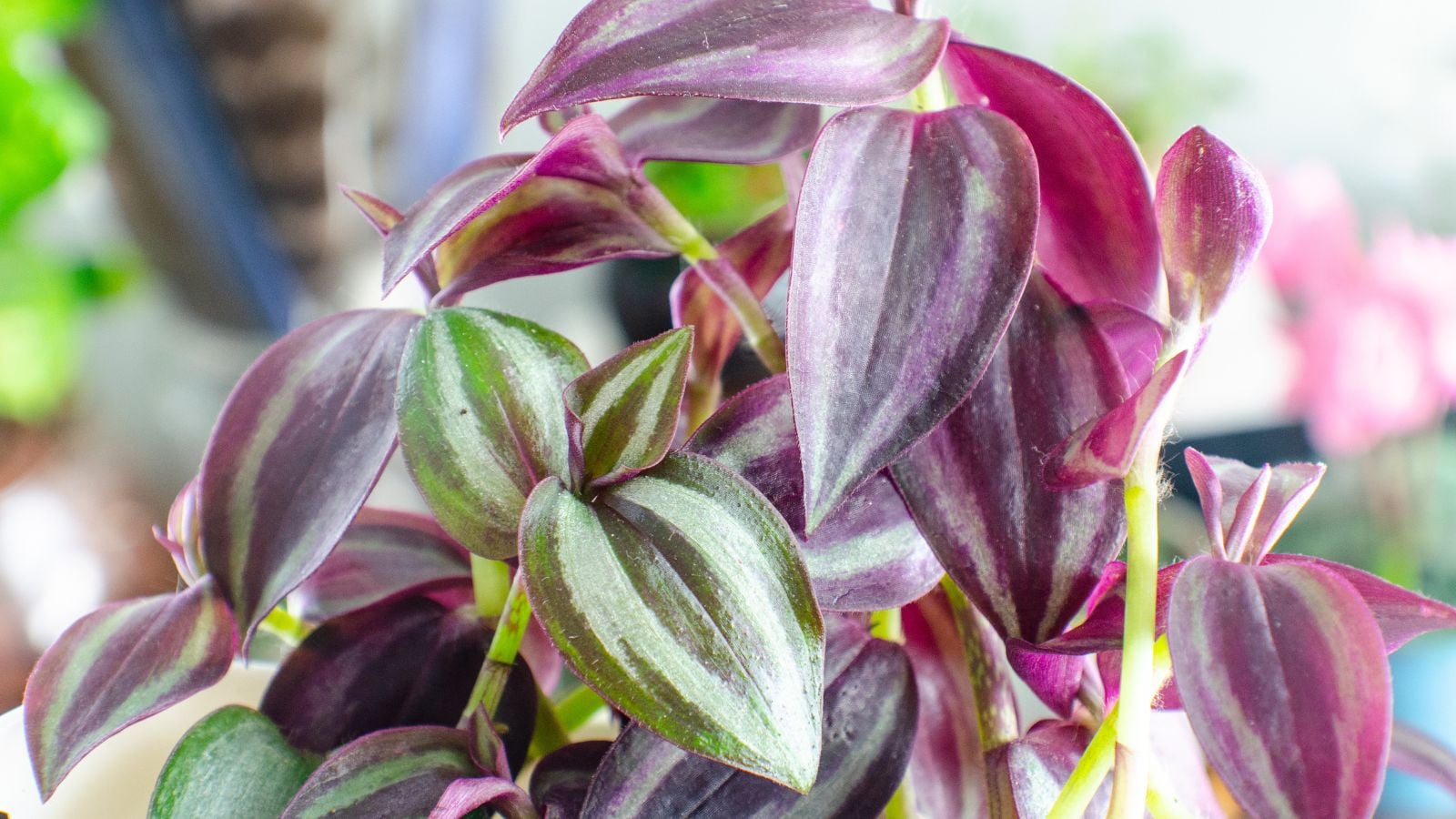
My wandering jew plant is one of the most beautiful houseplants I own. It is also known as Tradescantia zebrina, fluminensis, or pallida. We prefer to call it wandering dude here at Epic.
As a plant lover and a cat lover, it’s vital for me to know which of my indoor plants are potentially toxic or poisonous.
Naturally, I wanted to know: is the plant poisonous to cats?
In short, the answer is a resounding YES.
The plant has sap within the stems that will bother your cat’s digestive tract. It’s important to note that usually there isn’t a toxic reaction to consuming the leaves. But there’s also no reason to risk it, when part of the plant is definitely toxic.
Symptoms of Wandering Dude Poisoning in Cats

According to the ASPCA, which has a wonderful list of toxic and non-toxic plants, the most obvious symptom your cat (or dog) has been affected by wandering jew plants is a dermatitis-like skin irritation developing. You may notice your pet scratching incessantly as well.
Look for these areas on your pet to be affected first:
- Groin
- Stomach, due to laying on the plant
- Under your pet’s chin
- …any other body part that comes into contact
Protecting Your Plants From Pets

What if, like me, you want fauna and flora to play along nicely in your home? I couldn’t stand to get rid of a plant simply because it was toxic to my pet. Instead, I take note of spots that pets can access in my home, and make sure to place all poisonous or irritable plants well out of reach.
Keep in mind, most cats are far more agile than they let on. I’ve had plants six-plus feet off of the ground, but still get mauled to death because a cat jumped from one ledge to another to reach it.
For these plants, try locating them in well-lit corners of a room that your cat doesn’t go in too often. You can grow it in a hanging basket and attach the basket to the ceiling with a pack of wall anchors and ceiling hooks.
Not only does this keep your plant out of reach of your cat, but as the wandering dude is a trailing, vining plant, it’ll also drape down nicely in the corner. As long as you prune it from time to time to make sure your cat can’t access the long trailing vines, you should be able to enjoy both your pet and your plant in the same home.