How To Grow Vanilla Beans: The Vanilla Orchid
The vanilla orchid is beautiful, but do you know how to grow vanilla beans from that lovely plant? It's a complex process, which is why vanilla pods are so pricey. We delve into this complex topic in this growing guide!

Contents
Vanilla is one of the most beloved flavors in the world. Vanilla extract is essential for baking and adds depth to many confections, which leaves many gardeners wondering how to grow vanilla at home. Vanilla bean plants are climbing orchids that produce vanilla pods with time and patience.
Growing vanilla bean plants is not as simple as planting seeds and watching them grow. Vanilla orchids have specific requirements based on their native tropical habitat. If you have experience growing orchids, you may already understand some of these needs, but even beginners can succeed with the right setup.
It is possible to grow a vanilla bean plant in a controlled environment. With several types available, you can produce vanilla with different flavor profiles. Homegrown vanilla pods are especially rewarding after the planning and care required to support a healthy vanilla orchid. The following sections cover vanilla plant care and the main varieties available so you can begin growing your own vanilla pods successfully.


Quick Care Guide

|
Scientific Name
Vanilla planifolia or Vanilla tahitensis
Days to Harvest
180 to 270 days
Light
Indirect sunlight
Water
Consistent, light
|
Soil
Combo bark, peat moss, well-draining
Fertilizer
High nitrogen when active, full-spectrum balanced when dormant
Pests
Spider mites, mealybugs
Diseases
Root rot, stem rot
|
All About Vanilla
This piece covers the two most popular cultivars of vanilla plants: Vanilla planifolia and Vanilla tahitensis. These plants are commonly called vanilla, vanilla orchid, flat leaf vanilla, or west indian vanilla.
Vanilla tahitensis originated in southern North America, where Aztec cultures hybridized two vanilla types into one. Vanilla planifolia is native to Guatemala, Mexico, and Belize. Spanish conquistadors introduced both species to Europe between the years 1300 and 1500.
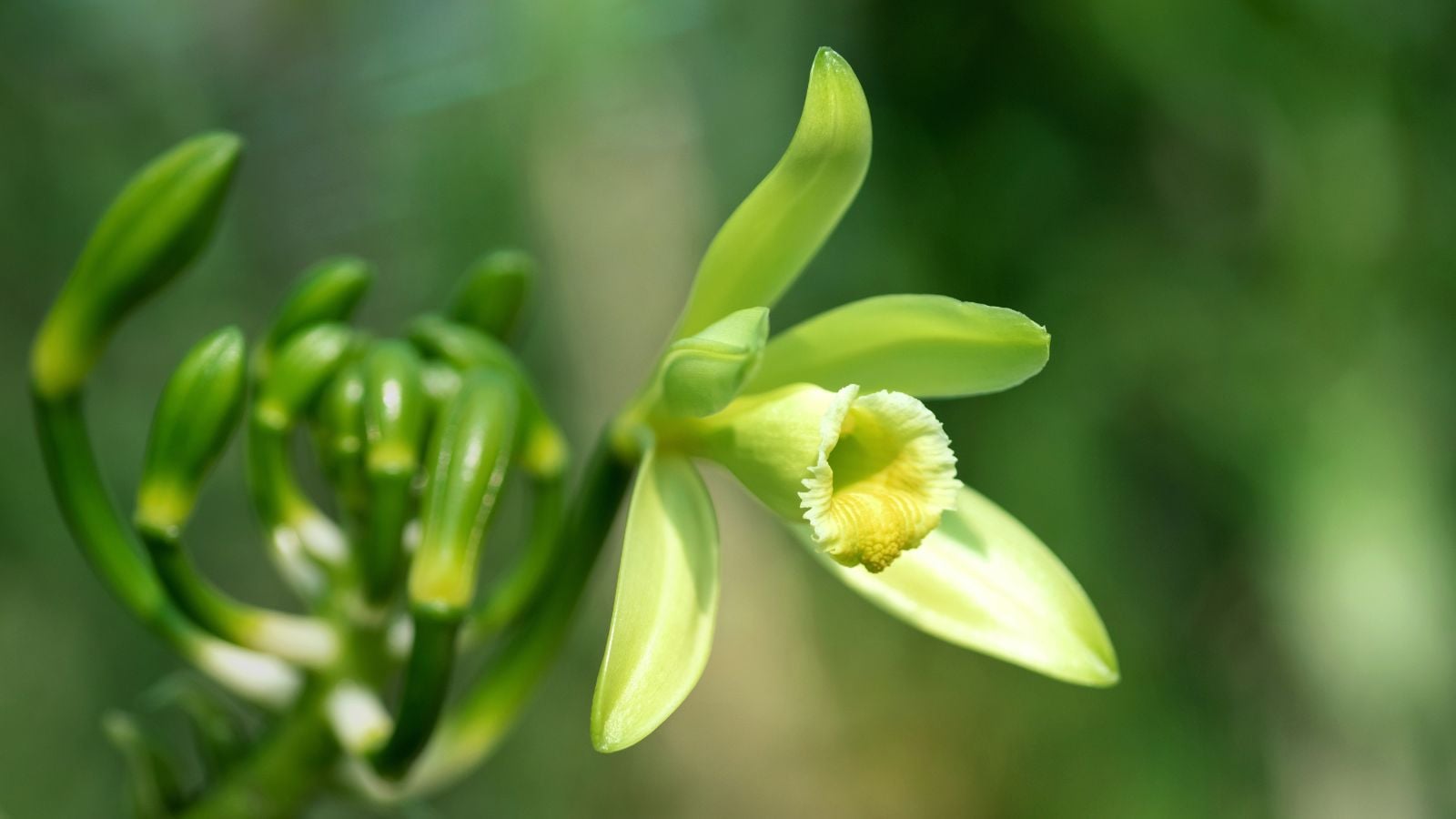
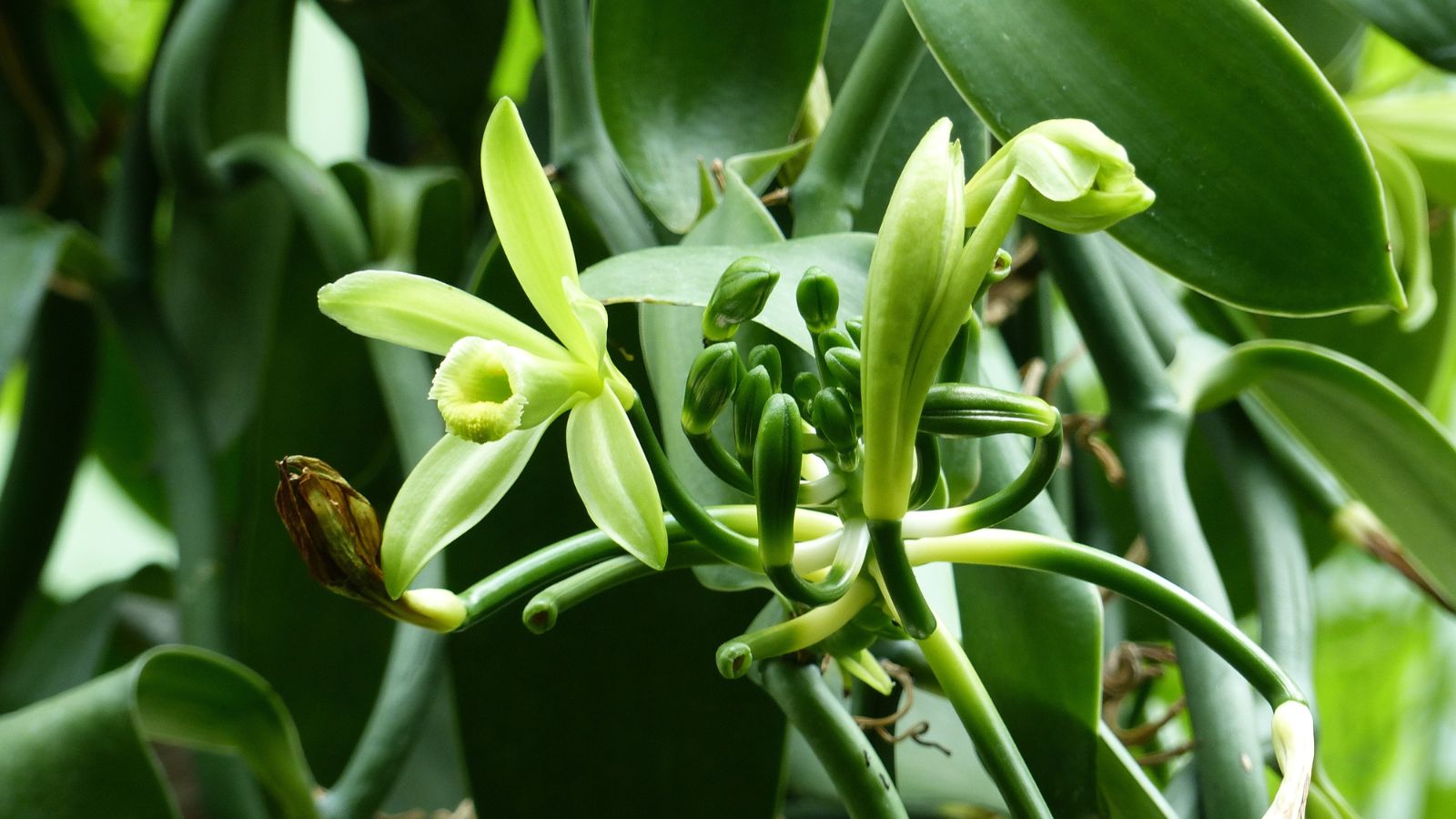
These plants grow as climbing vines that rely on trees for support. In their native habitat, they thrive in tropical climates beneath the lower canopy of rainforests. The vines zigzag as they grow and produce elliptic-shaped leaves. After several years of vegetative growth, the plant produces greenish, yellow, or white flowers. Each flower lasts only one day. During this brief window, the self-fertile flowers must be pollinated. Without pollination, the flowers drop.
Once the vine matures for a few years and pollination succeeds, fruit begins to develop. The pods initially resemble small bananas, measuring six to nine inches long, and take about six months to mature. Growers harvest mature pods and cure them before extraction. Most commonly, the entire pod is macerated and infused in alcohol to produce vanilla extract. Some cooks scrape the seeds from inside the pod and use fresh vanilla directly in desserts and other confections.
Most vanilla used for extract production comes from Madagascar, Tahiti, and Mexico. Vanilla can only grow naturally within ten to twenty degrees north and south of the equator. When grown outside this range in controlled environments, hand pollination is required for reliable vanilla bean production.
Types of Vanilla
Here are a few of the varieties commonly cultivated by curious gardeners who are up for the challenge.
West Indian Vanilla (Vanilla pompona)
A lovely plant with large glossy green leaves and long thin stems up to five meters long. Native to Mexico, and South Tropical America. Bunches of fragrant flowers open in succession and produce long pods.
Flat-leaved Vanilla (Vanilla planifolia)
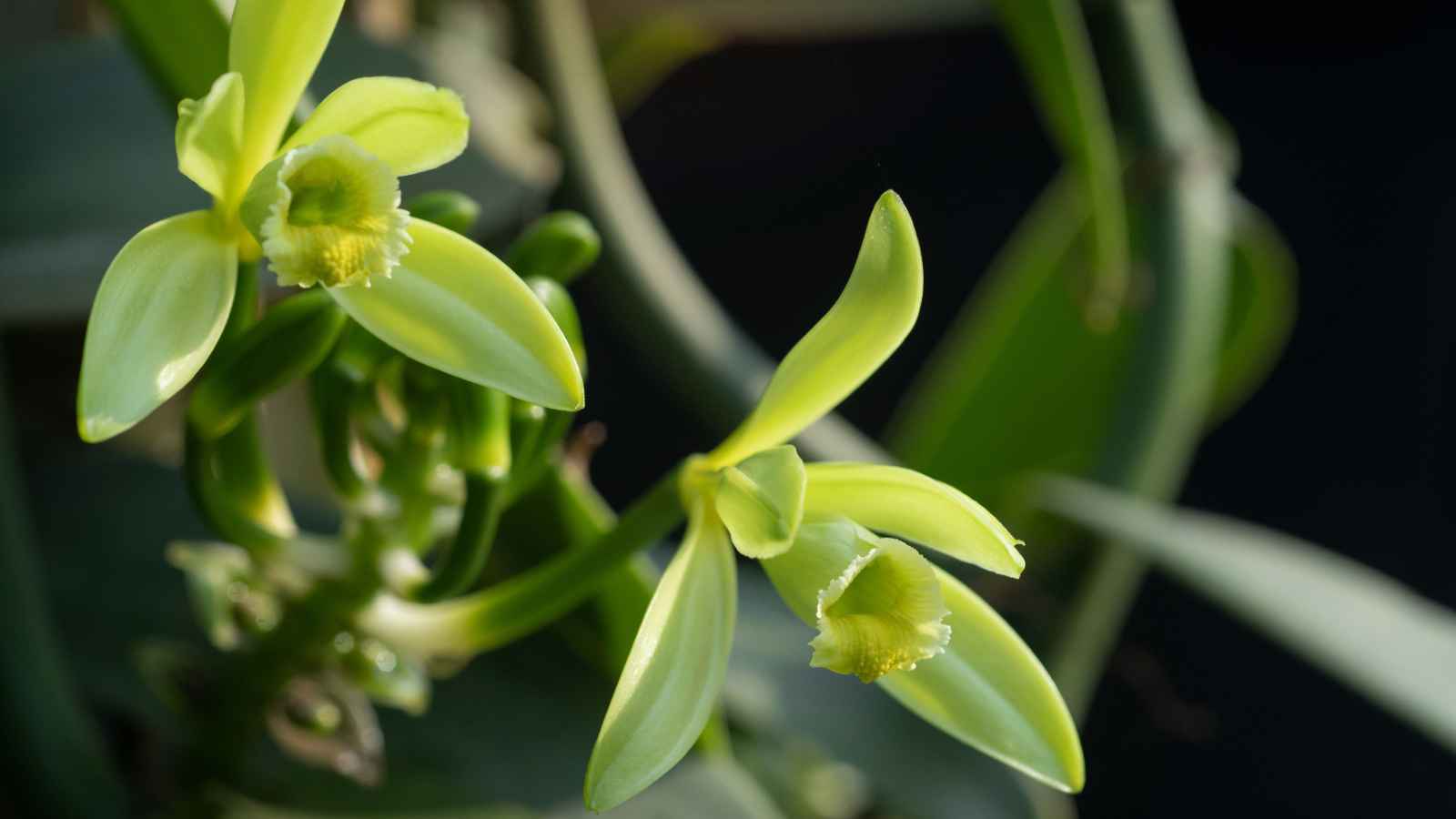
One of the largest plants, this cultivar grows up to 30 meters. It prefers a swamp habitat or tropical environment.
Tahitian Vanilla (Vanilla tahitensis)
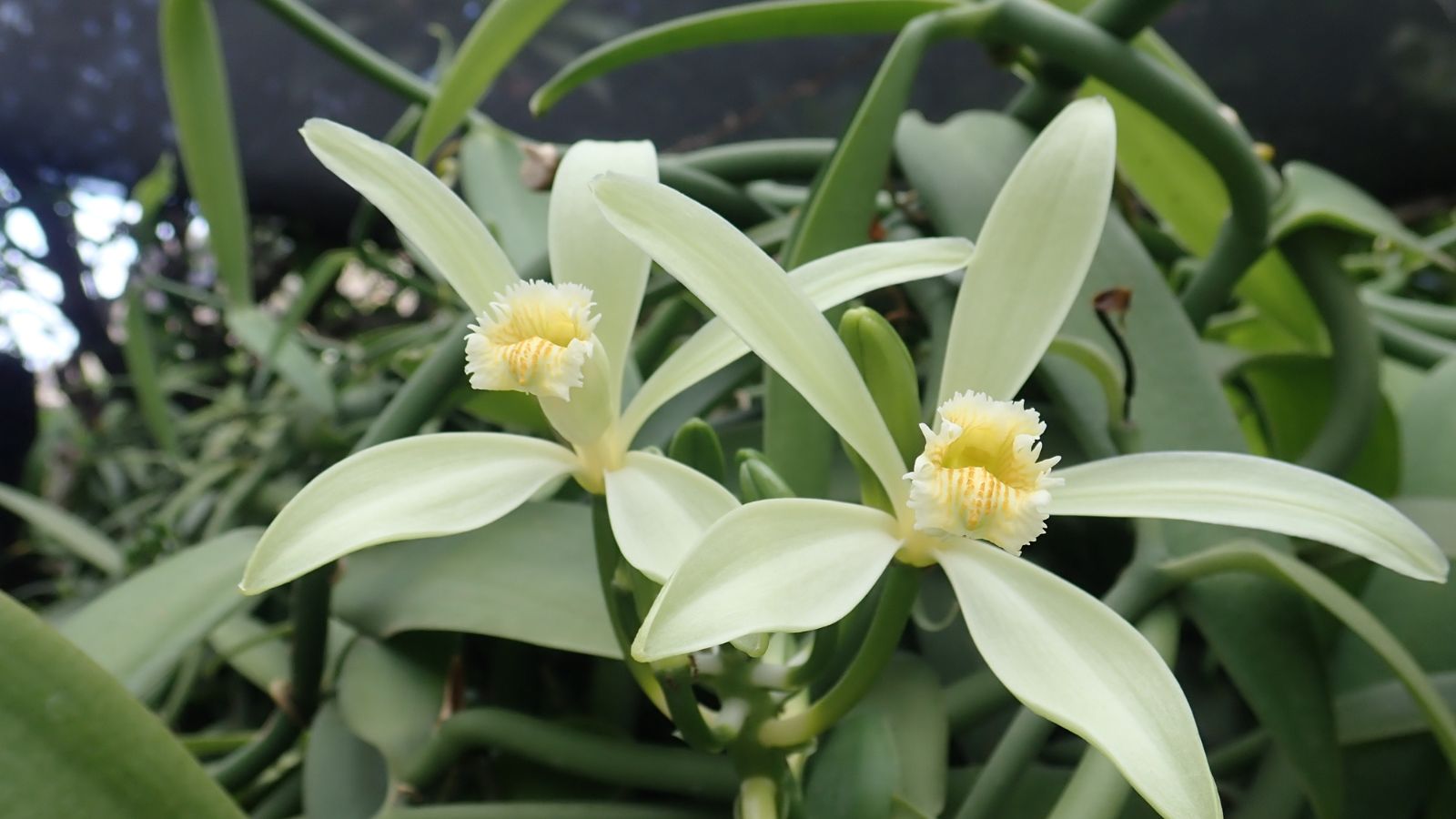
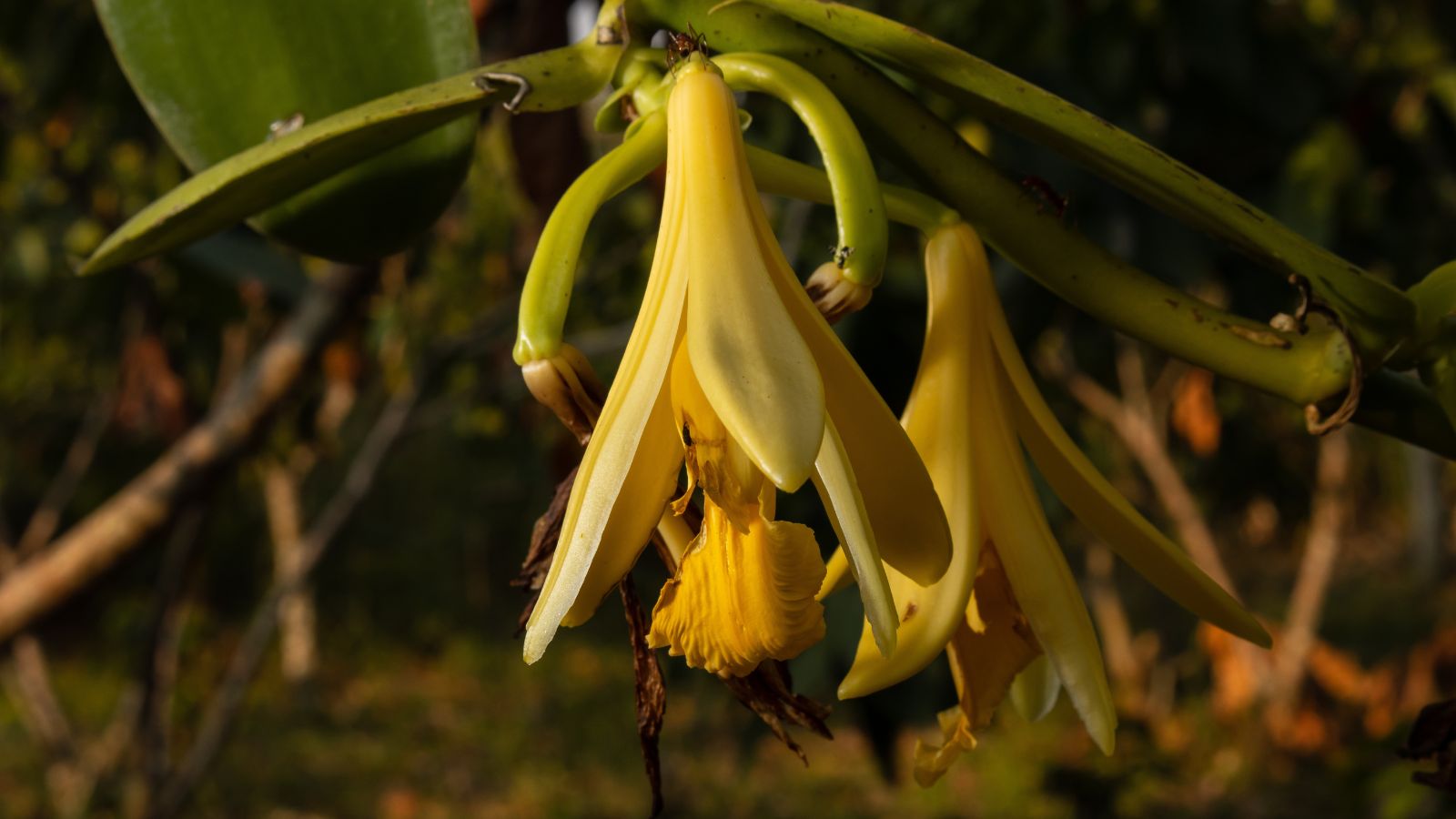
Native to Tahiti, this vanilla bean plant has yellowish-green flowers that produce broader, more squat pods than West Indian. This is one of the most common vanilla bean plant cultivars, and the vanilla extract has a flavor distinct from other varieties.
Leafless Vanilla (Vanilla aphylla)
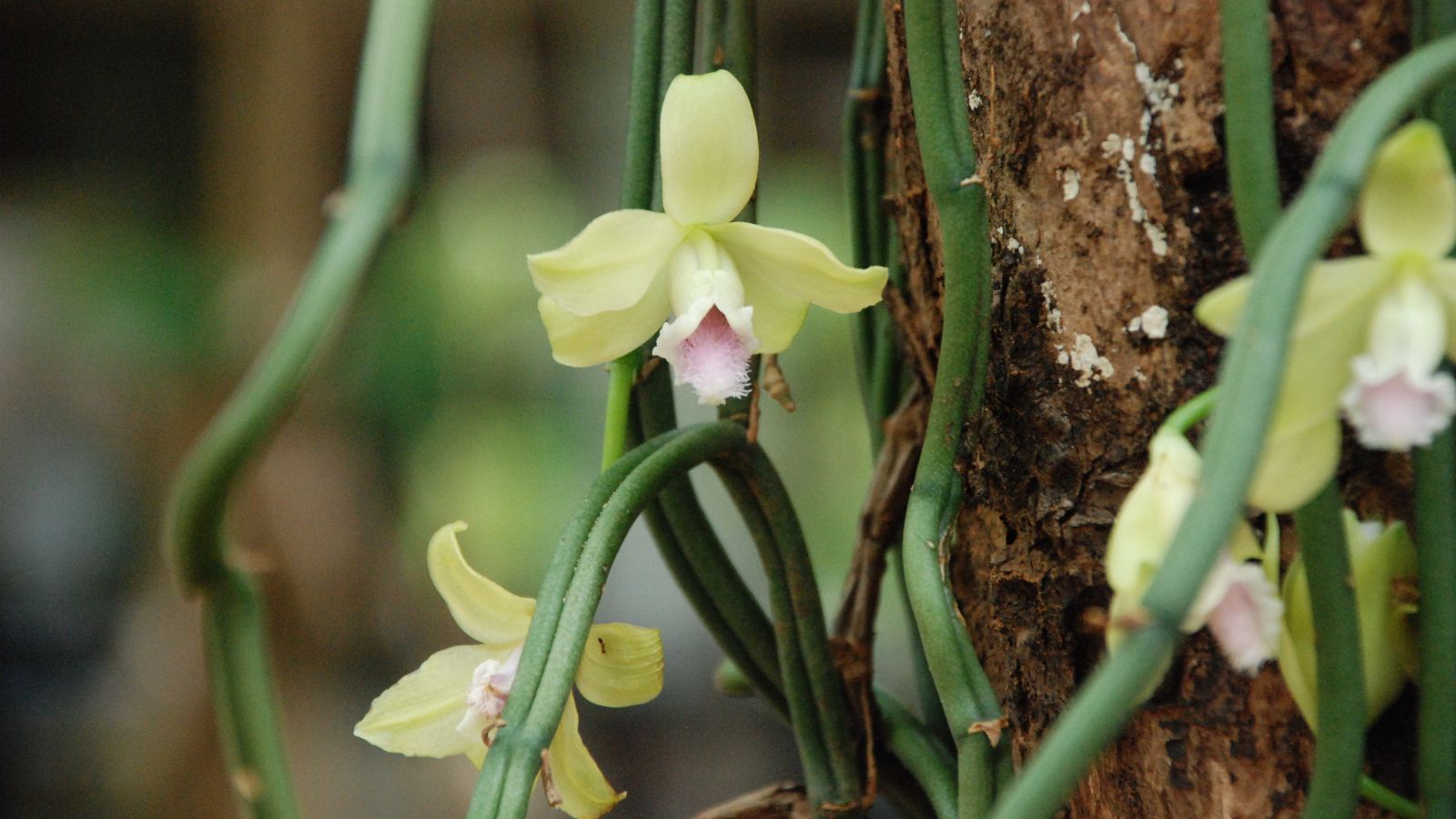
Native to Southeast Asia, this vanilla bean plant has clusters of three to four flowers that bloom in spring and summer. Unlike other cultivars, leafless vanilla has no foliage. Flowers grow directly from internodes situated evenly on vines.
Mexican Vanilla (Vanilla mexicana)
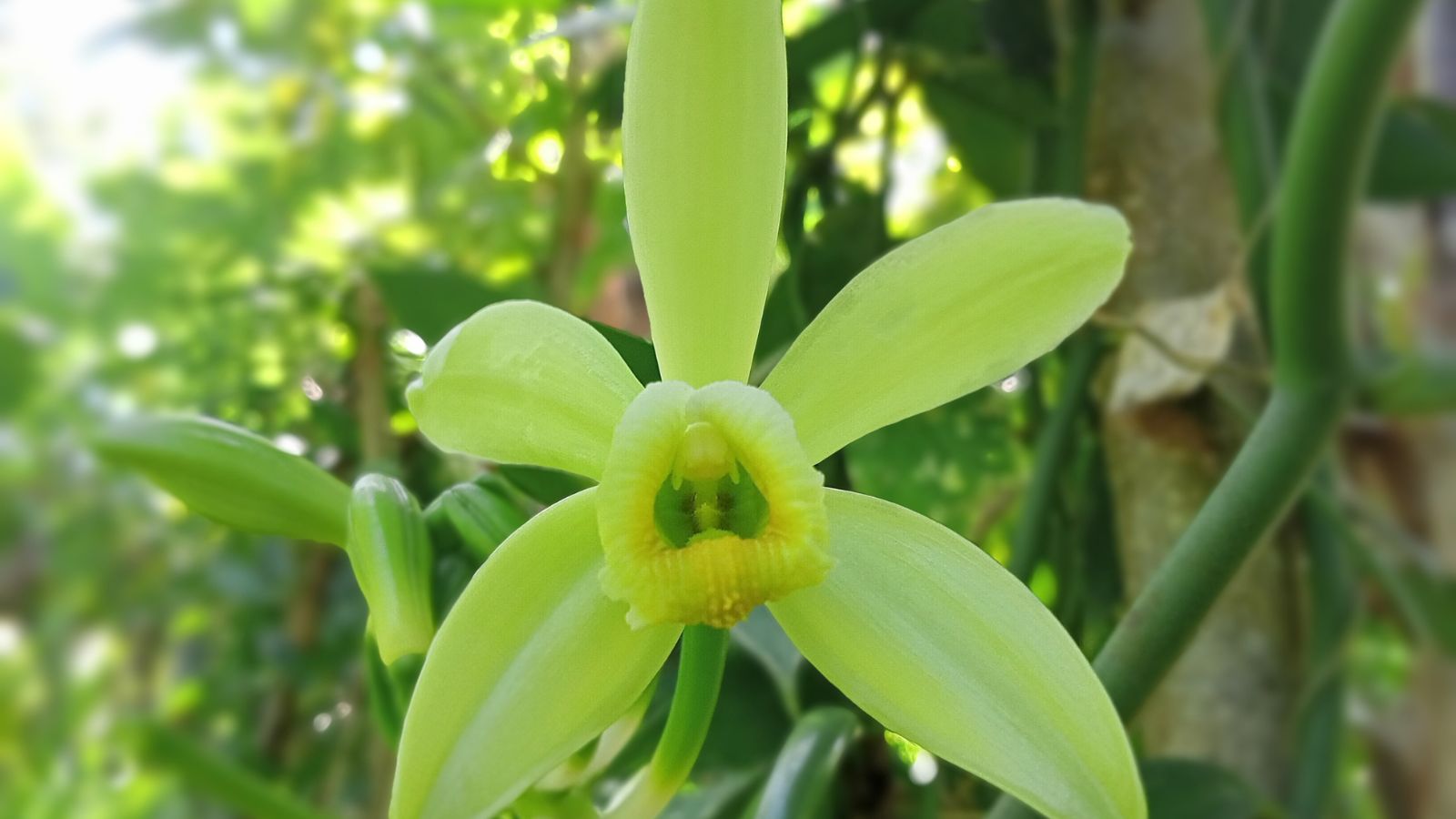
This vanilla bean is native to Central Florida, Mexico, and areas of Central and South America. One of the most common varieties, it grows squat and short at less than two feet in length.
Planting
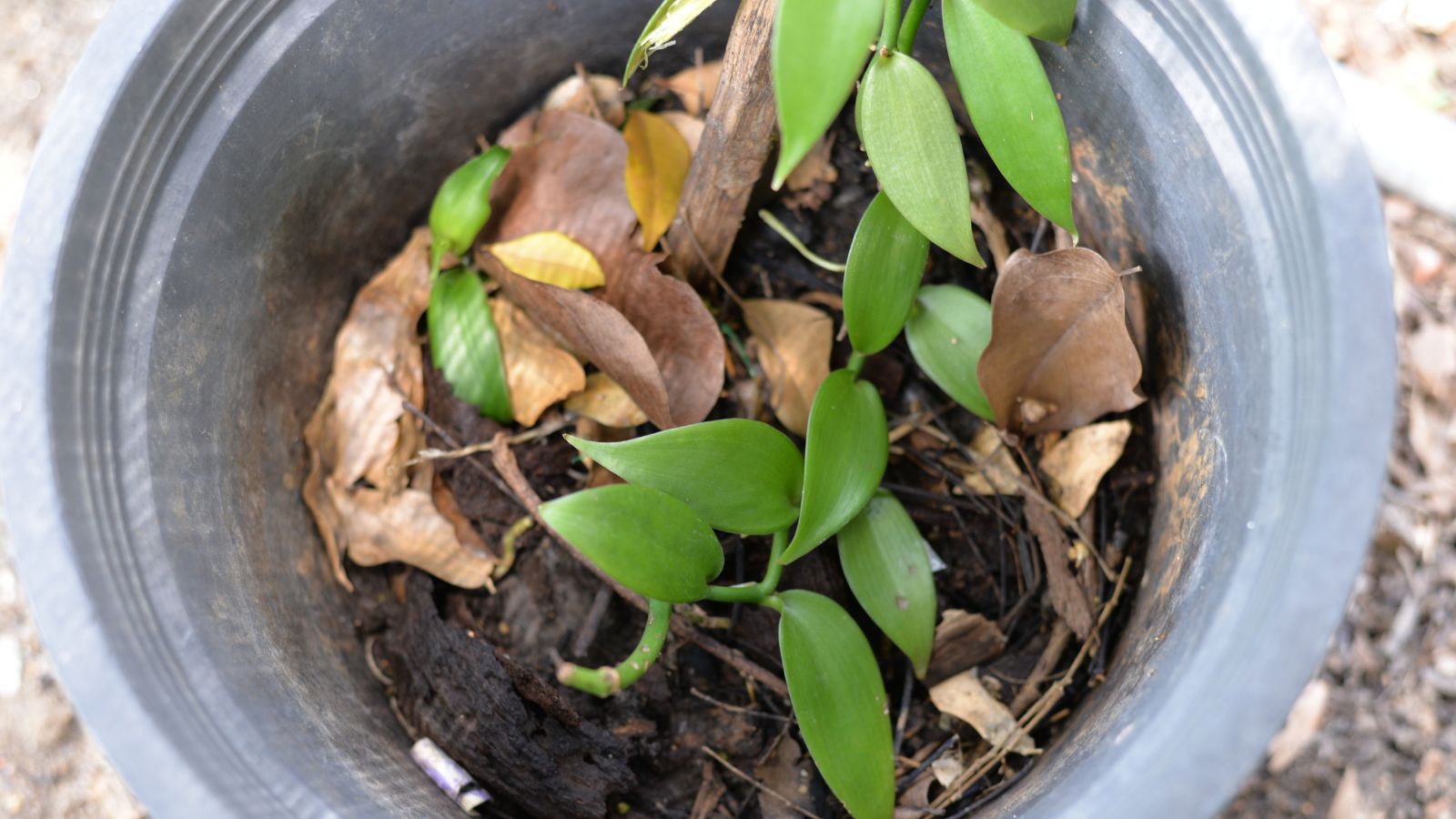
Unless you live in a region with year-round tropical conditions, grow vanilla in a controlled environment. In southern Florida, planting at the base of a tree in an area with bright, filtered afternoon shade may work. In all other regions, grow vanilla plants in small pots filled with an orchid potting mix.
Provide a pole, stake, or other support structure for the orchid to climb. The container and potting medium must drain well, as this type of orchid does not tolerate waterlogged conditions. Use a sanitized cutting tool and remove one-third of the lower roots before planting. Set the plant in the pot, then install the stake, pole, or training support you will use to guide upward growth.
How to Grow
A vanilla plant can be tricky, so it’s important to know what is required in raising vanilla beans. Stick to the guide, and you’ll be harvesting vanilla beans in under a year!
Light
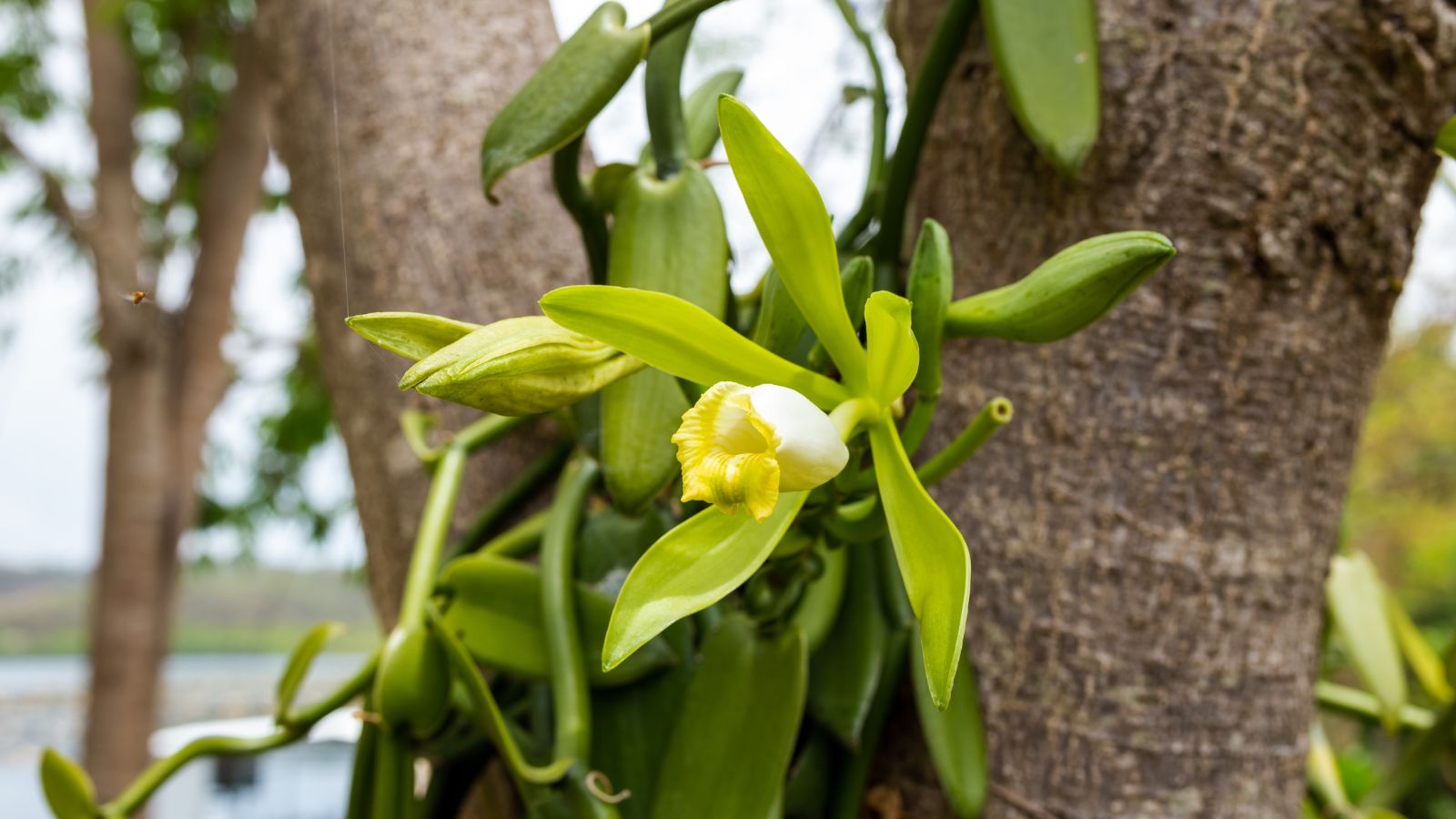
A vanilla plant needs indirect sunlight in the morning and evening, with bright, filtered shade during the afternoon. Too much direct light can scorch the plant and damage the roots. Many growers find that the south side of a greenhouse, shaded by a large tree, provides ideal conditions.
Because vanilla grows outdoors only in USDA zones 10 and 11, most gardeners need a carefully monitored and well-managed space to grow vanilla beans successfully.
Water

This is one of the most common mistakes people make with orchids. These plants prefer evenly moist growing media, along with high humidity and good air circulation. Allow the top two to three inches of the potting mix to dry out between regular watering.
When the orchids begin to bloom, let the entire plant dry out for a few weeks between watering to support healthy flowering and prevent root issues.
Soil

Vanilla beans grow best in a mix of half orchid bark and half sphagnum peat moss. You can also use a pot filled entirely with orchid bark if peat moss is unavailable. Always choose a well-draining mix and container.
Avoid low-quality potting mixes, as they retain too much moisture and can quickly kill the plant. Maintain a soil pH between 6.6 and 7.5. When you provide the right growing environment, your vanilla vine can reward you with pods over time.
Temperature and Humidity

Vanilla plants prefer warm conditions and perform best at temperatures between 75 and 85°F (24 to 29°C). Outside this range, leaves yellow and drop, and vines fail to produce beans. When a greenhouse is not available, a grow tent works well and often makes climate control easier and more consistent.
Vanilla beans require at least 85% humidity year-round. You can achieve this with grow tent controls, regular misting using a spray bottle, or a humidity tray placed beneath the plant. In greenhouses that struggle to maintain ambient humidity, a humidifier can be especially helpful. Consistent humidity is critical to long-term plant health.
Lack of humidity and overwatering can damage vanilla plants just as quickly as temperature extremes. Use distilled water instead of tap water for irrigation and water in the morning to support healthy growth.
Fertilizing

Vanilla beans respond well to a heavily diluted, high-nitrogen fertilizer applied weekly during active growth. Use a 30-10-10 NPK formula and apply it only when the growing medium is moist, as fertilizing dry bark can damage the roots.
When the orchid enters dormancy, switch to a lightly diluted balanced orchid fertilizer with a 20-20-20 NPK ratio. Always fertilize between waterings and only when the medium is moist. Focus feeding efforts during spring and summer, when the plant is actively growing.
Pruning and Training
Unless you’re ready to propagate your vanilla plant, you shouldn’t need to prune. Train your vine with a pole covered in sphagnum moss, or up fences. Gently hang the vine on a nail attached to your training area if you don’t have a pole covered in moss.
Pollination
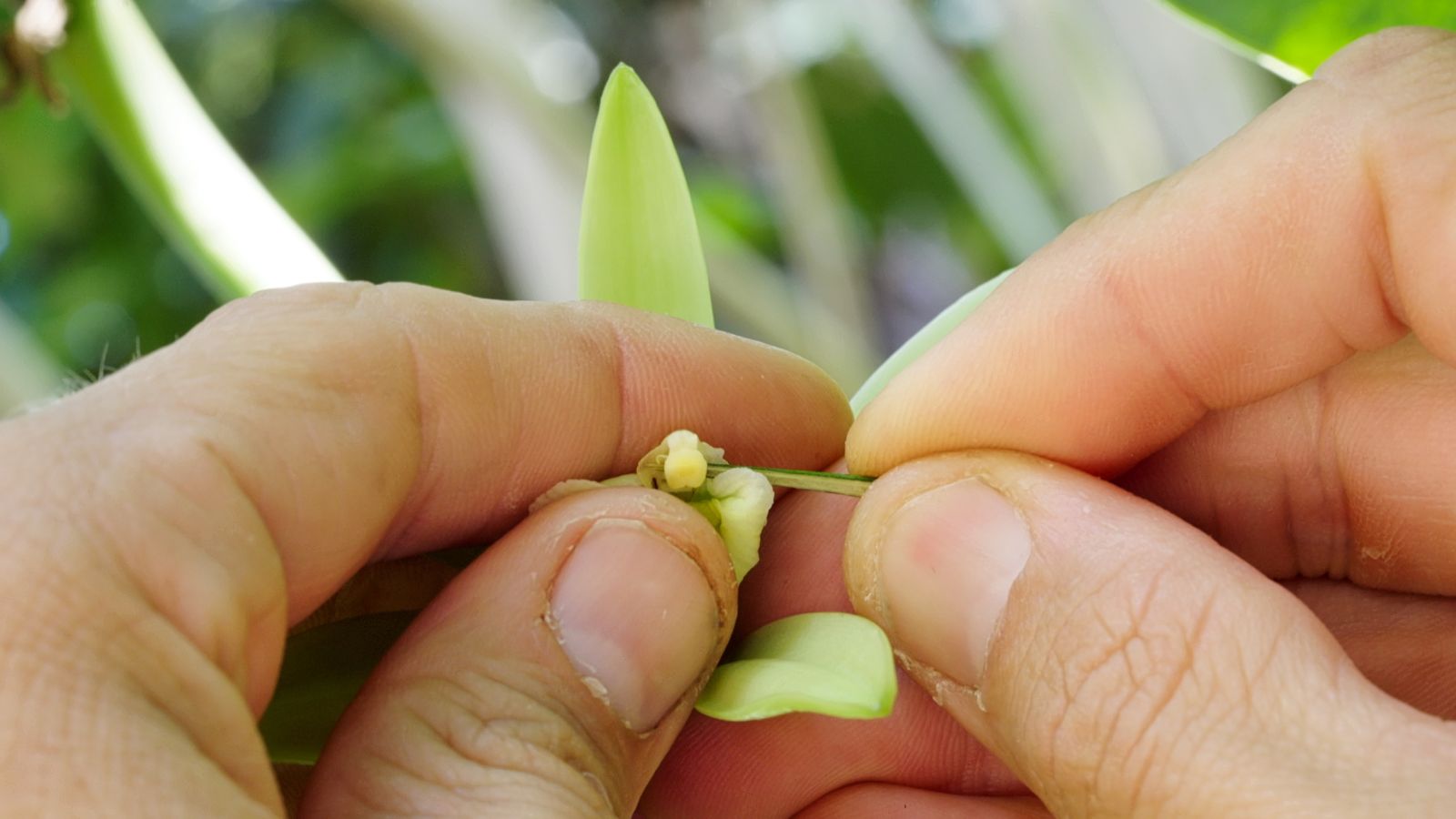
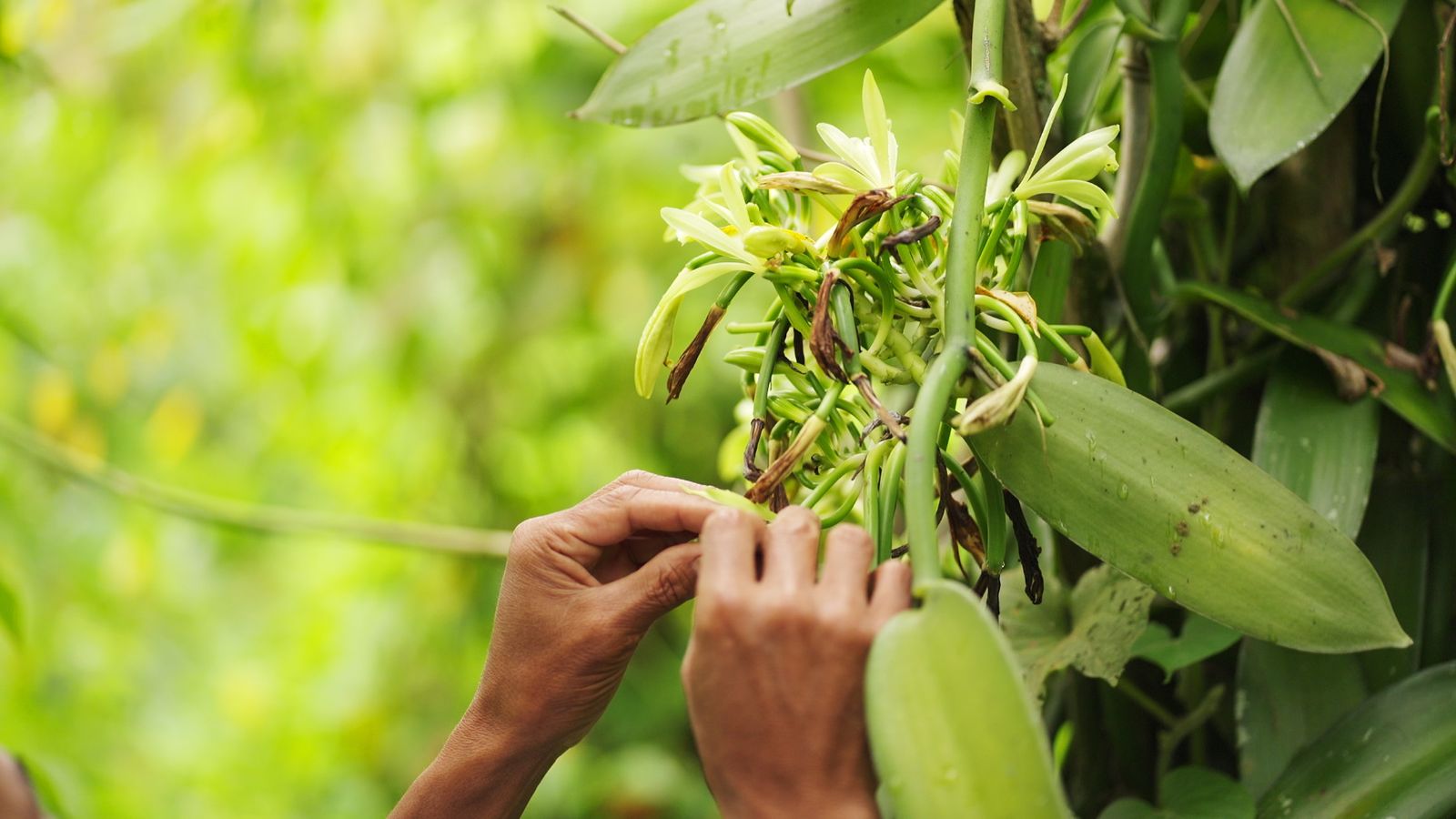
As noted earlier, vines must be hand-pollinated on the day the flowers open to produce beans. Use a chopstick or cotton swab in the morning to collect pollen from each flower. Then transfer the pollen to the female parts of the flower, which sit beneath a small flap.
You will know whether pollination succeeded within one day. A successfully pollinated flower wilts but remains on the vine. If the flower drops, pollination did not occur. Within one week, green pods begin to form.
Propagation
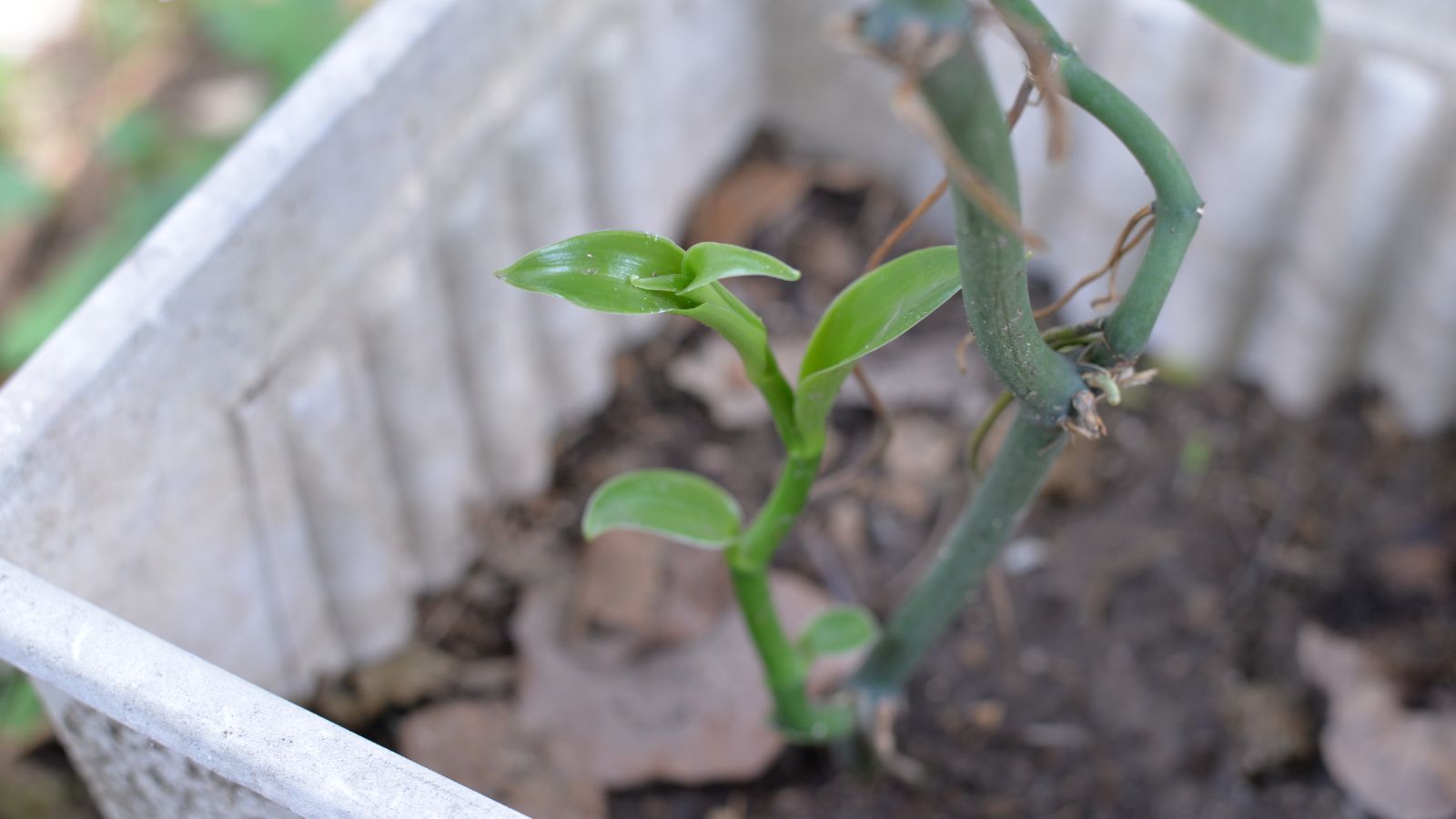
Propagation for this plant happens through cuttings. Wear gloves and long sleeves when handling vanilla, as the plant’s oils can irritate or burn skin.
Take cuttings that are six to eight inches long and include two to three nodes. Leave enough bare stem at the base to insert into the growing medium, and keep at least one inch of stem above the top node. Plant each cutting in the same type of orchid potting mix and container size used for the parent plant. Water lightly to moisten the medium, then place the cuttings in an environment suited to orchids with warm temperatures, high humidity, and good airflow.
After a few inches of new growth appear at the top, gently check for root development. If you see three to five inches of healthy white roots, the cutting has successfully rooted and your vanilla orchid propagation was a success.
Harvesting
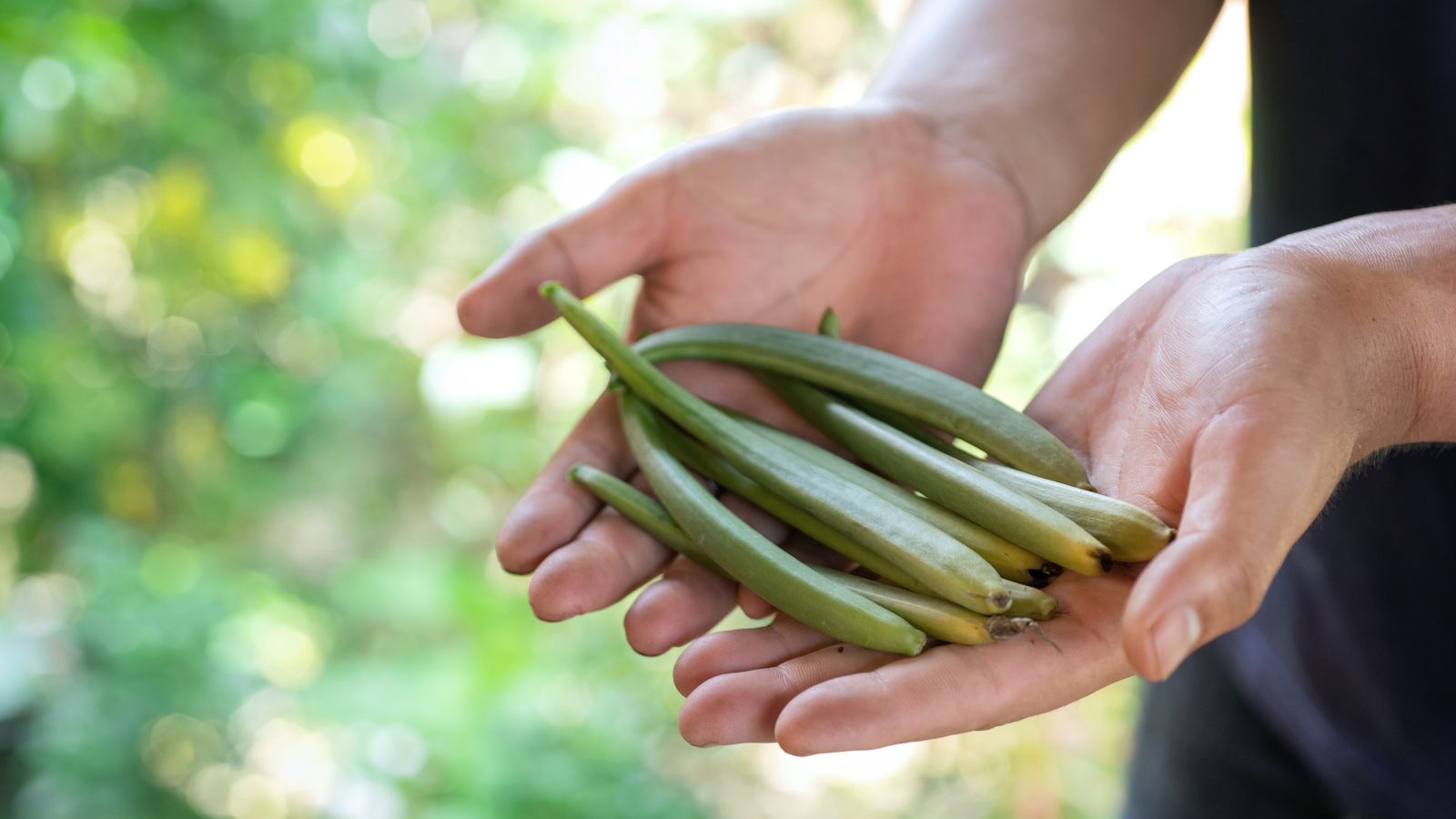
The pods gradually turn yellow and elongate as they develop, then shift to a light brown color. After six to nine months, the pods darken to a deep brown, which signals they are ready for harvest.
You can allow the beans to fully mature on the plant or harvest them and begin the curing process. Use a sharp, sanitized tool to remove the pods. Blanch the beans in boiling water for a few minutes, then wrap them and place them in a cool, dry location overnight. During the day, sun dry the beans. Repeat this process daily for about one month, then store the cured vanilla beans.
Storing
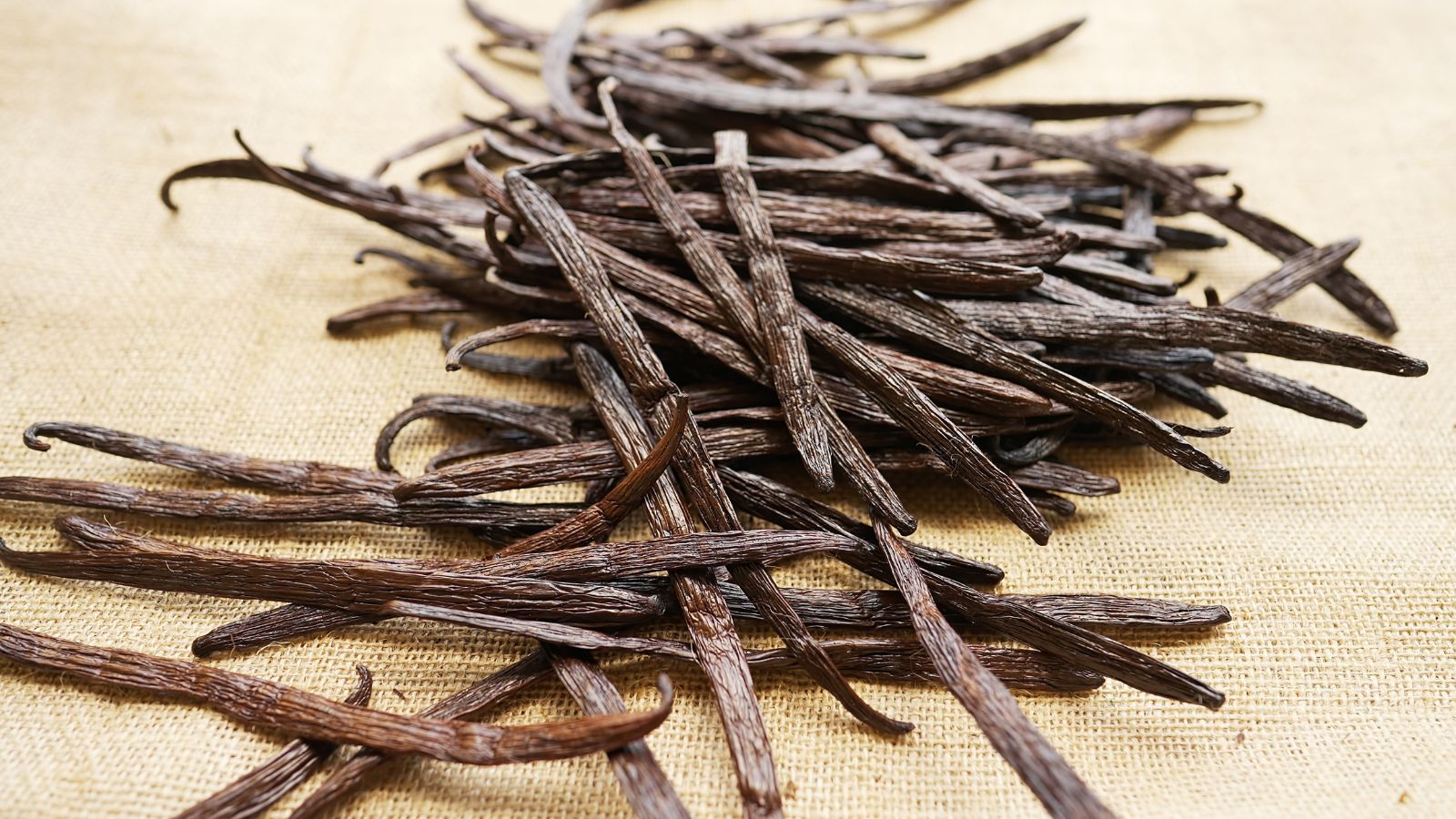
Cured, dried beans will keep indefinitely when stored in an airtight container. You can also scrape out the interior of the pods to make vanilla paste and store it in an airtight container at room temperature for up to three years. Do not freeze or refrigerate vanilla, as cold storage significantly shortens its shelf life.
Spent pods can be infused into alcohol or blended into sugar for later use. Making vanilla extract at home is simple. Split the beans and steep them in vodka for at least eight months. The result is a rich, homemade vanilla extract that rivals any store-bought version.
Troubleshooting
There are a few things to watch out for when you’re growing this plant. Keep this in mind, and you’re set!
Growing Problems
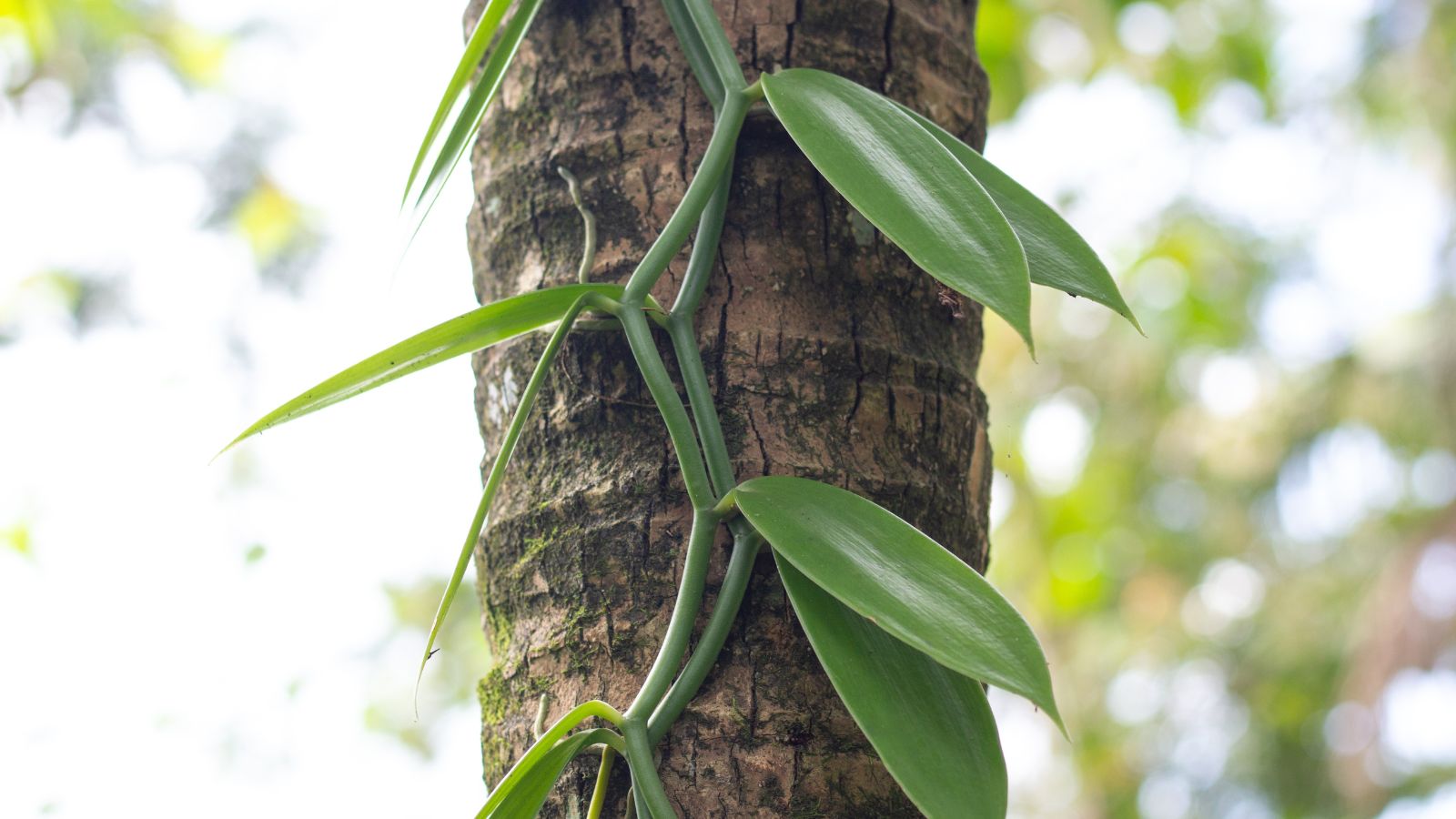
Most problems with this plant stem from over- and under-watering, and a lack of proper humidity. Maintaining the humid but not soggy environment vanilla likes can be tricky!
Pests

The only two pests to look out for are spider mites and mealybugs. Both suck the sap from your plant.
For mealybugs, use a cotton swab dipped in rubbing alcohol to force the white, fluffy bugs to release. Neem oil or horticultural oil can be applied for mites, but also are preventative against mealybugs.
Diseases

The only disease you have to worry about is rot. Overwatering causes fungal stem rot, which may kill your plant.
If you notice brow,n flimsy stems and overly saturated planting media, remove the entire plant, trim off the rotted parts, and transplant the cutting into new, dry media. Then add a little bit of moisture. Keep the air circulating and the media moist for rooting.
Frequently Asked Questions
Can you grow vanilla at home?
Yes, in a controlled environment.
How long does it take to grow vanilla?
At least a year.
Is vanilla easy to grow?
Not exactly. But it’s very rewarding when you can help vanilla plants thrive, and even better when you can produce them.