How to Plant, Grow, and Care for Taro
The taro plant is not only a lush and vibrant green tropical, but a food-producer. It's a great addition to lush, leafy gardens in warm climates. Learn all about taro in our in-depth grower's guide by gardening expert Rachel Garcia.

Contents
The taro plant, one of the many types of elephant ear plants, features gigantic leaves with a range of striking color variations. It also produces the taro root, which is one of the most important staple foods worldwide. Botanically known as Colocasia esculenta, taro is prized for both its ornamental appeal and its edible qualities.
Taro is an ancient plant with origins in Southeast Asia and is believed to be one of the first crops ever cultivated by humans. Today, many countries, from Australia to Belize to Papua New Guinea, have traditional dishes centered around taro, including foods such as poi. In the United States, Hawaii is the primary commercial grower. The islands are home to more than 100 taro varieties, and the crop plays a central role in Hawaiian cuisine and cultural history.
If you are curious what taro roots look like, picture a ringed, hairy potato. Once peeled, the flesh is white or pink with a mild, sweet, and nutty flavor. The large leaves are also edible and are typically cooked in a similar way to spinach.
Elephant ear plants thrive outdoors in tropical climates but can also be grown in USDA zones 8 to 10. Taro can be grown as a houseplant as well, provided it receives plenty of bright light. Thanks to its impressive size, taro makes a bold statement in both indoor and outdoor spaces. With its edible tubers and dramatic foliage, it is a standout choice for gardeners interested in tropical plants and edible gardening alike.
Epic Grow Bags – Lined

Epic Grow Bags – Lined
The unique liner system allows the soil to retain moisture while still encouraging air pruning, creating a denser, more fibrous rootball. Our lined grow bags are great throughout the hot, dry summer months.
Buy at Epic Gardening Shop
Quick Care Guide

|
Common Name(s)
Taro, dasheen, caladium, melange, cocoyam, eddo
Scientific Name
Colocasia esculenta
Days to Harvest
7 months
|
Light
Partial sun
Water
Heavy and consistent
Soil
Fertile, loamy, acidic
|
Fertilizer
High-potassium
Pests
Spider mites, root knot nematodes
Diseases
Fungal leaf blight, Pythium rot, downy mildew
|
All About Taro Plant

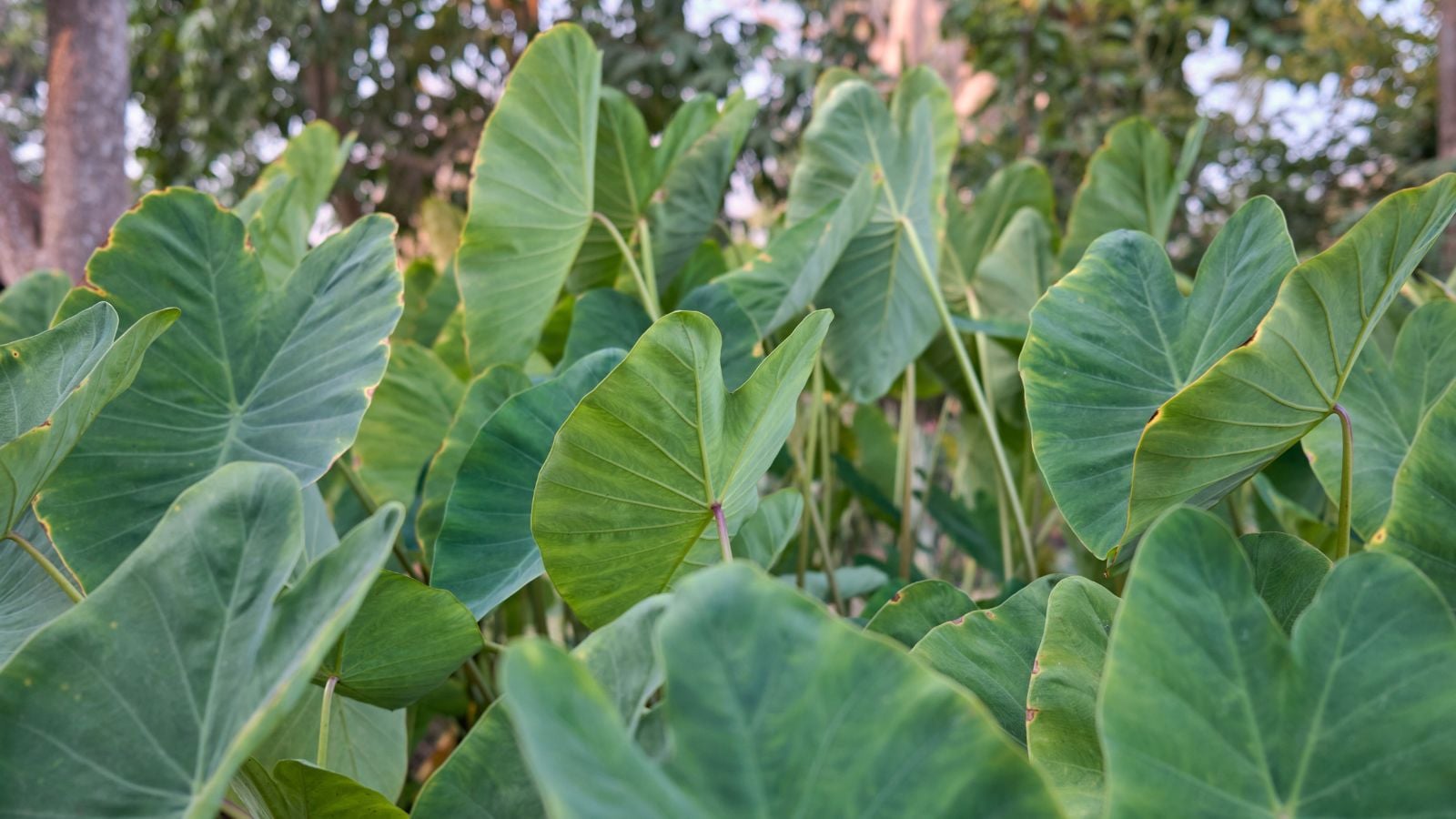
So what is taro root? This plant truly earns its reputation for size. Mature taro plants can reach three to six feet tall and wide, with individual leaves growing up to three feet across. At the base of the plant sits a main tuber that stores nutrients to carry the plant through winter. From this tuber grow fibrous roots, often referred to as corms, along with several smaller tubers.
Rather than traditional stems, long, thick petioles connect the leaves directly to the root system, similar to the growth habit of a beet plant. The leaves are heart-shaped with pronounced veins. They are most often green but can also appear purple, red, or even nearly black. Variegated varieties combine these colors in a wide range of patterns.
Flowering is rare and irregular. When it does occur, the blooms resemble small calla lilies and are usually overshadowed by the large foliage. Botanically, taro is known as Colocasia esculenta.
As a tropical plant, taro is adapted to a long growing season. It typically requires about seven months of consistently warm weather to reach maturity and will go dormant during mild winters. In colder regions, elephant ears are often grown as annuals for ornamental use rather than for their edible roots.
Cultivars
Taro goes by many different names, far too many to list in full. You will most often hear it called taro or dasheen plant, although caladium, melange, cocoyam, and eddo are also common names. Botanically, this plant is a single species, Colocasia esculenta, but it includes a wide range of cultivars.
Most cultivars differ primarily in leaf color, but some produce more palatable roots or require specific growing conditions. Taro can be grown in both dry and wet environments, although certain cultivars are suited to only one of these conditions. For reliable root production, ‘Bun Long’ and ‘Elepaio’ are good choices. If you are growing taro purely for ornamental value, ‘Black Magic’, ‘Blue Hawaii’, or ‘Hilo Beauty’ are excellent options.
One final detail to keep in mind is that taro is mildly toxic when eaten raw. The entire plant contains calcium oxalate, an acrid compound that can irritate the mouth and stomach. Fortunately, this toxin is completely neutralized through thorough cooking, making properly prepared taro safe to eat.
Planting
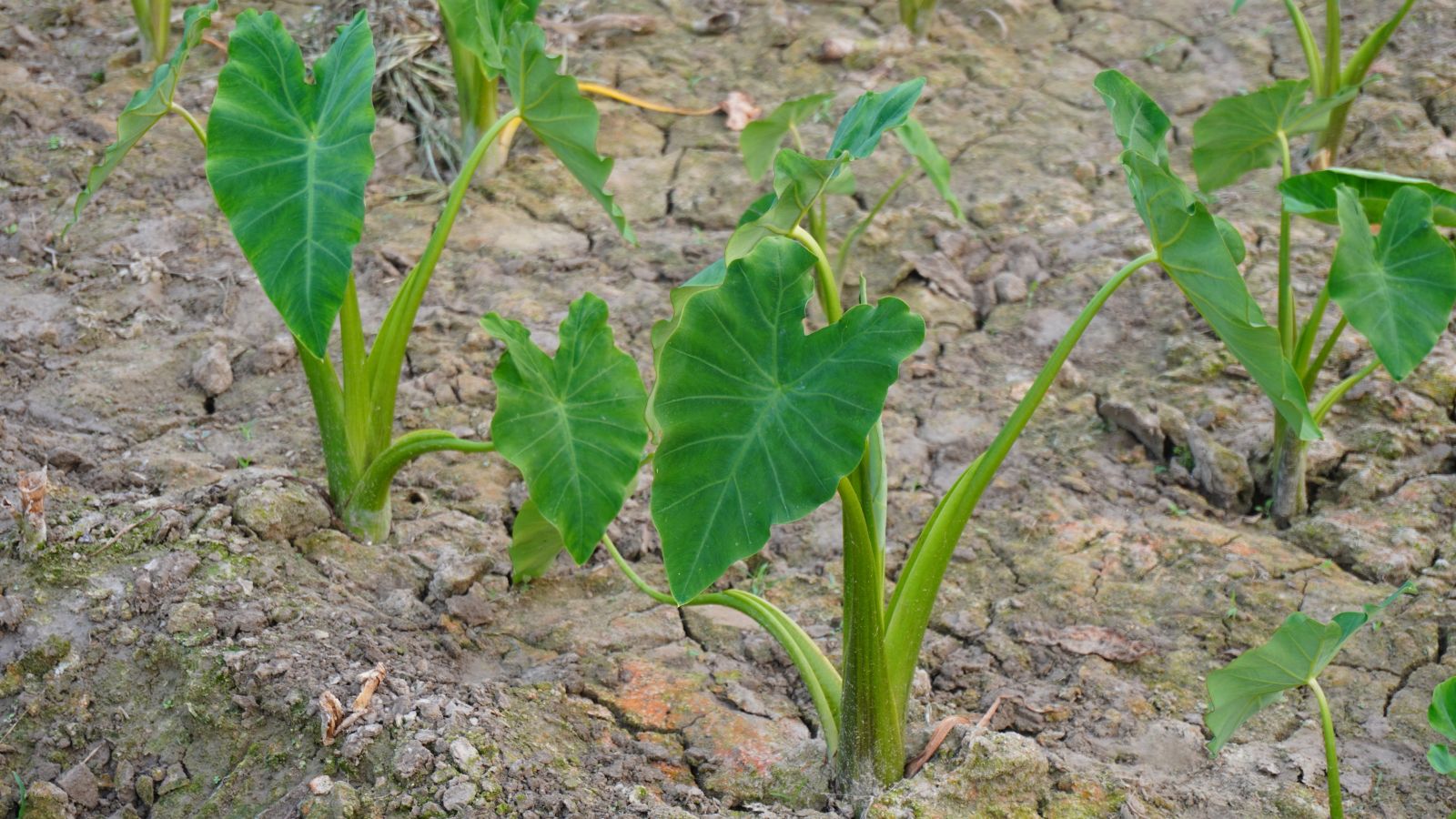
Eddo plant is grown through vegetative propagation, most commonly using corms or tubers. Like potatoes, you can plant small tubers or cut sections from a larger one. It is also possible to purchase taro starts from a nursery.
Choose a planting location with rich, consistently moist soil and partial sunlight. Because taro grows well in waterlogged conditions, it is an excellent choice for planting along the edge of a backyard pond. When grown indoors, taro requires a fairly large container and a spacious location near a south-facing window to provide enough light.
Before planting, work organic matter into the soil to improve fertility and texture. As taro grows, it benefits from nutrient-rich, loamy soil. Plant each tuber two to three inches deep and space them 15 to 24 inches apart. One common method is planting in six-inch furrows, which helps conserve moisture in the soil.
How to Grow
To keep them healthy, you have to keep up with their care needs. Taro plants grow quickly, so get ready for a wild summer!
Light
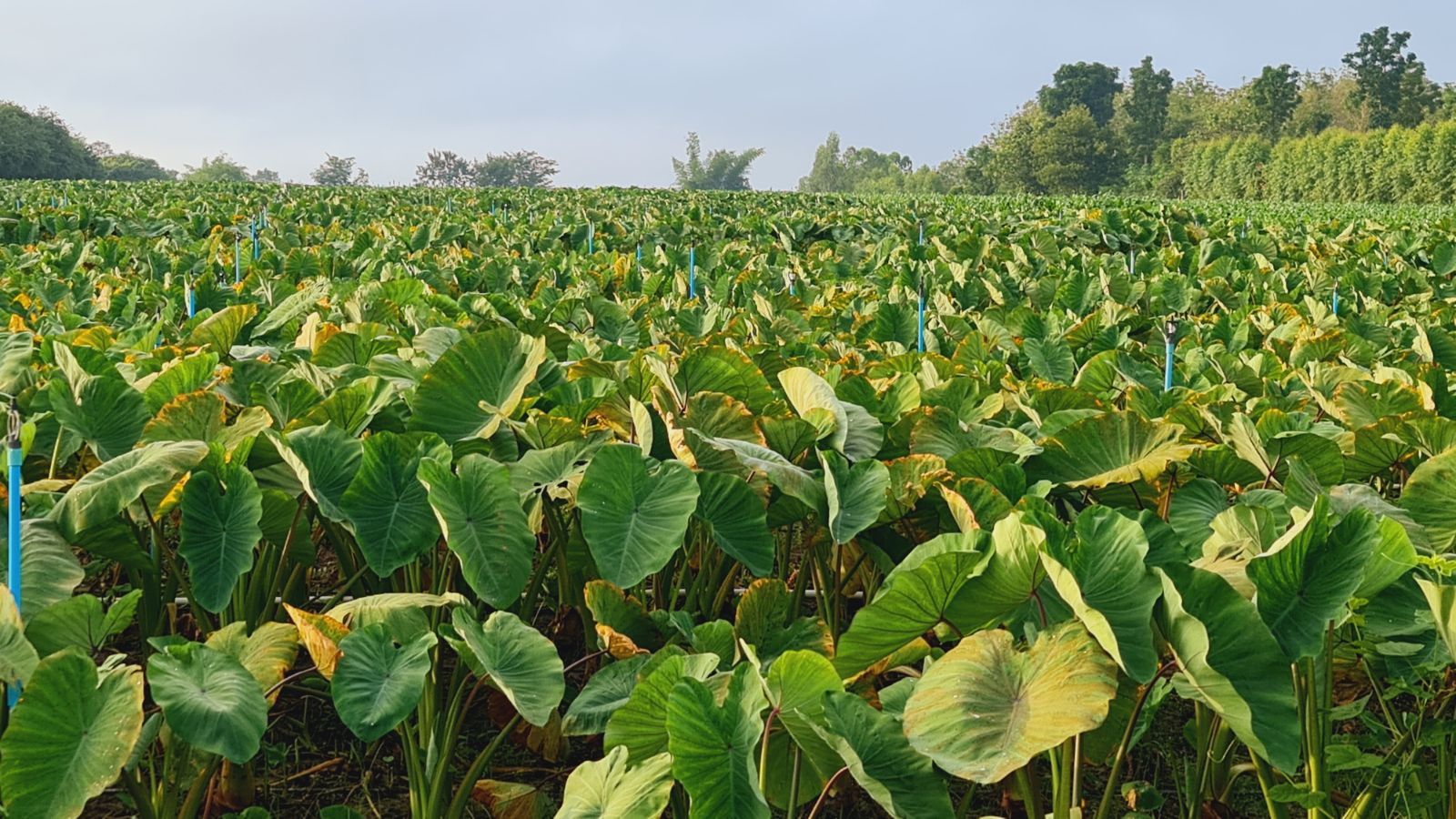
Colocasia esculenta prefers partial shade or dappled sunlight, and a roomy spot beneath a tree is ideal. When grown indoors, provide as much bright light as possible. This plant should also be protected from strong winds, as its large leaves are easily damaged.
Water
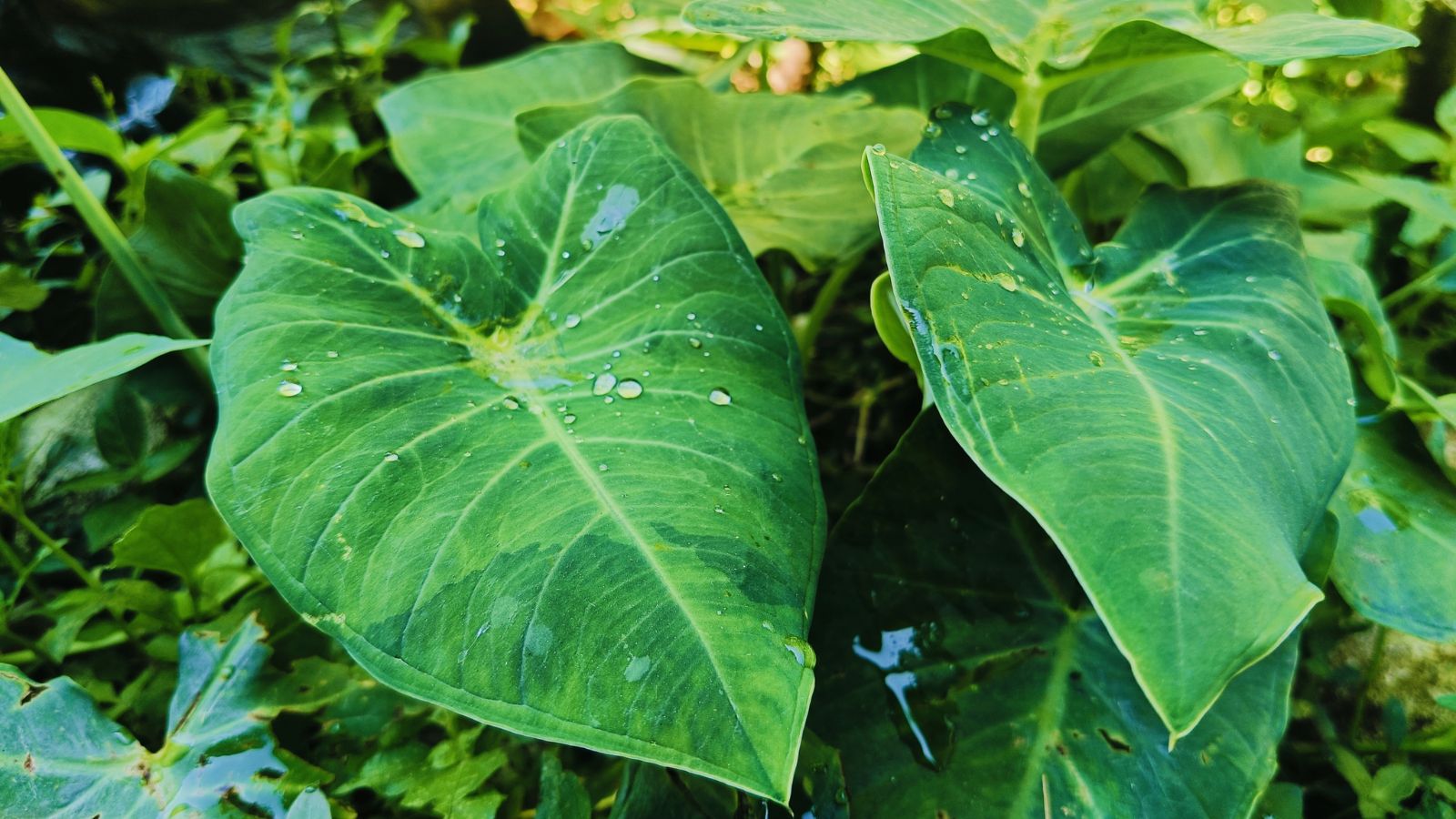
It is vital to never let the soil dry out. The taro plant can grow in up to six inches of water, so do not be shy with the watering can. This makes it an excellent choice for those hard-to-fill areas of the garden that flood frequently. During winter, however, keep the tubers dry so the plant can properly go dormant.
Soil
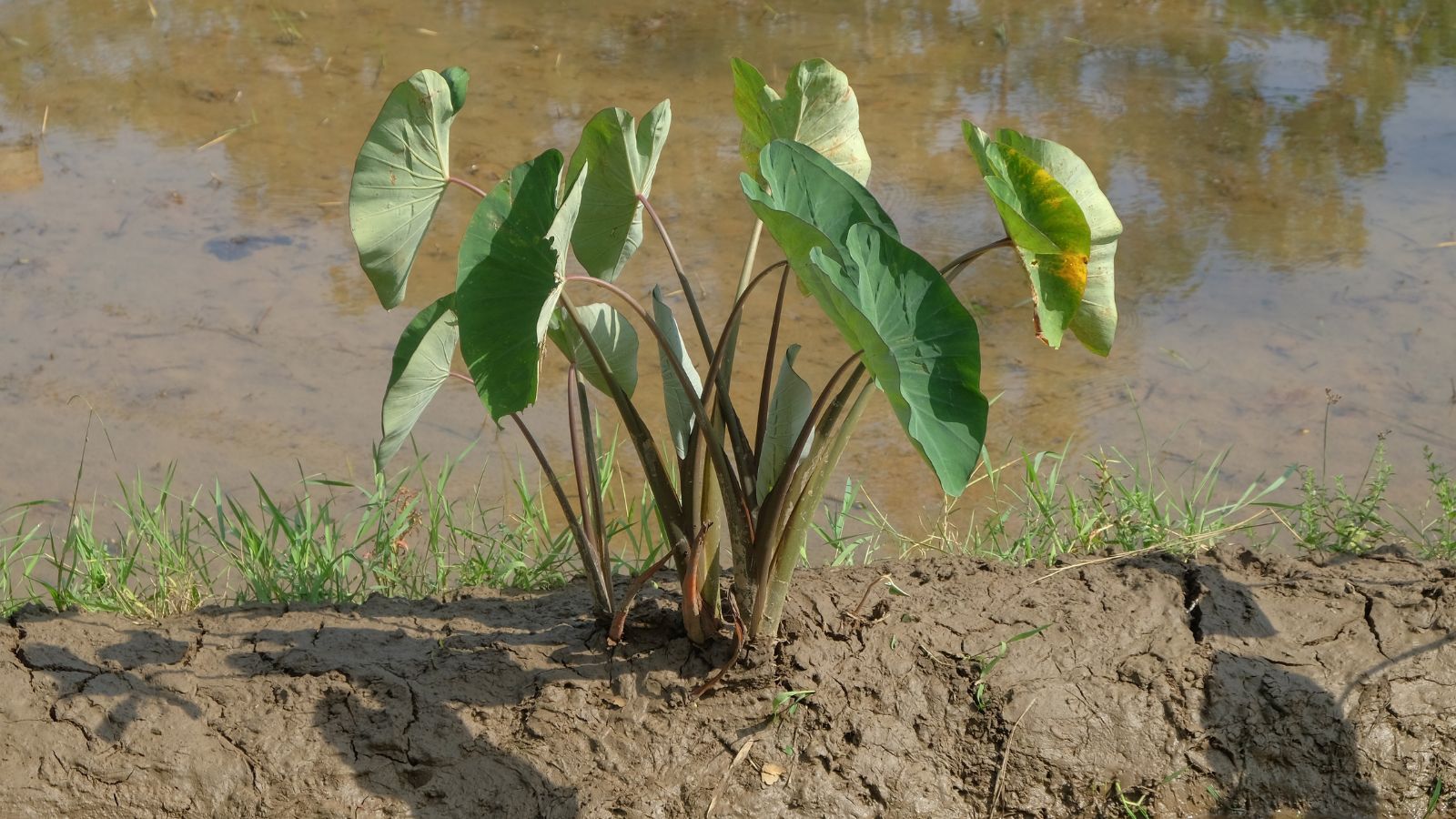
Colocasia esculenta grows best in wet soil, but that does not mean planting it in pure mud. Instead, choose a soil rich in humus. It should be highly fertile with a loamy texture that holds moisture well while still allowing excess water to drain so the roots do not suffocate. A slightly acidic pH between 5.5 and 6.5 is ideal for healthy taro growth.
Temperature and Humidity

The ideal temperature range is 77 to 95°F (25 to 35°C). Taro corms need at least 200 days of warm, frost-free weather to fully mature, so timing is important. If your plant is grown outdoors year-round, temperatures should remain above 45°F (7°C), as cooler conditions can negatively affect tuber development. Indoor taro plants should only be moved outside during the period between the last and first frost.
High humidity is also important for healthy growth. Indoors, a plant humidifier can help keep taro leaves thriving. You can also mist the plant occasionally with a spray bottle to provide extra moisture.
Fertilizing

Those huge leaves need plenty of nutrients to grow well. Along with fertile soil, regularly treat your elephant ears to a high-potassium fertilizer during the growing season. It is a good idea to test your soil beforehand, as excess nitrogen can lead to weak, overly lush taro plants with reduced structure.
Propagation
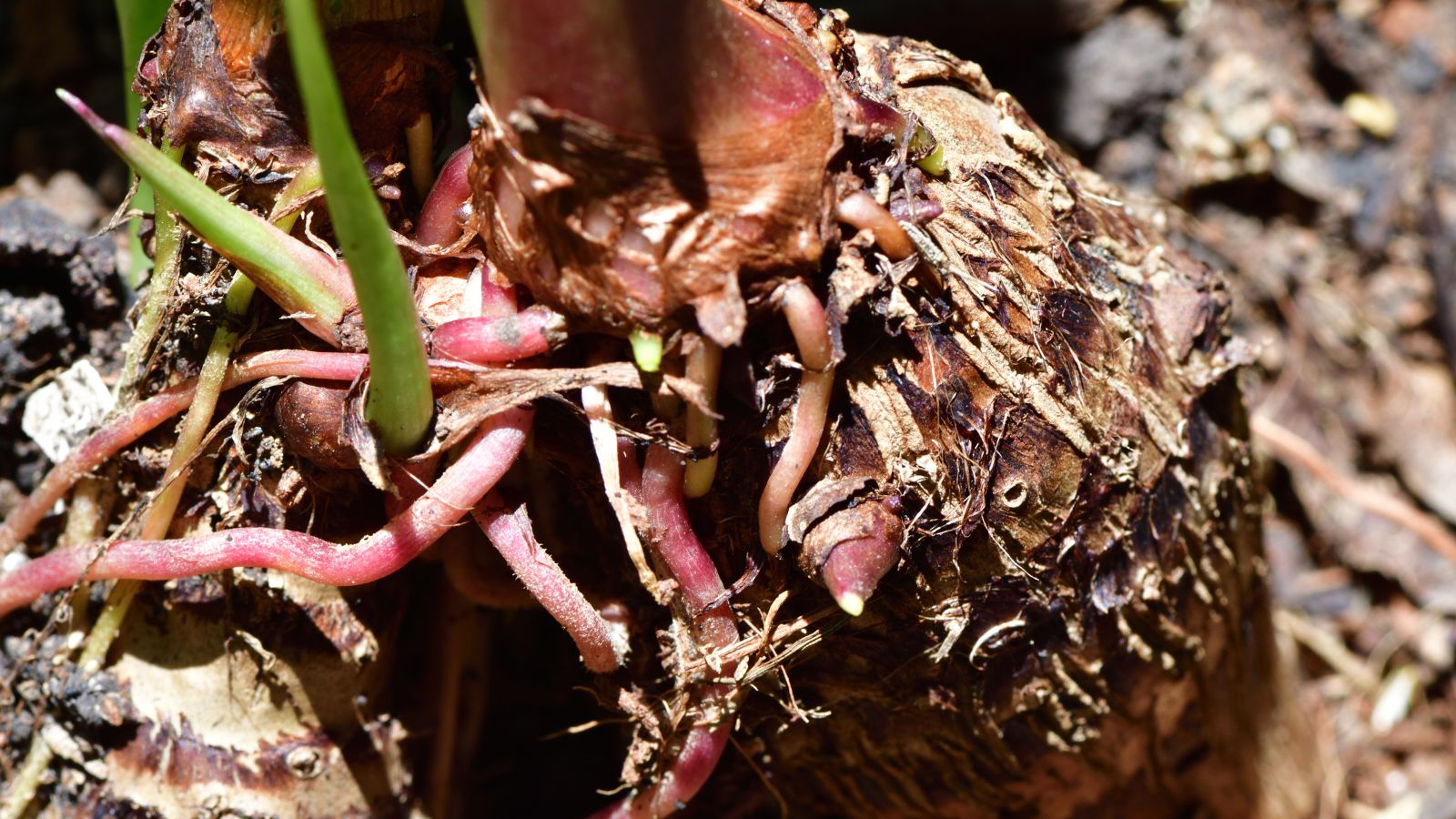
Because flowering is so unpredictable with this plant, division is the most reliable propagation method. Select a healthy taro plant and carefully dig up the entire plant. Gently brush the soil away from the roots to expose the main tuber. You will usually find smaller tubers growing off the main one. These can be snapped off by hand.
The smaller tubers should already have some roots and may even show a developing petiole. Plant each tuber directly into the ground or start them in a medium-sized container. If the main tuber and foliage are still healthy, you can replant the original tuber as well.
Harvesting
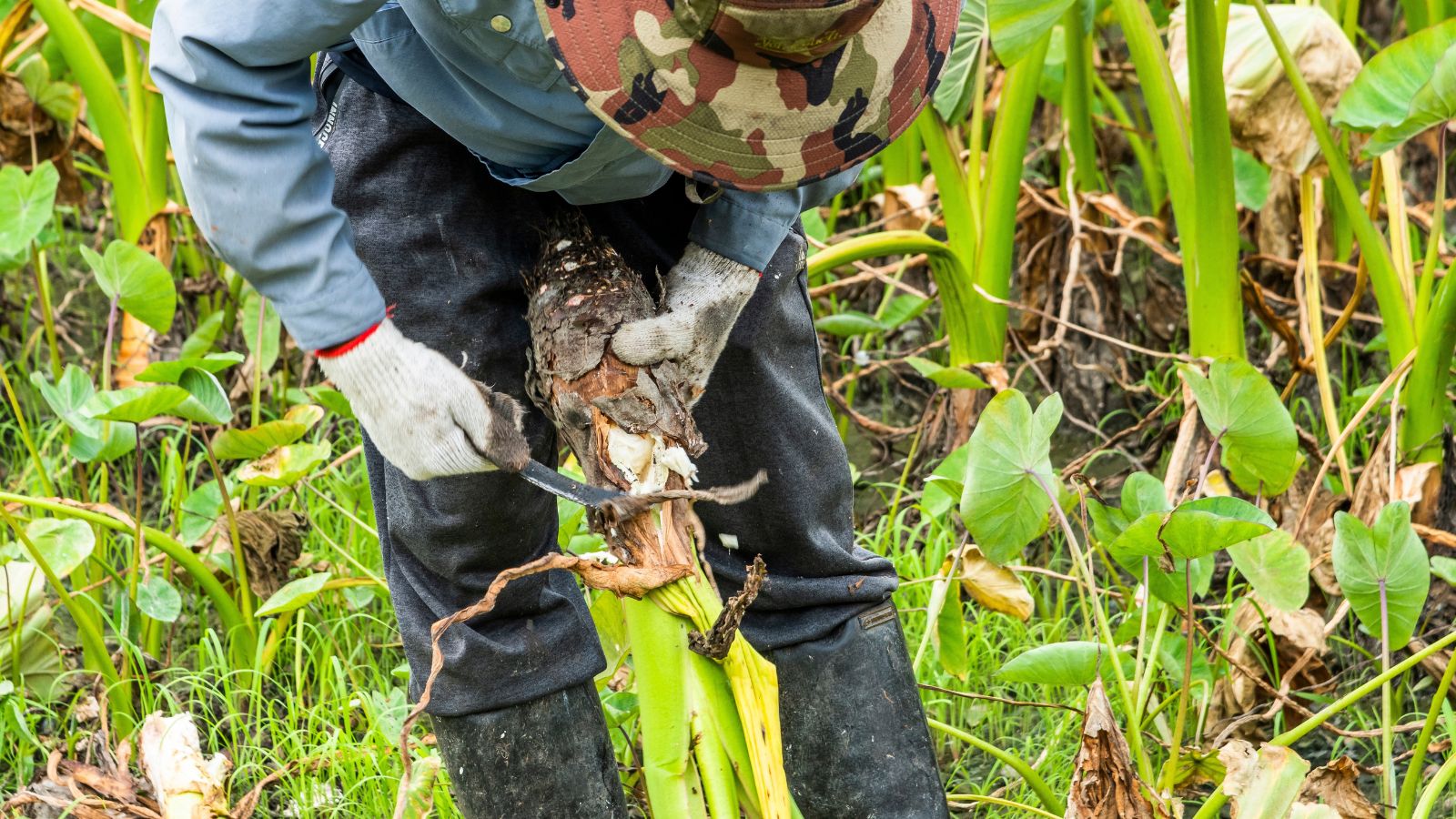
Some gardeners only grow elephant ear plants as decoration, but they are worth harvesting at least once. Here is how to turn that striking plant into a tasty dish.
When the plant reaches maturity, the taro leaves will begin to yellow and die back. This is your signal that the tubers are ready to harvest. That said, taro roots can remain in the ground until frost arrives, so there is no need to rush. Since tubers can only be harvested once, you will need to sacrifice the foliage and get your spade ready.
Lift the entire plant from the soil, cut off the leaves, and gently brush away excess dirt. You should find one large main tuber along with several smaller ones. The smaller tubers can be eaten or saved for planting the following year. Leaves can be harvested throughout the growing season, but do not remove more than one-third of the leaves from a single plant at a time, as this will limit its ability to photosynthesize effectively.
If you plan to overwinter the plant instead of harvesting it, cut back the leaves and leave the tubers in the ground. In suitable climates, they will sprout again the next spring. Gardeners in colder regions should lift all tubers and store them over winter in a cool, dry place such as a garage or shed. Temperatures should remain above 45°F (7°C) to keep the tubers viable.
Storing
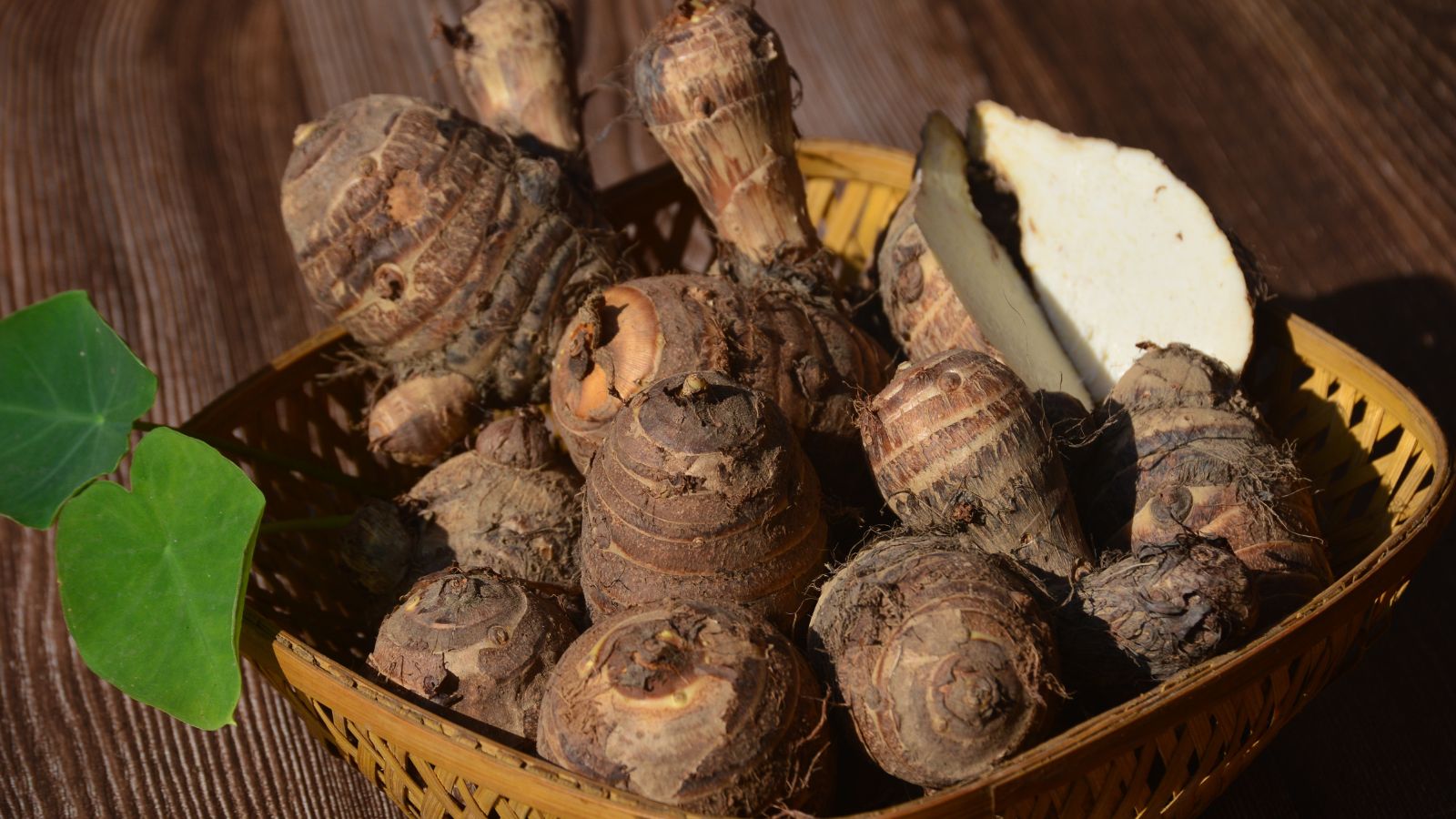
Unlike potatoes, taro softens quickly after harvest, so it is best eaten as soon as possible. Until then, store the roots in a dark, well-aerated place, not the refrigerator. Colocasia leaves should be washed and stored in the fridge, where they will keep for up to a week.
It is essential to cook all parts of the taro plant before eating them. The plant contains calcium oxalate just beneath the skin, which can irritate the skin, mouth, and throat, so wearing gloves while preparing taro is recommended. Taro can be baked, roasted, fried, or boiled, and is best eaten warm. It pairs especially well with coconut milk. Taro can be cooked much like a potato, although it does not mash as well.
Once cooked, taro root can be frozen. Blanching before freezing is recommended. Store the cooked taro in an airtight container in the freezer, where it will keep for up to a year.
Troubleshooting
Most Colocasia esculenta plants live their lives largely free of disease and pests. However, it is still important to stay alert for potential problems that can quickly damage plants and wipe out your harvest.
Growing Problems
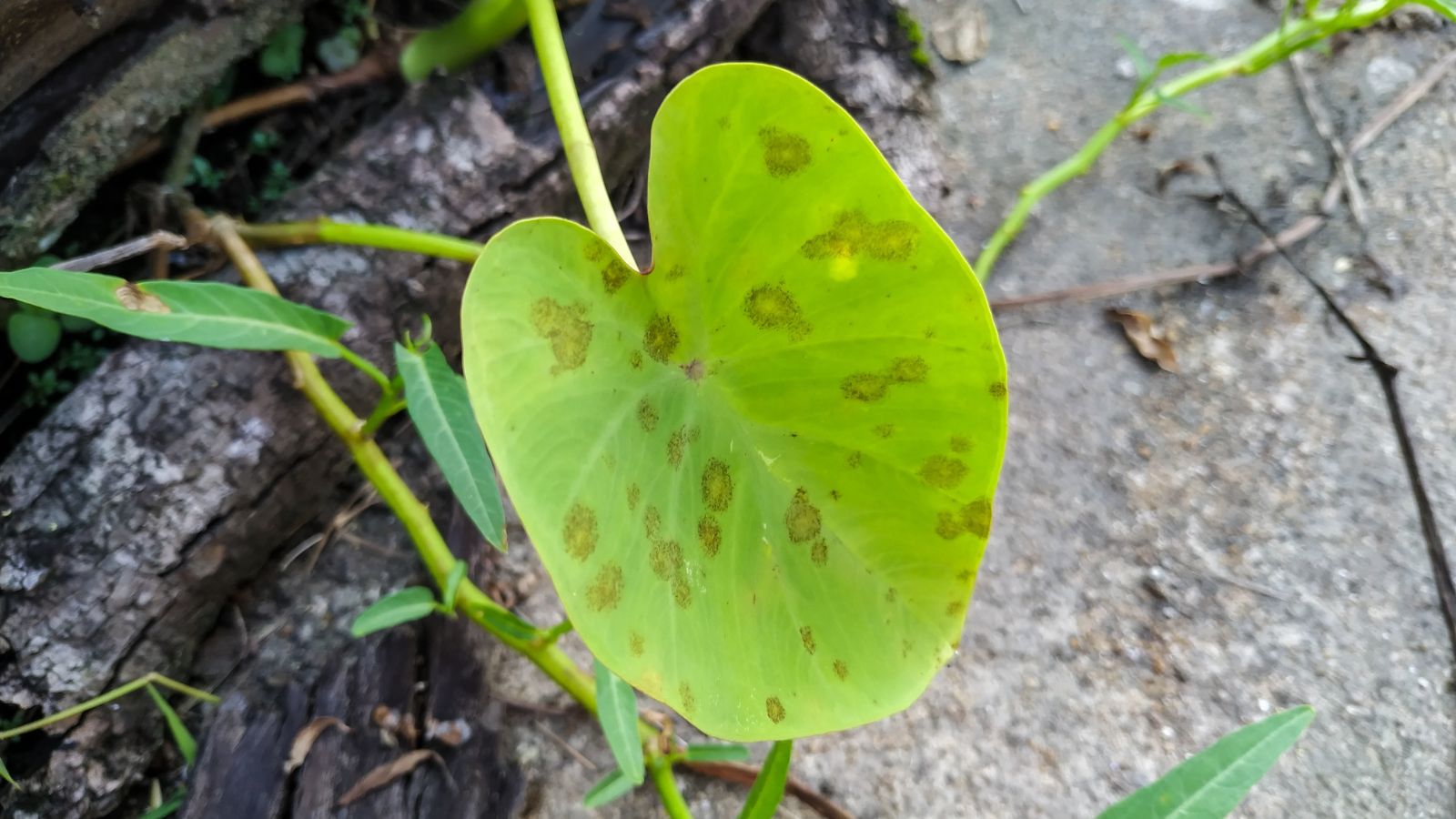
The worst thing you can do to Colocasia esculenta is stress it. Infrequent watering, inconsistent fertilization, or fluctuating temperatures can significantly impact the plant’s growth and overall health. The result may be a reduced harvest along with an increased risk of pest and disease issues.
Creating a consistent schedule for watering and fertilizing, and keeping taro in a location with reliably warm temperatures, will go a long way toward keeping plants healthy.
Underwatering causes the leaves to wilt and curl. Overwatering, on the other hand, can leave the plant soft and weak, creating ideal conditions for pests and disease. Adjust your watering routine as needed to maintain evenly moist, but not stagnant, soil.
Pests

Spider mites can be especially troublesome for taro, particularly when plants are grown indoors. These tiny arachnids spin ultra-fine webs on the leaves and feed on plant sap. They are most common in hot, dry conditions. Simple control methods include blasting the plant with water or applying neem oil. More stubborn infestations can be managed with a pyrethrin-based insecticide.
Root knot nematodes are a common issue in commercial taro cultivation and can also occur in home gardens. These parasitic roundworms feed on the roots, causing plants to yellow, weaken, and stop growing altogether.
Nematodes can be difficult to control organically, as many nematicides also kill beneficial soil organisms. A better approach is to apply beneficial nematodes, which actively seek out and destroy root knot nematodes in the soil. You can also reduce the risk of nematode damage by rotating crops and promptly removing dead or infected plants from the garden.
Diseases
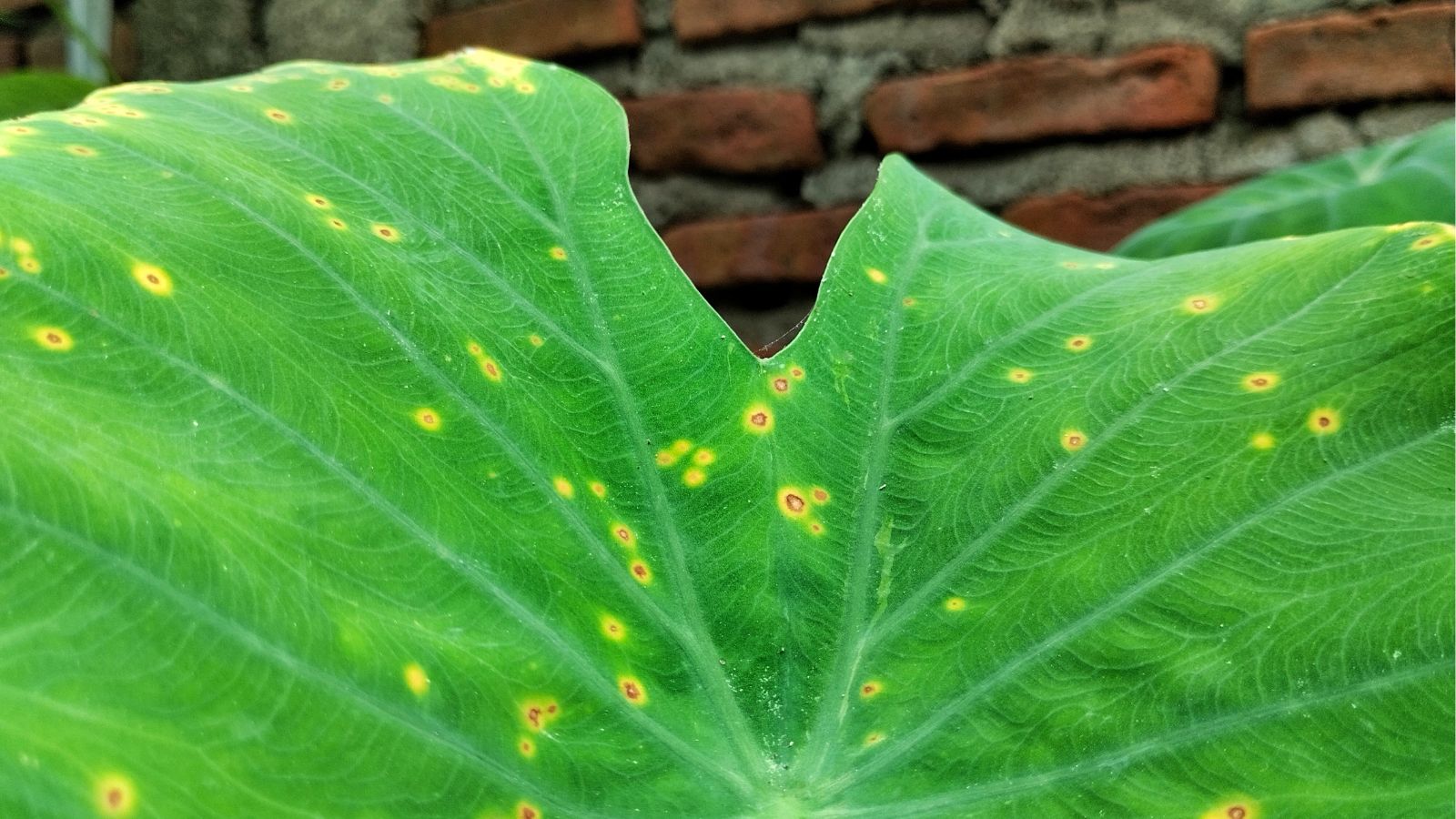
Phytophthora blight is the disease you are most likely to encounter. It causes water-soaked lesions that lead to rotting tissue, sometimes accompanied by fuzzy growth. If left untreated, leaf blight can eventually cause the entire plant to collapse. Prevent this disease by keeping the foliage dry and avoiding overhead watering. Leaf blight can be managed with weekly applications of copper fungicide.
Pythium is the pathogen responsible for corm rot. It is most often triggered by consistently soggy soil conditions. This makes it particularly challenging to control, since taro prefers very moist environments. Once established, this disease cannot be cured, so prevention is essential. Avoid stagnant water, choose resistant cultivars when possible, and only plant corms that are confirmed to be disease-free.
Downy mildew appears as yellow or brown dust-like growth on the foliage. Like the other diseases mentioned, it thrives in humid conditions and can cause serious damage if ignored. As the infection progresses, downy mildew produces spores that spread easily to nearby plants and can eventually affect an entire garden. Treat outbreaks as soon as they appear using neem oil or copper fungicide to limit further spread.
Frequently Asked Questions
Are taro plant leaves edible?
Yes, but they must be cooked first. They’re often used like spinach.
Are elephant ears and taro the same thing?
Sort of. Elephant ears are an entire series of different plant species, all of which have large leaves. We’ve got an in-depth article that covers a wide variety of elephant ear plants, so if you’re looking for the ornamental varieties like alocasia, you can read that too!
Is taro healthier than potato?
Taro actually does have more nutrients than your average potato. It contains more fiber and potassium as well as Vitamins B, C, and E.