The Best (and Worst) Sweet Potato Companion Plants
Picking the right sweet potato companion plants can really help your gardening efforts. If you want to maximize your growing space and manage pests and diseases with ease, join gardening expert Sarah Jay as she shares the best and worst companion plants for your sweet potatoes.

Contents
Companion planting is an age-old gardening practice that can help your space thrive when used thoughtfully. By weaving helpful partner plants into your beds, you create a more balanced system that boosts overall growth and resilience. Sweet potato companion plants are some of the most interesting examples of how this strategy works.
Sweet potatoes are prolific, fun, and easy to grow, and there are plenty of plants that pair well with them. Whether you are planning your spring garden or already have sweet potatoes in the ground, the right companions can make a noticeable difference.
Some companion plants supply nutrients that support vigorous sweet potato growth, while others help strengthen the plants’ natural resistance to insect pests. As you explore these useful companions, you will get a clearer sense of what sweet potatoes need to thrive. It is surprising how much of a difference the right plant partners can make.


What Is Companion Planting?

When I think of companion planting, I immediately think of the Three Sisters, a Native American regenerative agriculture practice that has been used for centuries.
Beans, corn, and squash are grown together in a mutually supportive system. Corn provides a natural pole for beans to climb. Beans add nitrogen to the soil, helping squash and corn develop strong roots. Squash spreads along the ground, suppressing weeds and improving pest resistance. Together, they create healthier plants and even enhance one another’s flavor.
The Three Sisters is a simple illustration of a much more complex process. Vegetable gardens that incorporate thoughtful companion planting often have stronger harvests. Some companion plants lure pests away as trap crops, allowing nearby vegetables to grow undisturbed. Others attract beneficial insects that help control pest populations. Certain companions even enhance flavor by adding micronutrients to the soil.
Ground covers block out weeds while maintaining a steady flow of nutrients, and taller plants offer shade for crops that prefer part sun. Fast-growing varieties can also help mark and border planting areas, guiding where new crops should go.
Many gardeners use companion planting for any or all of these reasons. The result is higher yields and plants that naturally support one another. With so many benefits, why not include a few helpful companions in your sweet potato garden?
The Best Sweet Potato Companion Plants

Sweet potatoes are prolific and fun to grow. Pair them with the right companion plants, and you will not only enjoy more plentiful, better-tasting sweet potatoes, but you will also add more variety to your garden. The sweet potatoes give back to their companions too, creating a healthier, more balanced growing space overall.
Herbs
Herbs are great plants for sweet potatoes, principally because they enjoy sandy soils. Warm soil-loving herbs are especially good companions for sweet potatoes.
Thyme

This herb is an excellent companion for sweet potatoes because it attracts beneficial insects like hoverflies, which feed on the aphids that steal sap and nutrients from sweet potato vines. Sweet potatoes and thyme also pair beautifully in the kitchen, and thyme is a versatile perennial herb that complements many dishes.
If you plant a creeping variety, be sure to keep it contained so it doesn’t take over valuable sweet potato space.
Dill

Dill is a great companion for many vegetables, and it is especially helpful for sweet potatoes because it repels problem insects. Like thyme, dill deters aphids, and it also helps keep spider mites away. Spider mites can be devastating to nearly any plant, so having dill nearby offers valuable protection.
As a bonus, dill is a host plant for swallowtail butterflies, which are beneficial pollinators you definitely want in your garden.
Oregano

Oregano is an insect repellent companion plant that also provides helpful ground cover around your vine. Because it can spread quite aggressively, it is best used as a border around the area where you are growing sweet potatoes rather than in the same bed. Let the oregano suppress grass and weeds while your sweet potato vines thrive.
Alliums

Onions, including green onions, are excellent companion plants for sweet potato vines. Their compact growth habit makes them easy to tuck into the garden, and their strong scent helps repel pests.
Insects like the Colorado potato beetle avoid the pungent aroma of onion leaves, giving your sweet potatoes a layer of natural protection. Other alliums, such as scallions, provide the same benefits.
Chives and spring onions also work well as companions, acting as a border between vine patches while deterring pests. Very few insects enjoy chewing on spicy allium leaves. Keep in mind that alliums can suppress the growth of legumes, so if you are also planting legumes as sweet potato companions, make sure to place them away from any alliums.
Greens

Spinach and small lettuces make excellent ground cover for your sweet potato crop. They also work well as cover crops, helping prevent soil erosion. Vegetable gardens feel more complete with a healthy supply of greens, and in this case, more greens can mean better sweet potatoes.
Spinach draws excess nutrients from the soil that might otherwise slow sweet potato vine growth. Lettuce has similar qualities and provides low, dense cover that suppresses weeds and builds soil biomass.
Legumes

Great sweet potato companion plants like pole beans help enrich the soil by fixing nitrogen. As sweet potatoes form, they draw nitrogen from the ground, and pole beans replenish it, supporting steady tuber development.
Peas offer the same benefit. You can even grow pole beans and peas as a succession planting, letting them mature and die back before planting sweet potatoes. The mulch they leave behind enriches the soil and provides the nitrogen sweet potatoes need for healthy leaf growth and photosynthesis. Peas can also offer a bit of shade, protecting sweet potato leaves from intense summer sun.
Root Crops

There are plenty of root vegetables that grow well alongside sweet potatoes. Parsnips help fill space in the garden and naturally break up compacted soil. Just be sure to plant sweet potatoes near parsnips rather than in the same bed, since parsnips grown too close can inhibit tuber development.
Beets and radishes also loosen the soil, and their shallow roots are less likely to interfere with vine or tuber growth. All of these root crops help deter potato bugs as well.
Regular potatoes can work as companions, since they are reliable staples that pair well in the kitchen. They can grow in the same bed, but it is often better to give them separate spaces because they share many of the same diseases. Planting them apart frees up room for both types of tubers to thrive.
Horseradish is one of the best companion plants for sweet potatoes. It helps boost disease resistance in nearby crops and keeps potato beetles away from the sweet potato’s light orange flesh. Plus, horseradish has an intense, spicy flavor that is great in dips and pickles.
Flowers

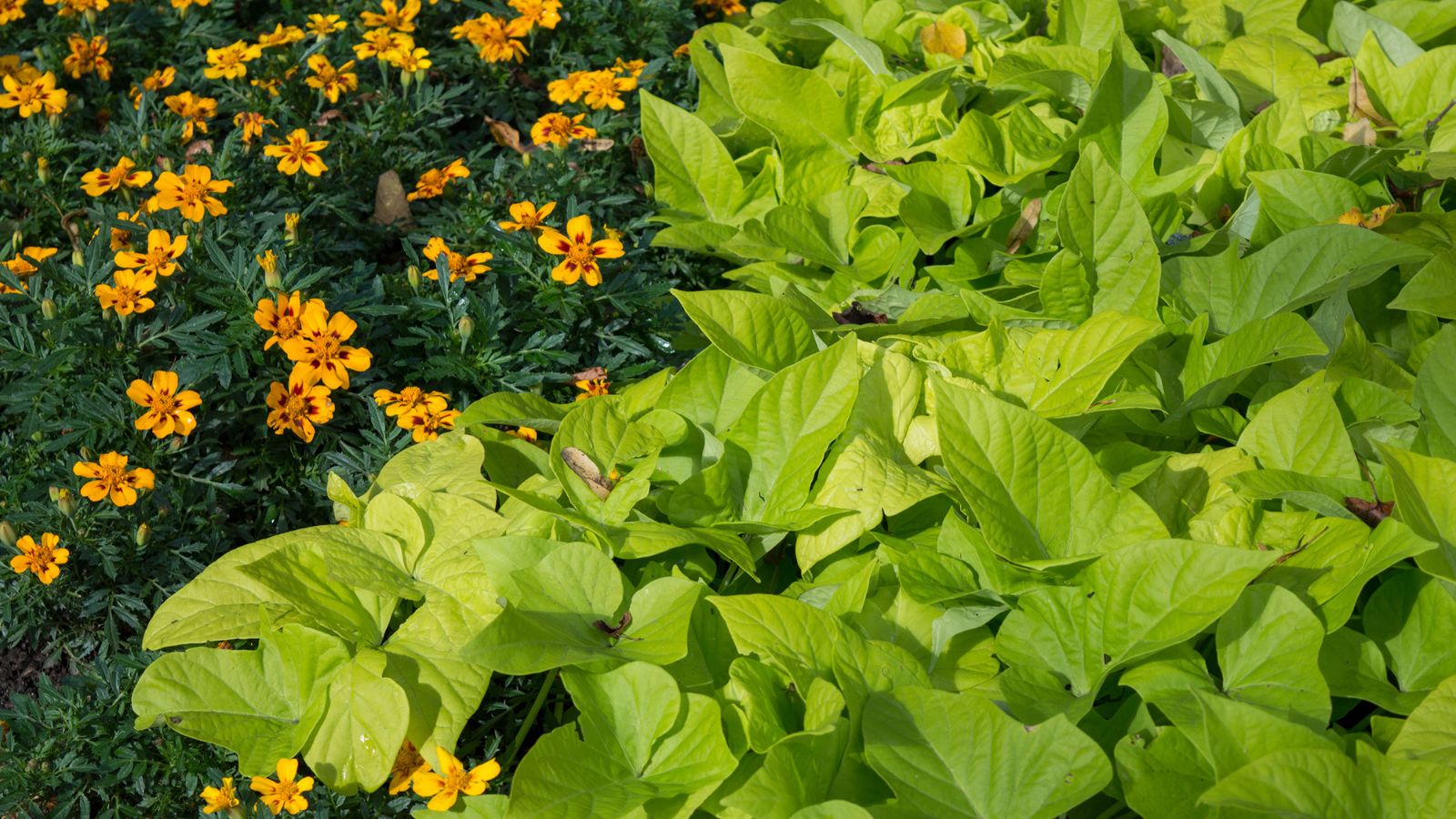
In general, flowers are excellent for attracting beneficial insects and trapping or repelling pests. Marigolds are among the best known for this, widely used in companion planting because they naturally deter many harmful insects.
Plant them as borders around your sweet potato vines along with other flowers and herbs. They help repel potato beetles, flea beetles, and nematodes, and they also add bright, vibrant color to the garden. Marigold petals are even edible and great in salads.
Nasturtiums are another useful and edible companion. Their yellow, orange, and pink flowers have a zesty flavor and bring both color and pollinators to the garden in spring. They also act as trap crops, pulling aphids away from other plants. Nasturtiums pair well with many vegetables, not just sweet potatoes, and they can even form a helpful border between sweet potatoes and regular potatoes.
Sweet alyssum is a wonderful ground cover that attracts beneficial insects, especially those that feed on aphids. Many growers swear by alyssum in companion planting, and it is often used in fruit tree guilds. It spreads gently, suppresses weeds, and offers reliable pest control.
Yarrow is another great companion plant for sweet potatoes and a useful plant for you as well. It attracts lacewings, which prey on aphids, spider mites, and flea beetles. You can also harvest the flowers for tea, add them to arrangements, or enjoy their chamomile-like flavor in cakes and sweet treats.
Shade-Bearing Plants

Corn grows tall enough to cast gentle shade over sweet potato vines, protecting them from intense sun and the warm weather that can scorch leaves. Planting corn among a large bed of sweet potatoes creates the kind of dappled shade that helps the vines thrive.
Another interesting companion for sweet potatoes is the banana tree. It offers the same cooling shade during high temperatures when warm soil can become too hot. In return, sweet potatoes act as a living ground cover for banana trees, helping conserve soil moisture and suppress weeds.
What Not To Plant With Sweet Potatoes

Although sweet potatoes are fairly easy to work with in companion planting, there are a few plants you should keep out of the sweet potato garden. Sometimes the issue is structural, with roots that interfere with one another, and other times it comes down to biochemical interactions that hinder growth.
Squash of any kind are poor companions for sweet potatoes. Both summer and winter squash, along with sweet potato vines, are vigorous growers that take up a lot of space. Even if one is trellised and the other trails along the ground, they will still compete heavily for nutrients. Sweet potatoes need as much ground room as possible, and unless you are bordering with aromatic herbs, it is best to avoid other sprawling vines entirely.
Sunflowers are also not ideal for sweet potatoes because they encourage potato blight. They take up a considerable amount of root space too, leaving less room for sweet potatoes to form the plump orange tubers you are growing them for. Choose other flowers mentioned earlier for pest control and pollinator support instead.
Tomatoes pose similar problems. They share many of the same diseases as sweet potatoes, including potato blight, and the two together tend to encourage these issues rather than suppress them. If you want to grow tomatoes in the same season, place them on opposite sides of the garden, or grow one crop in the ground and the other in a container well away from it.
Sweet potatoes also struggle with plants that like the same growing conditions. Pole beans make great companions, but bush beans do not because they occupy space in the same way sweet potatoes do. Bush beans and sweet potatoes will end up competing for room and nutrients, lowering yields across the board. If you want to grow beans as companions, stick with pole beans that climb rather than sprawl.
Frequently Asked Questions
Can you plant anything with sweet potatoes?
Not necessarily. Because sweet potatoes tend to take up a lot of space, other vining plants may not be suitable companion plants. Check the lists above to see which are best, and which to avoid.
Can you plant tomatoes with sweet potatoes?
You can, but you probably don’t want to. Tomatoes can easily transfer disease to your sweet potato vine. Instead, place tomatoes elsewhere in your garden or grow them in a container away from sweet potatoes.





