How to Plant, Grow, and Care for Society Garlic
Society garlic is a garlic-scented, almost garlic-flavored bulbing plant... but it's not really garlic. The beautiful flowers make them worth growing alone, but the leaves and flowers are also edible! Learn how to grow it in this complete beginner's guide.

Contents
Do you enjoy growing edible perennials? Maybe you love garlic chives for their flavor and ability to attract pollinators. Or perhaps you want to add a pop of color to an herb garden. If that sounds like you, society garlic is worth growing.
Society garlic (Tulbaghia violacea) makes a versatile addition to gardens with a wide range of planting styles. Wildcrafters use the leaves and flowers in salads, much like wild garlic. Fans of regenerative gardening value the plant for its hardy, tuberous roots, which tolerate a wide range of soil types.
Society garlic rarely attracts pests or disease-causing pathogens. It thrives in bright sunlight and hot weather. Unlike true garlic, it does not cause bad breath when eaten. Although it loves summer conditions, it is also winter hardy, allowing for a long growing season.
So what sets society garlic apart from traditional garlic bulbs? And how do you grow and care for it successfully? Read on to discover just how easy society garlic is to grow.


Quick Care Guide

|
Scientific Name
Tulbaghia violacea
Days to Harvest
14 to 21 days to sprout, then one to two years to harvest
Light
Full sun to partial shade
Water
1 inch per week
|
Soil
Light, sandy, moderately fertile
Fertilizer
Add compost once per year in spring
Pests
Aphids, whiteflies
Diseases
Root rot
|
All About Society Garlic
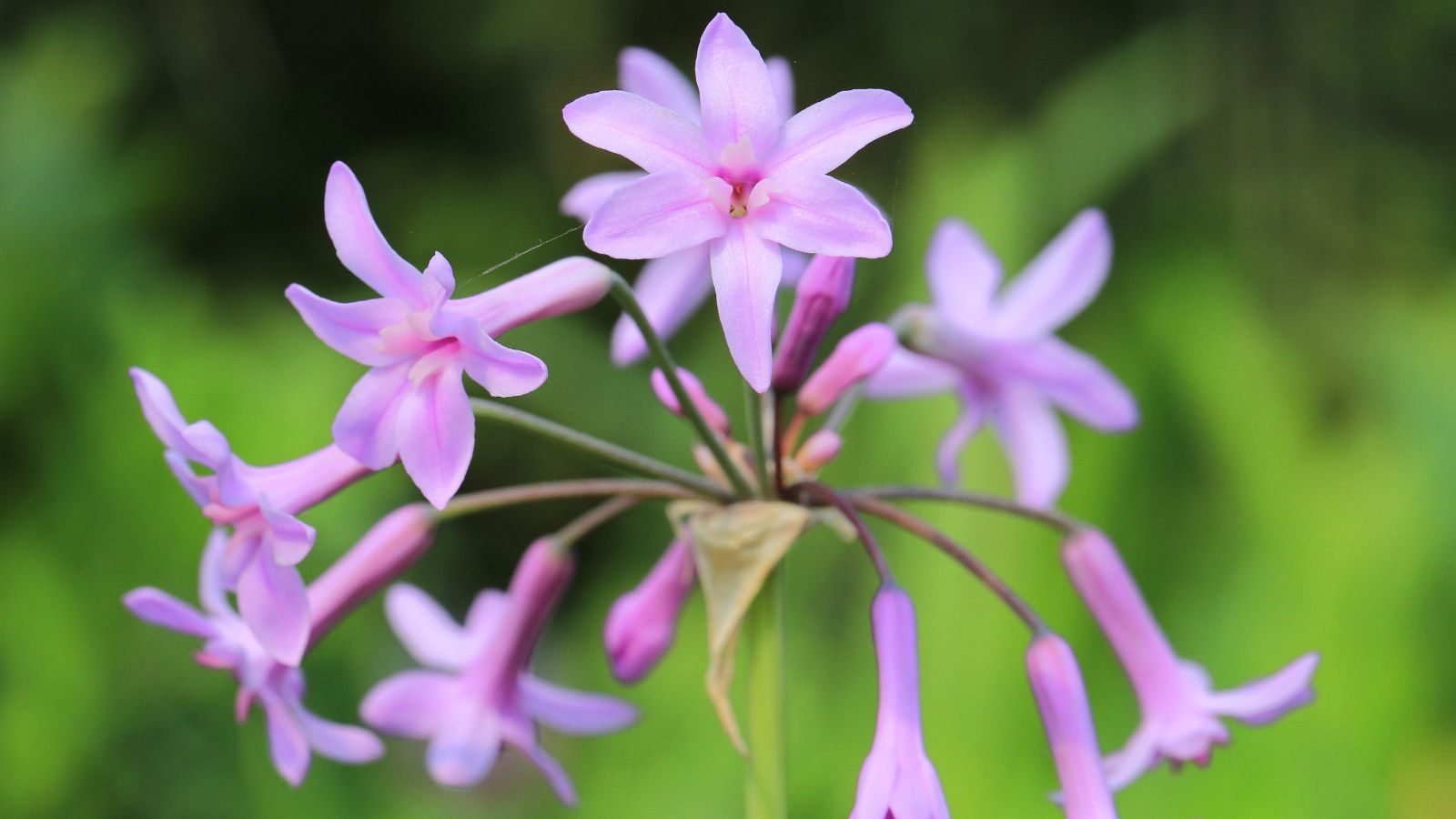
Society garlic, Tulbaghia violacea, is also known as pink agapanthus, spring bulbs, and sweet garlic. The common name society garlic refers to its ability to add garlic-like flavor to dishes without causing bad breath.
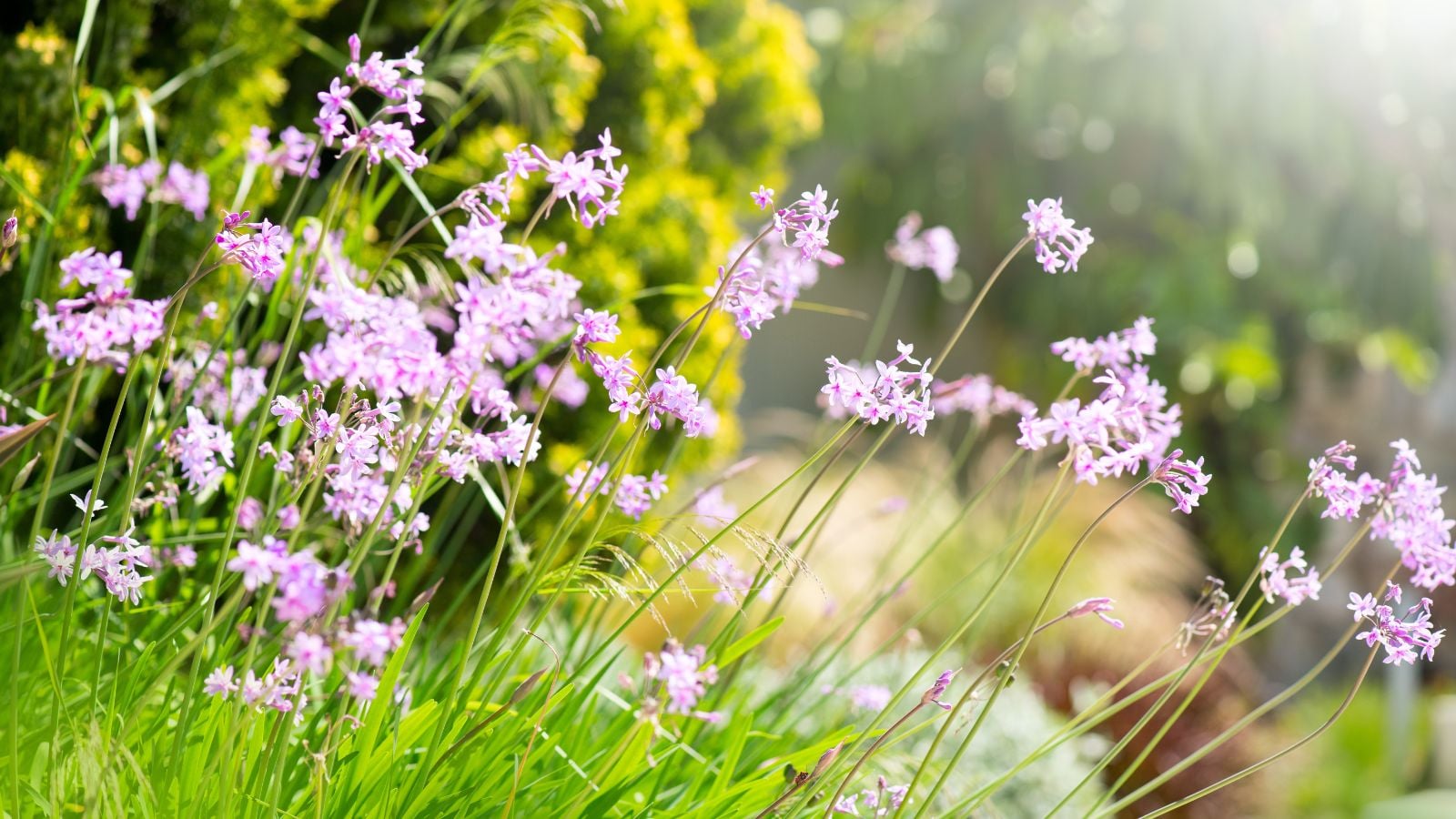
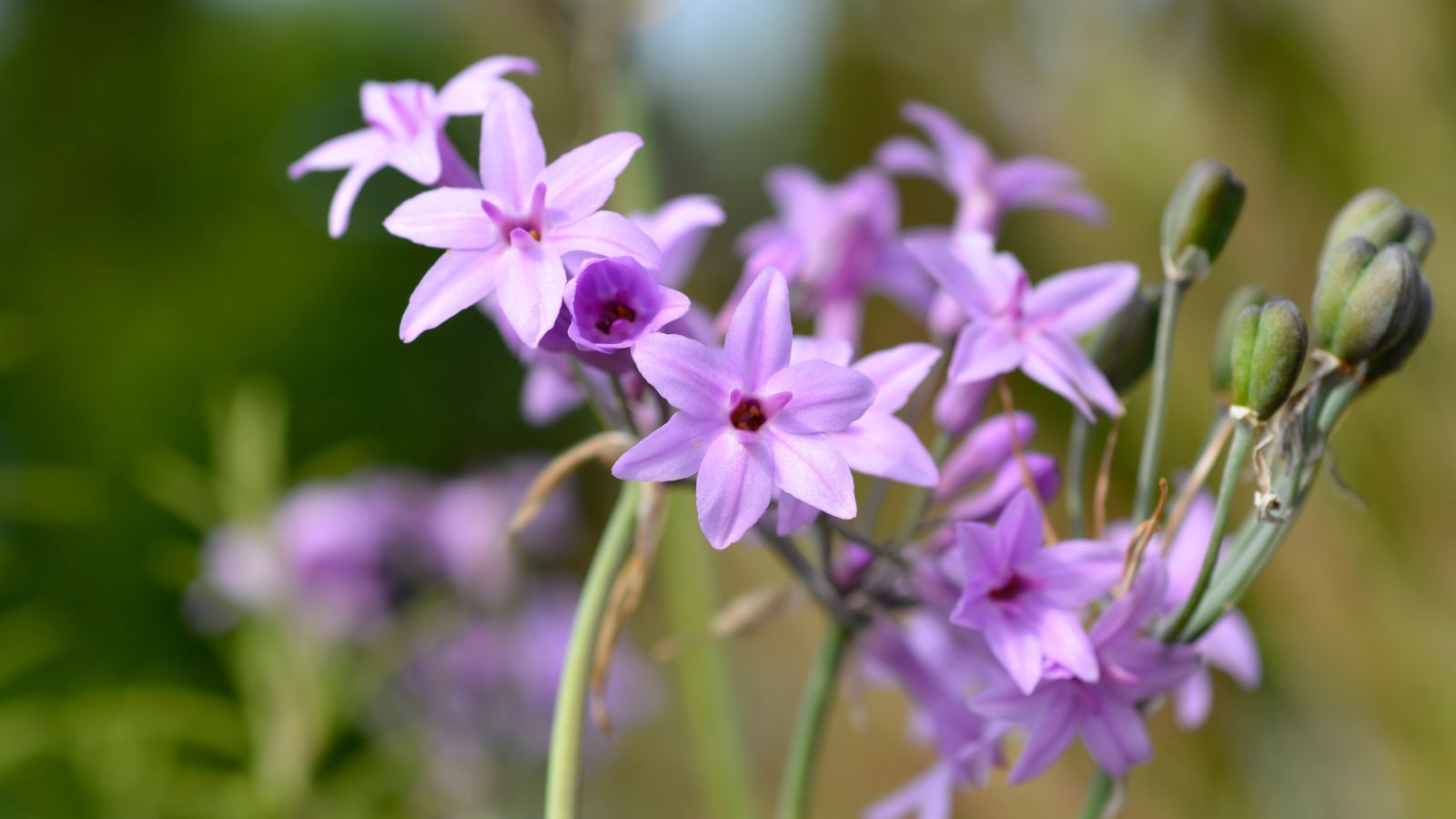
This clump-forming herbaceous perennial is native to South Africa and has also naturalized in Tanzania and Mexico. In the United States, gardeners recognize society garlic for its dense clumps of green, strap-like foliage topped with fragrant, sometimes pungent, lavender-colored flowers. The flowers grow in clustered, tubular forms, with colors ranging from white to pink to purple. Some cultivars produce bi-colored blooms in shades of purple and white.
The tuberous roots must establish before you can harvest and use the flowers. Interestingly, eating society garlic does not result in lingering garlic breath, even though the lavender-pink flowers can smell quite strong in hot summer conditions. Once established, this clump-forming perennial can thrive for at least three years. Flower stalks rise above the foliage and can reach up to three feet tall, with clusters of tubular flowers. Each bloom has six petals that sit above narrow, arching leaves.
Society garlic is not true garlic, although it belongs to the same family as garlic and onions, the Amaryllis family. It also shares its genus with other tuberous South African plants that have a similar growth habit.
People in Africa have long used society garlic tubers for medicinal purposes to treat a range of ailments. Zulu communities in KwaZulu-Natal use the plant to season meat and potato dishes and often plant it around homes as a traditional method to deter snakes. The genus name Tulbaghia honors Rijk Tulbagh, a governor of the Cape of Good Hope in South Africa during the 1700s.
Types of Society Garlic
Here are a few varieties of society garlic, each with slightly different characteristics.
Silver Lace
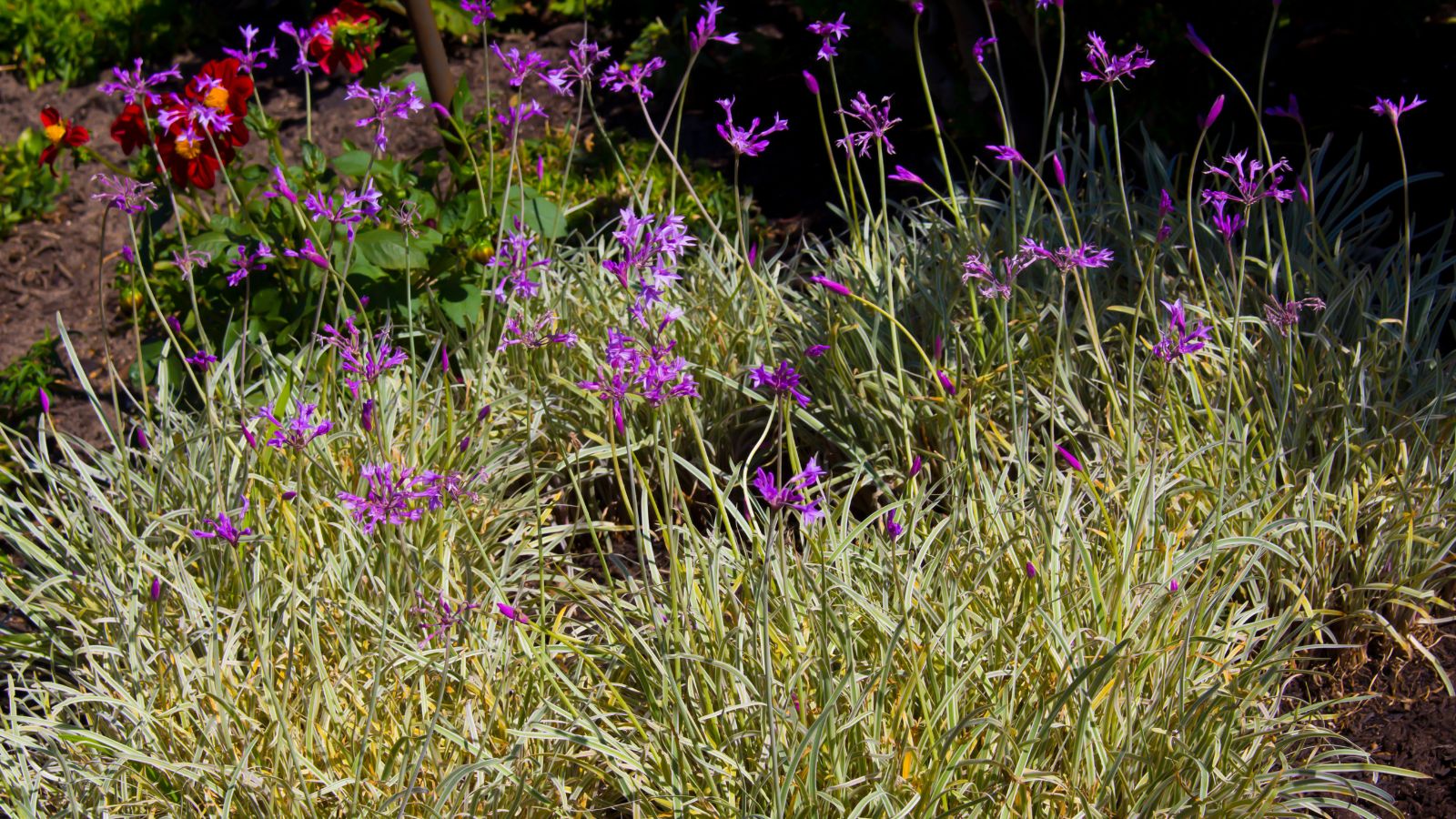
This variety has clumping white and green narrow leaves with lavender blooms that reach up to three feet and open in spring. They die away in summer. It’s a great companion plant for hyssop.
Variegated
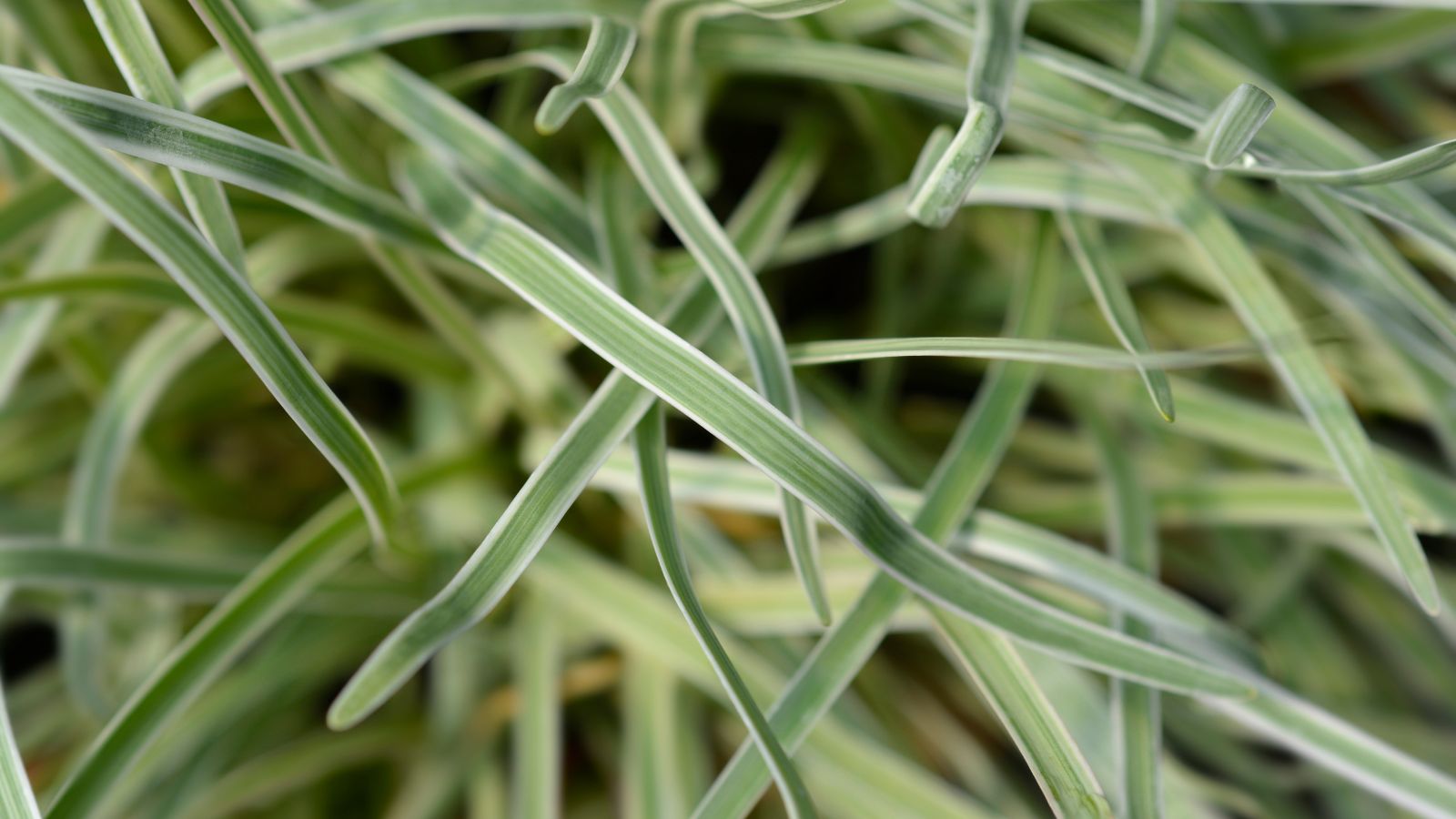
This species is similar to silver lace, but blooms into fall. Its lilac flowers reach up to two feet tall and are known for their deer resistance.
Tricolor
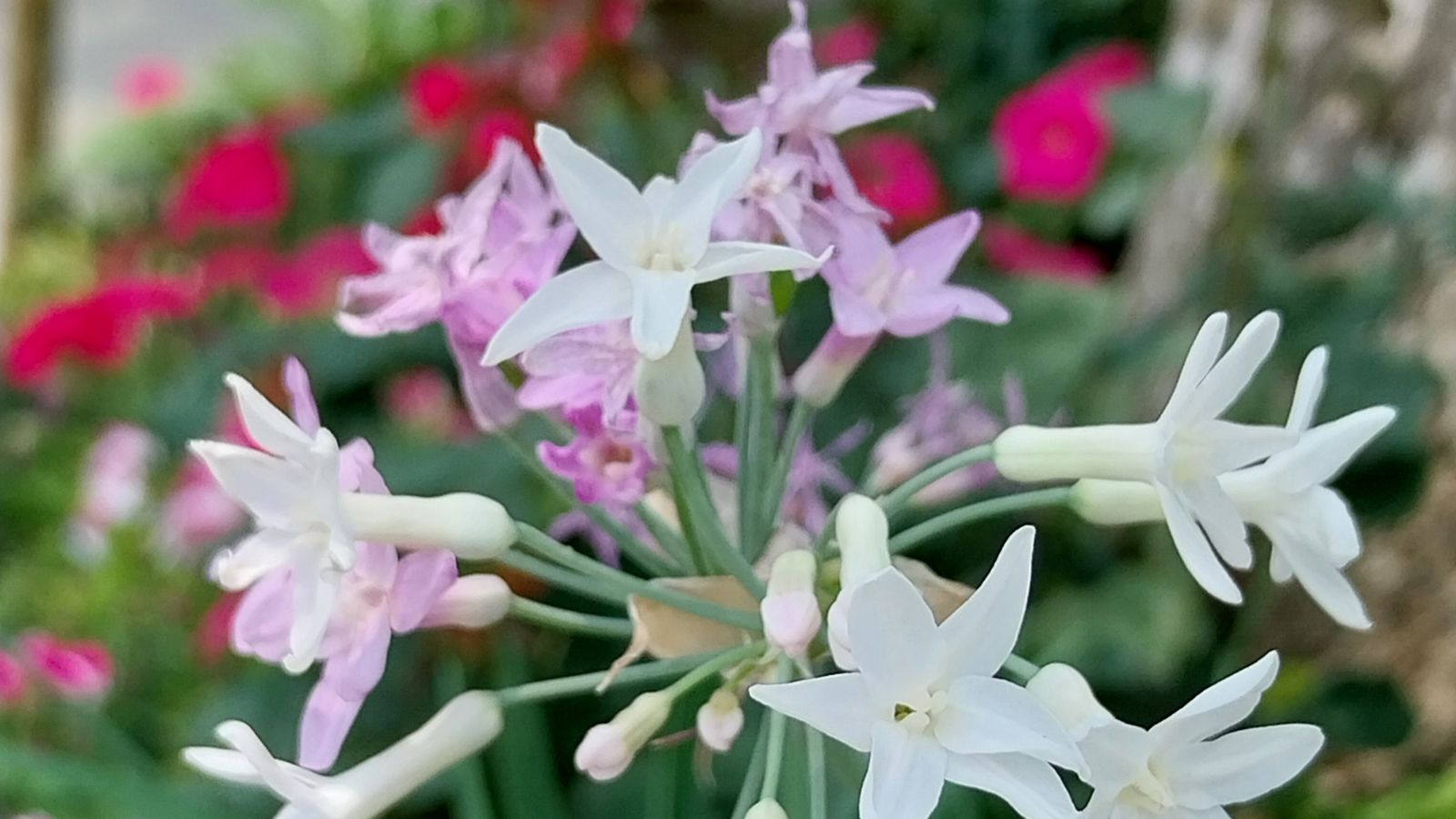
Another variegated species, which is topped with white, pink, and purple flowers that open in early spring. With flowers, this plant is two feet tall.

Planting
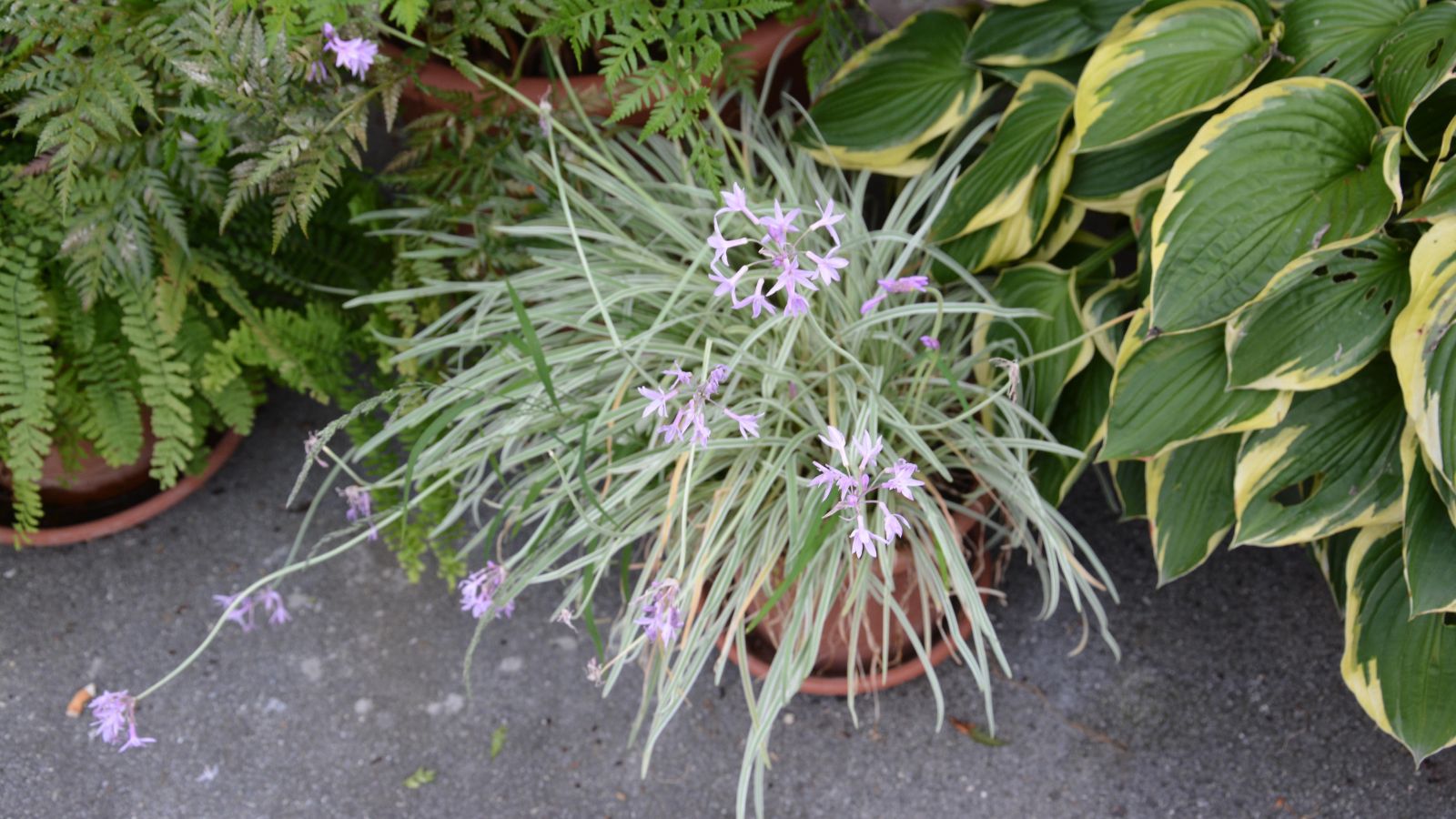
Plant society garlic in spring in a location that receives full sun to partial shade. Choose a site with lightly fertile, sandy soil, either in the ground or in containers. You can direct sow seeds or transplant mature tubers at this time.
Because society garlic grows from tubers, it performs well in containers that are large enough to support root development. Use pots that are at least eight inches deep to allow adequate space for healthy growth.
How to Grow
Once society garlic is established, there isn’t much you need to do. Let’s cover the foundations of caring for society garlic.
Light
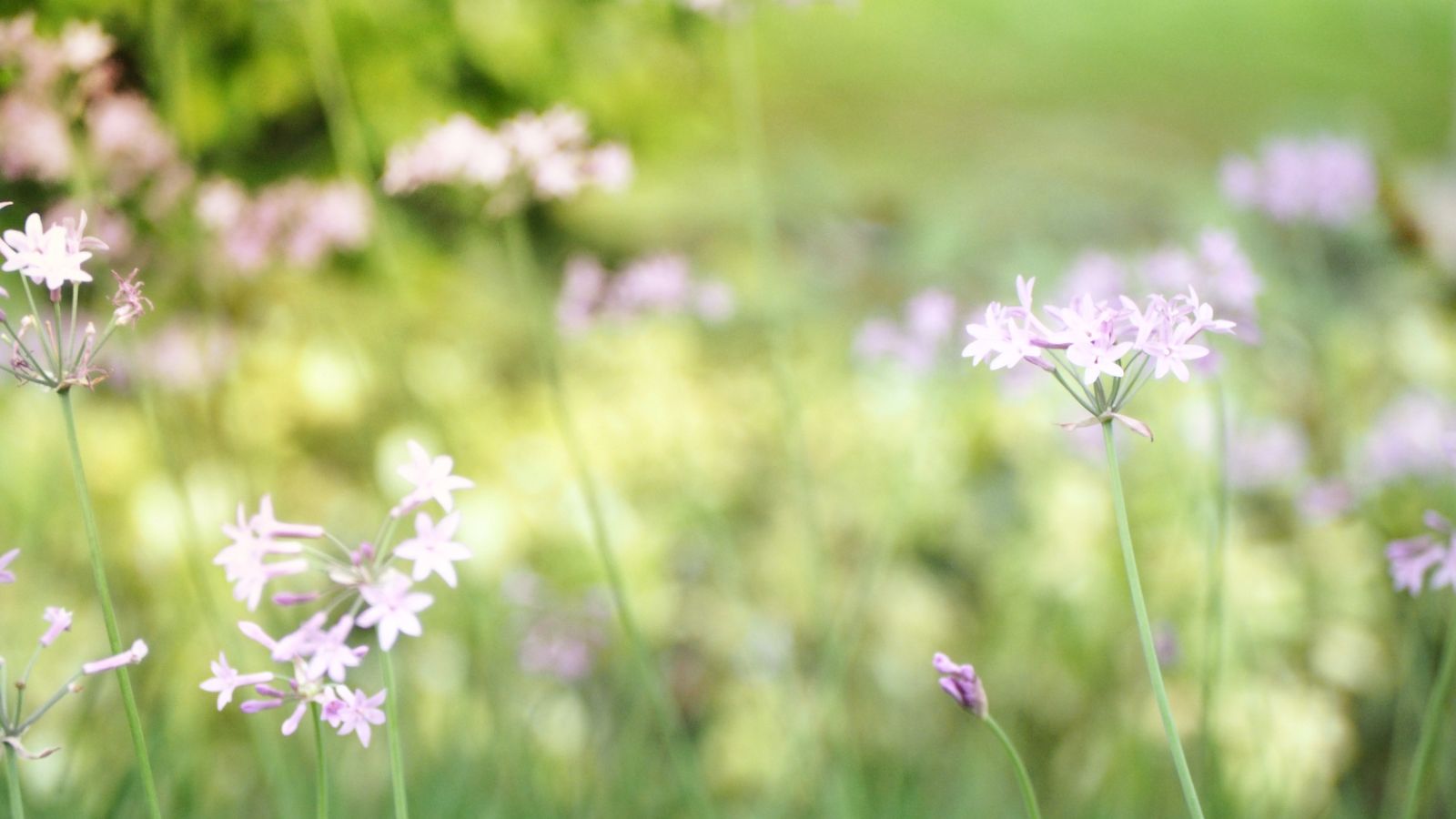
As mentioned above, society garlic needs full sun to part shade, with at least six hours of direct sunlight per day.
Water

When watering society garlic, water deeply and slowly. Although this plant tolerates extended drought, it performs best with regular, low and slow watering. Drip irrigation works well, but a standard garden hose provides adequate results if drip systems are not an option.
Allow the soil to dry between watering cycles. Let the top one to three inches of soil dry out before watering again. Because society garlic handles dry conditions well, watering every other day may be sufficient. During the blooming period, reduce watering, as excess moisture can slow or reduce flower production.
When rainfall is frequent, skip supplemental watering altogether. The primary disease concern for society garlic is root rot, and excess water is the main cause.
Soil

Plant society garlic in sandy, lightly fertile, slightly acidic soil. Sand helps excess moisture drain away from the crown, where root rot can develop. These plants tolerate poor soil as long as it drains well, which is especially important when growing in containers. Aim for a soil pH between 6.8 and 7.5 when growing society garlic.
Temperature

Although society garlic is not hardy outside USDA zones 7 through 10, you can grow it in other hardiness zones by bringing plants indoors for winter.
Society garlic does not require cold hours and tolerates both high heat and cooler conditions. As a perennial, it needs no special protection from heat or cold when grown outdoors in zones 7 through 10. Container-grown plants can be moved indoors if desired. Overall, society garlic handles moderate frosts and light freezes well and may even survive the first frost of winter.
Fertilizing

These plants survive and remain edible even in extreme conditions, so fertilizer is not required. Still, work a few inches of compost into the soil around the plant each spring. This practice supports healthy foliage and flowers and keeps the leaves organically rich year-round.
In rocky grasslands, rock gardens, containers, or other poor soils, added fertilizer can improve foliage and flower performance. If you choose to fertilize, mix a slow-release granular fertilizer with a 5-10-10 NPK into the top few inches of soil along with compost.
Pruning
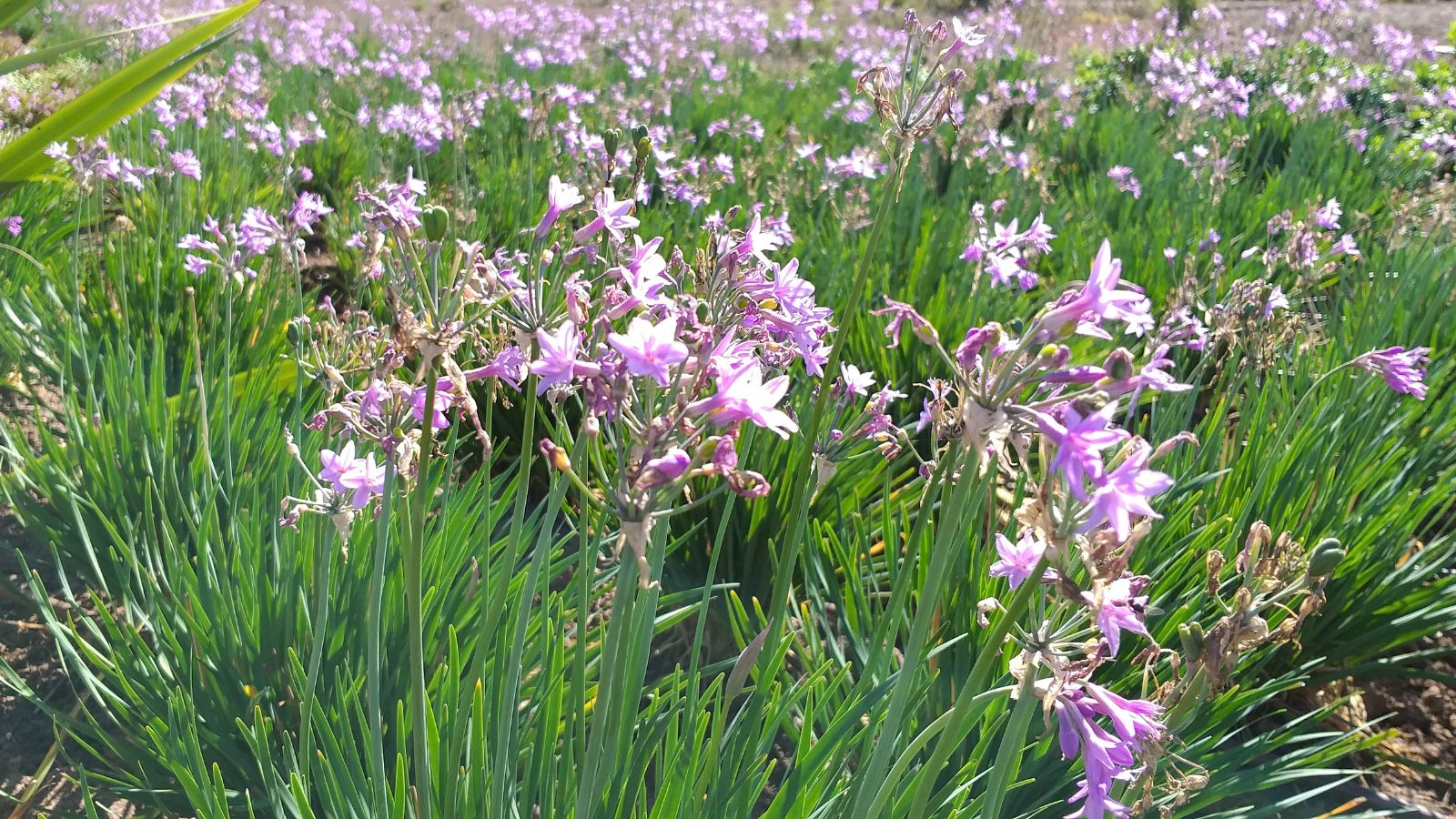
Other than harvesting edible leaves, society garlic does not require pruning beyond removing dead, damaged, or crushed foliage. This cleanup is often necessary after light freezes or moderate frosts. If plants experience extended drought, a light trim can help refresh growth and improve appearance.
Propagation
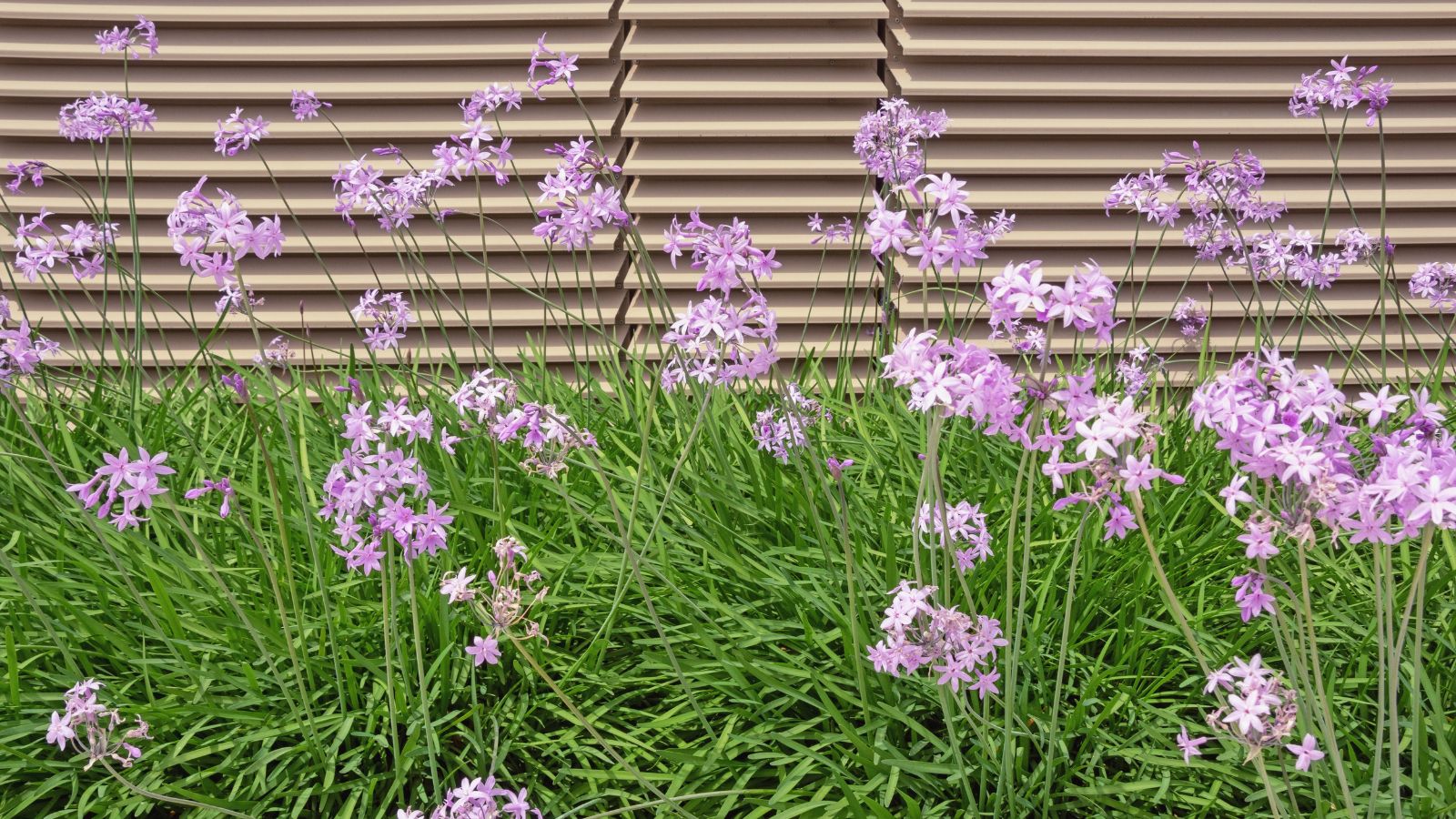
The easiest way to propagate society garlic is by dividing clumps as they mature. Dig up the plants by the tuber and relocate them as needed. Move divisions to containers or other areas of the garden after flowering in summer or late fall. Choose planting sites carefully, as society garlic is considered invasive in some regions.
Although society garlic grows in clumps, it also propagates by seed. Remove spent flowers once they dry and collect the seeds. Sow seeds in a seed-starting mix or direct sow them outdoors. Plant seeds in a location with sandy soil and bright sunlight for best results.
Harvesting
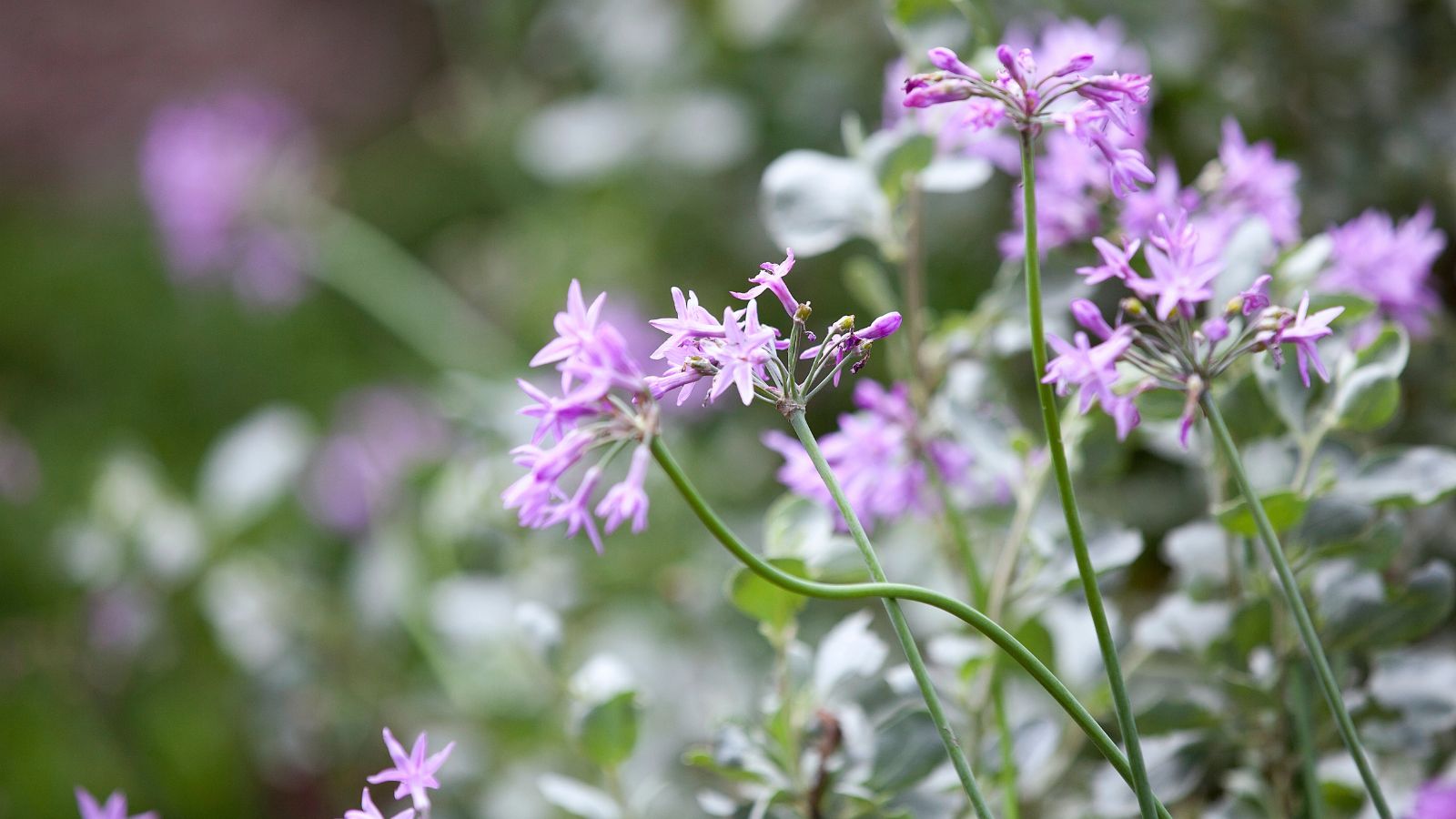
If you are wondering how to harvest ‘Silver Lace’ or variegated society garlic, the process is simple. All parts of the plant are edible. The main growing season runs from summer through fall. To harvest green or striped leaves, cut them to the length you need.
During flowering, you can harvest the stalks and flowers together. Take only what you need and avoid removing the entire plant to keep it growing strong.
Storing
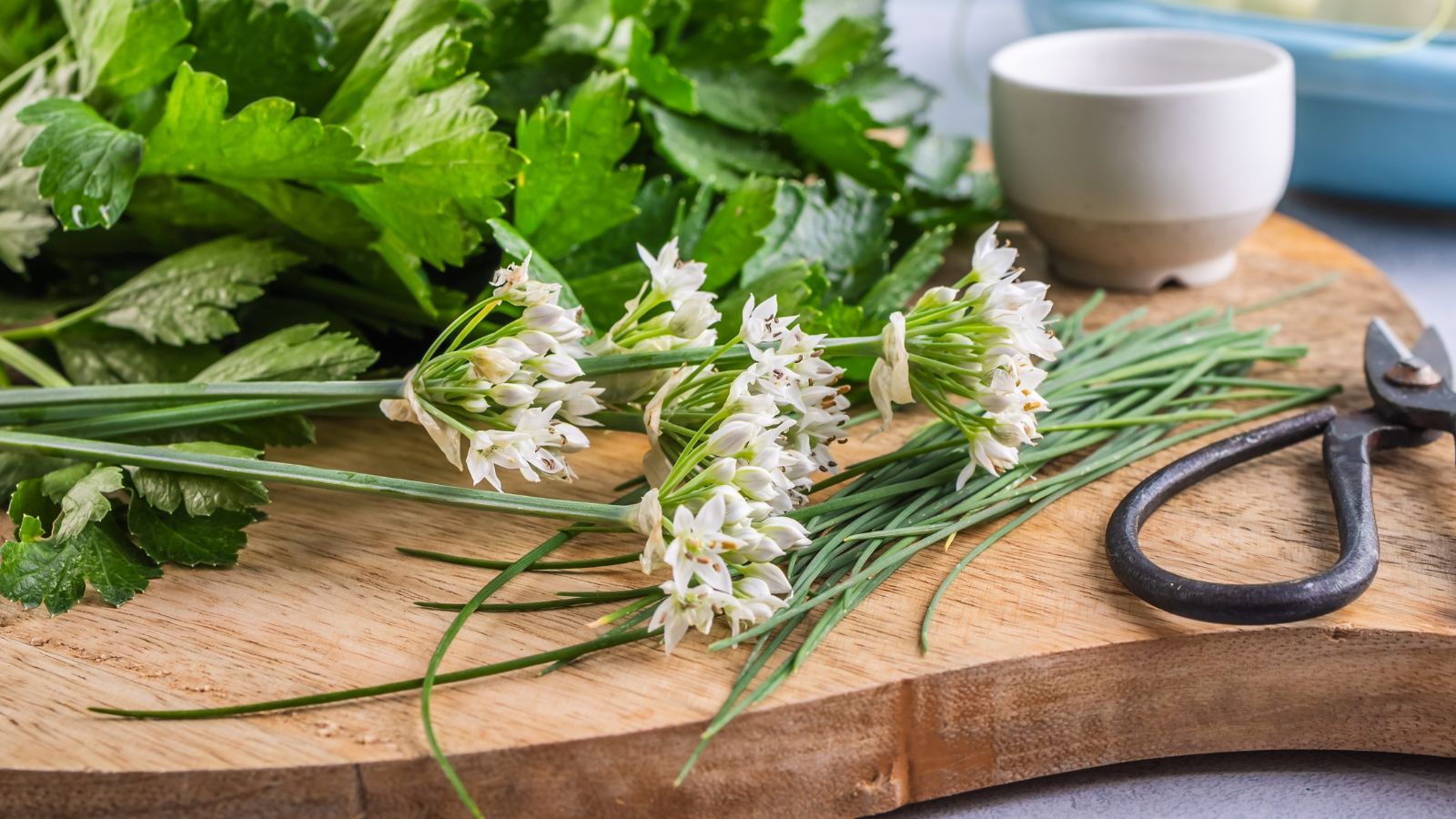
Use society garlic foliage fresh or dried. All parts of the plant are edible, including the flowers. The common name society garlic comes from its ability to deliver garlic-like flavor without causing bad breath. When stored properly, harvests from society garlic plants provide flavorful additions to soups, salads, and stews, much like garlic chives.
To dry the foliage, wash it and hang it to dry for about one week. Dried leaves store well and remain usable through winter. The roots do not require drying, but both roots and leaves keep in the refrigerator for up to one week. Consume flowers immediately after harvest. Frozen tubers and leaves keep in the freezer for up to one year.
Troubleshooting
Society garlic doesn’t have many problems because it deters most pests and diseases. However, there are a couple of things to remember.
Growing Problems
New plants may struggle if they are not placed in an area with full sun. These plants are deer-resistant, which is a benefit in many gardens. They also perform poorly in high winds, even though they adapt well to rocky grasslands. Avoid watering during the flowering stage, as watering at this time reduces further bloom production.
In cooler regions, foliage and flowers naturally die back during winter. This dieback is normal and not a cause for concern.
Pests

The only pests that commonly affect these plants are aphids and whiteflies, and neither causes significant damage when managed early. Both aphids and whiteflies feed by sucking sap from plant tissue. A strong spray of water from a garden hose often dislodges them effectively.
If infestations persist, neem oil or insecticidal soap provides reliable control when applied according to label directions.
Diseases

Overwatering increases the risk of root rot in society garlic. Allow the soil to dry out between watering sessions, and do not water during periods of heavy rainfall, even in early summer. If you suspect root rot, stop watering for a short period to see if the plant recovers.
If conditions do not improve, carefully remove the plant, trim away any damaged roots, and transplant it into well-draining, fungus-free soil.
Frequently Asked Questions
What is society garlic used for?
It is used to keep out pests, season dishes, and for medicinal needs in South Africa.
Is garlic society toxic?
No. While some findings suggest eating a ton of the tuber could be toxic, those studies are inconclusive. Just to be careful, limit your intake of the root to small quantities, and stick with the leaves.
Why is it called society garlic?
It’s named after the governor in the Cape of Eastern South Africa in the 1700s. This is because although it’s garlicky, it doesn’t produce bad breath. High society loved the fresher breath element of this plant.
Can you eat the leaves of society garlic?
Yes! All parts are edible.





