15 Best Flowers You Can Plant in September for Fall Blooms
September is a wonderfully transitional time in the garden and a perfect time for planting things that like cool weather. Join Florida gardener Melissa Strauss to take a look at some flowers you can plant now for beautiful fall blooms.


Contents
If you want flowers blooming through the fall, but don’t have any in your garden, September is a great time for adding them. Planting flowers in September is also a great way to set your garden up for success in the coming year.
Cooler weather and more regular rainfall create ideal conditions for many flowering plants. It aids in root development, allowing plants to establish themselves before winter dormancy. Many perennials benefit greatly from fall planting since they can focus on building strong root systems.
In addition to perennials, many cool-season annuals thrive when planted in fall. Some plants enjoy the crisp air and will often bloom well into winter in mild climates. Fall planting also helps gardeners get a head start on the next season. By taking advantage of fall’s gentle growing conditions, you can have a glorious flower garden well into the fall season.


China Aster


|
botanical name Callistephus chinensis |
|---|---|

|
sun requirements Full sun to partial shade |

|
height 8-36″ |

|
hardiness zones 2-11 |
China asters are tender annuals, and in cooler climates, September might be a bit late to plant them. However, if you’re in zones 7-10, September should be just about right. Even in cooler climates, these will flower until the first frost. The warm soil and cool air make these happy and easy to care for.
Asters are prone to mildew; make sure to give them space. Crowding paired with cool, rainy weather may produce powdery mildew on your foliage. From seeds, asters take 70-120 days to bloom. So, for September flowers, you’ll want to use nursery starts, or you are unlikely to get any flowers.
Chrysanthemum

|
|
botanical name Chrysanthemum spp. |
|---|---|
|
|
sun requirements Full sun |
|
|
height 6″-4′ |
|
|
hardiness zones 3-9 |
If you’re looking for a bold and quick splash of color in the fall garden, chrysanthemums are ideal. Garden centers sell these in every color toward the end of summer. They will bloom beautifully until the first frost. They’re perennial in zones 3 to 9, so you’ll get to enjoy these for years to come.
Get your mums in the ground as early as possible to get their roots established. In zones 7 to 9, September planting is ideal; in cooler climates, they may not set down strong roots in time for winter. However, if what you want is color in the garden, you can plant these as annuals and hope for the best come spring. Container growing is always an option too.
Goldenrod

|
|
botanical name Solidago spp. |
|---|---|
|
|
sun requirements Full sun |
|
|
height 1-8′ |
|
|
hardiness zones 2-9 |
Goldenrod is a hardy perennial that is native to North America. If you can find a native species, this is the best thing to plant. It will be the most low-maintenance and thrive best in your environment. Fall planting is great for these, as they do a lot of late-season growing.
If you find young nursery starts, they may not bloom this year, but they will establish roots and bloom next fall. If you can find larger potted goldenrod, you are more likely to get those September flowers that the pollinators love so much.
[div]
Marigold

|
|
botanical name Tagetes spp. |
|---|---|
|
|
sun requirements Full sun |
|
|
height 6″-4′ |
|
|
hardiness zones 2-11 |
September is too late to start marigolds from seeds in most places, unless you’re in zones 10-11. However, this is a flower that nurseries nearly always have in stock, and they are great pops of color in the fall garden. They bloom up until the first frost and often self-seed.
In warm climates, you’ll get great results planting these flowers in September. They will thrive in the balmy weather far better than through the heat of summer. They are tough and quick to establish, and in subtropical and tropical areas may flower throughout winter.
Pansy

|
|
botanical name Viola x wittrockiana |
|---|---|
|
|
sun requirements Partial shade |
|
|
height 6-12″ |
|
|
hardiness zones 6-10 |
September is a perfect time to plant pansies in your garden and containers. These cool-weather flowers come in an array of cheerful color combinations. The best part is they are frost-tolerant! The cooling temperatures in September will help pansies to set roots.
Depending on your climate, pansies may bloom through the fall and even into the winter months. In warmer climates, you can typically overwinter these. They may take a blooming pause during the coldest months, but are likely to bounce back and flower more in the spring.
Snapdragon

|
|
botanical name Antirrhinum majus |
|---|---|
|
|
sun requirements Full sun |
|
|
height 6″-4.5′ |
|
|
hardiness zones 7-10 |
September is also a great time to plant snapdragons. In mild climates, these also will survive the winter and bloom again in the spring. These cool-season September flowers perform best when planted in the fall.
Snapdragons are perennial in zones 7 to 10, and this is the perfect time to plant them in these zones. In zones 6 to 7, you may see these overwinter as well and return in spring. Mulch over the roots for added insulation from the cold. In colder climates, snapdragons still make great fall flowers. They won’t overwinter, but they will survive temperatures down to about 20°F (-7°C).
Autumn Sage

|
|
botanical name Salvia greggii |
|---|---|
|
|
sun requirements Full sun to partial shade |
|
|
height 2-4′ |
|
|
hardiness zones 6-9 |
Autumn sage is a species of perennial salvia. September is a great time to plant it within its range, as it appreciates time to root before the winter cold. The warm soil and cool air of late summer and early fall are ideal for root formation. It’s also evergreen, so you’ll have this in your garden year-round.
In terms of flowering, autumn sage isn’t just a fall bloomer. It begins flowering in spring and continues through the fall. In cooler climates, this plant may also act as a perennial, but will die back over the winter and re-grow in spring.
Calendula

|
|
botanical name Calendula officinalis |
|---|---|
|
|
sun requirements Full sun to partial shade |
|
|
height 1-2′ |
|
|
hardiness zones 9-11 |
Calendula favors the cooler weather heading into fall. So planting these flowers in September will maximize bloom time. Mild days and cool nights are preferable, and in mild climates, it may even overwinter and bloom again in the spring.
Calendula is not frost-tolerant, but in many places it will continue to look nice late in the season. These self-sow well, so even in those cooler regions, there is a chance they will return in the spring. In frost-free places, these will bloom heaviest during winter, so now is the perfect time to plant.
Autumn Joy Sedum

|
|
botanical name Hylotelephium spectabile ‘Autumn Joy’ |
|---|---|
|
|
sun requirements Full sun |
|
|
height 1.5-2′ |
|
|
hardiness zones 3-10 |
‘Autumn Joy’ sedum is one of the best perennials for fall flowers. It also adds tons of seasonal interest to the garden. This tough, reliable plant provides months of beauty. It’s especially valuable to pollinators because it blooms as many summer perennials are fading.
Sedums are succulent plants; they require little care. They’re drought-tolerant and appreciate plenty of light. This one produces tall stems topped with dense flower clusters. The flowers start off green and turn pink as they mature. The flowers last a long time and even look good in winter if you leave them on the plant.
Celosia

|
|
botanical name Celosia spp. |
|---|---|
|
|
sun requirements Full sun |
|
|
height 6″-4′ |
|
|
hardiness zones 2-11 |
Celosia is a flamboyant annual in the amaranth family. These September flowers make a great addition to the cutting garden, pollinator patch, or anywhere you want a serious pop of color. The flowers are fuzzy and come in shades of pink, red, peach, yellow, and orange. They also self-sow, so you’ll get some popping up in years to come if you allow them to.
There is a wider range when it comes to celosia flower structure. Some are referred to as cockscomb for their resemblance to a rooster’s comb. Others resemble flames or small fluffy clusters.
Black-Eyed Susan
|
|
botanical name Rudbeckia hirta |
|---|---|
|
|
sun requirements Full sun |
|
|
height 1-4′ |
|
|
hardiness zones 3-9 |
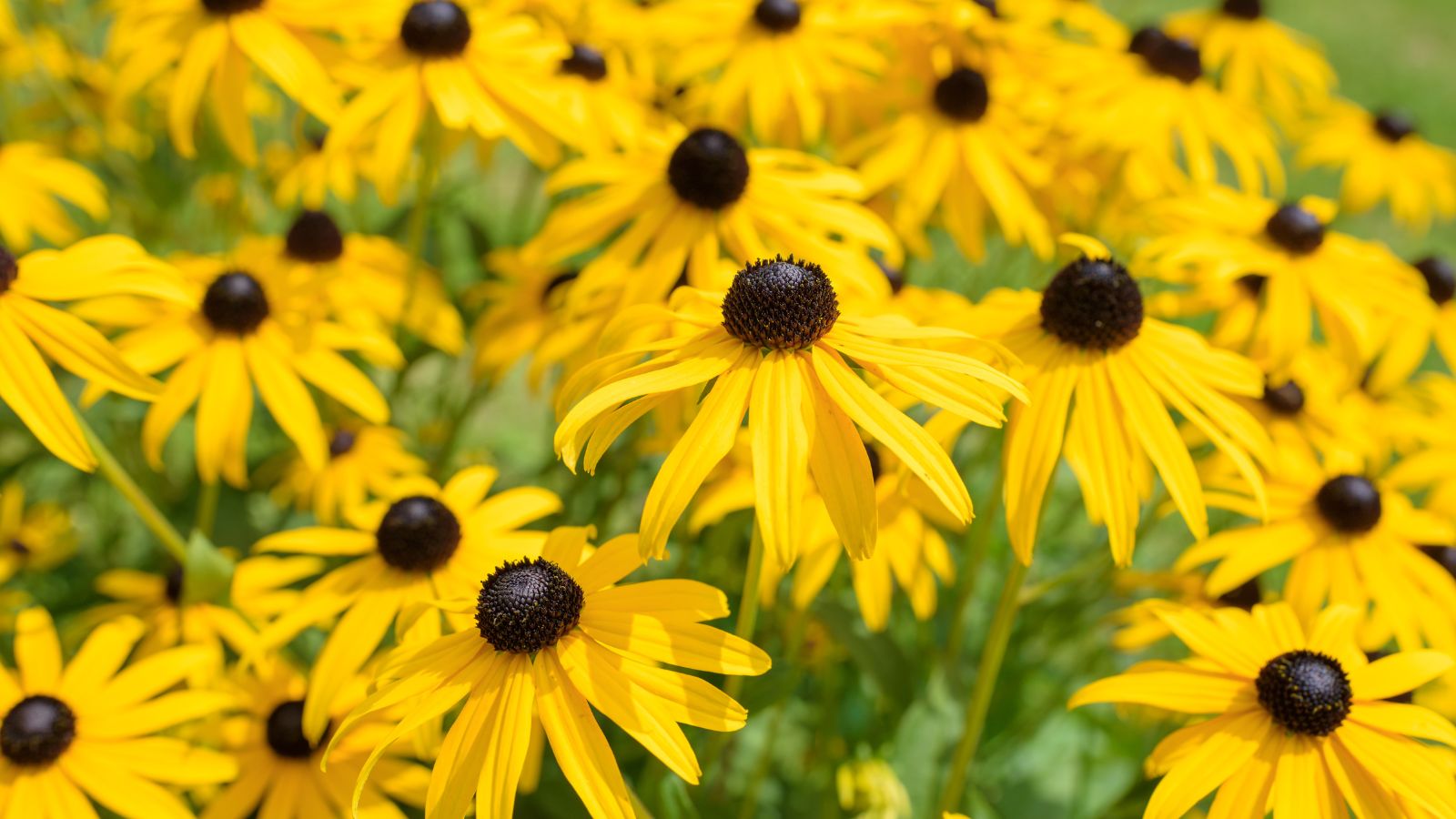
Black-eyed Susans are a staple of the fall garden. They bring months of color and support pollinators through summer and autumn. Their golden-yellow petals with chocolate brown centers add warmth and brightness, as many summer blooms are winding down.
Depending on the variety, Black-eyed Susans bloom from early to mid-summer, until about October. Your climate will play a role, though many bloom throughout this entire period. They are perennials and self-sow freely, so you can enjoy them for years to come!
Sneezeweed

|
|
botanical name Helenium autumnale |
|---|---|
|
|
sun requirements Full sun to partial shade |
|
|
height 3-5′ |
|
|
hardiness zones 3-8 |
Sneezeweed is a wonderful flowering perennial for the fall garden. It’s commonly valued for its bold color and pollinator appeal. Despite its name, sneezeweed doesn’t cause seasonal allergies. It got its name from a historic use of its dried leaves in snuff.
Sneezeweed begins to bloom in late summer and continues well into the fall. The warm autumn tones of yellow, orange, and red pair wonderfully with the fall landscape. The flowers are flat, making them a great landing pad for pollinators. They will appreciate the food source as flowers grow scarce.
Toadlily

|
|
botanical name Tricyrtis spp. |
|---|---|
|
|
sun requirements Partial to full shade |
|
|
height 1-3′ |
|
|
hardiness zones 4-9 |
Toad lilies are an enchanting and special flower in the fall garden. They’re not as flashy as goldenrod or asters, but they have a special charm all their own. Because they need partial to full shade, their arrival can sometimes be a surprise.
This shade-loving quality makes them wonderful for spaces where many plants can’t thrive. They flower in September and October, with speckled blooms in shades of white, lavender, and purple. The flowers resemble orchids, giving them a tropical vibe.
Petunia

|
|
botanical name Petunia x hybrida |
|---|---|
|
|
sun requirements Full sun to partial shade |
|
|
height 6″-2′ |
|
|
hardiness zones 10-11 |
Petunias may be blooming their last this time of year in cool climate gardens. But, for warmer climates, they make excellent September flowers. They are not cold-tolerant, but they do prefer cooler weather. While they may languish in the August heat, September will bring them bouncing back.
Because of their wide range of colors, petunias can work with any color scheme. They are great for refreshing your containers and beds when the summer annuals are worn out. In mild climates, cut them back and they will densify and bloom again in October and November.
African Daisy

|
|
botanical name Osteospermum spp. |
|---|---|
|
|
sun requirements Full sun |
|
|
height 1-3′ |
|
|
hardiness zones 10-11 |
African daisies are a wonderful choice for extending color into the fall garden. They’re especially great in regions with mild autumns. They look like traditional daisies but with richer jewel tones. They bloom in purples, oranges, pinks, and whites, colors that complement the season beautifully.
They prefer cool temperatures, so spring and fall are the best seasons for African daisies. Their bright blooms open during the day and close at night. The flowers are long-lasting and pair nicely with mums, asters, and pansies for fall color.