Root Rot: How to Identify, Treat, and Prevent it
Root rot can lay waste to your plants. It's also more common than you may expect, both indoors and outdoors. In this disease guide, horticultural expert Lorin Nielsen explains what it is, what it's caused by, and how to prevent or treat it.


Contents
Root rot is something we talk about often. It is a common but incredibly frustrating plant disease, and in some cases it can be deadly. To a new gardener, it may seem like root rot happens simply because of overwatering, but that is only partly true.
Diagnosing root rot can also be tricky for anyone without much experience, largely because the root system is out of sight. It is hidden in the soil, and regularly digging up plants to inspect their roots is neither practical nor recommended.
So what exactly is root rot? How can you tell whether you are dealing with root rot or a different plant problem? And most importantly, is there a way to treat root rot once it starts? These are common questions, and for good reason. Understanding how to identify, prevent, and manage root rot can make the difference between saving a plant and losing it altogether.

Coco Coir, Castings & Thermometer Bundle

Coco Coir, Castings & Thermometer Bundle

What Is Root Rot?

Let’s start with the basics. What is root rot, anyway?
There are a variety of soil-dwelling fungi, molds, and oomycetes that live in garden soil, but root rot is caused by only a small handful of them. Understanding these common culprits, how they develop, and the damage they cause will make it much easier to identify root rot early and respond appropriately.
Pythium

Not a true fungus, this disease spreads more like an oomycete. While it can develop slender, threadlike hyphae extending outward from its host plant, it also produces oospores that can overwinter in soil debris or infected plant material.
There are a wide number of Pythium species that impact plants. In the nursery industry, Pythium aphanidermatum is more active at temperatures below 68°F (20°C), while Pythium ultimum and Pythium irregulare are more common at temperatures above 77°F (25°C). These are the most common species affecting houseplants, shrubs, and garden plants in the United States, although other species are more likely to impact turfgrass.
In all cases, two conditions make soil infection more likely. Overly wet soil provides the ideal environment for this pathogen to thrive. In addition, soils or soilless mixes with high salt content are more susceptible, as Pythium prefers a slightly salty environment. This puts sphagnum peat moss and vermiculite blends at higher risk, as well as some forms of coconut coir.
Once this contaminant is present in the soil, it can be difficult to eliminate using organic methods alone. Overwatering and overfertilizing further increase infection rates. Excess moisture perpetuates the disease cycle and can encourage pests to feed on roots, leaving them vulnerable to infection. Overfertilizing with too much nitrogen suppresses the plant’s natural defense response, making root rot even more likely.
Phytophthora

This disease is caused by a type of water mold. Anywhere water accumulates or flows, this disease can develop. It is common throughout the Pacific Northwest of the United States, for example, as well as along rivers or streambeds, in rice fields, and in other flooded environments.
In a garden setting, Phytophthora is most likely to affect shrubs or trees, but it can also impact vegetables such as tomatoes, eggplant, and peppers. It prefers warm, wet conditions and thrives when moisture levels remain high, which is why good drainage is essential for reducing this persistent cause of root rot.
Fusarium
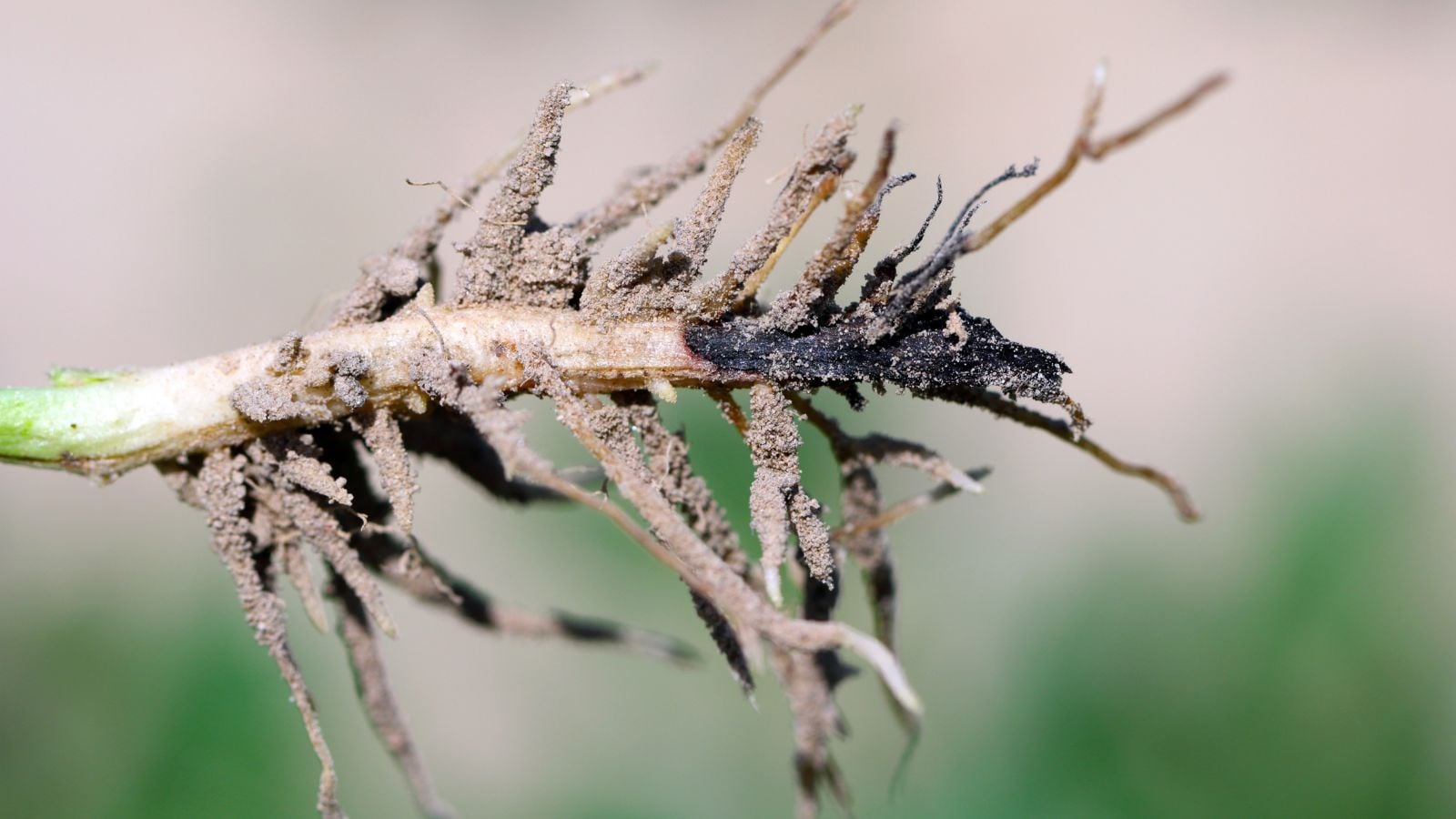
Fusarium oxysporum, a fungus that has been covered in depth for other plant health issues, is also a common cause of root rot. It typically causes rot in both the roots and the plant crown and can persist in garden beds for long periods of time.
This pathogen is one of the most common causes of root rot in home gardens and can be particularly challenging to manage once it becomes established.
Other Root Rots

There are other fungal species that can cause rotting damage similar to those above, but they tend to have a more limited range of host plants.
- Rhizoctonia solani is one of the most widespread of these pathogens. It commonly affects food crops such as soybeans and wheat. While it is fairly common, it is generally manageable with proper cultural practices.
- Thielaviopsis basicola causes a rot that primarily affects ornamental and flowering plants. Like Rhizoctonia, it can often be controlled with good soil management and sanitation.
- Leptographium procerum is responsible for procerum root rot in trees and is most commonly found in pines.
- Heterobasidion annosum causes annosus root rot in pines, firs, and other coniferous species. It is a major pathogen in American forestry but is far less common in residential landscapes.
Symptoms and Identification of Root Rot

One of the more interesting aspects of these various causes of root rot is that they tend to produce very similar symptoms above ground. It is often easy to identify that a plant is suffering from some form of rot, but far more difficult to determine exactly which pathogen is responsible.
In most cases, plants begin to show slowed or stunted growth. Leaves may yellow, and in turf grasses you might notice circular yellow patches developing across the lawn. As the rot progresses, plants show clearer signs of being unable to absorb enough nutrients and moisture. Wilting becomes more common, and trees or larger plants may drop leaves out of season.
Below the soil surface, the damage varies depending on the pathogen involved. Roots will show areas of decay, but the pattern differs. For example, Pythium infections often start at the tips of the roots and gradually spread inward. Phytophthora, as a water mold, typically enters through damaged root tissue. True fungi tend to force their way into roots over time using hyphae.
Because the symptoms can resemble more common gardening problems, many gardeners rule out basic issues before considering disease. However, since all of these forms of root rot are linked to excess soil moisture, good garden management plays a major role in prevention.
Make sure your soil drains well, avoid overwatering, prevent water from pooling in garden beds, and do not allow potted plants to sit in trays of water for extended periods.
Root Rot Treatment

Treatment for root rot depends largely on the specific type you are dealing with.
For some forms of root rot, potent fungicides can be used to slow or prevent further spread. These products are typically applied directly to the soil, where they work to kill fungal pathogens in the garden bed. Most effective options are chemical treatments, as there are very few organic fungicides capable of controlling disease within potting media itself.
However, even chemical controls are not effective against all forms of root rot. The three most aggressive pathogens discussed earlier are far more complex and can often become a death sentence for affected plants. Very few anti-rot treatments work reliably against these, although a handful of strong chemical options may offer limited success.
What does appear to help in many cases is the use of beneficial mycorrhizae at planting time. These organisms form a symbiotic relationship with plant roots, occupying space safely while helping protect the plant from external pathogens and competing organisms. They also share access to water and nutrients.
Particularly effective options include Bacillus subtilis, Trichoderma harzianum, and Gliocladium virens, all of which have shown an ability to suppress root rot pathogens. Incorporating these into the soil or applying them directly to the root system before planting can be highly beneficial.
With smaller plants, it may also be possible to salvage healthy tissue by trimming away damaged roots. For example, if orchid roots show signs of rot, the plant can be removed from its pot, affected roots carefully trimmed away, and then repotted into fresh orchid media with excellent drainage.
What To Do If The Plant’s Already Dying

If your plant is already dying, there is not a lot you can do to prevent its decline. However, you can still attempt to propagate from healthy cuttings and potentially save the plant.
Select cuttings that are higher up on the plant but still vigorous. Follow standard methods for rooting cuttings, and use sterile soil when doing so. Do not plant the cuttings in the same location where the original plant was growing, as that area may still be at risk until the fungus is fully eliminated.
If you are not sure which type of rot has set into the plant’s root system, consider taking the roots to your local garden extension office for identification. It is best to place the roots in a doubled zipper-sealed bag so nothing can escape. Extension staff can often provide insight into exactly which pathogen is present, helping you prevent future issues.
Dispose of the old plant without composting it, roots and all. You can consider solarizing the soil to kill fungal pathogens, but keep in mind that this process will also kill beneficial microorganisms in the soil.
Preventing Root Rot

With so many destructive root diseases out there, how do you protect your plants? In this case, prevention is far better than trying to find a cure. Practicing good stewardship of your garden is the key to keeping root rot at bay.
Selecting Resistant Plants

There are a number of plant cultivars that have resistance to common pathogens such as fusarium. Look for strains that offer high resistance to fungal species that are prevalent in your area. In many cases, you can find a wide variety of plants capable of resisting most causes of root rot, even if they are not the exact cultivars you are accustomed to growing.
Provide The Right Conditions

Since all of these pathogens spread in some way due to wet or soggy conditions, it is essential to avoid overwatering your plants. Try using soaker hoses or similar irrigation methods to regulate watering frequency and reduce splashing, which can help limit the spread of plant diseases.
You can also improve drainage by working perlite or large organic materials such as forest products into your potting media. Well-draining mixes are widely available commercially and can provide an excellent foundation for healthy plant growth in the future.
If you have already dealt with root rot, there is no need to panic about removing contaminated potting mix from your garden beds. Instead, consider planting resistant species or plants that are not susceptible to the specific pathogen present. While crop rotation is not an exact science, it can help potting media gradually become naturally sterilized by sun exposure over time.