How to Plant, Grow, and Care for Romneya Coulteri
Romneya coulteri, also called matilija poppy, is a gigantic California native and great for large-area xeriscaping. This beautiful flower is also easy to grow in the right environment. Epic Gardening founder Kevin Espiritu shares everything you need to care for these flowers.

Contents
If you have ever looked out across the mountains in southern California, you may have seen the matilija poppy, Romneya coulteri. Also called Coulter’s matilija poppy or California tree poppy, this gigantic plant was once a contender for California’s state flower, although it ultimately lost to another poppy.
This California native perennial remains popular today as an erosion control plant on hillsides. It also appears naturally in foothills and canyons, often as one of the first plants to return after a brushfire.
You will not see this in small cottage gardens, since it is simply too large for most residential yards. It does, however, work beautifully in xeriscaping. Here is a closer look at this striking California chaparral plant.
Romneya Coulteri Overview

|
Common Name(s)
Coulter’s matilija poppy, California tree poppy
Scientific Name
Romneya coulteri
Family
Papaveraceae
Height & Spread
6′-8′ tall and wide
|
Light
Full sun, tolerant of partial shade
Soil
Well-draining sandy soil, mulched to prevent moisture loss
Water
Drought-resistant but prefers 1″ of water per week
Pests & Diseases
Caterpillars, occasional powdery mildew, some rhizome rot.
|
All About Matilija Poppy
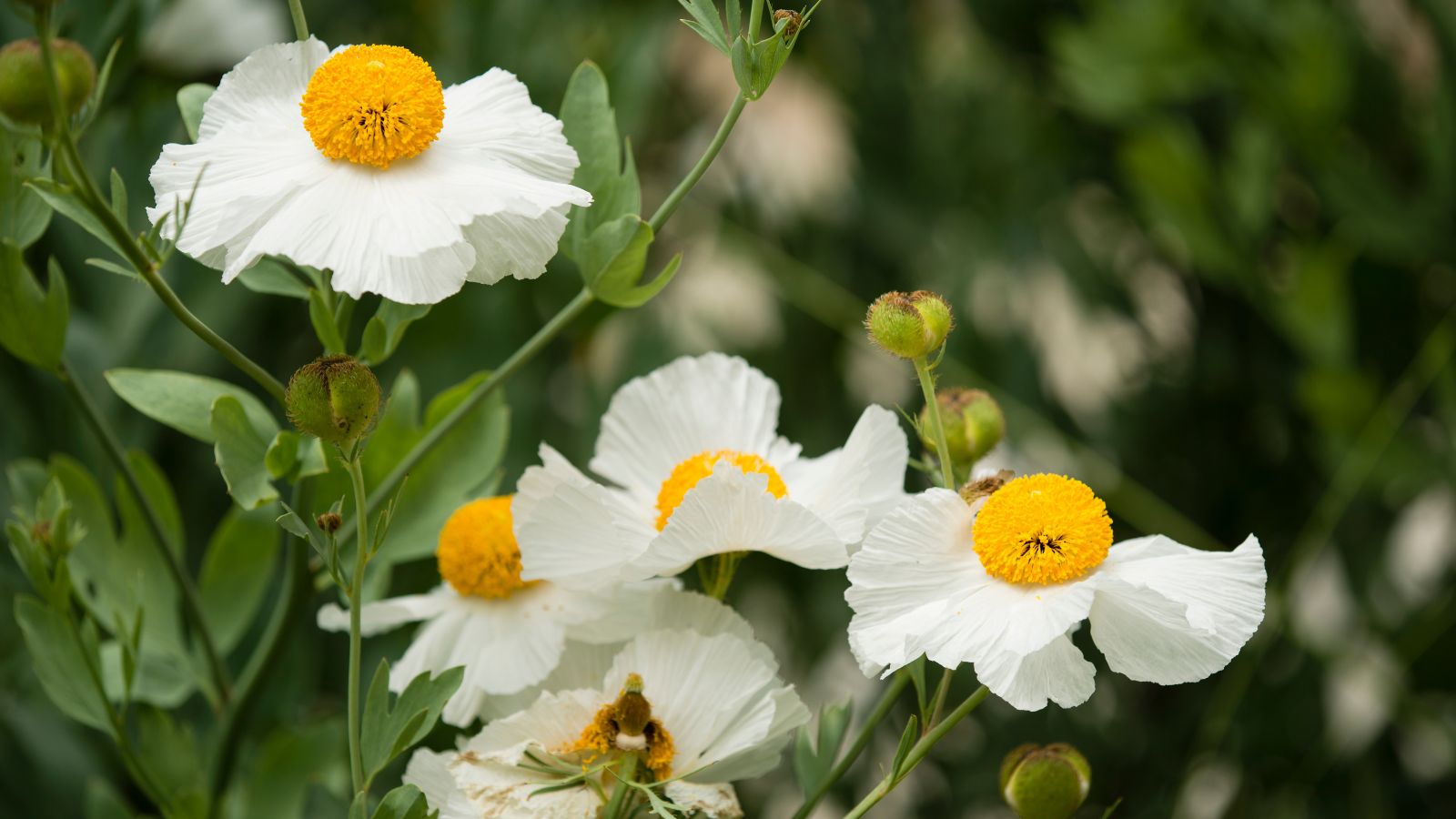
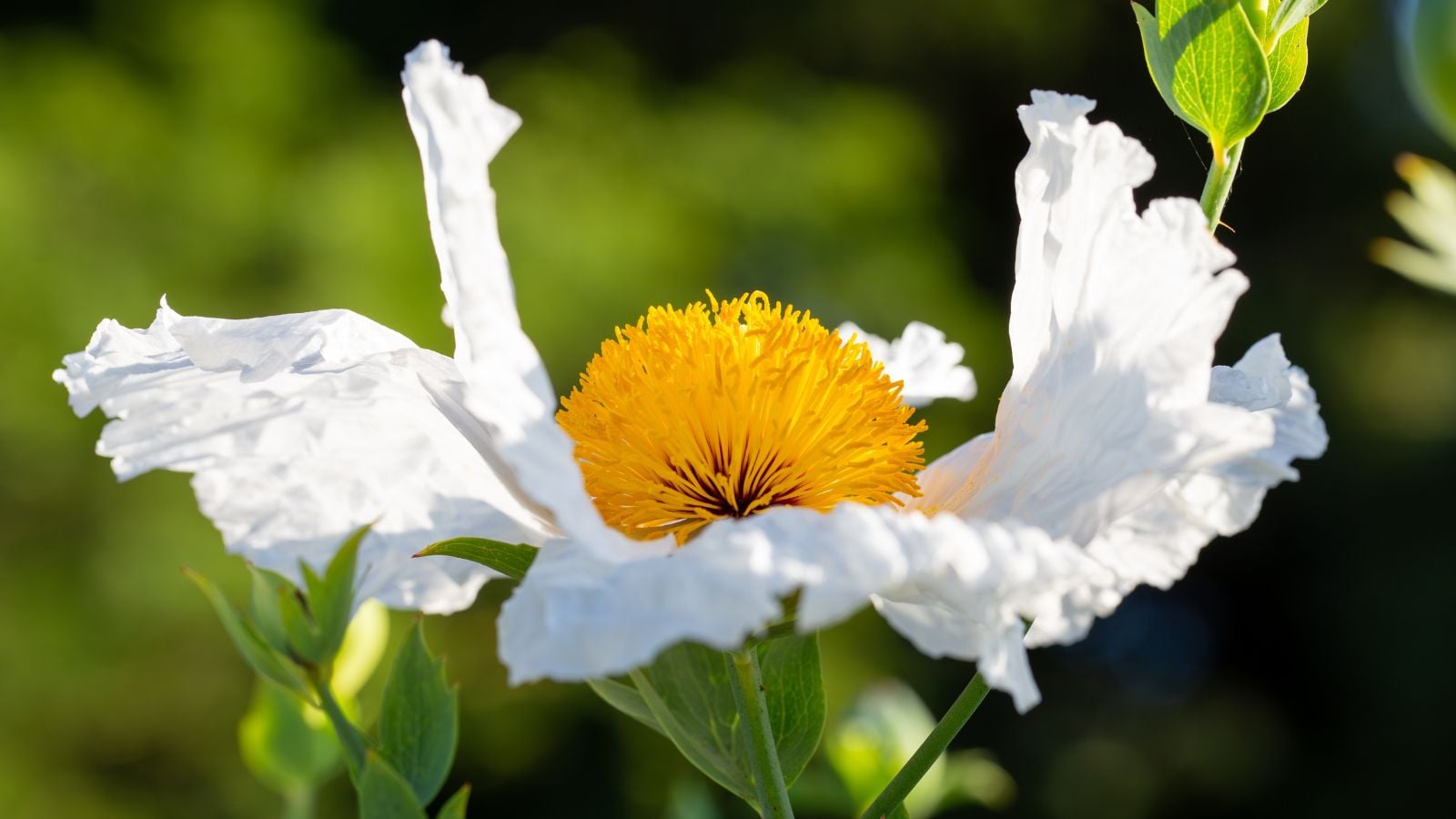
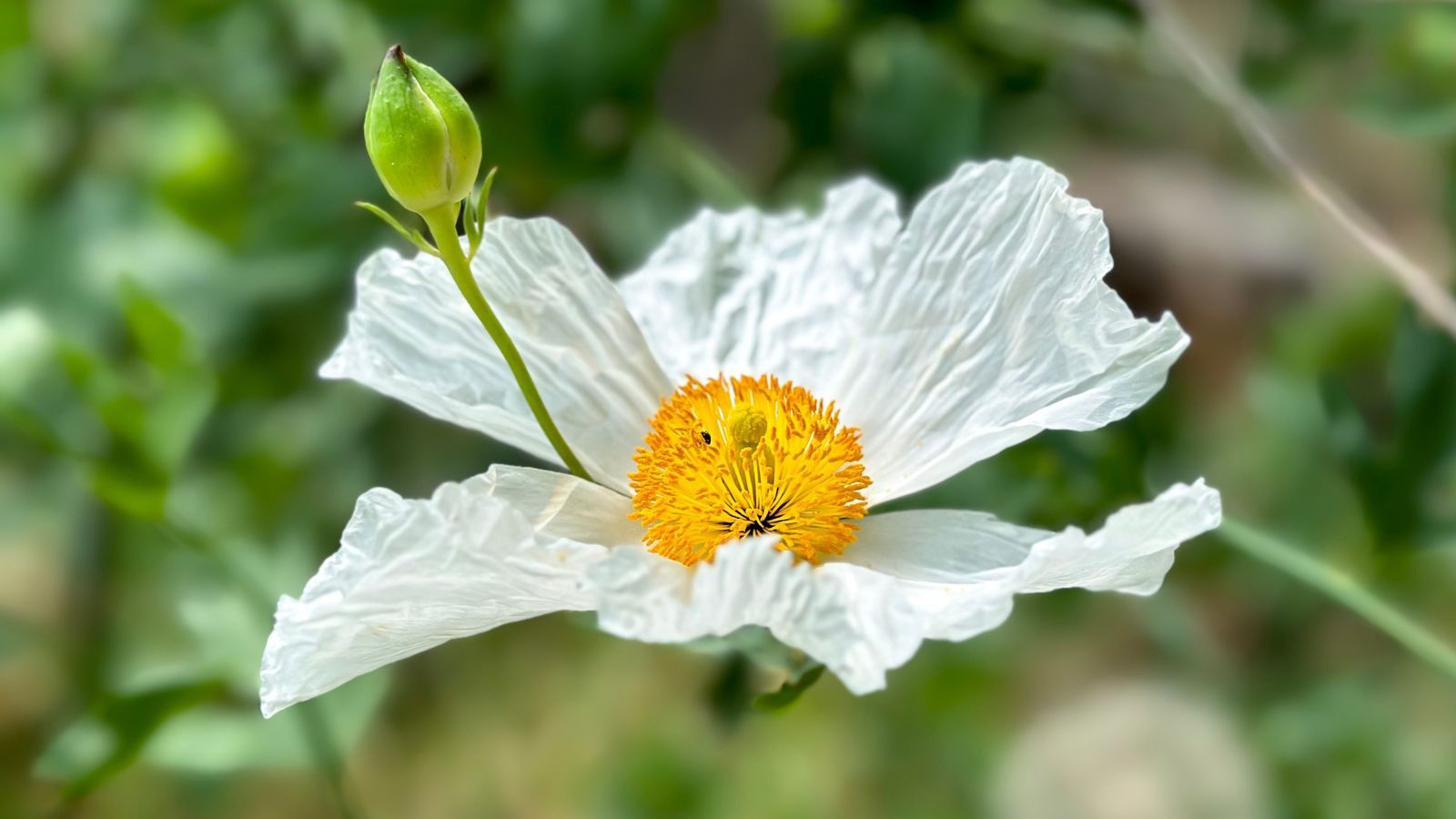
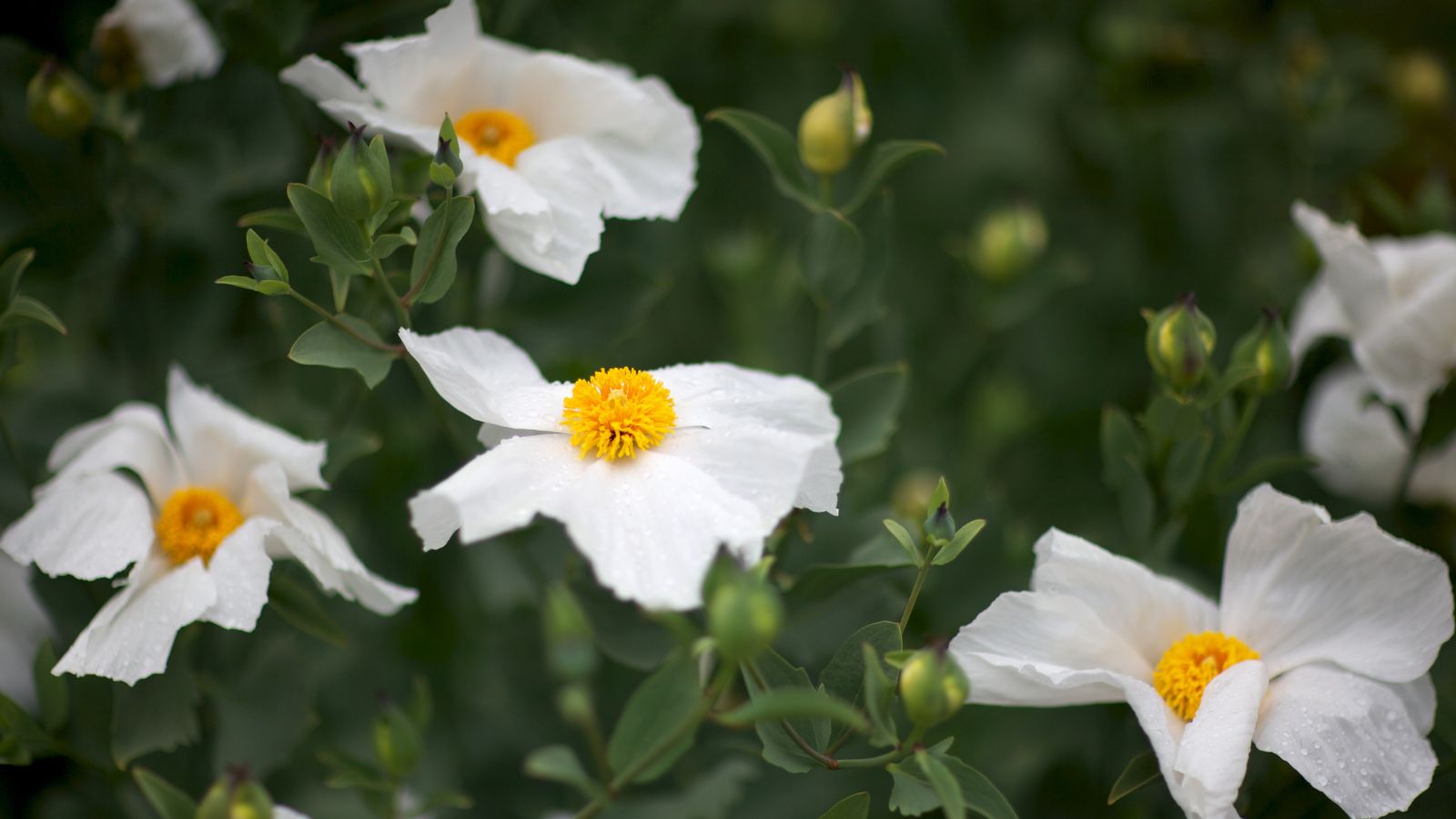
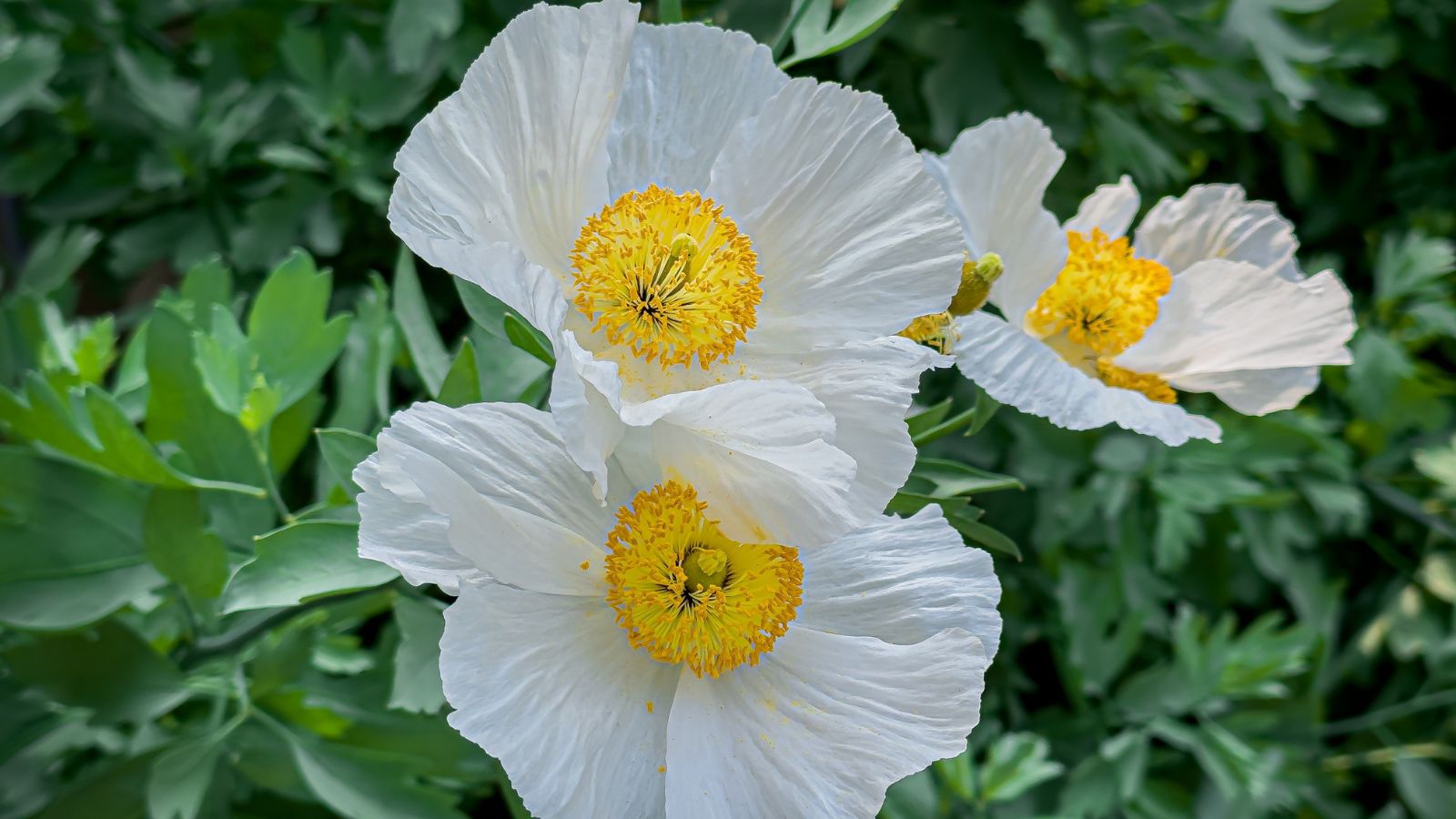
One of the most remarkable aspects of this plant is its flowers. Sometimes nicknamed the fried egg plant, its blooms measure between four and nine inches across and do resemble a fried egg. Large, soft white petals surround a golden yellow center with a hint of apricot fragrance. The nickname hardly does justice to how stunning this bloom really is.
Sharing a genus with a closely related plant, Romneya coulteri is often confused with its sibling. Romneya trichocalyx has smaller flowers and fruit than its gigantic coulteri relative, along with hairy sepals and stalks. More importantly, it does not reach eight feet tall.
Characteristics
The plant grows in a bushy form, with long branches lined with eight inch grey green leaves. Multiple plants cluster together, connected by a spreading rhizome system beneath the soil surface. This network can creep up to 20 feet from the original plant, and without management it can become invasive.
Flowering from late spring through early summer, the stems are often tipped with five to eight enormous blooms. The white petals are usually rippled or crinkled like crepe paper. As the flowers fade, the center forms an inedible seed pod. The plant can self sow in fall once the seeds mature.
The name Romneya coulteri honors Dr. Thomas Coulter, a botanist who collected the plant. It is native from southern California into Mexico and is commonly found in chaparral and coastal sage communities. It is deer resistant and highly tolerant of drought.
While there are few commercial cultivars, a hybrid called ‘White Cloud’ is known for having a less aggressive spreading habit than typical Romneya coulteri.
How to Grow
In its native range, this plant gets no care at all and thrives. As a landscape plant, you may want to keep it within certain boundaries and encourage strong flowering, so here is a look at its optimal growing conditions.
Light
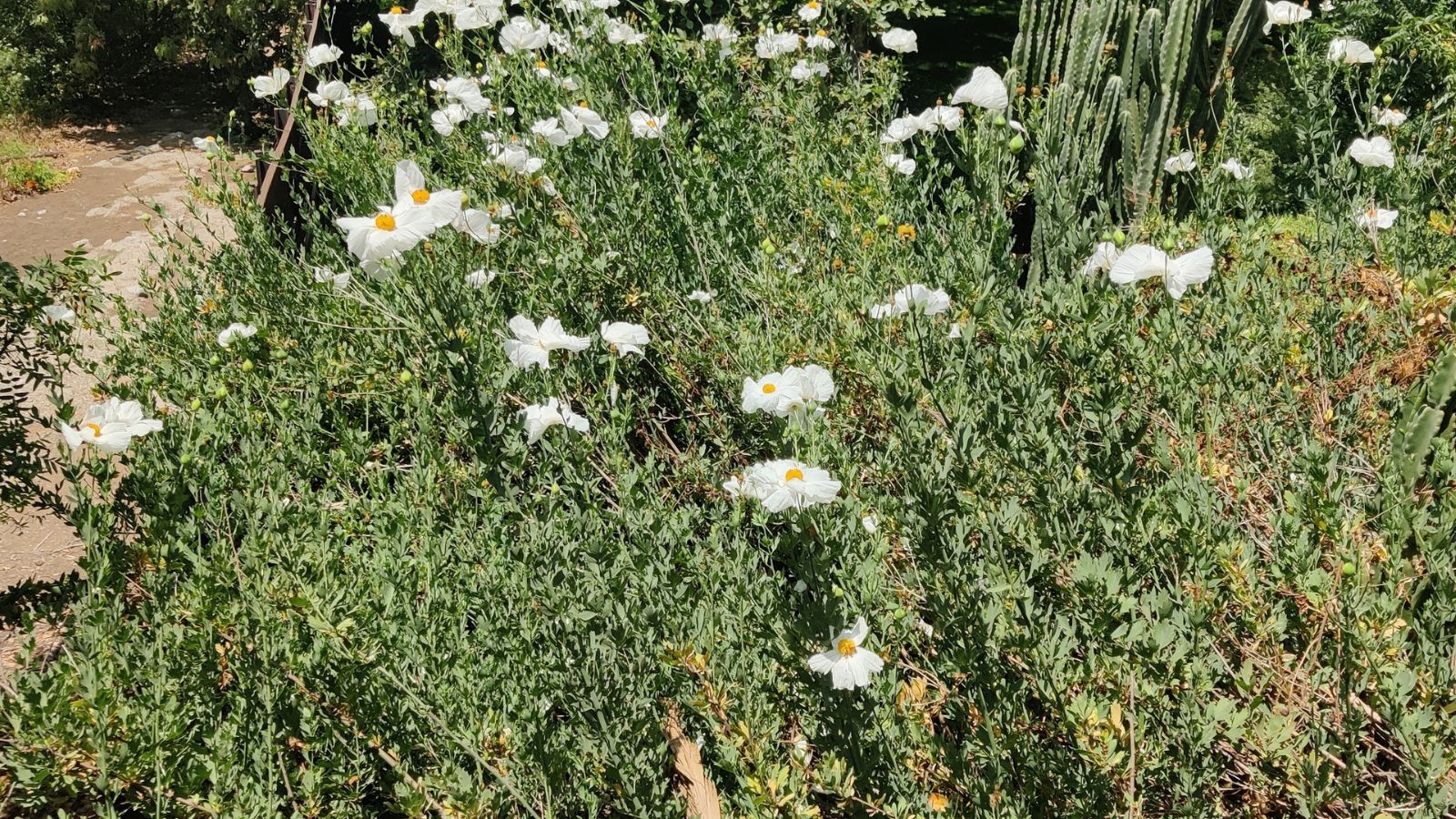
Full sun is perfect for this plant. While it can take dappled shade, it needs lots of light to produce its white flowers with their pop of yellow color.
Water
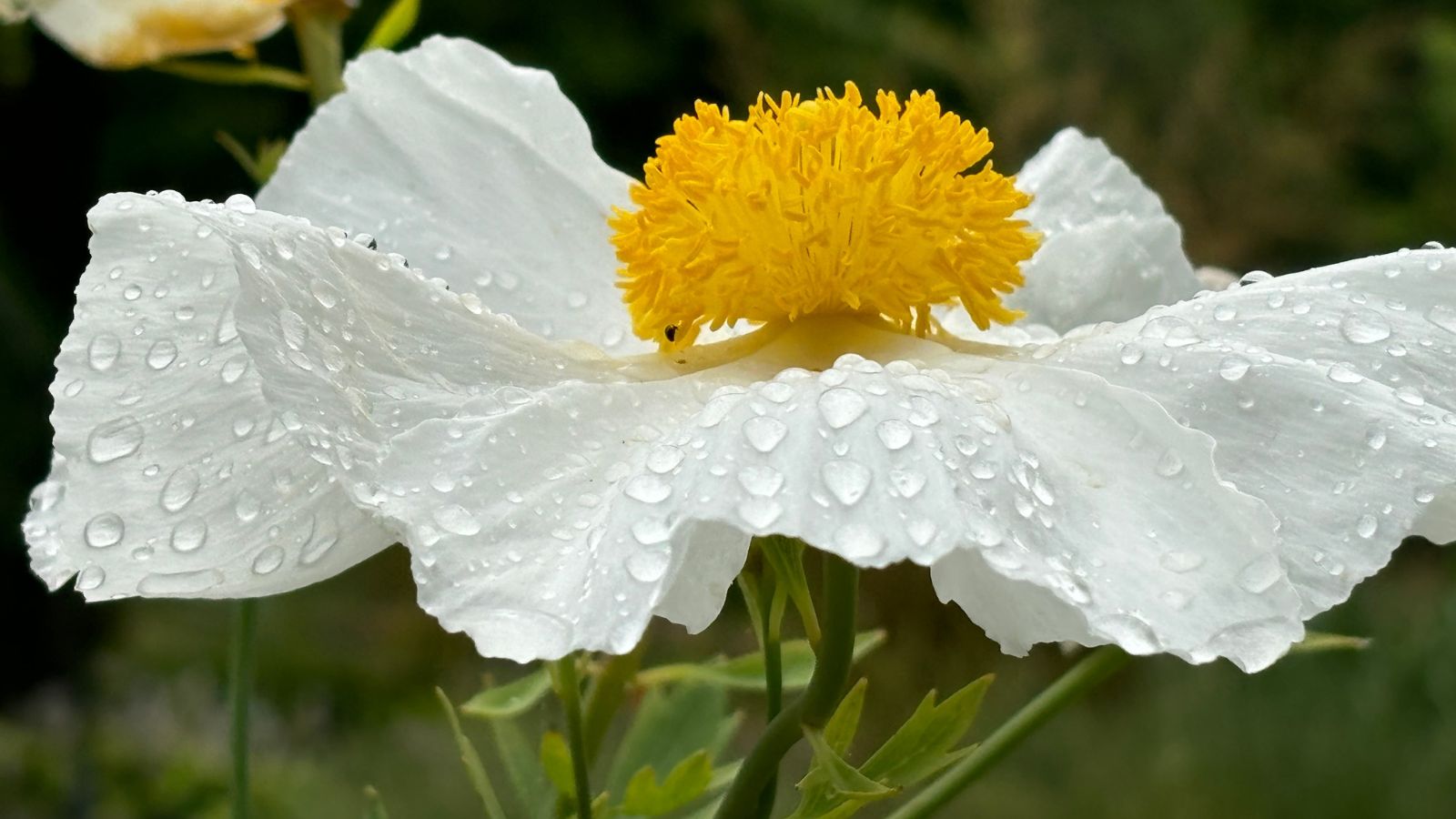
Once it is established, you should not need to irrigate your Coulter’s matilija poppy again. In the wild, it receives between 11 and 40 inches of annual rainfall and performs perfectly well. It tolerates very low water conditions with ease.
Young plants do need a bit more moisture. Mulch around the base to help prevent evaporation and hold water in the soil. This is all you need to maintain the right ambient humidity for healthy growth.
Soil

Sandy to gravelly soil with a pH between 5 and 8 is ideal for this plant. The soil must drain very well, since poorly drained conditions put the rhizomes at risk of fungal rot. If you are working with heavy clay, amend the area generously with compost and agricultural sand or perlite.
Temperature and Humidity
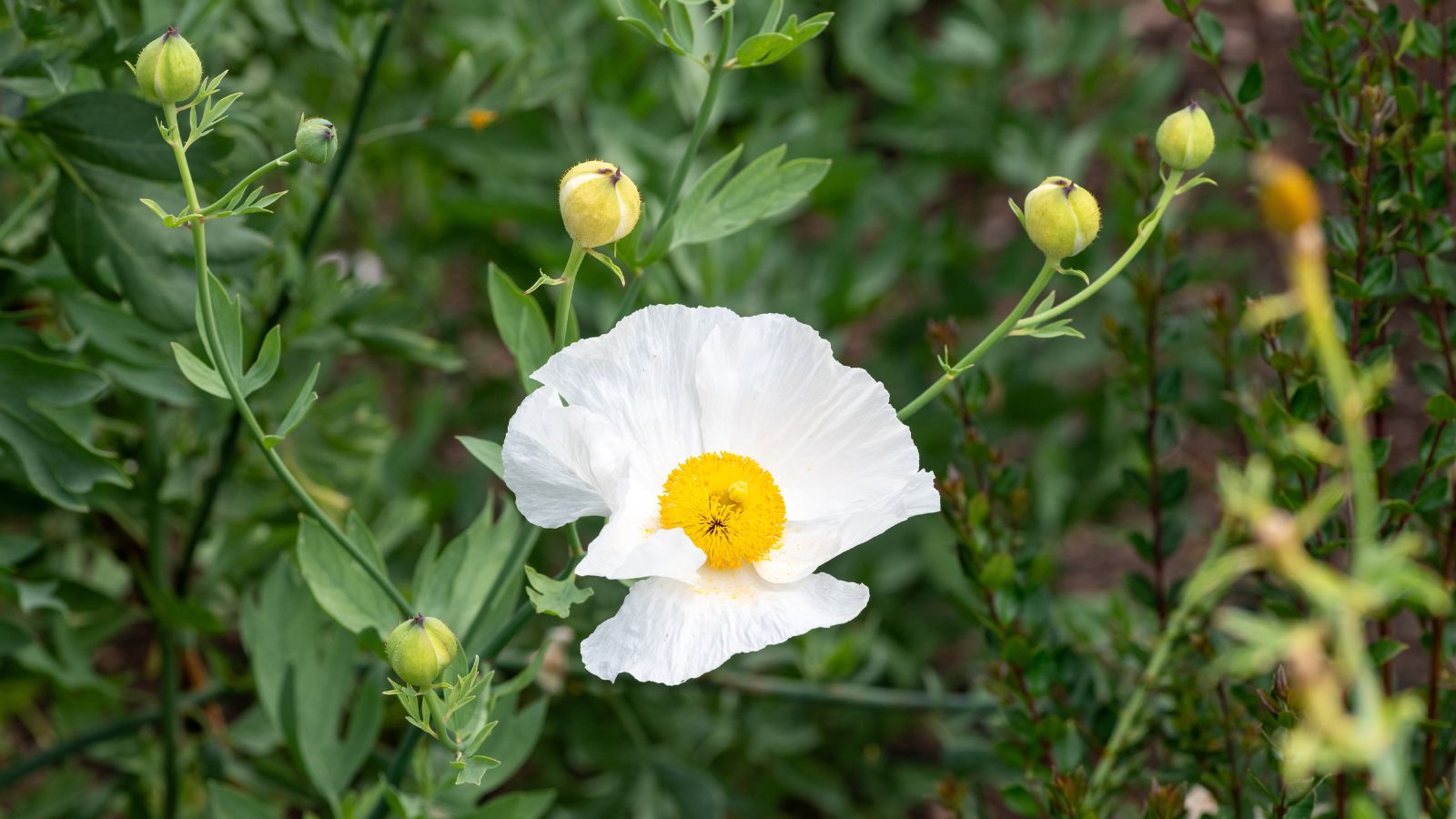
It can withstand typical southern California heat with no trouble, but like many California native plants, it dries out during the summer. This species is deciduous in late summer and will drop many of its leaves from that point through fall.
It goes dormant in winter, and with enough leaf mulch over the root system, it will pop back to life in spring. In general, the plant is frost hardy down to 23°F (-5°C).
Fertilizer
Fertilizer is not needed for this plant. It may be helpful when the plant is very young, but it’s just not necessary. If you fertilize, it may affect the overall performance of your tree poppy, so avoid it.
Repotting
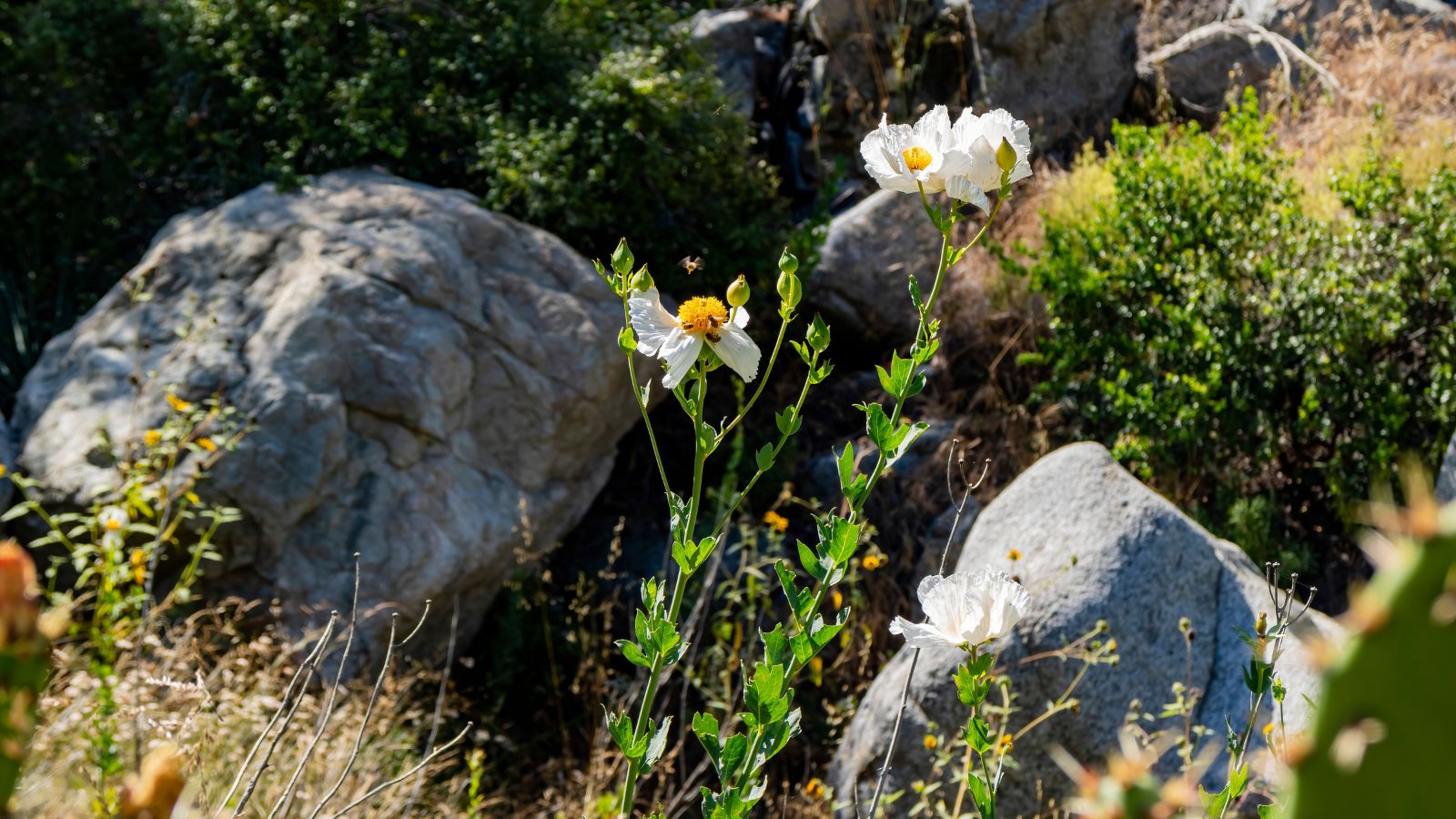
Because of its tender rhizome structure, this plant is not well suited to container growing. Nursery plants should be planted directly into the ground. Avoid attempting to grow it in a pot and do not repot it. Disturbing the rhizomes during the active growing season can cause the plant to die.
Pruning

In California, Romneya coulteri should be cut back to six inches above the ground in late summer or fall. The trimmed material makes excellent mulch for the rest of the plant and should be spread around the base.
Propagation
During winter, the rhizomes can be carefully separated and replanted. This is only successful while the plant is dormant and can be fatal at any other time of year. Propagation by seed is challenging, since the seeds typically germinate only after exposure to fire.
When removing rhizomes, make sure you already have a planting site prepared. Choose a spot with sandy loam that drains very well.
Troubleshooting
If this plant sounds too good to be true, it is not. It is genuinely that easy to care for. Still, a few rare problems can arise, so here is what to watch for.
Growing Problems
In late summer, Romneya coulteri becomes deciduous and drops its leaves. It dries out during the hottest months and can become a fire hazard in regions prone to wildfires. If you live in one of these areas, be prepared to cut it back once it dries out and becomes risky.

Pests

Some caterpillars will chew on the leaves. While this does not usually harm the plant, it can increase local caterpillar populations and put other plants at risk. A Bacillus thuringiensis spray will take care of the problem.
This plant is deer resistant.
Diseases

Powdery mildew can infect the leaves. You will notice a white, dust like coating on the leaf surfaces when it appears. If you can remove the affected leaves without taking more than one third of the foliage, do so. Then treat the remaining foliage with neem oil.
If the soil does not drain well, the rhizomes may also develop fungal root rot. There is no cure for this, so prevention is essential. Make sure your Romneya is planted in well draining sandy loam to avoid the problem.
Frequently Asked Questions
Is Romneya coulteri poisonous?
Yes and no. The Chumash used this plant as a traditional medicine, but it contains mild saponins that can cause skin irritation and gastric issues. Wear gloves when working with this plant.