How to Remove Invasive Plants from Your Property
Unruly and aggressive, invasive plants blanket the ground with dense growth. They displace native plant species and harm ecosystems over time. Don’t let them grow in your yard, or they’ll quickly spread out of control! Join native plant gardener Jerad Bryant to learn how to remove invasive plants from your property.


Contents
How to remove invasive plants from your property depends on the plants in question. Some are trees, others are shrubs, and many are low-growing annuals and perennials. They use spreading tactics, like self-seeding and rhizomatous growth, to creep into new sites with bare soil.
Though invasives may look pretty, the effects they have on our natural ecosystems are particularly damaging. They smother the ground and prevent native plants from thriving. Trees like Norway maples and Callery pears spread into forests, where they outperform our native maples and species of Prunus.
It’s best to remove invasive species when they’re young, before they grow expansive roots that anchor to the ground. Don’t worry if the invasives have spread and cover a large part of your yard. We’ll cover a wealth of removal techniques that’ll help your situation.
CobraHead Original Weeder & Cultivator

CobraHead Original Weeder & Cultivator
The Original CobraHead Weeder and Cultivator is here to make those jobs easier so that you can focus on planting and nurturing your garden. This hand cultivator comes with a blade designed to cut through any soil, even clay. Its slender design gives it an unprecedented level of precision without sacrificing durability.
Buy at Epic Gardening ShopIdentify the Plant
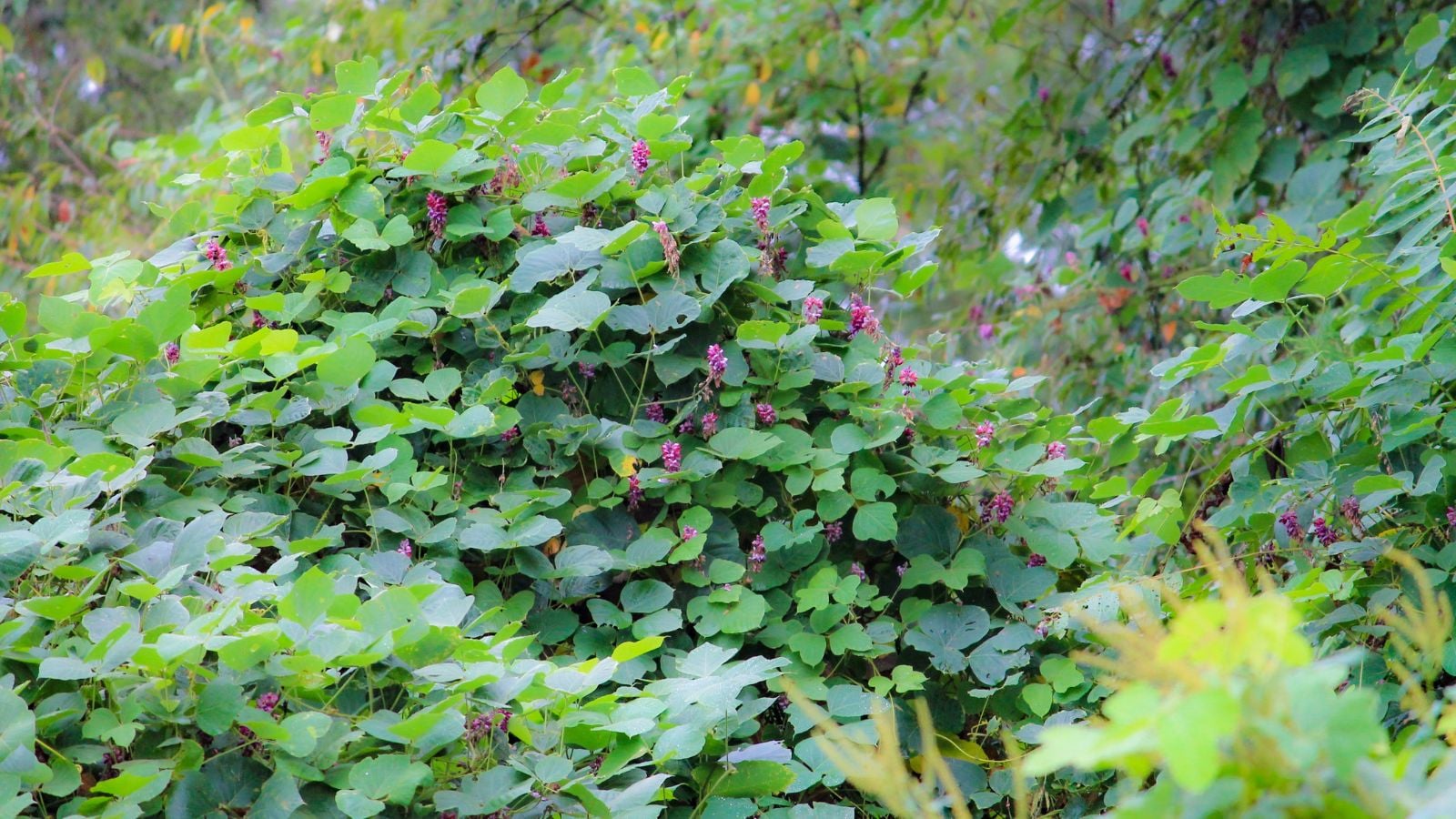
If you haven’t identified the plant yet, then now is the time to do so. It’s helpful to know what you’re dealing with. Once you identify the unruly spreader in question, you can determine how to properly remove those invasive plants from your property.
Many invasive weeds are spreading vines with rooting nodes. They form new roots when they touch the ground. In this way, a single vine can grow into a dense clump that spreads wider each year. English ivy, pothos, and blackberry grow like this.
Some are woody shrubs with strong roots. Japanese knotweed is one example. It spreads underground with roots and aboveground with seeds. You’ll see new patches popping up near and far from the original plant.
Invasive trees use seeds to spread into new areas. They tend to grow more quickly than native trees, and their branches shade out the others when they poke above the canopy.
Others are annuals and perennials with fleshy stems. They use a variety of spreading methods, like bulbils, seeds, and rhizomes, to create dense patches of growth. Dig, pull, or snuff them out to remove them from your garden. Lesser celandine, nipplewort, and forget-me-nots are common examples.
Remove Invasive Plants
These strategies will help you remove invasive plants from your property. Use quick-working strategies with plenty of labor, or let passive methods work slowly over time. Often, a combination of multiple tactics works well to snuff out the unruly spreaders.
Solarization

We’ll start with solarization, a passive strategy that requires little labor. All you need is a clear plastic sheet and some bricks to weigh down its edges. You may also use rocks, stones, or other heavy objects to weigh the sheet down.
Solarization works during the warm months. The clear plastic magnifies the sun’s intensity, creating hot beams that burn the plants below. Hot temperatures coupled with a lack of airflow suffocate the invasive species, and they struggle to sprout new growth.
Solarization requires a few weeks to work. Leave the sheet for at least four weeks in the middle of summer, when temperatures are warm and sunlight is abundant. Check under the sheet after a month; if there are live roots or shoots, leave the plastic for another week or two before inspecting the site again.
Occultation

Occultation is similar to solarization, except it works without sunlight. It uses an opaque sheet rather than a clear one to snuff out the invasive sprouts. The lack of sunlight and airflow prevents the plants from photosynthesizing, which causes them to wither and die out.
Use a black plastic sheet or any opaque material. Old carpets and rugs work well, too! As with the previous method, you’ll take the material and lay it over the site. Weigh down the edges, and leave the sheet in place for at least four weeks. Let the sun bake the invasives below.
Check the site after a month, and lift the sheet to inspect below. Rake away the dead growth and plant new plants in the area to prevent invasives from returning.
Some aggressive weeds, like Himalayan blackberries, will sprout new shoots when they receive water. You’ll have to starve them of their energy and nutrients. Do so by lifting the tarp and watering below it once a week. New shoots will sprout, and the tarp will smother them before they mature.
Hand Pulling

If you garden regularly, you know the importance of pulling weeds. Hand pulling is the best strategy a gardener has! It works especially well when the plants are small and young. Their weak roots pull easily from the ground.
Wear gloves when you remove invasive plants from your property to prevent reactions or injuries. Some plants have chemicals that interact with our skin, while others have thorns or spines that’ll hurt your hands. Pull from the plant’s base, taking care to remove as many of the roots as possible.
If you pull the tops off and leave the roots in the ground, the invasive weeds will resprout. Remove them in full, and pull any sprouts if they pop up again.
For many invasives, annual pulling is necessary to reduce their energy reserves. Perennials, like English ivy, will regrow in the fall and spring when moisture is abundant. Though it seems like you’ve pulled all their sprouts, there will be more! Repeat the pulling each year, and eventually the perennial roots will waste their reserves and die out.
Digging

Digging works to remove some invasive plants from your property, but not for all of them. It may hasten the spread of some perennials, like lesser celandine. Digging moves rhizomatous roots, bulbils, and bulbs into new locations, where they sprout into new plants.
For other plants, digging is essential to remove the roots hiding underground. You’ll need to dig deep to ensure you get all the pieces. Choose to dig woody trees, shrubs, and perennials with strong roots.
Avoid digging any plants that spread through their roots, including bindweed and lesser celandine. Snuff them out with occultation or solarization, then work to remove any lingering sprouts.
Burning

Invasive annuals are invasive because they produce seeds quickly. They grow from seedlings to mature plants seemingly overnight, and they dump dozens of seeds on the ground. Instead of pulling every single plant one by one, try burning them all!
Using a propane torch, home gardeners may selectively burn troublesome weeds. This kills the top growth, which is why it works particularly well on annuals. The annuals will die, though perennials may resprout after burning.
When using a torch, take extreme caution and watch your surroundings. Avoid using one in dry fields or areas with dead brush, as the flames can jump and create an unmanageable fire. This tool is most helpful on driveways, gravel, and rocky areas where there isn’t much dead plant matter to catch fire. Never use a torch during fire season.
Chopping

For established trees, no amount of digging will remove them. They have deep-reaching woody roots that are difficult to excavate. Instead, simply chop the tree down. Chop Callery pears, Norway maples, and trees of heaven.
Use a chainsaw or axe to chop down a tree. Cut the side of the trunk where you’re not standing to help the tree fall predictably. Make a V-shaped notch—don’t cut straight through, or your saw will get stuck under the weight of the trunk.
When you see the tree begin to lean, run far away in the direction that it’s not falling. Wait until after it hits the ground to look at it, and chop it into pieces to manage the woody debris.
It may be best to consult a local arborist for help. Arborists have certifications for this type of work, and they’ll do a much better job than you or I could do.
If sprouts reappear from the trunk, pull them annually as they appear. Don’t let them grow, or they’ll form a new trunk to replace the old one. Eventually, the stump will die as it runs out of energy, nutrients, and resources.
Prevent Invasive Plants
Once you’ve done the work to remove invasive plants from your property, you’ll want to do everything possible to prevent them from returning. Cover the soil, plant more plants, and pull young seedlings before they escape your control.
Mulch the Soil

Organic mulch is the greatest soil amendment for your plants. It decays over time, working to improve and insulate the ground below. It also prevents invasive weeds from growing. The thick layer doesn’t allow the seeds to touch dirt, and they die out instead of sprouting.
If any weeds do sprout, the mulch will soften the soil and make it easier for you to pull them. Simply pull them up and throw them on top of the mulch to decay. Or, throw more mulch on top of the invasive species to smother them.
When choosing a mulch, use a nutritious one like compost or leaf mold. Compost feeds the soil with nutrients, but it also introduces worms, beneficial bacteria, and fungi. Feed the soil with compost, and the soil will feed your plants.
Plant More Plants

Whatever you do, don’t leave the soil bare when you’re trying to remove invasive plants from your property. Bare soil invites weed seeds to sprout, and it’s incredibly difficult to maintain. Alongside adding mulch, planting more plants is a helpful method for covering the ground.
Which plants to plant depends on your preferences. Choose native plants to offer the most benefits to your local environment. Native plants feed pollinators, create habitat space, and work together to create cohesive ecosystems.
Non-natives aren’t all bad, as diversity is key. The goal is to cover the ground with as many plants as possible. If a plant won’t fit in a spot, simply cover the area with mulch to prevent weeds from sprouting.
Pull Young Weeds

No garden is weed-proof! These unruly invasive species use clever strategies to invade our spaces. With due diligence, you can spot them early and prevent them from thriving.
A single weed is no problem. It’s the seeds the single plant produces that are the problem. They’ll scatter over the yard and sprout into dense patches of unruly growth.
Don’t let any invasive weeds grow. Instead, pick or hand-pull them when they’re young. If they mature, use the above strategies to snuff them out. Then, plant more plants and add mulch to prevent them from returning.
Last Resort
So, when do herbicides come into play? These toxic chemical sprays remove weeds with a simple spray, though they have lasting consequences for your garden and the surrounding environment. Use them as a last resort, and try the above options first.
Herbicides

You can buy herbicides at nurseries, garden centers, and online. Though they’re easy to source and apply, they’re not easy on the environment. They can spread in bodies of water, and many tend to linger in the landscape for many months before breaking down.
Herbicides work by interfering with a plant’s normal processes. They often require dry weather and warm temperatures to work, making them most viable for use in the summertime. They can waft onto nearby crops and damage them, and they often harm insects and pollinators.
What herbicide companies also don’t tell you is that overusage breeds resilient super-weeds. Use an herbicide too much and you’ll create new strains of weeds that are resistant to traditional herbicides. They also contain toxic surfactants that companies don’t have to legally disclaim.
So, when do herbicides make sense? They work well to remove large patches of a single plant. If you must use them, always choose targeted herbicides. They’re less effective in areas where invasive plants and non-invasive plants commingle. Use them sparingly, and follow their labels for proper application and dosage instructions.
Homemade Solutions

You may think a homemade solution, like a vinegar spray, is less damaging than herbicides. This is not the case. Homemade herbicide solutions are often more toxic and less effective than their commercially sold counterparts.
The danger lies in the side effects. White vinegar will kill weeds, but it needs to be at a high concentration to work. This high concentration is also dangerous for humans, which makes the application process an unsafe task.
Others, like laundry detergent and hand soap, contain many ingredients. These ingredients are not tested for use in the garden, and they can interact with each other to create harmful chemicals.
When in doubt, use mechanical removal techniques like pulling and solarization. If you do need an herbicide, use one that’s specific to the plant in question. Avoid broad-spectrum herbicides, and don’t use dangerous homemade sprays.
Key Takeaways
- Not all weed removal techniques are the same. First, identify the invasive species. Then, decide on a removal strategy that makes sense.
- Don’t rush to the herbicide counter. You’ll start a vicious cycle with lasting consequences. Use physical removal techniques, and apply herbicides as a last resort.
- After removing the unruly species, work to cover the ground. Prevent new seeds from sprouting by planting plants and adding mulch.





