21 Best Raspberry Varieties For Home Gardens
If you want to add raspberry plants to your home garden, check out this comprehensive list of the best 21 varieties. Organic farmer Jenna Rich breaks them down into primocane and floricane as well as berry color, ripening time, and hardiness zones.


Contents
There’s nothing like sun-warmed berries picked fresh from your garden and added to breakfast granola, a mid-day smoothie, a pie for later, or by the handful!
Raspberries are healthy, kid-friendly, and easy to care for once you get the hang of it. Some types require trellising and pruning, but others you can simply mow down in the fall, allowing new canes to pop up in the spring. Whatever your needs are, there’s a variety for you.
Here are 21 of the best raspberry varieties for home gardens, broken down by primocane and floricane varieties, berry color and size, ripening time, and more!
‘Nova’ Red Raspberry Plant

‘Nova’ red raspberries are:
- high yielding
- disease-resistant
- provide an extended harvest
- perfect for containers
- adaptable to zones 3-8

Primocane Varieties
Primocane-bearing, also called fall or ever-bearing raspberries, produce fruits in the first year and each subsequent year on new wood. Fruit comes on in late summer and until the first frost. Plants don’t need support, and only simple pruning is required.
General upkeep involves mowing them down before each winter and mulching the base to protect the roots—an easy and popular choice for home gardeners.
‘Polana’


|
botanical name Rubus idaeus ‘Polana’ |
|---|---|

|
sun requirements Full sun |

|
height Up to 6 feet |

|
hardiness zones 3-8 |
This is the go-to variety for cold-region growers as it’s extremely cold-hardy. ‘Polana’ produces a huge flush of medium to large berries in mid-June to early August, depending on your climate. We get a second small flush here in New Hampshire in late fall of smaller berries that we let birds feast on.
The berries have good flavor and are the perfect glossy raspberry shade. They hold up well when frozen. ‘Polana’ canes are short and prolific, often producing between early and late-season raspberry varieties, giving you a continuous flow of berries. These plants benefit from extra fertilizer in May or June before they set fruit.
If you want a low-maintenance raspberry that thrives even when neglected, ‘Polana’ is for you.
‘Polka’

|
|
botanical name Rubus idaeus ‘Polka’ |
|---|---|
|
|
sun requirements Full sun |
|
|
height 4-6 feet |
|
|
hardiness zones 3-9 |
Originating in Poland, ‘Polka’ produces some large, firm, conical-shaped berries in the fall of the year it’s planted. The berry color remains red without darkening like some other raspberry varieties.
This plant’s growing habit is very upright, with thick, sturdy shoots in the spring. ‘Polka’ continues to perform well in drought conditions.
Before planting any raspberry variety, adjust the pH levels to between 6.5 and 6.8 and ensure a weed-free seedbed for best results. Space bare-root plants at about two to three feet. Remember, canes will continue to pop up, filling in that space.
‘Joan J’

|
|
botanical name Rubus idaeus ‘Joan J’ |
|---|---|
|
|
sun requirements Full sun to partial shade |
|
|
height 4-6 feet |
|
|
hardiness zones 4-8 |
‘Joan J’ is a glorious thornless variety that amazes with incredible yields. The big berries are easy to pick, and they come on early.
If you’re looking for a raspberry that’s firm and dry enough to hold up well to freezing, this variety performs very well.
Water consistently throughout the first season until roots are established, paying close attention to moisture levels during dry spells.
‘Himbo-Top™’

|
|
botanical name Rubus idaeus ‘Himbo-Top’ |
|---|---|
|
|
sun requirements Full sun |
|
|
height 5-6 feet |
|
|
hardiness zones 3-8 |
‘Himbo-Top’ berries have great raspberry flavor, with small drupelets and strong, erect canes. The plants are high-yielding, and the berries keep their shape well after being harvested, perfect for freezing.
Floricane berries are ready in July, and primocane berries ripen in September until the first frost. This cultivar shows high tolerance to Phytophthora root and crown rot.
To keep weed pressure down, use landscape fabric in the walkways around the bed of raspberries, or use a live ground cover, or heavy mulch. Keep the area directly around these raspberry varieties free of mulch.
‘Heritage’

|
|
botanical name Rubus idaeus ‘Heritage’ |
|---|---|
|
|
sun requirements Full sun |
|
|
height 4-6 feet |
|
|
hardiness zones 4-8 |
‘Heritage’ is an all-around, good-quality raspberry variety. It’s delicious fresh and frozen, and when used in jams, gorgeous to boot.
The second flush of berries comes on quite late, from late August to October, so this variety is best when grown in warmer zones. Be sure to water them well all season, or the size of the berries will be small.
Pro Tip: Have a plan to scout early for Japanese beetles and aphids. Large populations can severely decrease yields and overall health.
‘Caroline’

|
|
botanical name Rubus idaeus ‘Caroline’ |
|---|---|
|
|
sun requirements Full sun to partial shade |
|
|
height 4 feet |
|
|
hardiness zones 4-8 |
This is a fussier raspberry plant, but the flavor is excellent, classic, and intense. Known as one of the sweetest berries, they ripen earlier the farther south you are, typically from August to the first frost. However, ‘Caroline’ doesn’t thrive in drought conditions or extended high heat.
This variety is grown all over the United States and is known for its excellent winter hardiness. ‘Caroline’ was developed at the University of Maryland and seems fairly disease-resistant. This variety benefits from afternoon shade.
If you only want a fall fruit, cut all the canes back to two feet in the late fall after your harvest. Fruits form on new canes again the following fall. Add compost before winter to get the largest fruits possible.
‘Jewel’

|
|
botanical name Rubus occidentalis ‘Jewel’ |
|---|---|
|
|
sun requirements Full sun to partial shade |
|
|
height 3-6 feet |
|
|
hardiness zones 4-8 |
‘Jewel’ is one of the most popular black raspberry varieties, and it’s perfect for jams and jellies. The glossy and large fruits hold up well after harvest, and the plants are reliable and high-yielding.
It’s considered to have good winter hardiness, but performs well in warmer zones as well. Fruiting will begin in its second year after planting.
Love to make pies in bulk to freeze them? ‘Jewel’ fruits uniformly for large harvests to be used for freezing or making jams and pies.
‘Niwot’

|
|
botanical name Rubus occidentalis ‘Niwot’ |
|---|---|
|
|
sun requirements Full sun to partial shade |
|
|
height 3-6 feet |
|
|
hardiness zones 5-8 |
‘Niwot’ is patented as the first primocane black and was introduced by a private breeder out of Colorado. The flavor is good, but not as intense as ‘Jewel,’ and it has decent winter hardiness.
You’ll need to trellis this vigorous variety and give it extra space to spread out. Berries ripen in late August until the first frost. Tip pruning is recommended for a prolonged but later harvest.
When new shoots reach three feet, prune off the tips, like pinching back a basil plant. This encourages the production of side branches and a bushy growth habit versus continued vertical growth. This should increase yields and reduce arching.
‘Anne’
|
|
botanical name Rubus ellipticus ‘Anne’ |
|---|---|
|
|
sun requirements Full sun to partial shade |
|
|
height Up to 7 feet |
|
|
hardiness zones 4-7 |
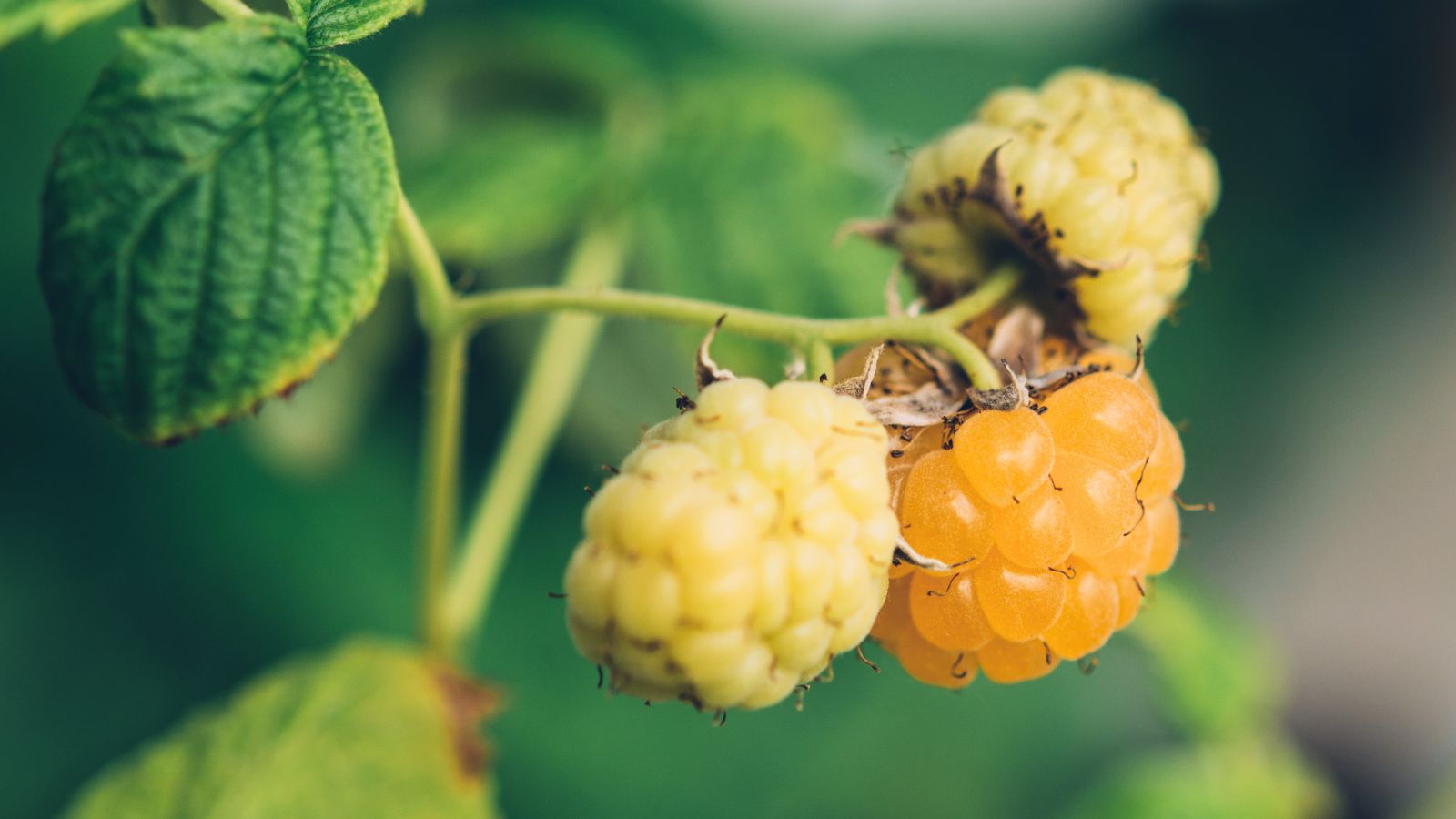
‘Anne’ is highly productive and has a very sweet flavor with hints of apricot. Its pale color is unique and can be planted with red raspberry varieties with similar fall ripening times for a nice blend of colors.
Trellising may be necessary due to height, but ‘Anne’s’ canes are large and strong. Enjoy these berries in jams and pies, but especially for fresh eating. The berries are twice the size of an average raspberry!
Note that the cultivars of Rubus ellipticus are highly invasive plants in many parts of the United States. Check with your local extension before you plant one.
‘Double Gold’

|
|
botanical name Rubus ideaus ‘Double Gold’ |
|---|---|
|
|
sun requirements Full sun |
|
|
height 4-5 feet |
|
|
hardiness zones 5-7 |
‘Double Gold’ is a great option for home gardeners. Growers love it for its vigor, disease tolerance, and intense, sweet flavor. Plus, the mix of champagne hues is just lovely.
While they may be a bit slower to establish in cooler growing zones, these plants sucker easily and produce berries in the first year, making their planting a no-brainer. Be sure to harvest them early, as they don’t hold long on the bush. The pinkish coloring makes this tough at first, but you’ll get the hang of it after the first season.
Harvest raspberries in the morning after any overnight dew has dried. Ripe berries release easily when pulled. Avoid washing them until they’re ready to be used, and cool them right away. Store for three to seven days or freeze.
‘Tahi’

|
|
botanical name Rubus occidentalis ‘Tahi’ |
|---|---|
|
|
sun requirements Full sun to partial shade |
|
|
height 4-5 feet |
|
|
hardiness zones 5-8 |
No spines? Yes, please. ‘Tahi’ is a spineless black raspberry option whose name means “number one” in Maori. Developed in New Zealand, it features full, tight, easy-to-pick clusters.
Black raspberry varieties typically produce smaller fruits with heavier seed loads, making them perfect for preserves. ‘Tahi’ has a similar season to Jewel.
Pro Tip: If you receive bare-root plants but are unable to plant them upon arrival, store them in a dark, cool place. Dampen the roots every few days and loosely wrap them in plastic to ensure freshness. Plant as soon as possible.
‘Latham’
|
|
botanical name Rubus idaeus ‘Latham’ |
|---|---|
|
|
sun requirements Full sun to partial shade |
|
|
height 5-6 feet |
|
|
hardiness zones 3-8 |
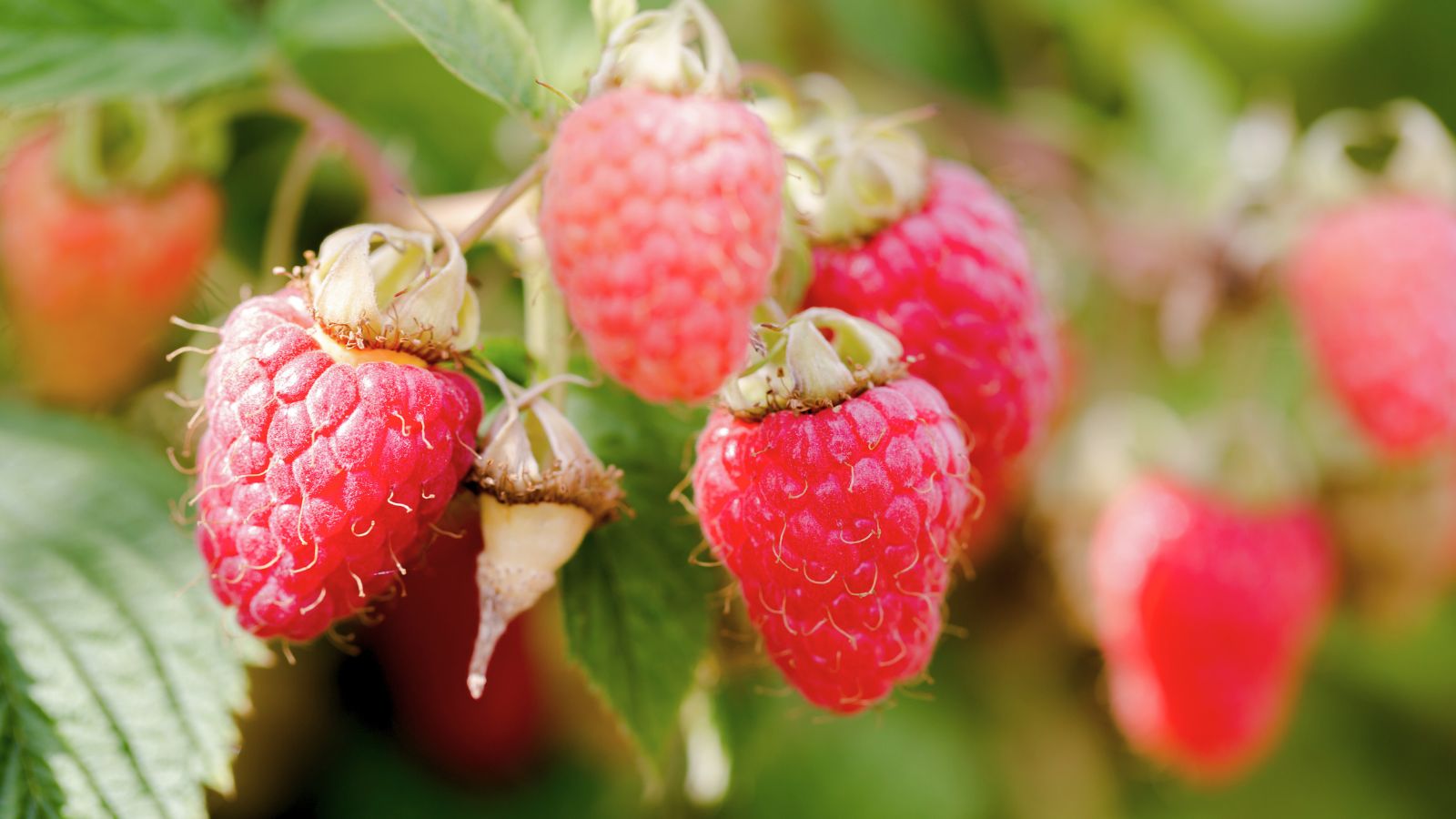
‘Latham’ is a classic, bright red, and flavorful raspberry and is highly recommended for home gardeners. Cultivated in Minnesota in 1920, it has extreme cold hardiness and tolerates frost. The berries ripen from late June to early July for about three weeks.
Canes of ‘Latham’ have very few thorns, making harvesting a breeze. Berries grow in tight clusters, ensuring each harvest is quite rewarding.
Keep your local birds away by hanging scare tape around your fruit plot. If your patch of bushes is large enough, a net makes more sense. Secure it tightly so birds don’t get stuck or injured. Or plant alternative food sources away from your raspberries in hopes the birds will be more attracted to them than your raspberries.
‘Prelude’

|
|
botanical name Rubus idaeus ‘Prelude’ |
|---|---|
|
|
sun requirements Full sun to partial shade |
|
|
height 6 feet |
|
|
hardiness zones 4-8 |
You may not look any further once you grow ‘Prelude’ and experience its great flavor and high productivity. One of the earliest to fruit, the conic berries will ripen in mid-June with a smaller flush in the fall.
‘Prelude’s flavor is excellent, and the plants are extremely cold-hardy and vigorous. Consider trellising them once growth really takes off.
‘Bristol’

|
|
botanical name Rubus occidentalis ‘Bristol’ |
|---|---|
|
|
sun requirements Full sun |
|
|
height 4-5 feet |
|
|
hardiness zones 4-8 |
An heirloom with black raspberry flavor, ‘Bristol’ is sure to delight the taste buds when it fruits in the second year.
Its vigorous growth requires regular pruning, and yours should be spaced at three to four feet. Pruning ensures good airflow and light penetration and decreases the risk of fungal disease. Of course, it also makes picking a bit easier, too.
‘Bristol’ was released from the Cornell Small Fruit Breeding Program. Cornell has many helpful resources on their website that I rely on heavily during the growing and planning season.
Floricane Varieties
Floricane-bearing or summer-bearing raspberry varieties produce fruits on second-year canes and bear fruits in the summer. You won’t get fruit in the year canes are planted, and the second year will be a light load. Plants usually need trellising.
Next year’s fruit grows on last year’s wood, so pruning is a bit more involved. But they’re often much more consistently productive once they’re established. Berries arrive earlier than primocane options. Often, these raspberry varieties are popular among commercial farmers but not so much among home gardeners, depending on your space and setup.
‘Mac Black’

|
|
botanical name Rubus occidentalis ‘Mac Black’ |
|---|---|
|
|
sun requirements Full sun to partial shade |
|
|
height 3-6 feet |
|
|
hardiness zones 3-8 |
‘Mac Black’ will continue your harvest through the fall with a late harvest well after ‘Jewel’. The harvest period is about three weeks. Plants are very cold-hardy, and fruits are firm and sweet.
Black raspberries are an excellent source of vitamin C and fiber, which keep immune systems healthy and may help regulate blood sugar. One cup is about ⅓ of the suggested daily value for adults.
‘Nova’

|
|
botanical name Rubus idaeus ‘Nova’ |
|---|---|
|
|
sun requirements Full sun to partial shade |
|
|
height 4-6 feet |
|
|
hardiness zones 3-8 |
One of the most popular bramble raspberry varieties, ‘Nova,’ is dependably delicious with firm berries. This variety is widely adaptable, able to tolerate high heat in summer, and has excellent winter hardiness as well, making it an easy choice for midwestern and northern growers.
‘Nova’ grows vigorously but has light spines, so it’s not a pain to work with like some others. These berries have a long harvest period and a great shelf life, and the plants seem to be resistant to some common diseases, such as cane blight and spur blight.
‘Nova’ ripens about ten days after ‘Prelude’ but suckers less. You may get a light fall crop on the primocanes if the weather is mild.
‘Malling Promise’

|
|
botanical name Rubus idaeus ‘Malling Promise’ |
|---|---|
|
|
sun requirements Full sun |
|
|
height 4 ½ to 5 feet |
|
|
hardiness zones 5-9 |
Known for its ability to grow in less-than-ideal soil, this early and reliable berry has great disease resistance. Berries are plump and flavorful, perfect for eating fresh or freezing, and ready as early as June in some regions.
Pollinators flock to the abundant white flowers of ‘Malling Promise’ plants. Foliage transitions from a deep green to pale yellow in the fall, making it an attractive ornamental in the off-season.
After the summer harvest, cut down the canes from this year, tie in new canes if using a trellis, and mulch as needed. Continue to water until the first frost so the roots remain healthy and hydrated.
‘Encore’

|
|
botanical name Rubus idaeus ‘Encore’ |
|---|---|
|
|
sun requirements Full sun to partial shade |
|
|
height 3-4 feet |
|
|
hardiness zones 4-8 |
Fill the gap between early and late-season varieties with ‘Encore’, whose berries will ripen in late July to early August, the latest of most floricane raspberry varieties. Fruits are round and plump, and plants are highly productive and have light spines.
‘Encore’ was bred at Cornell and is hardy down to zone 4, making it a great option for growers with harsh winters. Its fruiting season is three to four weeks, from mid-late July into August. Berries taste sweet even if picked a little too early.
‘Royalty’

|
|
botanical name Rubus idaeus ‘Royalty’ |
|---|---|
|
|
sun requirements Full sun to partial shade |
|
|
height 4-7 feet |
|
|
hardiness zones 4-8 |
Low-maintenance with good flavor and cold hardiness—What more could you ask for? This gorgeous purple berry is dependable and a reliable heavy producer.
When bare-root plants arrive, trim them down to about six inches and make a shallow trench. Place the cane vertically, allowing the roots to spread out in the trench. Bury them in the trench and gently tamp the soil down. Use drip irrigation or a soaker hose to water them right away, and continue watering them one to two inches per week if no rain falls.
‘Royalty’ doesn’t spread by root runners and handles late spring frosts, so it’s a good option for growers in cold or elevated regions.
‘Boyne’

|
|
botanical name Rubus idaeus ‘Boyne’ |
|---|---|
|
|
sun requirements Full sun to partial shade |
|
|
height 5 feet |
|
|
hardiness zones 3-7 |
This variety was released in 1960, has excellent freezing capabilities, and has a deliciously medium-sweet flavor, great for jams and freezing whole.
‘Boyne’ holds up well in wet springs, contracting less foliar fungal diseases than other raspberry varieties. Plants also survive winter damage to canes when others may not. Consistent and cold-hardy, ‘Boyne’ is a great option for the home gardener.
‘Eden’

|
|
botanical name Rubus idaeus ‘Eden’ |
|---|---|
|
|
sun requirements Full sun |
|
|
height 4-5 feet |
|
|
hardiness zones 4-8 |
Breeders in Nova Scotia crossed ‘Glen Ample’ and ‘K93-11,’ and ‘Eden’ was born spineless, thornless, and with delicious berries. The berries don’t separate when picked, and they have a lovely, sweet flavor. They are more conically shaped than some others.
Eden is an extremely productive plant and has great hardiness. Canes are tall and strong. Overall, a great option!