Raised Bed Trellis Ideas to Save Space
A raised bed trellis is not just a good idea. It can be an absolute necessity, depending on which crops you are growing and how much room you have available to grow. In this guide, we discuss different trellises that you can use in raised beds!


Contents
Nothing completes a raised bed garden like a trellis. Not only are they whimsical and easy DIY projects, but they are also extremely practical. Turn one into a raised bed trellis and you have an ideal setup for backyard gardening.
DIY trellises are a smart addition to any garden, especially because they are so customizable. You can make one using just a couple of stakes and some chicken wire, or you can build a more substantial structure out of wood. The choice is entirely up to you. The goal here is to give you the information you need to decide what works best for your space.
To begin, it helps to understand why a trellis is useful in the first place. From there, you can explore the different types of trellises available, along with practical tips for building a few of them yourself.


Why Do You Need A Raised Bed Trellis?

The biggest advantage of using a trellis is that it maximizes space. Plants are no longer limited to the horizontal footprint of a raised bed and can grow upward instead. This allows you to grow more produce while also creating a visually appealing garden.
Trellises are essential for classic vining crops such as beans, peas, and tomatoes. Many plants that typically sprawl along the ground are also excellent climbers, including cucumbers, winter squash, and even pumpkins. Other crops, like peppers and raspberries, are not true climbers but still benefit from added support.
Another major benefit of trellis gardening is easier harvesting. With plants growing vertically, much of the produce stays at eye or waist level, reducing the need to bend over and making harvests quicker and more comfortable.
A trellis works with nearly any type of raised bed, regardless of the material it is made from. While galvanized steel raised beds are a popular option, trellises can be just as effective in wooden or DIY raised bed setups.
Types of Trellis

Climbing plants will grab onto almost anything as they grow, which gives you plenty of freedom to get creative with trellis designs. There are many standard DIY trellis styles to choose from, and most can be easily modified to suit your space. There are also plenty of free plans available online.
When choosing a design, keep the structure of your raised bed in mind. Some trellises attach directly to the bed, which works well for wooden builds, while others are designed to stand independently in the soil. It is also important to consider what you plan to grow so you can provide enough vertical space for mature plants.
Rectangular Trellis

This is one of the most popular trellis designs, and for good reason. It features a long, rectangular frame that spans an entire side of a raised garden bed. Chicken wire or cattle fencing is secured across the frame to provide sturdy support for vining plants.
One drawback of this DIY trellis style is that it can block access to one side of the bed, making it harder to reach the soil. If you have a larger raised bed, you can place the trellis across the center instead, keeping the outer edges accessible. To prevent plants from competing for space, plant along only one side of the trellis and leave the opposite side open.
String Trellis

This design is similar to the rectangular trellis but uses heavy-duty string instead of fencing. The string is woven by hand, allowing you to customize the size of the grid to suit the plants you plan to grow. While this trellis can take a bit more time to assemble, it is relatively simple and highly adaptable.
String trellises are best suited for lighter plants, as string does not provide the same level of support as wire. Crops larger than cucumbers may be too heavy for this type of structure. String trellises work well for tomatoes or peppers, but are generally not strong enough for winter squash.
Fan-shaped Trellis

This unique shape takes up only a small amount of space at the soil level, so it interferes less with the raised bed itself. It provides ample growing space above ground, making it a good choice for plants with a central stem that branches into multiple vines, such as passion fruit or grapes. This style works especially well for smaller raised garden beds.
If it is not secured properly, this type of trellis can become top-heavy and tip over. It is typically attached to one side of the raised bed or secured to a nearby wall for added stability.
Archway Trellis

This is a favorite look for a raised bed garden, and it is easy to see why. It is made using a long piece of wire fencing bent into an arch. The trellis can span an entire bed or connect two beds, creating a walkway underneath. With enough space, you can even build a tunnel of vining plants that stretches several feet long.
DIY archway trellises offer both vertical and horizontal growing space above raised garden beds. Just be sure to harvest on time, as heavy or overripe vegetables can hang overhead and may drop while you walk beneath the arch.
Ladder Trellis

This support is just that, a wooden ladder. Each side must be set inside the raised bed. If placed on the outside, it will take up far more ground space than the bed itself, which defeats the goal of keeping things compact. The space between each rung is much larger than chicken wire, so this option is best suited for large vines.
A-shape Trellis

Like the ladder, this DIY trellis has two sides that join together in a peak above the raised bed. Instead of wooden rungs, chicken wire is stretched across the sides. This is a sturdy design that can provide support for most climbing plants.
Triangular String Trellis

The string technique isn’t limited to rectangular frames. In this DIY design, the strings are tied vertically across an A-shaped frame. It’s ideal for small vines that climb up solitary posts, such as beans.
Cover Trellis

This one is cheating a little. If you have a raised bed cover, it’s super easy to attach chicken wire or string across the center. This way, you have a great 2-in-1 design!
Tomato Cages

If you’re just not in the DIY mood, you can always stick some tomato cages in the soil. This one isn’t a great long-term solution and will only provide support for smaller plants, but it does work in a pinch.
Basic DIY Trellis Ideas
We’ll go over how to build a few of these DIY trellises. The supplies to make them should be fairly inexpensive at a gardening store, and you may even be able to source some for free from fellow DIYers. Ideally, you should time your trellis installation for before the growing season, since most trellises need to be in place prior to planting.
DIY Rectangular Trellis

This may be the most basic style, but it’s still very free form. For the sturdiest option, you’ll need to build a three-sided frame using wood. It should match the length of the bed it will be paired with and be as tall as needed, as most are several feet high. Keep in mind that a tall, narrow frame will require extra support at the base to prevent it from tipping over.
Spread a length of chicken wire or cattle fencing across the frame. The fencing should only extend down to the plant’s soil level. Since the frame is made of wood, it will be easiest to secure the fencing in place with nails.
To install the trellis, attach it to the outside of the raised bed using nails or screws. You could also sink each post directly into the raised garden bed, although this may take up valuable growing space. As an alternative, you can build the frame posts from a thinner material, such as a metal fence post or PVC pipe.
DIY Cover Trellis

This one is very simple because it builds directly onto the pieces of your raised bed cover. All it requires is wire fencing, wire clippers, and zip ties or a similar fastening method.
Cut a piece of fencing that will cover the space between two or more of the cover posts. Secure the fencing across the space and trim back any overhanging edges. That’s it. The trellis will be as sturdy as your cover support, and you can still cover your plants as needed.
DIY Archway Trellis
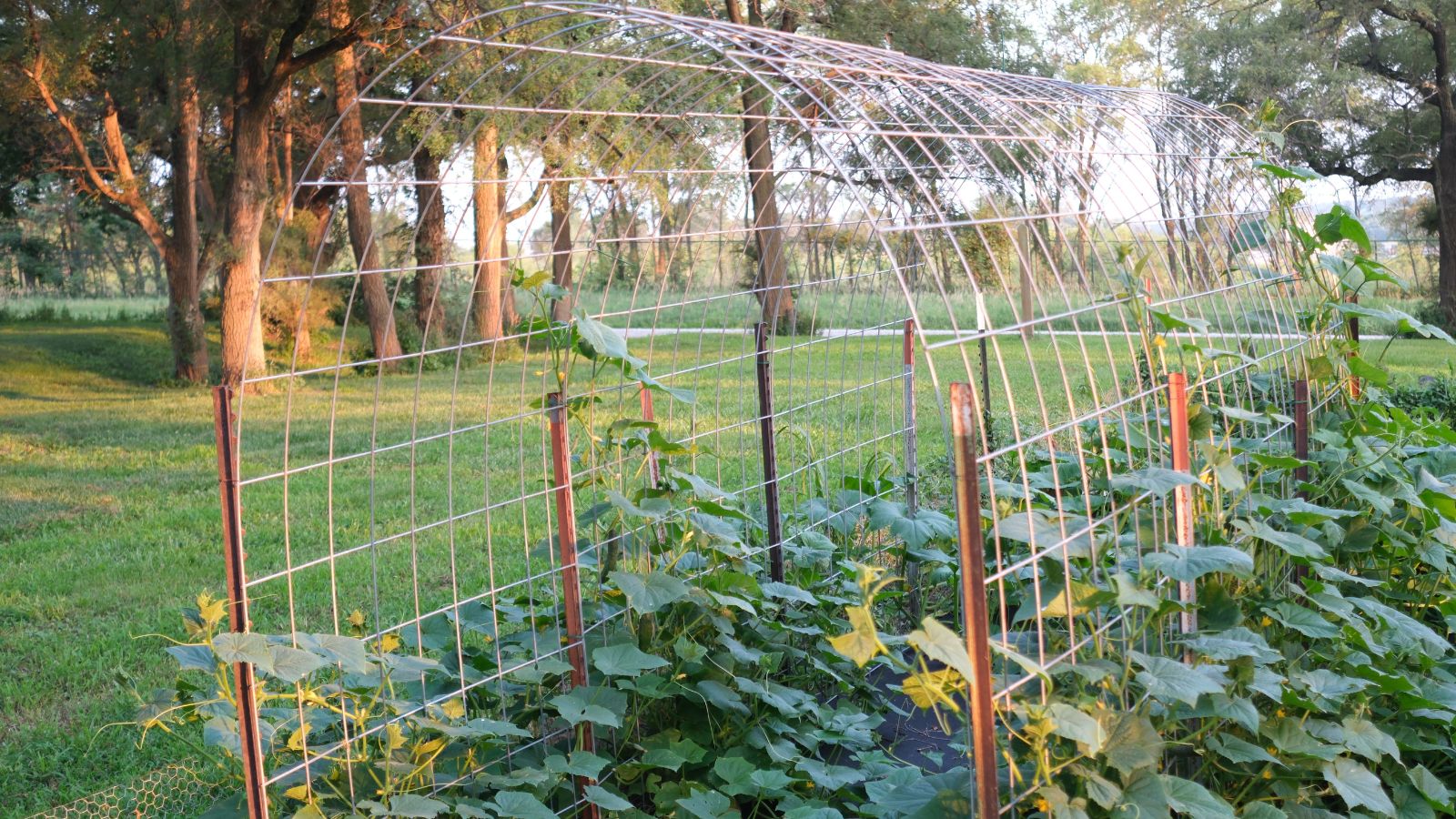
If you want your archway to be rigid, you’ll need a sturdy material, as chicken wire won’t cut it. Cattle fencing works well, as do ladder-like structures designed specifically for archways. For extra support, use T posts at the base and attach the fencing with zip ties, wire, or screws.
Each side of the archway can be staked into the ground inside or outside of the garden box. If you install the fencing on the inside, it’s easiest to put the trellis in place before filling the box with soil.





