How to Grow Pothos in Water
Growing pothos in water is not only doable, but it can also be a great way to cultivate this popular houseplant. Expand your collection quickly with these easy steps. Epic Gardening founder Kevin Espiritu teaches you how!

Contents
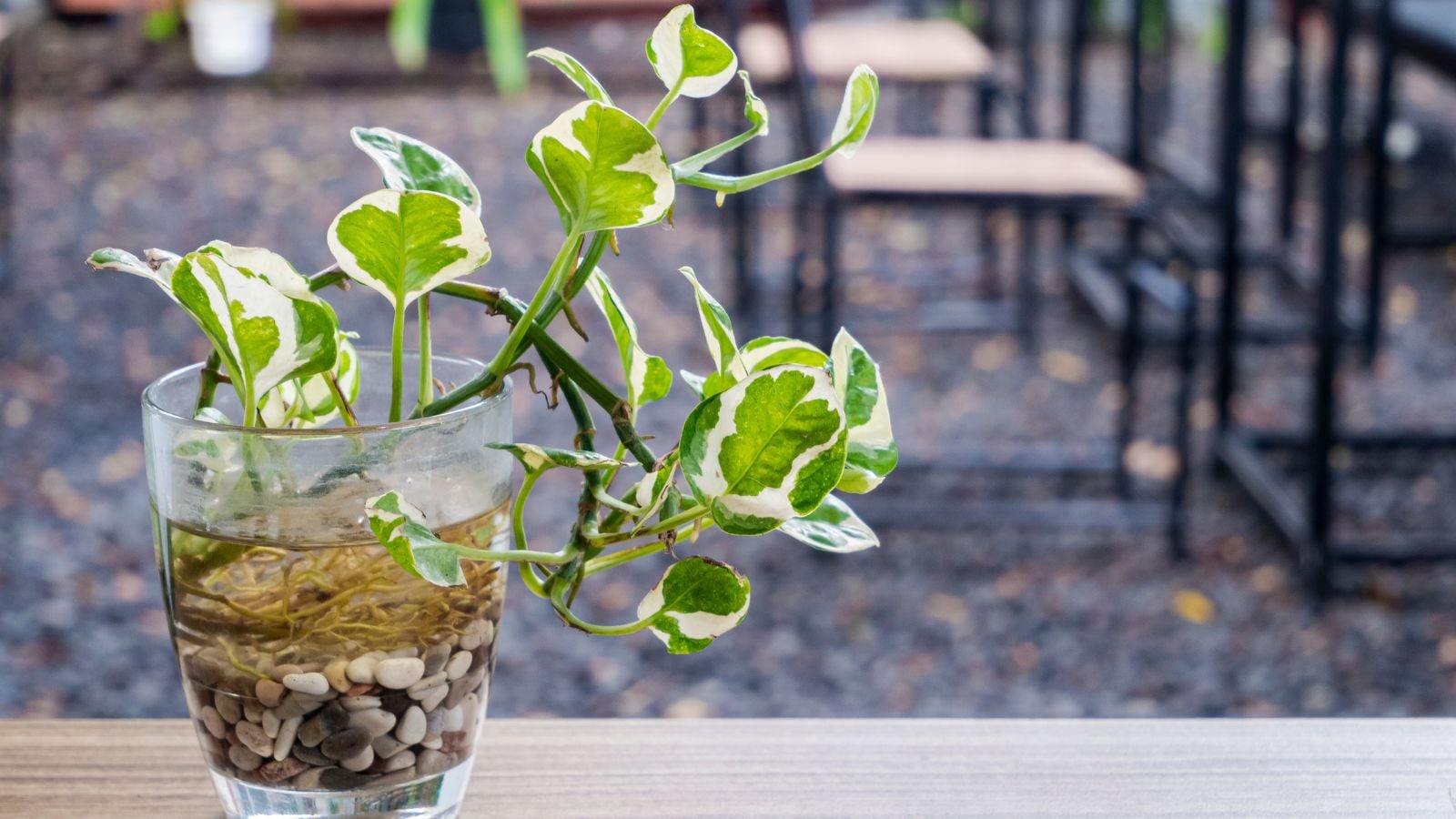
Pothos (Epipremnum aureum), also known as devil’s ivy, is a trailing houseplant with gorgeous, heart-shaped green leaves. The most common variety, golden pothos, has golden and cream marbling that makes it a simple but standout indoor plant.
But did you know that pothos is one of the easiest houseplants to propagate or grow in water?
Even if you do not have a green thumb, you can easily grow this sturdy, low-maintenance plant in nothing more than a jar of clean water. I love growing houseplants this way, so read on for the pro tips in this post.
You’ll learn the following:
- How do you propagate your pothos plant in water?
- How long do you have to keep your pothos in water to thrive?
- What fertilizers should you use for your pothos, if any?
How Plant Propagation Works

Propagation is the practice of creating new plants from existing ones. It is an easy, fast, and practical way to expand your collection.
To propagate a plant, you use one of its vegetative parts, such as a stem, root, leaf, or rhizome. These cuttings are rooted in soil or water, depending on the species. Once the cutting develops a healthy root system, you have a brand new plant growing in your home.
Learning to propagate is always useful. You will have a constant supply of plants to add to your collection or, my favorite part, to share with family and friends.
The Benefit of Growing Pothos in Water

Devil’s ivy grows beautifully in soil, but it can become overwhelming and unruly fairly quickly. You need to water it consistently, choose the right location, and give it a steady amount of care.
When you grow golden pothos in a glass jar filled with water, there is no need for pumps, special fertilizers, or drainage holes. The plant also grows more slowly in water, which keeps it manageable and saves space while still adding fresh greenery to your home.
Materials Needed

Most plants don’t absolutely need soil to thrive. What they need is water and nutrients, which they get from the soil. So, as long as you can provide those to your plant, you don’t really need to root your devil’s ivy cuttings in soil.
They grow easily in water as long as you provide them with sufficient sunlight and nutrients. Here are a few basic things that you’ll need:
- A water container (any vase or glass jar that can hold water will do)
- Tap water (unless it’s overly chlorinated)
- Liquid fertilizer to supply nutrients
How to Water Propagate Your Pothos

Now that you know the basics of propagation, let’s return to our beloved pothos.
To grow pothos in water, start by taking a healthy vine from an existing plant. Avoid any stems with brown or yellowing leaves. Cut just below a node, and make sure the cutting includes at least three nodes. Remove any leaves below the lowest node so they do not decay underwater and suffocate new roots.
Along the vine, you may notice small brown bumps near each node. These are aerial roots, and they will begin to grow once the cutting is placed in water.
Place the cutting in a vase filled with clean water, ensuring one or two nodes are submerged. Choose a vine with at least two leaves to encourage quicker growth and stronger root development.
Fertilizing
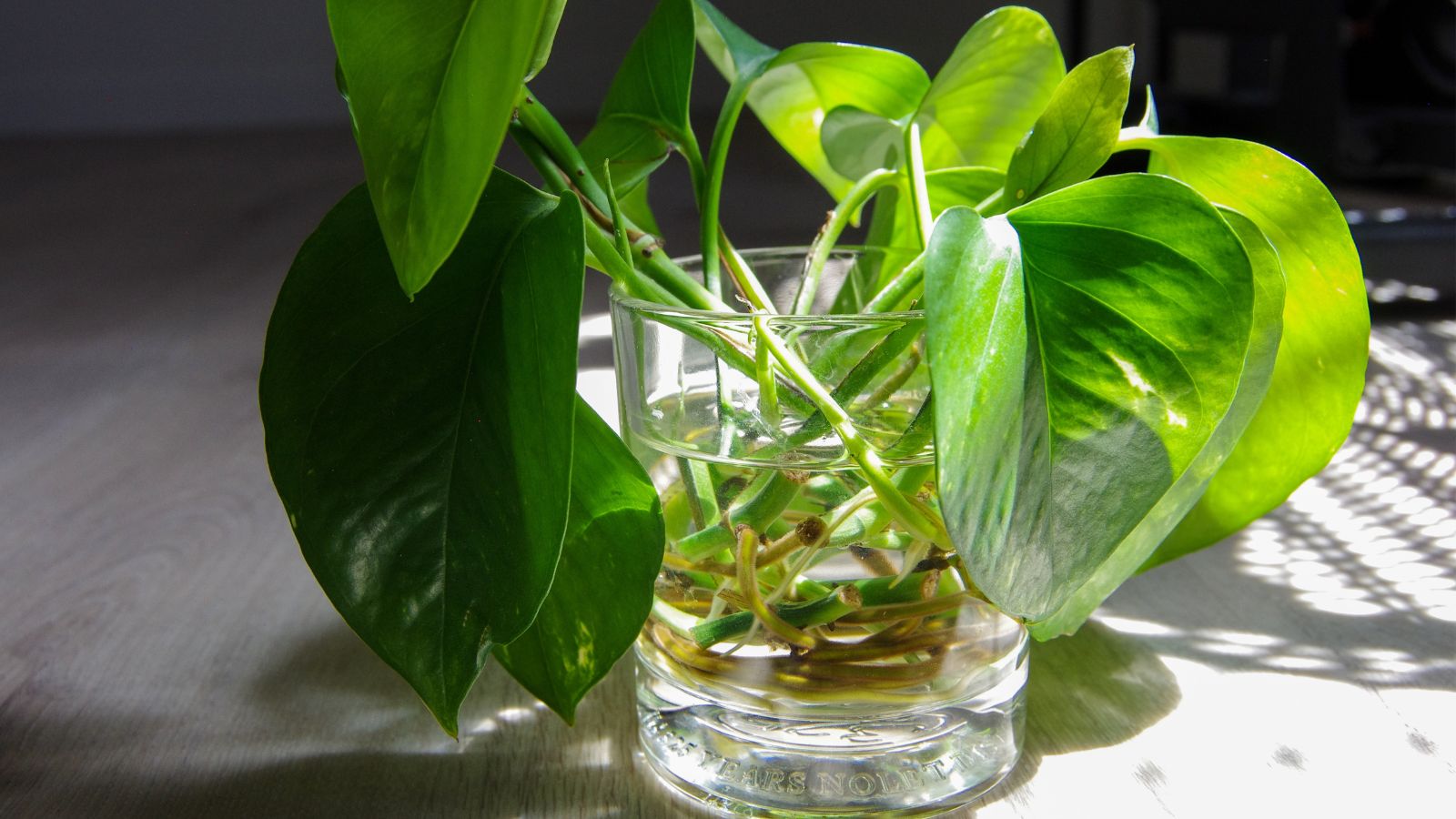
Place the vase in bright, indirect sunlight. New roots will begin to sprout from the submerged nodes in about seven to fourteen days. Once the roots reach one or two inches long, you can either move the cutting into soil or continue growing your pothos in water.
If you choose to grow it in water long-term, use a good-quality liquid fertilizer to feed your plant. Fertilize every four to six weeks. The amount you use will depend on the instructions on the fertilizer package and the size of your jar and plant, but it should never be more than a few drops. It is always better to underfertilize than overfertilize when growing plants in water. Too many nutrients combined with sunlight can cause algae growth.
Place your growing pothos in front of a north-facing window and filter the light with blinds if necessary. Change the water every other week to keep the plant fresh and healthy.
Maintenance
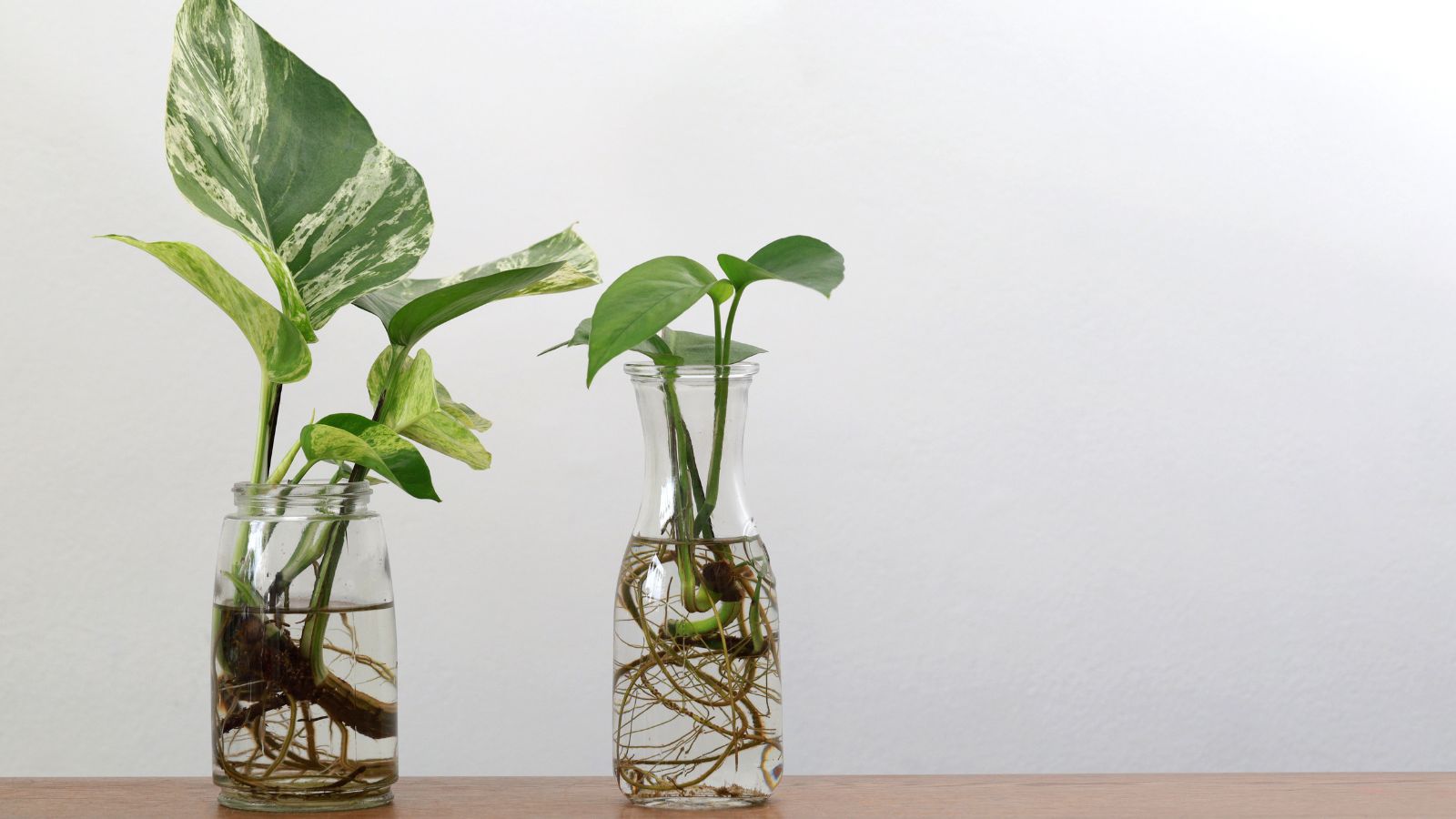
You can’t just stick your cuttings in water, forget about them for months, and expect them to stay alive. Follow this checklist to ensure you keep a healthy pothos plant:
- Make sure to change the water in your containers (ideally, after a week or two at most). Water eventually loses oxygen, and your pothos’ roots need oxygen to stay alive!
- Feeding your pothos is vital! Use a high-quality liquid fertilizer to feed your new plant baby. You can also use a water-fertilizer mix of water with a few drops of liquid fertilizer to refill the containers as the existing water slowly evaporates.
- Keep your containers clean! If you have opted for a glass container and you see algae growing in it, instantly remove your plant and wash out the jar before placing your pothos back in it.
As long as you check it every so often, pothos vines will flourish in water. I followed these simple steps to grow my golden pothos in water without any difficulty whatsoever.
Things to Consider When Growing Pothos in Water
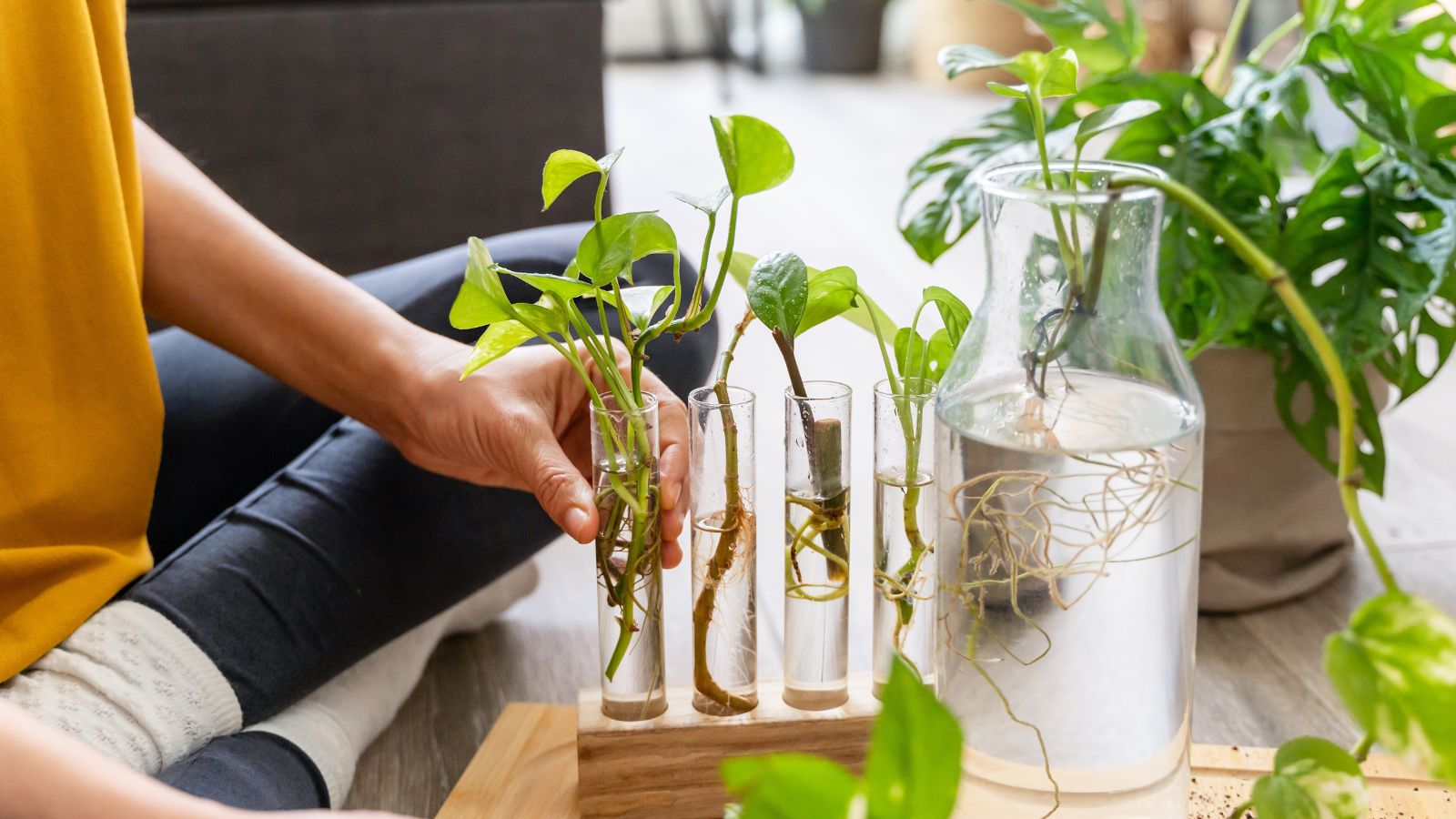
Choose an opaque vase if possible, since it blocks more light and helps prevent algae growth. If you prefer a clear vase, be prepared to clean it more often to keep algae under control.
Pothos can grow well in tap water, but it should not be high in chlorine. To off-gas chlorine, leave tap water in an open container for at least 24 hours before pouring it into your vase.
Avoid using solid fertilizers when feeding pothos in water. Liquid fertilizer is immediately available to the roots and provides quick access to the nutrients the plant needs.
Does Pothos Grow Faster in Water or Soil?

In short, it depends. If you provide plenty of nutrients in the water, a pothos can actually grow faster in water. But a healthy pothos growing in soil and watered correctly will usually keep pace with one grown in water.
Pothos can survive in water, but what happens when you move a soil-grown plant into water? It can adapt, although it may take time. Growth will slow at first, and you may see one or two leaves yellow and drop. For this reason, it is generally easier to start new pothos cuttings in water and keep them there permanently rather than transitioning a mature soil-grown plant.
If you must change the growing medium, thoroughly rinse all soil from the roots before placing the plant in water. This keeps the stems and roots free of debris and reduces the risk of fungal infections. Handle the roots gently while rinsing so you do not damage them, as damaged roots make adjustment much harder. Prune off any roots that appear rotten, since they can infect healthy ones.
Once your pothos is in water, add a drop or two of hydrogen peroxide. This helps oxygenate the water and reduces the risk of fungal problems while the plant transitions.
Frequently Asked Questions
Can pothos live in just water?
It can! However, if you grow pothos in water for long enough, it will be difficult to grow it in soil.
Can you keep plants in water forever?
It depends on the plant. In the case of pothos and many other houseplants, it’s possible to just grow them in water.
Why are pothos dying in water?
Plant cuttings often emit urea as they sit in water. If you don’t change out the water frequently, your plant could be poisoned by its own secretions. Another issue that can cause pothos death is when there is algae growth present. Therefore, keep the water somewhat clean, and ensure damaged parts of the plant are removed as they crop up.
Do pothos grow slower in water?
Yes. Because the water itself doesn’t contain nutrients, and soil does, your pothos plant will grow faster in a soil-based medium.
How do you make pothos grow faster in water?
First, ensure the conditions for growing pothos in water are correct. Ensure temperature, water quality, and container are all up to speed. Then you can add a heavily diluted plant fertilizer to the container.





