Are Ponytail Palms Safe for Cats?
With a ponytail palm, cats aren't in danger. But there are ways to deter them if they hang around your houseplants. Epic Gardening founder Kevin Espiritu gives you all the tips you need.

Contents
Picking the right houseplants for your living space can be tricky, and finding ones that are safe for pets is even harder.
Dogs often lounge around the house, but cats tend to be far more curious. With a feisty pet that explores every nook and corner, it’s important to avoid keeping poisonous plants indoors.
Ponytail palms are incredibly popular houseplants thanks to their cascading leaves and bulbous caudex. They are also known as elephant’s foot tree and bottle palm. These plants make wonderful home decor because they are slow-growing, low-maintenance, and can live for decades.
But the question remains: are ponytail palms toxic to cats and other furry friends? Read on to find out.
Is Ponytail Palm Toxic To Cats?

In many houseplants, toxicity hides beneath the surface. Some have sap that becomes harmful when a stem breaks. Others contain toxins in their leaves, making even brief contact dangerous for cats and dogs. In many cases, pets must ingest part of the plant before any poisonous effects appear.
Fortunately, according to the American Society for the Prevention of Cruelty to Animals (ASPCA), ponytail palm is non-toxic to cats, dogs, and horses. These plants are small, lightweight, slow-growing, and easy to place on coffee tables or near sunny windows.
When in doubt, the ASPCA database is one of the best resources for checking whether a plant is safe for pets. They compile toxicity information for common houseplants, such as spider plants, and organize everything into a clear, searchable list you can reference whenever needed.
In short, ponytail palm is completely safe around pets and children. With its dramatic, sculptural shape, it can easily become a focal point in your living room. The leaves, stem, and trunk are all non-poisonous. With that peace of mind, you can enjoy caring for it in your home.
Keeping Cats Away From Your Palm
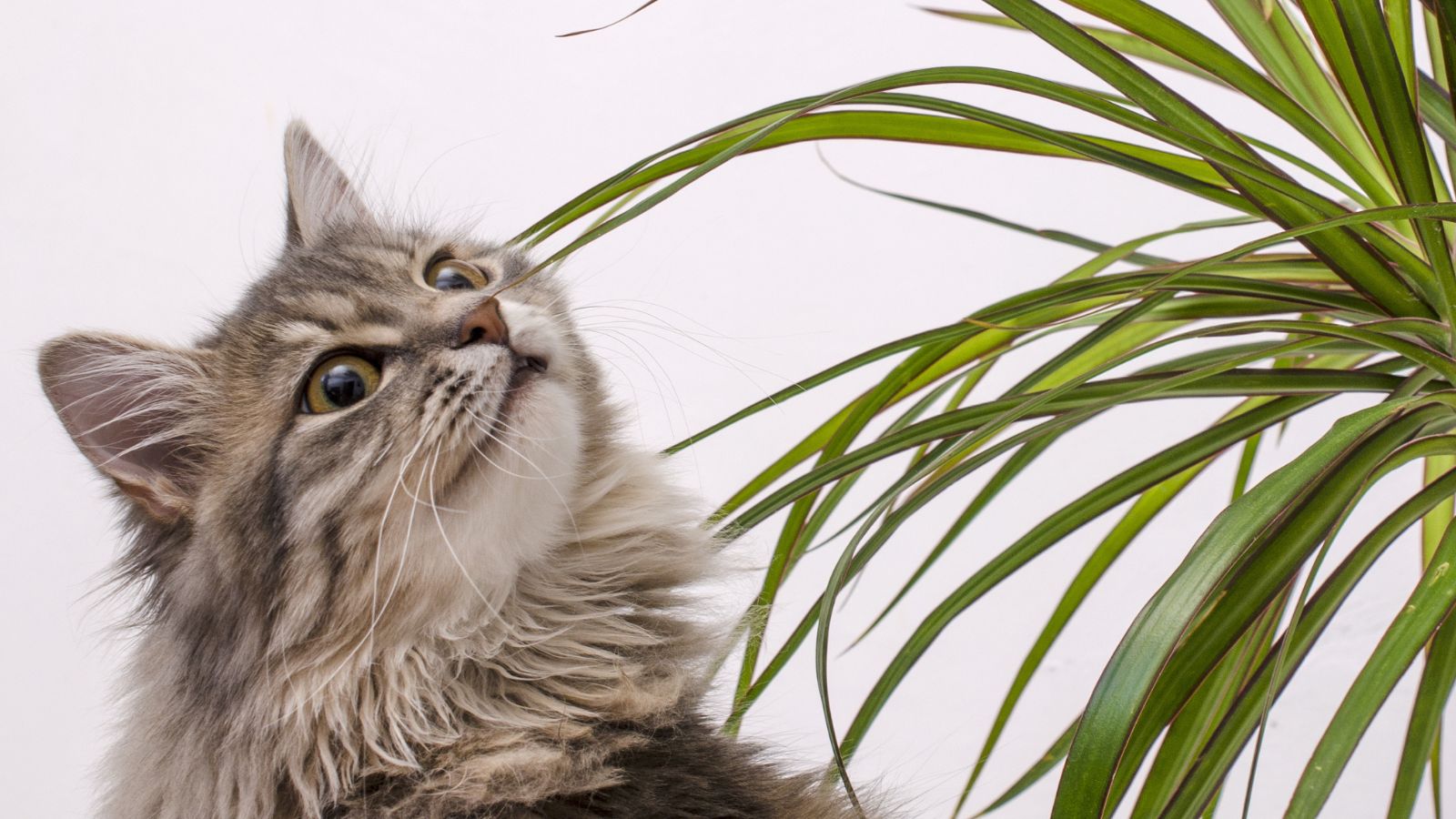
However, the real question is how to protect a ponytail palm from curious cats. Cats tend to investigate any plant in the house, whether it is a fern, a cactus, or anything leafy, green, and inviting.
If you are choosing a ponytail palm as a décor piece, keep it in a safe, pet-free zone to protect both the plant and your peace of mind. Here are a few ways to discourage unwanted attention:
- Use cayenne pepper or citrus to deter ponytail palm cats by causing an unpleasant aroma
- Add pebbles or stones to the top of your container
- Add pinecones or crumbled aluminum foil
- Buy plants like catnip or lemon balm to attract them
- If you hear fluttering leaves, lightly spray your cat with water every time it goes near to train it
- Grow your ponytail palm outdoors if your climate allows, to avoid the problem entirely
Why It Works

Cats are extremely sensitive to smell, which makes scent deterrents a great option for keeping them away from Beaucarnea recurvata, the ponytail palm. There are several safe ways to make the plant smell unpleasant to a cat. Sprinkling a little cayenne around the leaves is both safe and effective, although you will need to reapply it about once a month because it fades over time.
Cats also dislike citrus. If you have dried orange or lemon peels in the kitchen, place a few in the ponytail palm pot. The aroma is pleasant for you but strong enough to discourage a curious cat. Avoid using lemon juice or other acidic liquids, since they can damage the leaves.
If your cat treats the pot as a litter box, you can place objects like large pebbles or stones over the soil to block access. Another option is to add pine cones or crumpled aluminum foil around the container. The sharp edges or unusual texture keep cats away from the windowsill.
If nothing else works, you can cover the soil with breathable mesh fabric or chicken wire to prevent digging and protect the plant.
What to do When Cats Dig in Ponytail Palm Soil

If your cat still manages to get its paws into the pot, there is another option. You can buy a few sacrificial plants, such as lemon balm or catnip, to divert your cat’s attention. Place these cat-friendly plants in containers far away from the ponytail palm so your pet seeks out the more appealing choice instead of disturbing your palm.
Ponytail palms are among the safest and most attractive plants to keep indoors. With the simple techniques above, you can easily keep curious cats away from them. Thanks to their low upkeep and long life span, they make a fresh and stylish addition to any sunny window.
Frequently Asked Questions
What happens if my cat eats ponytail palm?
Not much! Thankfully, ponytail palm is non-toxic to cats.
Is ponytail palm pet-friendly?
It’s highly pet-friendly and completely safe for cats and dogs! However, your cat might try to use the planter as a litter box.
Can a ponytail palm be a houseplant?
Yes! It’s a pretty low maintenance houseplant that thrives on neglect.
How do you care for a ponytail palm indoors?
Give it somewhat dry soil, low humidity, fertilizer once in spring and summer, and bright, indirect light.
Should I cut the brown tips off of my ponytail palm?
Yes. Remove dead and diseased leaves as needed with sterilized pruning shears to keep the rest of the palm’s lush greenery healthy.





