21 Plants That Can Grow in Poor Soil Conditions
If you have poor soil conditions, picking plants to add to your garden can be a challenge! The good news is that there are many different plants that will grow in poor soil, and have adapted to harsher conditions over time. In this article, we take a look at our favorite plants that will grow in even the poorest soil conditions.


Contents
Just because you have poor soil doesn’t mean you can’t have a thriving garden! But what is poor soil? It is soil that lacks sufficient nutrients to support plant growth. This can be due to a lack of organic matter, compaction, mineral deficiencies, or high salt levels.
While poor soil health may seem like a death sentence for your garden, many plants have adapted to poor soil and grow quite well in these conditions. These plants are tenacious, and many have adapted to rocky, soggy, or overly dry soil, as well as heavy clay.
Before you plant, check your hardiness zone. Understanding your plant hardiness zone is important because it helps you choose plants that will thrive in your garden. If you’re living in a drought area, you can even plan a water wise garden to help you conserve water and protect your soil!
With a little patience and some creativity, you can create a beautiful garden no matter what kind of soil you have. So don’t let poor soil keep you from enjoying the beauty and bounty of gardening!


Aster


|
botanical name Aster spp. (North America, Eurasia) |
|---|---|

|
plant type Perennial |

|
sun requirements Full sun to partial shade |

|
height 1-8 feet |

|
hardiness zones 3 to 8 |
Asters grow in a variety of different conditions and typically have bright, colorful flowers. Aster plants are a great choice for pollinators, as they provide a lot of nectar. They are also a popular choice for gardeners, as they are relatively easy to care for.
Perhaps best of all, aster plants come in many different varieties, which makes them very versatile flowers. Whether you’re looking for a bold fuschia or a soft purple bloom, there is sure to be an aster plant that is perfect for you.
Bee Balm

|
|
botanical name Monarda spp. (North America) |
|---|---|
|
|
plant type Perennial |
|
|
sun requirements Full sun to partial shade |
|
|
height Up to 4 feet |
|
|
hardiness zones 4 to 9 |
Bee Balm is native to North America. Bee Balm grows in moist soils in open fields, meadows, and near streams and ponds.
The Bee Balm plant produces clusters of tubular flowers that range in color from white to pink to purple. The flowers are super attractive to bees and other pollinators. Bee Balm has many different uses and can handle very tough soil conditions.
Black-Eyed Susan

|
|
botanical name Rudbeckia hirta (North America) |
|---|---|
|
|
plant type Perennial, Biennial |
|
|
sun requirements Full Sun |
|
|
height 2-3 feet |
|
|
hardiness zones 3 to 9 |
The cheerful Black-Eyed Susan is a perennial plant that has been around for centuries. They are easy to grow and care for. These plants thrive in full sun and well-drained soil.
Once established, black-eyed Susans require very little care and will continue to grow and bloom year after year.
Blazing Star

|
|
botanical name Liatris pycnostachya (North America) |
|---|---|
|
|
plant type Perennial |
|
|
sun requirements Full sun |
|
|
height Up to 5 feet |
|
|
hardiness zones 3 to 9 |
Blazing Star is a beautiful addition to any garden. It has tall, spiky blooms in shades of purple, pink, and white that are sure to catch the eye.
These make a great choice for gardeners who want a long-lasting flowering perennial. They bloom from late summer into fall, and their flowers are a favorite of butterflies and other pollinators.
Bleeding Heart

|
|
botanical name Lamprocapnos spectabilis (Asia) |
|---|---|
|
|
plant type Perennial |
|
|
sun requirements Partial to full shade |
|
|
height Up to 3 feet |
|
|
hardiness zones 3 to 9 |
Bleeding Heart is a popular garden flower with heart-shaped leaves and delicate pink flowers. This is a woody perennial, and can adapt to almost any growing environment. The only things it won’t tolerate are full sun and high heat.
So, if you plan on growing bleeding hearts as perennials, make sure you are in the proper hardiness zone. These perennials do very well in the shade, and can adapt to a variety of different soil conditions.
Calendula

|
|
botanical name Calendula officinalis (Mediterranean) |
|---|---|
|
|
plant type Perennial, Annual |
|
|
sun requirements Full sun to partial shade |
|
|
height 1-2 feet |
|
|
hardiness zones 9 to 11 |
Calendula is an annual flower that is easy to grow from seed. It blooms throughout the summer and into fall, providing a cheerful splash of color in the garden.
Calendula is commonly companion-planted amongst different types of vegetables. It’s quite hardy and can be grown as a perennial if the conditions are perfect. Its orange blooms are also quite striking, and provide some additional color in your veggie patch.
Fennel

|
|
botanical name Foeniculum vulgare (Mediterranean) |
|---|---|
|
|
plant type Perennial |
|
|
sun requirements Full Sun |
|
|
height 4-6 feet |
|
|
hardiness zones 4 to 9 |
Fennel (Foeniculum vulgare) is an easy-to-grow herb that is a member of the carrot family. The plant grows to a height of about 3 feet and has feathery leaves and small yellow flowers. It can be grown from seed or transplants.
Fennel is a hardy herb that can be grown in almost any soil type as long as it is well-drained. It prefers a sunny location but will tolerate some shade.
Fountain Grass

|
|
botanical name Pennisetum spp. (Asia, Africa, Australia) |
|---|---|
|
|
plant type Perennial Ornamental Grass |
|
|
sun requirements Full sun |
|
|
height Up to 4 feet |
|
|
hardiness zones 3 to 10 |
Fountain grass, a perennial ornamental grass, is often used in gardens and landscapes. It is a low-maintenance plant that is drought-tolerant and grows well in full sun or partial shade. Fountain grass can be grown from seeds or plugs.
One common variety is Pennisetum alopecuroides, also known as ‘Hameln.’ It is sometimes called Chinese fountain grass because it originated in China. This variety grows to about 3 feet tall and has distinctive, fluffy, cream-colored flowers that appear in late summer or early fall.
Many varieties are considered invasive in parts of North America, so be sure to choose a fountain grass that isn’t invasive to your region.
Gaillardia

|
|
botanical name Gaillardia x grandiflora (North America) |
|---|---|
|
|
plant type Perennial |
|
|
sun requirements Full Sun |
|
|
height 2-3 feet |
|
|
hardiness zones 3 to 10 |
Gaillardia, or blanket flower, is a genus of about 20 species of annual and perennial herbs in the sunflower family. Gaillardia is native to North America, Central America, South America, and Mexico.
The flowers are daisy-like and come in a variety of colors, including red, orange, yellow, and pink. The flowers have a long blooming period and are popular in gardens. They love the sun and can tolerate a wide variety of growing conditions.
Goldenrod

|
|
botanical name Solidago spp. (North America) |
|---|---|
|
|
plant type Perennial |
|
|
sun requirements Full sun |
|
|
height 1-5 feet |
|
|
hardiness zones 3 to 9 |
Goldenrod is a plant native to North America. The flowers are typically bright yellow and smell sweet. Goldenrod is known for its ability to attract bees and other pollinators.
It prefers full sun and moist, well-drained soil. Goldenrod is a great addition to any garden, as it can grow in poor soil. It’s also drought-tolerant, so it’s the perfect plant to add if you’re looking to increase the biodiversity of your garden.
Ironweed

|
|
botanical name Vernonia noveboracensis (North America) |
|---|---|
|
|
plant type Perennial |
|
|
sun requirements Full sun to partial shade |
|
|
height 3-8 feet |
|
|
hardiness zones 5 to 9 |
Ironweed is a hardy plant and can withstand low-nutrient conditions. It has deep roots that help to improve the soil quality over time. The flowers range in color from purple to pink, and they bloom from summer to fall.
Ironweed is also a host plant for the larvae of several types of butterflies, so it can attract these pollinators to your garden.
If you are looking for a fast-growing plant, ironweed is an ideal choice. It can grow up to eight feet tall in a single season and often forms large clumps due to its spreading roots. Because it requires little care and attention, growing ironweed is an easy way to add beauty and interest to your garden.
Lavender

|
|
botanical name Lavandula spp. (Europe) |
|---|---|
|
|
plant type Perennial |
|
|
sun requirements Full sun |
|
|
height 2–3 feet |
|
|
hardiness zones 5 to 9 |
Lavender doesn’t require a lot of nutrients to thrive. In fact, lavender actually prefers a little neglect. Additionally, lavender can survive with low levels of water. This makes it a great choice for gardeners who don’t have access to ample irrigation or those who live in a climate with low rainfall.
Lavender is also known for its ability to repel pests, making it a great plant to grow if you’re looking for natural pest control. There are also many lavender cultivars, giving you plenty of options depending on the color or your hardiness zone. If you’re searching for a plant that is both beautiful and useful, lavender is a great choice.
Lenten Rose

|
|
botanical name Helleborus x hybridus (Asia, Europe) |
|---|---|
|
|
plant type Perennial |
|
|
sun requirements Partial shade |
|
|
height 1-1.5 feet |
|
|
hardiness zones 4-9 |
Lenten rose is a common name for hellebore, a hardy perennial that blooms in late winter or early spring. The flowers are long-lasting, making them a popular choice for flower gardens.
You’ll want to plant Lenten Rose for its showy flowers and ability to tolerate cold weather. The Lenten Rose is not a rose, but a member of the buttercup family. Hellebore is drought-tolerant and also prefers shade.
Perennial Sunflower

|
|
botanical name Helianthus × laetiflorus (North America) |
|---|---|
|
|
plant type Perennial |
|
|
sun requirements Full sun to partial shade |
|
|
height 3-6 feet |
|
|
hardiness zones 4 to 8 |
Perennial sunflowers are easy to grow in poor soil because they have a deep root system that can reach down to find water and nutrients. Their strong stems can also withstand wind and rain, making them a hardy plant that is adaptable to a variety of growing conditions.
You’ll find perennial sunflowers in a variety of colors, from bright yellow to deep red. They have an upright habit and grow between 3 and 8 feet tall, depending on the variety.
If you’re looking for something a bit smaller, consider opting for one of the dwarf varieties that reach only about 2 feet tall.
Because perennial sunflowers grow so tall and strong, they make a great addition to borders. You can use them as an ornamental grass replacement or as a background plant in your flower garden.
Periwinkle

|
|
botanical name Vinca minor (Europe, Asia, and Africa) |
|---|---|
|
|
plant type Evergreen perennial |
|
|
sun requirements Full sun to partial shade |
|
|
height 3-6 inches |
|
|
hardiness zones 4 to 9 |
The periwinkle is a flowering plant that typically grows in the wilds of Europe and Asia. It has small, delicate flowers that come in a variety of colors, including blue, white, and purple.
The periwinkle has spread to many parts of the world and has become invasive in optimal conditions. It prefers moist, shady areas and naturally grows in woodlands or near streams and rivers. However, opt for something else if you know it is invasive in your region.
The periwinkle plant is low-maintenance. It’s a fast-growing ground cover that can quickly fill in an area, and it’s also tolerant of shade and poor soil conditions.
Purple Coneflower

|
|
botanical name Echinacea purpurea (North America) |
|---|---|
|
|
plant type Perennial |
|
|
sun requirements Full sun to partial shade |
|
|
height 2-5 feet |
|
|
hardiness zones 3 to 8 |
The purple coneflower, or Echinacea, is a beautiful flower that you’ll find in many gardens. Purple Coneflower is one of the best plants for poor soil because it can withstand extreme conditions. It also has a deep root system that helps to stabilize the soil and improve its fertility.
Coneflowers grow perennially in the right climates. There are many uses for this flower outside of its beautiful pink and purplish blooms. It’s commonly grown as an annual and makes a welcome addition to any flower garden. It’s also revered for its long bloom time, often lasting until the first frost in most climates.
Rosemary

|
|
botanical name Salvia rosmarinus (Mediterranean) |
|---|---|
|
|
plant type Perennial |
|
|
sun requirements Full sun |
|
|
height 2-6 feet |
|
|
hardiness zones 8-10 |
If you’re looking for a plant that is both drought-tolerant and has a pleasant aroma, rosemary is a good choice for your garden. It is an easy herb to grow and can thrive in a variety of climates. Additionally, rosemary leaf oils keep insects away.
Rosemary is a flavorful herb that you can use in many dishes. You can dry out the stems and use them year-round in cooking. Similar to lavender, rosemary can handle a little bit of neglect.
Russian Sage

|
|
botanical name Salvia yangii (Southwest to Central Asia) |
|---|---|
|
|
plant type Perennial |
|
|
sun requirements Full sun |
|
|
height 2.5-5 feet |
|
|
hardiness zones 5 to 9 |
Russian Sage is a perennial native to Asia. It is drought-tolerant and blooms from late summer through fall with spikes of flowers.
Russian Sage can grow in a variety of soils, but it prefers sandy or alkaline ones. It is often used as an ornamental plant in gardens and borders.
Sea Holly

|
|
botanical name Eryngium planum (Asia, Europe) |
|---|---|
|
|
plant type Perennial |
|
|
sun requirements Full sun |
|
|
height 2-3 feet |
|
|
hardiness zones 5 to 9 |
Sea Holly is tolerant of a wide range of growing conditions. It can grow in full sun or partial shade, and it can tolerate dry or wet soil. The leaves of sea holly are also quite attractive and can add to foliage displays if you use them as an accent alongside other plants.
Young flowers will bloom in the summer and will continue to bloom until fall. The flowers are a deep blue color and have a very unique spiky shape. The blooms of sea holly attract bees and other pollinators to your garden.
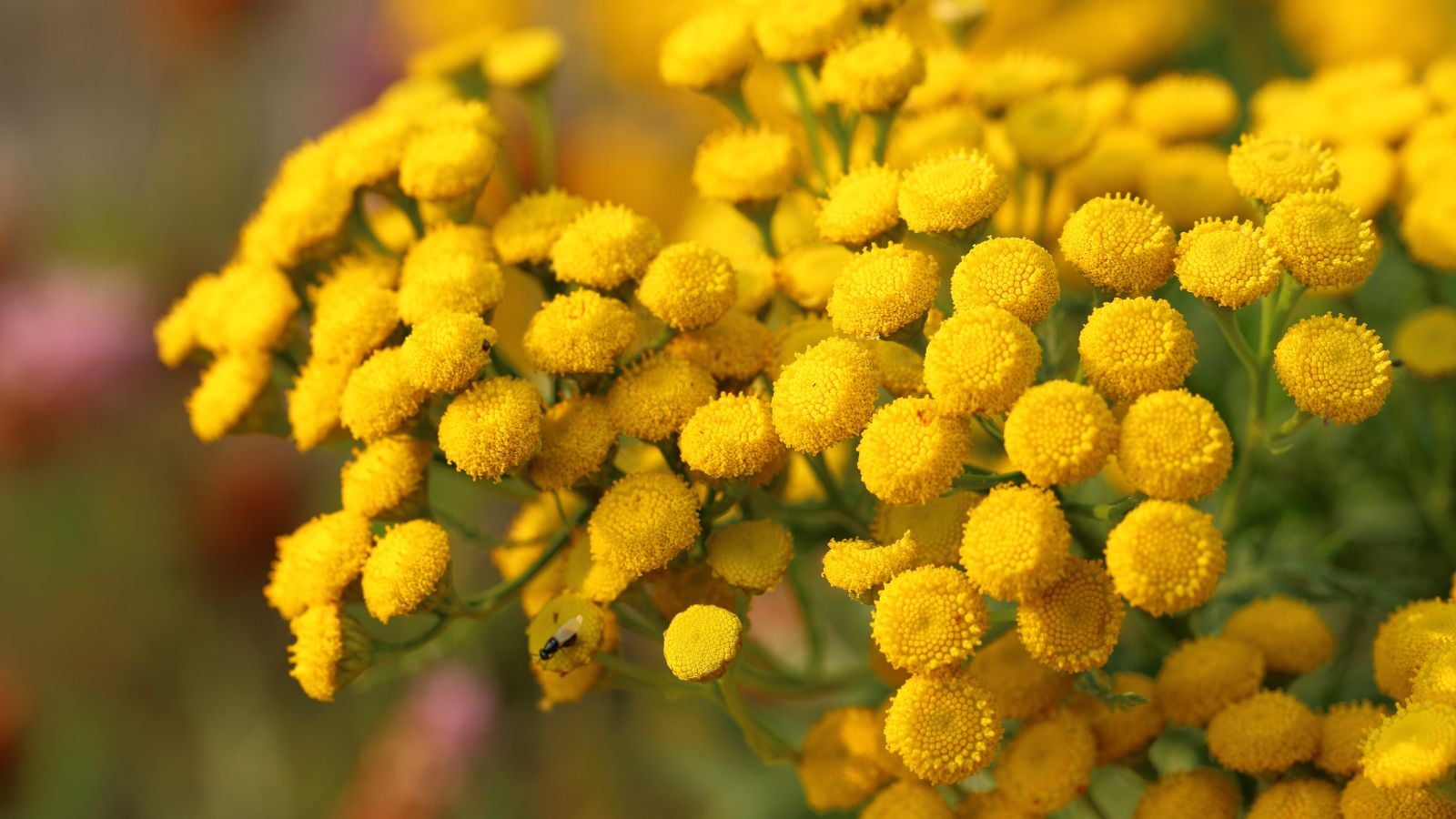
Tansy
|
|
botanical name Tanacetum vulgare (Europe and Asia) |
|---|---|
|
|
plant type Perennial |
|
|
sun requirements Full sun to partial shade |
|
|
height 2-4 feet |
|
|
hardiness zones 3 to 8 |
Tansy is a bright, cheerful plant with button-like flowers. This perennial is hardy, as it does not need much nitrogen to grow. Additionally, tansy can help improve the soil quality over time by fixing nitrogen in the soil. This makes tansy an excellent plant to grow in a permaculture garden.
If you want to grow Tansy in your garden, it is important to note that the plant can be quite invasive. Tansy will self-seed readily and can quickly take over an area if left unchecked. It is best to grow tansy in an area where it can be easily contained, such as in a raised bed or container garden.
Yarrow

|
|
botanical name Achillea millefolium (Asia, Europe, North America) |
|---|---|
|
|
plant type Perennial |
|
|
sun requirements Full sun |
|
|
height 1-3 feet |
|
|
hardiness zones 3 to 9 |
Yarrow is a beneficial plant, providing many nutrients to the soil. This plant is also very easy to maintain and can be grown in a variety of environments. Yarrow is a hardy plant that can tolerate drought and heat, so it is a good choice for those who live in hot, dry climates.
Yarrow is a common companion plant to many vegetables, in order to help ward off unwanted pests and diseases. It grows quickly and is highly adaptable.
Final Thoughts
Don’t let poor soil stop you from growing beautiful plants. If you’re looking to start a garden but don’t have the best soil quality, don’t worry! There are so many plants that can grow quite well in poor soil and yield beautiful results.
All you need is a bit of creativity and planning. Now that you know how to garden in tough conditions, what will you try growing first?





