Peperomia Obtusifolia: Pretty Little Pepper Face
Looking for a new tropical houseplant? Peperomia obtusifolia is for you! Our growing guide makes it easy to care for and maintain.

Contents
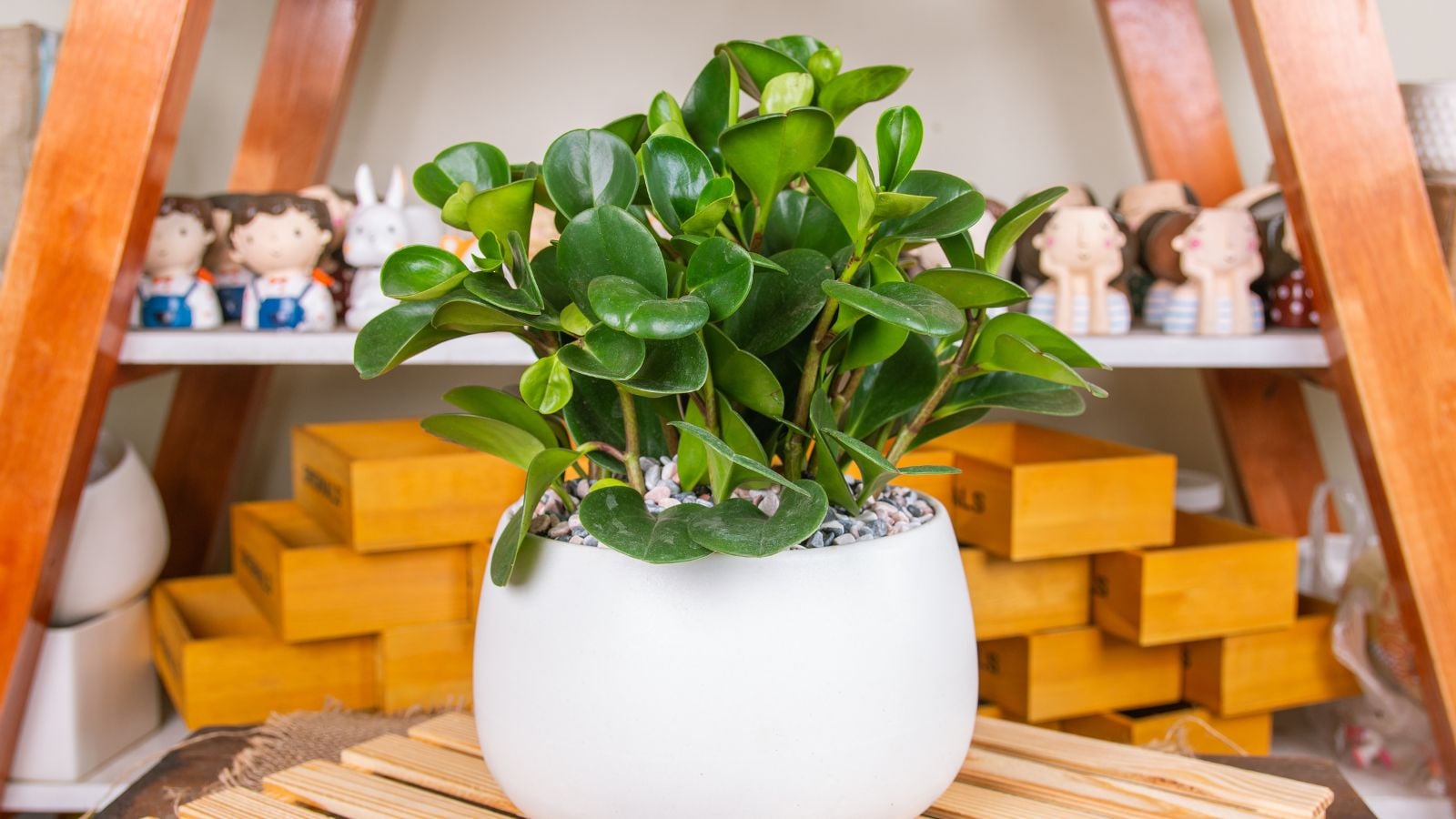
With its tropical origins, it’s no surprise that Peperomia obtusifolia is popular. Often grown as a prized houseplant, the baby rubber plant loves its humidity, but can’t take cold temps. It’s surprisingly self-sufficient, and makes for a perfect green addition to your home.
Slender upright stems support fleshy, almost succulent-looking glossy green leaves. Whether it’s one of the multicolored varieties or all green, it’s quite a sight to behold. A perennial, it’s capable of living for years in the right environment. Inviting one of these beauties into your home is a joy!
So let’s talk about the “pepper face”, this sweet little gem amongst the varied peperomia species. We’ve collected all the tips you’ll need to grow your own. You’ll love the lush foliage it provides for you every year.
Peperomia Obtusifolia Overview

|
Scientific Name
Peperomia obtusifolia
Common Name(s)
Baby rubber plant, American rubber plant, pepper face
Family
Piperaceae
Height & Spread
Grows and spreads up to 1 foot, dwarf cultivars smaller
|
Light
Bright, indirect light; avoid direct sunlight
Soil
Peaty potting mix preferred
Water
Water when surface is drying out
Pests & Diseases
Sucking pests, stem & root rots, leaf spots, botrytis
|
All About Pepper Face
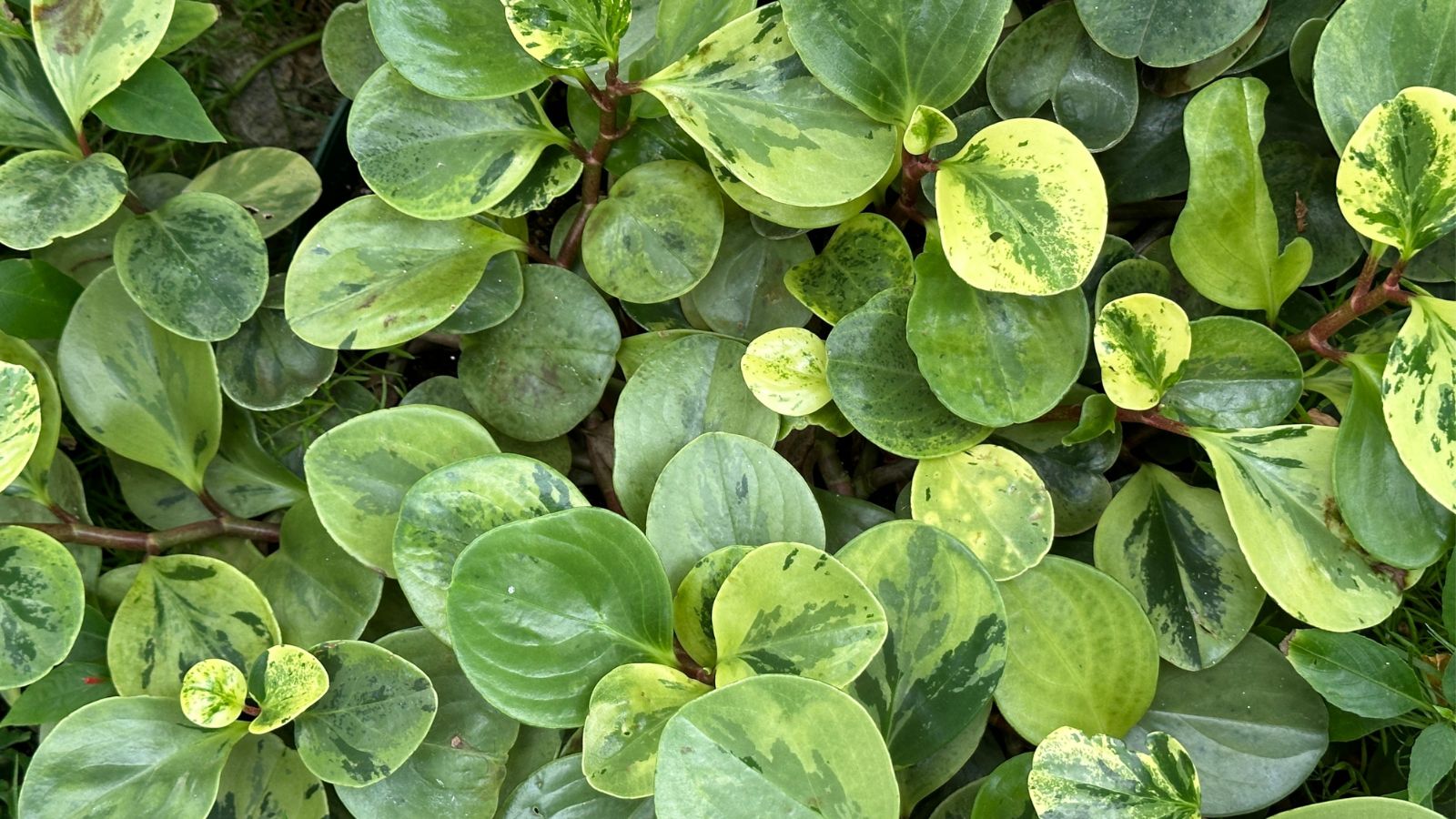
Variegated Peperomia obtusifolia, sometimes called pepper face, originates from Mexico down to northern South America, and also grows in parts of the West Indies. It’s popular now in Florida, Mexico, and the Caribbean – areas where the warmer climate is favorable.
Peperomia obtusifolia baby rubber plant is an evergreen perennial that can grow up to a foot tall and wide. Its flowers aren’t showy and are greenish white in hue. They grow on spikes that can reach five inches long.
The epithet obtusifolia means “blunt-leaved.” As such, it’s also referred to as blunt-leaved peperomia. But this lovely plant is most commonly known as baby rubber plant. It’s so beloved it earned the Royal Horticultural Society Award of Garden Merit, too!
Gardeners have developed several cultivars of Peperomia obtusifolia baby rubber plant over the years. Some have solid green leaves. Others have variegated foliage in shades of green with gray, gold, or cream-colored markings.
It’s possible to grow the baby rubber plant as a hanging garden plant, a low growing potted indoor plant, or as a ground cover in shade. Most opt for indoor conditions, as they’re a tropical plant and can’t take tolerate cold.
Why would this plant be called “pepper face”? That’s because of its visual similarity to Piper nigrum, the true black pepper plant. The shape and size of the leaves is quite remarkably similar. And indeed, peperomia is closely related to black pepper as part of the Piperaceae family.
The botanical name of Peperomia obtusifolia baby rubber plant even refers to it directly, as it’s taken from the Latin terms “peperi” (meaning pepper) and “homoios” (meaning resembling or similar to). So it’s unsurprising that it’s claimed to be “wearing a pepper face”!
Varieties of Peperomia Obtusifolia
There are multiple cultivars of this lovely plant available on the market. Let’s go over a few of the most popular ones and some information about each.
Peperomia obtusifolia ‘Alba’
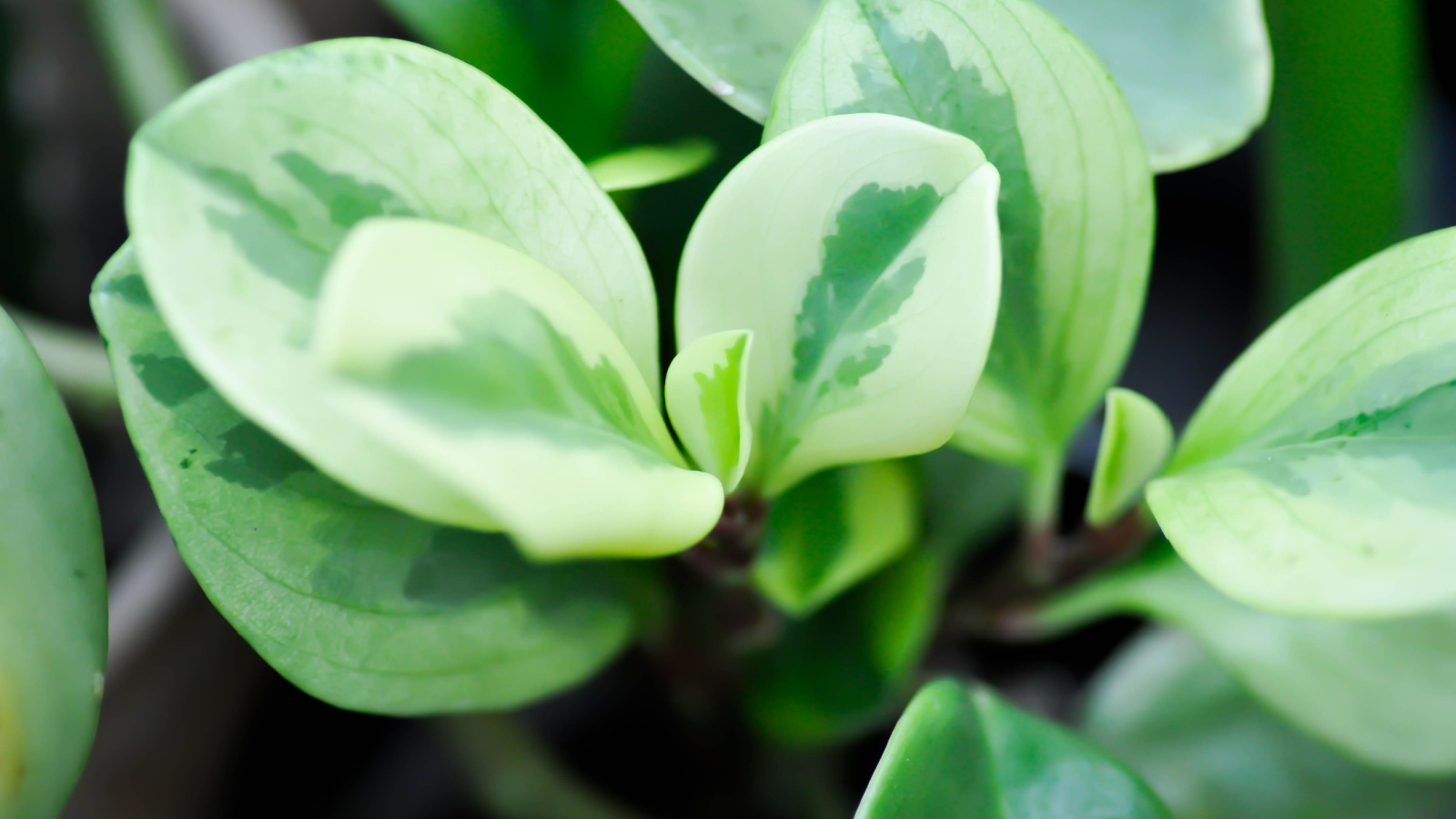
With Alba, new leaves first form as a creamy ivory color. This leads to its varietal name, a reference to albinism. Over time, the pale-toned leaves gradually turn green. It can maintain a bit of variegation on the leaves once they’ve matured.
Peperomia obtusifolia ‘Variegata’ and ‘Greengold’
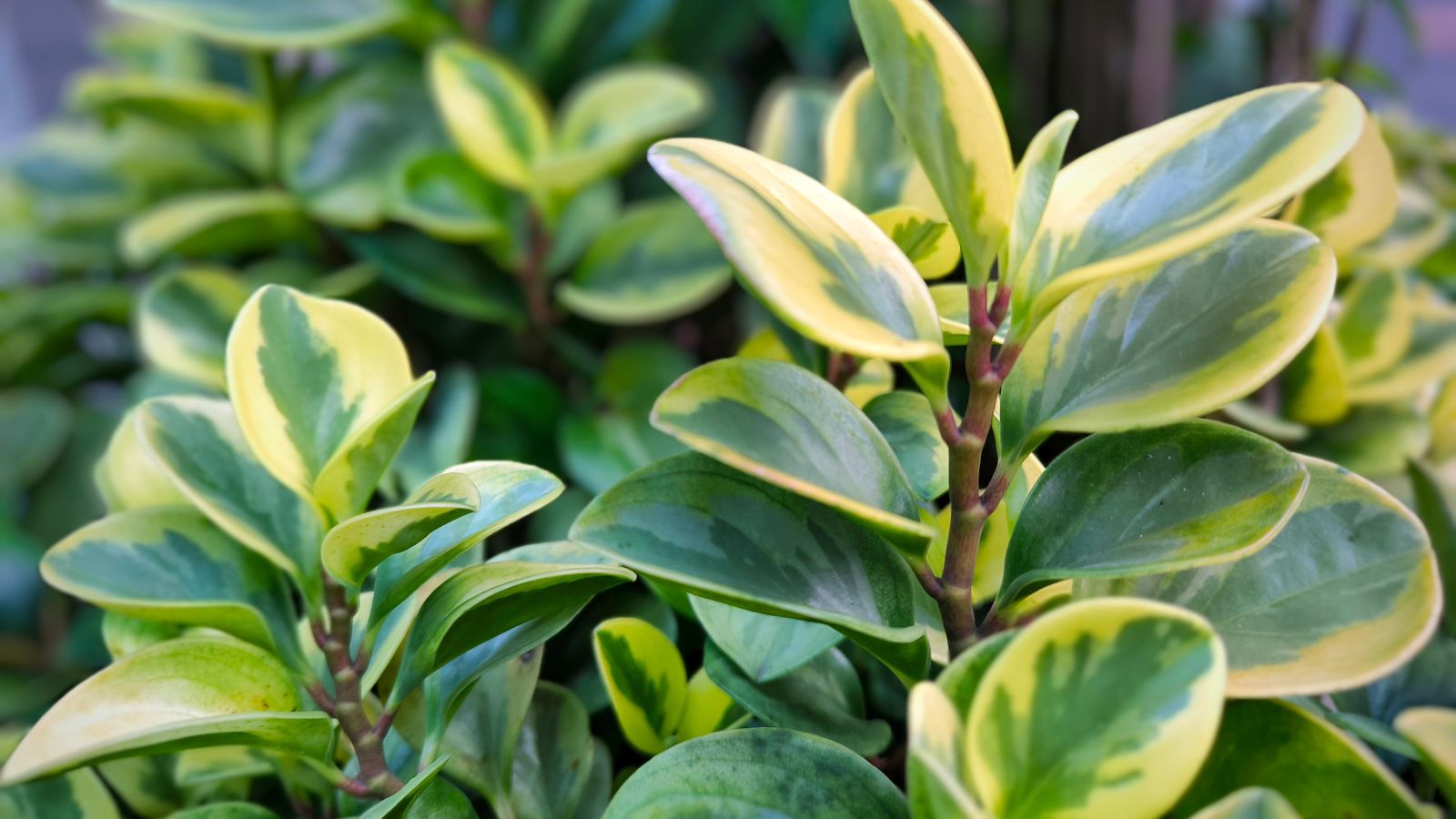
The fleshy leaves of Greengold and Variegata have cream to golden edges. The center of the leaves is a dark green color. Greengold’s lighter coloring can streak into the center of the leaves. By contrast, Variegata’s tends to stay at the edges, leaving the center wholly green. Both are quite similar and beautiful.
Peperomia obtusifolia ‘Albo-marginata’, ‘Hummel White Cloud’
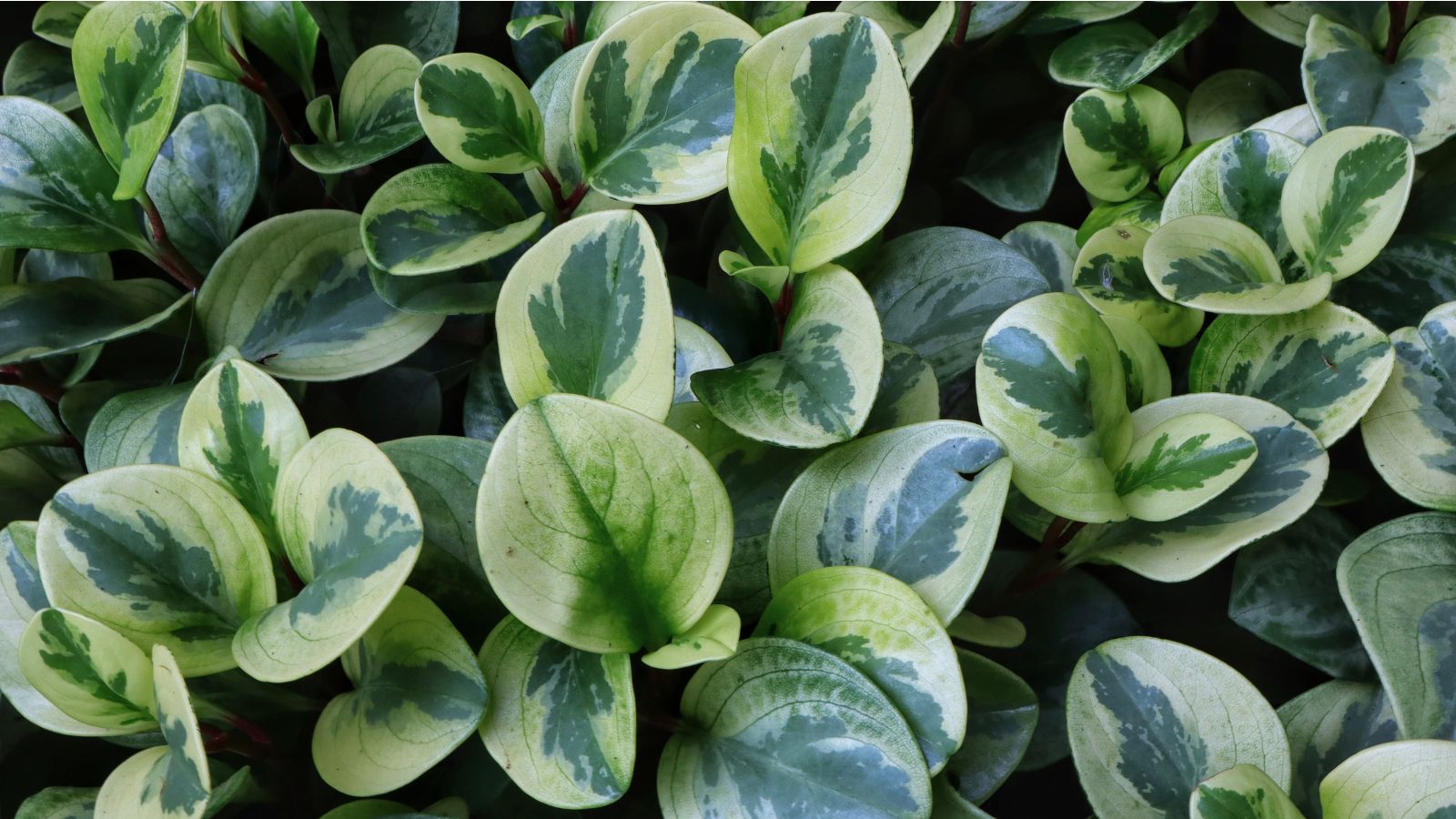
One cultivar with two names. Distinctively grey-green leaf centers are edged with a silvery ivory. A waxy appearance to the leaf makes it stand out from other cultivars. This variant has a form which is petite in size, if not a true dwarf peperomia.
Peperomia obtusifolia ‘Minima’
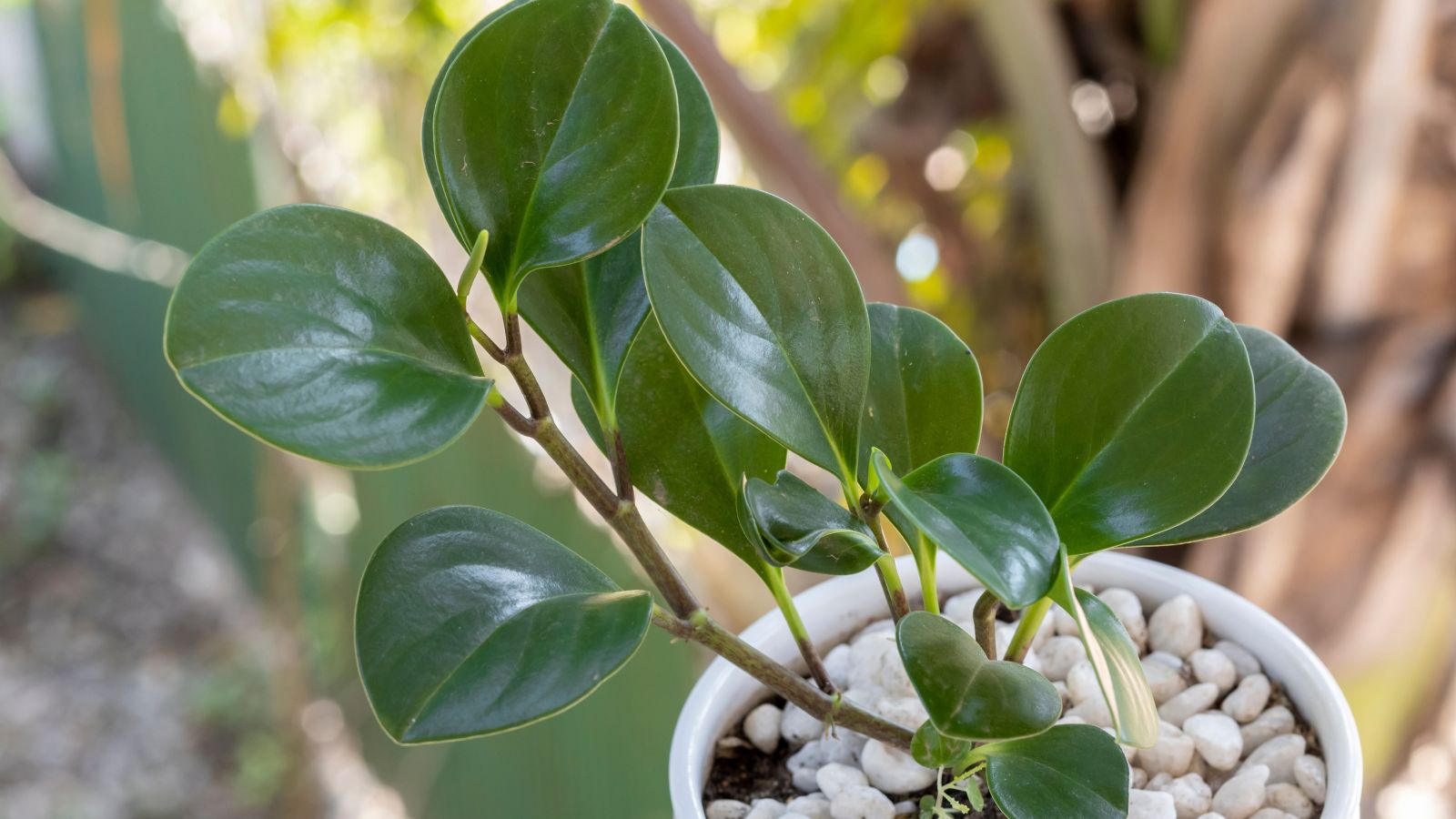
This is a true dwarf Peperomia obtusifolia. Its growing habits and size are distinctly smaller than others of the species. Tending to stay rather compact, it’s a perfect houseplant. But it maintains all the appeal of its larger relatives!
Caring For Your Baby Rubber Plant
Looking for an easy grower? Pepper face is perfect! The baby rubber plant is very easy to care for as long as a few needs are met. Let’s explore those needs now.
Light & Temperature
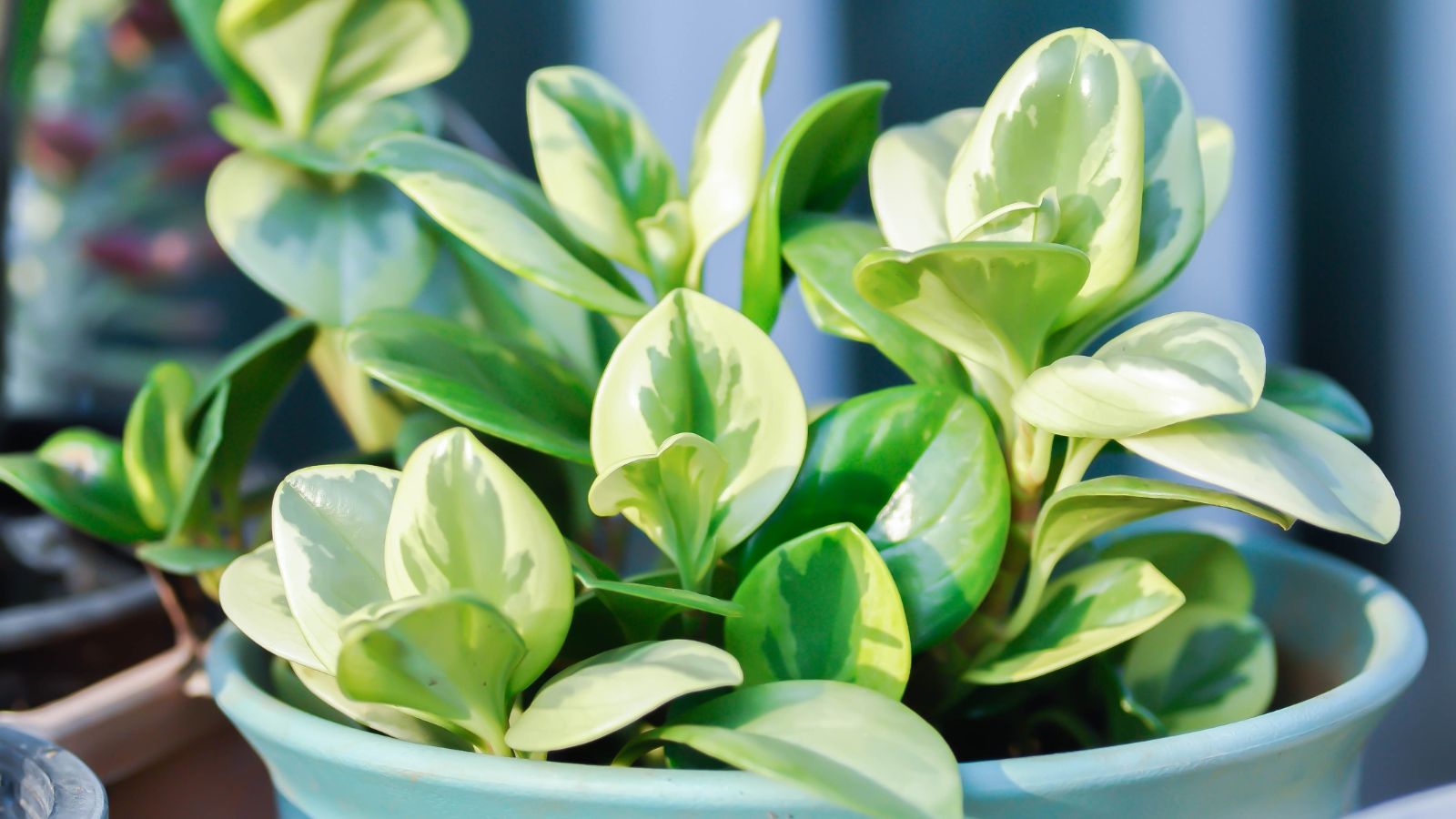
Bright, but indirect light is best for these common house plants. While short periods of direct light are fine, too much full sun will cause leaf discoloration. Partial shade is your best bet, as it loves a bit of early morning sunlight before the heat of the day hits. If you don’t have a location with only early morning sun, avoid direct afternoon sun and instead opt for a bright location in your home.
Temperature is definitely a concern. The natural environment for your baby rubber plant is growing zones 10 and 11. In cold drafts or at temperatures below 55°F (13°C), your plant will be chilled and suffer problems. Maintain an indoor temperature of 60°F (16°C) and above, and it will be happy!
Water & Humidity
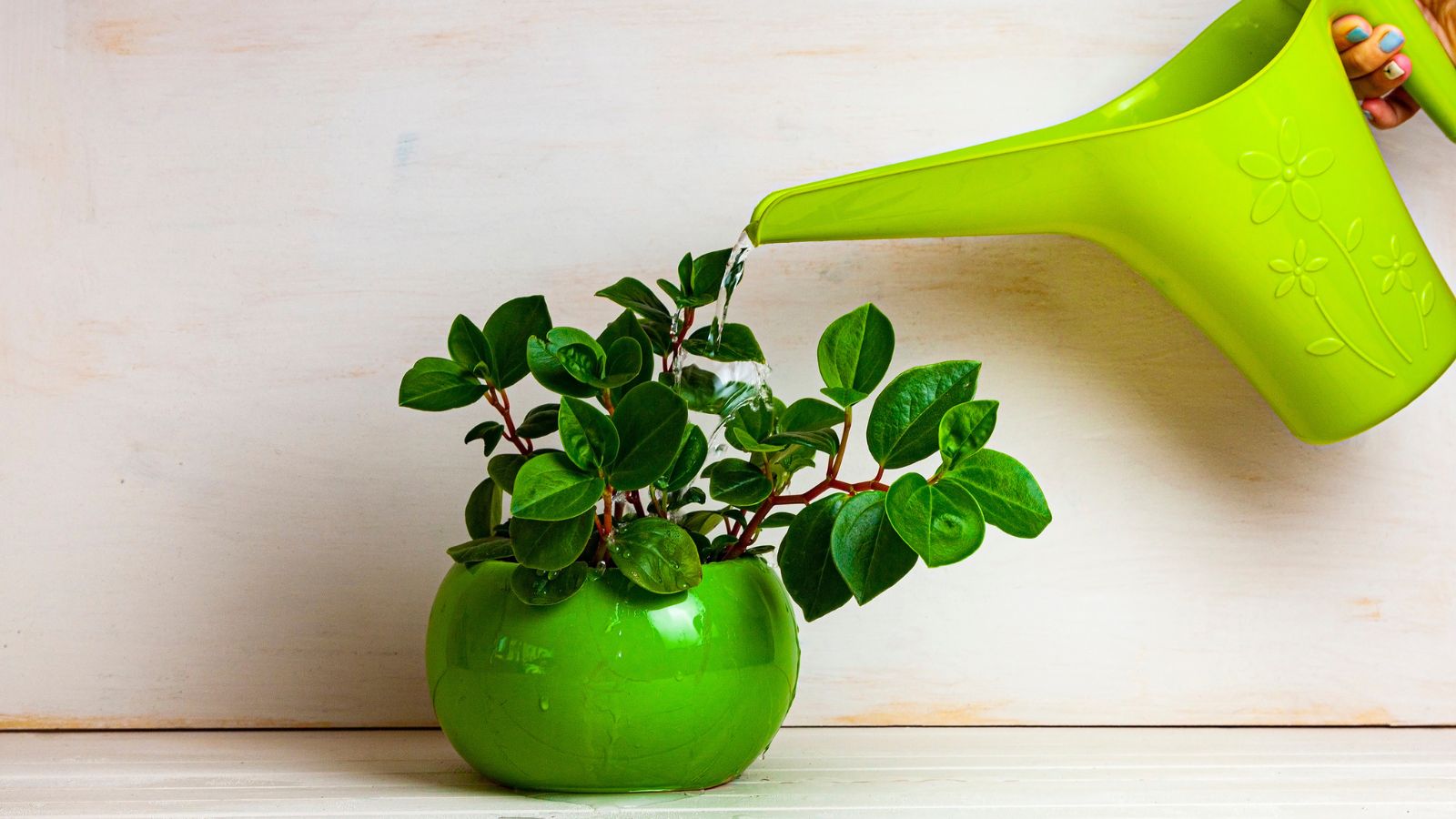
Consistent, light watering through the spring and summer months is important. Wait until the soil is almost dry on the surface before watering again, but don’t allow it to dry out completely. In the late fall and winter, you can reduce the watering frequency. It’ll need less during the cooler months.
Because its leaves store water, this plant is slightly drought-tolerant. Allowing it to dry out too often may cause damage to the leaves, but the occasional skipped watering won’t do much harm. Avoid excessive watering at all costs, though.
As the plant’s in its active growing phase, it loves high humidity environments. These environments mimic its natural jungle atmosphere. Placing this in a frequently-used bathroom is great, as it’ll love the steam from the shower!
But if you don’t want to adorn your bathroom with baby rubber plants, there’s high humidity alternatives. Place a pebble tray beneath the plant, or put it near a humidifier. Avoid placing it in the airflow from a heater or air conditioning system.
Soil

Peperomia is a low maintenance houseplant tolerant of most soils. Clay, sand, or loam are all optional. But it performs best indoors in a peaty potting mix with good drainage. Avoid soils that hold lots of moisture against the epiphytic and extensive root system. Too much moisture can cause root rot to form.
That tolerance spreads to soil pH as well. Slightly-acidic, neutral, or slightly-alkaline soils are all fine for your plant. In the wild it often grows in plant debris along jungle floors, so it’s tolerant of many soil types as long as they’re well-draining.
Fertilizer

Aim for a balanced, but diluted liquid fertilizer every 3 weeks during the spring and summer months. Apply the fertilizer directly to the soil rather than the dark green leaves to avoid leaf burn.
In fall, drop back to once a month feedings. Gradually increase the time between feedings to every month and a half in the early winter. They need less fertilization during those months of the year.
Propagating Peperomia obtusifolia
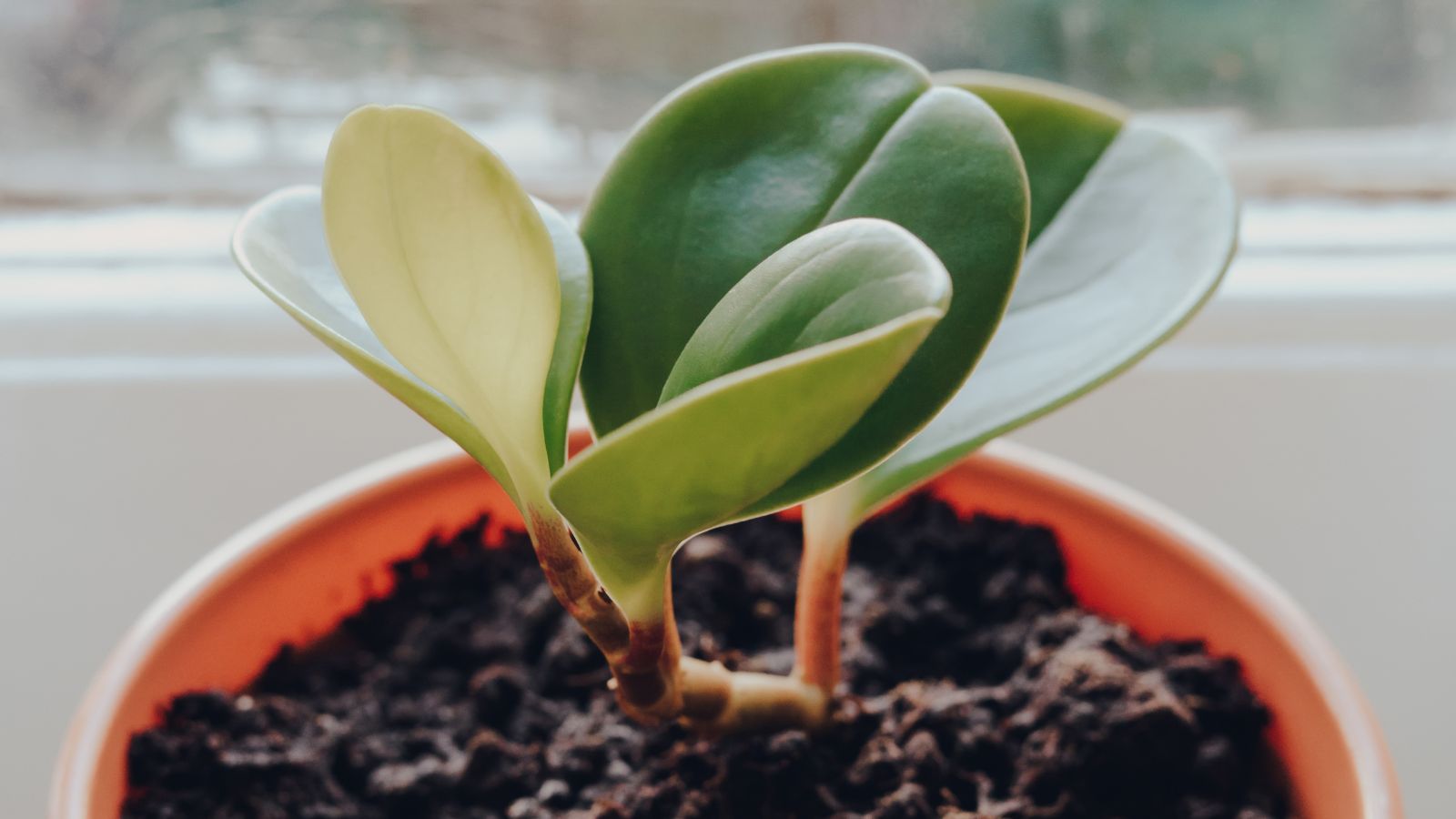
Stem tip cuttings or leaf cuttings are the best way to propagate baby rubber plant. They grow easily from both. Use a rooting hormone on the base of your stem cutting or leaf cutting to promote quick root development.
Care for your American rubber plant leaf or stem tip cuttings as you would most other plant species. Our guide to cuttings can give you some pointers! You’ll need to plant a leaf or stem cutting in a small pot in the same media you’re growing the parent plant.
Then place something over the plant to promote high humidity and offset your cuttings from bright light, or place them in low light conditions. Your leaf or stem cuttings will root in roughly a week.
Pruning Peperomia

While pruning isn’t absolutely necessary, it’s often performed for cosmetic purposes. Regular trimming can encourage bushier leaf development. Maintaining a particular size is also an option.
You can also prune off dead or dying leaves, but that too is mostly cosmetic. In the wild, this plant’s fallen leaves would form a mulch around its base. Over time, they’d break down and become part of the soil. If it doesn’t appeal to your aesthetic, you can remove these, but it’s not required.
Troubleshooting
Over all, your pepper face is pretty tough. But it may still encounter a few growing issues along the way. Let’s go over a short list of what might come up and how to handle it!
Growing Problems
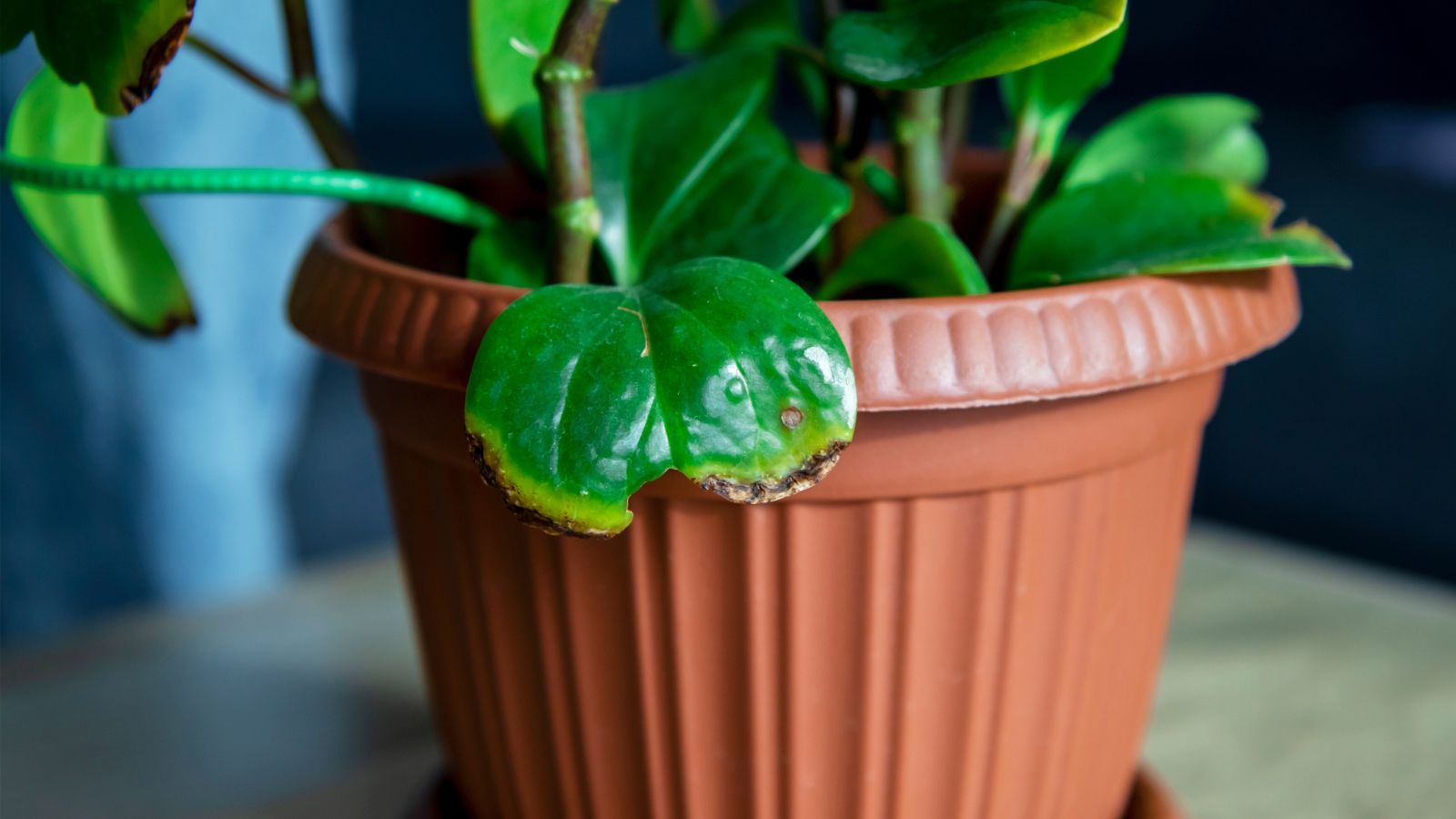
Overwatering may cause small blisters to form on the fleshy leaves. It can also lead to conditions that promote root or stem rots. Ensure your soil is well-draining and releases excess water. Avoid leaving your plant’s pot in standing water, as that can cause overwatering as well.
If the temperature dips below 55°F (13°C), leaf tips can begin to turn brown. The colder it becomes, the more pronounced this damage will be. Near-freezing temperatures will defoliate your plant and cause excessive damage. Keep it above 60°F (16°C) to keep your plant going!
Avoid placing your plant in drafty locations or direct sun. Air conditioning vents can chill the plant’s leaves. Heaters can dry out the soil too rapidly and may cause wilting. A consistent temperature’s best for your Peperomia obtusifolia.
Pests

The most common pest for baby rubber plants is spider mites. These irritating little pests suck the sap out of the fleshy leaves. For indoor growers, a miticide is an excellent choice to kill these off. This blend of plant oils coats the mite eggs and prevents them from hatching.
Other sucking pests which may appear are mealybugs and whiteflies. These are somewhat more rare on Peperomia obtusifolia, but still can appear from time to time. Both can be treated with an insecticidal soap. If mealybugs persist, you can use a cotton swab dipped in rubbing alcohol to remove them from the leaves.
Diseases
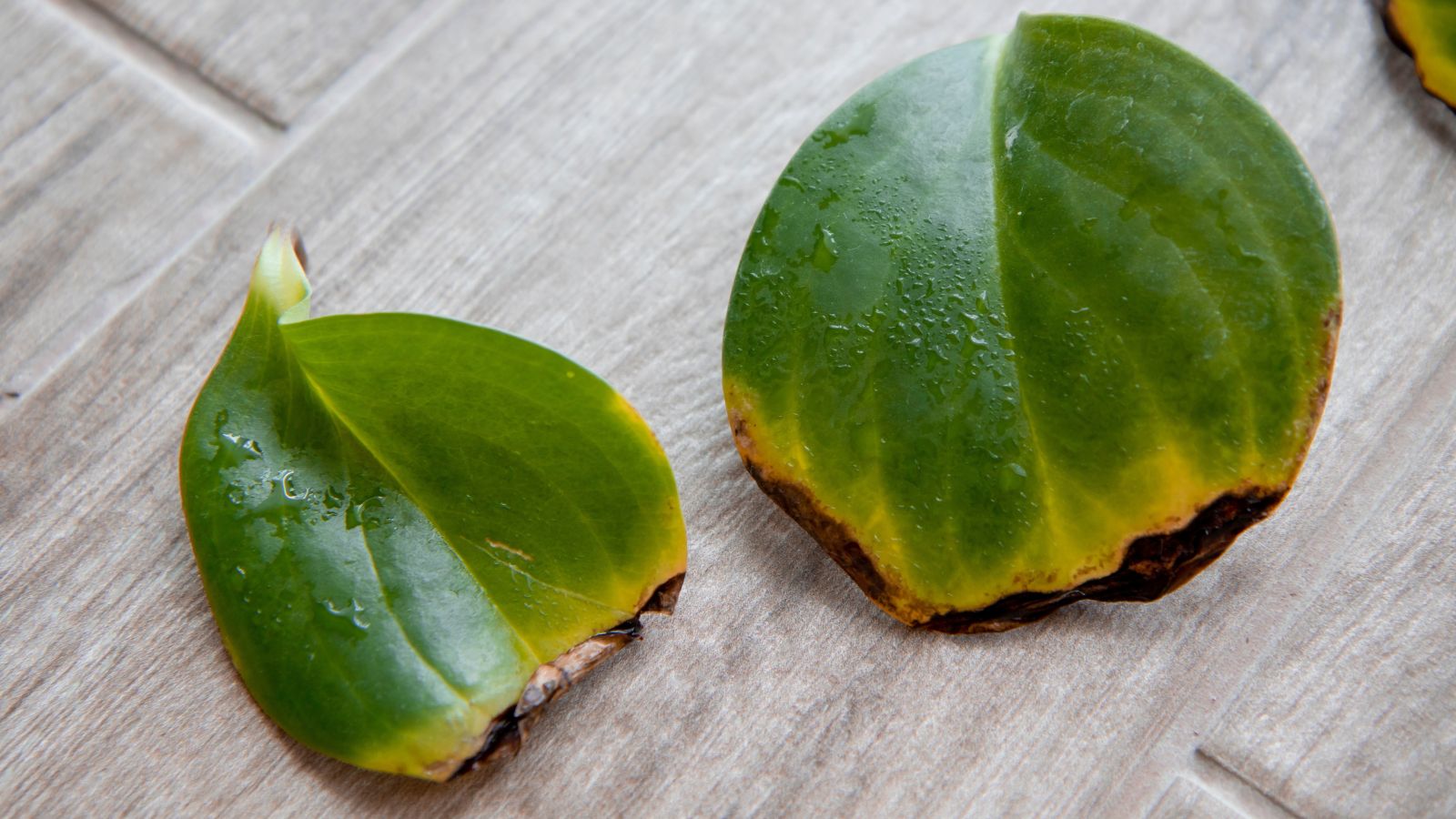
Phytopthora can become a problem if your soil is overly moist. This water mold fungus can cause both root and stem rots to develop. Plants can die from a variation of damping off due to these rots. To avoid this fungal disease, don’t overwater, and make sure your soil’s well-draining.
Phytopthora can also cause cutting rot, as can rhizoctonia and pythium fungi. If your cuttings never develop roots and instead fail, it’s best to dispose of infected soil. Start again with sterile soil, being sure to sterilize your pot and tools before you start. This prevents further transmission of these fungal diseases.
Peperomia ring spot is caused by a virus. This creates large brown circular markings on leaves. The leaves of young plants may be distorted in shape. These concentric patterns may create indentations in older leaves or become sunken.
This ring spot isn’t curable. The most common point of transmission is through infected cuttings. Once the soil is infected with the virus, it can spread to healthy plants. Use sterile potting medium, and ensure your cuttings are only from healthy plants. Destroy infected plants.
Finally, some reports of the grey mold called botrytis exist. This is most common in very humid environments. While botrytis won’t necessarily kill your plants, it can prevent photosynthesis. The spores can also spread to other nearby plants. Treat any outbreaks of botrytis with a copper-based fungicidal spray.
Frequently Asked Questions
Is my pepper face plant safe around my pets?
The ASPCA says so! Peperomia obtusifolia is non-toxic to cats, dogs, and horses.
Can I grow baby rubber plant in a hanging basket?
Yes, baby rubber plant can be grown in a hanging basket easily. Be sure to check it more frequently, as hanging plants often dry out more quickly.
Do Peperomia obtusifolia need a lot of light?
Peperomia obtusifolia plants need bright, indirect light to low light conditions to thrive. They grow much more slowly in lower light conditions, though. Direct sun or too much bright light can harm the plant.
Is Peperomia obtusifolia an indoor plant?
Because they are tropical in the wild of South America where they originate, and its conditions are easily replicated indoors, they are often cultivated as indoor house plants.
Is Peperomia obtusifolia a succulent?
Peperomia obtusifolia is not a succulent, but an epiphytic, herbaceous plant that is succulent-like.
Do Peperomia like being misted?
In conditions that aren’t naturally humid, a daily misting with filtered or distilled water is appreciated.
Should you water Peperomia from the bottom?
While you can water above or below your container, you don’t want to leave the baby rubber plant sitting in a puddle of water. As long as that isn’t happening when you bottom water, you’re good.
Where do you put Peperomia in your home?
Place it somewhere it will receive bright indirect light, or anywhere it can receive at least some bright light from a nearby source.





