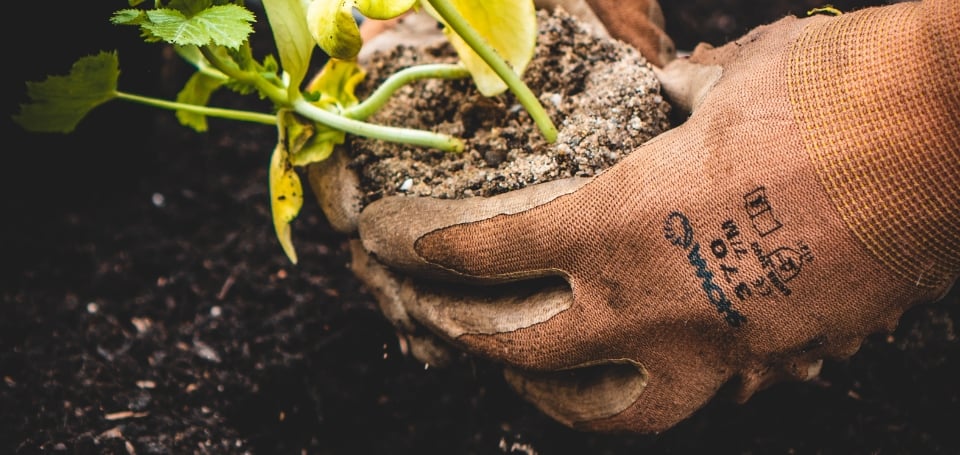
The Best Raised Bed Soil Mix
When developing organic raised bed soil, it can be hard to settle on the perfect mix. While you can purchase soil mixes, you can also make your own from scratch, tailored to what you're growing. In this guide, we're demystifying soil science for future success!

Contents
For first-time gardeners, one of the most confusing challenges is choosing the right soil mix. There are countless options available, all claiming to be the best organic raised bed soil. Some bagged mixes are quite good, and they are often an excellent starting point for new gardeners.
However, soil science involves more than opening a bag and expecting perfect results. Garden soil is a living, dynamic system made up of many different components. In nature, soil forms in layers, with inorganic materials such as weathered rock and organic matter like decaying leaves. Microbes, fungi, and other organisms live within the soil, and together they create the foundation that supports plant growth.
When soil is removed from its natural environment and placed into a raised bed, it must meet a different set of needs. Raised bed soil warms more quickly in spring, usually requires improved drainage compared to in-ground soil, and gradually settles as organic materials break down and are converted into nutrients for plants.
Understanding raised bed soil mixes, how they function, and how to maintain their structure and biology is essential for long-term success. Healthy soil leads to healthy plants, making it especially important to get the soil right from the start.
Large Modular Metal Raised Garden Bed Kit

Large Modular Metal Raised Garden Bed Kit – 29” Extra Tall


What is Soil, Anyway?
The term “soil” is often misused, but in essence it refers to what many people casually call dirt. The average garden soil in a home yard is typically made up of at least 45% mineral content, roughly 25% air, 25% water, and about 5% organic matter, such as decomposed leaves. These percentages can vary depending on region and soil quality, but they represent a general benchmark for healthy soil.
While mineral content differs by type, soils are most commonly classified by particle size. Sand has the largest particles, clay has the finest, and silt falls between the two.
Each soil type has distinct characteristics. Clay particles tend to bind tightly together and can become extremely hard when exposed to intense sun. Sand is loose and well-draining, but its large particle size means it does not retain water well. Silt has a smooth, slippery texture and is more susceptible to erosion.
A balanced mixture of sand, silt, and clay is known as loam. When one particle type dominates, it is reflected in the name. For example, sandy loam describes soil that is fairly balanced but leans toward sand, while loamy sand is primarily sand with some loam mixed in. These classifications help identify both the average particle size and the typical behavior of the soil in the garden.
What’s the Difference Between Soil and Mix?

The material sold as “potting soil” is almost always a blend, and it may not contain actual soil at all. A more accurate term is “potting mix,” which some manufacturers use instead of labeling it as soil.
For most raised beds, what you really want is a soil blend. A soil blend contains mineral-rich garden soil combined with organic ingredients, which increases organic matter and creates the nutrient-rich environment plants need to thrive.
Do You Always Need Mixes?

“Need” is a fairly strong word here, because technically you do not have to buy a premade mix at all. It is entirely possible to create your own blend at home using compost, aged leaves from the yard, or a variety of other organic materials.
That said, when starting a new raised bed, using a commercial mix as part of your initial soil blend is often a practical and reliable approach.
Depending on the size of your raised bed, bagged mixes may be sufficient to fill it. Alternatively, many landscape supply companies sell soil blends in bulk. Both options can work well and provide a solid foundation for getting started.
Is Soil Always Necessary?

For container growing, soil is not always required. Many plants grow perfectly well in a potting mix that is formulated to meet their specific needs. That said, sand is often added to commercial mixes to improve drainage because of its large particle size, so there may still be a small amount of soil present even when it is not immediately obvious.
As a general rule, raised beds include at least some soil to ensure good drainage and provide bulk. Because raised beds require a surprising amount of material to fill, incorporating soil alongside other components can significantly reduce the overall cost of filling the bed.
What Goes Into Raised Bed Soil?

Many bagged mixes use proprietary blends made up of different ingredients. As one example, Espoma’s organic mix for raised bed gardens lists the following components on its label: 55 to 65% aged forest products, sphagnum peat moss, perlite, limestone, alfalfa meal, kelp meal, feather meal, worm castings, yucca extract, and mycorrhizal organisms.
Technically, this is a soilless growing medium designed for large containers or raised beds, and it works well if you prefer a ready-to-use mix straight from the bag.
But what exactly are these ingredients, and what role do they play in plant health and soil structure? Let’s take a closer look at each component and how it contributes to a successful raised bed mix.
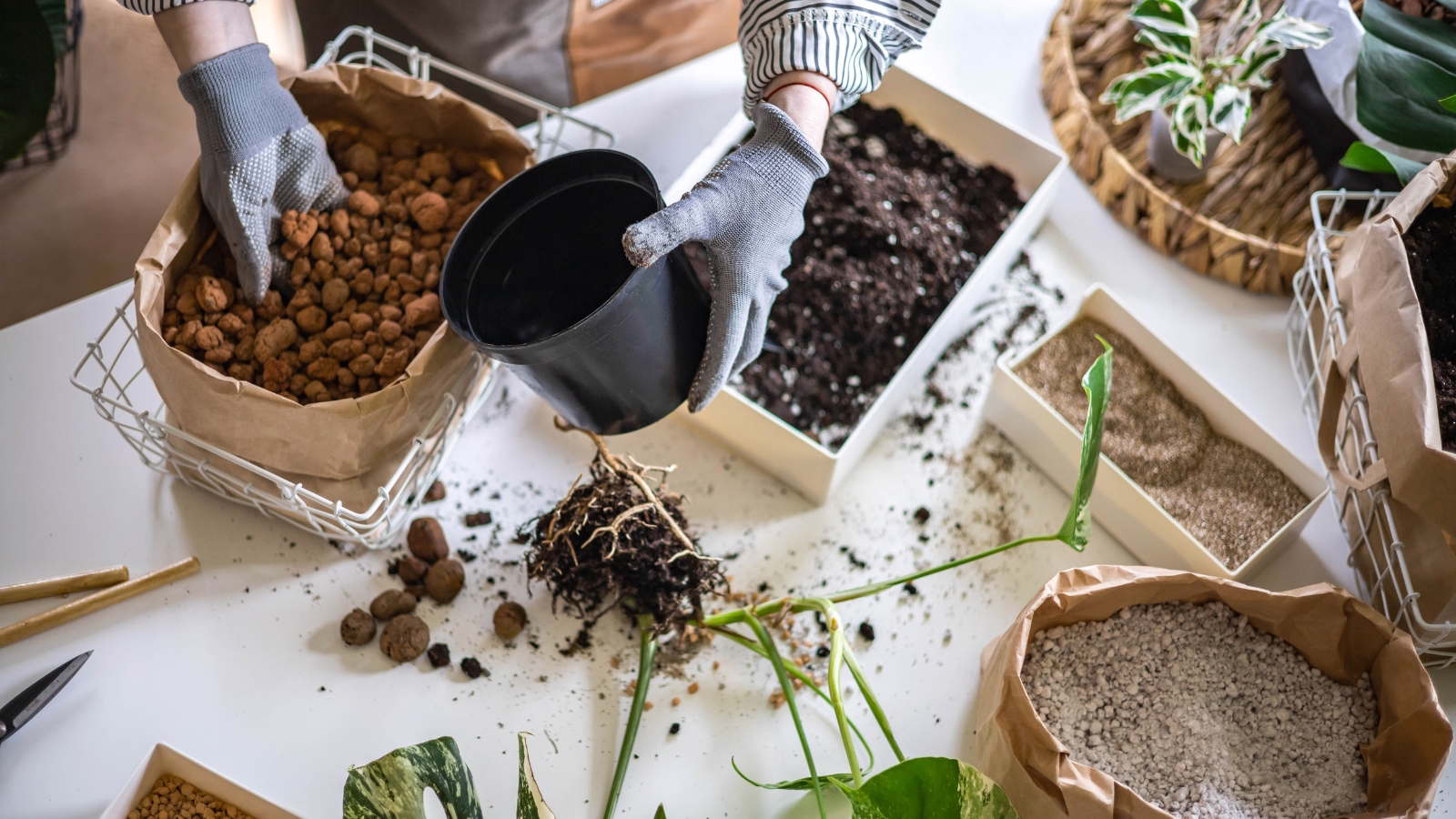
Aeration and Moisture-Related Additives

It stands to reason that moisture is necessary for plant growth, but too much moisture can quickly become a problem. Drainage needs vary by plant type, but most common garden plants prefer excess water to drain away freely. If you are starting with garden soil that tends to compact year after year, improving aeration is especially important. Just as plants need water at the root level, they also need access to air.
Perlite is a common additive that helps address both drainage and aeration. This expanded volcanic rock is extremely lightweight, easy to work with, and helps reduce soil compaction. Its larger particle size allows air to move through the soil while also creating channels for excess water to drain away.
Many soil amendments improve both aeration and moisture management, although some are better suited to one function than the other. Below is a summary of the most common additives used to improve drainage and airflow, as well as those that help retain and absorb moisture in raised bed and container soils.
- Perlite: Improves drainage, lightweight, catches small amounts of water
- Rice hulls: For drainage, will eventually decompose, extremely lightweight
- Lava cinders: Improves aeration and drainage. will not get crushed by soil weight
- Aged forest products: Improves drainage, absorbs water for later, won’t rob nutrition from the raised garden beds
- Coconut coir: Absorbs water, loosens the soil, will eventually decompose.
- Sphagnum peat moss: Holds moisture for long periods when kept moist
- Worm castings: Absorbs nearly 10 times their weight in water
- Vermiculite: Releases moisture to the soil over time
- Coarse Straw/Hay: Used as a mulch, useful for aeration
Fertility Additives

While the components mentioned above are excellent for regulating water and improving airflow through the soil, only a few of them contribute meaningful nutrients. Soil needs fertility not only to support plant growth, but also to sustain the complex microbiology living within it.
There is a wide range of materials that can be added to improve the fertility of a raised bed garden. Let’s take a closer look at some of the most common options and how they support healthy, productive soil.
- Plant-based compost: Enriches the soil as it breaks down, improves the texture and tilth
- Mushroom compost: Waste product from mushroom farming
- Cow manure: Once composted, this is a fantastic amendment
- Horse manure: If it’s well-composted and aged, this is also an option
- Poultry manure: Should be composted first, or you can compost this directly in the bed during the off-seasons
- Worm castings: Improves the fertility of your soil, although less than other manures do
- Leaves or leaf mold: Provides lots of valuable material for your soil, excellent top mulch
- Alfalfa meal/bone meal/blood meal/kelp meal/other meals: Acts as a natural fertilizer source
- Vermiculite: Provides trace minerals
- Organic fertilizers: If you’re not adding your own blend of meals as a fertilizer source, this is an option
- Azomite: This and other powdered minerals provide additional trace nutrients
Other Additives

There are a few other amendments that can help address more specific needs. Products such as agricultural lime or calcium carbonate can be used to neutralize overly acidic soil, but they should be applied carefully. Adding too much can interfere with a plant’s ability to absorb nutrients from the soil.
Mycorrhizae and beneficial bacteria are included in many bagged mixes and organic fertilizers. These additions are generally safe to use in raised beds, although naturally occurring mycorrhizae and bacteria are already present in most garden soils. Even so, giving the soil biology an occasional boost can support healthier plant growth over time.
Building a Good Blend

If you are short on time, using bagged mixes to get started can be a good option, but it often depends on the size of the bed you are filling. For example, if you are using one of the tall galvanized steel beds from the Epic Gardening shop, you may need just over one cubic yard of soil, or about 30 cubic feet. That can translate into a lot of bags, and the cost adds up quickly.
While there are plenty of tips available on filling tall raised beds, it is just as important to understand what you are filling them with. Even high-quality bagged mixes can benefit from added fertility. If you choose bagged soil, work in some good-quality compost or composted manure in addition to what is already included. This not only lowers the overall cost but also improves soil structure and nutrient availability.
If you are building a mix from scratch, a solid starting recipe is 30% high-quality topsoil from your yard, sifted to remove large rocks, 40% composted materials, 20% aeration and drainage amendments, and 10% additional components such as fertilizers, moisture-retention materials, pH adjusters if needed, or worm castings.
Another popular option is a blend often referred to as “Mel’s Mix,” which combines equal parts compost, peat moss, and vermiculite. Many gardeners swear by this mix, and it performs well in raised beds. Peat moss is usually affordable at big box stores like Home Depot or at local garden centers. If plant-based compost is not available, aged and composted manure can be used instead.
No matter which blend you choose, mix all components thoroughly before adding the soil to your raised beds to ensure even distribution and consistent growing conditions.
Maintaining Your Soil
Once your raised garden beds are filled and in use, it can feel like the job is finished. However, organic soil blends naturally settle and shrink over time as materials break down. Mineral components remain in place, but compost and other organic matter are meant to decompose and gradually disappear.
Adding compost is the most effective way to rejuvenate a raised bed mix. Applying a thick layer of compost to the soil surface once a year helps top off the beds and keeps them fertile. This practice can also reduce weed growth. Compost plays a central role in organic gardening and should be added regularly.
Beyond compost, you can occasionally top off beds with additional soil mix if needed. Avoid adding large amounts of sand unless improved drainage is necessary, and steer clear of clay-heavy soils that tend to compact. Regular applications of vermicompost or well-composted manure are always beneficial. You can also pile fall leaves on top of the bed and allow them to break down naturally over time. By spring, most of the leaves will have decomposed into usable compost.