The Best (and Worst) Onion Companion Plants
What are some good onion companion plants? We explore how to pair your plants for improved yields, pest control and overall garden glory!

Contents
Companion planting is an old but popular strategy. Gardeners and farmers have used this organic gardening technique for generations, and it is seeing a revival in backyard gardens. As more people move away from synthetic fertilizers and pesticides in favor of natural practices, companion planting has become increasingly important. For those growing food to stock a home pantry, choosing the right onion companion plants is essential for maximizing yields.
Your goals with companion planting should be carefully considered. Pairings like beans and strawberries work well because beans fix nitrogen in the soil while strawberries act as a living mulch, helping retain moisture. With onion companion planting, benefits only occur when combinations are planned and executed correctly.
While growing onions and other alliums such as garlic from seed can be challenging, planting ‘onion sets’ is far easier. Onion sets are small, immature bulbs that quickly grow into full-sized onions. These fast-growing plants are reliable and especially useful when companion planting with other crops. You can also plant onions that have already begun to sprout.
There are many reasons to use companion planting. Some combinations improve flavor, while others help reduce pest pressure. Certain plants provide physical support for each other, such as corn and beans, while others shade the soil and help retain moisture, like squash with its large leaves.
When companion planting with onions, start by identifying the problems you want to solve. Are you aiming for sweeter harvests, fewer pest issues, or increased yields from crops like carrots or lettuce? Understanding how onions can support other plants will help you design a healthier, more productive garden.


Yellow Sweet Spanish Utah Bulb Onion

Yellow Sweet Spanish Utah Bulb Onion Seeds

What Is Companion Planting?

Companion planting is a system where different crops are planted among one another, such as a carrot between each onion plant, or in neighboring rows or beds. With companion planting, each plant supports another simply by growing nearby. This support can take many forms, including improved flavor, pest protection, nutrient sharing, structural support, weed suppression, shading, or water retention.
One of the most well-known companion planting examples is the ‘Three Sisters’ system traditionally grown by Native Americans. This combination includes corn, beans, and squash. Corn grows tall and provides support for climbing bean vines. Beans add nitrogen to the soil, while squash spreads across the ground, shading the soil, retaining moisture, and suppressing weeds. Together, these plants form a symbiotic system that results in stronger growth and better yields.
Some plants, such as yarrow, attract beneficial insects. Butterflies and bees are drawn to its flowers, while lacewings are attracted to the airy flower clusters. Lacewings feed on aphids, which are common garden pests that damage crops and spread disease. This type of companion planting helps reduce pest pressure naturally.
Many members of the onion family produce a strong scent that repels garden pests such as Japanese beetles, carrot flies, and cabbage worms. Strategic planting can help prevent pest damage before it starts.
Another pest management strategy is the use of trap crops. Nasturtiums are often planted to attract aphids away from food crops. Once the nasturtium becomes infested, it is removed and disposed of, reducing the aphid population in the garden. As an added bonus, nasturtiums also produce bright, ornamental flowers.
Good Onion Companion Plants
Onions are excellent companion plants for their ability to repel pests. Plus, there are some crops that benefit these alliums too.
Vegetables

Onions are an excellent companion plant for members of the brassica family, commonly known as the cabbage family, and not just because they appear together in many dishes. The pungent scent of onions helps repel pests that commonly attack cabbage crops, including cabbage worms, cabbage loopers, and cabbage maggots. Brassicas such as kale, broccoli, brussels sprouts, and napa cabbage benefit when planted near these strongly scented bulbs.
For gardeners dealing with aphids, the entire onion family makes a valuable companion for crops like tomatoes, lettuce, strawberries, and peppers, including bell peppers and jalapeños. Growing onions near tomatoes may even enhance tomato flavor. When planted alongside lettuce or strawberries, onions can also help repel other sap-sucking pests.
Onions may also deter spider mites, making companion planting tomatoes, peppers, and onions together especially beneficial. Spider mites can cause significant damage and stunt foliage growth, so slowing their spread with companion plants is a smart strategy. Planting onions, peppers, tomatoes, and marigolds together can dramatically reduce pest pressure on peppers and tomatoes.
Although onions are a root crop, they draw nutrients from different soil levels than crops like carrots or parsnips. When interplanted with carrots, spinach, and lettuce, onions do not compete heavily for nutrients. Carrots send their taproots deep into the soil, onions draw nutrients from the upper soil layers, and lettuce and spinach have even shallower root systems. This creates a tiered root structure that makes efficient use of soil nutrients.
While this approach is more intensive, it can result in a larger overall harvest. The scent of onions also repels carrot flies, a common carrot pest, and helps deter aphids and flea beetles. This complementary relationship between lettuce, carrots, and onions makes it one of the most popular companion planting combinations.
Fast-growing root crops such as radishes can also be used to mark rows where slow-growing onions are planted. Radishes emerge quickly and are ready to harvest around the time onion seedlings become visible, helping prevent accidental overplanting.
Herbs and Flowers

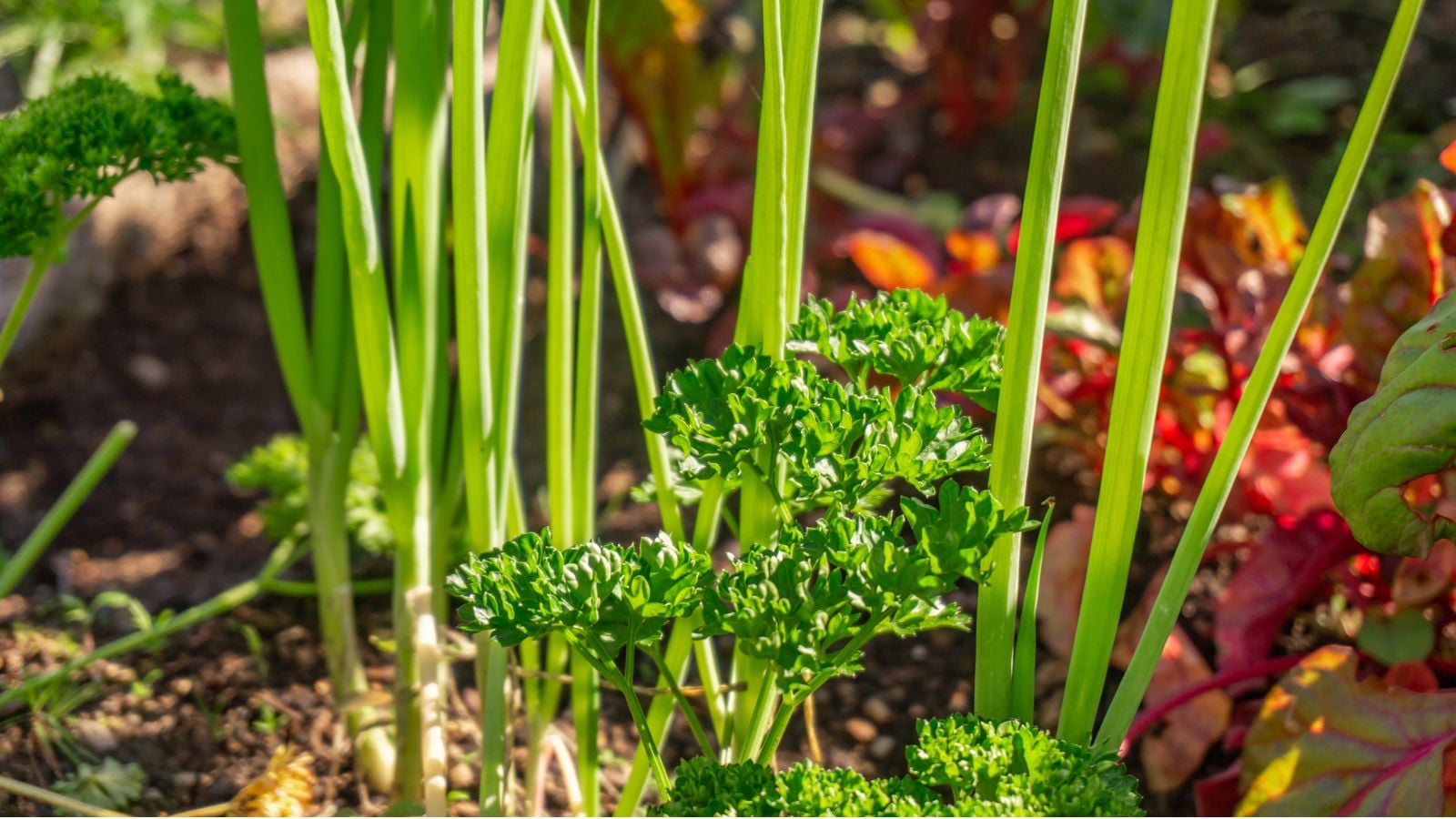
Many herbs planted alongside onions can actually improve onion flavor. Herbs such as summer or winter savory, marjoram, rosemary, and dill are known to enhance taste. Mint and parsley can also improve onion flavor, while summer savory may even make onions sweeter.
Take care with placement, though. It is often better to add onions into an herb bed rather than planting herbs among onions. Mint can quickly take over a garden space, and dill and parsley flower readily and may reseed themselves year after year.
Another beneficial pairing in the garden is chamomile and onions. Chamomile has natural antifungal properties that can help reduce fungal issues on onions, which is especially helpful in humid climates. Chamomile also attracts beneficial insects that prey on common pests such as aphids.
For home orchards troubled by Japanese beetles or aphids, consider placing containers nearby and companion planting onions with carrots and summer flowers or herbs such as marigolds, dill, summer savory, and parsley. This approach provides additional vegetables while improving overall garden health. Onions help reduce pest pressure, while flowers attract beneficial insects that assist with pollination throughout the orchard.
What Not To Plant With Onions

There are a few plants you should avoid growing alongside onions, as not all crops make good companions. Different plants interact with one another in different ways, and some combinations can lead to poor growth or reduced yields.
One summer vegetable that should never be planted near onions is asparagus. Because asparagus is a perennial that takes several years to become established, it is best grown in a dedicated area of the garden. Planting onions near asparagus creates unnecessary competition for soil nutrients.
Other vegetables that perform poorly around onions include beans, peas, and most members of the legume family. Alliums can stunt the growth of legumes due to a chemical incompatibility between the two plant families. Crops such as peas, fava beans, pole beans, bush beans, lentils, and other legumes do not form a stable or beneficial relationship with onions. Avoid planting garlic, onions, leeks, or other alliums in the same bed as these crops.
Like most plant families, alliums are susceptible to many of the same pests and diseases. For this reason, it is often beneficial to space members of the allium family apart rather than planting them together. Growing onions alongside leeks, garlic, chives, shallots, or garlic chives can attract shared pests such as onion maggots and onion flies, both of which can cause serious damage and stunt growth.
Another plant to avoid pairing with onions is sage. Although sage can stimulate growth in many vegetables, it has the opposite effect on onions and may stunt their development. Keep sage well away from onion beds.
Companion planting turnips with onions is also best avoided, as this pairing can negatively affect flavor, particularly in the turnips.
Frequently Asked Questions
Can I plant onions with cucumbers?
Not only will the smell of the onions repel pests that prey on cucumbers, but the roots of the onion plants grow in a different soil layer from the deep taproot of the cucumber.
Can onions be planted with tomatoes?
Yes, they’re one of the best plants to grow alongside your tomatoes. The smell of the onion plant and other alliums can repel insects and beetles that prey on tomatoes when you plant onions near tomatoes.





