The Best (and Worst) Okra Companion Plants
If you pick the right okra companion plants you'll improve your garden and your okra harvest. We've got information about what's right and wrong for your okra! Follow this guide to decide which okra companion plants are best for you, and which plants to avoid.

Contents
Okra, Abelmoschus esculentus, is one of the hardiest plants in the mallow family. It is believed to have originated in Africa and Asia, but today it is grown across the United States, particularly in temperate zones and during mild seasons. What many gardeners don’t realize is that there are excellent okra companion plants that can enhance your garden’s overall health and productivity.
Growing okra plants is straightforward if you have full sun and good soil. They need plenty of space for strong vegetable production, with each plant requiring at least two feet of spacing from the next. Because okra plants grow tall, they create areas of shade. Any crops that require full sun should be planted to the south of your okra to prevent light obstruction.
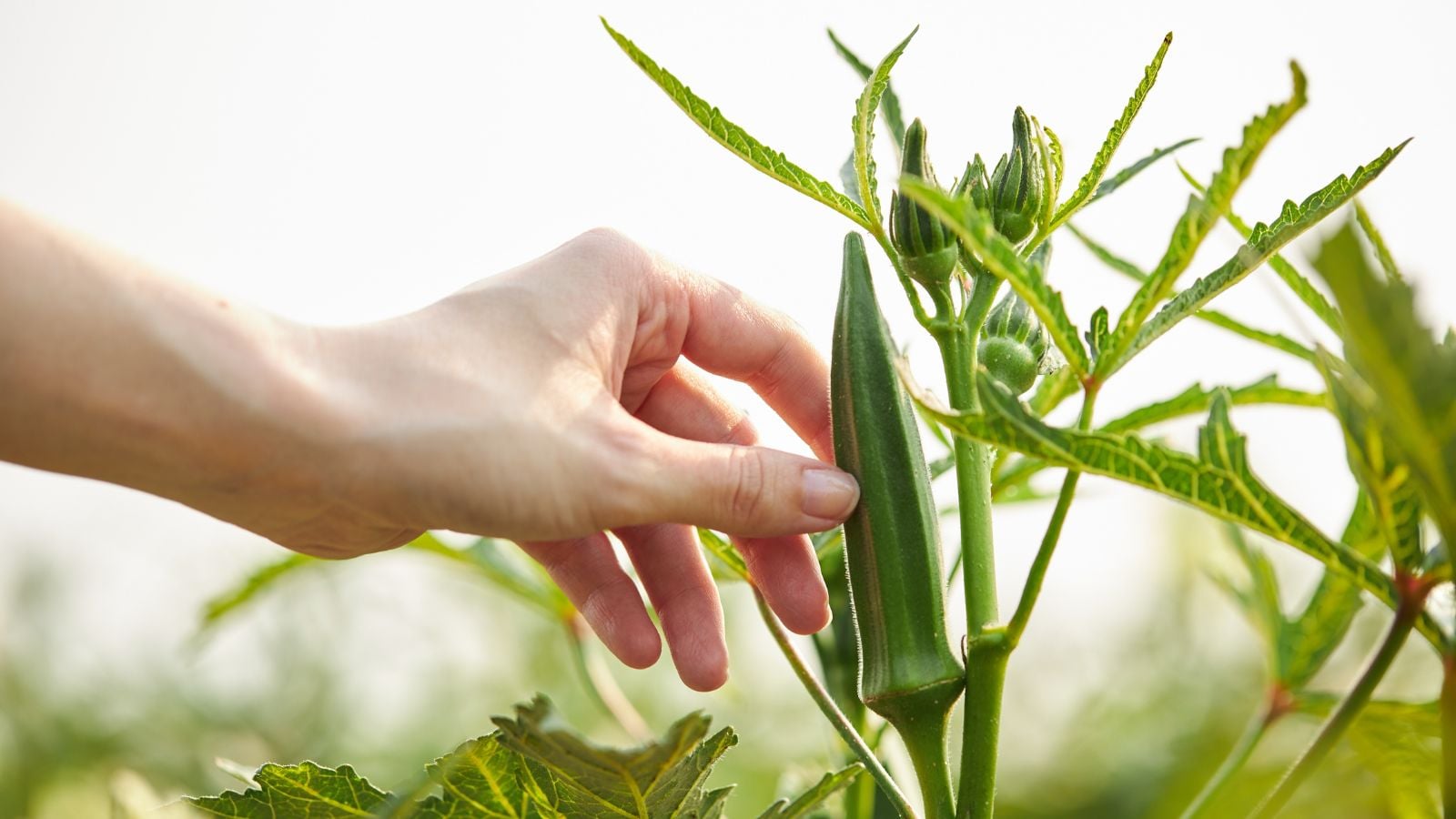
An okra plant’s blossoms are striking and surprisingly fragrant, with a scent so appealing it has historically been used as a base in perfumes. Sow a few seeds and, within a couple of months, tall stalks can tower six or seven feet above you and the rest of the garden. Okra is somewhat defensive and releases fine spines during harvest that can irritate the skin. These spines are much smaller than cactus spines, but gloves are still a good idea. Even so, the harvest is well worth the occasional discomfort.
If you’ve ever seen rows of okra thriving in summer, you know how well it tolerates intense heat, even in the Deep South. That said, it performs just as well in milder climates. Nutritionally, okra is a strong source of protein, fiber, and carbohydrates, along with a wide range of vitamins and nutrients. Be sure to harvest pods at the right time, as overripe okra becomes tough and fibrous.
If you want to grow okra while supporting a healthy, productive garden ecosystem, companion planting is a smart approach. Okra’s height allows it to provide shade for low-growing plants that benefit from some protection. Before exploring the best okra companion plants, it helps to understand the basics of companion planting and how it supports plant growth.


What Is Companion Planting?

Companion planting is an organic gardening practice that involves sowing seeds or transplanting different fruits, vegetables, flowers, and herbs next to one another for mutual benefit.
One of the most well-known companion planting methods is the Three Sisters. This growing system pairs squash, beans, and corn in the same space. As these crops grow together, they create a reciprocal system that supports each plant through a beneficial feedback loop.
In the Three Sisters method, corn acts as a tall support plant, providing shade while squash spreads along the ground. Okra can easily stand in for corn, offering vining beans a sturdy stalk to climb. Bean vines fix nitrogen in the soil, which benefits all three plants by supporting healthy root development and improving overall growth and flavor. Beans can also help deter pests, while squash suppresses weeds and protects the base of corn stalks or okra plants.
The Three Sisters is just one example of companion planting. More broadly, companion plants act as good neighbors that can repel pests through a strategy known as trap cropping. In this setup, pests are drawn to sacrificial plants such as peppers or tomatoes instead of attacking okra. Other companions attract beneficial insects that naturally manage pest populations. For example, lacewings lay eggs that hatch into nymphs, which feed on small pests like aphids.
Some plants improve the growth or flavor of nearby crops through nitrogen fixing. Beans are a classic example, helping supply nitrogen to leafy greens. Low-growing plants can serve as ground cover, reducing weeds that compete for nutrients. Taller plants like okra provide dappled shade where needed, while fast-growing crops can be used as row markers for slow-germinating varieties, helping prevent accidental double planting. This approach is especially useful in high-production gardens.
So what role does okra play in the soil, and which plants make the best okra companion plants?
Good Okra Companion Plants

Although an okra plant can be a bit spiny to human hands, it makes an excellent companion for many other crops. Most common garden produce grows well alongside okra, but some pairings are especially beneficial. Gardening with okra companions can give your garden a noticeable boost while also offering insight into how these plant systems work together.
Herbs

Like many aromatic herbs, basil is one of the best companion plants for okra. Basil helps repel spider mites, flea beetles, and whiteflies thanks to compounds in its leaves that are toxic to smaller pests.
An added bonus of planting basil among your okra is that it also helps repel mosquitoes. The last thing anyone wants while harvesting okra is paying nature’s taxes in the form of itchy bites. To include basil among your okra plants, set mature starts about six inches apart at the base of the okra stalks.
Another excellent herb companion for okra is cilantro, which attracts hoverflies whose larvae prey on aphids. Cilantro also helps deter potato beetles. When gardening with cilantro, tuck young plants beneath ground cover crops. It doesn’t require much sun to thrive and can be planted early in the growing season when temperatures are still cool. A true garden ally, cilantro pairs well with many different plant species.
Alliums

Onions and garlic are also beneficial companions for okra, particularly as natural pest repellents. Like basil, onion and garlic foliage helps deter insect pests such as scarab beetles and aphids.
Their strong scent and flavor can also discourage rabbits, which tend to prefer milder-tasting plants over pungent onion greens or garlic scapes. In addition, onions and garlic help loosen the soil, making it easier for okra roots to access water and nutrients.
Flowers

There are many layered benefits to planting flowers in your garden. Pollination is essential for flowering plants and plays a major role in organic gardening as a whole. Plant sunflowers along the border of your okra bed to attract important pollinators such as bees, hummingbirds, and butterflies, which will move from the sunflowers to your okra plants. This is just one example of companion plants that are excellent for encouraging pollination.
Zinnias are also highly attractive to bees, as are calendulas. Nasturtiums help deter insect pests, making them another valuable addition to the garden. Okra, in turn, is a good companion for more delicate flowers, offering light shade and structural support within mixed plantings.
Vegetables

Ground-covering plants like melons and cucumbers are excellent for preventing weed growth that can sap nutrients from your okra. Okra grows tall, providing shade for cucurbits that prefer dappled sun. Since these plants spread, it’s best to space melon or cucumber plants two to three feet apart and give them plenty of room to grow.
Lettuce, spinach, and peas are fast-producing crops that can be harvested while your okra is still maturing. For the same reason cucurbits benefit from tall companions, lettuce, spinach, and peas enjoy growing beneath okra plants and make good use of the shade they provide. Peas, in particular, prefer cooler weather, so plant them alongside okra early in the season before okra pods mature. Once peas reach the end of their life cycle, cut the plants back and allow the decaying greens to enrich the soil.
Lettuce has a shallow root system and will not crowd out other companions planted near okra. You can safely tuck it in among many other crops. Keep in mind that lettuces and leafy greens require consistent moisture for good flavor and crisp texture, so they may need extra watering.
Peppers, including bell peppers and jalapeños, are excellent companions for okra. Peppers help reduce pests such as cabbage worms, while okra’s height offers protection from strong winds. Most pepper varieties work well as long as planting times align with your climate.
Eggplant and tomatoes are other warm-season crops that pair well with okra. When planted near sunflowers, these combinations can be even more effective, as sunflowers grow well alongside both plants. Eggplant stays smaller than tomatoes and appreciates partial shade, making it well-suited to grow near okra.
Cool-season crops like radishes also benefit from being grown near okra. Radishes help break up the soil, making it easier for okra roots to access water and nutrients. Radishes are reliable producers in many soil types and store well after harvest.
What Not To Plant With Okra

Overall, okra grows well alongside most companion plants. It is friendly to neighboring crops, and there are very few hard “don’ts” when it comes to planting with okra. That said, there are a couple of useful rules of thumb to keep in mind.
Squash, both winter squash and summer squash, along with sweet potatoes, can increase populations of pest nematodes in the soil. If you plan to garden in a bed where these crops have been growing, wait at least four seasons before planting okra from seed or transplants.
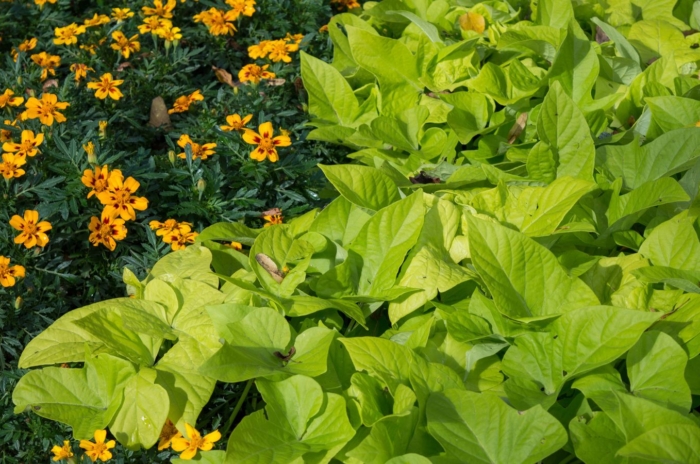
In the meantime, grow companion crops that help reduce nematode numbers. Marigolds are an excellent choice. After a marigold crop, planting grain cover crops such as rye or oats can deliver a final blow to lingering nematodes.
Root knot nematodes thrive in the same conditions okra prefers, namely full sun and hot weather. Under these conditions, nematodes can multiply quickly and interfere with nutrient absorption in okra plants. This not only weakens plant growth but can also make harvesting difficult or even impossible.
Frequently Asked Questions
Can I plant marigolds with okra?
Yes! In fact, marigolds will help deter detrimental nematodes that can block nutrient absorption in your okra crop. Okra and marigolds love each other. Give them plenty of sun, and space adequately. Marigolds need about 10 inches of space between plants. Okra needs a lot more space between itself and other okra plants but can have smaller plants nestled between.
Can you plant cucumbers and okra together?
Cucumbers and melons are two of okra’s favorite companions. Cucumbers provide ground cover for okra that prevents weed growth and keeps nutrient content funneling into okra stalks. They can also act as an impromptu trap for pests that would otherwise feast on okra leaves.