How to Plant, Grow, and Care for Nutmeg Trees
Warm climate gardeners can grow and enjoy the tropical nutmeg tree... and get both nutmeg and mace as a result! If you live in a tropical region, this tree would be a great addition to your garden. In this guide, Sarah Jay explains how to do it.

Contents
When autumn arrives in the Americas, spice takes center stage. Baked goods, coffees, and comforting warm dishes feature familiar autumn spice blends many people love. Mace and nutmeg often appear together in these blends, but both spices come from the same plant.
Nutmeg and mace are harvested from the tropical nutmeg tree, Myristica fragrans. Nutmeg trees originate in the Spice Islands, an archipelago in eastern Indonesia. This region played a central role in the global spice trade, particularly among European colonists as far back as the 16th century BCE.
Although nutmeg trees took a long time to reach the Americas, they are now grown successfully outside their native range. With the right conditions, you can cultivate the distinctive, warm fragrance and flavor that nutmeg seeds add to both sweet and savory recipes. In this guide, you will learn how to grow your own nutmeg trees at home.


Quick Care Guide

|
Scientific Name
Myristica fragrans
Days to Harvest
150 to 180 days (from planting a mature tree)
Light
Part sun
Water
Up to 2 inches per week
|
Soil
Fertile, well-draining
Fertilizer
Composted cattle manure or occasional liquid fertilizer
Pests
Cocoa weevil
Diseases
Anthracnose leaf spot, thread blight
|
All About Nutmeg Trees
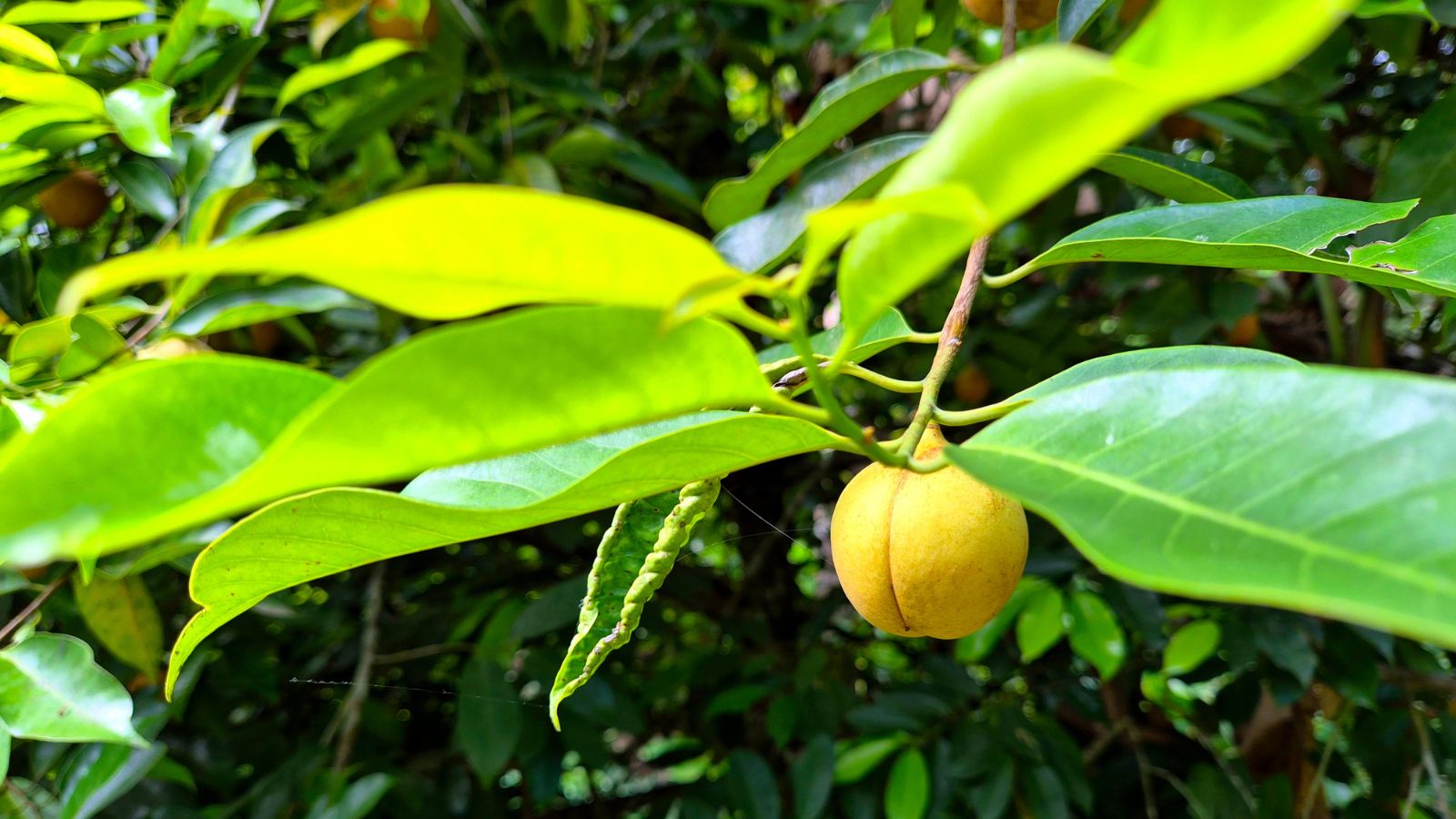
Nutmeg trees, known scientifically as Myristica fragrans, produce both nutmeg and the spice called mace. Fragrant nutmeg and mace are the common names associated with this tree, which is the source of the nutmeg most Americans know and use.
Nutmeg trees are native to the Spice Islands of Indonesia. Portuguese colonists learned about the plant in the sixteenth century and carried it back to Europe. Cultivation outside the Maluku Islands did not begin until the nineteenth century, when growers successfully established this tropical tree in new regions.
These trees are evergreen and feature smooth, fragrant, dark green leaves similar in appearance to magnolia. Female trees produce petal-less flowers with three to four lobes, while male trees produce flowers with up to 20 stamens. Fully mature nutmeg trees grow between 30 and 60 feet tall.
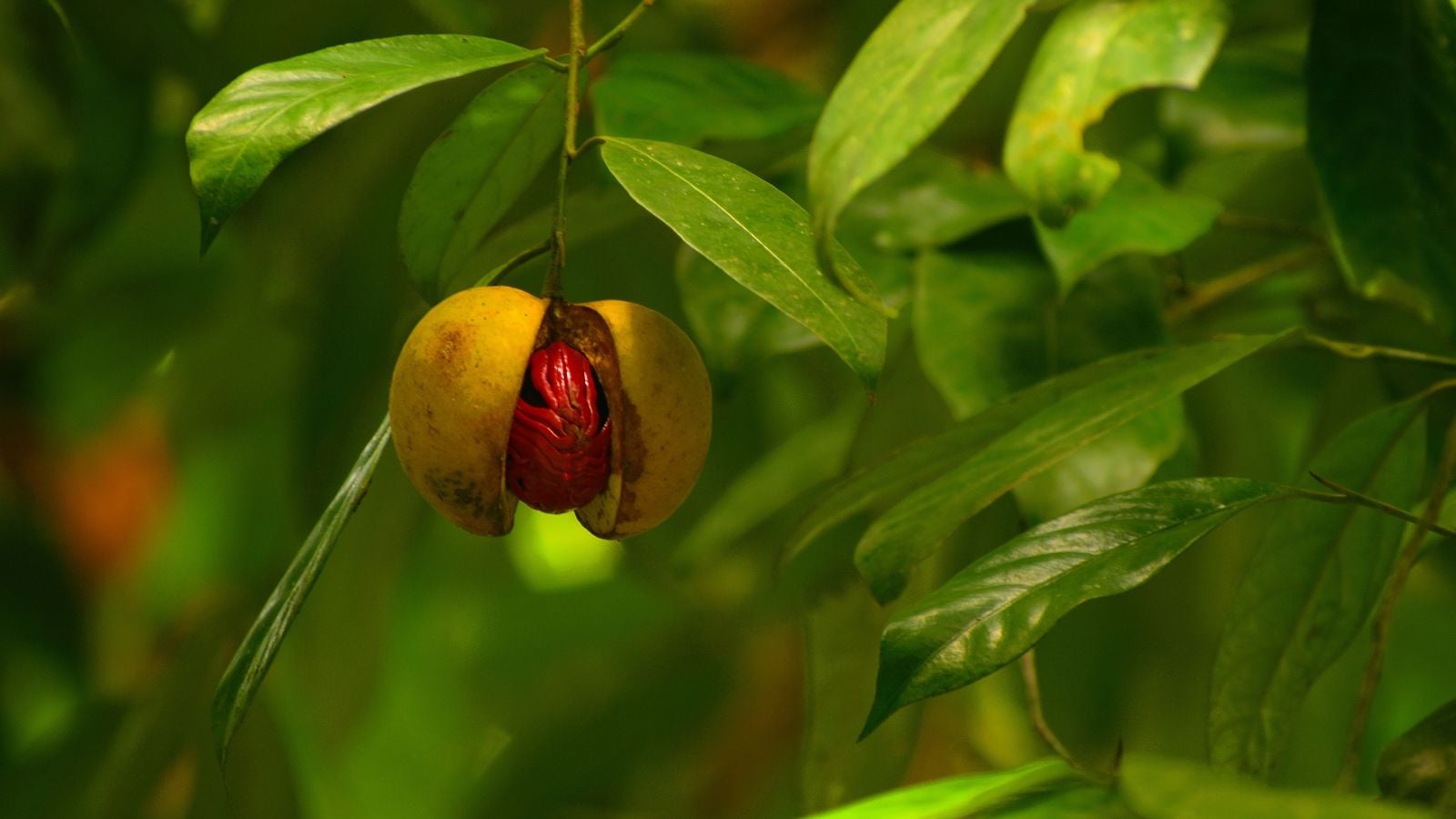
Pollination occurs between male and female flowers and is often carried out by nocturnal beetles. Once pollinated, nutmeg trees produce teardrop-shaped fruit with tender green to yellow flesh. Inside the fruit, the seed appears as a grayish-brown oval with a furrowed surface, surrounded by a hard, red aril that becomes mace.
Home growers who commit to long-term cultivation often grow both male and female trees and hand pollinate to ensure seed production. Nutmeg trees begin producing fruit at around five years of age and can live for up to 60 years.
Uses
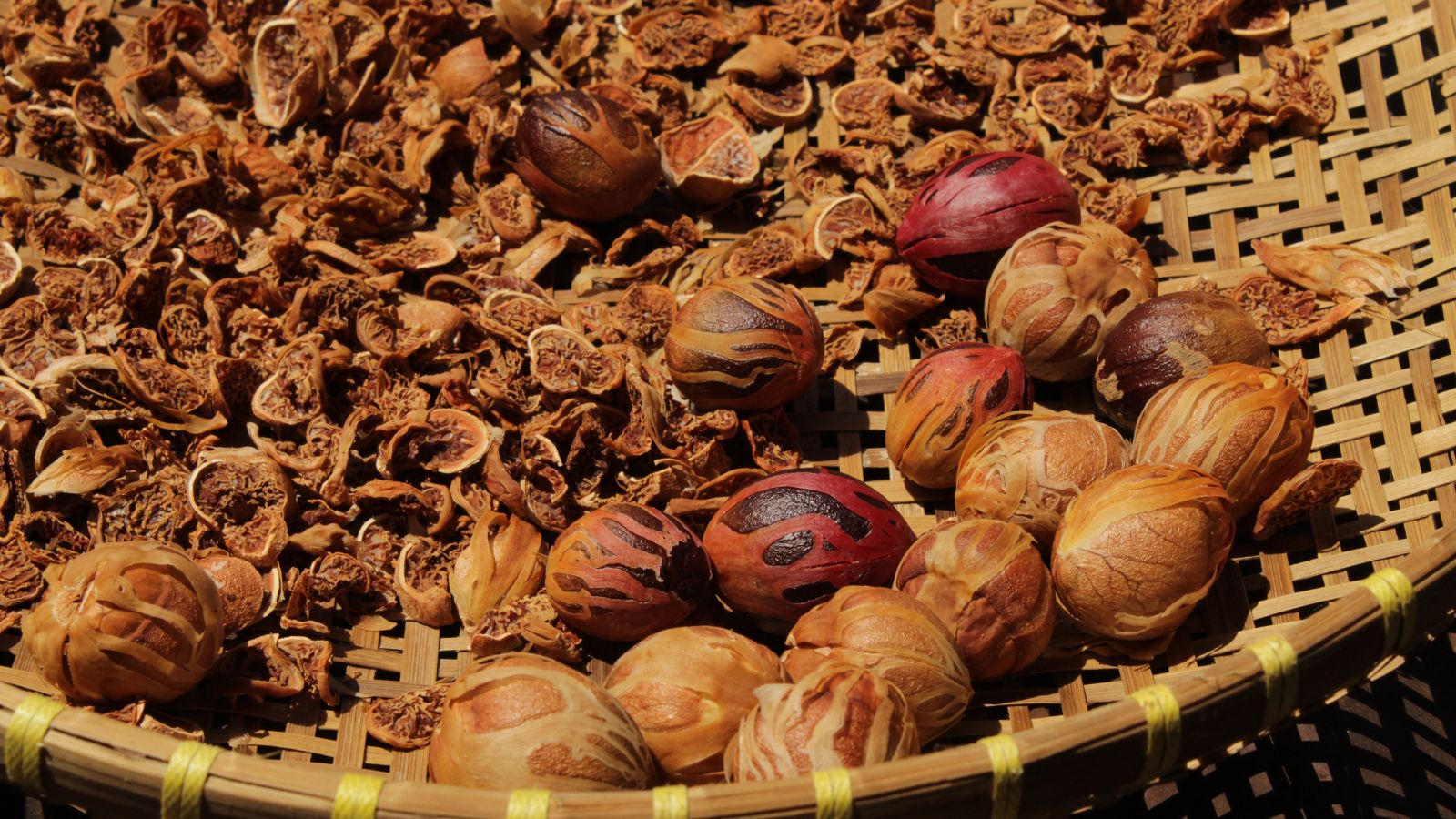
Fresh nutmeg pulp can be removed to expose the seed kernels that become dried nutmegs. Once grated, dried nutmeg is used as nutmeg powder, a spice valued worldwide. The crimson colored aril that surrounds the hard seed surface is carefully separated and slowly dried to produce the spice known as mace.
Although nutmeg trees are strictly tropical, they are relatively easy to grow under the right conditions. Gardeners in cooler regions can achieve excellent results by growing nutmeg trees in greenhouses, just as successfully as growers in warm climates.
The nutmeg fruit itself is also edible. It can be processed into nutmeg juice, a delicacy commonly served in coffee shops throughout its native range. Cooks who explore the full culinary potential of nutmeg fruit often describe its flavor as unexpected and surprising, especially when compared to the familiar way nutmeg is typically used in American kitchens.
Planting
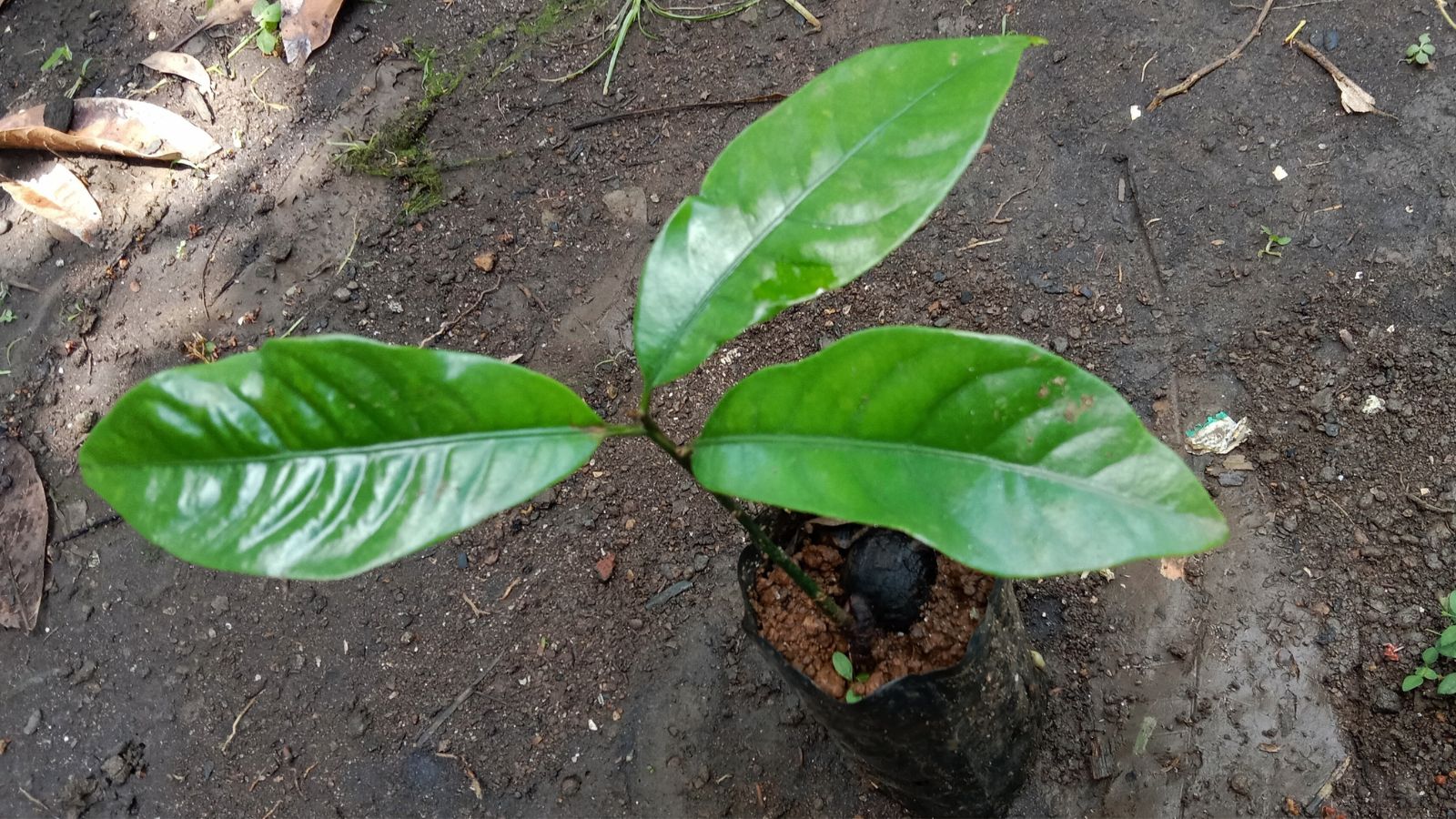
When you purchase nutmeg trees, wait until the roots fill the nursery pot before transplanting. Unless you live in a tropical climate, grow nutmeg trees in containers. As the plant grows, move it gradually into containers with two more inches of width and depth than the previous pot. Check roots during each transition to ensure they are not circling the container.
Eventually, transplant nutmeg trees into five-gallon pots. Once the roots fully occupy that space, move the tree into its final location, either a larger container or the ground. A ten-gallon container works well for long-term container growing.
If planting nutmeg trees in the ground, allow at least 30 to 40 feet of spacing between plants. Container-grown trees perform well as long as they remain healthy and are not root-bound. Because nutmeg trees are tropical, avoid planting or transplanting during cool weather.
Choose a sunny location with consistent humidity, shelter from strong winds, and protection from cold, dry air. Provide fertile, well-draining soil to support steady growth and long-term health.
How to Grow
Nutmeg does great once it’s established after planting. Let’s discuss the framework for successfully growing nutmeg.
Light
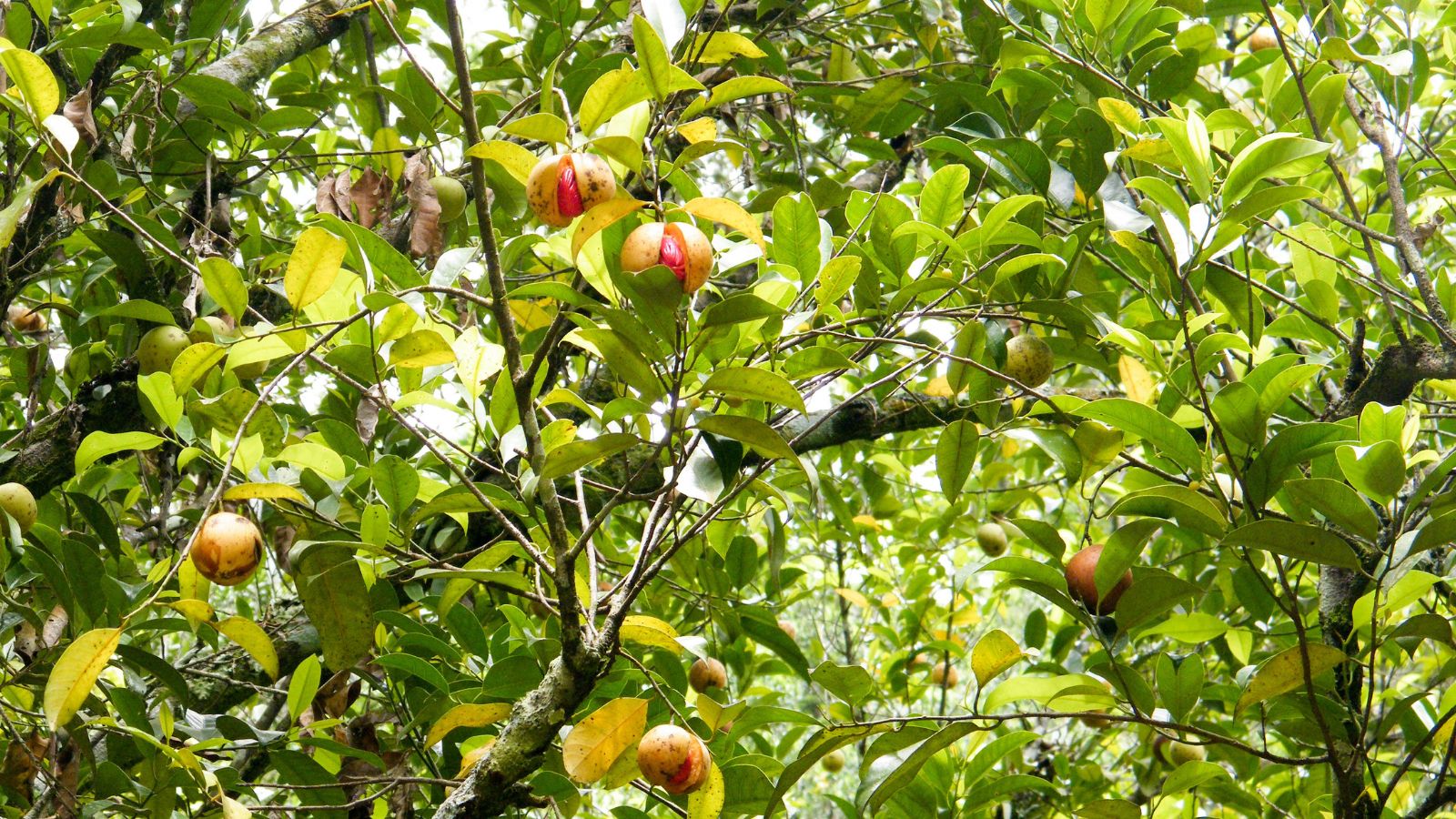
Nutmeg grows best in areas that receive full sun to partial shade, with four to six hours of direct sunlight each day. Excessive sun can scorch the leaves, while too much shade limits photosynthesis and starves the tree of the energy it needs for healthy growth.
Water

Water nutmeg in the morning when the top two inches of soil feel dry. Container-grown trees need more frequent watering, following the same guideline, as containers dry out faster than in-ground soil.
In garden beds or yards, apply a two to three-inch layer of mulch to help retain consistent soil moisture. Install a drip irrigation line around the base of the tree, keeping it away from the trunk. During extended periods of rain, hold off on watering until the surface layer of the planting medium dries again.
Do not allow the soil to dry out completely. Nutmeg is native to regions with consistently moist soil, and maintaining that moisture is essential for healthy growth.
Soil

Use highly fertile, well-draining soil when planting nutmeg trees. Experienced growers often rely on a rich soil base amended with well-rotted manure, commonly cow manure, and a small amount of sand to improve drainage. When planting directly in the ground, work a generous amount of composted manure into the soil before planting.
While nutmeg trees can survive in poor soil, they require higher fertility to support flowering, pollination, and fruit production. Lightly acidic soil produces the best results. Test your soil and aim for a pH range between 5.5 and 7.0.
Temperature and Humidity

Nutmeg trees thrive in USDA zones 10 and 11. You can still grow them outside this range by keeping the tree in a container. The ideal temperature range for nutmeg is 77 to 86°F (25 to 30°C). For best results, grow nutmeg outdoors in regions with hot summers and mild winters, and move container-grown trees indoors in cooler climates.
Cold temperatures quickly damage nutmeg trees. Exposure below 30°F (-1°C) can kill them. If you garden in USDA zones outside the ideal range, plan to use a greenhouse or indoor space to protect your tree from temperature extremes. When temperatures fall outside the optimal range, nutmeg trees stop flowering and may drop fruit, which also makes pollination more difficult. Maintain consistent warmth to keep trees productive.
Nutmeg trees also require high humidity. If your local humidity stays below 85%, mist the tree regularly until water pools on the leaves without dripping off. Repeat this up to two times daily as needed to maintain adequate moisture.
Fertilizing

Because nutmeg grows well in soil rich with well rotted manure, it does not require heavy supplemental feeding. That said, a monthly application of a diluted organic liquid fertilizer with a 20-18-50 NPK ratio can support steady growth. Increase the amount gradually each year as the tree matures. As an alternative, apply an additional layer of composted manure around the base of the tree once a year.
Avoid fertilizing during periods of extreme heat or cold. Fertilizing under these conditions can stress the plant, increase the risk of root rot, or cause fertilizer burn.

Pruning

On young nutmeg trees, prune away branches that grow inward toward the trunk. As the tree matures, remove lower branches to lift the crown and create usable space beneath it. Some growers believe that more branches lead to higher fruit production, while others find that selective pruning encourages better flowering and fruit set. You have plenty of time to experiment and see which approach works best for your tree.
As nutmeg trees grow taller, ask someone to spot you when pruning higher branches, or hire an arborist to help shape the tree safely. When fruits ripen, they naturally split and fall to the ground. You can also harvest them just before the flesh splits if you plan to use the fruit pulp. Nutmeg is an evergreen tree, so it retains its leaves year-round rather than shedding them seasonally.
Propagation
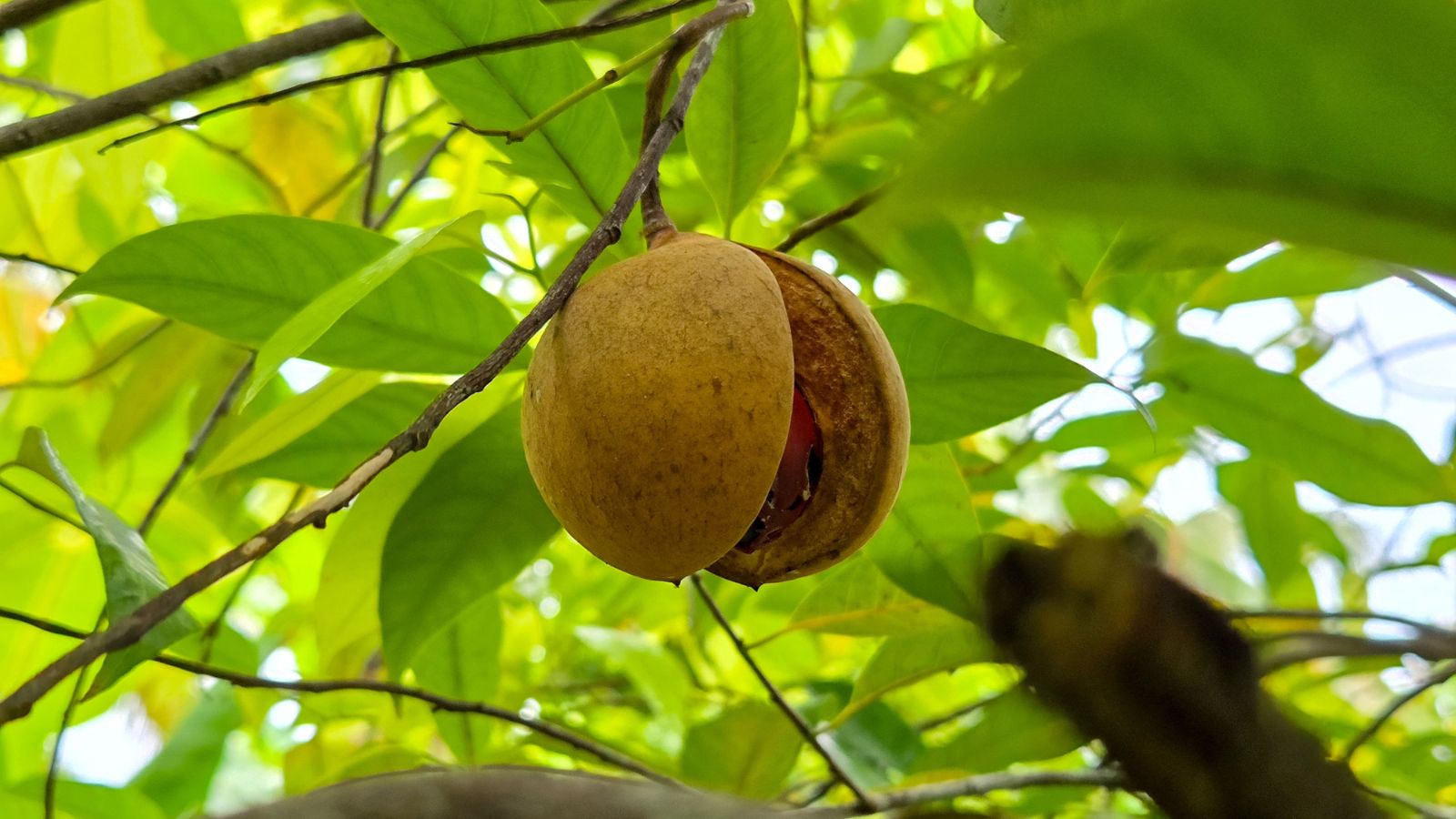
As nutmegs fall to the ground when they ripen, they may land in shaded, moist soil and germinate on their own. You can dig up these seedlings along with their new growth and transplant them into a one gallon container filled with the same soil used for mature trees.
You can also propagate nutmeg by planting seeds yourself. As fruits and seeds drop, collect the seeds and place them in an envelope or paper bag. Store them in the refrigerator, where they remain viable for up to 45 days. Before planting, soak the seeds in clean water for at least 24 hours. Plant them one inch deep in five inch starter pots and keep the soil consistently moist. Within six to eight weeks, the nutmeg seeds should sprout.
Recent horticultural work has focused on grafting male nutmeg branches onto female nutmeg trees. This technique creates a self pollinating tree. If you already have a mature female nutmeg tree, you can graft a male branch onto a healthy female specimen to improve fruit production.
Harvesting
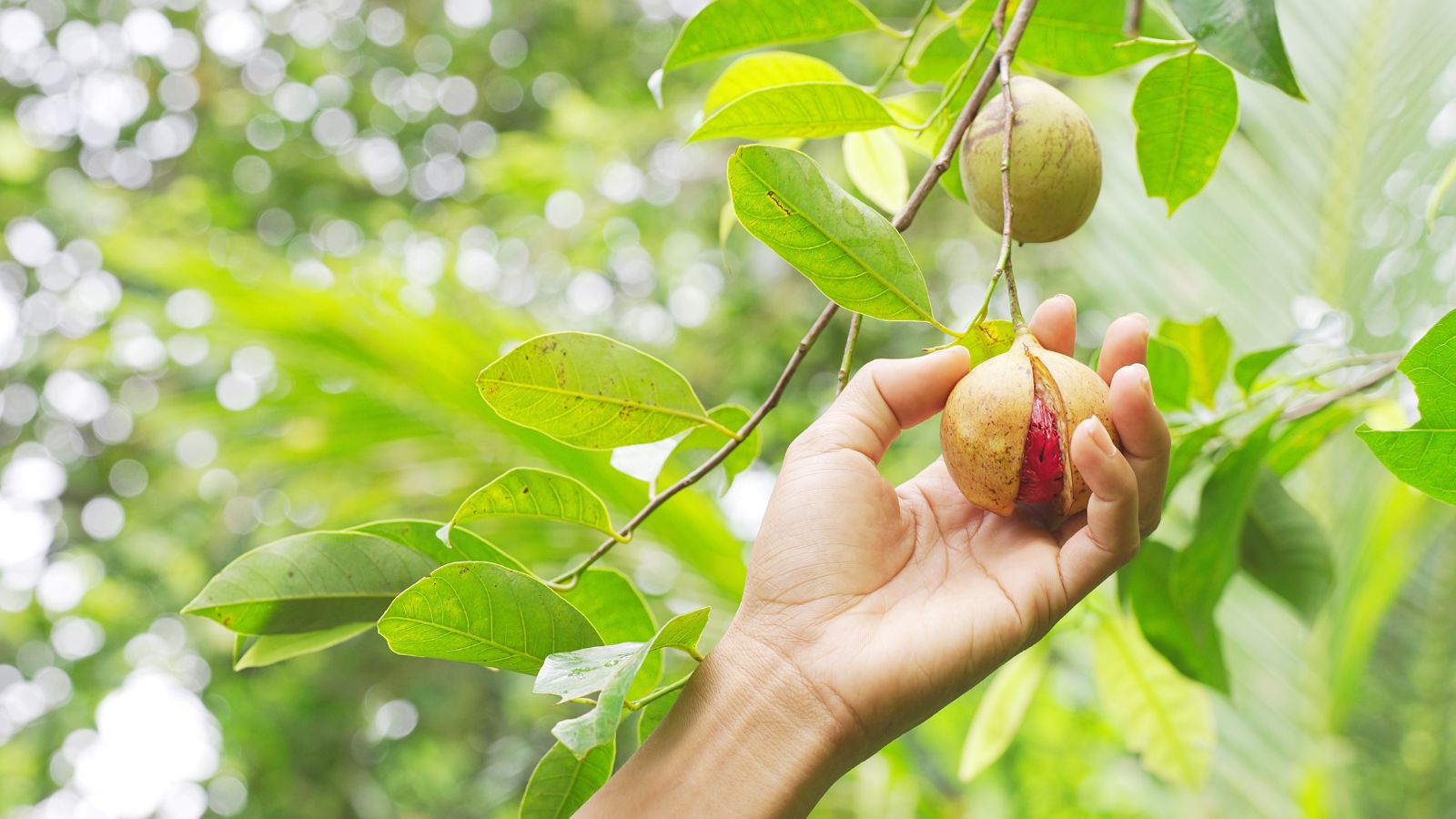
As the fruit splits open and exposes the seed, nutmegs are ready to harvest. You can wait for ripe fruit to drop naturally beneath the tree or remove it carefully using a long pole. Expect to wait at least five years of healthy growth before a nutmeg tree produces harvestable fruit.
Separate the red aril from the seed casing soon after harvest. Allow the seed to dry fully before removing the outer casing, which can be composted or discarded. Dry the aril in direct sunlight for two weeks, then grind it into powder using a mortar and pestle to make mace.
To dry nutmeg seeds, place them in direct sunlight for six to eight weeks until the nutmegs shrink and the kernels rattle inside their shells. Once dry, crack the outer casing to extract the kernel. This kernel is the nutmeg used as a spice. Grind it fresh using a microplane or nutmeg grater.
Freshly ground nutmeg has a much stronger flavor than pre-ground powder, so adjust quantities in sauces, beverages, desserts, and meats based on aroma and taste.
Storing
Whole nutmeg, along with its flavor, can be stored in a dry, airtight container at room temperature for up to five years. Ground nutmeg keeps under the same conditions for up to three years.
Mace should also be stored in an airtight container in a cool, dark place. It will keep for up to one year, although it begins to lose potency after six to eight months.
Having freshly ground nutmeg and mace on hand for vegetables like potatoes, meat, or finishing a variety of dishes adds depth, warmth, and complexity that pre ground spices cannot match.
Troubleshooting
Growing nutmeg can be difficult when conditions aren’t right. Here are a few things to be aware of.
Growing Problems
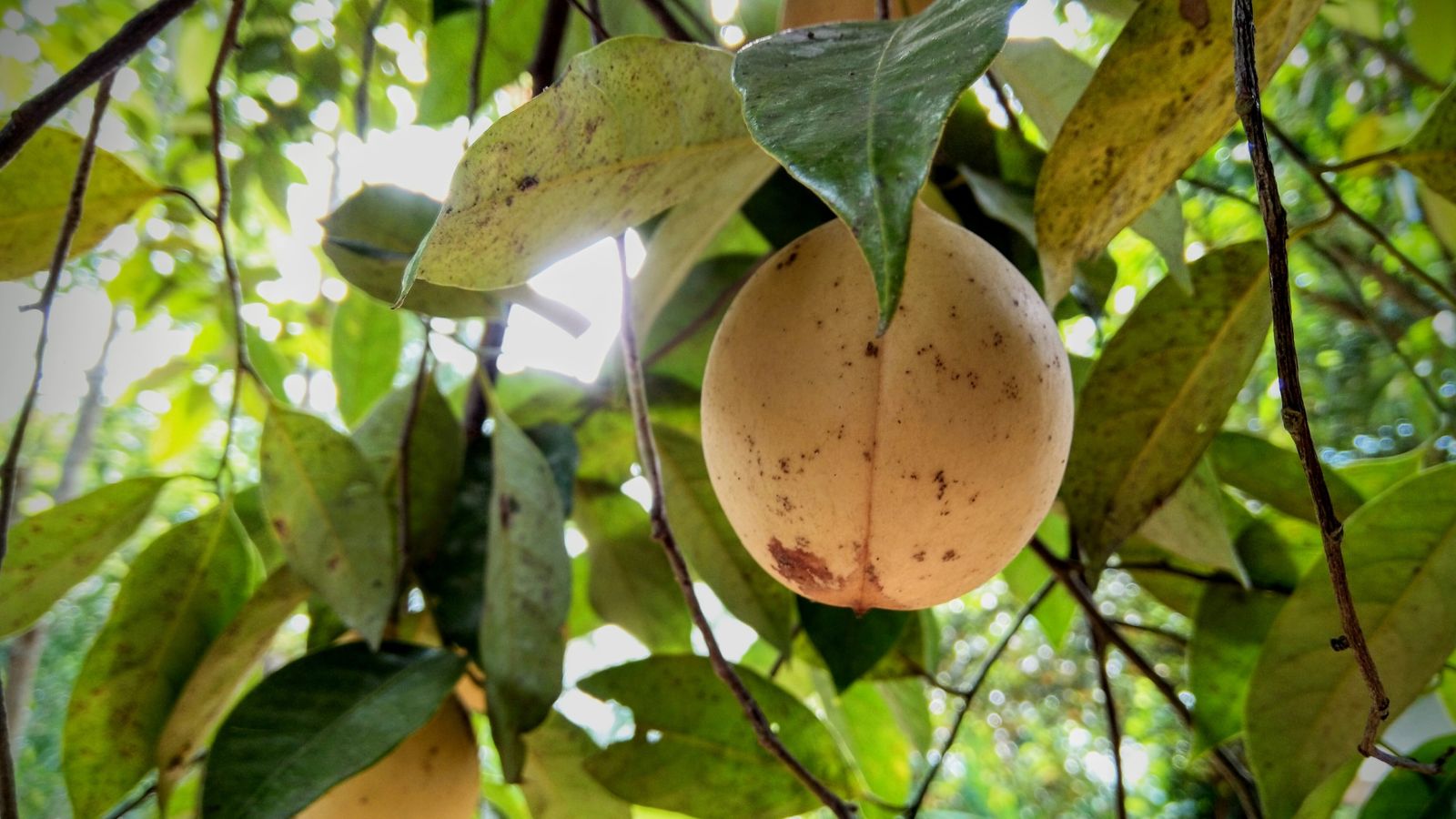
If you grow nutmeg in soil that lacks fertility or consistent moisture, the tree may fail to flower or fruit. By year seven, if flowering has not occurred, increase fertilization slightly compared to the previous year.
Nutmeg also requires partial shade. Too little shade can cause leaf scorch and fruit drop, while insufficient sunlight prevents the tree from producing the energy it needs for healthy growth and fruiting.
Planting depth matters. If the planting hole is too deep or too shallow, the tree may struggle to establish proper roots. If you notice exposed roots after planting, replant deeper as soon as possible.
When mulching, leave a small gap between the mulch and the trunk. This spacing helps prevent fungal or mold issues that can damage the trunk over time.
Pests

Cocoa weevils bore circular holes through the casing and into the nutshell, where they feed on the kernel. If you notice holes in your nutmeg, treat the tree immediately to prevent widespread kernel damage. These pests not only consume the kernel but also lay eggs inside the holes, allowing larvae to multiply and destroy the nutmeg from within.
Manage cocoa weevils by encouraging natural predators such as mantises, birds, and ladybugs through companion planting or by introducing these beneficial insects into your garden. You can also protect developing kernels with organic treatments. An organic spinosad spray works well as a targeted pesticide option for controlling weevil populations.
Diseases
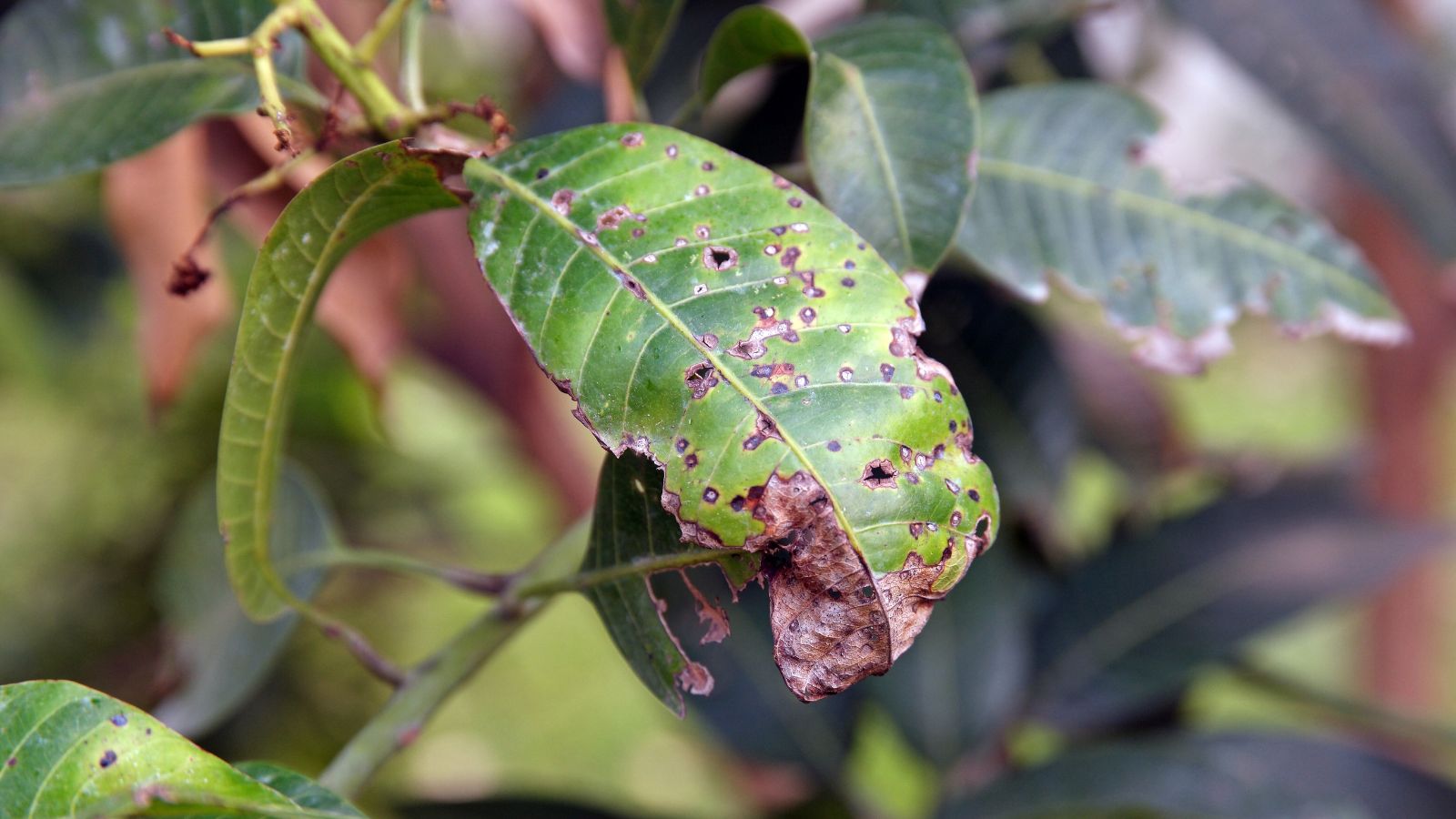
Anthracnose leaf spot is caused by the fungus Colletotrichum gloeosporioides and appears as dark spots surrounded by yellow halos on nutmeg leaves. To control leaf spot, spray affected foliage with a 1% Bordeaux mixture made from copper sulfate, hydrated lime, and water. For a simpler option, an off-the-shelf liquid copper fungicide also provides effective control.
Thread blight is another fungal disease caused by Corticium spp. This pathogen produces either white or black silky threads that form an irregular web across stems and leaves. Treat thread blight using the same approach, either a liquid copper fungicide or a 1% Bordeaux mixture applied evenly to infected plant tissue.
Frequently Asked Questions
Can I grow a nutmeg tree?
Yes! It will take time, but once you establish this plant you’ll be so glad you did.
Can you eat the nutmeg fruit?
The pulp around the fruit is reputed to be quite sweet and popularly juiced in Asian countries. It has a different flavor than the spice but is very tasty!
How long does a nutmeg tree take to grow?
Nutmeg produces fruit after at least 5 years of healthy growth and proper pollination.





