13 Plants That Love Being Misted
Mists grace the tropical forests of the world. They give rise to epiphytes, mosses, and orchids that love growing in high humidity. In the home, misting emulates the humid forests of the tropics and coastal regions. Discover which plants love being misted alongside seasoned grower Jerad Bryant.


Contents
Misting is a well-contested act in the home garden. Many growers swear by it, while others claim it’s harmful. The truth lies somewhere in between the two extremes.
Misting is a beneficial gardening task that helps humid-loving plants. It temporarily boosts the humidity around them, and the leaves pull some of the water in to drink. So, what’s the downside?
Misting may increase the presence of fungal diseases with frequent wetting. Cacti and succulents dislike misting, as do most other dry-loving plants. It’s also not a good long-term solution for boosting humidity.
When you mist, the water droplets quickly evaporate and the humidity returns to normal. You’ll need to mist consistently, multiple times a day, to effectively increase the humidity. Consider combining misting with other techniques, like adding humidifiers and pebble trays, to give your plants the moisture they need.
This list includes a few humidity-loving plants you should mist occasionally for better growth.
Orchid


|
botanical name Family Orchidaceae |
|---|---|

|
sun requirements Bright, indirect light |

|
height 3″-5′ |

|
hardiness zones 3-12 |
Orchids are incredibly diverse! They are many gardeners’ favorite houseplants, as they work well in indirect light and indoor conditions. Though they like the indoors, they also appreciate high humidity levels. If the area isn’t already humid, mist these plants to help them get the moisture they need to thrive.
Mist your humidity-loving orchids twice daily or more often if you can. Once a week during the growing season, mist them with a foliar feed. Foliar feeds are fertilizers that you mist on the leaves. The orchids take in the nutrients, much like how they would in the wild when nutritious mists land on their foliage.
Getting orchids to rebloom is a challenge! Those that need high humidity love being misted, so that’s one easy way to promote blooms. Give them adequate light, nutrients, and moisture throughout the year to coax their blooms out during the flowering season.
Moss

|
|
botanical name Division Bryophyta |
|---|---|
|
|
sun requirements Partial to full shade |
|
|
height 1″-1.5′ |
|
|
hardiness zones 1-13 |
Mosses grow everywhere. They’re not technically plants; they’re bryophytes. Bryophytes differ from plants in that they lack vascular tissue. They consist of many similar cells that multiply and create vast mats of green foliage.
Because they lack vascular tissue, mosses do not drink water in the way that plants do. They require high humidity levels around their foliage to stay green, perky, and fresh. Mist these plants often, especially if they’re growing indoors near a heater or AC unit.
Spider Plant
|
|
botanical name Chlorophytum comosum |
|---|---|
|
|
sun requirements Bright, indirect light |
|
|
height 1-1.5′ |
|
|
hardiness zones 9-11 |
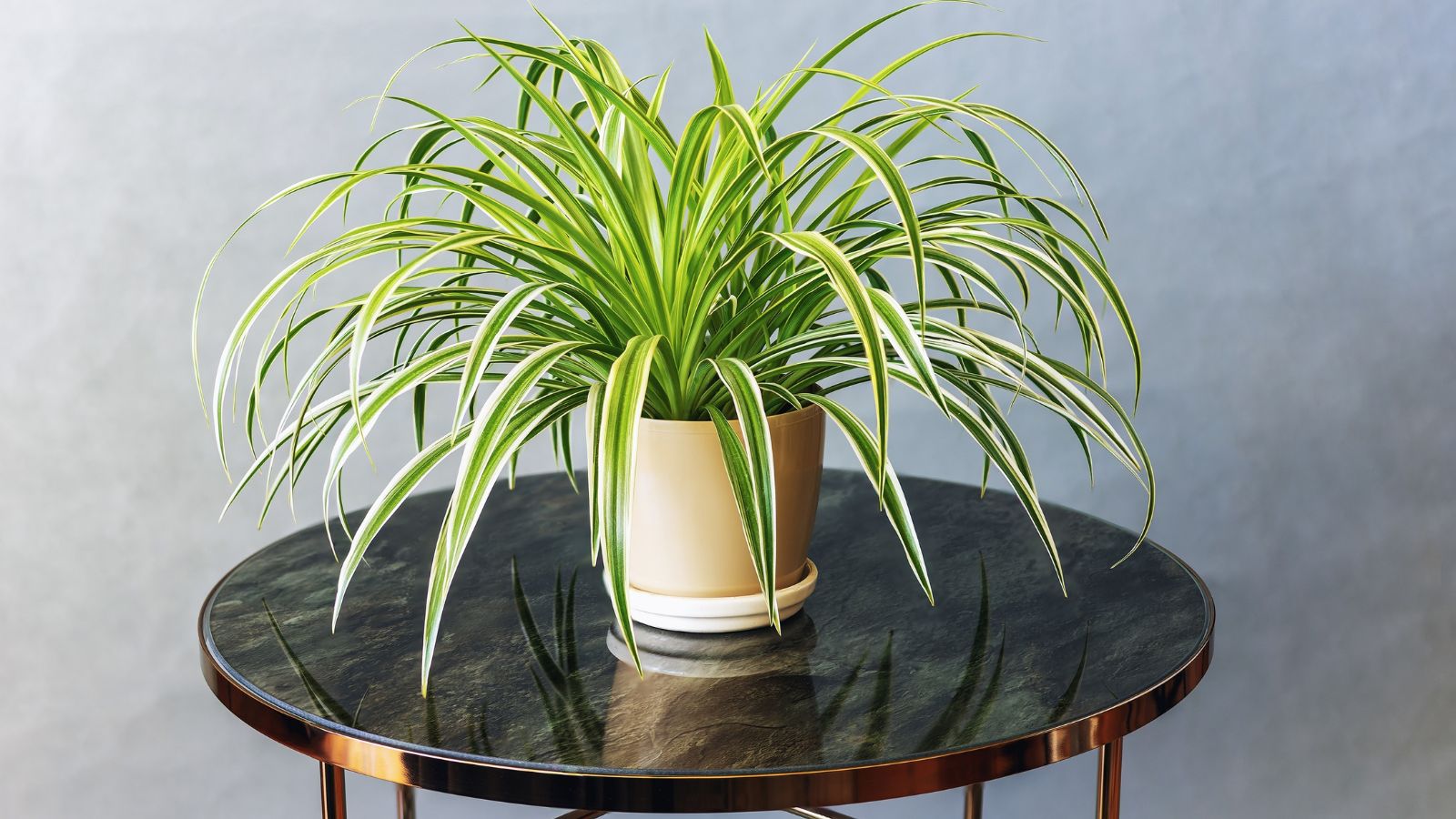
Spider plants are the perfect houseplants for beginners! These specimens are foliage-forward, and growers love them for their tropical leaves. They bloom sporadically throughout the year indoors, and after the blooms fade, baby plants, called “spiderettes”, replace them.
These spreading specimens prefer misty, humid conditions similar to those in their native range. They love being misted when the room isn’t already humid, even if it’s occasional instead of regular misting. They also appreciate a good wipe-down. Mist the leaves, then use a moist cloth to wipe dust and grime from the leaves.
Fern

|
|
botanical name Division Pteridophyta |
|---|---|
|
|
sun requirements Full sun to full shade |
|
|
height 6″-80′ |
|
|
hardiness zones 2-13 |
Ferns, like mosses and orchids, are extremely diverse. There are tropical ferns, cold-hardy ferns, and tree ferns! Opt for native ferns that grow in wild regions nearby for the best results in your garden.
Indoors, opt for tropical ferns that grow well in indirect light. These types appreciate being misted. Bird’s nest fern, Boston fern, and rabbit’s foot fern are a few of the many possible options.
Some ferns tolerate low humidity, though most prefer levels above 50%. They thrive in bathrooms, kitchen windows, and well-lit living rooms.
Monstera

|
|
botanical name Monstera spp. |
|---|---|
|
|
sun requirements Partial shade |
|
|
height 6-70′ |
|
|
hardiness zones 10-12 |
Many homes have monsteras. These tropical specimens, also called Swiss cheese plants, stay between six and eight feet tall indoors with indirect sunlight. Outdoors in tropical climates, monsteras climb trees to 70 feet tall!
Monstera plants have small, heart-shaped leaves when they’re young. As they age, the leaves grow larger and with more holes. They love frequent misting because it mimics the mists and humid conditions of their native environment from Mexico through Guatemala.
Bromeliads
Bromeliads dwell in tropical climates from North to South America. They’re fleshy plants in the pineapple family, Bromeliaceae. Many genera are popular as houseplants, which is why we include them here! Mist these plants regularly to keep them moist, perky, and vigorous.
Aechmea

|
|
botanical name Aechmea spp. |
|---|---|
|
|
sun requirements Partial shade |
|
|
height 1-3′ |
|
|
hardiness zones 10-12 |
Up first in the bromeliad category is the Aechmea genus! These bromeliads form water reservoirs with their leaves, and they prefer that the reservoirs retain moisture at all times.
Care for these water-loving bromeliads, called tank-bromeliads, by filling their tanks and misting them often. Use filtered water or rainwater, not tap water, to avoid burning the leaves. Prevent pests by changing the water in the tank once a month.
One popular species is the Amazonian zebra plant. It features variegated leaves with green and maroon stripes. It flowers with a long spike full of red-orange blossoms. Another is the silver vase bromeliad, with pink-purple spikey flowers and silver-green leaves.
Billbergia

|
|
botanical name Billbergia spp. |
|---|---|
|
|
sun requirements Partial shade |
|
|
height 1-3′ |
|
|
hardiness zones 9-13 |
Bromeliads in the genus Billbergia are quite unique. They’re more tolerant of dry conditions than most others, and they use narrow tanks to store water and nutrients. They appreciate occasional misting, especially when they’re flowering in summer.
Some Bilbergia species grow on the ground, and some grow on trees without any soil! The ones that grow on trees, called epiphytes, appreciate frequent misting. They require higher humidity levels than those in the ground to stay healthy and perky.
Cryptanthus

|
|
botanical name Cryptanthus spp. |
|---|---|
|
|
sun requirements Partial shade |
|
|
height 3″-1′ |
|
|
hardiness zones 8-12 |
Cryptanthus bromeliads are low-growing, making them charming additions to terrariums, containers, and borders. Some have stripes and clean lines, while others have variegation throughout their foliage. There’s sure to be a Cryptanthus species you like the looks of!
Consider the zebra plant, a species of Cryptanthus with zebra-like stripes on wavy leaves. The zebra plant and all other bromeliads in this genus are not tank types. They lack a central reservoir that stores water.
To keep them happy and humid, mist these plants as often as possible. We all have busy schedules, so consider setting up a humidifier or pebble trays underneath the pots to protect them from drying out.
Guzmania

|
|
botanical name Guzmania spp. |
|---|---|
|
|
sun requirements Partial to full shade |
|
|
height 6″-3′ |
|
|
hardiness zones 10-12 |
Bromeliads in the Guzmania genus are some of the most popular types. They have striking leaves with many colors, though some have plain green leaves. Their flowers emerge high above the foliage, and they often differ in color from the leaves.
Most Guzmania species have the tank-like reservoirs that help them collect moisture from rainwater and humidity. Mist these plants daily to fill the tanks. Use plenty of mist to ensure the water droplets fall into the reservoir.
Neoregelia

|
|
botanical name Neoregelia spp. |
|---|---|
|
|
sun requirements Partial shade |
|
|
height 2″-3′ |
|
|
hardiness zones 10-12 |
Though bromeliads like high humidity levels, they dislike soggy soil. The epiphytic types prefer growing in well-draining blends. Use orchid potting soil with bark for the roots, or consider making a blend yourself with moss and bark. Neoregelia species especially prefer growing in a well-draining medium.
Neoregelia species have tanks that need filtered water at all times. Fill them regularly, and change the water if it sits for a month.
Bromeliads in this genus love being misted. When happy, they’ll sprout inconspicuous little flowers in their tanks.
Pineapple

|
|
botanical name Ananas comosus |
|---|---|
|
|
sun requirements Partial shade |
|
|
height 3-4′ |
|
|
hardiness zones 10-12 |
Yes, pineapples are bromeliads! They’re one of the most important species in the family. Pineapple plants produce juicy, sweet fruits with spiny exteriors. There are pink pineapples nowadays, though most types have yellow flesh.
This tropical fruit requires infrequent misting; do it when you remember to! Pineapples are surprisingly drought-tolerant and grow well with occasional watering and free-draining soil.
Indoors, heaters during the winter zap the air and lower humidity levels. Mist the plants often to counteract the dry air.
Tillandsia

|
|
botanical name Tillandsia spp. |
|---|---|
|
|
sun requirements Full sun to full shade |
|
|
height 6″-1′ |
|
|
hardiness zones 8-12 |
Tillandsia species, or air plants, are superb houseplants. They don’t need soil. They’re epiphytic, and they love being misted. Find them growing naturally in parts of North and South America; they sprout on buildings, trees, and powerlines.
Frequent misting is important for air plants, as is a good soaking. Aim to soak your plants once a week when they start looking dry and thirsty.
Instead of planting air plants in soil, you may hang them up or set them down. Put them in hanging terrariums, hang them on the windowsill, mount them on wood, or set them on a bright shelf.
Vriesea

|
|
botanical name Vriesea spp. |
|---|---|
|
|
sun requirements Partial to full shade |
|
|
height 2-3′ |
|
|
hardiness zones 10-12 |
Our last set of bromeliads includes some of the most showy species. Those in the genus Vriesea sprout bright flower spikes with multiple colors. Some are fiery red, a few are orange, and others are bright pink. Their showy blooms are why these plants also go by “flaming swords.”
Like the other types, flaming swords have tanks that require filling, and they love being misted. Give them bright, indirect light indoors and partial shade outside.