How to Tell if Melons are Ready to Harvest
Melons are a labor of love, or at least patience, as we await their long development. With full, sweet rounds that ripen quickly in their final days, picking them at peak flavor takes gauging a few cues. Gardening expert Katherine Rowe outlines what to look for to make sure we catch melons at the right time for the sweetest, juiciest slices.


Contents
With melons, there’s a limited window for capturing the sweetest harvest. After a long development period, they ripen quickly in their final days to maturity. They do all of their sweetening on the vine and don’t continue to ripen after picking. So, to achieve the best flavor and texture, knowing when melons are ready to harvest gives the juiciest reward.
Watermelons, muskmelons, cantaloupes, and “winter melons” like honeydew are long maturing. It takes time to develop the hefty fruits with thick rinds and tender, juice-filled flesh. Melons mature in about 80 to 100 days (dwarf varieties sometimes earlier) and offer their refreshing delight in mid to late summer.
To celebrate one of the best harvests of the season, we’ve got tips on how to tell when your melons are ready to harvest.

Hale’s Best Jumbo Cantaloupe / Muskmelon Melon

Hale’s Best Jumbo Cantaloupe / Muskmelon Melon Seeds

Melon Basics

Melons relish the warm season. Their optimal growing temperatures are between 70 and 85°F (21-29°C), and they wither as temperatures drop in the fall. With sensitive roots, they do best with direct sowing after spring’s final frost and when air and soil temperatures warm to the 60s (~16°C).
To get a head start in climates with short growing seasons or for an earlier yield, start seeds indoors in biodegradable pots or soil blocks.
As melons belong to the Cucurbitaceae family with cucumbers and squash, they’re susceptible to the same pests and diseases. It’s best to separate the group when practical and to practice crop rotation. Companion plants and those with nectar and pollen-rich blooms promote pollination and attract predatory insects.
Whether full-size or dwarf selections, melons are versatile across garden scales. Depending on the variety, they take to vertical growing on a support structure, which saves space and helps vine health. Optimal growing conditions for the cucurbits include:
- Full sun, with six or more hours of sunlight daily
- Well-draining, sandy loams
- Slightly acidic to neutral soils with a pH near 6.8
- Warm temperatures
- One to two inches of water per week
Melon Harvest Timing

The first way to gauge when a melon is ready to harvest is to know the days to maturity for your variety. The seed packet indicates the number of days it takes from sowing to harvesting a mature melon. Depending on the variety, they typically mature in 65 to 100 days. After flowering, it takes about 35 to 45 more days for the fruits to develop.
The days to maturity are an estimate based on optimal growing conditions. Most of us can factor in a few extra days as a buffer for seasonal conditions and weather fluctuations. At sowing, make a note of your sowing date and count out the days to maturity (or ask Google for “X days from today” and add it to the calendar).
Since melons gain all their sugars and juiciness on the vine, using the days to maturity is a strong indicator to use in combination with visual cues.
A Note About Watering

Melons do best with consistent moisture throughout the growing season, but when peak ripeness nears, it helps to withhold irrigation a bit. As melons reach maturity, the fruits stop growing in size but continue to absorb water. An excess of moisture uptake surpasses maximum capacity, and the rinds split open as they burst at the seams.
To avoid a cracked melon after waiting all season, reduce irrigation when the fruits are nearly ripe. Too much water near peak readiness also reduces sweetness. As the melons reach their prime sugar content, extra water dilutes the concentration. Decreasing irrigation just before harvesting helps prevent splitting and maintains that optimal sweetness.
Signs of Readiness by Melon

Not all types are alike when it comes to physical signs that melons are ready to harvest. An underripe melon will be pithy, less color-rich, and not as sweet and juicy. An overripe one may be mushy and off in flavor.
While it takes a little experimentation, following a few signs for the type of melon you’re growing is key.
Watermelon
Watermelons offer a few tell-tale traits when they’re ready to harvest. The main qualities relate to color, stem characteristics, and a sound or “thump” factor.
Color

Color is the best indicator that your melon is ready to harvest. Inspect the “ground spot,” which is the belly or underside where the melon touches the ground. When ready to harvest, the patch transitions from greenish-white to yellow or creamy white.
On dark green and striped melons, the ground spot will be deep to buttery yellow. On light green varieties, the spot will be lighter yellow.
Use the color test in combination with other ripening characteristics, especially if working with a light selection where patch readiness is not as apparent.
Also, look at the overall luster of the watermelon. Their shiny skin becomes duller and rough when ripe.
Stem

Ready-to-pick watermelons have a brown, withered tendril or “pigtail” tendril near the main vine. This browning curlique indicates a mature fruit that’s no longer twining and clinging as it grows.
This gets a little tricky for some varieties, which may show brown tendrils before fruits fully develop. The stems may brown as much as seven to ten days before maturity. Varieties like ‘Crimson Sweet,’ ‘Sugar Baby’, ‘Starlight,’ and ‘Yellow Doll,’ among others, exhibit dry pigtails before peak ripeness.
Try to catch the melons as the stems turn and use the indicator in combination with other cues (an overripe melon also has brown tendrils).
Thump

The last signs that melons are ready to harvest relate to feel and sound. A fully mature melon should feel weighty. It may plump at the blossom end. The thick skin will be firm and resist a fingernail poke. Fruits that “give” when pressed are overly soft and may be overripe.
When tapped, the fruit should have a solid “thump” noise. This takes practice and isn’t always accurate, but a ripe watermelon should sound hollow and dull with the tap of a finger. Unripe melons sound more metallic and have a lighter tone.
Muskmelon and Cantaloupe
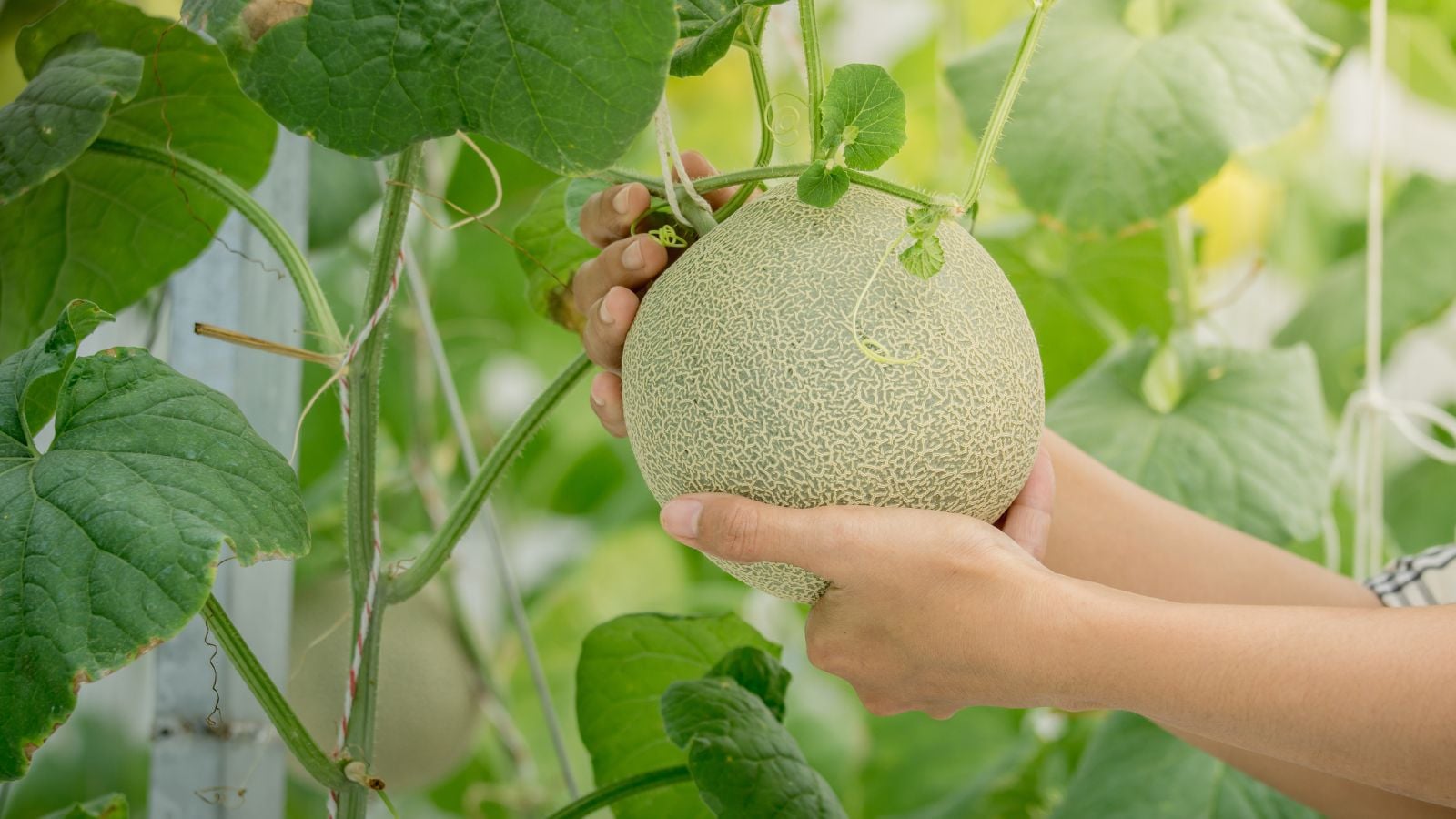
The melons we call “cantaloupes” are typically muskmelons. True cantaloupes are smooth, green fruits of European origin. Both have a candy-sweet flavor. Muskmelons are easily recognizable with their netted skins, perfumed aroma, and salmon-pink flesh.
Cantaloupe and muskmelon offer fewer external cues than watermelons when it comes to maturity. The best measures are color, scent, and “slip.” Feel, too, is a helpful guide. The blossom end should have a slight give under gentle pressure.
Color

The melons are ripe when their original green skin turns beige and creamy yellow. They’ll also show full netting (the textural webbing on the exterior).
Scent
A frequent scent test is helpful when cantaloupes and muskmelons reach near-ripeness. They’ll have a fresh fruit perfume, especially on the blossom end (bottom). The aroma changes quickly as the melon ripens, and when it shifts to acrid, the fruit is overripe.
Slip

If a cantaloupe or muskmelon is a “full slip” variety, it separates easily from the stem when ripe. The slip is where the stem meets the fruit. If the slip is green and sealed, the melon isn’t ready. If the slip is brown and separating from the fruit, the melon is ripe.
Give the round a test pull. If ready, it will pop off the stem easily.
With a non-slip variety, the gauge won’t be the same. Non-slip types need to be cut from the stem. Color and scent tests are the best indicators to check for optimal sweetness in non-slip selections.
Honeydew
Honeydews are a type of “winter melon,” or those ready late in the season. They have a long shelf life for storing and enjoying in the fall and winter. They usually reach optimal size and flavor in late summer and early fall.
Unlike muskmelons, honeydews have smooth, green skins without netting. They’re also less aromatic on the vine and don’t separate from the stem when ripe. Minute cracks appear at the blossom end when fully mature.
Color

Honeydew and other winter melons (Juan Canary, casaba, crenshaw) transition from lighter to darker rinds, with green skins becoming more yellow. Color varies by type from light gold to dark yellow. You’ll also see a waxy, matte finish at maturity.
Feel

With the waxy finish comes a slight stickiness when winter melons are ready to harvest. Like others in the group, they’ll also feel weighty. With a gentle press of the blossom end, you’ll feel a slight yield. Skin will be firm.
How To Pick Melons

Cut the rounds from the main vine with pruners or a sharp blade. Unless they’re a “full slip” type, they may lack the tendency to separate easily from the vine with a pull. Clipping helps reduce injury to the primary stem. When cutting, leave two inches of the stem attached to the melon. This helps preserve the fruit and protect it against injury and disease.
Scout for soft spots, rot, bruising, or pest damage, and toss any fruits that aren’t viable. Then, bring the juicy melons indoors to slice or store.
Storing

There are a few storage options for your perfectly ripe globes. Most whole melons last at room temperature for about one week and in the refrigerator for two to three weeks. Honeydew and winter melons boast a longer storage period, lasting three to six weeks at 45 to 50°F (7-10°C).
To extend their shelf life, keep melons away from other fruits that emit ethylene gas as they ripen. This includes tomatoes, bananas, and apples. Cantaloupes, too, produce the gas, so separate them from other melons.
Freezing

Flash freezing is an easy way to store all the excess from your productive harvest. When there’s just too much to eat fresh, cut away the rinds and remove the seeds. Cut the flesh into pieces and arrange them on a parchment-lined baking sheet. Freeze them for a few hours before transferring to an airtight container or freezer bag. Freeze the lot, using it in desired portions.
Once thawed, the texture will be softer (mushier) and less sweet but still refreshing. Use frozen melon in smoothies, gazpacho, or as a puree. Blend the fruit and pour it into ice cube trays to freeze as a puree. Then, place the tray in a freezer bag to preserve.
Melon rinds are edible, too, and tasty when pickled. Homegrown varieties usually have thinner skin than commercial varieties, making them well-suited to the pickling jar.





