Keep Cats Out of Your Garden With These Tips
How do you keep cats out of garden beds? Many things are ineffective, but there are a few solutions that definitely work. In this guide, we go over the list of recommendations to determine what works and what doesn't.

Contents
You’ve put a lot of time and effort into your garden. Perhaps you’ve added raised beds with phenomenal soil. Maybe you’ve amended in-ground beds to near perfection. And suddenly, the neighborhood cats think your garden spaces are their personal litter box. How do you keep cats out of garden beds successfully?
There are many tips suggested online, but unfortunately, a lot of these methods just do not work well. Sometimes they are very short-lived. Other times, they are simply ineffective.
On the bright side, there are ways that do work to deter cats from your carefully cultivated soil and prevent them from damaging your dahlias. We will start by looking at tips that do not work. After that, we will cover options that are short-lived and may need to be repeated. Finally, we will look at more reliable methods to keep cats away.


What Doesn’t Work
There are quite a few techniques suggested online that simply do not work. Although these ideas are some of the most commonly recommended, they tend to be ineffective and, in some cases, downright silly. Let’s take a closer look at a few of these.
Forks, Pointy Sticks, Or Chopsticks

I actually tested this one personally some years ago, along with other cat prevention methods such as giant PVC or chicken wire cloches and fabric walls around beds. And let me tell you, forks were one of the worst garden mistakes I have ever made. I suspect I will be picking bits of plastic forks out of my garden for years to come.
Plastic forks are not UV-resistant. They become brittle after sitting in the sun, which I did not consider at the time. They are also very easy to knock over, whether you place them tines down or tines up. Cats simply push them out of the way. And if you have ever watched a cat on a table with a glass of water, you already know how much they enjoy pushing things around.
The same issue applies to pointy sticks or chopsticks. Even when spaced a couple of inches apart to create a field of spikes, a determined cat will just shove them aside. To make matters worse, my neighborhood ferals knocked them over and then used them as a target rather than a deterrent.
Cat-Deterring Plants
There is a plant often called the scaredy cat plant. Coleus caninus is said to repel cats with its scent. On paper, it sounds appealing. Plant something cats dislike and solve the problem naturally. In reality, it is far more likely to repel humans than cats. The smell is strong and closely resembles that of a skunk.
Even worse, the so-called scaredy cat plant can actually attract dogs. If you have ever watched a dog gleefully roll in something foul-smelling, you may end up witnessing that exact behavior in your garden. Unfortunately, Coleus caninus simply does not work as a reliable cat deterrent.
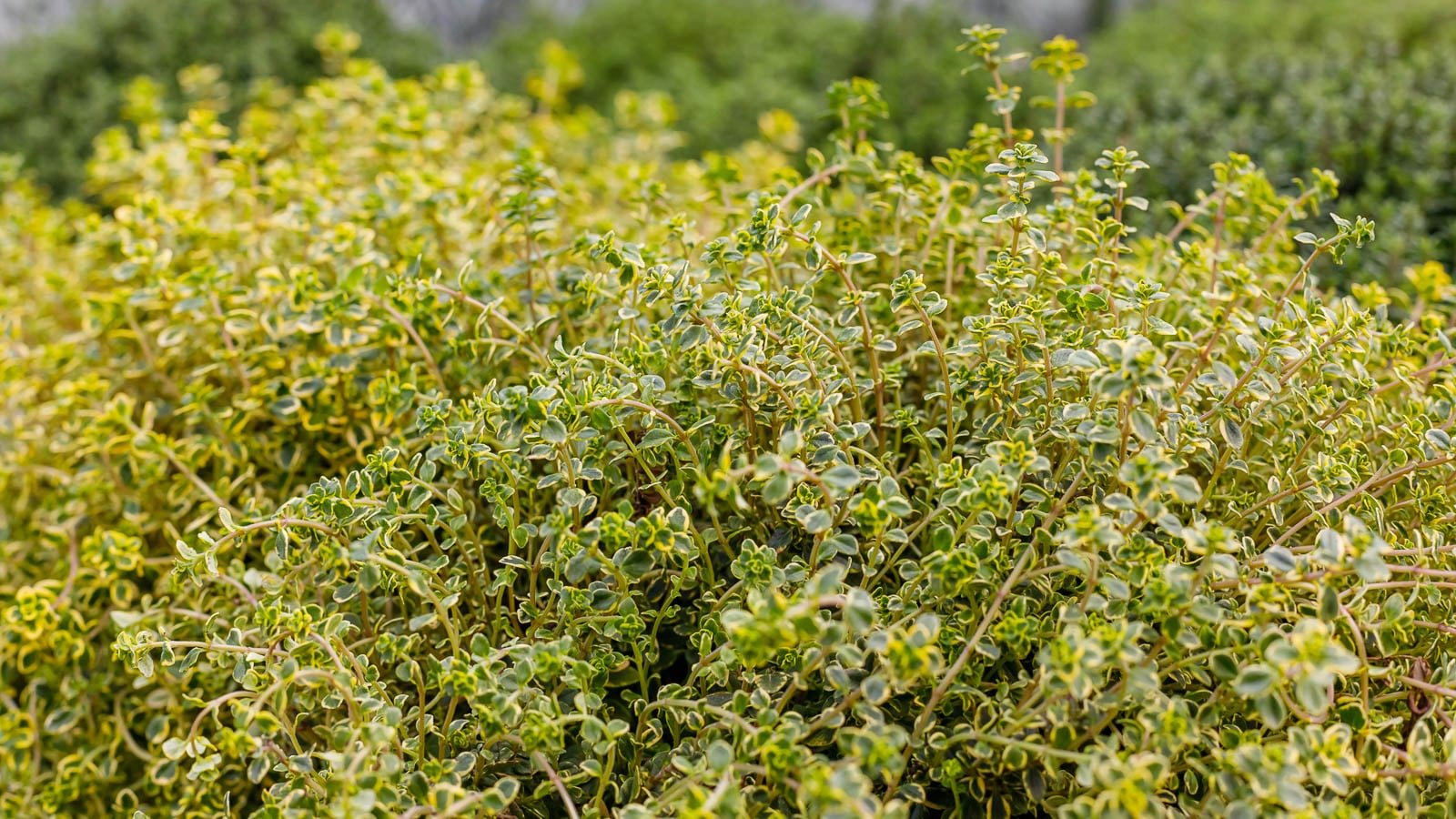
Other live plants often claimed to repel cats include rue, lemon thyme, lavender, pennyroyal, geraniums, rosemary, and garlic. In my experience, these plants have had no noticeable effect on the cats in my area. I already grow most of them for other reasons, but I cannot recommend them specifically as cat deterrents. That said, there is no harm in growing them if you enjoy having them in your garden.
Eggshells

So many magical garden uses get ascribed to eggshells. In this case, the claim is that eggshells deter cats with their pointy, sharp edges.
Unfortunately, cats will walk straight across them, and the shells crumble under their weight. It does not take much pressure to crack an eggshell, and most adult cats weigh at least eight to nine pounds and often closer to 12 to 14 pounds. An already broken shell stands no chance against a determined garden pooper.
What Might Work
There are also solutions that sometimes work and sometimes don’t. They might be worth a try, but don’t expect guaranteed results.
Sprinkling Herbs On The Soil

The plants mentioned above that cats supposedly dislike are often spread across the soil surface as well. Some recommendations even suggest pruning those plants and scattering the cuttings throughout the bed. If you really want to put in the extra effort, you may see advice to dry the plant material and grind it into a powder to sprinkle around.
If cats truly dislike the plant, the scent of freshly crushed leaves might deter them for a few hours. Once that initial smell fades, usually within 24 hours, the effect disappears. Most dried plant materials lose their aroma quickly and break down far too fast to be useful.
A few substances do hold their scent a little longer than most. Crushed hot peppers such as cayenne, certain pipe tobacco products, and used coffee grounds may keep cats away for two to three days.
Cayenne comes with a serious downside, though. If cats walk through it and then lick their paws, it can make them sick. Coffee grounds are a safer option, and if you do not mind sprinkling grounds from your morning coffee over the garden every few days, you may see some limited success.
One other commonly suggested option is citrus peels. The idea is that orange or lemon peels spread across the soil will repel cats with their smell. The problem is that citrus peels mold quickly and can attract flies or other pests. They also look a bit odd scattered throughout the garden, which may be reason enough to skip this method altogether.
Spiky Mats
There is a product called the Cat Scat Mat, which is essentially a sheet of plastic mesh covered in three-quarter-inch spikes. To use it, you lay the mat directly on the soil surface. The spikes sit about an inch apart, which makes it very uncomfortable for cats to walk across and nearly impossible for them to dig.
You can get a similar result by using plastic carpet runners with the spikes facing upward. Both options work well, but they do leave you with a rather strange-looking mat sitting on top of your soil. You can place them over mulch if you are trying to reduce moisture evaporation, but that does not improve the appearance much.
Even so, these mats are very effective if you can find a way to disguise or tolerate how they look in the garden.
Sharp Mulches

Along the same lines as the previous suggestion, sharp mulch materials can sometimes help keep cats out of garden beds. Pine cones, splintery bark mulches, sharp wood chips, or jagged rocks may discourage cats, at least for a short time.
Unlike spike mats, however, cats can still dig through sharp mulch if they really want to. Outdoor cats regularly encounter prickly materials in the wild, so these textures do not always stop them. Crushing large numbers of pine cones or dealing with splinters every time you work in the garden can also be frustrating.
Rock mulch tends to work better than organic options, but it retains a lot of heat, which may not suit every garden or plant.
Urine
Did you know you can buy predatory animal urine? Coyote urine is one of the most common options. And yes, animal urine does work, but only for about a week.
Like plant-based scents, the smell of animal urine fades over time. Hot weather breaks it down quickly, although it can be very pungent at first. Rain dilutes it and washes it away. Once the scent disappears, cats often return and treat the garden like a litter box again, assuming the predator has moved on.
There is a free alternative, although many people find it unappealing: human urine. If you do not have any medical conditions, urine can act as a fertilizer and may also deter cats. However, just like predator urine, the effect is temporary and strongest when fresh. For most gardeners, that trade-off is not especially appealing.
Oils And Sprays

One of the most popular ways to keep cats out of gardens, at least according to the internet, involves using strong-smelling sprays. These include mixtures made from essential oils, garlic sprays, or other odd homemade remedies. And yes, they do work, but only briefly.
The main issue is longevity. The natural oils in strong-smelling plants like garlic break down quickly once applied to the garden. Sun exposure degrades them fast, and fresh air disperses the scent just as easily. What smells strong at first often disappears within a day.
There is also a serious safety concern. While a lavender, citrus, or eucalyptus spray may smell pleasant to us, many essential oils are toxic to cats. If a cat walks through the garden shortly after application, the oils can coat its fur. When the cat grooms itself, ingestion can cause significant harm. If you decide to try any spray-based deterrent, make absolutely sure it contains only ingredients that are non-toxic to cats.
Cat Deterrent Products

There are a number of retail products that claim to act as natural cat repellents. Some come in granular form, others as liquids. But how effective are they, really?
The honest answer is somewhat. Most of these products rely on the same ingredients already mentioned, such as essential oils, powdered peppers, or garlic-based additives. Because of that, they tend to work only for a short burst of time before the scent fades and cats return.
Another downside is that many of these products do not smell particularly pleasant to humans. You still need to use and enjoy your garden while treating it, and strong or unpleasant odors can make that difficult.
Claiming It As A Human Space

Have you ever tried to stare down a cat? This approach is the garden version of that tactic, and it can be somewhat effective.
Claiming your garden as your own space can include placing shed hair from your hairbrush around the beds or applying urine around the perimeter. This marks the area as a human space rather than a neutral one.
Adding movement or sound can also help. Wind chimes, clickers, spinners, or pinwheels may make the garden less appealing to cats. Removing scat promptly or washing down areas where cats have marked with a hose can also reduce repeat visits.
Unfortunately, many cats visit gardens when you are not around. Cats often sneak in during the night and may continue marking the space despite your efforts. Because of this, this method has very limited effectiveness when it comes to fully preventing cats from using your garden as a litter box.
Reducing Their Natural Prey

If you make your garden inhospitable using the methods above, do not overlook the role of prey. Cats hunt by instinct, and if your yard supports plenty of mice near the compost pile or attracts lots of small birds, it can draw cats in just as reliably as the sound of an ice cream truck draws kids.
Reducing the number of prey animals on your property may help decrease how often cats visit. That said, it is not a guaranteed solution, and some cats may continue to return regardless.
Making A Truce With Kitty
Finally, you could try making a truce with the neighborhood cats by offering them their own designated space. Providing a clean litter box, or even a separate garden “bed” with no plants in it, might give them exactly what they are looking for. If you surround this peace offering with plants like catnip or catmint, you may successfully lure cats away from your pea patch or beet bed and into their own area instead.
The downside is maintenance. You will need to keep the litter box clean and make sure the designated space remains appealing. Depending on the cat, this solution may work beautifully or not at all.
What Definitely Works
So, what ways to keep cats away are left after all of this? Actually, there are quite a few. Let’s explore those!
A Quick Burst Of Water

There’s a reason cats versus water is such a common stereotype in film and TV. Most cats really dislike getting wet unexpectedly, which makes water one of the most effective deterrents.
I am a huge fan of motion-activated sprinklers. You can set one up when you are not actively gardening and connect it directly to a hose. When the sensor detects movement, it sends out a sudden burst of water in that direction.
This method does come with a few minor drawbacks. At first, plants in high-traffic areas may receive a bit too much water. Over time, though, cats quickly learn that your garden comes with unpleasant surprises. Best of all, this approach is non-toxic and harmless. If your goal is to keep cats out of the yard, this is one of the most reliable solutions.
A fair warning: at some point, you will probably set it off yourself. It will likely happen on a morning when you forgot to drink your coffee and were not prepared for an unexpected shower. On the upside, you will know for certain that it works.
If you do not want to invest in a motion-activated sprinkler, you can still use a hose while you are in the garden. A quick spray toward prowling cats works well when you are around, even if it does nothing when you are not home.
Securing Yard Borders

This is the natural extension of claiming your yard as a human space, but it focuses on keeping cats out in the first place. There are a number of ways to do this.
Rollers, sometimes called roll bars, are round bars designed to sit on top of yard fencing. When a cat tries to walk along the fence or climb over it, the bar spins, preventing the cat from getting a good grip. The cat then slides back down on the opposite side of the fence.
Roll bars also work extremely well at stopping dogs, including your own or a neighbor’s, from jumping the fence. If they cannot grip the top, they cannot easily vault over it. This essentially doubles the effectiveness of your fence. The downside is cost, as roll bars can be expensive, making this more of a last-resort option.
For a slightly cheaper but still effective solution, ultrasonic deterrents are another option. If you do not have pets of your own, devices that emit high-frequency sound can work well. These ultrasonic repellents produce sounds that are too high-pitched for most humans to hear but are audible and unpleasant to animals. Many of these devices are portable, allowing you to move them to areas where cat activity is most common.
The drawback is that these sounds can also bother your neighbor’s pets or any animals you may have in the future. This method will not suit every situation, but it can be very effective for reinforcing barriers and keeping cats out of the garden.
Garden Fencing

What if your exterior fencing is already as reinforced as possible, but you are still finding poop scattered through your garden beds?
In that case, double up on barriers by fencing individual beds. These fences can be as simple or as elaborate as you need them to be. I use wood and chicken wire to make fence panels attached to stakes, then tap them into place around beds as needed.
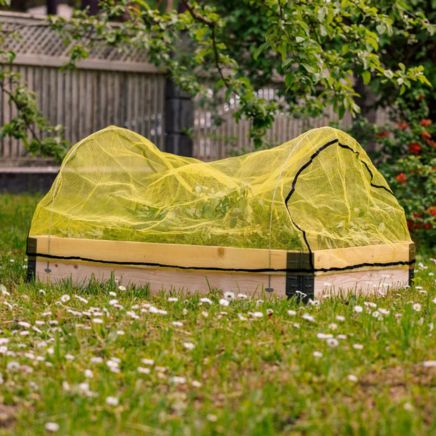
You can also use plastic mesh fencing with T-post supports, large cloches made from PVC and chicken wire, or even floating row cover hoop houses covered with tightly secured bird netting or row cover fabric. Anything that blocks direct access to the bed can work well here.
One of my favorite setups uses PVC, shade cloth, and old pallet wood. I have a bed dedicated to shade-loving plants, so I built a hoop house frame from PVC to support shade cloth. I then added slatted fencing made from pallet wood at the ends of the bed, spaced closely enough that an adult cat cannot squeeze through.
Along the front of the bed, I anchor the shade cloth to the ground with a long, weighted piece of PVC pipe. When I need to work in the bed, I lift the weighted pipe, roll up the shade cloth, and secure it at the top of the hoop house while I garden.

Soil Barrier Solutions

We covered scat mats earlier, but several other options can stop cats from digging around the base of your prized plants. Many of these solutions cost less and work just as well, if not better.
After you finish preparing your beds in spring, lay chicken wire directly over the soil and secure it with landscape fabric staples, the long U-shaped wires used to anchor weed barrier. Plants will grow up through the openings, but cats will not be able to dig through the wire, and the texture feels uncomfortable on their paws. Chicken wire is also slow to degrade and inexpensive to replace.
Lattice fencing works in a similar way and covers more surface area. It is more visible than chicken wire, but it can look quite attractive when plants grow through the openings. This option may also help reduce weed growth around your crops.
Fabric barriers offer another effective approach. In some farming systems, growers use black plastic or landscape fabric around plants to suppress weeds and prevent pests from disturbing the soil. You can use these materials or choose a more natural option by laying old burlap coffee sacks over the soil, cutting holes for each plant to grow through.
Enlisting Aid

If you cannot beat them, why not join them? One option is to add your own animals and let them stake a claim on the yard. Dogs, in particular, act as an excellent deterrent for most feral cats, regardless of whether the dogs are friendly toward them or not.





