
Contents
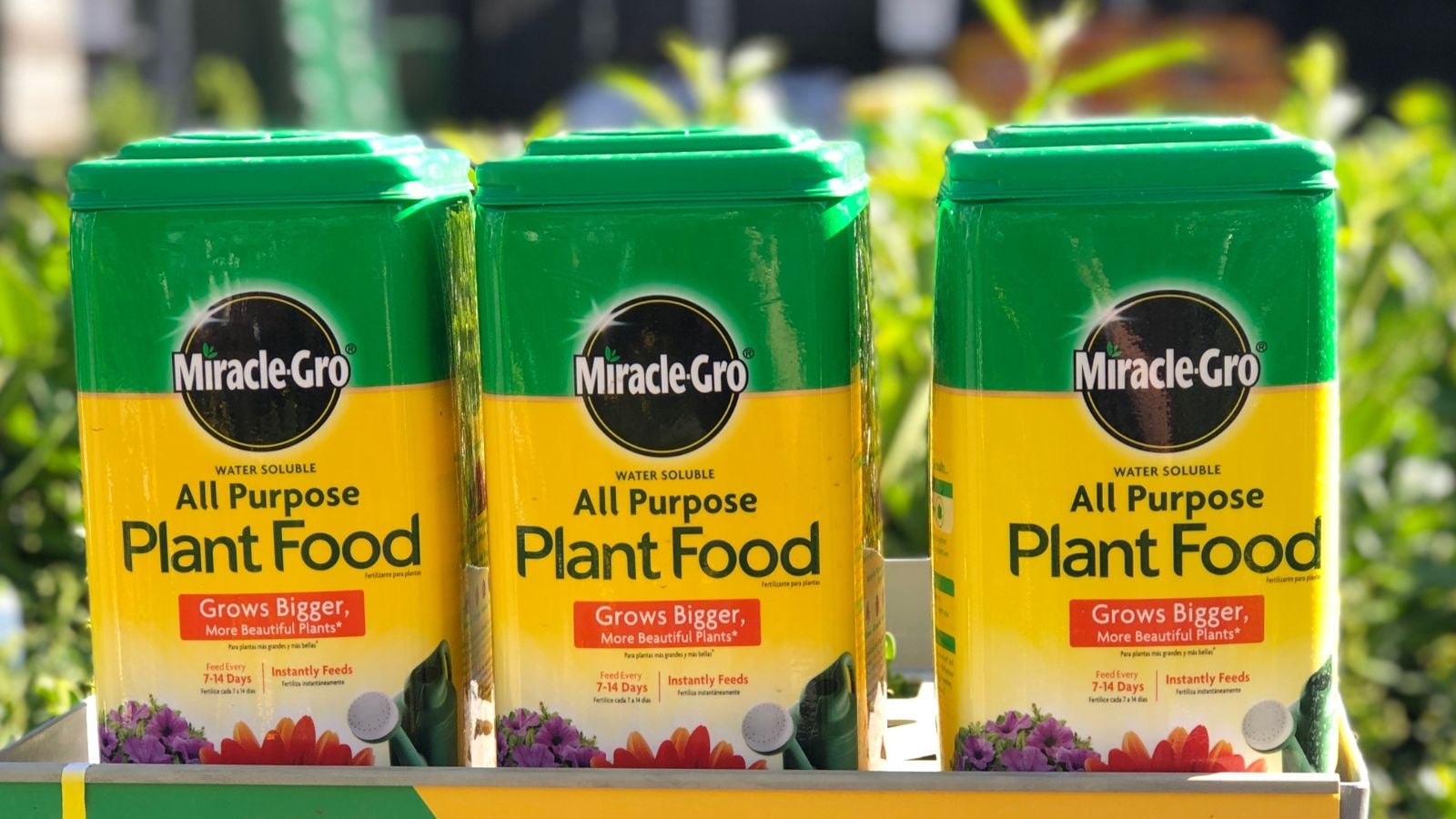
When you’ve run a gardening blog for a few years, you start to receive a lot of questions from your readers. Not surprisingly, one of the questions that I have received the most often is about whether or not Miracle-Gro is an organic or a synthetic fertilizer.
Because of this, I decided it was time to directly address this topic. But, before we get into the nitty gritty of answering “is Miracle Gro organic?”, let’s go over why synthetic fertilizers are frowned upon in the first place.
Espoma Bio-tone Starter Plus Organic Plant Food

Espoma Bio-tone Starter Plus Organic Plant Food (4 lbs.)

Coco Coir, Castings & Thermometer Bundle

Coco Coir, Castings & Thermometer Bundle

What’s Wrong With Synthetic Fertilizers?

Synthetic fertilizers can wind up having a lot of harmful effects on the environment. For instance, they have the ability to harm the microorganisms that are responsible for making both soil and plants fertile. Additionally, they can make it difficult for soil to hold water and nutrients, and they also cause major nutrient imbalances that can be very detrimental for the health of soil and plants.
And, as if all of this isn’t bad enough, when synthetic fertilizers runoff into the water system, they can serve as pollutants and thus cause eutrophication to occur, which is essentially the presence of too much nitrogen in a body of water. This can cause life to rapidly die off, and it kills both animals and plants in the water.

The dead zone in the Gulf of Mexico, caused by nutrient runoff of massive monoculture farming.
With all of this in mind, it’s pretty clear why we all should avoid synthetic fertilizers if possible.
Is Miracle Gro Organic?

To determine if something is organic or not, you first need to establish what exactly ‘organic’ means. Whenever I use the word ‘organic’, I’m referring to something that is natural and doesn’t contain artificially produced chemicals.
Keep in mind, organic fertilizers are composed of chemicals too – just like you and I. Don’t use the word chemicals as a slight against the artificial fertilizer industry. It’s just not accurate.
It’s important to keep in mind, though, that organic doesn’t automatically mean that something is safe. Likewise, if something isn’t organic, that doesn’t automatically mean it’s unsafe.
While it has been found that chemicals tend to have a harsher impact on the earth than organic products, your plants don’t know the difference between these two things. To them, organic or inorganic fertilizer is all the same, and both types of products have been found to be effective.
To answer the question, “Is Miracle Gro organic?” simply: yes and no. At this time, Miracle Gro currently offers products that are both inorganic and organic, and it’s up to you to decide which type you’d like to purchase.
However, as I said earlier, make sure not to assume that organic fertilizer is automatically safer than fertilizers with chemicals. The basic components of fertilizers tend to be relatively the same, whether they are natural or man-made, and they both can cause issues such as algae blooms and pollution.
The same rules apply to pesticides, so don’t let yourself be deceived. In my personal opinion, if you are using a product for the purpose of killing something, even if it’s ‘natural’, it’s probably bad for the environment in some way. Because of this, I try to avoid using them as much as possible. Short of poison ivy or a herd of ants carrying my house away, I stick to natural tactics.
A great alternative is known as “integrated pest management”, and it essentially consists of putting beneficial pests in your garden in order to take care of the pests that are eating your plants.
Consider Who Produces Miracle-Gro

Unfortunately, deciding whether or not Miracle Gro is organic and should in turn be used in your garden is somewhat of a gray area. When you look at all of the products that Miracle Gro produces, you’ll immediately notice that a lot of them ARE full of unhealthy, inorganic chemicals. Furthermore, Miracle Gro is owned by Scotts, which is known for being a really big supporter of Monsanto.
If you’ve kept up to date with recent news, you’ll know that being associated with Monsanto is a huge no-no among some organic-loving circles. Plus, all Miracle-Gro products are mass-produced, and they are generally composed of cheap, low-quality ingredients. Finally, to make matters even worse, Scotts has been repeatedly found guilty for mislabeling their products and lying about what’s in them. To be fair, they have gotten much better over the years, but that’s due in large part to court cases against them.
Some Great Alternatives to Miracle-Gro

If you’re at all worried about potentially using harmful chemicals in your garden, I personally recommend that you stay away from Miracle Gro and try out some alternatives instead. There’s a lot of great products out there that are organic, and some of them are even easier to use than fertilizer.
Composting

The first alternative that I would recommend trying is composting. Compost is fantastic for all gardens, and it will help to make your soil quality so high that you will not need fertilizer. Plus, most of the materials that you will need for composting are already in your home, as they’re a variety of food scraps and paper goods, such as napkins.
If you don’t yet own a composter, I strongly recommend either checking out my review of the best indoor composters. You might also really enjoy bokashi composting, or my favorite of all, worm composting. All of these systems are great! But even if you don’t use a system like one of the above, you can compost just by making a compost pile in the back yard, keeping it moist, and turning it occasionally to aerate it.
Espoma Fertilizers

Espoma has an extensive line of multiple different optimized fertilizers. Here we’ve shown their Garden-Tone blend that’s optimized for veggie gardens, but others include Tree-Tone, Berry-Tone, Citrus-Tone, and more. They also produce many useful soil amendments as well as liquid fertilizers like their Fish! Liquid Plant Food, a fish fertilizer.
Down To Earth Fertilizers

Down To Earth is a solid brand with a line of fantastic organic fertilizers. Everything comes packaged in a compostable box. While there is a plastic bag inside the box so there’s no fertilizer loss in shipping or store displays, that’s the only part you can’t use in the garden!
We’re highlighting one of their all-purpose fertilizers here, but they also have a veggie gardening blend, as well as an extensive line of amendments like bat guano, alfalfa meal, bone meal, blood meal, and more.
JR Peters Fertilizers

If for some reason you’re not interested in trying out composting, you can always give JR Peters Fertilizer a go. This brand has a variety of different types of fertilizers, and all of them are known for being incredibly safe to use. They’re also very reasonably priced and come in huge tubs, so they should definitely last you a while.
And there you have it: the answer to whether or not Miracle-Gro is organic. These products definitely can be useful and are very commonly bought, but I understand if you’d rather play it on the safe side and use one of the alternatives I mentioned.





