Hydroponic Strawberries: Complete Guide to Growing Strawberries Without Soil
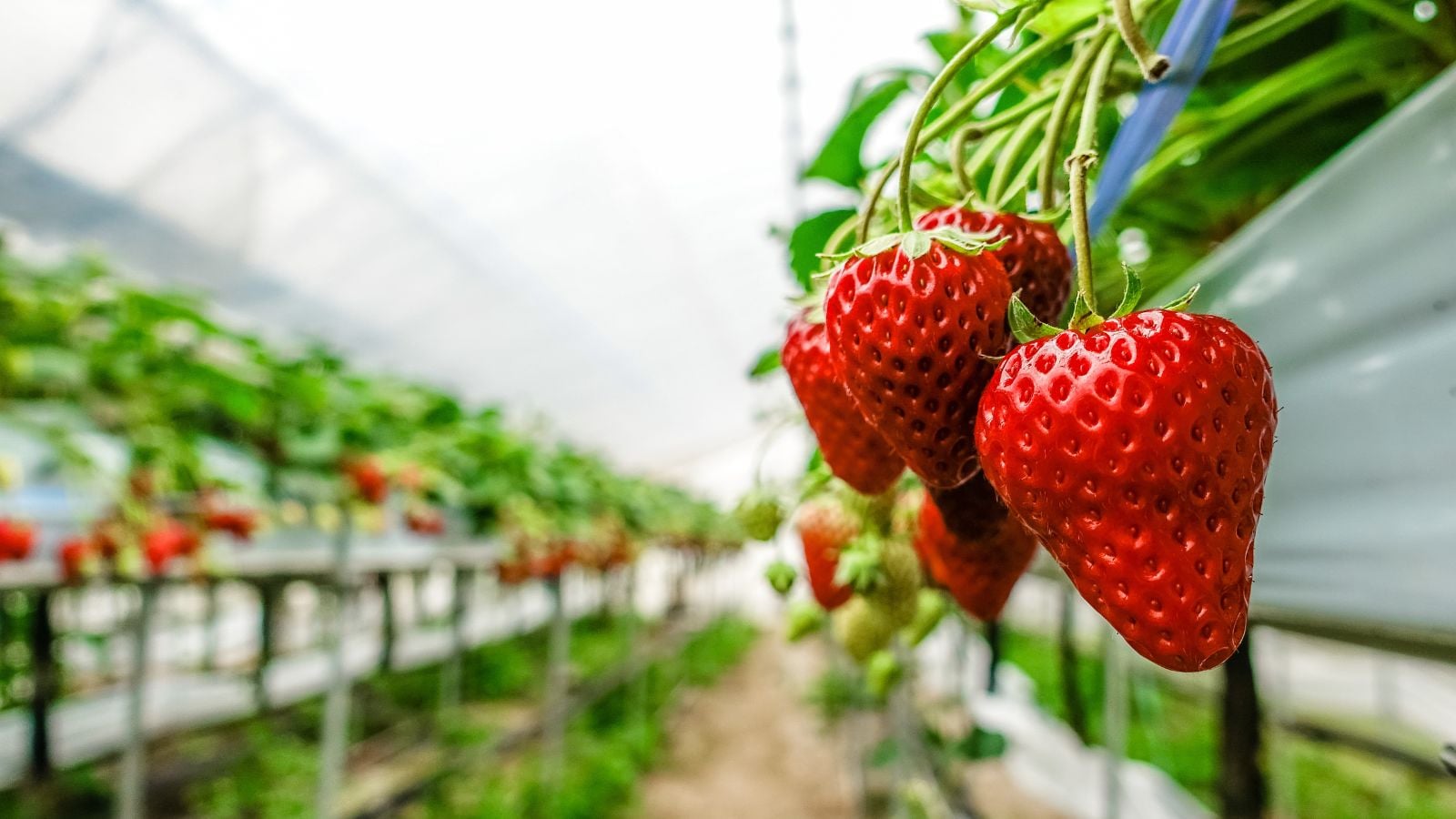
Growing hydroponic strawberries is entirely within your grasp, no matter your garden location. In this complete guide, horticultural expert Lorin Nielsen shares insights on different methods you can use for growing hydroponic strawberries.

Contents
Growing hydroponic strawberries is an efficient, clean, and rewarding way to enjoy fresh berries right at home. While the word hydroponics might sound complicated, the process is actually simple once you understand the basics.
There are plenty of great reasons to try this method, and getting started is easier than you might expect. In this guide, we’ll explain why hydroponic growing is worth a try and walk you step-by-step through how to grow hydroponic strawberries from start to finish.
Why Grow Hydroponic Strawberries?
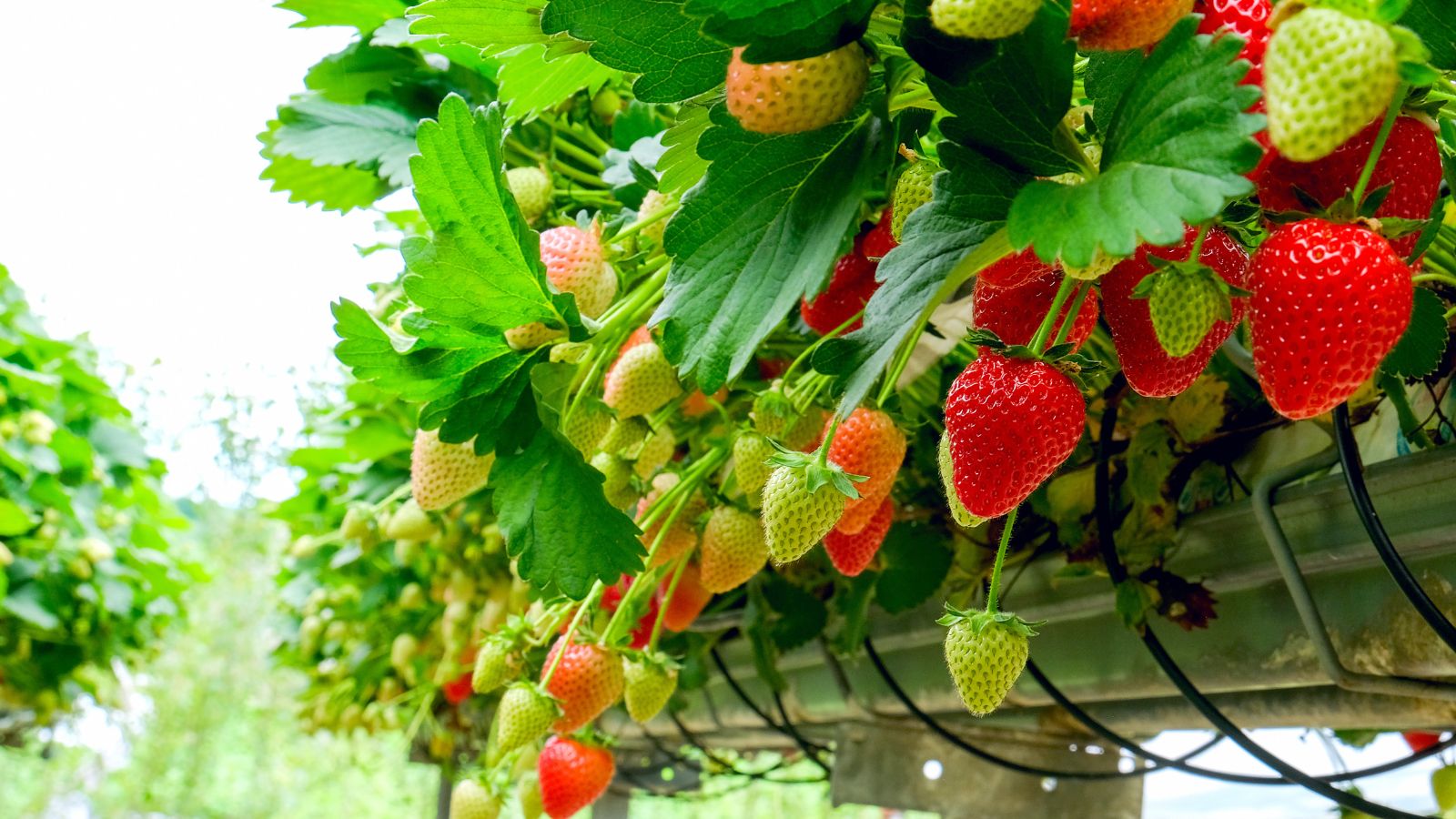
Whether you’ve been growing strawberries in soil or are a complete novice, there are plenty of reasons you should consider this style of growing.
Hydroponics does not use any soil. Instead, an inert medium is used to anchor the plant’s roots in place. The root system grows through this medium and is exposed directly to water or a nutrient solution, depending on what you’re growing.
Pros
There are many benefits to growing strawberries hydroponically. Because there is no soil present, you won’t have to deal with any soil-based pests at all. This makes your job as the grower much easier. Plus, hydroponically grown strawberry plants are less prone to flying pests as well.
You may be under the impression that hydroponics requires more water for growing. In reality, hydroponics is more water-efficient because you recirculate the water as opposed to constantly feeding fresh water to the plants.
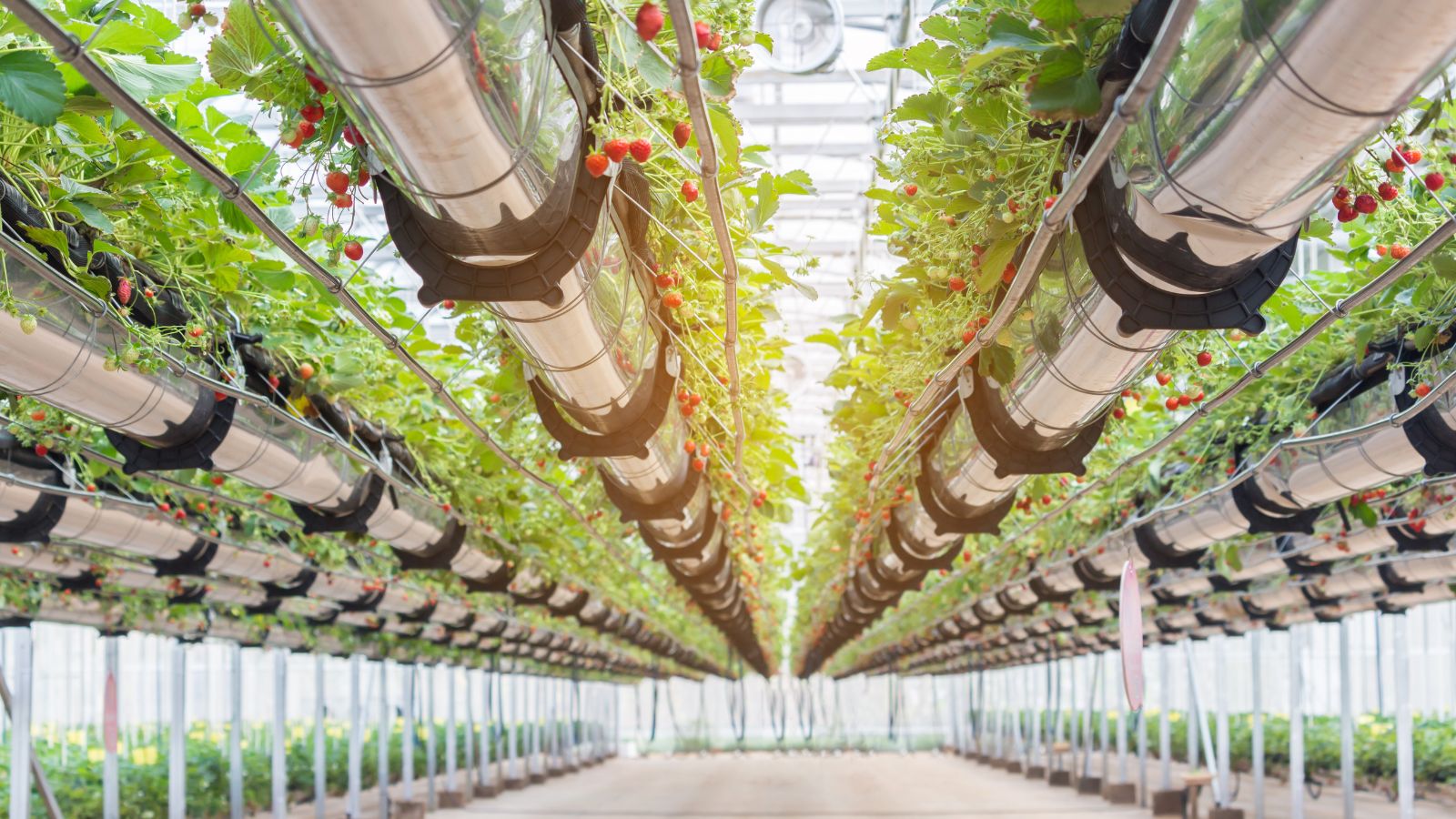
If you are tight on space, you will be pleased to learn that hydroponically grown strawberries can be stacked vertically. This leads to more plants per square foot of space. On top of this, harvesting your strawberry fruit is much easier than crouching down to harvest from the soil.
There are plenty of other good reasons to try hydroponics. It’s definitely a method worth your time.
Cons
With all these pros, you may be wondering, what’s the catch?
There are only a few drawbacks to growing hydroponically. The main one is the initial setup cost. Hydroponic systems can be a bit pricier than growing in soil. But these systems often pay for themselves over time in terms of efficiency and long-term yields, as you can grow more strawberries this way.
Another drawback of this style of gardening is the learning curve of hydroponics. It is a bit more complicated at first than traditional soil gardening, but once you get the hang of it, this is no longer an issue.
The final thing to consider for strawberry hydroponics is a slightly lower yield per plant. However, since you can grow a larger quantity of berries overall if your system is indoors, the loss per plant initially can easily be recouped. You’re also growing much more efficiently!
Hydroponic Strawberry Supplies
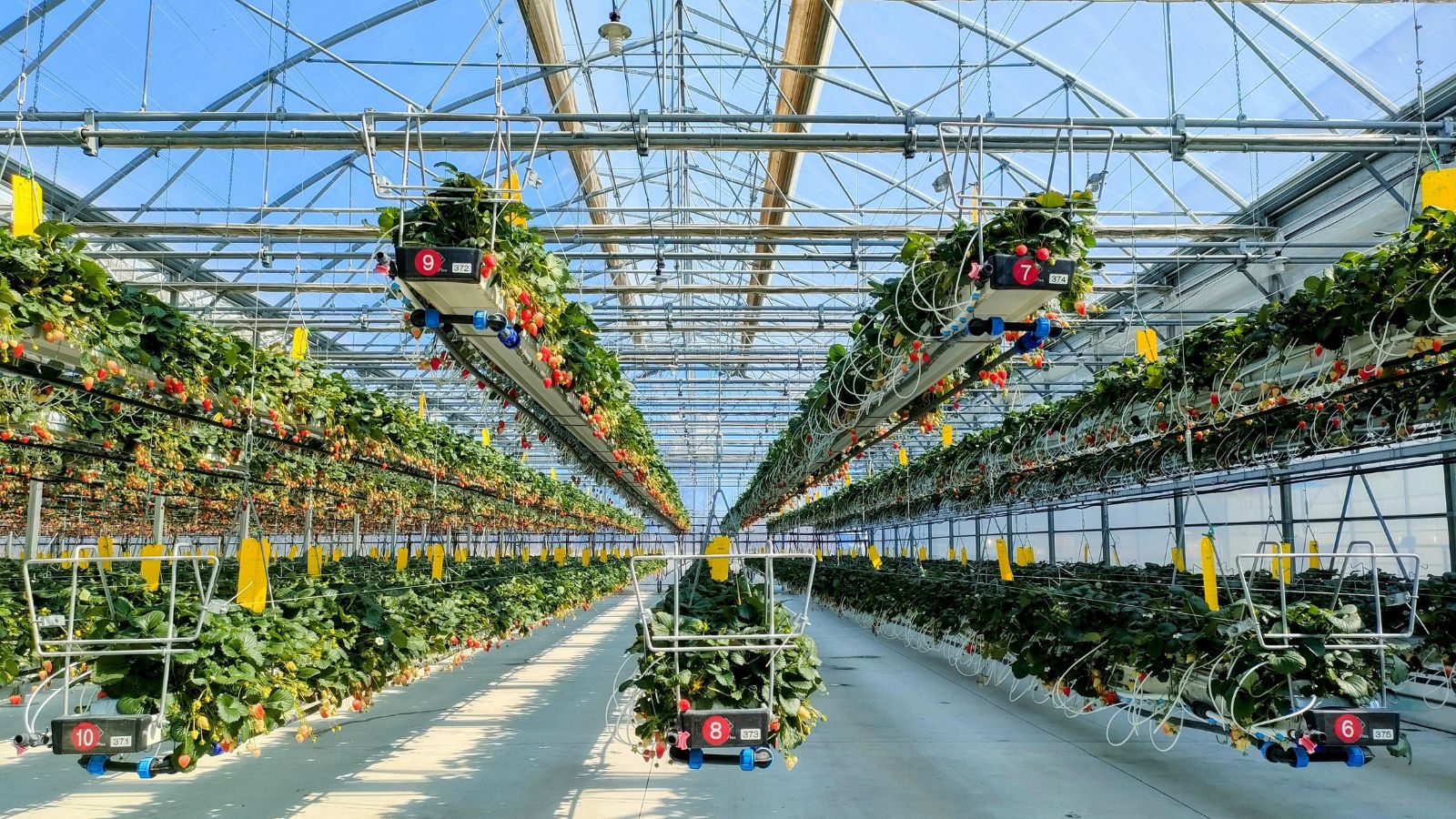
Obviously, the first step is finding a good hydroponic system. These vary greatly in terms of price, plant count, and performance. You’ll need to do your due diligence when purchasing your system.
When first getting started, stick with an ebb and flow, deep water culture (DWC), or hydroponic drip system. There are plenty of systems that come ready to grow, but you can also build your own.
Using a garden tray, reservoir, water pump, and a few other miscellaneous hydro components, those looking to grow on a budget can get started pretty easily and for a fraction of the cost.
The actual building of the system is pretty easy. You just need to set up your water reservoir underneath your tray, which is where your plants will actually be grown. Then, set up your pump and your timer to move water from the reservoir into your grow tray to keep your berries watered and fed.
You also need to consider what growing media you are going to use. Some common choices are growstones, clay pebbles, coconut coir, or rockwool. You will also want some hydroponic nutrients to keep your plants well-fed and growing to their full potential. But, this is totally up to you as the grower.
Growing Hydroponic Strawberries
Now that you have an idea of what you’ll need to get started, let’s get to the fun part: actually growing your hydroponic strawberries.
We’ll cover everything you need to know about hydroponic strawberries, so whether you’ve dabbled in hydroponics before or you are a complete novice, you’ll feel confident by the end of this section.
Planting Techniques
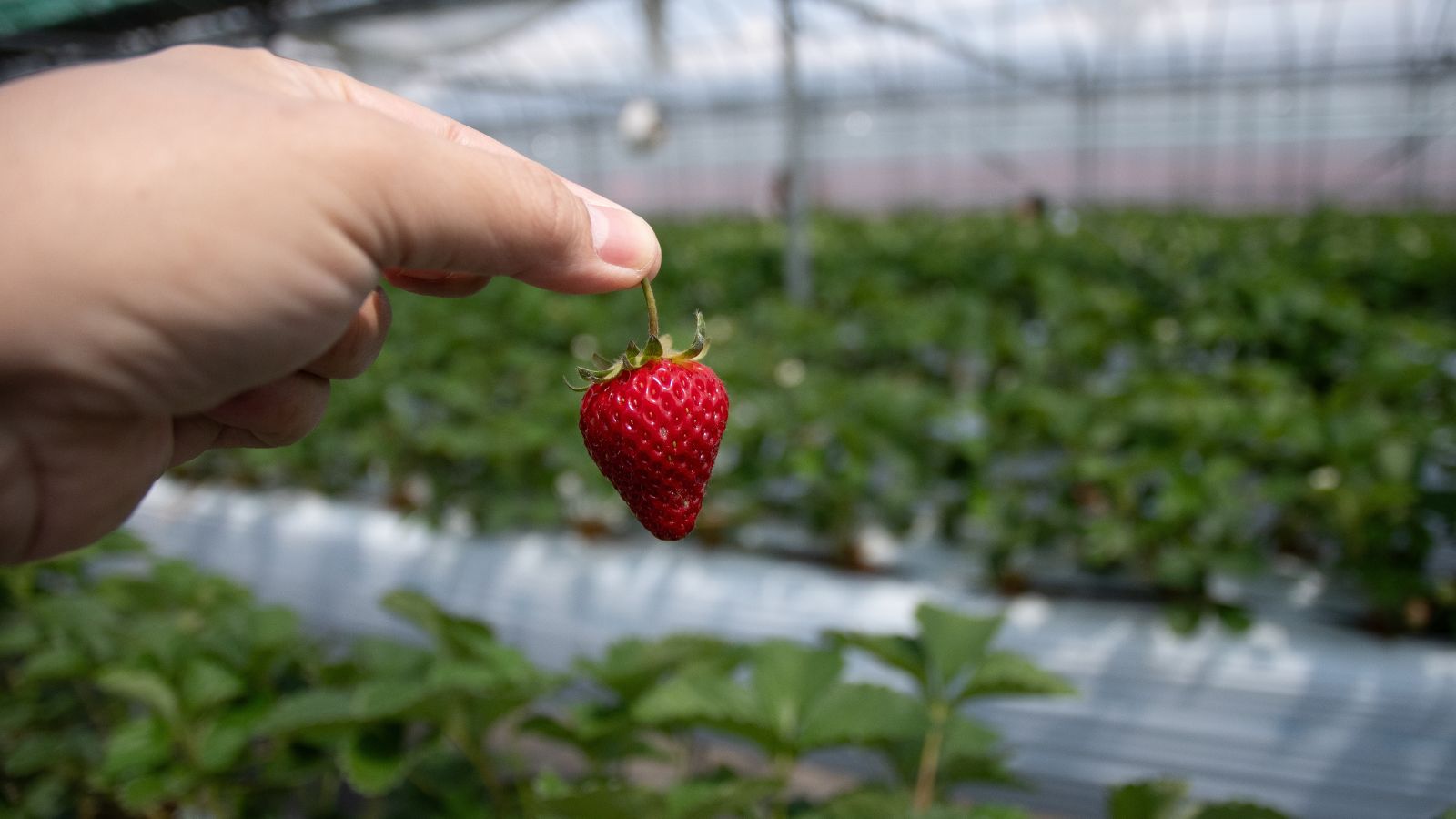
Before getting started, you’ll need to decide if you want to grow from seed or from starts. Strawberry seeds can take years before they are ready to fruit, so this is a much slower option. Instead, you can find some young strawberry plants and plant those directly into your hydroponic system using a medium of your choice and net pots.
Fill the net pots partway, stick your plant in after rinsing all the soil off its root system, and then fill the rest of the way to hold it in place. Give it a good watering right away.
Light & Temperature
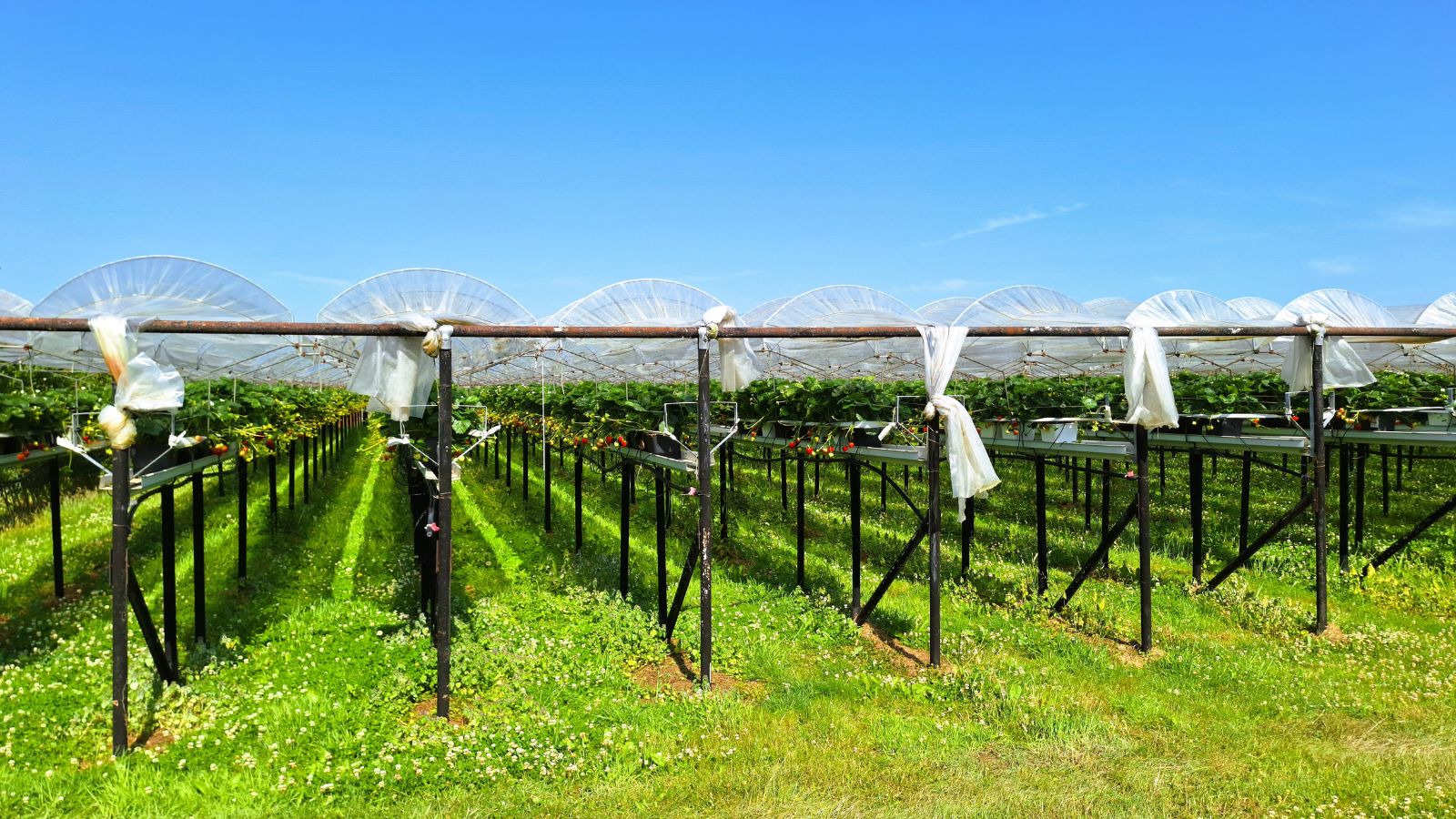
When growing hydroponic strawberries, you’ll often be in a climate-controlled environment. You need to provide the right lighting and temperature conditions for your berries to thrive.
Strawberries prefer warm temperatures, between 65-80°F (18-27°C).
From a lighting standpoint, you need to make sure your strawberries get between eight and 12 hours of light per day. Unlike some plants, there is no need to vary the lighting schedule throughout their life. You can keep them on this photoperiod forever.
If you are growing in a greenhouse, your plants will get their light naturally. Otherwise, you will need to add supplemental grow lights to provide them with what they’ll need.
Water Quality & pH Levels
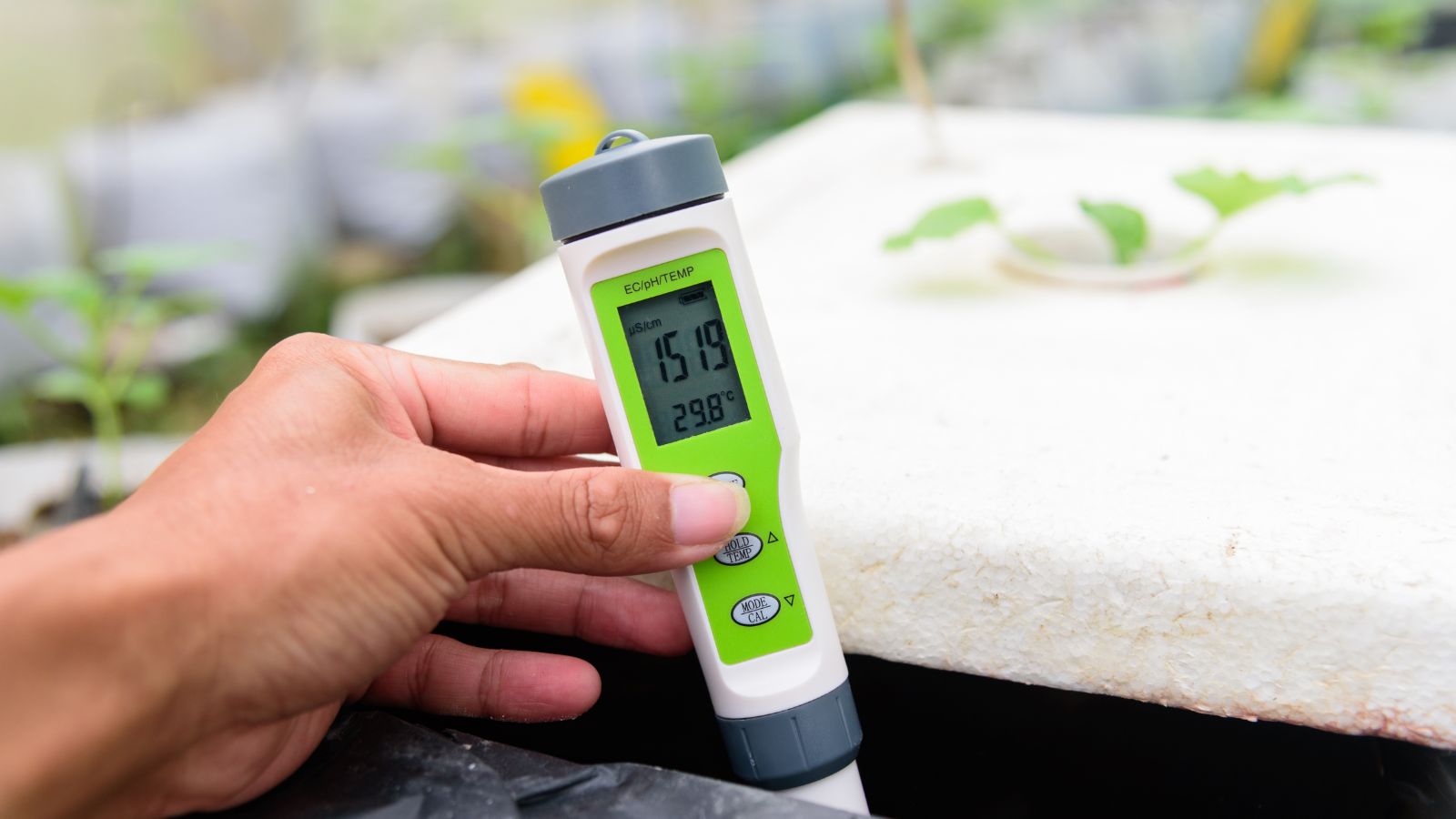
When it comes to hydroponics, water quality and pH levels are everything. Your roots are exposed directly to the water, so there is little room for error.
We highly recommend using a water filter to ensure you aren’t feeding your strawberries harmful chloramines or impurities often found in tap water.
You’ll need to make sure your pH is in the proper range. Use a pH meter to make sure your water is between 5.8 and 6.2. If you extend below or above this range, you’ll run into nutrient issues, and your plants will suffer.
Growing Medium

There are plenty of hydroponic growing mediums you can choose from, and they all pretty much do the same thing. But, we recommend sticking with something easy and readily available, like coco coir.
Coco is completely inert and won’t alter the nutrition or pH of your strawberries. It is very beginner-friendly, widely available, and inexpensive. You may want to add some perlite to increase aeration and water drainage.
Nutrient Solution
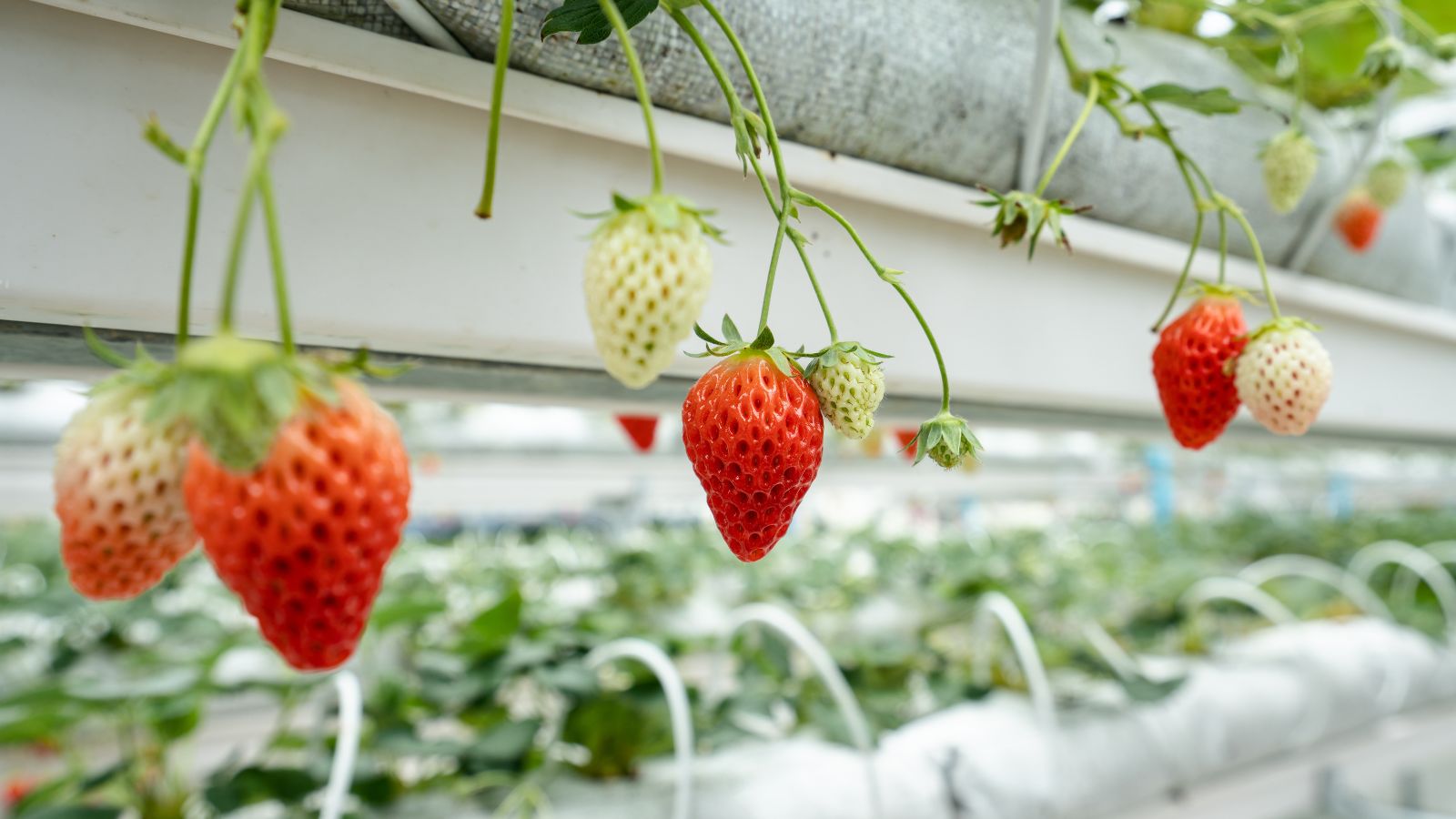
Whether you are growing organically or not, strawberries will need some type of nutrient solution to keep them alive. Your strawberries need an ample supply of nitrogen, potassium, and phosphorus, along with secondary nutrients and micronutrients.
You’ll need to use liquid nutrients. Organics tend to clump and clog hydroponic systems, so it’s easier for beginners to start with synthetics and to move on from there.
One of our favorite lines is General Hydroponics Nutrients. These include easy-to-follow feeding schedules, so you know exactly what to feed and when throughout your strawberry plants’ lives. They are beginner-friendly, high-quality, and low-priced.
Pollination
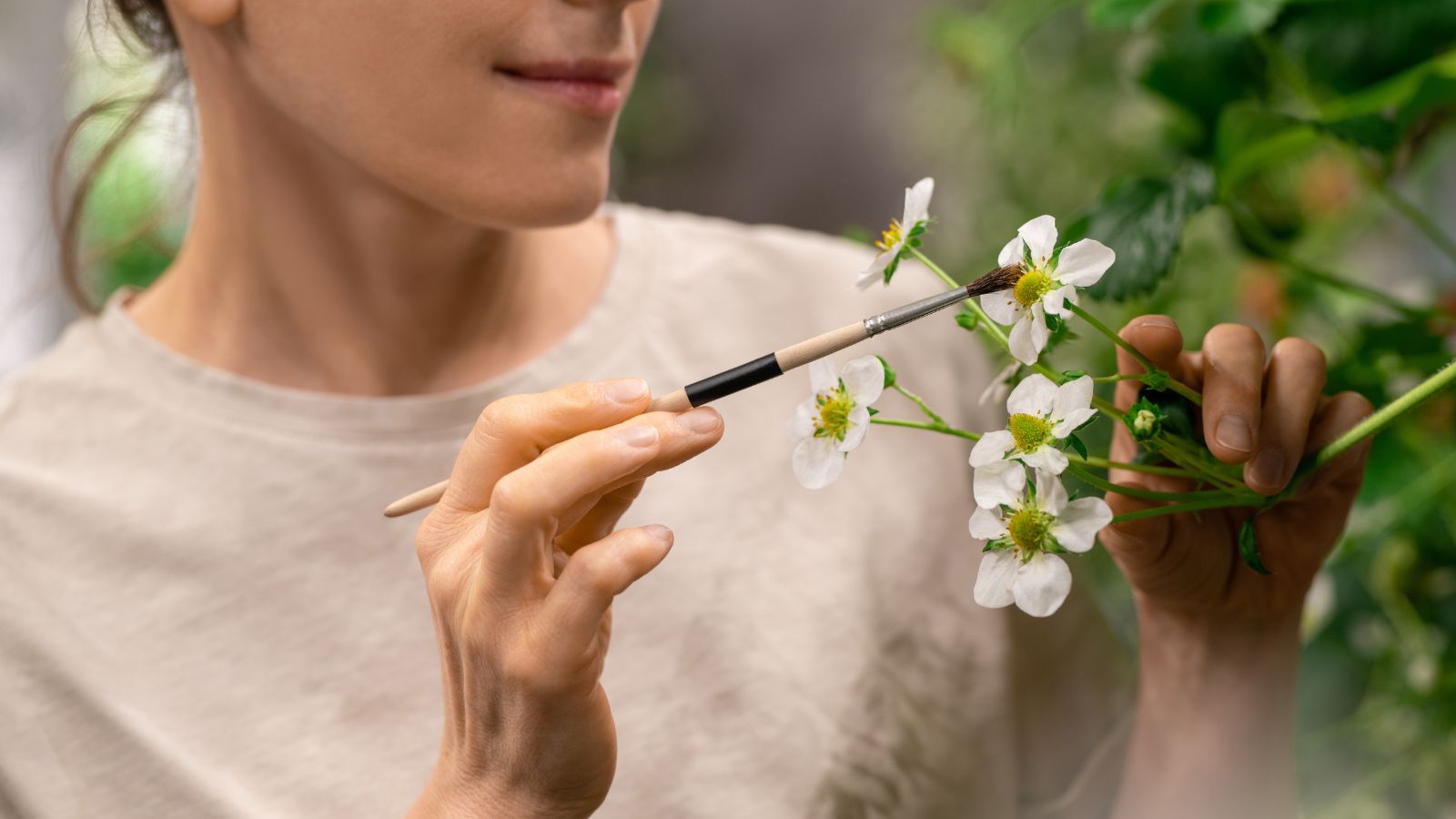
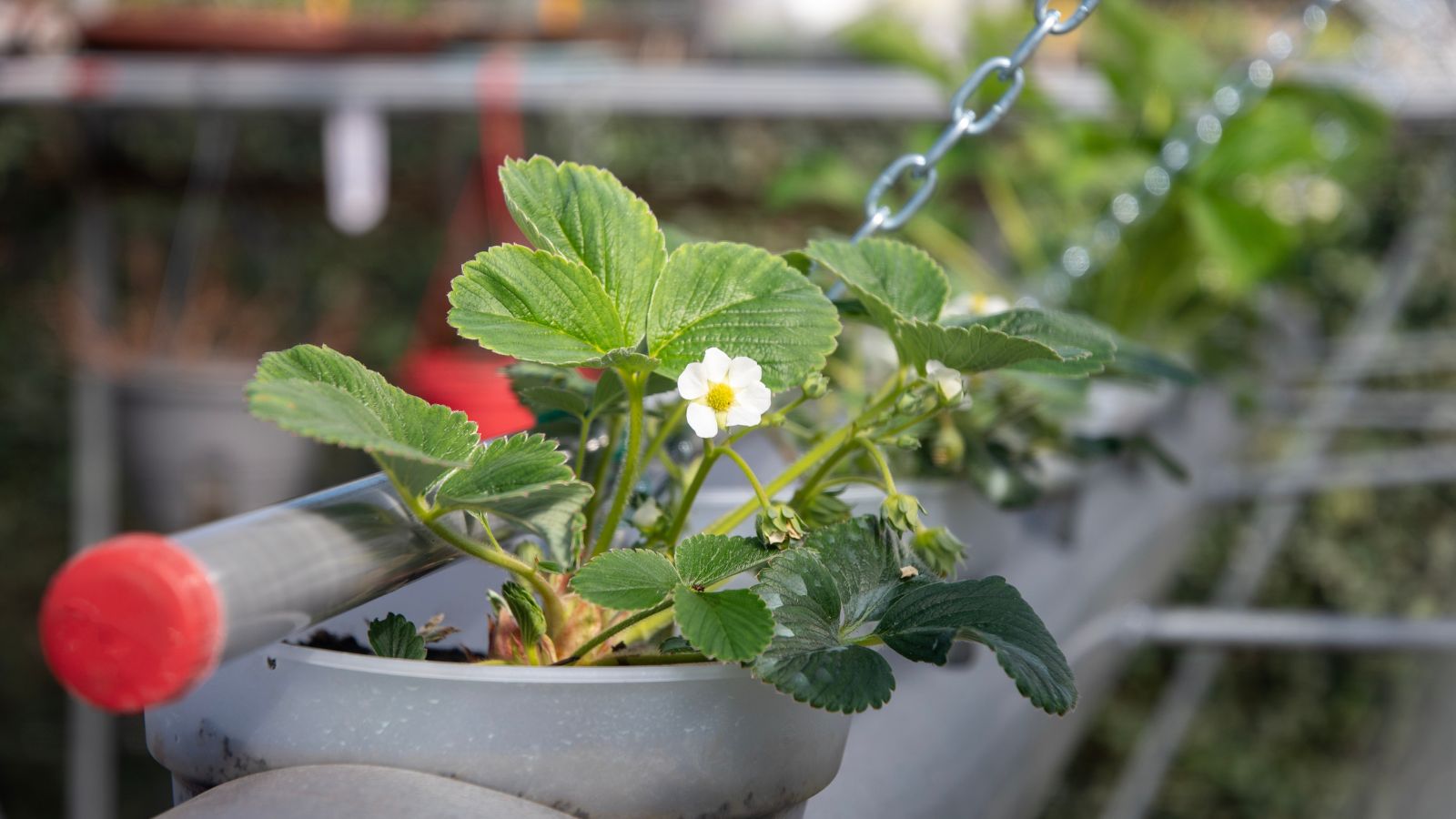
If you are looking to cross-breed certain varieties of strawberries, you’ll want to pollinate your strawberries. Pollinating insects like bees also may not have access to your plants, so you may need to pollinate them by hand to produce fruit.
You can easily pollinate by hand. Strawberry plants are hermaphroditic, so you don’t need to find male or female flowers. Use a cotton swab to collect pollen from one flower and transfer it to another, then repeat across all your plants, using the same swab to pollinate them all. This can become tedious if you have many plants to pollinate, but it’s simple and effective.
If your hydroponic setup is outside and you’ve got pollinating insects at hand, you won’t need to do this to produce fruit. However, anyone who grows indoors will want to hand-pollinate to ensure they have good fruit development.
Pruning

To keep your strawberries growing healthy and yielding high, prune off runners, also called stolons. Strawberry runners are leafless stems that extend out of the plant, sometimes with a new plant forming at the tip. Clip these off as close to the base of the plant as you can. If a plantlet has formed at the runner’s tip, you can use it for propagation.
Propagation
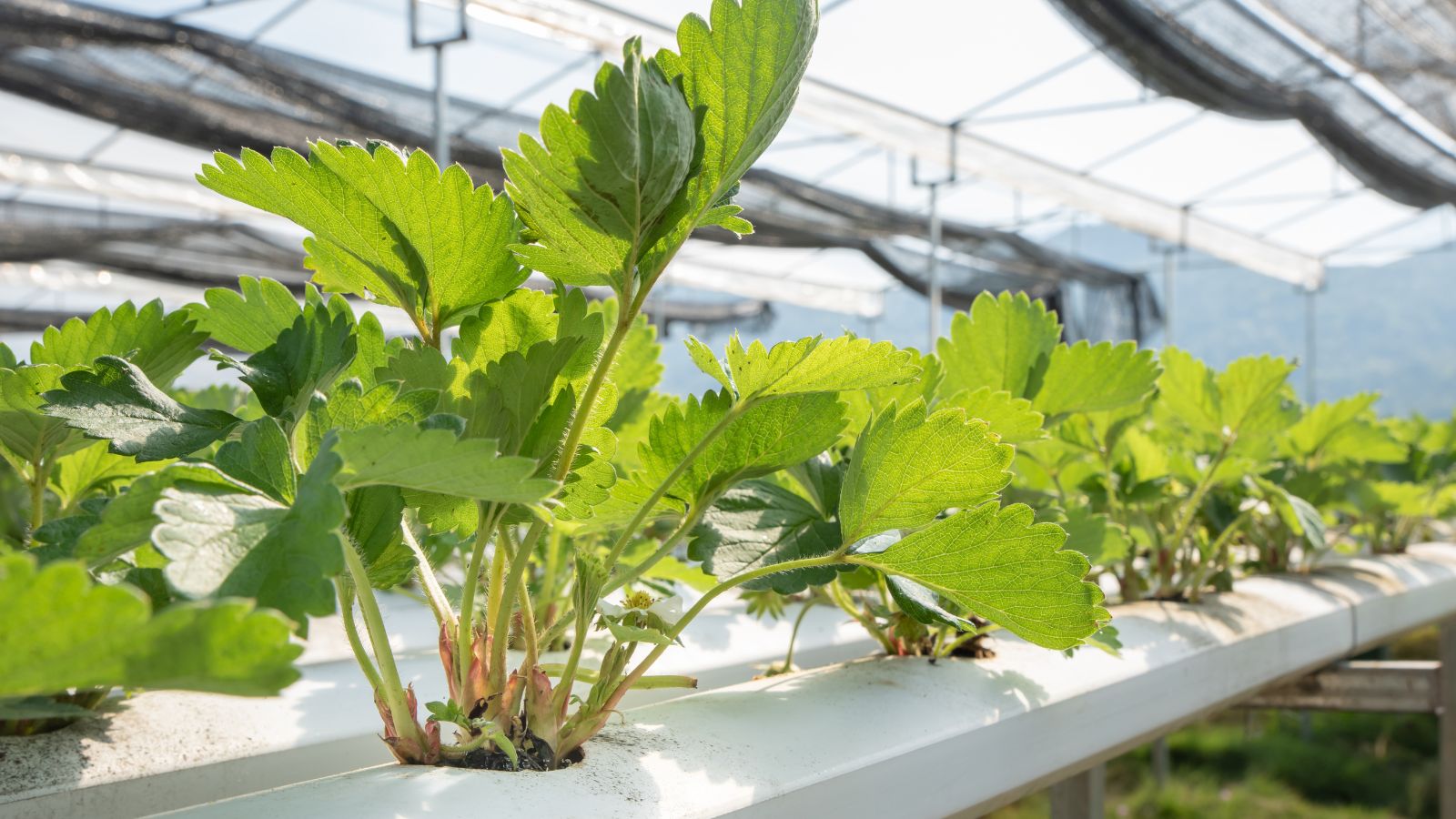
Strawberry plants are typically propagated using seeds or the plantlets that develop at the end of their stolons.
From seed, you will need to acquire seed from a reliable seed supplier. While it’s possible to collect seed from your prior year’s berries, it may not breed true if the plant is a hybrid. Plant your seed in potting mix indoors and wait for it to germinate and develop into a small plant. Keep it moist and warm, and provide light to help the young plant develop.
With plantlets, take your cuttings and lay them across moistened potting soil. Secure the base of the plantlet to the soil and keep it warm and moist. Provide light for these, as well. They will form roots, and you can trim off the extending runner stem once they have.
For both seed-starts and plantlets, wait until the plant has developed at least two-inch-long roots. You can then carefully unpot them. Brush off most of the soil, then rinse the roots with water to remove any soil that’s still clinging to the strawberry roots. You can then plant these in your growing medium.
Troubleshooting
If you follow these steps we’ve outlined above, you will likely avoid most of the problems new growers face when growing strawberries.
However, there is still a chance you’ll run into issues, no matter how careful and diligent you are. Let’s go over those that might arise.
Growing Problems
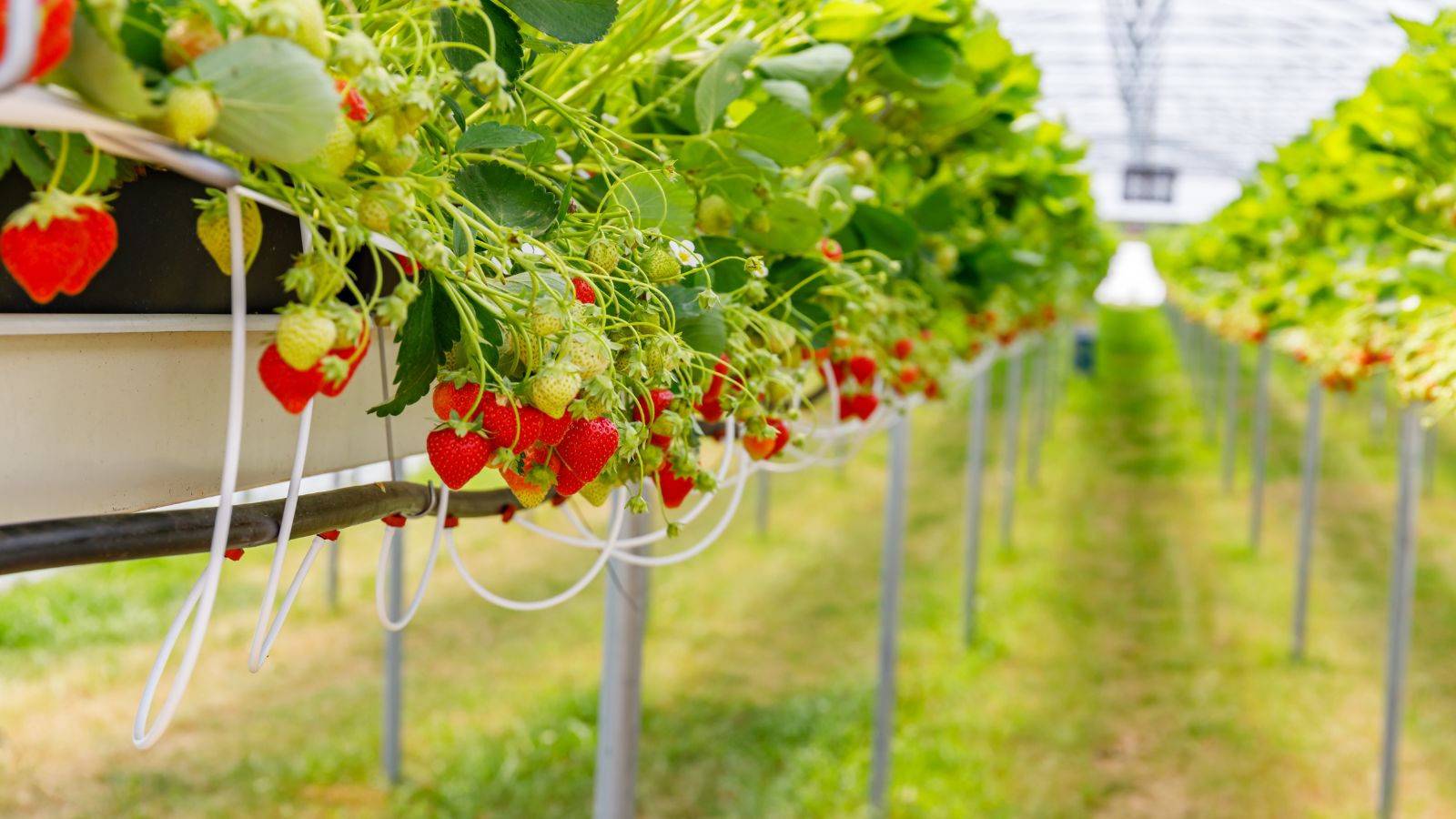
The most common growing problems you’ll experience are from nutrition and pH imbalances. This can be caused by underfeeding, overfeeding, too low a pH, or too high a pH.
Be sure your nutrient solution is at the right levels for your strawberry plants. If the nutrient solution you’re using is too potent, dilute it with extra water. Talk to your hydroponics supplier and see what nutrient solution options they have that are optimized for strawberries and fruit production.
Timing is important. If you feed at the wrong time, you can upset the delicate balance of pH, nutrients, and water. Your strawberries can suffer as a result. Have a pH meter on hand and check your levels regularly.
If you follow your feeding schedule carefully, watch for issues, and act accordingly, you should be able to remedy problems quickly.
Pests

While you are growing indoors, you won’t be exposed to many insects that can occur in traditional soil gardens. Plus, growing hydroponically further lowers any chance of pests and diseases.
But there is always the risk of something infiltrating your garden, and you’ll need to act quickly. Here are some pests and diseases you may encounter when growing strawberries:
- Mites (spider mites)
- Thrips
- Gnats
With most of these, spraying the surfaces of your plant with neem oil should deal with the issue. If it persists, use an organic pyrethrin-based spray to take out the problem.
Diseases
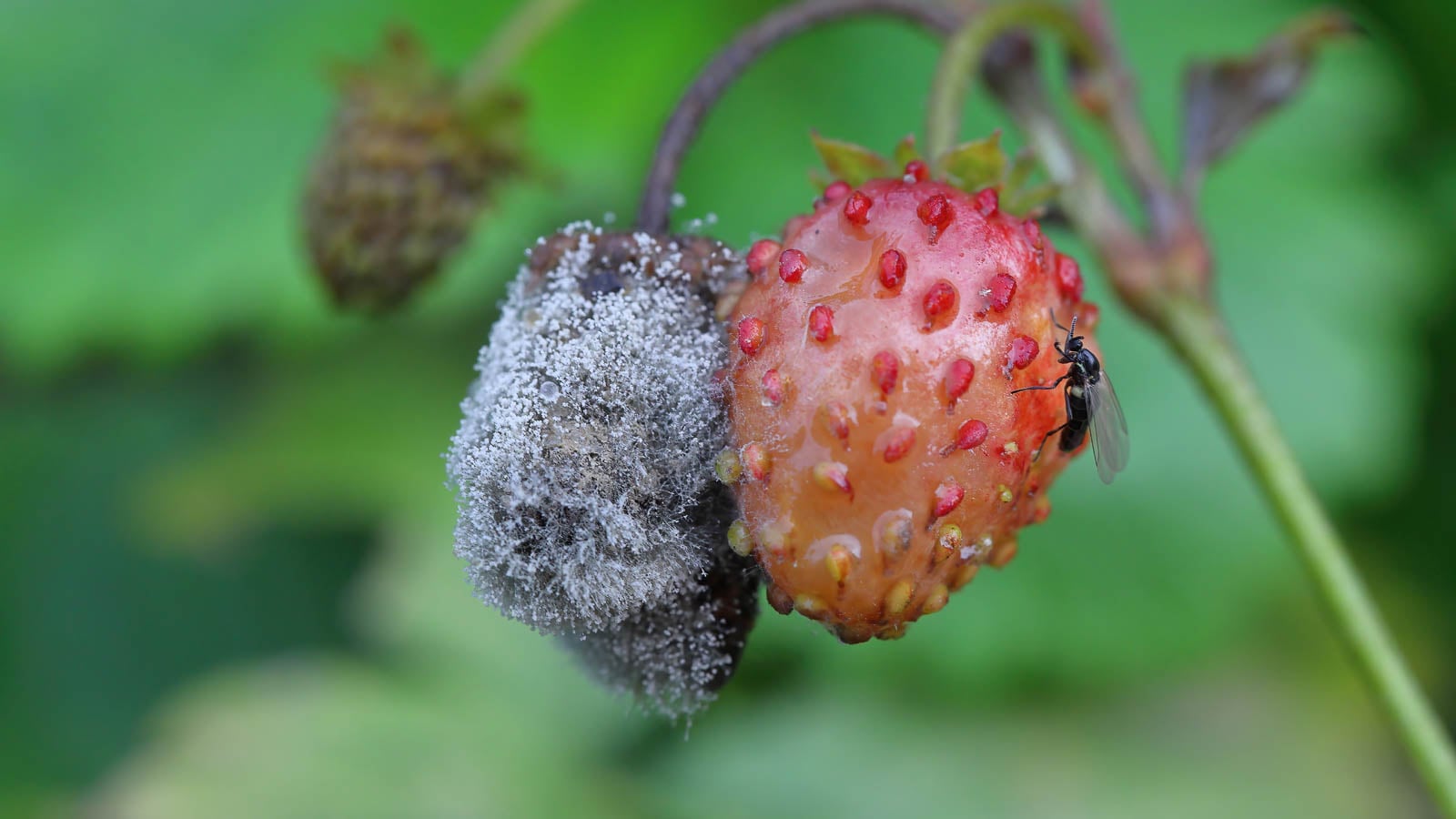
Growing strawberry plants hydroponically eliminates most root rot concerns. As there’s no soil for a fungal rot to form in, you just don’t experience them!
But some diseases may still appear above the growing medium. These can be dealt with in varying ways.
Two forms of fruit rot, rhizopus rot and mucor fruit rot, can still form on the fruit. These are both common on ripe or overripe strawberries, and they will develop in the warm temperatures your plants grow best in. To reduce the likelihood of these, pick fruit as soon as it ripens.
Botrytis cinerea can impact the fruit and flowers. Sometimes called grey mold, this fungal disease can infiltrate greenhouses or garages with surprising ease. Use neem oil for light infestations, or a copper-based fungicide for large-scale ones.
Powdery mildew is another spore-based disease that impacts strawberries. Like botrytis, you can treat this with either neem oil or a copper-based fungicidal spray.
Frequently Asked Questions
Do hydroponic strawberries have pesticides?
Only if you’ve applied one. No strawberry plant inherently has pesticides, although some have been bred to have a natural immunity to certain plant diseases.
How many strawberries can you get from one plant?
This varies depending on the variety of strawberries you’ve opted to grow, whether it’s everbearing or seasonal, how old the plant is, and other factors.
On average, you can expect between 150-400 grams of strawberries per plant by weight. With hydroponics, you can grow year-round, which means you can get berries at any time! Older strawberry plants will reduce their fruit production over time and will eventually need to be replaced with younger, more vigorous ones.





