How to Propagate Cactus: 3 Easy Methods
Knowing how to propagate cactus properly will expand your succulent selection quickly, without breaking the bank. There are three easy methods to try, depending on what kind of cactus you have. Join Rachel Garcia as she explains each process in detail.

Contents
Everywhere we look, cacti seem to be creeping into gardens both indoors and outdoors. Their popularity is justified by the numerous shapes and sizes available. With so many different forms, you can never have too many cacti. And this is when you need to learn how to propagate cactus.
Cactus propagation is a fantastic method of increasing your cactus supply without spending a cent. It’s simple enough for beginners and gets easier with practice. Following these easy methods, you’ll be ready to start propagating to your heart’s content.
Epic 5” Cube Pot

Once your seedlings outgrow their starter trays, it’s time to size up. The Epic 5” Cube Pot gives your seedlings the extra space they need to keep growing indoors until it’s warm enough to move them outside. They’re also a great way to extend your indoor grow time even longer, especially if you started a bit too early and your seedlings have outgrown the 3” pot.
Buy at Epic Gardening ShopWhat is Cactus Propagation?

Propagation describes any method a plant uses to reproduce. In their natural habitat, cacti reproduce slowly by cactus seeds or offsets from a mother plant. When gardeners take things into their own hands, the methods become much faster and easier.
The most popular propagation method is to grow cactus from cuttings. This works with most cacti species. It involves cutting off a chunk of the stem and replanting it. This works well if your cactus has round pads, like prickly pears (Opuntia microdasys).
Grafting is a less common, but still effective propagation method. It sounds complicated, but it’s much easier than it seems. Grafting is often used for cacti that don’t propagate well from cuttings. It’s also used to save a dying cactus or pair complementary traits,
Propagate your cactus right before or during the growing period. If you have a flowering cactus, propagate after the blooms fade while the plant is dormant.
Necessary Materials
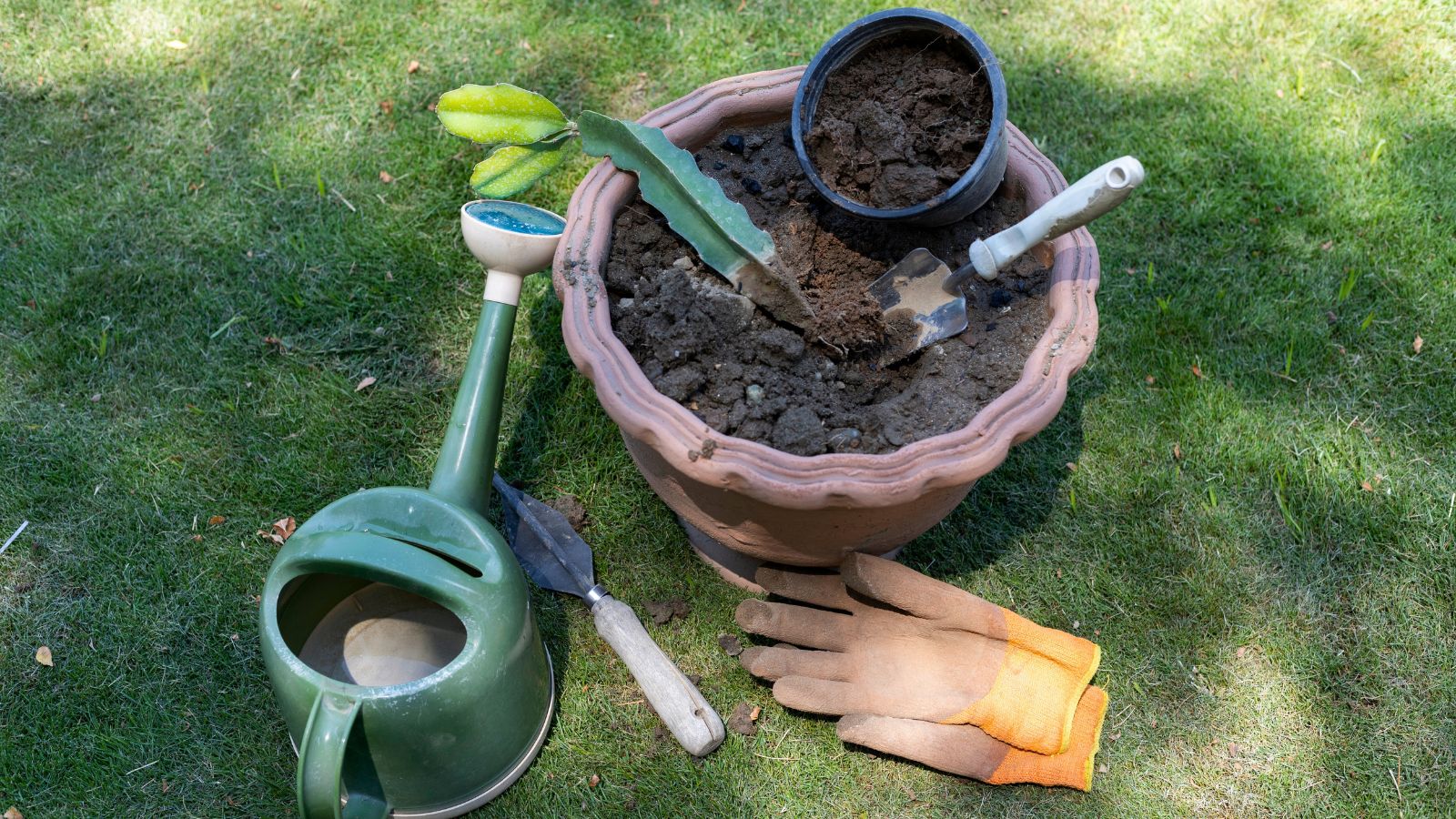
Along with a healthy cactus, have the following materials ready before you begin:
- Heavy-duty gloves
- A pot or container
- Well-draining soil
- A clean, sharp knife
- Rooting powder (optional)
- Tongs or cactus pliers (optional)
- Rubber bands, twine, or electrical tape (for grafting)
How to Propagate Cactus
Before beginning any method of propagation, disinfect your knife. There will be open wounds on the plant that can easily grow bacteria.
Also, since we’re dealing with spiny cacti, remember to wear gloves. For extra protection, hold your cactus cuttings with tongs instead of your hands.
Stem Cuttings
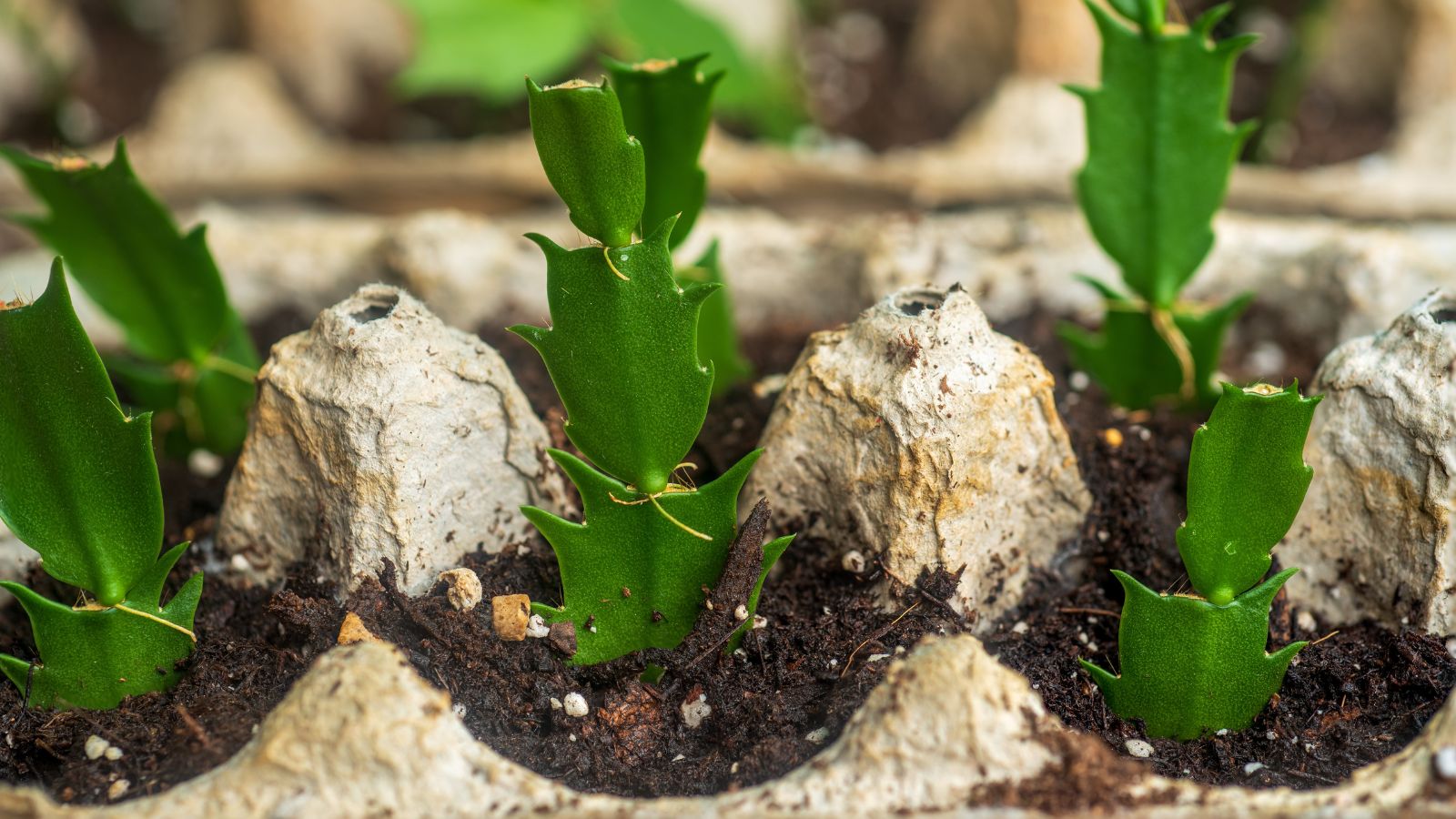
You’ll be taking your cutting from the top of the plant. To root a cactus pad, choose one that’s mature, even if a few smaller cactus pads are growing on top of it. For columnar cacti, choose a thin stem, which will root faster than a chunky one.
On columnar cacti, cut off the stem at least a few inches from the top. Make the cut as clean and straight as possible, without crushing the stem. Pads can be snapped off by hand.
Set your cutting aside, out of the sun and soil, for a few days. The wound needs to dry and form a callous. Once it’s dried and scabbed over, fill the new pot with moist soil.
Once the end of your cutting is dry, stick it upright in the pot with the wound side down. If it won’t stand on its own, you can just lay it on top of the soil. If you have some on hand, dip your cutting in rooting hormone powder right before planting.
While the roots are growing, your cutting is relying on stored nutrients and water. Keeping the soil continually moist will supplement the supply and encourage deep root growth. Lightly water the soil every few days to keep it moist. The soil should never be soaked with water, just kept damp.
The root-growing speed depends on the variety of cactus, watering frequency, and the size of the cutting. Smaller cuttings typically grow roots faster than large ones. Consistent watering also yields faster results. Your cutting can take anywhere from a couple of days to a month or more to root.
Once the roots are settled into the soil, switch to a typical cactus watering schedule. Gradually give your baby cacti more sunlight. The roots will keep growing, but you probably won’t see new stem growth for at least a year. Every cactus is different, though, so you never know!
Grafting
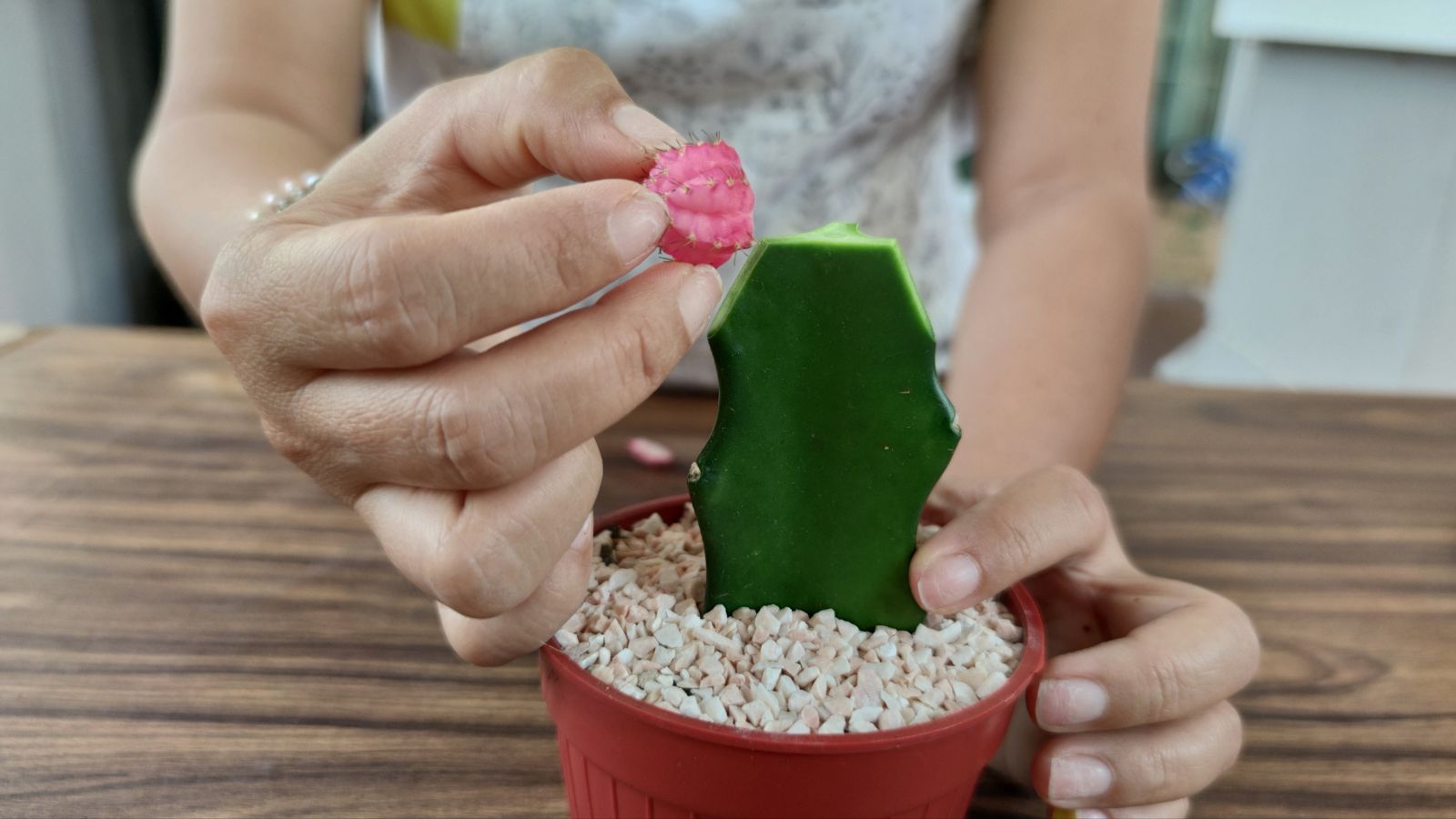
A grafted cactus is made up of two pieces. The rootstock is the plant with roots in the ground. It needs to be vigorous and healthy to support the other piece. The scion is the top portion of the graft. It’s commonly colorful or otherwise ornamental.
When choosing your rootstock and scion, look for plants that are similar in size and closely related. The more alike they are genetically, the better they’ll grow together. A good example of a common pairing is the coral cactus, a grafting that melds two different types of Euphorbia succulents into one single plant.
Using a sharp knife, slice each plant in two where the diameters are similar. You can make a V-shaped cut or a diagonal one. The cuts have to be near exact so they’ll match up well.
Place the scion on top of the rootstock. There should be no gaps between them. The vascular cambium, a ring on the inside of the stem, needs to match up. This part transports nutrients throughout the plant and is essential for keeping the scion alive. In time, the vascular cambium of each plant will merge together, creating one unique cactus.
Secure the graft with rubber bands, electrical tape, or twine. Keep your new cactus in a warm spot but out of direct sunlight. Water it normally, but don’t get any water on the graft area.
After a couple of months, if the graft has successfully merged, you can remove the binding. Then you can place your cactus outdoors if needed.
Offsets
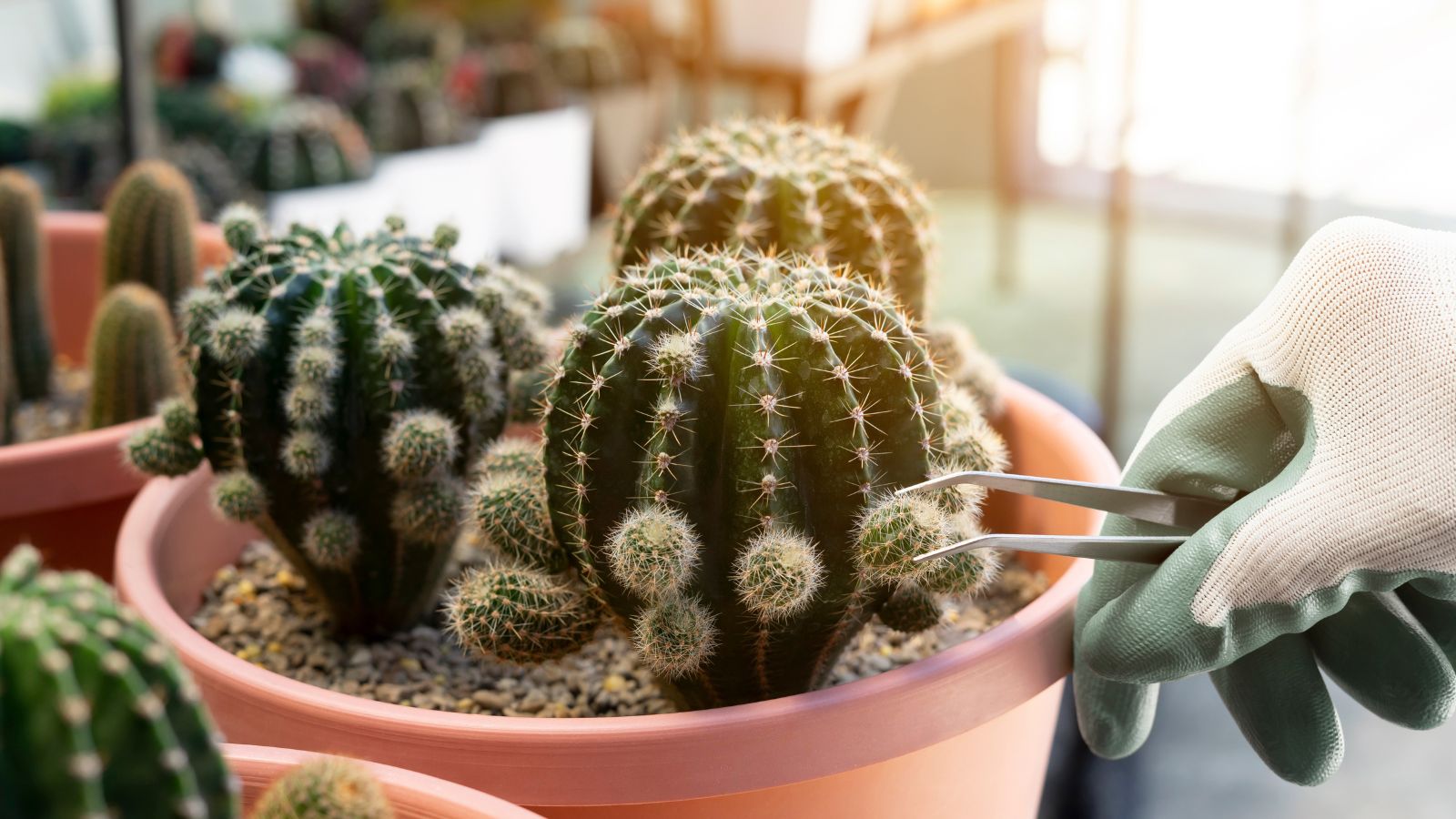
Offsets, or pups, are another means of cactus propagation. Some cacti send out offsets to root on their own. Removing these pups from the mother plant when you propagate cactus will refocus energy into the parent plant’s growth and give you some baby plants.
You can remove the offsets from your cactus before they grow roots by cutting them from the parent plant. Propagate cactus offsets just like you would a stem cutting.
For the best results, don’t remove the pups from the mother plant until they’re growing roots. Then, you can simply propagate the cactus by division. Dig up the plant and cut or break off the offsets. Try to cause as little root damage as possible. Once your cactus is split in two, replant them in separate locations.
Frequently Asked Questions
Can you grow a cactus from a cutting?
You can! Check above for more details on how to carry this out. You will need to allow the cutting to callous over before planting it in new media.
How do you root a cactus from a cutting?
After it has calloused over, you should plant in your preferred well draining cactus soil, and stake it if necessary. Roots should grow within a few weeks.
Can cactus cuttings be rooted in water?
Yes. It’s possible to root a cactus cutting in water. However, you’ll have more success rooting cacti in soil after the cutting wound has dried.
Can I cut the top off my cactus and replant it?
Yes. This is one way to root a new cactus and produce a new plant.
Can you put cactus cuttings straight into soil?
You can. While it’s recommended you allow the cutting to form a callous, in the wild, parts of cacti fall to the ground and root on their own. However, you may have problems with rot using this method. Instead, you can use rooting hormone to stimulate root growth.
Can you propagate a broken cactus?
Yes! This is the best way to handle a broken cactus.
Is it better to propagate cactus in water or soil?
Soil media is better for propagating cacti. That’s because water rooting can cause issues with rot down the line.
How long do cactus cuttings take to root?
It depends on the conditions and the cactus you’re propagating. A general timeline for this is a few weeks to a few months. If you use rooting hormone, it may take less time.