How To Harvest and Store Parsley
Whether you plan to dry it or use it fresh, knowing how to harvest parsley is necessary. The right storage techniques also mean you can enjoy your harvest for much longer. In this in-depth guide, horticultural expert Lorin Nielsen shows you how to do it without damage!

Contents
One of the most widely used herbs, parsley is a bright green biennial plant with feathery leaves. Native to the Mediterranean region, it prefers temperate climates but thrives across a wide range of growing conditions. Botanically known as Petroselinum crispum, parsley is grown worldwide and valued for both its flavor and versatility. There are two primary varieties: flat-leaf parsley and curly parsley.
While curly leaf parsley is the more popular of the two, both varieties are used for culinary purposes. Curly parsley is most often used as a garnish, while flat leaf parsley, also known as Italian parsley, is typically preferred for cooking due to its stronger flavor.
Thanks to its fresh, earthy taste and light scent, parsley is used in a wide variety of recipes, especially vegetable dishes, salads, soups, and sauces. Although popular worldwide, the parsley herb is especially prominent in Middle Eastern and Greek cuisines. It was first cultivated about 2,000 years ago and named after a Greek word meaning “rock celery.”
One of the best things about parsley is its subtle flavor, which can elevate an ordinary recipe into something special. Another advantage is how easy it is to grow and harvest, making it an ideal addition to a home herb garden and ensuring a steady supply of fresh parsley.
Parsley also stores exceptionally well. Once harvested, it can be preserved in several ways to maintain an uninterrupted supply throughout the year. Read on to learn everything you need to know about harvesting and storing parsley.



When to Harvest Parsley

Parsley is a biennial and grows back when cut, but it is most often grown as an annual. It typically takes 70 to 90 days of growth before a parsley plant is ready for harvesting. It’s best to allow the plant to develop plenty of foliage before you begin harvesting parsley leaves.
In temperate climates, parsley can be harvested year-round. In other regions, the growing season begins in spring and lasts through fall. The best time to harvest parsley is in the morning, before the day heats up. At this time, the leaves contain the highest concentration of essential oils, giving them the strongest flavor.
A good rule of thumb when harvesting parsley is to pick a few leaves regularly rather than taking a large harvest all at once. This encourages the plant to keep producing new foliage. Otherwise, parsley may go to seed earlier in the season.
Keep in mind that a parsley plant takes two to three weeks to regrow after harvesting. Plan your harvests accordingly, allowing enough time for the plant to recover before cutting again.
How To Harvest Parsley

Parsley is harvested for both its flavorful leaves and its seeds. Younger plants are best harvested for leaves, while older plants, especially those in their second year of growth, are better suited for seed harvest.
Harvesting for Leaves

The first step in harvesting parsley is choosing the right plants. For leaf harvests, select younger stems, as these offer the strongest flavor.
Check the plant to make sure the stems have three or more segments. If you see three or more leaf clusters on a stem, it is ready for harvesting. Otherwise, allow the plant to grow for a few more days before cutting.
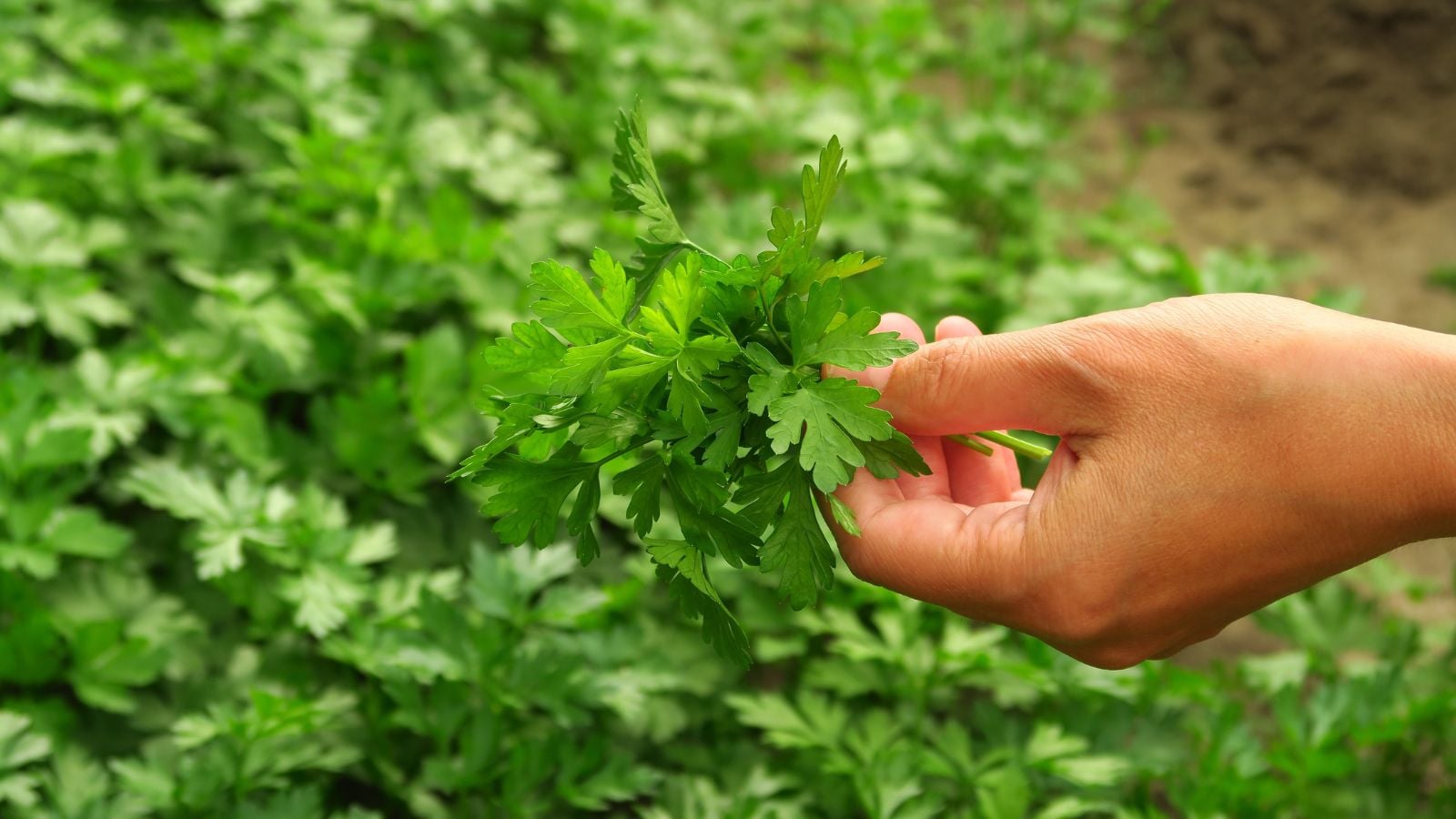
You can harvest individual leaves or remove entire stems. Leaves can be pinched or snipped off, while stems should be cut at the base rather than trimmed from the top. Always use sterilized pruning shears or snips.
Cutting parsley stems close to the base of the plant encourages new growth and helps plants become bushier. Use a sharp, sterilized pair of scissors or garden shears to make clean cuts.
Avoid cutting from the center of the plant, especially if you only need a few small sprigs. Instead, harvest stems from the outer portion of the plant to remove the oldest growth first.
Harvesting older growth allows the plant to focus its energy on producing new foliage. As a result, your herbs will stay healthier and more productive over time. Continue harvesting throughout the growing season, taking outer leaves or stems, until the bright green color of the leaves begins to fade. At this point, flavor quality starts to decline.
If your plants are grown outdoors and left unprotected, it’s best to harvest them completely at the end of the season. Parsley grown indoors under warm, favorable conditions can continue growing through winter as long as it receives plenty of sunlight. Indoor plants can be harvested on an as-needed basis.
Harvesting for Seeds

Now that you know how to harvest parsley for leaves, it’s time to look at harvesting parsley plants for seed. The first thing to know is that parsley does not produce seeds during its first year of growth.
Seed development requires patience. Monitor mature plants closely once they enter their second year. Parsley typically flowers and produces seed toward the end of its life cycle.
To get the best results, remove any weak or imperfect parsley plants at the end of the first growing season. This allows the remaining plants to put more energy into strong second-year growth and produce higher-quality seed.
Once the seed heads have darkened and are ready, remove them by cutting the stem just below the seed head. You can use scissors or gently pinch the stem between your thumb and forefinger to detach the seed heads.
Handle seed heads carefully during harvest. Excess movement or shaking can cause the tiny seeds to scatter and be lost. Place harvested seed heads into a paper bag and allow them to dry fully. Once dry, shake the bag to release the seeds from their heads.
Some immature seeds may remain attached to the seed heads. Allow these to finish ripening by placing them in direct sunlight for two to three days. Keep the seeds as dry as possible during this time, and protect them from birds and other small animals while they mature.
How To Store Fresh Parsley
Fresh parsley can be stored at room temperature or in the fridge. How long it lasts depends on how you store it. Here are some ways you can keep parsley fresh and make it last longer.
Storing at Room Temperature

You can keep your harvest fresh for the short term by storing it at room temperature in water. Bundle the stems together and snip the ends, then place them in a glass or vase filled with about one to two inches of water. Loosely cover the leaves with a plastic bag and leave the container on the counter. Your harvest should remain fresh and wilt-free for two to three days. Wash parsley just before using.
Storing in the Refrigerator
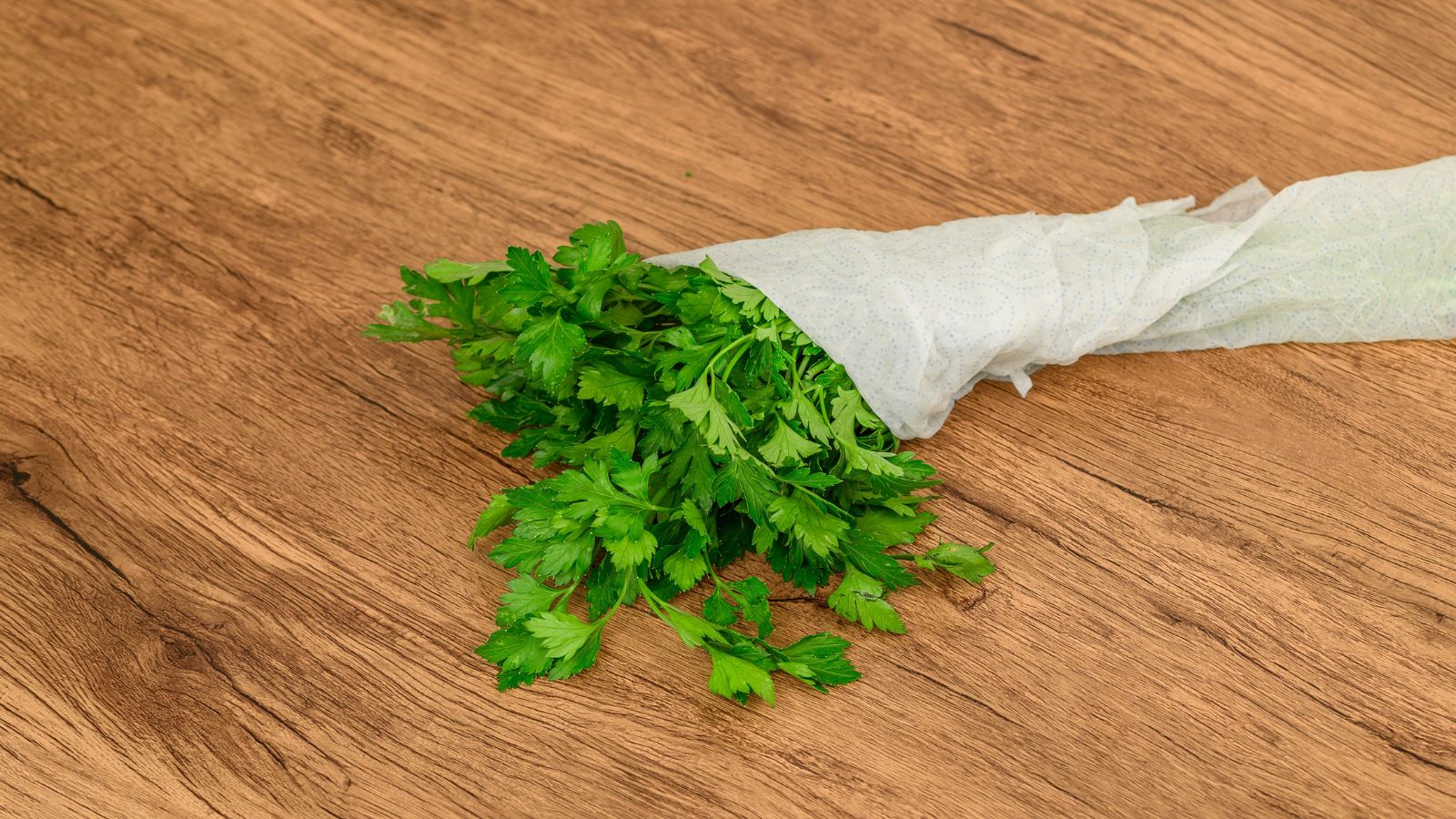
Want to store parsley for longer? Start by washing the stems thoroughly to remove any dirt or dust. Use a couple of paper towels to gently dab the sprigs dry. Instead of discarding the paper towels, loosely wrap them around the sprigs and place everything in a sealable bag. Store the bag in the refrigerator. Fresh parsley kept this way will last three to five days.
Freezing

Another easy way to store parsley long-term is by freezing it. You can freeze whole sprigs for later use, or freeze chopped parsley in an ice cube tray with a small amount of water to bind the leaves together. While frozen parsley retains much of its flavor, it does lose its crisp texture. For the best quality, use frozen parsley within six months.
How To Dry Parsley
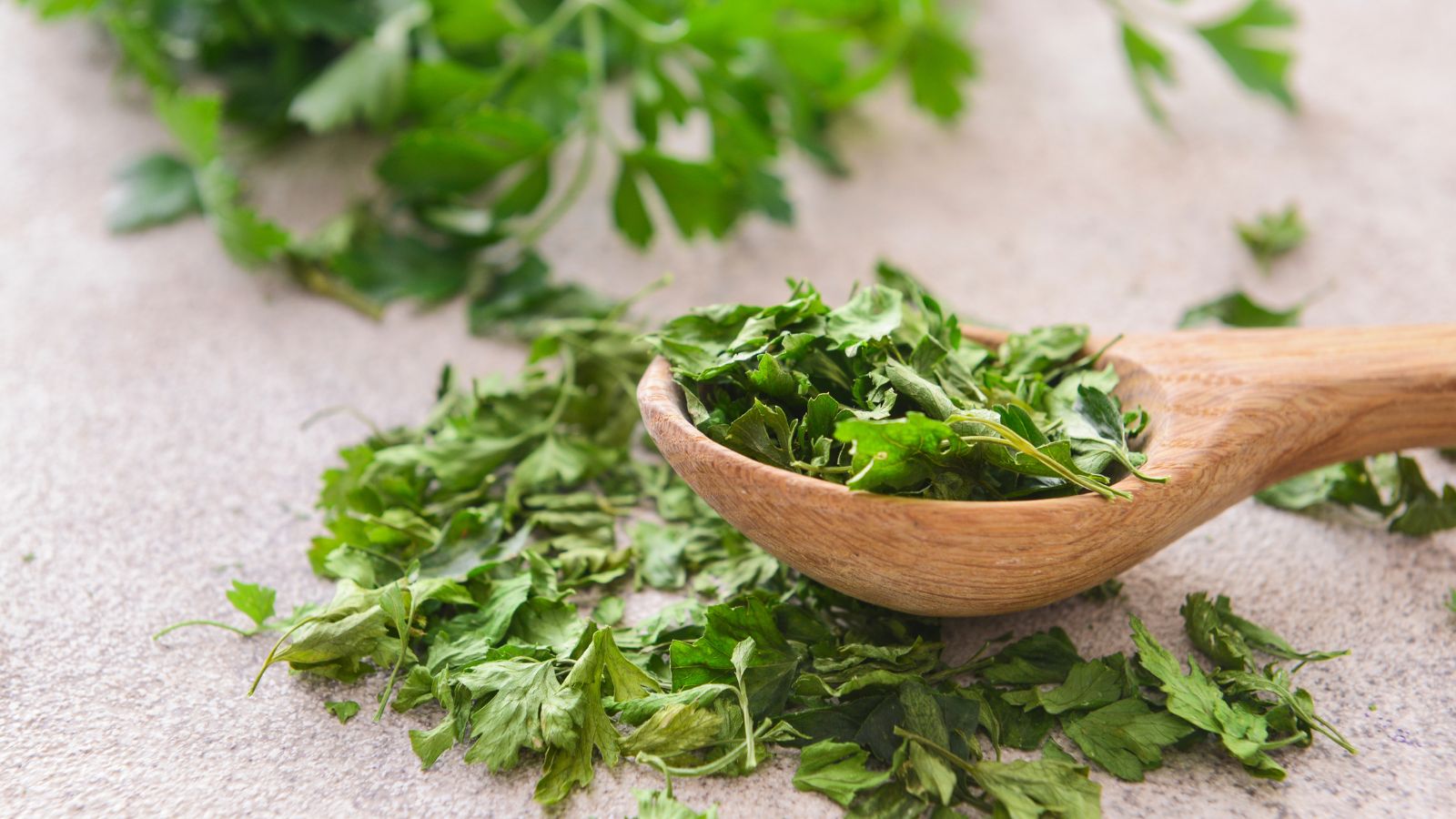
One of the best ways to store parsley long-term is by drying it. Hang washed sprigs upside down in a warm, dark, well-ventilated area. You may want to tie a paper bag around the leaves to keep dust away.
The stems typically take seven to 15 days to dry completely. Once dried, crumble the leaves and store them in an airtight container or bag. Be sure to cure the parsley properly to prevent mold or mildew.
You can also use a food dehydrator to dry your harvest quickly and easily. Since high heat can affect herb flavor, an air-only dehydrating setting is best. Dried parsley is best used within two to three years.





