How To Grow Truffles: A Rare Delicacy
Truffles are a commitment that takes years to come to fruition. We explain the complicated method of how to grow truffles and their trees.

Contents
Truffles may be new to many local restaurant menus, but these dark, fragrant fungi have appeared on European plates since Roman times. Unlike their relatives, such as oyster mushrooms or shiitake mushrooms, truffles rely on animals and humans to spread their spores. These unusual-looking fungi may seem humble, but their value can rival gold.
Many truffle species have never been domesticated, including white truffles. However, growers have successfully domesticated three varieties of black truffles, and farmers now cultivate them in the United States. Learning how to grow truffles took decades of experimentation and only became viable in the 1970s.
White truffles, which remain unfarmable, often sell at auction for tens of thousands of dollars per pound, with smaller specimens costing slightly less. This high price becomes even more striking when you consider that fresh truffles stay edible for only about one week. Before truffle domestication, sourcing fresh truffles in the United States proved nearly impossible.
After centuries of trial and error, growers domesticated three black truffle varieties in the 1970s, making truffle cultivation in the US possible. Truffles do not grow quickly. These slow-developing fungi depend on the root zones of specific host trees, including oak and beech. It can take several years for truffles to colonize tree roots before they begin producing and spreading underground.
Harvest Basket

Styled after a traditional, New England clamming basket, this harvest basket is not only beautiful but it is sturdy enough to become a family heirloom. Veggies can be rinsed off right in the basket. Crafted of pine, birch and oak with a weather-resistant, hand-rubbed oil finish and food-grade vinyl-coated wire to last many years. From Maine Garden Products.
Buy at Epic Gardening Shop
All About Truffles
The distinctive aroma of truffles comes from pheromones that attract animals to dig around the base of host trees in search of the hidden fungi. Truffles are a type of fungus that live in the root systems of specific trees. While many truffle subspecies exist, growers typically group them into white and black truffles. Farmers have domesticated three strains of black truffles and now cultivate them reliably as a crop. White truffles remain wild and only produce naturally in unmanaged environments.
Truffles, or Tuber spp., occur naturally across much of the world. The most famous European truffles originate from Alba, Italy, and nearby regions of Italy and France. Truffles also grow in places such as Oregon in the United States. Despite their excellent flavor, these American truffles often struggle with a perception problem when compared to their European counterparts.
Truffle fungi grow in tree root zones through a symbiotic relationship. The fungus colonizes the roots and transfers nutrients from the soil to the tree. It does this by extending hyphae into the soil to gather nutrients. In return, the tree produces sugars through photosynthesis and shares them with the fungus.
Trees and plants engage in this type of relationship with many forms of mycorrhizae worldwide. Truffles stand out simply because this particular mycorrhizal partnership produces an edible and highly prized fungus.
The Process
When growing truffles, you manage two crops at the same time. You must care for the host tree while also maintaining the soil and environmental conditions that allow truffle spores to thrive and produce mature truffles.
In an established orchard, host trees emerge from dormancy in spring and enter a period of active growth. During this time, weeds and grasses attempt to invade the truffle zone and require hand removal or mechanical cutting. Beneath the soil, truffle colonies expand through the root zone and support tree health. As summer and fall arrive, properly supported colonies begin forming truffles.
Harvest timing depends on the variety, with seasons ranging from summer through late winter. Truffle development requires several months of consistent moisture from rain or irrigation, warm temperatures, and sufficient sunlight reaching the root zone. Once truffles ripen, growers harvest them with the help of trained truffle dogs.
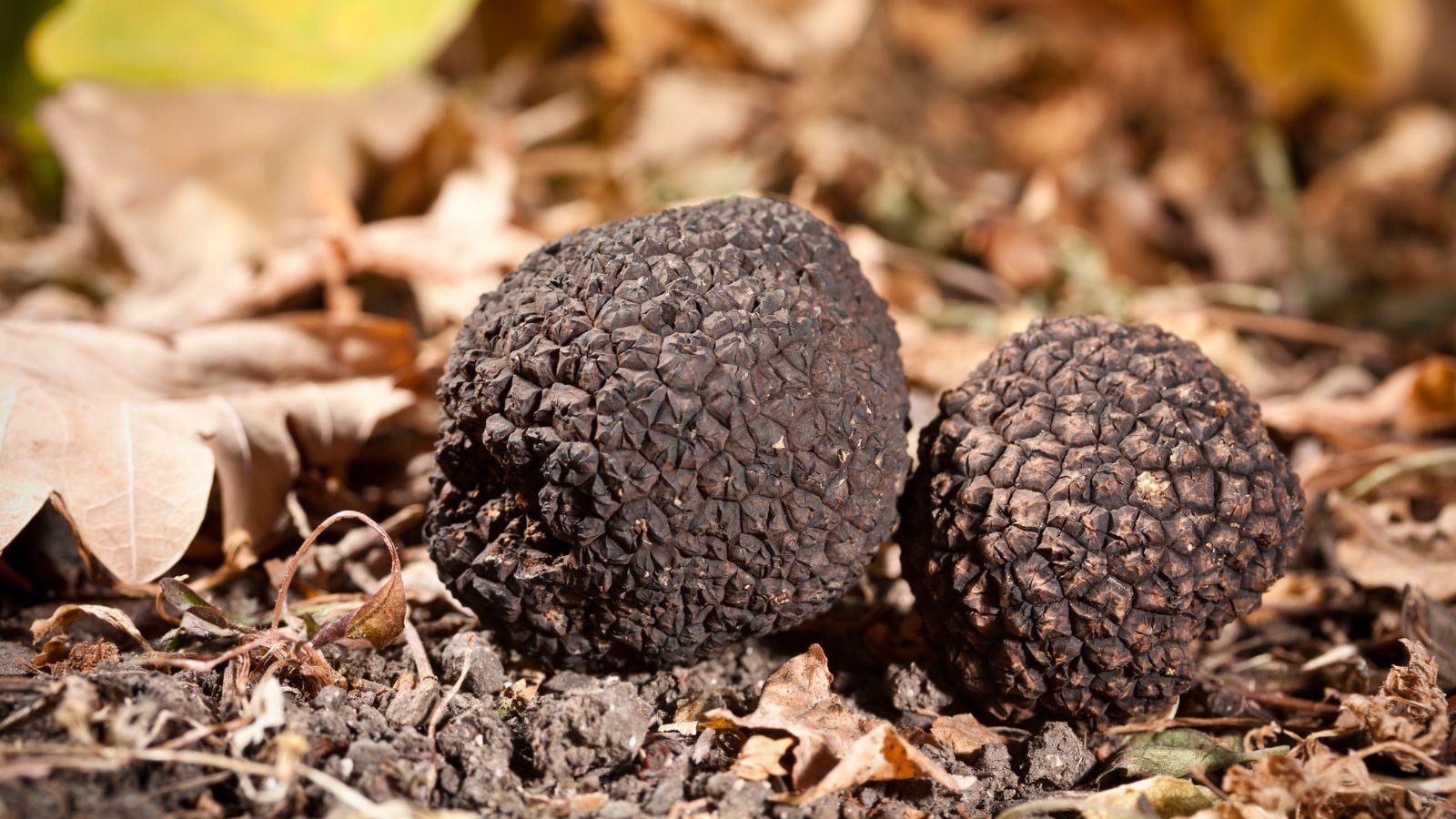
Truffles resemble a mix between a black golf ball and a lump of charcoal on the outside. The interior has a cork-like texture and ranges in color from off-white to deep black. Harvesters most often locate truffles with dogs or careful raking, although pigs filled that role centuries ago.
Types of Truffles
The bianchetto, called the ‘white truffle’s poor relation’, is frequently mistaken for the true white truffle because of its pale exterior. It resembles a lumpy white potato marked with dark brown patches. Tuber albidum Pico produces a milder aroma than its more prized relative and has a harvest season that runs from January to April.
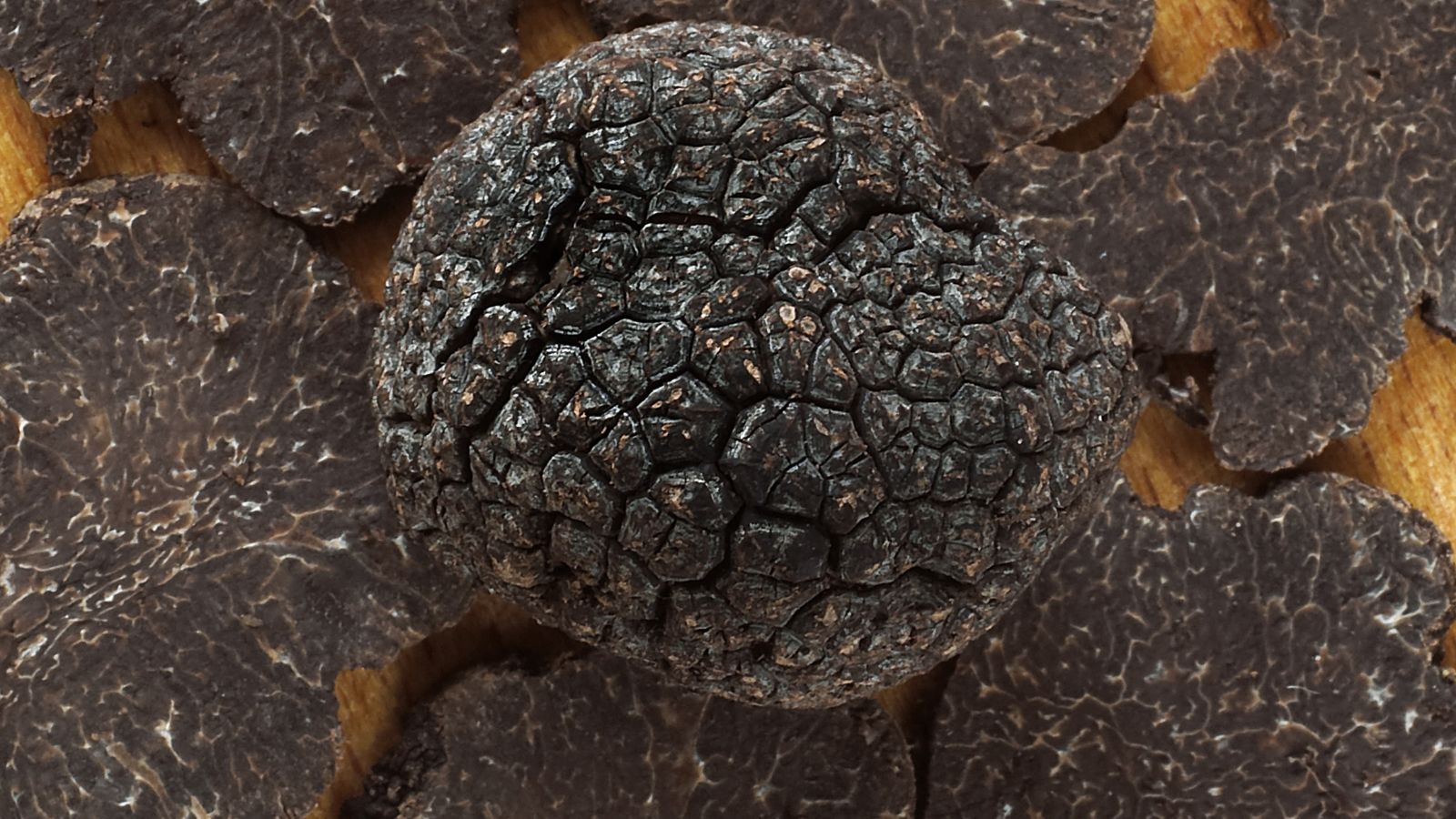
The French black winter truffle, considered the most famous truffle after the white, is often referred to as the black diamond of the table. Tuber melanosporum Vitt grows up to two feet underground near oak and hazelnut trees. This variety ranks among the most expensive and sought-after truffles. Growers also produce it in Australia, where opposite growing seasons allow farmers to supply the northern hemisphere year-round.
The Burgundy truffle, or Tuber aestivum, has a harvest season from September to December and typically stays smaller than the French black winter truffle. Growers have successfully farmed this variety, and it can command a strong sale price. Cooks often use it infused into oil or added to pasta dishes.
The white truffle, or Tuber magnatum, remains completely wild and has never been domesticated. It grows only in specific groves known to professional truffle hunters and their dogs. While these truffles grow mainly in Italy, changing climate conditions have caused a sharp decline in production. As a result, many producers have shifted focus toward farming black truffles to maintain profitability.
Several truffle species identical to European varieties grow naturally in the United States, including Tuber melanosporum in Oregon. Other native truffles also appear across the US and Canada. Although growers have not yet brought these varieties into full commercial production, they are well regarded for their flavor. As European yields continue to decline, these truffles may reach wider markets in the near future.
In the United States, notable species include Tuber borchii in the Pacific Northwest and Tuber lyonii in Georgia. In Canada, growers have identified both Tuber aestivum and Tuber canaliculatum.
Planning Your Truffle Orchard

Planting a truffle orchard requires a significant upfront investment and comes with considerable risk. Even when successful, growers may wait years before seeing a return. Because truffles form by colonizing tree root systems, the most reliable method involves planting inoculated seedlings and managing them from a young age.
Some growers have attempted to inoculate existing groves, but this approach produces lower yields and has fallen out of favor because it often fails to produce fully mature truffles at harvest.
Growers can cultivate truffles across much of the United States. Above all, truffles need consistent irrigation and sunlight reaching the root zone over many growing seasons to produce reliably.
During orchard planning, clear existing vegetation and level the site so tractors and equipment can move easily. Amend the soil with lime and other additives to raise soil pH. This process takes about two years and should not be rushed. Use agricultural lime rather than calcium carbonate, dolomite, or calcium hydroxide. Work the lime into the soil to a depth of 18 inches and test regularly. Continue amending until the soil reaches a pH between 7.5 and 8.
Once soil preparation is complete, mark planting sites and install an irrigation system. Irrigation must be operational from the beginning. Plant seedlings carefully and avoid compacting the soil when backfilling. Although inoculation gives truffle mycorrhizae an early advantage on oak or other host seedlings, other fungal strains may compete over time. Consistent irrigation improves the chances that truffle fungi remain dominant and productive.
Each spring and summer, control weeds around trees using mechanical methods. Truffles require sunlight at the soil surface, and grasses commonly found in orchards block this exposure. Hand weeding works best in small areas, while weed trimmers or propane torches suit larger plantings.
When selecting seedlings, research each truffle variety carefully. Different truffles prefer different host species. In the United States, growers most commonly use oak, beech, and hazelnut trees.
How to Grow
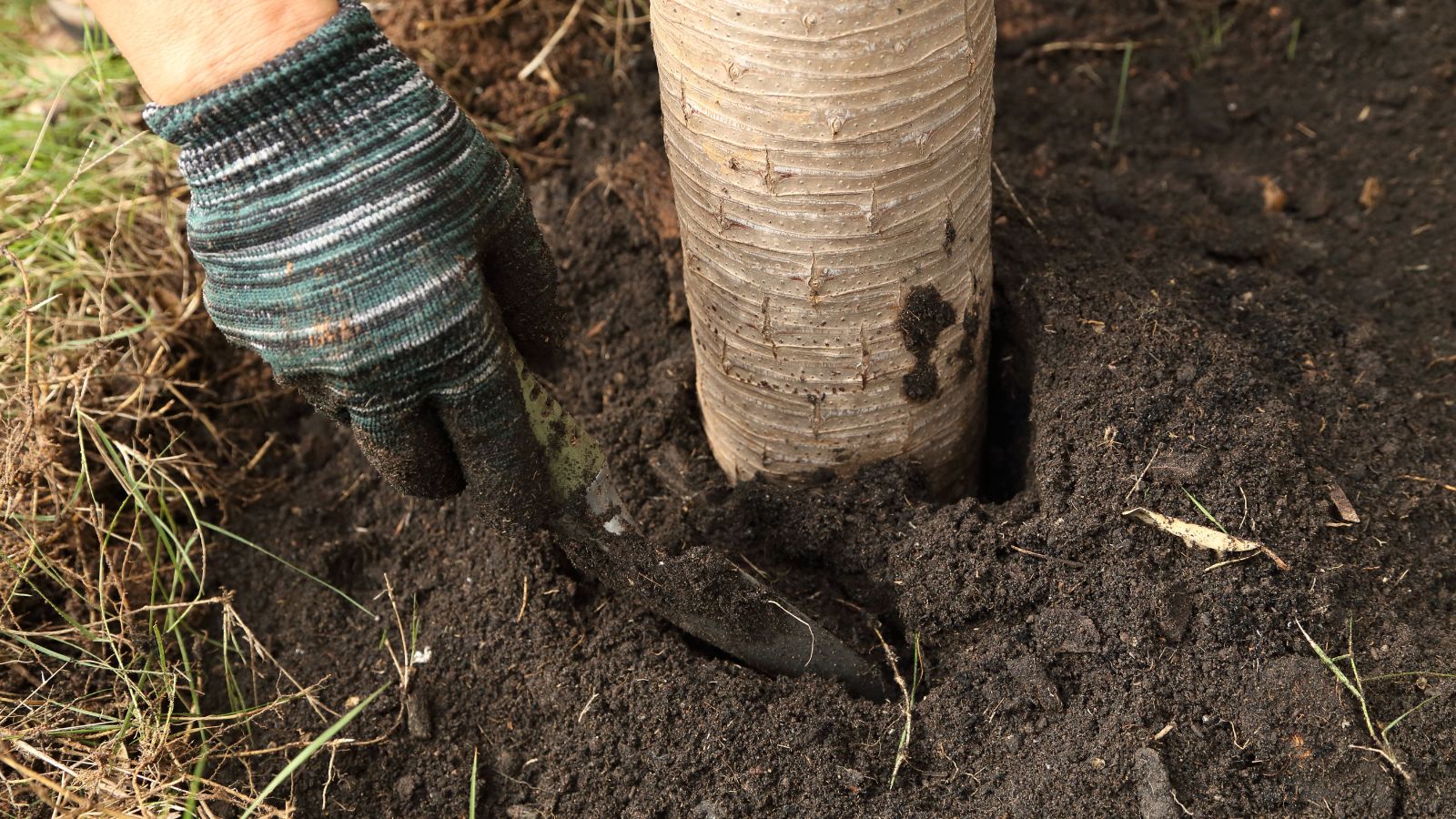
Once your orchard is established, ongoing care stays fairly minimal. Focus on maintaining even moisture, controlling weeds, and managing pests. Most orchards take three to seven years before they begin producing, so patience is essential.
During this period, pest management often requires the most time. Watch for pests that damage young trees, such as gophers, as well as those that feed on fungal primordia, including slugs. Deer may browse saplings before snow melts, and coyotes sometimes chew irrigation lines in search of water. Effective pest control plays a key role in protecting truffle health. Walk your grove once per week to monitor for signs of damage or activity.
Each spring, remove weeds and grass from around the base of each tree. Truffles need sunlight to reach the soil surface near the trunk to trigger growth. Without that light, production slows or stops.
Avoid applying pesticides to the soil at the tree base or over irrigation lines. Truffle primordia must remain alive year-round, even outside harvest periods. Chemical sprays can kill developing truffles and weaken tree health.
Keep the ground clear of weeds out to the drip line. Over time, you will notice less grass growing as a brûlé, or bare soil zone, forms beneath the tree. This clearing signals that the fungus has successfully colonized the roots and is preparing to produce.
Truffle fungi thrive in well-draining, light soils with a pH between 7.5 and 8. Limit foot traffic, tractor use, and animal grazing among inoculated trees. While humans help spread truffle spores, excessive soil compaction restricts fungal growth and reduces yields.
Propagation
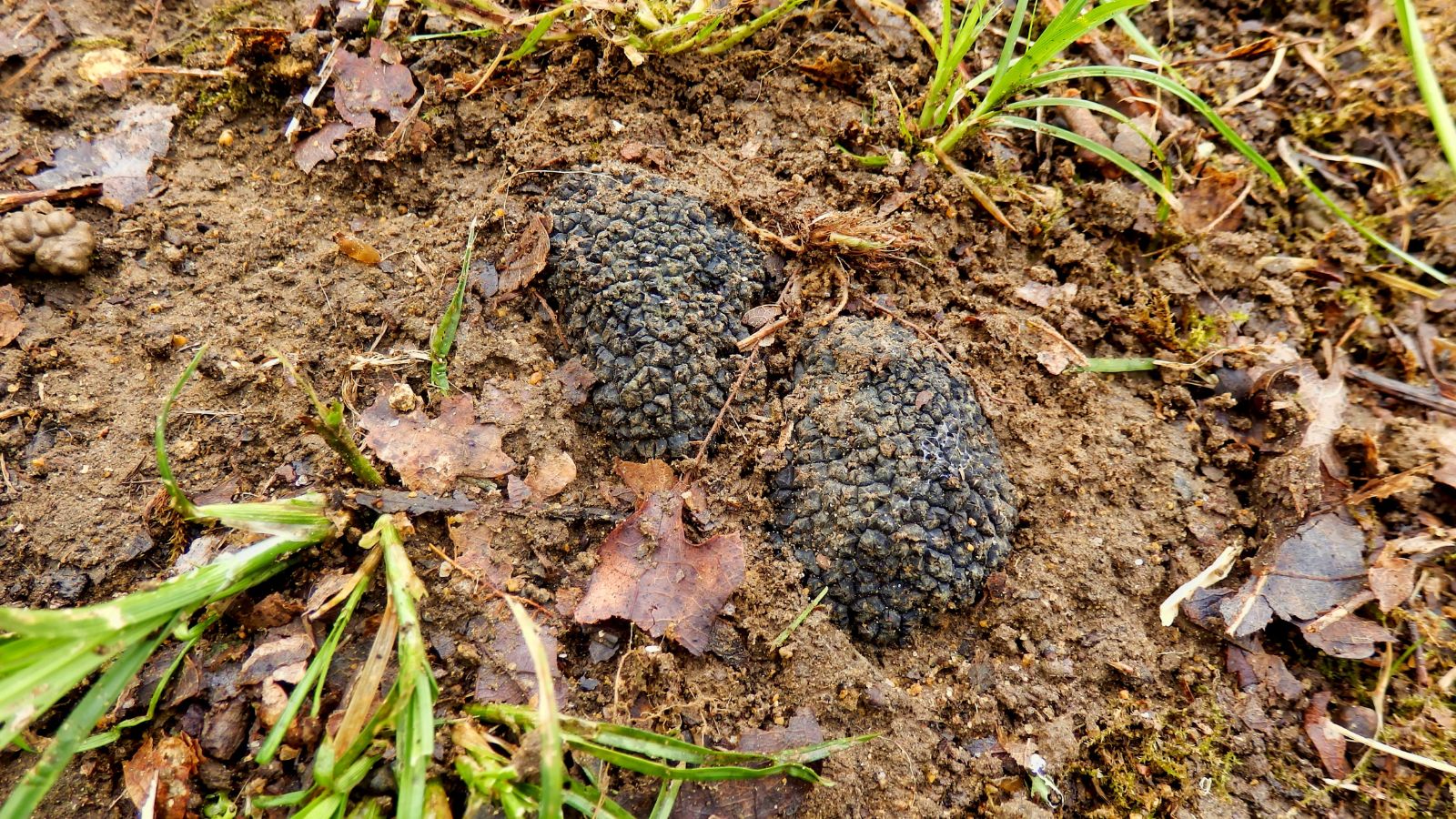
Truffle inoculation involves blending a mature truffle with water to create a slurry. Growers then apply this mixture directly to the root zone of young tree saplings in a growing medium. This process does not always succeed, so growers must examine the roots under a microscope to confirm whether the root zone has been successfully inoculated.
Harvesting
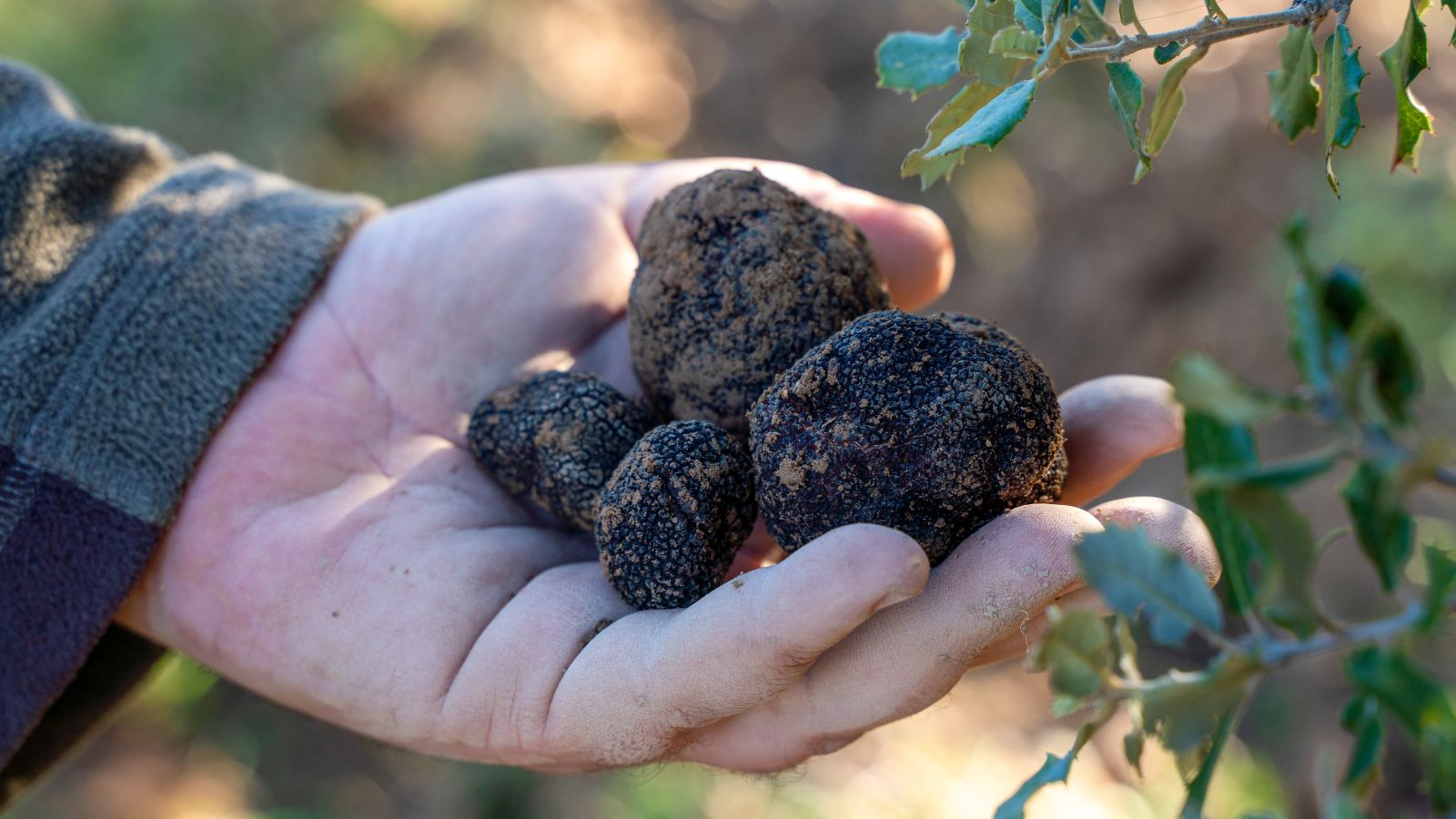
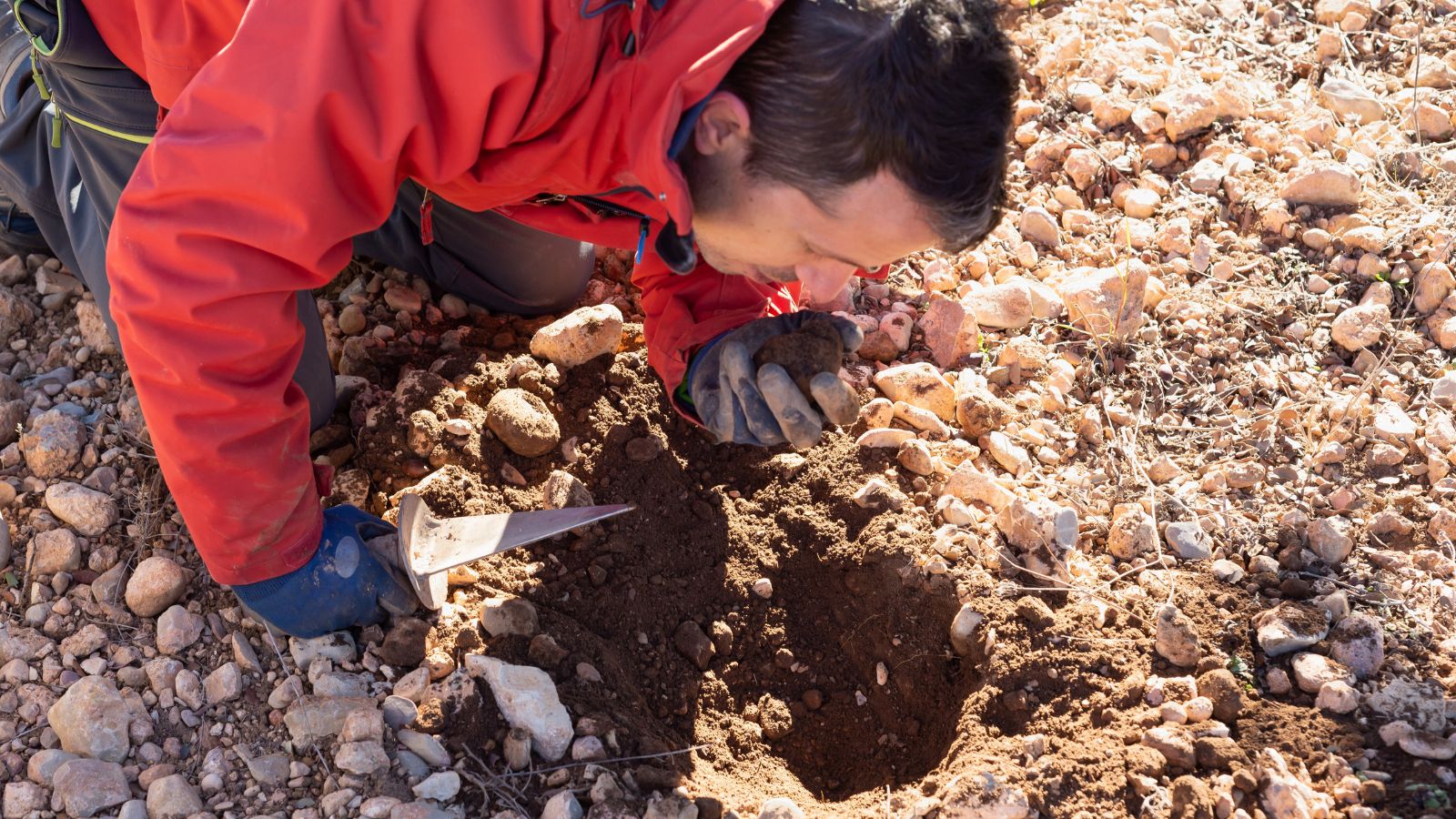
Truffle hunting is an art often practiced alone or alongside a dog. Although truffles release a strong aroma that can travel through the soil, pinpointing their exact underground location proves difficult without the scent-tracking abilities of a trained truffle dog.
Trained truffle dogs offer the most reliable way to locate mature truffles. Once they detect the scent, they sit directly above the truffle and place a paw on the spot. The handler then carefully digs through the soil to harvest the ripe truffle. After harvesting, refill the hole with soil before moving on to the next find.
You can also rake gently around the roots of a tree to search for truffles. Growers use this method less often because it increases the risk of uncovering unripe truffles, which then go to waste.
Storing
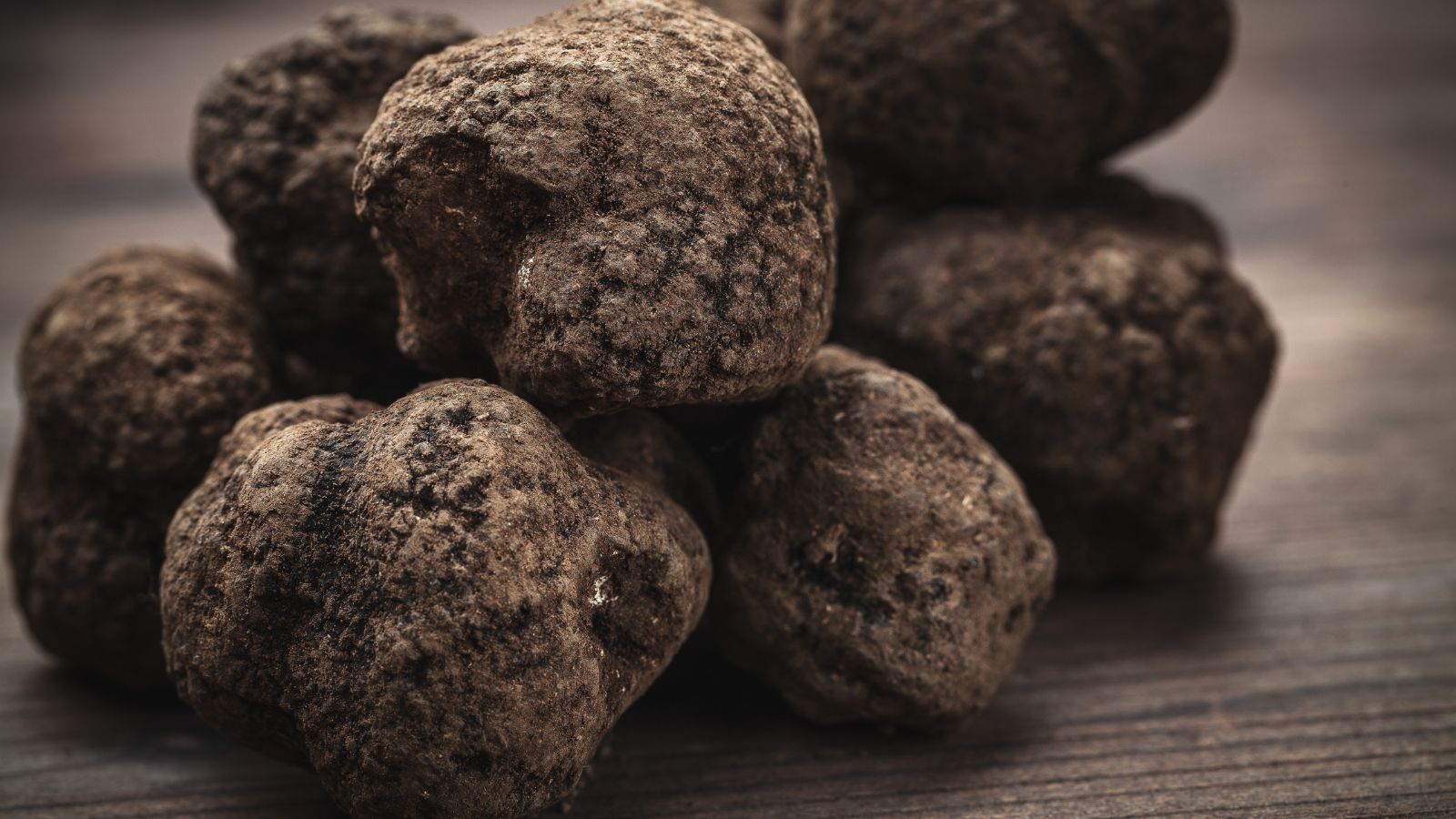
Truffles harvested directly from an orchard can last up to one week, while those purchased from a local supplier usually keep for only one to two days. All truffle species deteriorate quickly after harvest, typically within five to seven days, so use them as soon as possible for the best flavor and aroma.
Frequently Asked Questions
How long does it take to grow truffles?
Growing a truffle orchard can take up to 15 years to fruit, but it’s possible for them to produce in around 5 years if managed well.
How hard is it to grow truffles?
It can be quite difficult to grow truffles, especially because of the years-long delay in production.
Is it possible to grow truffles indoors?
No.
Where do truffles grow in the US?
Truffles grow all over the US, from Oregon to Texas to Arkansas. More than anything they need proper care as that determines the success rate.