How To Plant, Grow, and Care for Saffron
When you know how to grow saffron crocuses, not only will you have beautiful flowers but an expensive spice source too! These plants are surprisingly easy to grow, but a little tougher to harvest, explaining their high costs. If you want to grow your own, follow this in-depth guide to learn how.

Contents
The most exotic and sought-after rare spice in the world, the saffron crocus is a beautiful bloom prized across the globe. While the flower itself is small, saffron is harvested for the even smaller three stigmas at its center. Once dried, saffron loses about 90% of its weight, which is why it can be worth several times its weight in gold. Learning how to grow saffron is surprisingly straightforward. This hardy bloom is a delight to behold and well worth a place in the garden.
Grown from corms rather than seeds, the saffron crocus is primarily cultivated in Iran. More than 90% of the world’s saffron is produced there, largely due to the labor-intensive harvesting and drying process and the availability of lower-cost labor. That said, saffron crocus corms are relatively affordable and easy to source, making them accessible to home gardeners who want to grow this unique plant.
This prized spice is also packed with nutritional benefits and is often associated with improved heart health and mood support. Some even claim that handling the flowers and stigmas can cause feelings of joy and laughter.
Farmers in the United States have been growing saffron crocus since the 17th century, when the Pennsylvania Dutch first introduced the corms. It is possible to grow saffron successfully in the US if labor costs allow. Whether planted in raised beds or containers, this compact plant fits easily into most gardens. Keep in mind that a family of four will need at least 150 to 200 corms to produce enough saffron for a year of cooking.
Epic GardenBox

Epic GardenBox
With our Epic GardenBox, your garden will be up and running in minutes. Made from sturdy Nordic softwood with sleek, black powder-coated hinges, this raised bed is built to last and looks great wherever you put it.
Buy at Epic Gardening Shop
Quick Care Guide

|
Common Name(s)
Saffron crocus
Scientific Name
Crocus sativus
Days to Harvest
6-8 weeks
|
Light
Full sun
Water
Moderate water during production; no water during dormancy
Soil
Well-drained sandy to loamy soil
|
Fertilizer
Compost or bone meal
Pests
Rabbits, voles, mice, gophers, saffron bulb mite
Diseases
Corm rot
|
All About Saffron Crocus

The world-renowned saffron crocus is by far the most expensive spice in the world. It is known not only for its vibrant red color, but also for its scarcity. With 220,000 flowers required to produce a single kilo of dried spice, saffron cultivation often requires several fields in production to yield a crop worth selling.
Crocus sativus has traditionally been used in Middle Eastern, Indian, Greek, and Spanish cooking, but it has since been incorporated into cuisines around the globe. The plant is believed to have originated in Minoan-era Crete and thrives in similar temperate regions. Saffron can be grown on farms, in home gardens, or in containers, as the saffron crocus adapts well to a wide range of growing conditions.
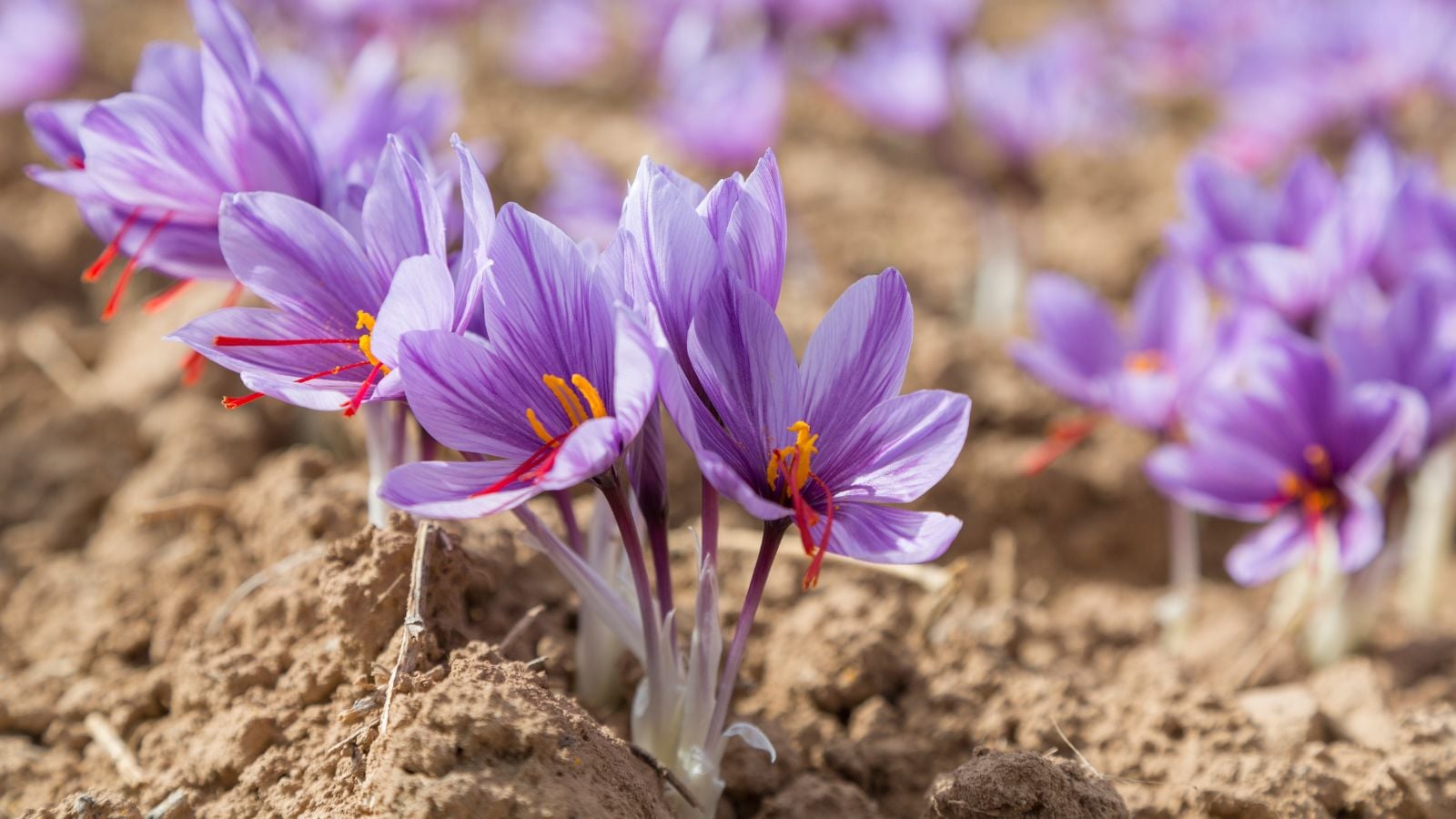
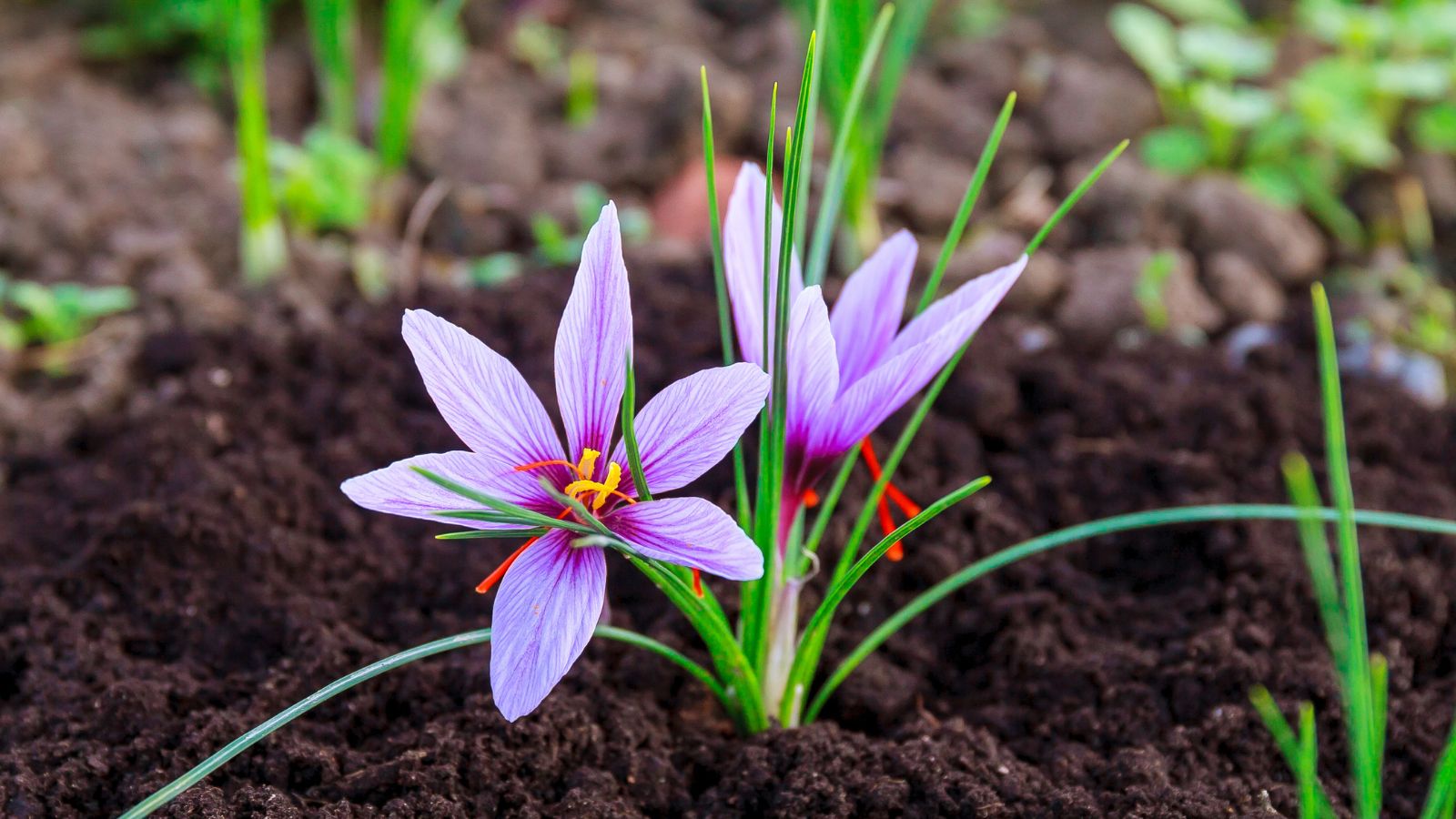
The saffron crocus is a short, compact plant that produces a purple, cup-shaped bloom in rich jewel tones. The foliage consists of narrow green spikes that resemble pine needles, and the mature plant reaches about four inches tall.
At the center of each flower are three stigmas, which are the part of the plant known as ‘saffron’. These vivid red-orange, tri-pronged threads emerge from the base of the bloom and are easy to spot. Each corm produces a single flower, but the corm will multiply as the plant enters its summer dormancy.
The saffron life cycle can generally be divided into five stages. Saffron crocus corms sprout six to eight weeks after planting in late fall to early winter. The plant then flowers and produces foliage before forming daughter corms as it transitions into dormancy.
Planting

If you’re growing saffron crocus, it’s ideal to start the corms in late summer or early fall. Your growing zone will determine the exact timing. In USDA zones 3 through 6, plant in August. In USDA zones 7 to 10, aim for September.
Plant saffron corms about four inches deep and spaced roughly four inches apart, although planting them slightly closer together for a more dramatic display will not cause issues. Some growers plant up to 12 corms per square foot. Always place the corm in the planting hole with the pointed side facing down.
How to Grow
It’s quite easy to grow saffron crocus bulbs. A great addition to the herb garden, this brilliant spice is well-suited to beginners and is a hardy corm that returns year after year. There are just a few key guidelines to follow to ensure these plants have the right growing conditions.
Light
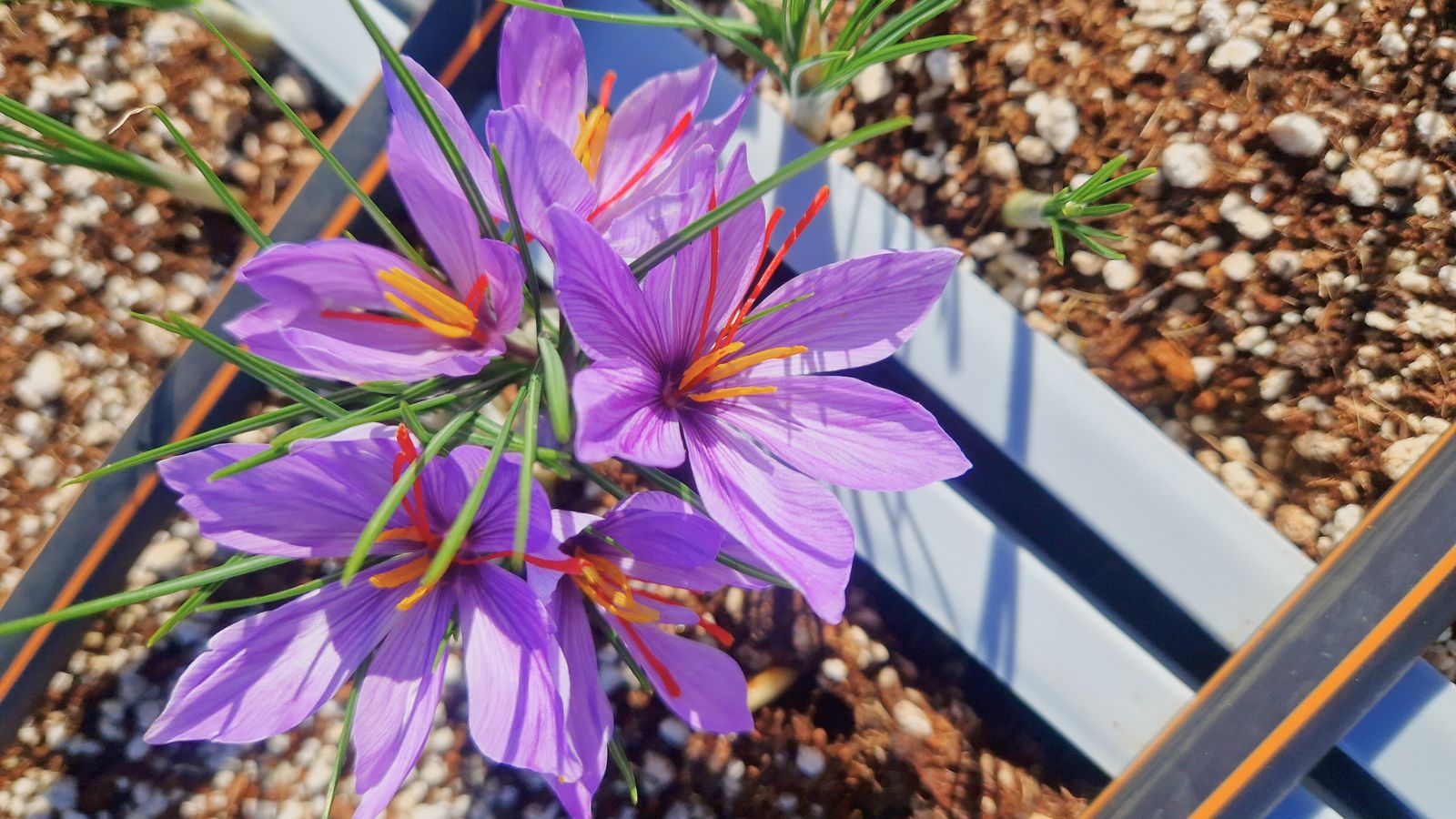
For gardeners interested in learning how to grow saffron crocus, most will find that saffron grows easily in their climate. While not everyone can leave corms in the ground year-round, many gardeners will discover that, with a few simple adjustments, these plants can thrive in a wide range of regions. It requires a full day of sun, with at least eight hours of direct light, along with consistent warmth toward the end of fall.
Water

It’s wonderful to see a blooming crocus in the landscape. However, take care not to overwater these hardy saffron flowers. In the days leading up to harvest, saffron crocuses need only a moderate amount of water, about half an inch per week from planting through harvest. Once the saffron has been harvested, stop watering altogether. This encourages the crocus to complete its life cycle and enter dormancy.
When watering, it’s best to use drip irrigation to deliver moisture evenly to the soil. A strong hose or watering can may damage these delicate, fall-blooming plants.
Soil

Saffron crocuses are fairly hardy plants that tolerate a range of soil types, from sandy to loamy. They can even be grown in poorer soils if the planting area is partially amended with compost or bone meal.
The most important requirement is excellent drainage. Soil that retains too much moisture can lead to rot, which is one of the few issues that affect this prized spice.
Temperature

Saffron crocus performs best in temperate climates and is adaptable to growing zones 6 to 10. After the stigmas have been harvested, temperature becomes an important consideration.
In USDA zones below 6, winters are too cold for corms to overwinter in the ground, so they will need to be lifted and stored over winter to protect them from extreme cold. In zones 8 through 10, saffron crocus corms should be brought indoors and artificially ‘winterized’ so the plants receive the cold period needed to trigger sprouting the following season.
Fertilizing

For gardeners who want to learn how to grow saffron, this fall-blooming flower is relatively low-maintenance. Saffron flowers do not require much fertilization. If you are amending poor soil or feeding overwintered, in-ground corms, add one inch of compost over the planting area. You can also amend the soil with bone meal at planting time. Given the plant’s quick bloom period and small harvest, very little input is needed for these corms to produce successfully.
Pruning
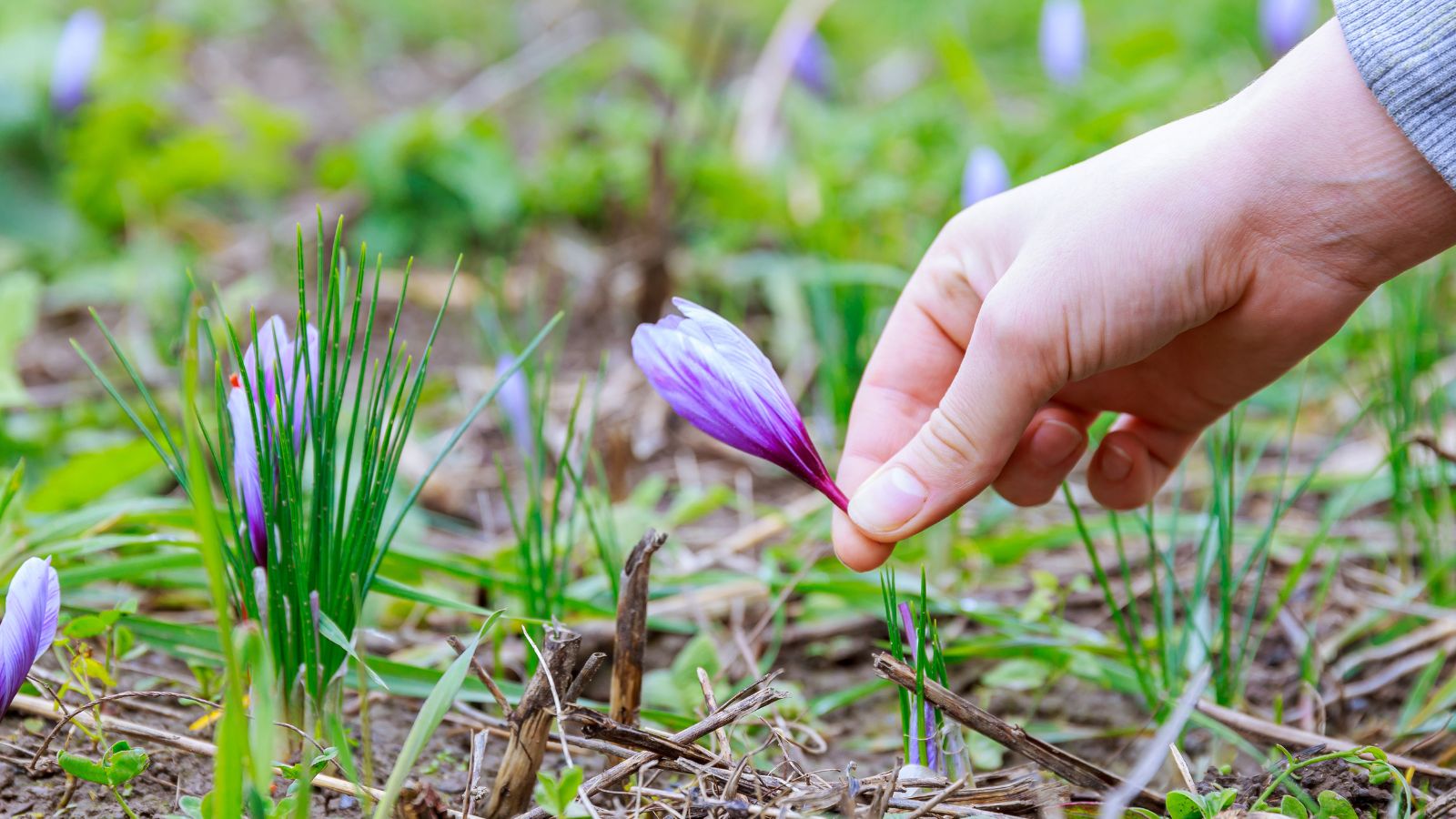
The only time a saffron crocus is pruned is during harvest. Using sharp scissors or your hands, gently separate the flower from the stem, then remove the petals to expose the stigma. Be sure to leave the foliage intact, as this allows the corms to continue developing daughter corms as the plant heads into dormancy.
Propagation

The saffron crocus is propagated exclusively by allowing each corm to complete its full life cycle. After the saffron flowers have been harvested, the foliage should be left in place to die back naturally. This is the stage when ‘daughter’ corms develop.
If desired, you can dig up these new corms and select the healthiest ones to store for the next year’s growth, or leave them in the ground and cover with mulch until the following fall if your climate allows.
Harvesting

The saffron spice is somewhat labor-intensive to harvest and store, which explains its high cost despite being an easy plant to grow. The bright red stigmas are striking and easy to spot, clearly signaling when they are ready to be picked.
The harvesting window for saffron crocus is quite short. Ideally, you should visit the garden in mid-morning during the harvest period. Saffron is best harvested on a dry morning before the sun becomes too intense. This usually occurs about six to eight weeks after the corms are planted.
Wait until the flower is partially open, then snip the base of the bloom without removing any foliage. Open the flower over a table or napkin, allowing the parts to fall away, and gently remove the stigmas by hand or with tweezers.
Storing
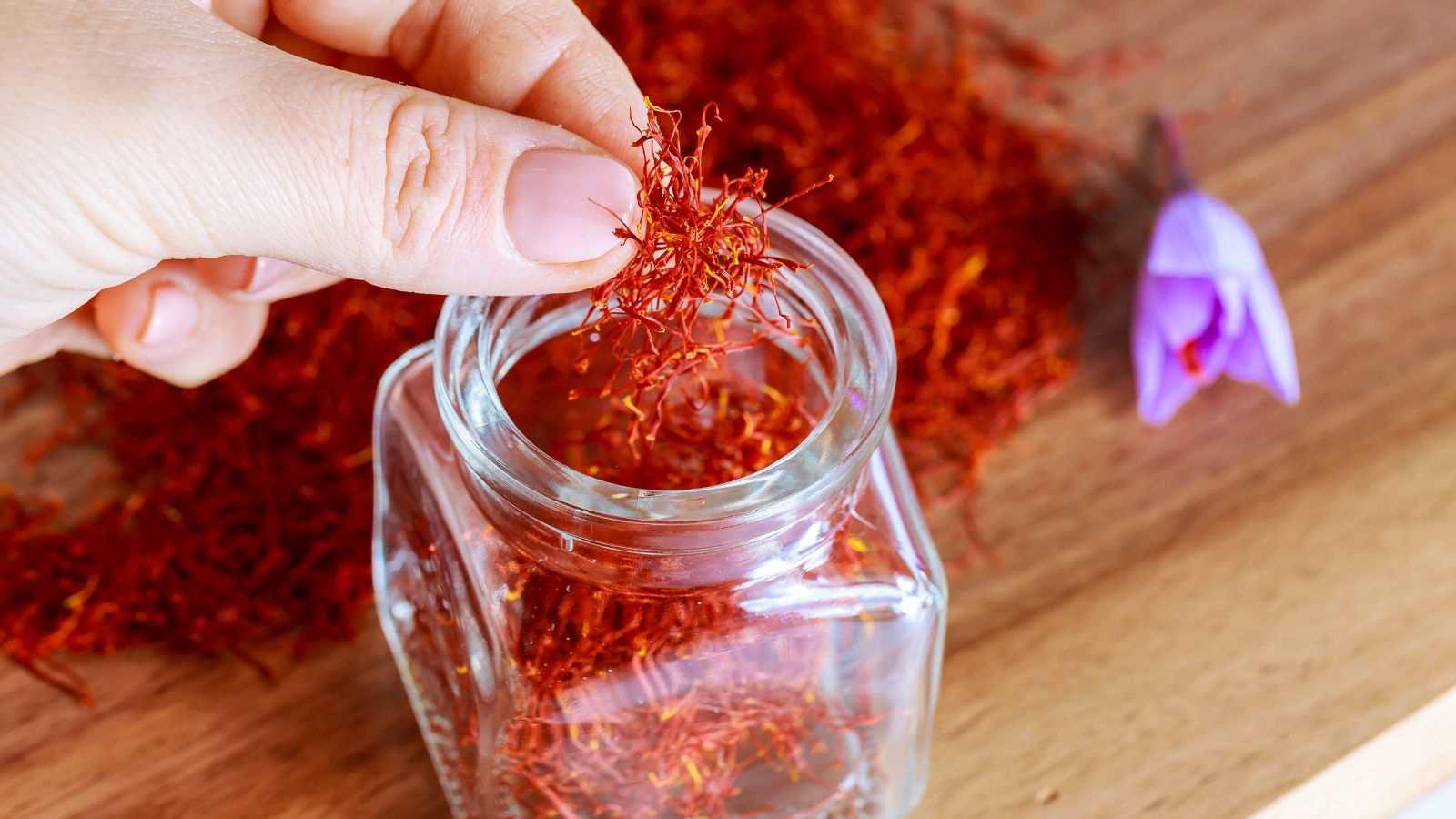
Saffron threads are finicky and cannot tolerate too much sunlight before their quality begins to degrade. After harvesting, store them indoors immediately in a shaded area.
Saffron threads can be used fresh within a 24-hour period, or they can be dried for long-term storage. If drying, there are two effective methods. For a small harvest, spread the threads on a paper towel and place them on a shaded table or shelf. They should dry completely within three days. If using a dehydrator, spread the threads evenly on a dehydrator tray and dry them for three hours at 45°F (7°C).
Once dried, the stigmas should be sealed in an airtight container and stored in a dry location. For long-term storage, wrap the saffron in foil or another light-blocking material, as exposure to light degrades the quality of the spice. Commercial producers often use black plastic for this purpose.
Don’t be surprised when your saffron loses much of its weight. The dehydration process removes about 90% of the stigma’s original weight.
Troubleshooting
Fortunately for gardeners who grow saffron crocus, these corms have relatively few predators and growing issues. Aside from the occasional rabbit or gopher, this hardy bulb is rarely affected by problems, although rot or mites can sometimes occur.
Growing Problems
Growing saffron crocus is thankfully an easy task. This plant has very few growing problems. However, it’s important to consider your growing region, especially if it differs from the plant’s native environment in Greece.
Saffron crocus performs best in USDA zones 5 to 8. While it can grow in zones 9 and 10, take care not to plant too early, as the corms need cooler temperatures to trigger flowering. If conditions are too warm, the plant may produce only foliage rather than the prized flowers.
Pests

Most of the pests that affect saffron crocus are small mammals. The corms are nutrient-rich and can be dug up and eaten by animals such as rabbits, gophers, voles, and mice. These corms are especially vulnerable during the winter months, when food sources are limited.
The saffron bulb mite is a small, beetle-like pest measuring about 0.8 mm long. An infestation causes stunted growth, with flowers that are shorter than normal and foliage that appears thin and weak. Prevention is the best approach, as affected plants cannot be fully cured once symptoms appear. To reduce the risk, consider treating corms with a miticide before planting.
Diseases
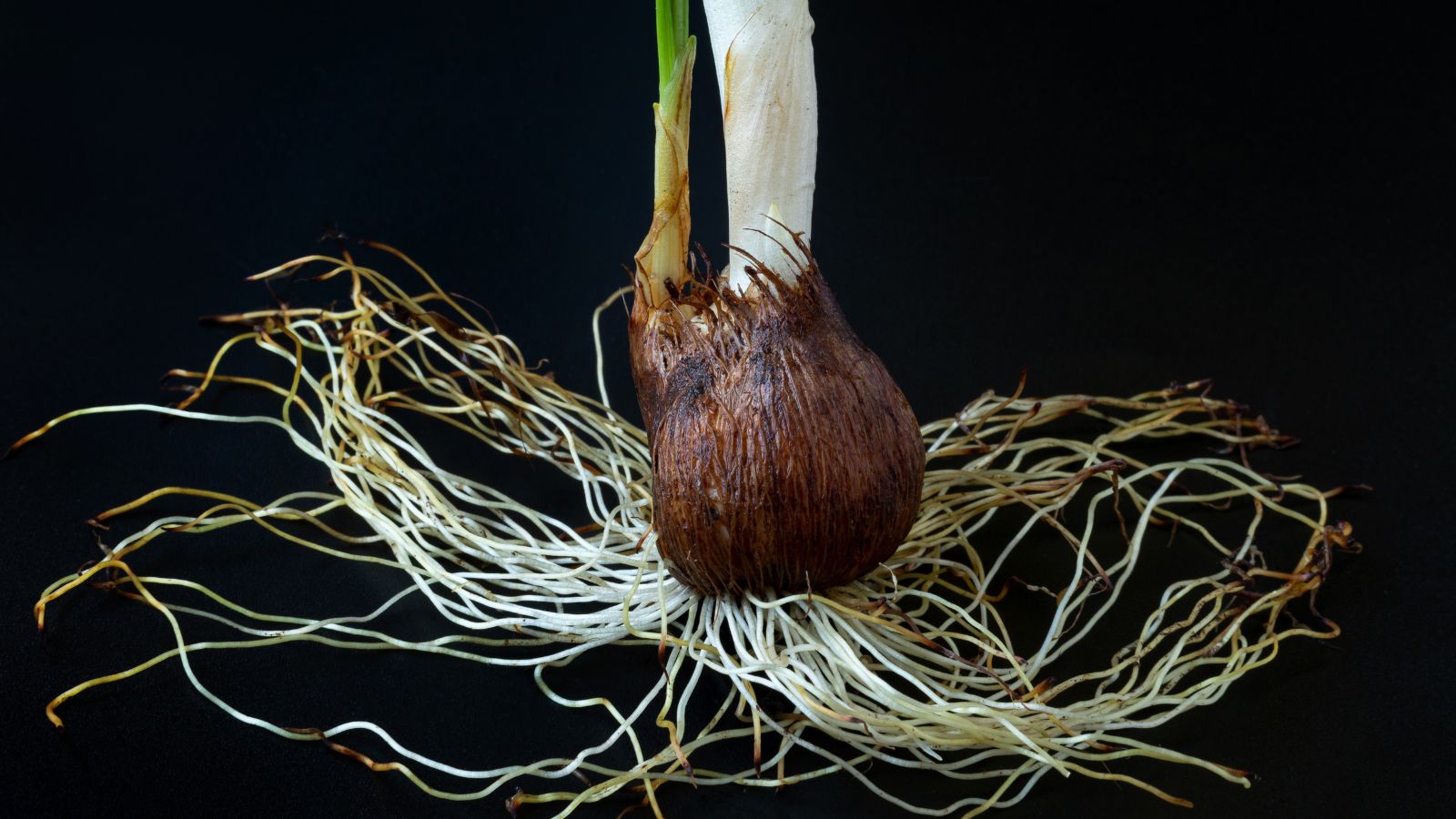
While saffron crocus is fortunate to have relatively few disease issues, corm rot is a definite concern in soils that retain too much moisture. Corm rot is a collective term for several fungal diseases, including Rhizopus, Aspergillus, Penicillium, and Fusarium. These pathogens cause the corm and foliage to rot, often turning them yellow or brown in color.
Much like root rot, these diseases can be prevented by planting saffron crocus in well-draining soil and avoiding excessive watering.
Frequently Asked Questions
Where does saffron grow best?
Saffron grows best in well-draining soil with full sun and a moderate amount of nutrients.
Is it profitable to grow and sell saffron?
It can be profitable to grow and sell saffron. However, as much of the cost is from the labor-intensive process of harvesting, that will be a big factor in its profitability.
Is saffron easy to grow?
It’s pretty simple to grow saffron crocus if you have a sunny location with well-draining soil.