How to Plant, Grow, and Care For Horseradish
Horseradish shouldn’t be relegated to that jar at the back of the fridge you never look at or open. This root vegetable, commonly used as a herb or condiment, is great in the garden – especially for beginners. Gardening expert Madison Moulton looks at all the essentials for growing horseradish – including how to contain them, and what to do with your harvest.

Contents
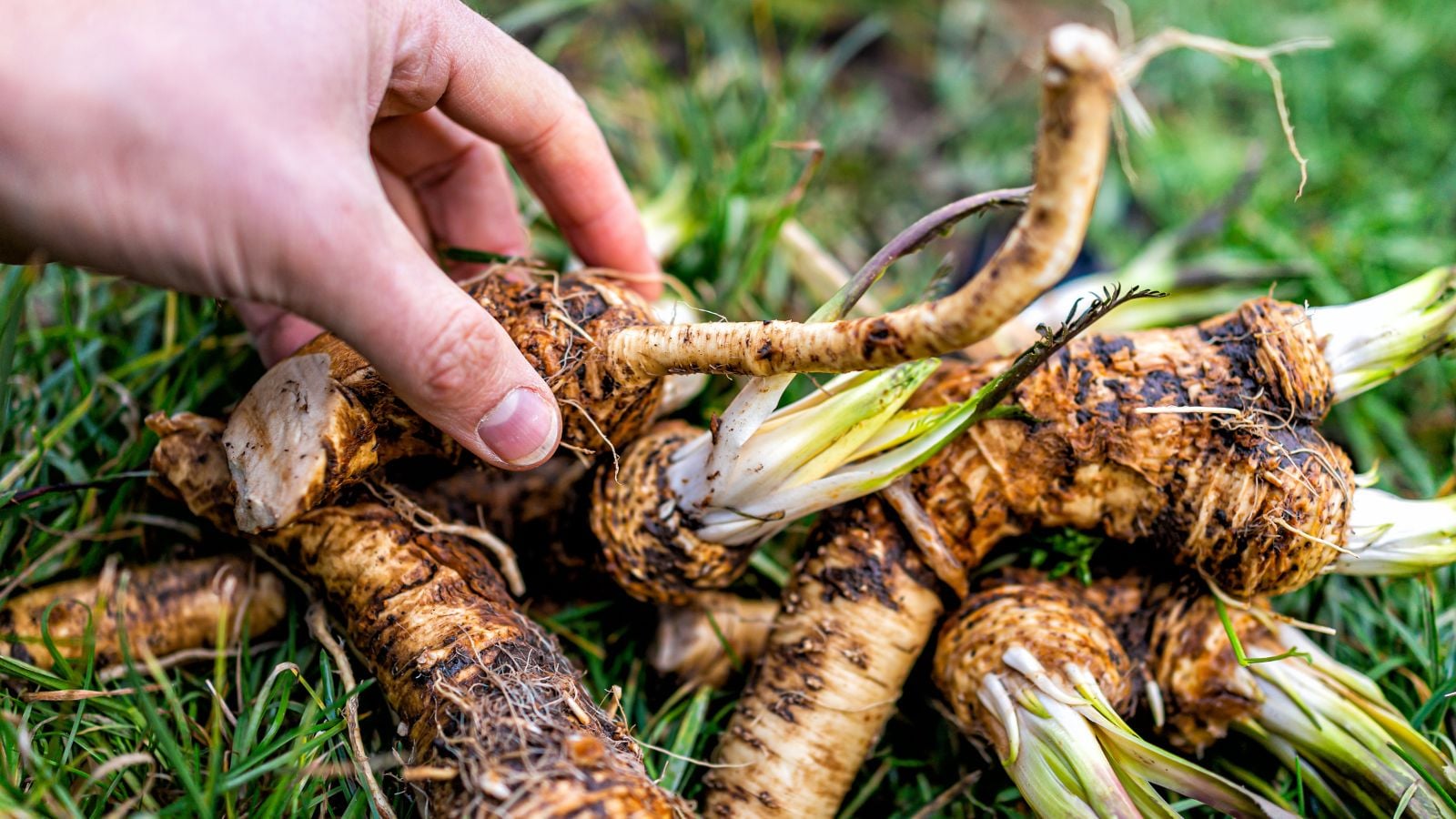
Although horseradish is not a common ingredient in many home kitchens, most people recognize this pungent root vegetable used as an herb for its sharp flavor. Whether canned or grated fresh, horseradish delivers a bold, unmistakable taste that is strong yet undeniably appealing.
That flavor reaches its peak when harvested fresh from the garden. Horseradish is a popular perennial vegetable thanks to its vigorous growth habit. It grows so readily with little to no care that many gardeners consider it invasive. Removing established plants often proves far more difficult than planting them in the first place.
Beyond its distinctive taste and ease of growth, horseradish also offers a long history of health-related uses, with records of its role in traditional medicine dating back hundreds and even thousands of years. Growing horseradish at home adds both dietary variety and visual interest to the garden.


Horseradish Plant Overview

|
Plant Type
Perennial Root Vegetable
Family
Brassicaceae
Genus
Armoracia
Species
Armoracia rusticana
Native Area
Europe/Asia
Hardiness Zone
USDA 3-9
|
Exposure
Full Sun or Partial Shade
Maturity Date
8-10 Months
Plant Spacing
1-2 feet
Planting Depth
2-3 inches
Height
5 feet
Heat Tolerance
Moderate-High
|
Watering Requirements
Moderate
Pests
Cabbage Looper, Flea Beetle
Diseases
Bacterial Leaf Spot, White Rust
Maintenance
Low
Soil Type
Nutrient-rich, Well-draining
Plant With
Keep Separate
|
What is Horseradish?
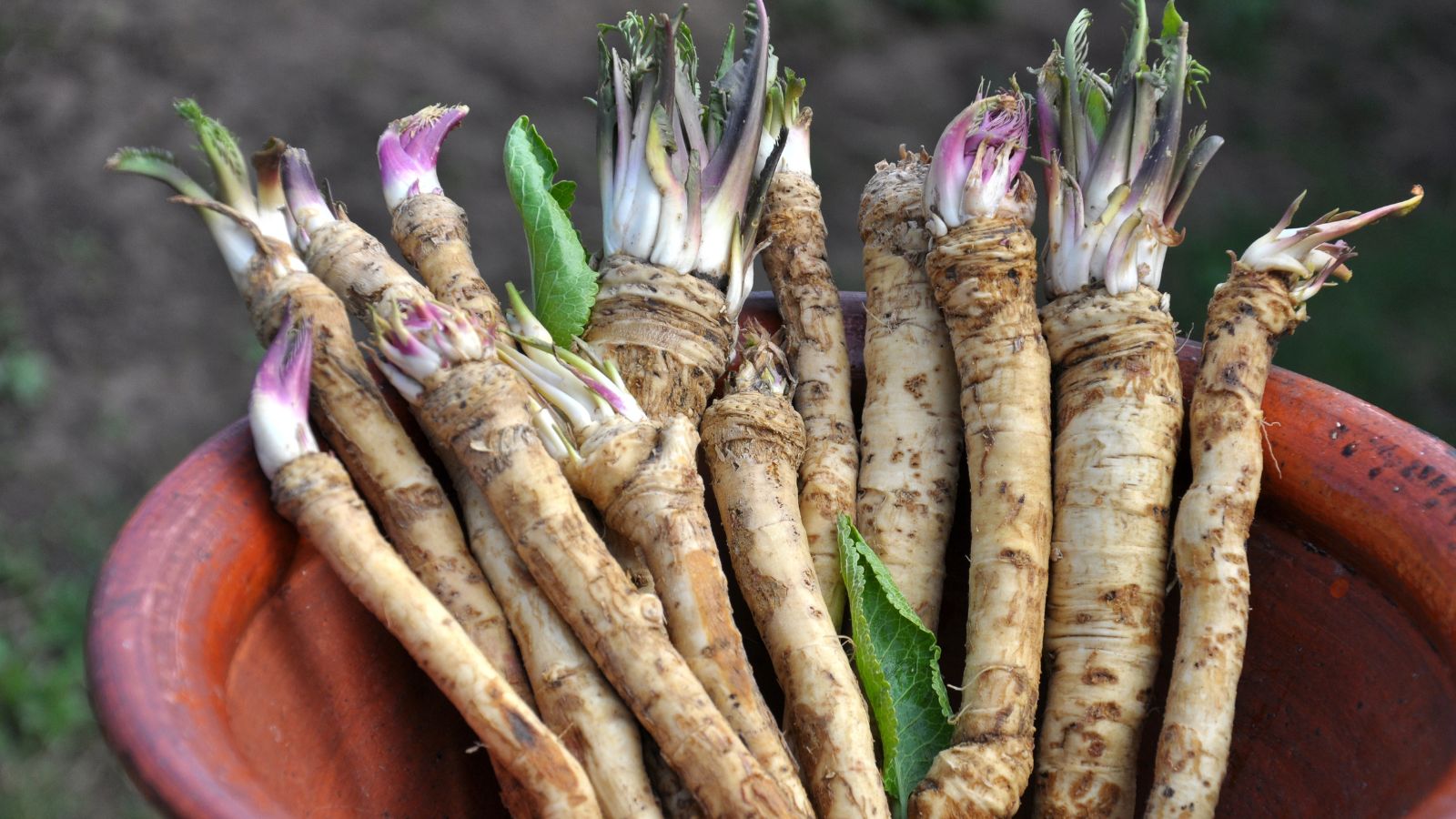
Like many common herbs and spices with medicinal benefits, horseradish history stretches back centuries, well beyond detailed written records. Much of its early past is wrapped in myth and misinterpretation, including the belief that it played a major role in ancient Egypt. Even so, the documented history of horseradish remains compelling.
Written records of horseradish first appear in ancient Greece, where people valued the root for its medicinal properties. The Roman naturalist Pliny the Elder recommended horseradish in his work Natural History. The plant also appears in Greek mythology, where the Oracle of Delphi reportedly told Apollo that horseradish was worth its weight in gold.
People primarily used horseradish as medicine during the Middle Ages. It treated a wide range of ailments, including coughs and digestive complaints. As travel increased during the Renaissance and the Age of Exploration, horseradish spread across Europe during the fifteenth and sixteenth centuries. During this period, it gained popularity as a spice and condiment, especially when paired with meat dishes for its intense flavor. By the seventeenth century, horseradish was widely grown in Germany, Scandinavia, and Britain.
Around the same time, Europeans introduced horseradish to North America, where it quickly gained popularity. By the eighteenth century, gardeners commonly grew it in home plots, and historical records note that both George Washington and Thomas Jefferson cultivated horseradish.
More than 200 years later, horseradish remains culturally and culinarily relevant. It continues to play a role in Jewish tradition as part of the Passover Seder plate and is still used in herbal remedies. Growing horseradish in your own garden helps preserve a small but meaningful piece of this long and fascinating history.
Cultivation

Horseradish is grown for its long roots and unique chemical makeup that gives the plant its signature heat. The root contains glucosinolates, which break down into isothiocyanates when the tissue is damaged through grating or chopping. Most commercial horseradish production takes place in Europe, where the vegetable is used most frequently.
In home gardens, horseradish can become invasive due to its aggressively spreading taproots that grow deep into the soil. Older roots turn woody and inedible over time, but they support the growth of new, tender roots that produce fresh foliage each season. Even the smallest piece of root left behind can develop into a full plant, which makes complete removal difficult once established.
Gardeners often manage this vigorous growth by planting horseradish in containers or restricting it to a clearly defined area of the garden. Regular harvesting helps limit spread but rarely stops it entirely. While some gardeners see this growth habit as a drawback, others appreciate it. Plant horseradish once and you can harvest it for years. Its rapid growth and minimal care requirements also make it a good option for beginners.
Planting
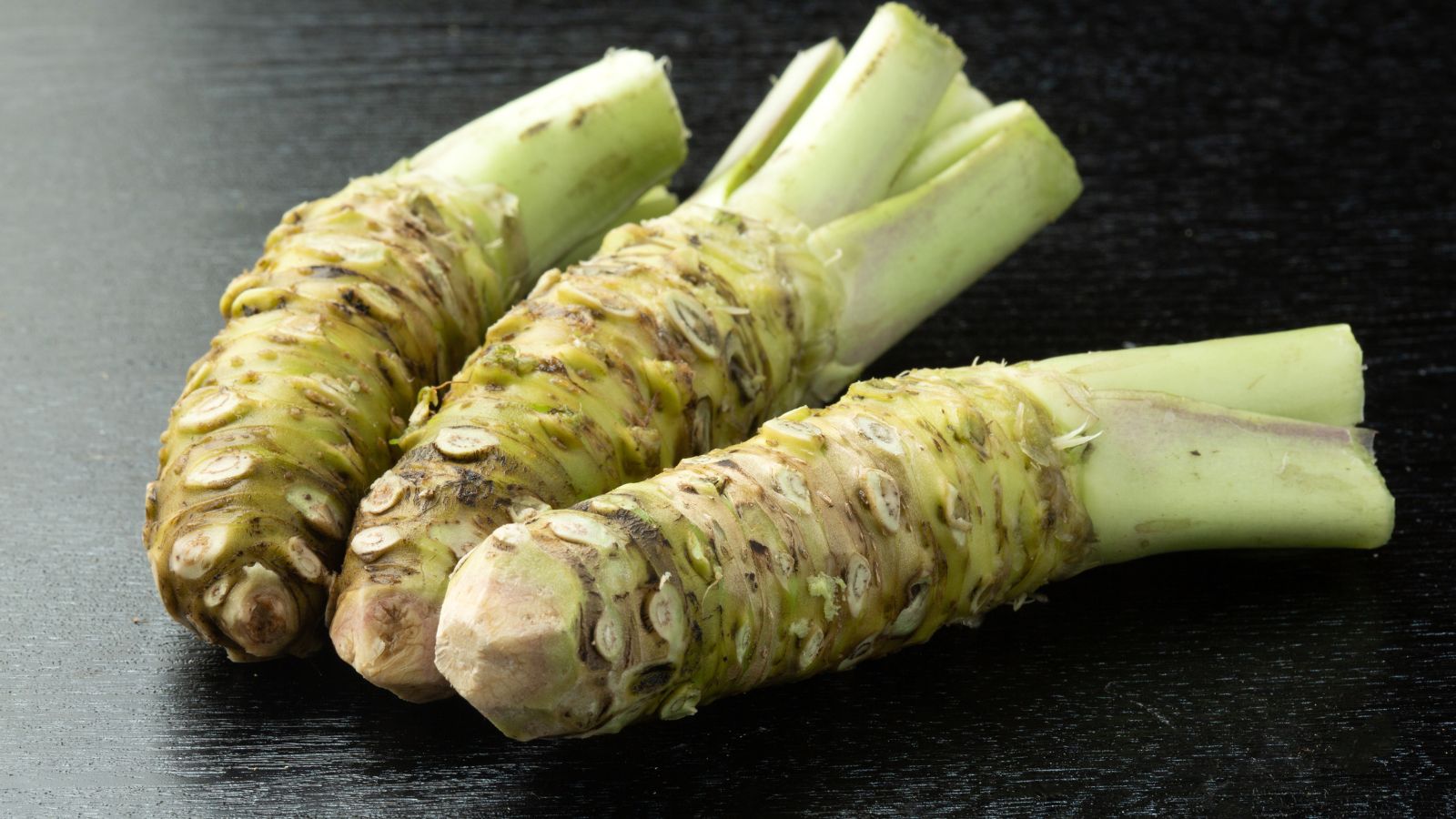
Planting horseradish can be as simple as placing the root in the ground and letting it grow. However, a few key factors help keep plants healthy and productive.
Soil preparation matters most. As a root vegetable, horseradish relies on loose, well prepared soil for proper development. Loosen the soil at least 10 inches deep to encourage strong root growth and amend generously with compost. Remove weeds, stones, or debris that could restrict the roots as they expand.
After preparing the soil, plant roots one to two feet apart. Position each root correctly, as horseradish will not grow upside down. Nursery-grown sets usually make this easy to identify, with the bottom end cut at an angle and the top end left square.
Plant the roots at a slight 45° angle to give them room to grow without competing with neighboring plants. Keep all roots oriented in the same direction to make harvesting easier later on.
Once positioned, cover the roots with about two inches of soil and press gently to secure them in place.
Follow the same steps when planting horseradish in containers. Choose a container deep enough to accommodate the long roots without crowding, ideally at least 25 inches deep.
How to Grow
Horseradish tolerates such a wide range of conditions that it is almost impossible to grow incorrectly. When gardeners say “plant it and forget it,” they mean it literally. You may even forget about it when the foliage dies back in winter, only to be greeted by vigorous green growth again in spring.
If you want to produce the best possible roots, a few growing conditions are worth considering. However, these guidelines do not need strict adherence, as horseradish will grow successfully in most locations.
Light

Horseradish grows best in full sun. Ample sunlight improves root development, resulting in larger, more flavorful roots at harvest. The plant also grows in partial shade, but reduced light limits root size and overall yield. If you are growing only one or two plants and want a substantial harvest, prioritize a full sun location.
If suitable garden space is limited, grow horseradish in containers. Container planting helps control its aggressive spread and allows you to adjust placement throughout the day to maintain full sun exposure as the sun shifts.
Water

Water regularly while plants are young to encourage fast growth and healthy root development. Once established, horseradish becomes relatively drought tolerant and does not require large amounts of water.
If the soil stays dry for extended periods, the roots can turn woody and unpleasant to eat. This does not harm the plant long term, as new growth will emerge from older roots, but it will compromise your harvest. Water as the soil begins to dry to keep both roots and foliage in good condition.
Avoid overwatering. Excess moisture in the soil can cause root rot and promote diseases that permanently damage plants. It is safer to underwater slightly than to overwater.
Soil

Horseradish grows in a wide range of soils, even those considered poor quality. However, it performs best in well-prepared conditions. For thick, healthy roots and a productive plant, soil quality matters most.
The soil should be very loose and well-draining. This reduces resistance, allowing roots to grow downward easily, and prevents waterlogging that leads to root rot. Soil pH has little impact on overall growth, but horseradish prefers slightly acidic to neutral soil rather than strongly alkaline conditions.
Amend the soil with plenty of compost before planting and continue adding it regularly. Compost improves soil structure, supports beneficial organisms, and supplies nutrients that directly enhance root development and overall harvest quality.
Climate and Temperature
These plants prefer cooler temperatures. Cold soil over winter improves root flavor, so harsh winters do not pose a problem. Frost also causes no lasting damage. It may kill the foliage, but the roots remain alive in the soil and return the following season.
Horseradish grows best in USDA Zones 4 to 7 or 8. It can sometimes grow successfully in Zone 3 or Zone 9 when conditions are adjusted for optimal growth. In general, cool to moderate climates suit this plant best, although horseradish adapts well to a wide range of growing conditions.
Fertilizer

Fertilizing horseradish is not essential, as these plants grow well without added nutrients when planted in suitable soil. Regular compost applications before planting and throughout the growing season improve soil health enough to support strong root development.
Gardeners looking to increase yields or improve growth in nutrient-poor soils can apply a balanced vegetable fertilizer at the start of spring. Vigorous leaf growth during spring and summer signals healthy development, as the plant directs energy into foliage early in the season before shifting to starch storage in the roots as leaves die back in fall.
Maintenance
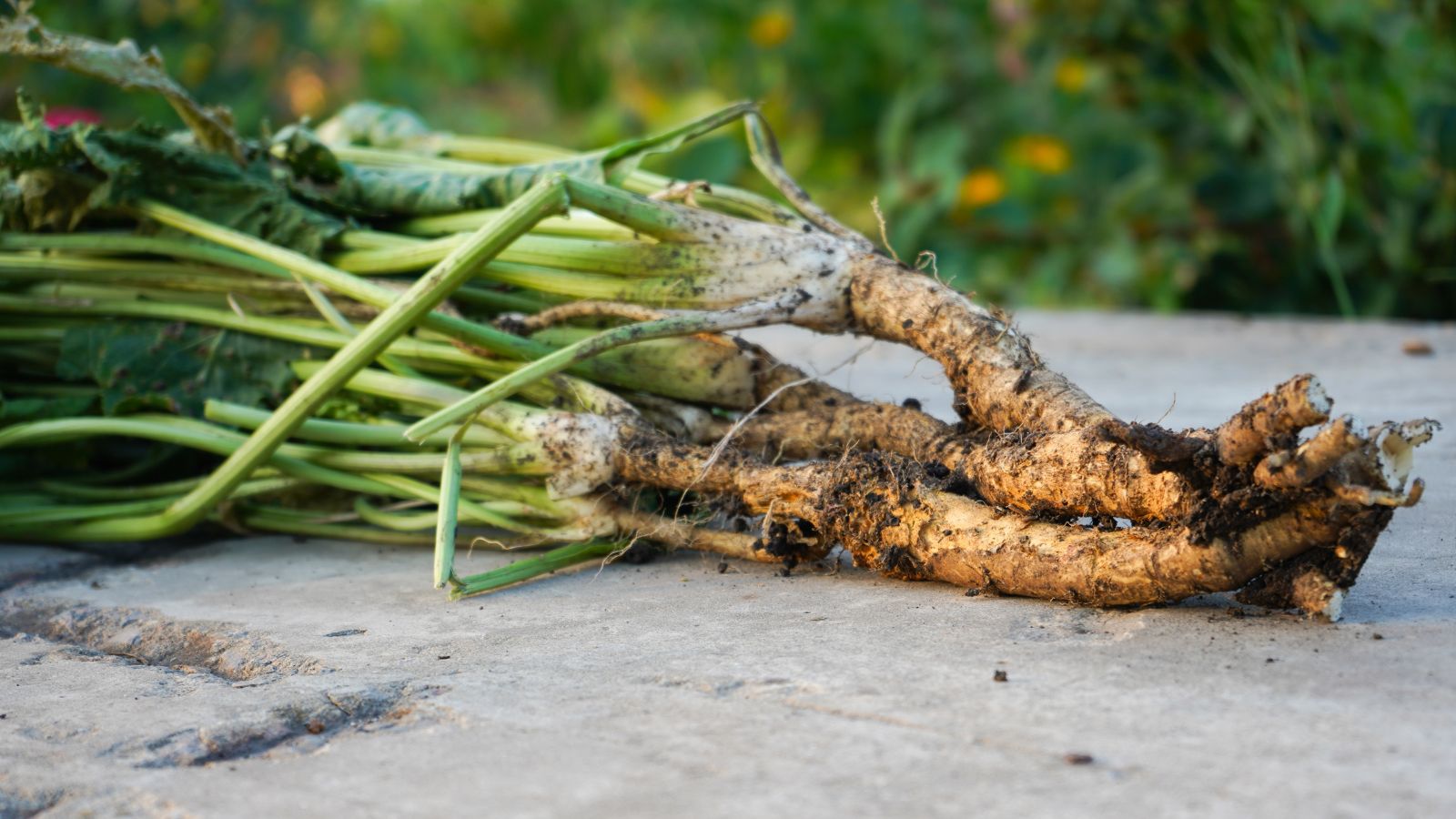
Horseradish requires very little maintenance, which makes it an excellent choice for beginners or gardeners who prefer a low effort approach. Regular weeding during the early stages of growth supports healthy root development, but beyond that, these plants need minimal attention.
Rather than ongoing care, control becomes the most important task. Keeping horseradish confined to its designated area can be challenging. Monitor its spread closely and harvest or divide plants as needed to prevent it from overtaking the surrounding garden.
Propagation
If you want to grow more horseradish plants faster than they spread naturally, propagation is incredibly easy. Horseradish ranks among the easiest garden plants to propagate, as even the smallest piece of root can quickly develop into a full plant.
Gardeners most commonly propagate horseradish by division. This method also helps manage plants that have spread too aggressively or become overcrowded. Divide the roots and replant them in containers or another area of the garden to continue growing.
Propagating by Division

To propagate horseradish, begin by preparing the soil. As a root vegetable, it needs a site that is completely free of weeds and enriched with plenty of organic matter for healthy growth. When growing in containers, use a light growing medium, ideally amended with a peat alternative or perlite, to prevent waterlogging and root rot.
Lift the plant gently from the soil using a fork. Take care not to damage or break the roots, as any pieces left behind will likely regrow. Once lifted, cut either at the crown or along the root, depending on the season.
In colder regions, crown cuttings help plants establish more quickly before foliage dies back. After cleaning and drying the roots, split the plant vertically, making sure each section has a healthy amount of foliage. Plant these divisions deeply back into the soil.
In warmer regions, root cuttings work well and often produce more plants. Take cuttings once the foliage dies back in fall. Cut roots into six-inch sections and plant each piece one to two feet apart. By spring, new leaves should emerge from the planting sites, signaling successful establishment.
Harvesting
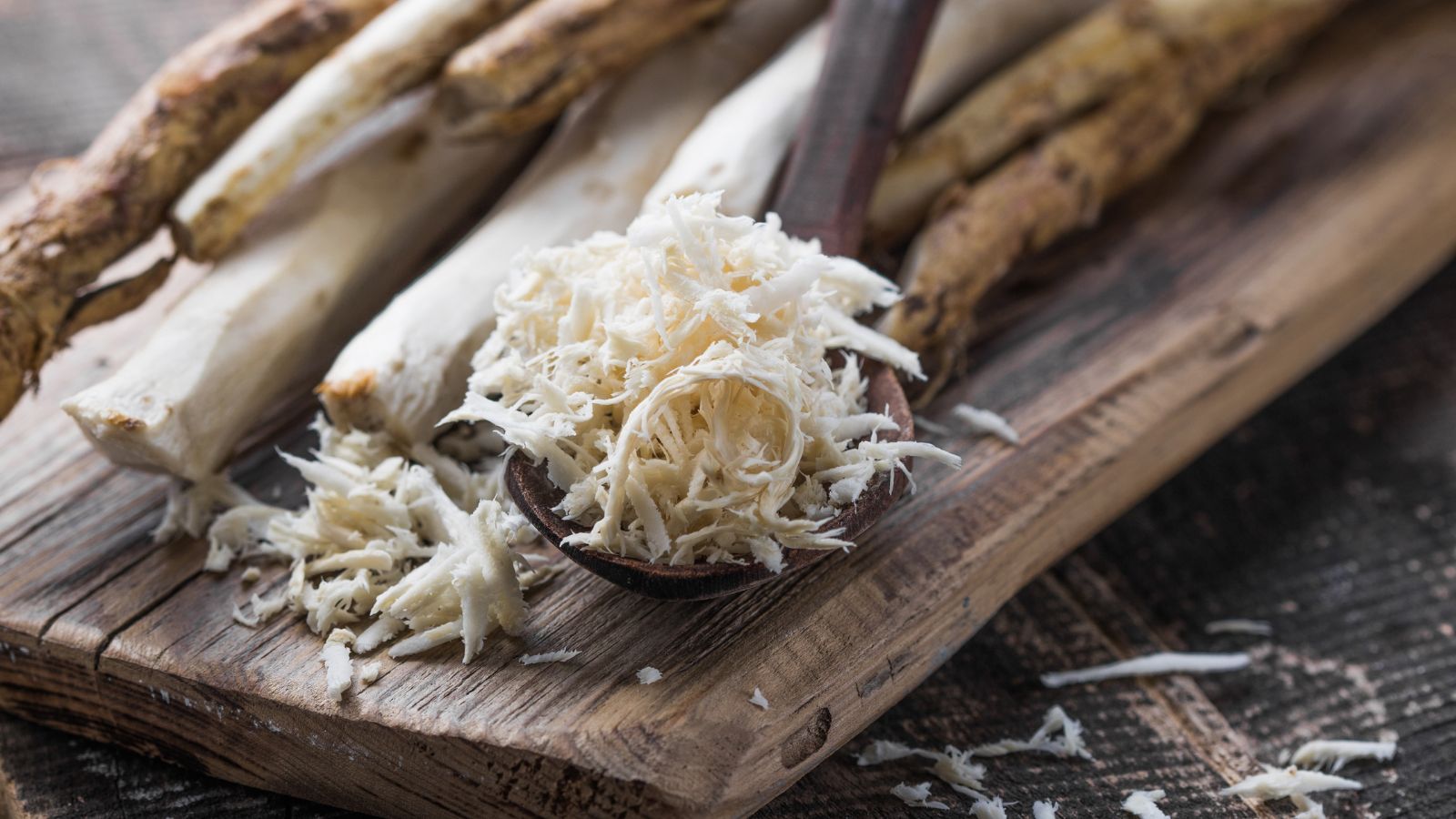
Horseradish needs time to establish, at least one season and ideally two. Harvest as needed, preferably in spring or autumn for the best flavor, by loosening the soil with a garden fork. Follow the direction of the root as you work, loosening the soil gradually to make removal easier. If you do not want horseradish to return the following season, remove the entire root along with any smaller root pieces that break off during harvest.
After harvesting, scrub the roots clean and allow them to dry. Store them in the refrigerator for several months in a plastic bag or sealed container.
You are unlikely to struggle with harvesting itself. The bigger challenge is often ending up with more horseradish than you know what to do with.
Preservation

Fresh horseradish pulled from the garden should last at least one to two months in the refrigerator without any preparation. For this reason, it is best to avoid harvesting all plants at once and instead pull roots as needed in spring and autumn. However, if you remove all plants to make space for something new and need to store horseradish long term, several preservation options are available.
Freezing is the easiest preservation method. Horseradish roots freeze exceptionally well and retain their flavor for several months. Freezing also makes grating easier when you are ready to use the root. Stored this way, horseradish will last at least six months in the freezer without any loss of taste.
For a more pungent preservation option, use vinegar. Grate the root or cut it into sticks or cubes and place it in a sterilized jar. Cover with white vinegar and add a small pinch of salt.
Grating releases the compounds responsible for horseradish’s heat, so the longer the root sits before adding vinegar, the stronger the flavor becomes. For the most intense result, chop the roots and process them in a food processor before transferring them to the jar.
Plant Uses
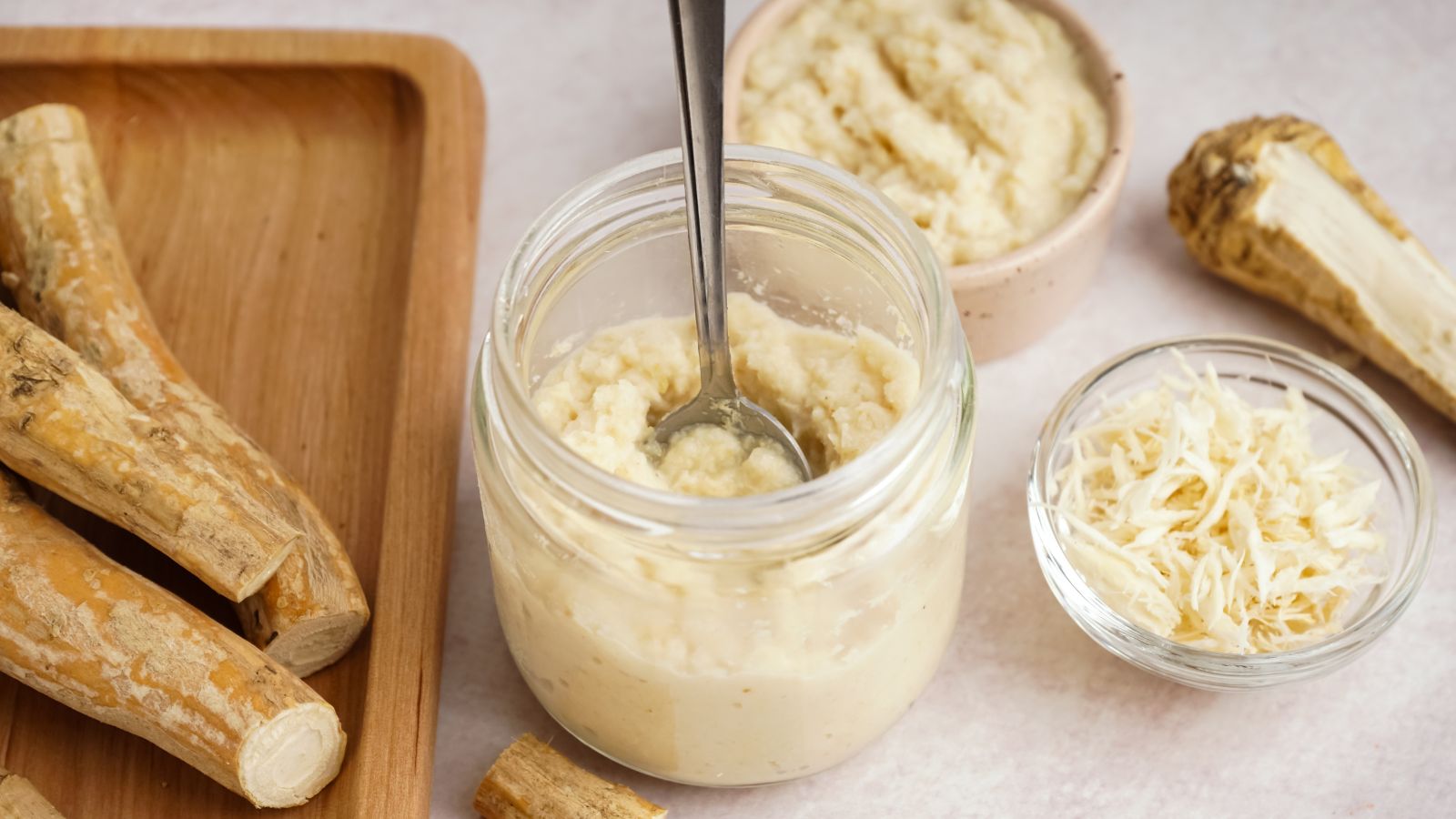
Horseradish was first valued historically for its perceived medicinal properties. While more research is needed to confirm its full medicinal potential, small studies suggest horseradish root may offer several health benefits.
The compounds responsible for horseradish’s pungent flavor may help protect against cancer. Other compounds act as antioxidants that reduce overall disease risk. Isothiocyanates also show antibacterial activity against harmful bacteria such as salmonella. Horseradish is commonly used to relieve cold and flu symptoms thanks to its strong, sinus-clearing effect.
Despite these benefits, most people value horseradish for its bold flavor above all else. It is a common ingredient in sandwiches, dressings, and sauces, and is most often processed into a condiment. You can also mix it into mayonnaise or sour cream to create a side with extra heat.
For a fun project, use horseradish to make homemade ‘wasabi’. The paste commonly served with sushi rarely contains true wasabi, which is difficult to grow and expensive. Instead, it usually relies on horseradish, often called mock wasabi. To make your own, combine processed horseradish root with mustard powder and English mustard, then add a small amount of green food coloring to mimic the traditional appearance.
Common Problems
Horseradish is not particularly prone to pests, and most gardeners encounter few disease issues. However, as a member of the Brassicaceae family, it shares several pests and diseases with other vegetable crops such as cabbage, broccoli, and kale. If these plants grow nearby and become infected, pests or diseases can easily spread between them.
Watch for early signs of problems and rely on preventative practices such as proper watering and good garden hygiene to reduce the risk of infection.

Pests

Two common pests find horseradish foliage particularly appealing: cabbage loopers and flea beetles.
The cabbage looper gets its name from the plants it feeds on, primarily those in the cabbage family. This small green caterpillar can cause significant damage despite its size by feeding heavily on horseradish leaves. Chewed foliage may die back, which slows growth and weakens the plant. You can control cabbage loopers by picking them off by hand and removing them from the garden area.
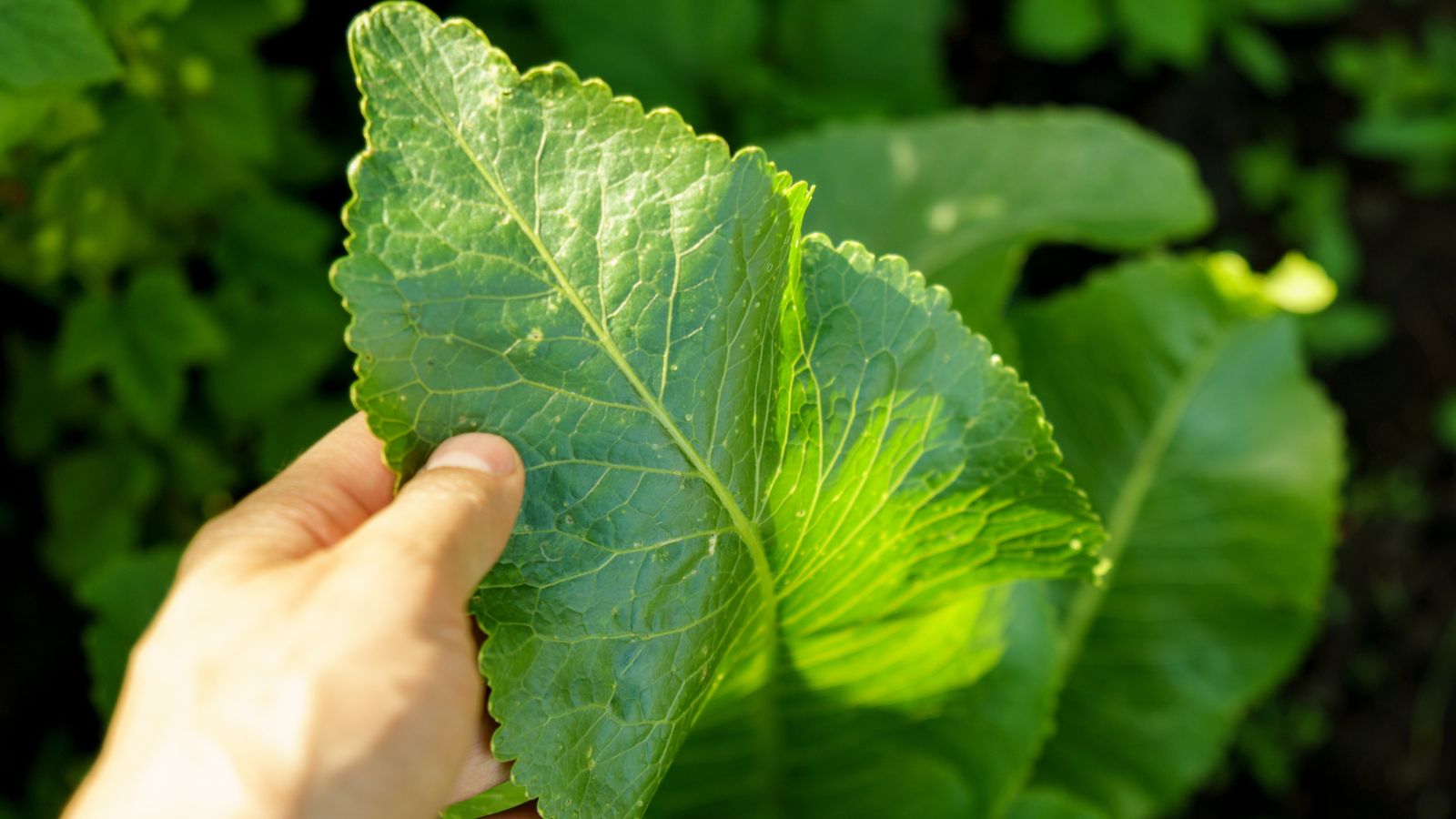
Flea beetles are much harder to detect. These insects create tiny holes in the large leaves, and infestations often go unnoticed for long periods. Horseradish tolerates moderate damage, but heavy feeding can eventually cause foliage to die back.
Flea beetles target young, tender leaves, which makes early growth stages the most vulnerable. Apply a thick layer of mulch to prevent beetles from emerging from the soil and use neem oil to help manage active infestations.
Diseases
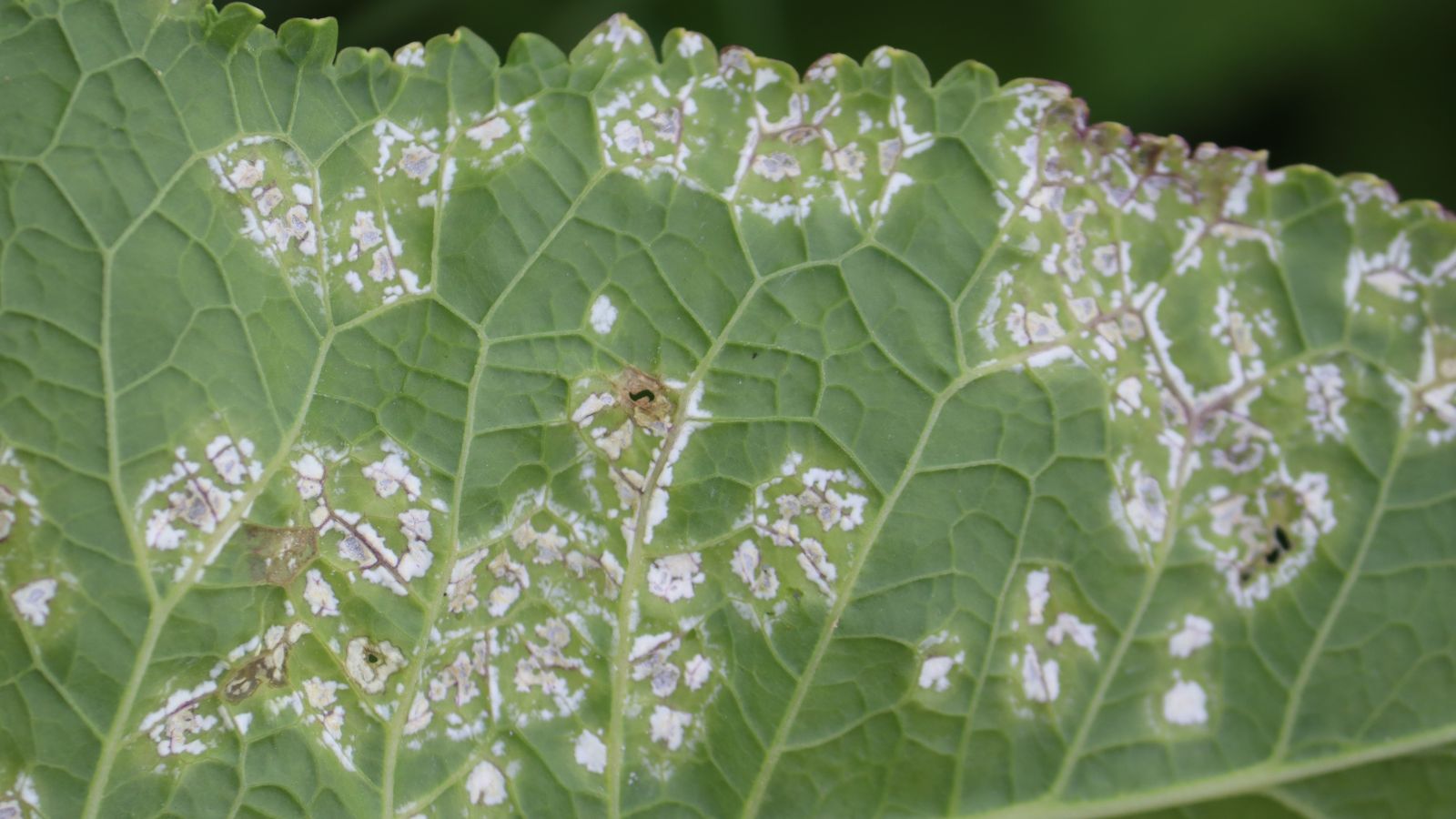
Horseradish is susceptible to several common garden diseases, including bacterial leaf spot. This disease is caused by the bacteria Phytomonas campestre armoraciae. Symptoms begin as small, translucent spots that eventually darken and turn black. As the disease progresses, leaves may curl inward and dry out due to damage to the leaf veins.
Bacterial leaf spot appears most often during wet weather and thrives on plant debris. Keep the planting area clear and ensure good drainage to reduce the risk of infection.
White rust is another disease you may encounter. This fungal infection affects the leaves, causing yellow patches on the upper surface and creamy white spots on the undersides. The fungus can persist in contaminated soil or spread by wind and favors wet, rainy conditions. Always water at the soil level rather than overhead, and remove surrounding plant debris to improve airflow and limit disease spread.
Other diseases to watch for include brittle root, Cercospora leaf spot, and Ramularia leaf spot. Preventative care plays the most important role in disease management. Maintain good garden hygiene and monitor plants regularly, as preventing disease is far more effective than trying to control a well-established infection.
Frequently Asked Questions
Can I eat horseradish leaves?
Some gardeners may choose to cook with the leaves, but they are rarely used. This plant is prized for its roots. Sources occasionally list the leaves as toxic, but others argue they are no more toxic than the root itself due to the compounds contained in the plant.
Ingestion of the leaves in small amounts is unlikely to cause any problems, but excessive ingestion of any part of the horseradish – including its beloved roots – is considered toxic or harmful to the body.
Will horseradish grow in a pot?
Horseradish can be grown in a pot if it is large enough. As the roots are the main attraction, they need plenty of space to expand outwards and downwards. Growing in pots is often a preferred method in home gardens because it stops the plant from becoming invasive.
Are horseradish and mustard related?
Horseradish and mustard are often confused as they have a similar spicy kick with a vaguely similar flavor. These plants are indeed part of the same plant family – the cabbage family. But horseradish is one particular plant (Armoracia rusticana) while mustard comes from a number of different plant species like Sinapis alba or Brassica juncea.
Is horseradish toxic to pets?
The degree of danger of horseradish ingestion when it comes to pets is not entirely clear – probably because your furry friends will likely stay far away from the plant anyway due to its intense flavor.
However, horseradish is listed as toxic to cats and dogs, causing mild to severe irritation. It is also toxic to livestock as it can cause inflammation that may be fatal. Rather save your horseradish leftovers for the fridge.





