15 Plants That Look Like Hearts for Valentine’s Day
Plants are the perfect Valentine’s Day gift! Whether for your family member, friend, or lover, they add year-round charm indoors and outside. Leaf through one of these 15 plants and select the best one for your special someone. Or, practice self-love and bring one home for yourself!


Contents
Heart shapes are surprisingly common in the plant kingdom! Leaves, flowers, and fruits often have a heart-like structure. Leaves most commonly have heart shapes, though a few special plant species display them in their flowers and fruit, making them the perfect Valentine’s Day gifts.
If your special someone has an orchard, a fruit or ornamental tree is a fantastic gift! Perennials and outdoor plants work well, too. If they live in an apartment, opt for a tender houseplant that grows well in a container. No matter where your loved one lives, there are heart-shaped Valentine’s Day plant options that’ll thrive in any home or garden.


Heart-Shaped Outdoor Plants for Valentine’s Day

Outdoor plants include trees, shrubs, and perennials that add a lovely charm to home gardens. They have heart leaves, flowers, and fruits. Look at the USDA hardiness zone ratings on each one to determine if they’ll work well with your local climate.
Bleeding Heart


|
common name Bleeding Heart |
|---|---|

|
botanical name Dicentra spp. |

|
sun requirements Partial to full shade |

|
height 1-2’ |

|
hardiness zones 3-8 |
Bleeding heart is the perfect perennial for this holiday! It sprouts heart-shaped flowers in lush hues of pink, red, and white. Dozens of cultivars and species exist, offering you the ultimate choice in selection. Try native varieties on the West Coast; the Pacific bleeding heart grows wild throughout shaded woodlands in the region.
Bleeding hearts prefer shady sites with little direct sunlight. You’ll find them available at nurseries around this time of year, as they’re an early spring bloomer. You may also gift seeds, though they’ll need to grow for many months before producing flowers. After growing in the ground, you can take flower cuttings from mature plants for Valentine’s Day bouquets!
Cyclamen

|
|
common name Cyclamen |
|---|---|
|
|
botanical name Cyclamen spp. |
|
|
sun requirements Partial to full shade |
|
|
height 4-12” |
|
|
hardiness zones 4-11 |
Cyclamen are low-growing spreaders with heart-shaped leaves and bright pink blossoms. Some types, like the Persian cyclamen, grow well in containers indoors. Most other varieties prefer cooler temperatures during the winter, thriving outdoors despite recurring frosts.
Persian cyclamen is most common in garden centers, though the outdoor species are available online and at specialty nurseries. Plant them in the shade garden and they’ll creep outwards each year, forming large swaths of colorful leaves and pink flowers.
Wild Ginger

|
|
common name Wild Ginger |
|---|---|
|
|
botanical name Asarum spp. |
|
|
sun requirements Partial to full shade |
|
|
height 6-10” |
|
|
hardiness zones 4-8 |
Heart lovers everywhere appreciate wild ginger! They emit a ginger fragrance and sprout ornamental foliage and blooms. Two main species are native to North America, Canadian and western wild ginger. Find Canadian ginger in the northern and eastern U.S. and western ginger in the Pacific Northwest and West Coast.
In addition to native species, two non-native types excel in home gardens. Panda face and Chinese wild ginger originate from China. Panda face ginger is especially showy, with giant white-black flowers that stand out among the leaves. The other types also have interesting flowers, though they hide below the leaves and lie low to the ground.
Grape

|
|
common name Grape |
|---|---|
|
|
botanical name Vitis spp. |
|
|
sun requirements Full sun |
|
|
height 5-30’ |
|
|
hardiness zones 4-10 |
What better way to say “I love you” on Valentine’s Day than with a fruiting, heart-shaped plant? Grape vines are the perfect gift, as they decorate bare gardens while producing edible fruit. Their leaves are big and heart-shaped, creating a lovely site in the yard. Hybrid cultivars sprout vines that are easy to cultivate, while native species provide habitat space, pollen, and fruit for local animals.
Many native grapes exist in the U.S., including frost grape and California grape. They’ll creep and ramble along the ground, creating a deciduous ground cover. They also grow well up trellises, dead trees, and arbors. Give them support and they’ll produce bushels of edible grapes year after year.
Peach

|
|
common name Peach |
|---|---|
|
|
botanical name Prunus persica |
|
|
sun requirements Full sun |
|
|
height 15-25’ |
|
|
hardiness zones 4-9 |
Peach trees are another fruit-bearing plant perfect for the season of love. The leaves and flowers don’t resemble hearts, though the fruits do! Peaches naturally have a curvy shape—when you slice them open, you can see their heart-shaped outlines.
Winter hardy to zone 4, peaches work well in North American backyards. Dwarf and semi-dwarf cultivars offer the ultimate selection; choose one that requires little maintenance and produces lots of fruit. That way, you give your special someone a gift that keeps on giving every harvest season!
Redbud

|
|
common name Redbud |
|---|---|
|
|
botanical name Cercis spp. |
|
|
sun requirements Full sun to partial shade |
|
|
height 16-30’ |
|
|
hardiness zones 4-10 |
Redbuds don’t grow edible fruit, though they sprout gorgeous flowers in early spring! Their pink blossoms emerge straight from the branches, creating lovely illusions of pink trees. After blooming, the leaf buds emerge with leaves that look like hearts. They flutter and flap in the wind, offering year-round ornamental interest.
Two main types of redbud originate in North America, the western and American redbud. Find them as potted trees at your local nursery. Choose the western redbud if you garden in the western states—it grows best in zones 6 through 10. The American redbud is a larger tree less tolerant of heat but more cold tolerant. Plant it from zones 4 through 9.
Catalpa

|
|
common name Catalpa |
|---|---|
|
|
botanical name Catalpa spp. |
|
|
sun requirements Full sun to partial shade |
|
|
height 30-70’ |
|
|
hardiness zones 4-9 |
Catalpas are giant shade trees ideal for big spaces. They grow tall and wide, sprouting some of the largest leaves of any deciduous tree. They have two top lobes and a point at the bottom, looking like hearts as they emerge from the branches.
The flowers are especially showy; they resemble pea flowers. After pollination, they evolve into large bean-like pods that hang from the branches from summer through fall.
Because catalpas are giant, it’s best to plant them where they have plenty of space to grow up and out. Two major species are native to the U.S., the southern and northern catalpas. Plant southern catalpas in warmer climates and northern catalpas in cooler ones.
Katsura Tree

|
|
common name Katsura Tree |
|---|---|
|
|
botanical name Cercidiphyllum japonicum |
|
|
sun requirements Full sun to partial shade |
|
|
height 40-60’ |
|
|
hardiness zones 4-8 |
The Katsura tree is like the redbud tree, which might be why Cercidiphyllum is the species’ name! Redbuds have the name Cercis, and the two trees resemble each other in form and shape. Unlike redbuds, the Katsura tree’s flowers are inconspicuous.
A Katsura tree is a great Valentine’s Day gift for a plant lover because it has lush, heart-shaped foliage. Each leaf looks like a heart, and its intricate veins form decorative patterns. In autumn, the foliage turns bright red, orange, and yellow. Though it looks its best in the fall, it’s also a great gift in the winter. The Katsura tree promises shade and beauty in the seasons to come!
Littleleaf Linden

|
|
common name Littleleaf Linden |
|---|---|
|
|
botanical name Tilia cordata |
|
|
sun requirements Full sun to partial shade |
|
|
height 50-60’ |
|
|
hardiness zones 3-7 |
Littleleaf lindens decorate large acreages across the country. You may see them lining the streets in cities’ downtown areas, though they’re often cultivars that tolerate urban conditions. Choose medium or small cultivars instead of the species if the yard is small. Littleleaf lindens reach 60 feet or higher with dense, pyramidal crowns.
Though the fall foliage isn’t as brightly colored as the Katsura tree’s, the green leaves look like hearts and sprout profusely! They offer much-needed shade during summer heat waves. Grant your littleleaf linden plenty of direct sunlight, well-drained soil, and room to grow tall and wide.
Heart-Shaped Houseplants for Valentine’s Day

Outdoor plants may not work for everyone. Not all of us garden outdoors, however, most of us have windows with light! A bright window is all you need to start cultivating houseplants. In the absence of natural light, grow lights work well as a Valentine’s Day gift alongside a heart-themed potted plant. They’ll ensure it survives no matter how dark the home is.
Sweetheart Plant

|
|
common name Sweetheart Plant |
|---|---|
|
|
botanical name Hoya kerrii |
|
|
sun requirements Bright, indirect light |
|
|
height 2-3’ |
|
|
hardiness zones 10-12 |
The sweetheart plant is one of the most popular heart-themed plants for Valentine’s Day. The leaves form the perfect heart shape. They look more like hearts than any other species on this list! Though gorgeous, many growers bring the hearts home and find they quickly decline.
Avoid heartache by giving the sweetheart plant what it needs. It prefers filtered light without direct sun rays, and well-drained soil with little water. Its foliage is succulent, holding onto water for when it needs it most. Ensure the soil doesn’t dry out, but add water once the soil surface dries.
Anthurium

|
|
common name Anthurium |
|---|---|
|
|
botanical name Anthurium spp. |
|
|
sun requirements Bright, indirect light |
|
|
height 1-4’ |
|
|
hardiness zones 11-12 |
Anthuriums have flowers that look like hearts, and the petals have red hues that match a heart’s color! Out of the flowers’ sheathe-like spathes emerge pollen-holding structures called spadices. They’re highly decorative, adding colorful charm to bare indoor spaces.
Anthuriums like lots of humidity, filtered sunlight, and warm temperatures. They’ll grow outdoors in warm regions without winter frost, spreading slowly to form moderate-sized clumps. Propagate mature plants by taking stem cuttings, or collect seeds for a chance at sprouting unique seedlings.
Heartleaf Philodendron
|
|
common name Heartleaf Philodendron |
|---|---|
|
|
botanical name Philodendron hederaceum |
|
|
sun requirements Bright, indirect light |
|
|
height 1-6’ |
|
|
hardiness zones 11-12 |
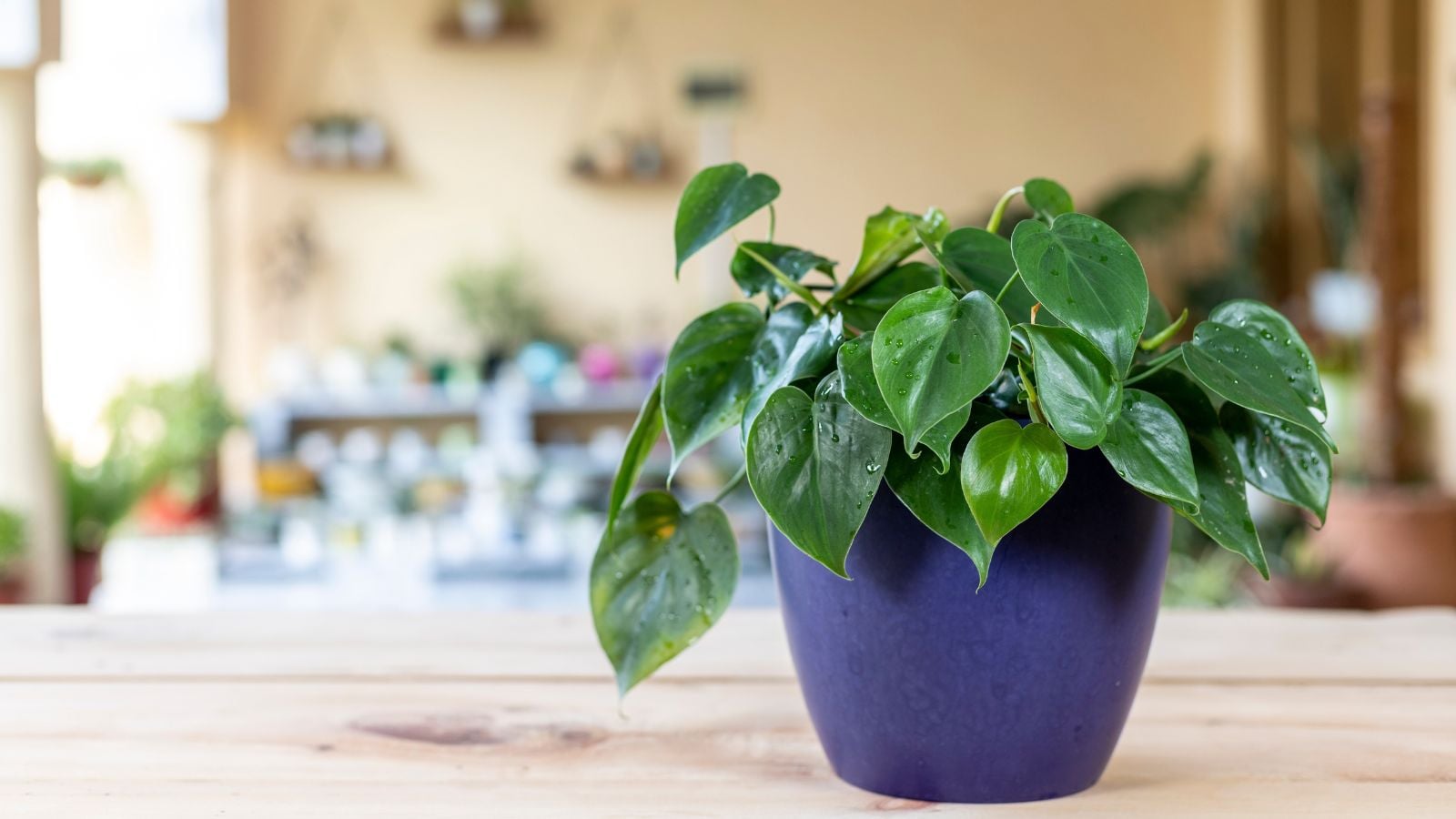
Vines make great presents too—they dangle and drape off hanging baskets, and their creeping vines will climb anything you let them. Drape them around other houseplants, or pin them up on the wall and have them grow across your home. Long vines propagate easily; simply snip a piece of the stem and place it in water.
Heartleaf philodendron has the word heart in its name, so you know exactly why it’s perfect for this holiday. The heart-shaped foliage comes in all sorts of colors. Grow the species Philodendron hederaceum for lush, green leaves, and choose a cultivar like ‘Rio’ or ‘Brazil’ for multi-color foliage.
Pothos

|
|
common name Pothos |
|---|---|
|
|
botanical name Epipremnum aureum |
|
|
sun requirements Partial to full shade |
|
|
height 1-40’ |
|
|
hardiness zones 10-12 |
Pothos are a lot like heartleaf philodendrons. These famous houseplants grow green heart-like leaves off of rambling stems that root freely in water or soil, offering longlasting beauty beyond Valentine’s Day.
Pothos have yellow splashes on their green leaves, offering more color than the green-leaved heartleaf philodendron. Pothos tolerates lower light levels too, working well in dark homes more than most other houseplants.
If you’re looking for a plant to gift a beginner grower, this one is it. It’s easy to cultivate, hard to kill, and it performs well in a wide range of conditions. The plants live for many years, offering you gorgeous foliage for little in return.
Chain of Hearts

|
|
common name Chain of Hearts |
|---|---|
|
|
botanical name Ceropegia woodii |
|
|
sun requirements Bright, indirect light |
|
|
height 1-12’ |
|
|
hardiness zones 10-12 |
Chain of hearts is another vining spreader like pothos and heartleaf philodendron, though it sprouts small, heart-like succulent leaves off thin stems. The stem can reach up to 12 feet long in their native habitat, though they’ll stay much smaller indoors.
Easy to care for, this succulent vine grows slowly under filtered sunlight. It propagates easily from stem cuttings, growing new plants that resemble the parent. Some cultivars exist, though the species type has lovely variegation that stands out on its own!
Heartleaf Fern

|
|
common name Heartleaf Fern |
|---|---|
|
|
botanical name Hemionitis arifolia |
|
|
sun requirements Bright, indirect light |
|
|
height 6-10” |
|
|
hardiness zones 10-11 |
Ferny foliage adds delicate charm to indoor spaces, providing a lush focal point against bare walls. Though this plant is more fussy than the others on this list, its heart-like leaves are well worth the trouble. Find potted plants at nurseries, houseplant shops, and online from specialty retailers.
Once you find the perfect heartleaf fern, give it a spot with warm temperatures and indirect sunlight. Avoid drafty sites near heaters or doors, and keep the soil consistently moist. Leaf drop may occur after transitioning the plant. Grant extra humidity with a humidifier or pebble tray to safeguard against further leaf drop.