Harvesting Potatoes: How to Know When Your Potatoes Are Ready
Harvesting potatoes is a tricky task, since they're underground. This is your ultimate guide to knowing exactly when to dig your taters up.

Contents
Potatoes (Solanum tuberosum) are grown throughout the world as a nutritious, convenient, shelf-stable food. Potatoes are the #1 most-consumed vegetable in the Americas, Europe, and Asian countries. I cannot imagine life without potatoes, can you?
Potato cultivars vary in appearance, days to maturity, growth requirements, and culinary qualities. If you live in a temperate climate region like I do, if you plant potatoes in late April they will be ready for harvesting from mid-summer through early fall.
You’ll have the best results with your potato harvest if you choose cultivars best suited for your local growing conditions and culinary interests.
So, let’s get into how to harvest homegrown potatoes!
How Can I Tell When Potatoes Are Ready to Harvest?

Potato growth is typically divided into five phases, which is helpful for understanding when potatoes are ready for harvest.
During the first phase, sprouts emerge from the seed potato varieties you’ve chosen, and root growth begins.
During the second phase, photosynthesis begins as the plant develops leaves and branches.
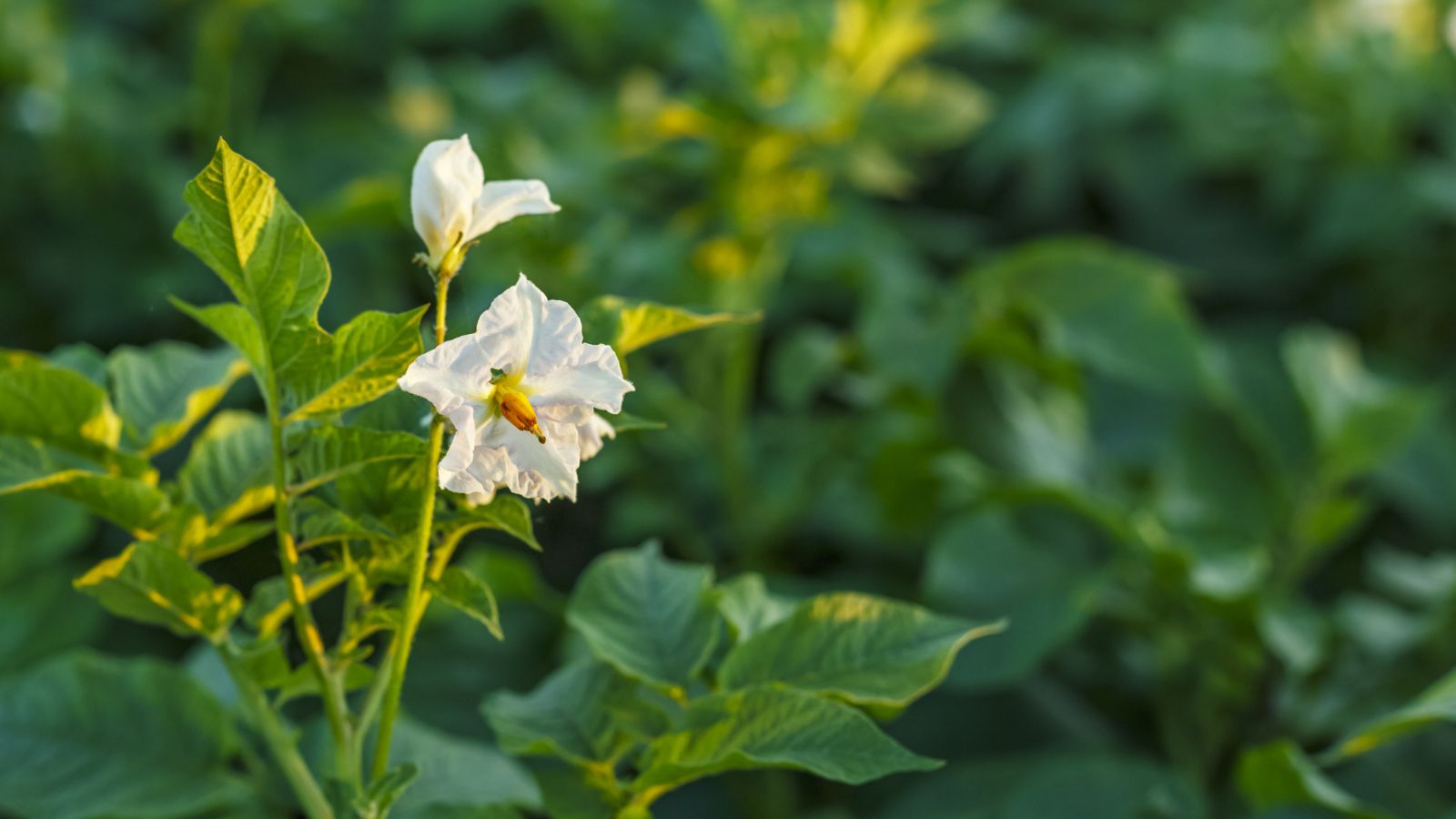
In the third phase, new tubers develop as swellings of the stolon. Usually the potato plant flowers develop during this phase.
During the fourth phase, tuber bulking occurs, and the plant begins investing the majority of its resources in its tubers. New potatoes can be harvested during this phase.
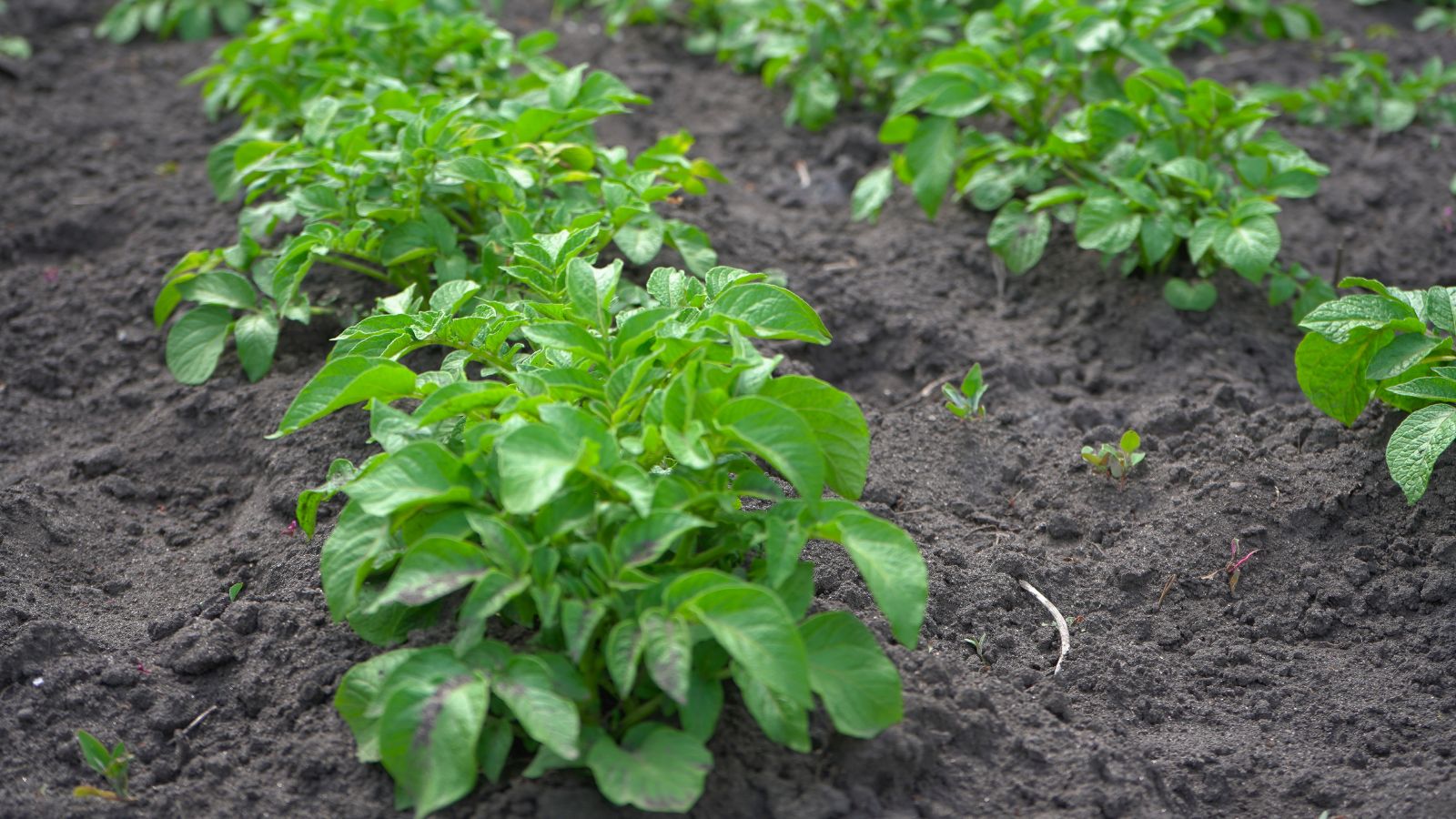
The fifth phase signals the maturation of the tubers—time to harvest potatoes. A clear visual signal of this is that the plant canopy dies back, and the tuber skins harden.
How Long Do Potatoes Take to Grow?
Potatoes are primarily a cool weather crop. They are grown in more than 100 countries in temperate, subtropical, and tropical conditions. The life cycle of your crop will vary based on the climate in which you live.
Say you live in West Virginia, which is in horticultural zone 6a. The white potatoes you plant will take about 135 days to become mature potatoes.
- Early potatoes require 60 to 100 cool days to reach harvest. Early potatoes are the best choice for southern regions where summers are very warm or hot.
- Midseason potatoes require 101 to 135 cool days to reach harvest. Late-season varieties require 135 to 160 cool days or light frost to reach harvest.
- Late-season potatoes are a good choice for northern regions where the weather stays mild all summer.
How Your Climate and Potato Variety Affect When to Harvest Potatoes
The minimum/maximum temperatures of your area and the variety of potato you choose to plant will be the main factors determining when to plant and how long it will take to grow them. Potatoes are planted in early spring in temperate zones and late winter in warmer regions. In tropical climates, potatoes grow best in the cooler months of the year.
In some sub-tropical highlands (such as central Europe, coastal northwestern North America, portions of southwestern South America, and small areas of Africa, southeast Australia, and New Zealand) that have mild temperatures and high solar radiation, you can grow them throughout the year. Under these ideal conditions (60 to 70°F), tubers can mature within 90 days. In cooler temperate climates such as northern Europe and Canada, it can take up to 150 days from planting for potatoes to be ready for harvest.
Potato cultivars will also differ in days required to reach maturity based on the access to light and soil conditions of your garden. Try to choose a planting cycle and potato variety that will mature in your garden setting when temperatures are mild, not above 80°F (27°C) and not below 40°F (4°C).
Harvesting New Potatoes

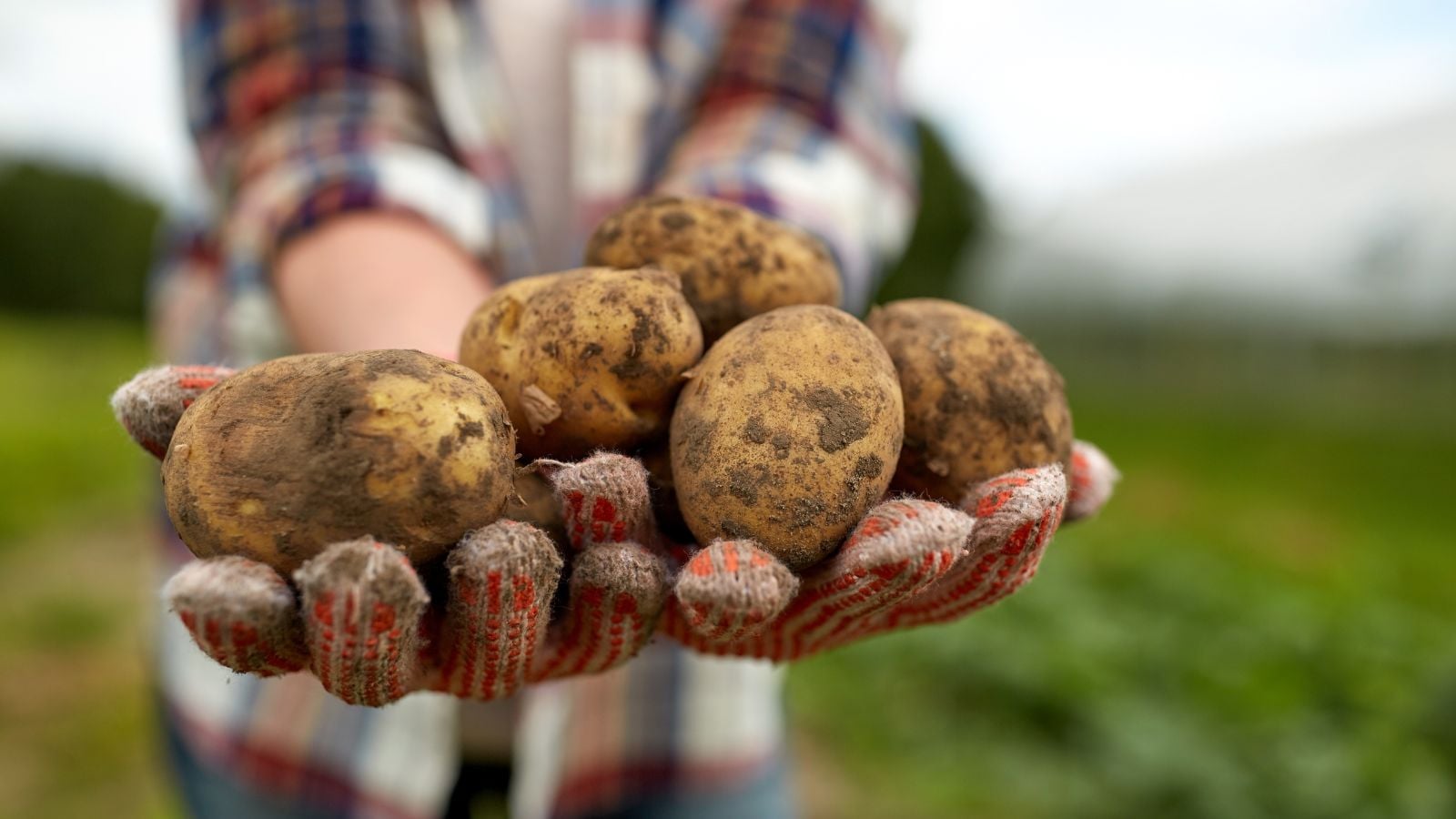
You can harvest “new” potatoes once the canopy flowers have bloomed, which is usually about six to eight weeks after the potato plants grow. These baby potatoes range from one- to two inches in diameter. Excavate lightly next to the plants and gently dig out a few potatoes from each plant.
Then, recover the hole to let the rest of the tubers mature. Planting in straw makes it easy to harvest a few new potatoes without killing the plant. Lift up the straw layer, remove a few baby potatoes directly under the straw, and then replace the straw layer.
Use new (young, picked early) potatoes quickly after you harvest because the thin, immature skins allow rapid moisture loss and disease pathogens can infect them more easily. Freshly harvested new potatoes can be stored in the refrigerator for up to one week. New potatoes can be harvested continuously while tubers continue to mature underground.
Harvesting Main Crop Potatoes

Potatoes that you plan to store and use through the fall and winter should be harvested when mature. Depending on the cultivar, you can plan for between 70 and 120 days to harvest potatoes when they’re mature. The yellowing or browning of the potato plant stem and leaves indicates that the tubers have reached maturity.
Stop irrigating your potato plants when the tops die back. To promote wound healing and tuber maturation, you can cut the plant tops off at the soil surface level using pruning shears. This is good practice in regions where wet fall weather hampers potato harvesting.
Dig your potatoes about two weeks after the vines have died or been cut back. Lightly irrigating the potato crop prior to digging softens dirt clods and reduces potential bruising and tuber damage during harvest.
Use a garden “lifting” fork or digging fork to carefully dig around the plants to find the harvest potatoes. Push the fork into soil just outside the row and lift up under the potato plant to draw out the potatoes.
When digging up fully matured potatoes, you’ll find that the skin is set and difficult to remove when rubbed. Potatoes dug from warm soil (50 to 65°F or 10-18°C) generally will not bruise as easily as those dug from cold soil (45°F or 7°C and below). Commercial farmers use desiccants (drying agents) to dry potato vines to make harvest easier; however, this is not necessary in the home garden.
9 Potato Harvesting Tips
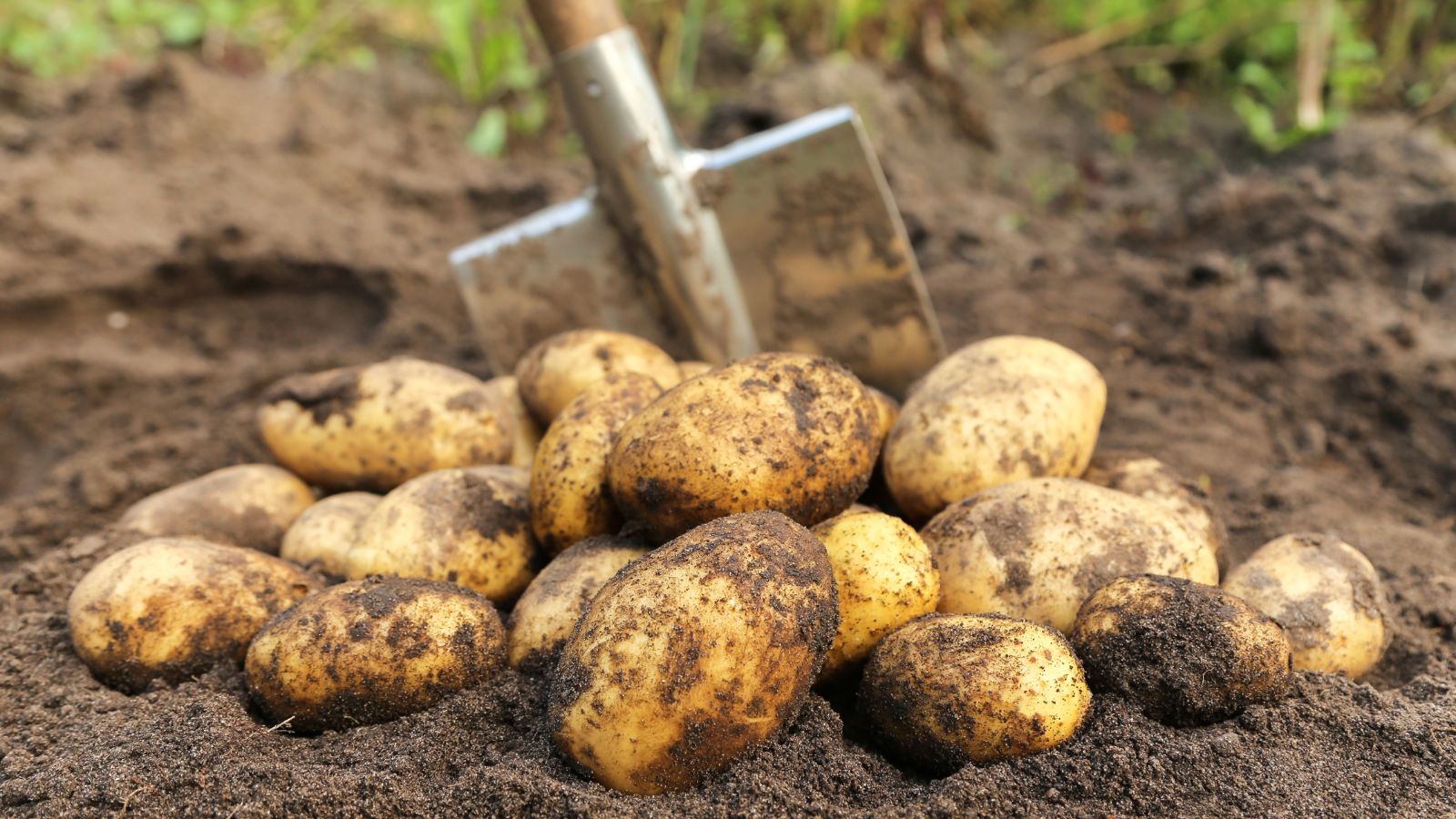
Here are a few quick tips to help your potato harvesting:
- Harvest tubers at any size. Potatoes harvested before they mature are called new potatoes. New potatoes cannot be stored but must be used right away.
- As potatoes mature, their skins harden. The skin of a new potato will easily peel off when rubbed.
- A potato plant will produce 3 to 6 regular-size potatoes and a number of small ones.
- Use a spading fork to dig up potatoes. Lift potatoes gently to avoid bruising or damaging the skins. Use your fingers to harvest potatoes if need be.
- Potatoes can be left in the ground past maturity until the first frost, but they are most nutritious if harvested when they mature.
- Protect harvested potatoes from sunlight; those exposed to light will become green potatoes and produce a bitter chemical compound called solanine.
- Cure potatoes before storing them. Curing will harden the skins for storage. Set tubers in a single layer in a dark place at 50 to 60°F (10-16°C) for two weeks to cure.
- Store them at about 40°F (4°C).
- Save the best tubers to plant potatoes next season. Don’t save potatoes that are soft or discolored. Don’t save potatoes if any of the potato plants are diseased.
Storing Potatoes

Store potatoes in a cool, dry place. Don’t wash potatoes before storing them because moisture speeds up spoilage. When stored between 45 to 50°F (7-10°C), potatoes will stay fresh for several weeks. When stored at room temperature, potatoes are at their best quality for about one week.
Do not try to store tubers that are bruised or injured from digging. Use these potatoes right away.
Do not store raw potatoes in the refrigerator because the potato starch will most likely change to sugar in this too cold environment. Refrigerated potatoes will show excessive browning during cooking (especially when frying) and will have an undesirable sweet taste.
Do not store potatoes close to fruit. Ripening apples and other fruit give off ethylene, a plant hormone that will stimulate potatoes to sprout prematurely.
Do not store potatoes where they will be exposed to light. Potato tubers are, botanically speaking, a modified stem. Exposure to light will cause tubers that are dormant to wake up, turn green, and begin to sprout and grow. This green color comes from the plant pigment chlorophyll.
Along with the “greening” of the potato, a compound called solanine forms. Solanine is one of the compounds that give potatoes their taste, but in excess amounts, this substance can be toxic. Avoid eating the green skin—simply cut off and discard the green parts of the potato. The rest of the potato will be fine.
Frequently Asked Questions
Can you grow potatoes without soil?
The simple answer is yes, a potato can grow without soil. However, you have to provide all necessary nutrients, water, and sunlight to the potato plants in order for them to thrive. If you try to grow them in a hydroponic system, use a system that protects the tubers from access to light and prevents solanine production and leafy growth from your tubers.
What is the difference between a sweet potato, yam, and a true potato?
The sweet potato (Ipomoea batatas) is a root, so it’s more like a carrot than a potato. Sweet potatoes and true yams are two different things they’re not botanical relatives. Yam is the common name for edible tubers in the genus Dioscorea, family Dioscoreaceae. Nigeria is the largest agricultural producer of yams, which are grown in temperate and tropical climates worldwide.
Can you grow potatoes from a store bought potato?
While possible, there is no advantage to growing potatoes from store-bought ones. Potato seeds are no more expensive than the ones purchased for eating. In addition, garden centers usually offer a varied selection of certified seed potatoes.
Another advantage of certified seed potatoes is that they are free of seed-borne diseases and have been developed to produce high yields and superb quality. Store-bought eating potatoes may have been treated to prevent sprouting, thus minimizing any yield if you’re lucky enough to get any potatoes at all.
If you choose to try your hand at growing those sprouting potatoes, take the project on as though it is an experiment and be sure to plant some seed potatoes too.
How many potatoes do you get per plant?
Typically a potato plant will produce 3 to 6 regular-size potatoes and an additional number of small tubers.
How do you know when it’s time to dig up potatoes?
The flowers of the plant and the state of the plant overall are huge indicators of when to harvest potatoes. Flowers indicate it’s time to harvest new tubers. When they’ve died back along with the potato plants themselves, you can harvest mature tubers.
What to do with potatoes after digging them up?
Either cure them, or stow them away to store them. In both situations, keep them at about 45 to 50°F (7-10°C). Sort out bruised or damaged potatoes and use them right away. If you’re curing potatoes, keep the humidity high, and wash and use them after about 10 days.
Can you leave potatoes in the ground too long?
You can. Watch the state of the plant to tell you when to harvest. Otherwise, your potatoes will rot before you can harvest them.
Can you eat freshly dug potatoes?
Yes! Either wash and enjoy them right away, or cure them and store them long-term.