How to Grow Tomatoes Indoors Successfully
Growing tomatoes indoors can give you tomatoes all year, whether in the dead of winter or height of summer. However, you will need to make some adjustments to get it right. Follow this in-depth guide to learn how to grow your own tomatoes indoors!


Contents
Growing tomatoes indoors may seem like an impossible feat for this heat-loving fruit, but indoor tomato plants are easy to grow. With the right setup, you can enjoy fresh tomatoes indoors year-round and harvest fruit on a regular basis.
Growing tomatoes indoors requires many of the same skills as growing them outdoors, with the added benefit of greater environmental control. There are fewer pests to manage indoors and far fewer weather-related issues that can damage your crop. Dwarf tomato varieties are especially well-suited to indoor growing, and both dwarf indeterminate and determinate types are available that stay compact and manageable.
For those without outdoor garden space, growing tomatoes indoors is an excellent alternative. It also makes tomato growing more accessible for people with varying mobility levels, allowing them to enjoy watching plants grow and fruit throughout the year, even in winter. Producing tomatoes indoors is entirely achievable with a little planning.
Cherry tomatoes perform particularly well indoors, even during winter months. Dwarf varieties such as ‘Tiny Tim’ are ideal because they typically grow no taller than two feet. Indoor dwarf tomatoes can produce fruit from summer through winter.
Seeds can be saved from mature fruit and grown again the following year. Many seed catalogs offer tomato varieties bred specifically for indoor growing, or you can collect cherry tomato seeds directly from ripe fruit for future germination.


Methods For Growing Tomatoes Indoors

There are several ways to grow tomatoes indoors. You may have window space where cherry tomatoes receive adequate sunlight. Since tomatoes thrive with strong light exposure, this can be an effective growing method. A sunny indoor window protects plants from cold temperatures while still providing the hours of direct light tomatoes need each day.
Keep in mind that tomatoes grown indoors will not have access to bees for pollination. Depending on your chosen setup, indoor tomato growing may require a fair amount of space. You may also need to supplement natural light with a grow light. As long as plants receive enough direct light, you can still expect a productive harvest.
If a bright window is not available, growing tomatoes indoors under a fluorescent grow light is a reliable alternative. Be aware that grow lights can slightly increase utility costs, but they may be the best solution for growers without access to sufficient natural light.
Hydroponic systems are also well-suited for growing tomatoes indoors. Because plants grow in a nutrient-rich water solution, the fruit is often especially juicy and flavorful. Advances in home hydroponic technology have made many options available, ranging from compact countertop systems to shelving units or vertical towers.
The main drawbacks of growing tomatoes hydroponically are higher energy costs and increased maintenance requirements. This method demands more hands-on management, which may not suit every grower. With consistent care, however, hydroponic systems can provide fresh tomatoes throughout winter for sauces and other kitchen uses.
Caring For Indoor Tomatoes
Whatever method you choose, there are basic requirements needed to grow fruit that is viable, juicy, and delicious. Maintain those, and you’ll have tomatoes year-round.
Lighting & Temperature

Tomatoes are full sun plants and need at least six to eight hours of direct sunlight each day. A south-facing window in the northern hemisphere or a north-facing window in the southern hemisphere works well for meeting these light requirements. If your windows are obstructed and light is limited, consider using one of the alternative growing methods mentioned above.
Grow lights can be used to supplement sunlight when window exposure is inconsistent or blocked during parts of the day. Adding one of these lights helps mimic additional sun exposure. Many hydroponic systems come with built-in lighting, but if you are setting up your own indoor tomato system, a grow light is a reliable option.
The ideal indoor temperature range for tomato plants is 70 to 85°F (21 to 29°C). Keep plants away from heating and cooling vents, as sudden temperature changes can stunt growth. Cold air from air conditioning can slow development, while dry heat from vents can damage foliage. If avoiding vents is not possible, close the nearest vent or use a grow tent to help stabilize temperature and humidity.
Rotate tomato plants regularly to promote even growth and healthy root development. Outdoors, tomatoes receive balanced light from all directions, so rotating indoor plants helps replicate this effect and prevents uneven or leggy growth and lack of flowers.
Water & Humidity
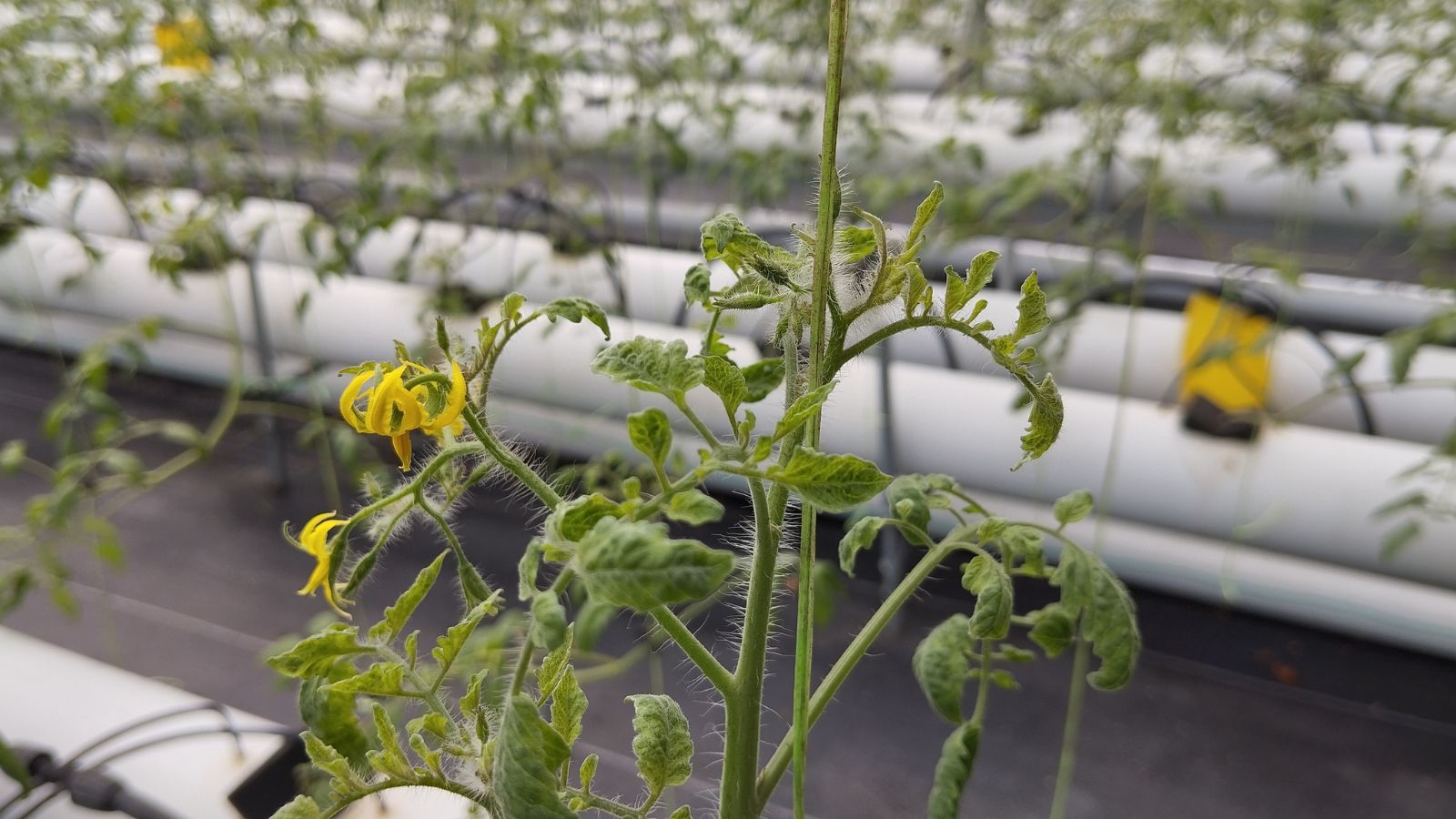
In hydroponic systems, water is always available to indoor tomatoes as needed. Replace the nutrient solution at least once per week to keep it fresh and reduce the risk of bacterial buildup.
Container-grown tomato plants need at least one inch of water per week along with good drainage. Different pots and growing media retain moisture differently, so aim to maintain consistent, even moisture for the best growth and fruit production.
Some containers include a drainage tray beneath the pot. It is best to empty the tray once it fills with water to prevent the growing medium from becoming waterlogged.
Growing Medium & Container

If you grow tomatoes indoors in soil, choose a growing medium that is rich, loose, and well-draining. A soilless potting mix works well for indoor tomato growing. Coir starter pellets or a blend of vermiculite, sand, and coir are also good options.
Keep in mind that soilless media lack nutrients, so regular fertilizing is necessary. In hydroponic systems, clay balls make an excellent growing medium, though they are not well-suited to the other growing methods mentioned here.
Tomatoes require plenty of root depth to grow properly. Even dwarf varieties need deep containers. Use a pot that holds at least five gallons for dwarf tomatoes and at least 10 gallons for standard varieties. Containers must have drainage holes. Self-watering pots are not ideal for tomatoes, as these plants are sensitive to overwatering and inconsistent moisture.
Grow bags can work well, but they are porous, so you will need a way to catch excess water as it drains. If that is not practical, opt for a large clay or plastic planter instead.
Fertilizing

Even if your potting media is rich in compost, tomatoes still need regular fertilization. Both garden-grown and indoor tomatoes rely on added nutrients for healthy growth and fruit production. Apply a tomato-specific slow-release fertilizer to your potting mix or soilless growing medium at planting time. Supplement every couple of weeks by adding more fertilizer in a ring around the plant and watering it in.
For hydroponic systems, many suppliers offer powdered tomato nutrients that provide the same benefits as soil-based fertilizers. Dissolve the powder in water and add it at planting time, then reapply every two weeks to maintain consistent nutrient availability.
Pruning

As tomato plants begin producing their first flowers, pinch them off to encourage vegetative growth. This allows the plant to grow strong enough to support the weight of fruit later on. Once plants reach about six inches tall, remove the lowest leaves to prevent splashback from the growing medium onto the foliage.
Indeterminate dwarf tomatoes tend to grow more vigorously than determinate varieties. Prune branches as needed just above a node to help shape the plant. Both determinate and indeterminate tomatoes produce suckers and often benefit from having them removed. If you enjoy growing tomatoes indoors, these suckers can be placed into prepared soil or potting mix to root and propagate new plants.
Planting

To start indoor tomatoes from seed, use starter trays and a heating mat. Sow tomato seeds about one-eighth of an inch deep and cover the pots or trays with plastic wrap to trap heat and moisture.
Use a seed-starting mix made of equal parts vermiculite, perlite, and coir, or use a commercial seed-starting mix. The seed contains enough nutrients to support early growth through germination. Set the heating mat to maintain temperatures between 60 and 70°F (16 to 21°C), which is the optimal range for tomato germination.
Keep seeds warm and remove the plastic cover once they sprout. Within one to two weeks, seedlings should emerge. As plants grow, transplant them into larger containers as needed.
For hydroponic systems, start seeds in coir pods and keep them warm on a heating mat. Transplant seedlings into the hydroponic system with fresh nutrient solution after one to two weeks. In both hydroponic and soil-based setups, avoid overcrowding seedlings.
Even when growing tomatoes indoors, proper spacing is essential. Most tomato plants require one 5-gallon container. Overcrowded plants cannot access enough light or nutrients, which limits flowering and ultimately stunts fruit development.
Troubleshooting

When you grow tomatoes indoors, you will encounter fewer pests and diseases than with outdoor plants. That said, there are still a few common issues to watch for when maintaining an indoor tomato garden.
Irregular watering can cause problems such as split fruit. As with outdoor growing, indoor tomatoes need consistent, adequate watering. Hydroponic tomatoes experience this issue less often due to their steady water supply.
Too much water can encourage fungal and mold growth, which may lead to root rot and plant loss. Overwatering alone can also be harmful. Water only when needed and allow excess moisture to drain properly.
Poor nutrient uptake is another potential challenge with indoor tomatoes. Frequent watering can flush nutrients out of the container before plants absorb them. Stick to a regular fertilizing schedule throughout the growing season. Consistent fertilization is essential for indoor tomatoes and helps prevent deficiencies such as blossom end rot, ensuring reliable fruit production even in winter.
Indoor tomatoes do not benefit from natural pollinators. To improve fruit set, hand-pollinate flowers using a cotton swab once blooms open. Gently touch the swab to each flower to collect and transfer pollen. This simple step can significantly increase fruit production.
Both garden and indoor tomatoes are sensitive to cold damage. In winter, windows may become too cold and provide insufficient light for healthy growth. Supplementing with a grow light can help. The warmth and light from a fluorescent bulb support lush foliage and continued fruiting through winter and into summer. If temperatures remain low, placing plants on a seedling heat mat may provide additional support.
On the other hand, excessive heat or prolonged exposure to temperatures above 90°F (32°C) can cause blossom drop and scorching on leaves. Make sure grow lights run for appropriate durations, especially during hot summer months, and monitor the surrounding temperature. Aim to keep indoor tomatoes within the 75 to 85°F (24 to 29°C) range whenever possible.
Two pests that may enter from outdoors, particularly in summer, are fungus gnats and broad mites. A range of organic pest control products is available to help manage these insects and protect each container in your indoor garden.
Frequently Asked Questions
Can tomatoes be grown indoors?
Absolutely! With the right care and conditions growing indoor tomatoes is not only possible but rewarding. Grow them indoors and have fruit all season long.
How long can a tomato plant live indoors?
Without interference from pests and extreme environmental conditions, you’ll grow tomatoes indoors for over a year.





