Growing Shiitake Mushrooms At Home: The Complete Guide
While growing shiitake mushrooms takes a while to get started, the rewards are worth it. It's also easier to do than you may think with the right supplies. Our in-depth guide reveals how to get started!

Contents
It’s wonderful to walk through a wooded forest after a good rain and spot a mushroom emerging from a log or nestled between fallen trees. Most of these mushrooms, however, are not edible. That said, it is entirely possible to grow shiitake mushrooms in your own backyard or greenhouse.
Growing mushrooms is a little different from raising herbs or other vegetables in your garden, but it is an enjoyable process and a great way to get new gardeners interested in growing their own food. Once you understand the basic steps involved, you will find that growing shiitake mushrooms is surprisingly straightforward.
In the past, shiitake mushrooms (Lentinula edodes) were grown almost exclusively in forests across East Asia. Today, they are cultivated worldwide. Their popularity has grown so much that an estimated 25% of annual global mushroom production now consists of shiitake mushrooms.
With a flavor similar to wild mushrooms and a rich, savory umami taste, shiitake mushrooms are well worth the wait. Slightly larger than button mushrooms and packed with vitamins, they are often praised for their potential immune-supporting benefits.
Shiitake mushrooms grow very differently from anything else in your garden. They begin as fungal spores that remain dormant until they encounter the right conditions. To encourage them to grow, you need to provide a suitable environment where the spores can colonize and reproduce. Thanks to the availability of inoculated plug spawn from online retailers, growing shiitake mushrooms at home has never been easier.
Organic Shiitake Mushroom Grow Kit
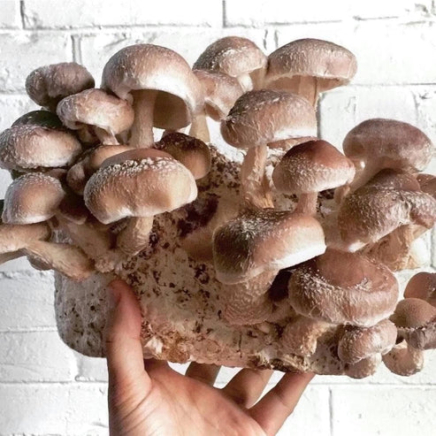
Our Shiitake Mushroom Fruiting Block:
- produces generous flushes of buttery, savory mushrooms
- grows medium to large umbrella-shaped caps
- is a great option for confident beginner or intermediate growers
About Shiitake Mushrooms

Shiitake mushrooms are a delicious edible fungus from East Asia and are ubiquitous in Japanese and Chinese cooking. Today, it is possible for people around the world to grow these mushrooms in their own homes, yards, and even bathrooms.
Growing shiitake mushrooms, like all mushroom species, can feel a little unusual for longtime gardeners who have never grown fungi before. Still, it is well worth learning how. These small, capped mushrooms justify the effort, as growing them in logs or grow bags can significantly reduce their cost.
Characteristics
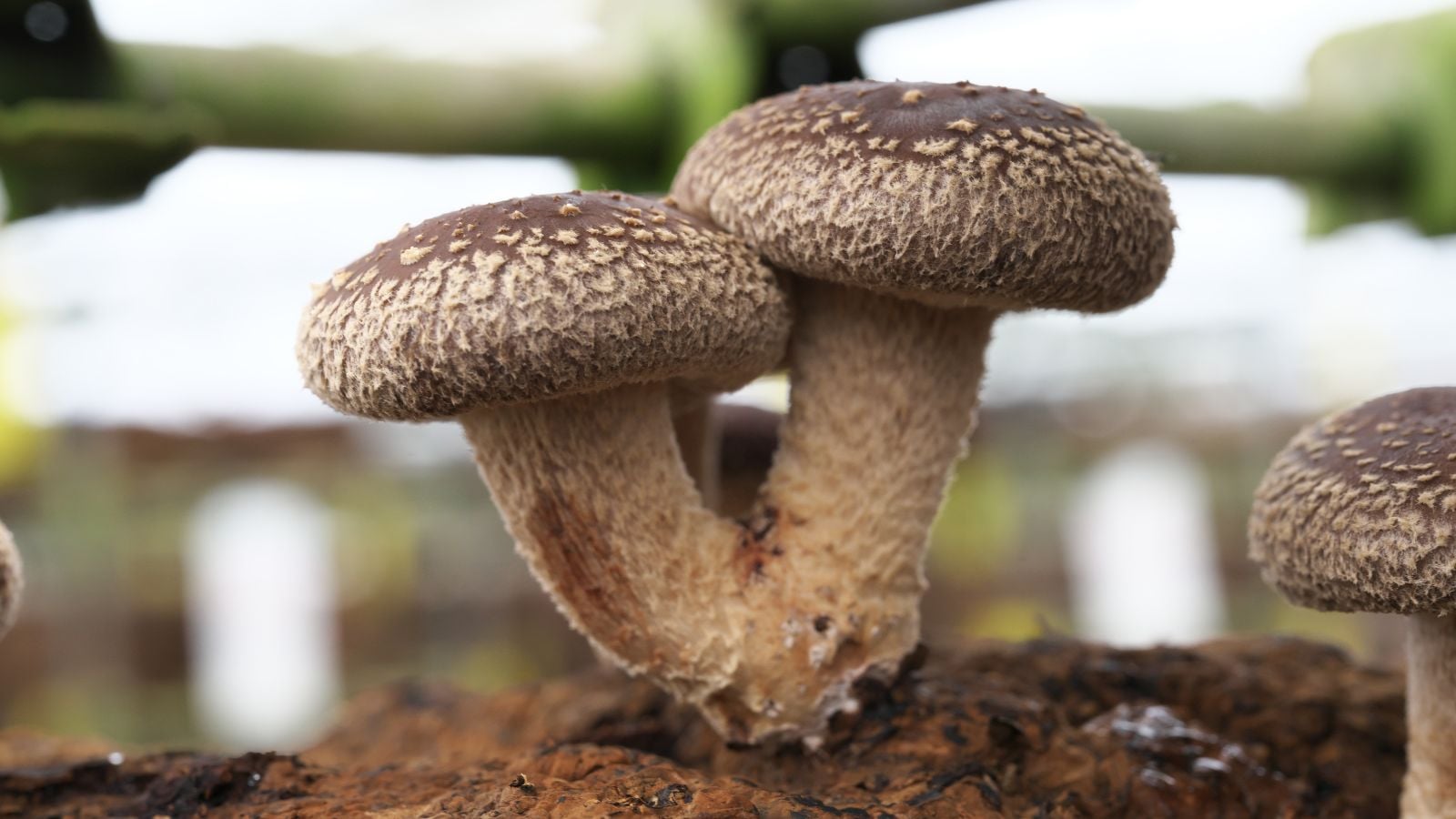
Lentinula edodes is a brown mushroom with a cap measuring two to four inches across and a light brown, somewhat spindly stem. The cap can sometimes resemble a small pancake. Around the edge of the cap are small white spots, and underneath are tightly folded gills that form an intricate, attractive pattern.
Like all mushrooms, Lentinula edodes is a fungus. The common name shiitake literally means castanopsis mushroom, named after the Castanopsis cuspidata tree, also known as the shii tree, which is native to Japan. While shiitake mushrooms thrive naturally throughout much of East Asia, they do not compete well with other fungi found elsewhere in the world. For this reason, sterilizing the logs or substrate used to grow shiitake mushrooms is essential.
There are two main types of shiitake mushrooms. Donko is a larger, thicker-fleshed mushroom that is highly sought after, while Koshin, with ko meaning small in Japanese, is smaller with thinner flesh and a more open cap.
While gardeners may notice wild mushrooms appearing seemingly overnight in their gardens, especially after adding compost, growing shiitake mushrooms requires patience. When grown in a sawdust substrate, mushrooms typically take several months from inoculation to harvest. When grown in logs, the process can take up to two years before the first harvest.
Shiitake Mushroom Substrates

In its native environment, shiitake mushrooms grow on decaying logs, specifically shii tree logs, throughout East Asia. These areas are typically shaded by a dense forest canopy and maintain consistently high humidity.
To replicate these natural conditions at home, there are two commonly used methods for growing mushrooms. You can insert mushroom plugs into a hardwood log and enjoy harvests for six to seven years, or you can grow shiitake mushrooms in a grow bag by inoculating a sawdust and bran mixture, which produces a harvest much sooner.
Hardwood Logs

Growing mushrooms in logs is a great option for gardeners with access to wooded areas or for those growing mushrooms to sell. Freshly cut hardwood trees, such as oak felled in late winter, are an excellent choice. Starting inoculation in spring often delivers the best results for this delicious fungus.
Growers need to begin with a recently felled log. While it may seem unusual, this step is essential. Use a freshly cut log or branch measuring three to six inches in diameter, and avoid wood that has been sitting for more than two weeks. This allows the mycelium to get a head start on colonizing the log. Because shiitake mushrooms do not compete well with wild fungi outside their native environment, they need a clean, uncontaminated surface, which only a fresh log can provide.
If you are committing to growing mushrooms in logs, also known as bolts, aim for logs that are three to four feet long. For consistency and easier handling, all logs should be roughly the same length.
For wood selection, the native host tree Castanopsis cuspidata is ideal. If that is not available, suitable alternatives include oak, beech, maple, ironwood, alder, or poplar. Always choose a hardwood, as shiitake mycelium struggles to colonize softwoods, particularly fruit trees and pine.
Hardwood Sawdust
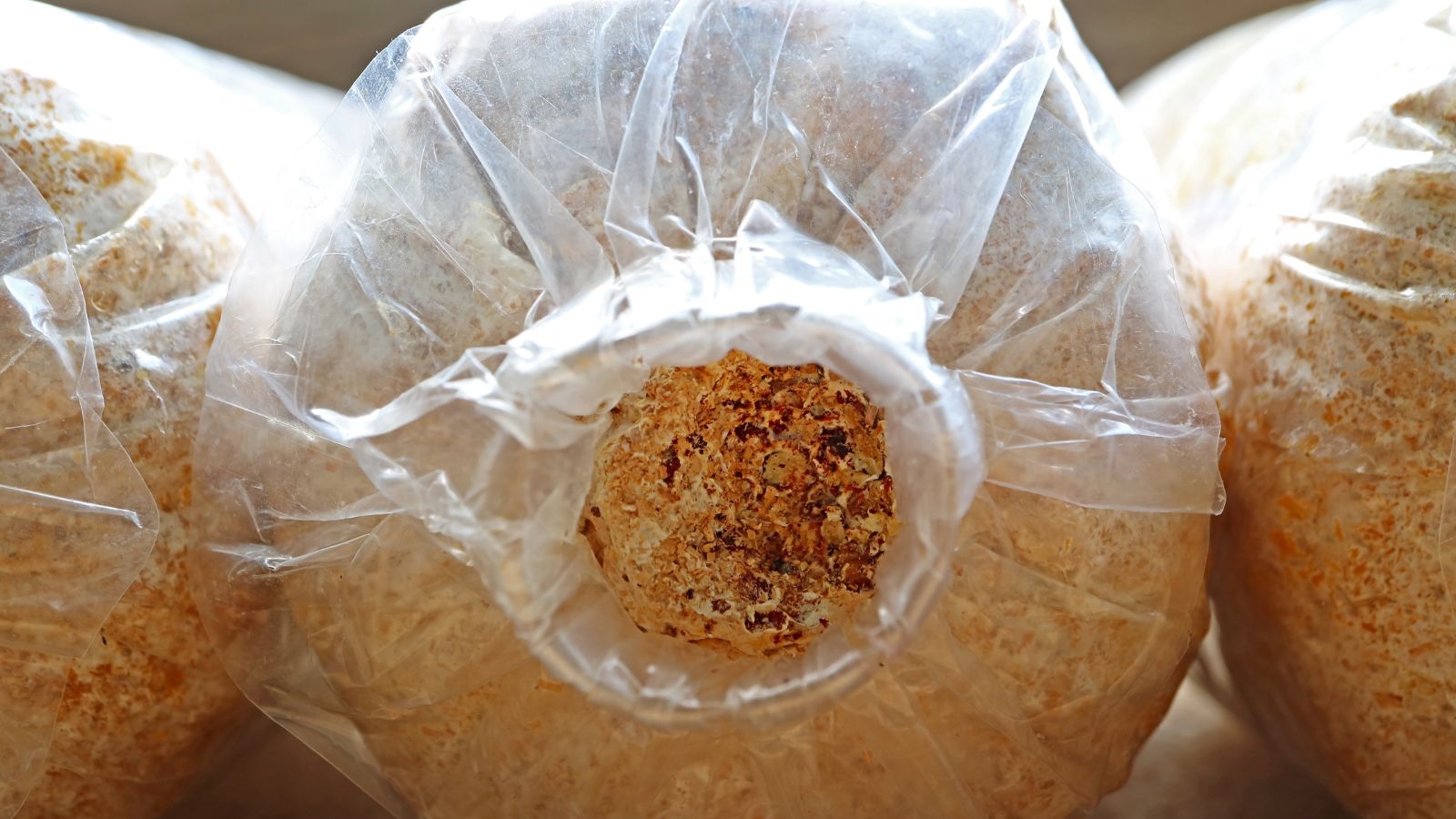
For growers who want a smaller or faster harvest, growing in sawdust blocks is often the best option. These tightly packed blocks of fungal culture can produce five to six harvests over the course of a single year and are manageable for growers of all skill levels. After one year, however, you will need to start again with a fresh substrate.
If you prefer not to mix in spores yourself, you can order a ready-made kit online and move straight to the fruiting stage. This is a good option for anyone who wants to try growing mushrooms before committing to the full life cycle. Kits offer an accessible starting point for new mushroom growers.
Sawdust blocks work well because, while mushrooms do not require logs, they do need cellulose, which is abundant in wood. Sawdust provides this same cellulose source. As with log growing, hardwood sawdust is strongly preferred. Many growers also find that adding rice bran, oat bran, or straw results in larger and more flavorful harvests.
Common substrate recipes include 95% sawdust, 3% rice bran, 1% wheat bran, and 1% chalk, or alternatively 75% sawdust, 24% straw, and 1% chalk. Percentages are approximate.
Before inoculating, both the sawdust mix and any added materials must be pasteurized. A pressure cooker is often used to reach the necessary temperature, but boiling the mixture for one hour can achieve similar results. Pasteurization occurs between 160 to 180°F (71 to 82°C), which removes most, but not all, living microorganisms from the substrate.
Allow the mixture to cool evenly to room temperature, around 70°F (21°C), before adding the inoculant. Adding spores while the substrate is still hot can kill the inoculant and ruin the batch.
Inoculating Your Shiitake Mushrooms

For shiitake mycelium to spread throughout its new environment and fully colonize the substrate before producing mushrooms, you will need to inoculate your growing medium. Inoculation introduces shiitake spores into their new home while minimizing the risk of introducing unwanted wild spores at the same time.
There are two main methods used to inoculate a growing medium. When working with cut logs, small holes are drilled into the sides of the wood, and inoculated plugs are inserted and sealed with wax. These shiitake logs are then stacked while the mycelium develops. When growing in sawdust, the inoculant is broken into small pieces and mixed evenly throughout the substrate.
Once you have chosen your inoculant, obtain it ahead of time. Plug spawn or sawdust spawn can be stored in the refrigerator while you wait for ideal inoculation conditions. Since successful inoculation depends on introducing spores into a sterile growing medium, planning ahead is important. You can safely keep the spores refrigerated for up to one week while waiting to begin the process in spring.
Inoculating Logs

After acquiring your freshly cut logs, with four feet in length being ideal, you can begin preparing them for inoculation. Using a power drill fitted with a specialized bit designed to remove wood shavings as it bores, drill holes one inch deep and spaced two to three inches apart in a straight row. Make sure the drill bit is sterilized to avoid introducing pathogens into the logs.
Create a second row of holes staggered between the first row so the pattern forms a diamond shape, which helps maximize usable space. Continue drilling until the entire log is covered.
Once the holes are drilled, you are ready to add your shiitake mushroom plug spawn or sawdust spawn. If using plugs, insert one plug into each hole and seal it with wax. If using inoculated sawdust, use an inoculation tool to pack the sawdust firmly into the holes. Mushroom inoculation tools are readily available online. On average, each four-foot log requires 30 to 40 plugs. After inoculation, seal the holes with beeswax, paraffin wax, or cheese wax.
Sealing the plugs with wax helps the mycelium colonize the log more effectively and improves moisture retention. When possible, use a softer wax, as it is easier for young fungi to push through as they grow.
For beginners, pre-made plug spawn is often the easiest option. These plugs are already inoculated with the desired shiitake strain, and a few gentle taps will seat them properly in the holes. If any plug material protrudes from the surface, you can trim it cleanly with an angle grinder before sealing it with wax.
Inoculating Sawdust

Another option available to growers is using sawdust instead of logs. Inoculating this type of substrate is generally easier, especially when the right tools are used. Once your substrate has been pasteurized, it should be mixed evenly with inoculated sawdust spawn. Before mixing, ensure that the container, tools, and any surfaces involved are fully sterilized. Wearing gloves or using thoroughly washed hands is essential at this stage.
After the substrate has cooled following pasteurization, mix in the sawdust spawn thoroughly. Break the spawn into the smallest pieces possible so it distributes evenly throughout the substrate. Once combined, pack the mixture into a sterile grow bag for colonization. Even distribution of the spawn encourages faster and more uniform colonization.
Mushroom spawn can also be added in plug form when inoculating grow bags. However, because plugs are larger and less evenly dispersed, colonization will take longer compared to using sawdust spawn mixed throughout the substrate.
Shiitake Colonization

Once inoculated, the fungi need time to spread, or ‘run,’ through their new host before it can begin fruiting. This stage requires patience. With logs, colonization can take up to one year, while sawdust substrates usually take less time, around 8 to 12 weeks. During this period, the log or substrate must be kept evenly moist at all times. Allowing it to dry out can halt the process entirely.
Logs
For mushroom logs, stack them on the ground in a forested area, greenhouse, or another shaded location, keeping them about six inches off the ground. Positioning logs close to the soil helps expose them to natural humidity.
As colonization progresses, you will notice white splotches forming along the cut ends of the logs. This is a sign that the mycelium is spreading, typically starting in the center and moving outward. After about one year of colonization, logs can be arranged into a ‘crib stack,’ placed two by two in a box-like formation.
Avoid covering logs with plastic or other impermeable materials, as they require airflow and moisture exchange. Burlap or a similar breathable fabric can be used to protect logs from direct sun. Keep logs sheltered from strong winds and excessive sunlight, both of which can dry out the wood and prevent fruiting. If logs begin to dry, submerge them in a water source such as a pond or stream, or hose them thoroughly several times over a few hours. Consistent moisture is critical.
This colonization phase is known as the ‘spawn run,’ during which the mycelium forms web-like networks throughout the log. The spawn run can take anywhere from eight months to two years, but the long wait is well rewarded.
Sawdust
For growers using sawdust blocks, the spawn run is much shorter. In most cases, it takes about 8 to 12 weeks for the block to turn a light brown color, which signals successful colonization. Once this stage is reached, the block is ready to fruit.
Initiating Fruiting

Fully colonized shiitake logs or sawdust bags typically wait for natural rainfall before producing mushrooms. Since most growers have access to running water, this process can be replicated to encourage earlier fruiting. This technique is known as ‘shocking’ shiitake logs into fruiting.
For growers using logs, soak fully colonized logs in cold water for 24 hours. This can be done in a lake, bathtub, or water trough. The water should be cool, but not so cold that it damages the spawn. Room temperature to slightly chilly water works best. After soaking, shiitake mushrooms usually begin to fruit within 7 to 14 days. At this stage, watch closely for slugs, which can be one of the biggest threats to your harvest.
Mushrooms grown in sawdust substrate require a similar approach. Place the grow bag in a bucket or large basin filled with cold water and soak it for two to three hours. It is important that the water is not chlorinated, as chlorine can kill the spores. Use filtered water or water that has been left to sit for 24 hours to allow chlorine to dissipate.
When small bumps begin forming on the surface of the substrate, fruiting is imminent. At this point, remove the substrate entirely from the bag to improve airflow. The block should remain intact due to full colonization as shiitake mushrooms begin to emerge.
Harvesting

Once you have shocked your shiitake mushrooms, monitor their growth closely. At this stage, development happens quickly. When the mushroom cap opens and the gills become visible on the underside, it is time to harvest.
Cut the mushroom cleanly from the log or substrate using a sharp, clean knife, taking care not to damage the growing medium. This is important because shiitake mushrooms can be harvested multiple times. Shiitakes grown on logs will continue to fruit for six to seven years, while those grown in sawdust substrates will typically produce five to six harvests per fresh bag.
After harvesting, shiitake mushrooms can be used immediately or stored in a brown paper bag in the refrigerator. They should be kept cool and dry and will generally keep for about one week.
For longer storage, shiitake mushrooms can also be frozen or dried.
What To Do With Spent Substrate
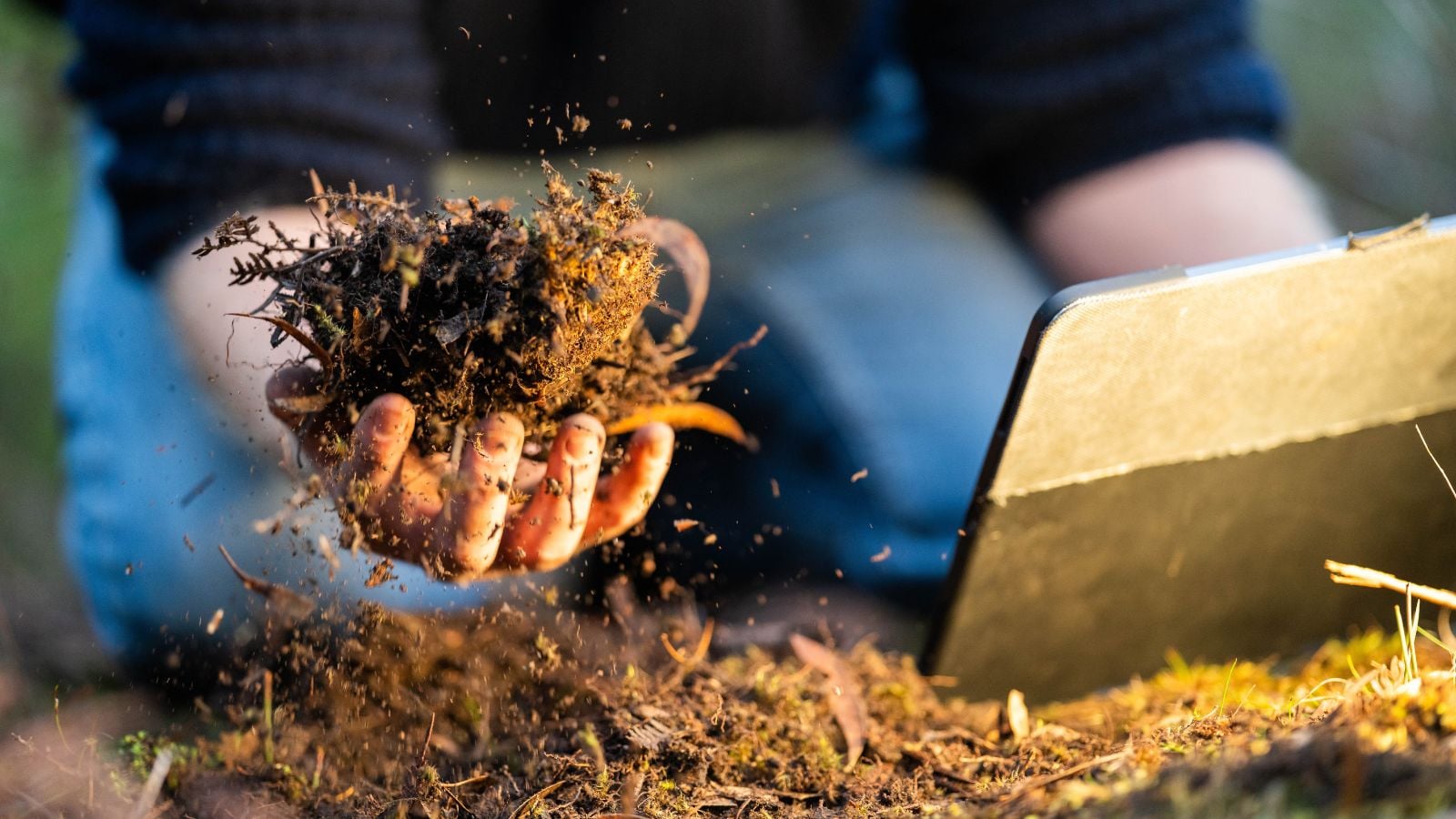
Spent shiitake logs or substrates still contain plenty of life, even if they are no longer productive for mushroom growing. Gardeners often recognize spent mushroom substrate as a valuable soil amendment. With the exception of a few flowering shrubs, such as gardenias, camellias, and hydrangeas, most plants respond well to mushroom compost. In most gardens, spent shiitake substrate is incredibly beneficial.
Large quantities of spent substrate should be weathered outdoors in open piles for a few months before use. This allows excess salts to leach out, making it safer for fruit and vegetable crops. Smaller amounts can be mixed directly into new garden beds or added to worm bins. In some cases, shiitake mushrooms may even begin growing on the surface of a worm bin.
Spent substrate can also be spread over newly seeded lawns. The nutrient-rich material helps retain moisture while providing gentle nourishment as grass establishes.
Logs that have completed their six to seven years of fruiting and remain structurally intact can be buried in garden beds or planting areas. Over time, they will slowly decompose, enriching the soil and releasing nutrients for years to come.