How to Plant, Grow, and Care for Okra
Looking to add southern flair to your dishes? Growing okra ensures you've always got this vegetable at hand. Read this growing guide by horticultural expert Lorin Nielsen to learn how.

Contents
Did you know okra is actually a fruit? Growing okra is surprisingly simple, and it is a great addition to your cooking. We eat okra, or lady’s finger, in many ways: raw, cooked, roasted, or pickled. Despite looking similar to other green vegetables, the pods contain seeds that categorize it as a fruit.
It may not have the sweetness of an apple, but okra has many fans across the world. If you enjoy superfoods, okra is one of the best foods to add to your rotation. Take a break from kale and spinach and brighten your salads with delicious raw okra.
The lady’s finger plant has a long history. It was cultivated during the ancient Egyptian era as far back as the twelfth century BC. Okra seeds can be toasted and used as a coffee substitute, and in the American South, okra is an essential part of Cajun cuisine.
We’ve gathered an abundance of information about this southern staple. Keep reading to learn more about this fruit and discover how to grow it in your garden.


Quick Care Guide

|
Common Name(s)
Okra, ochro, ladies’ finger
Scientific Name
Abelmoschus esculentus
Days to Harvest
48-75 days to maturity, pods form fast after that and are harvested every 1-2 days
Light
Full sun
Water
1″ per week, more in hot weather
|
Soil
Well-draining sand & loam mix, rich
Fertilizer
Side-dress as described below
Pests
Aphids, whiteflies, corn earworms, stink bug, root knot nematode
Diseases
Anthracnose, rust, powdery mildew, fusarium root or stem rot
|
All About Okra
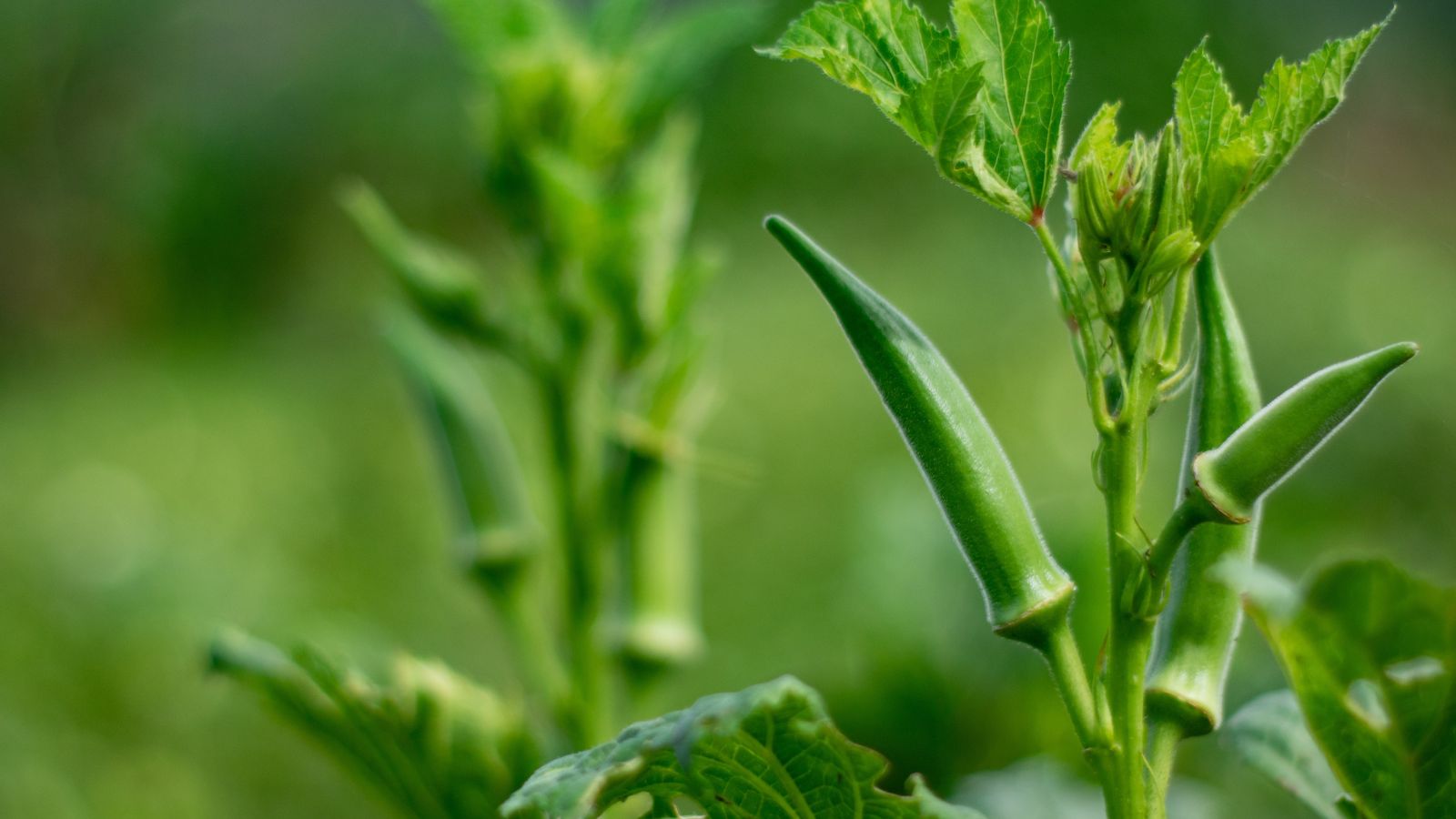
Okra plants are known by their botanical name Abelmoschus esculentus. In many countries, okra is also called ochro or ladies’ fingers. The pods are long, slender, tapered, and curved at the end, much like a lady’s finger.
This species is believed to have originated in Ethiopia. The largest production of okra today is in India and Nigeria. It is also widely grown in Southeast Asia, Pakistan, and the Middle East, including Saudi Arabia and Egypt. Okra is commonly cultivated in Sudan, Benin, Cameroon, and Mexico.
Okra is an annual plant that is herbaceous in nature. It is primarily grown for its edible pods. Typically, it reaches heights of four to six feet and can be a great addition to any garden.
Characteristics
Okra can be grown directly in garden beds or in pots. Unlike vining plants, okra has erect stems that grow like a tall shrub. The stems are mostly hairless or bristly, and the plant has distinctive leaves. These heart-shaped leaves grow four to eight inches long and have five to seven lobes.
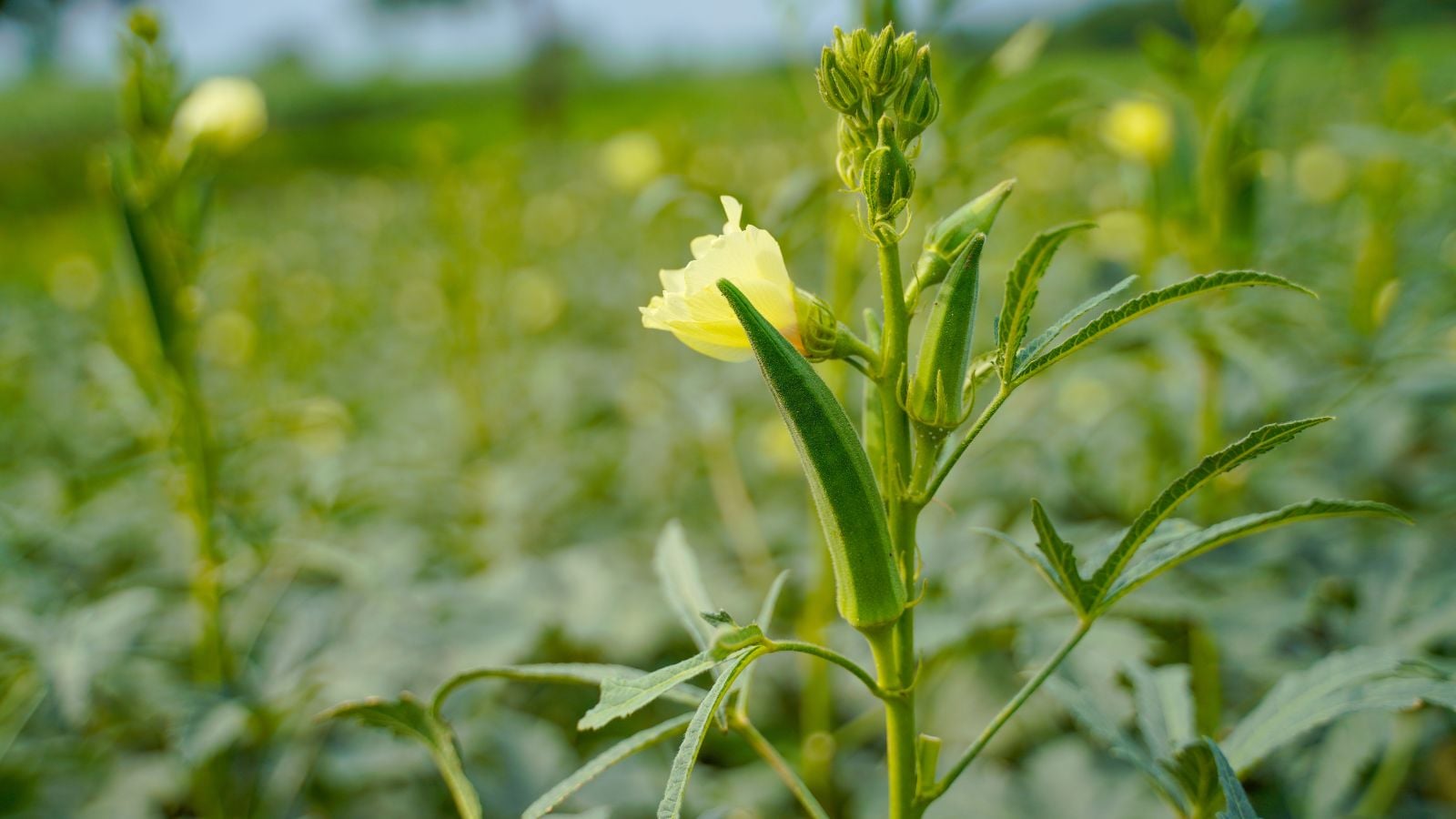
The okra plant typically grows four to six feet tall and produces vibrant blossoms with yellow to white petals. The pods reach seven to ten inches in length and taper toward the blossom end. They have a mild, earthy flavor similar to eggplant and may be green or red.
This shrub-like species has a single deep taproot, which absorbs most of the nutrients for the plant. The fine, hair-like secondary roots help with moisture absorption. As an annual, okra usually produces heavily for one or two seasons before dying back.
Okra matures within 50 to 65 days after planting. It then bears seed pods for the next 10 to 12 weeks or until frost. Popular varieties include ‘Blondy’, ‘Clemson Spineless’, ‘Cajun Delight’, ‘Baby Bubba Hybrid’, and ‘Burgundy’.
Planting Okra

But how do you care for okra and encourage it to develop those luscious pods? Let’s talk about growing okra in your garden and how to get it off to a good start.
You can start okra seeds indoors up to a month before warm weather arrives. For most regions in the United States, this is spring to early summer. If you are past the first frost, you can plant okra seeds directly in the garden bed, which is usually ideal. Okra does not like being transplanted, as it often loses its tender secondary roots in the process.
While you can find seedling starts, they are usually quite young to allow the best chance of transplanting. These should only go into the garden once all frost risk has passed. If you’re starting your own, try peat pots or Epic 4-Cells.
That tricky time of year when unexpected frost appears shouldn’t stop you from sowing seeds. If you are direct seeding, you can grow okra under a cold frame or in a poly tunnel to provide extra warmth and protect young plants.
Young okra plants need full sun and will not perform well in partial or full shade. Choose a location where they will receive plenty of direct light. They also need shelter from strong winds, as the plants can be easily damaged.
How to Plant
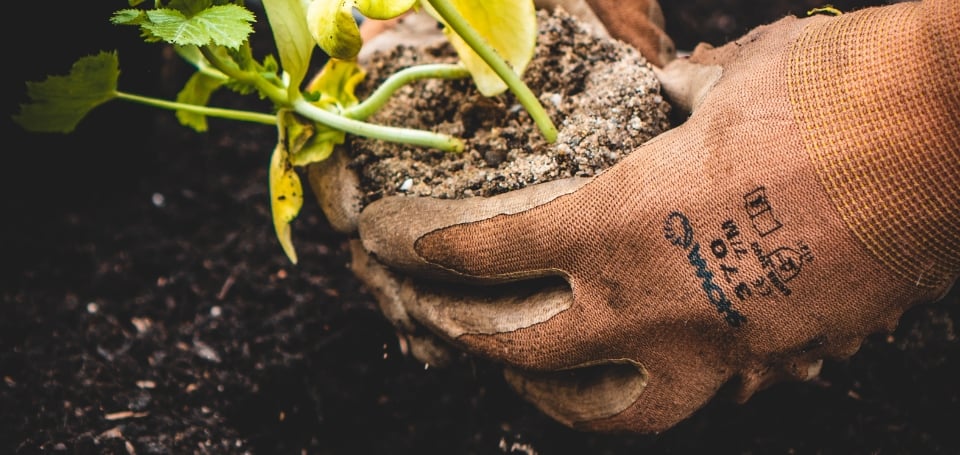
Space plants 12 to 18 inches apart for the best growth. Once they are planted, avoid disturbing their delicate secondary root system. Add a stake for extra support when the plant is young, as the root system will grow around it.
Avoid planting okra in the same soil where tomatoes or eggplants were grown previously. They are susceptible to the same fungal wilts, and those pathogens can linger in soil for years.
Soak okra seeds for at least 12 hours before planting to rehydrate them. Sow the seeds a half inch deep in good quality garden soil and cover them gently.
Warm weather is essential for strong germination. Although spacing plants 12 to 18 inches apart ensures airflow, warmth is equally important for development. Floating row covers can help keep pests at bay while maintaining good temperatures.
Finally, wherever you grow okra, remember that it produces a very deep taproot. Make sure there is nothing underground, such as landscape fabric, that could block the root’s development.
Growing in Containers
If you want to grow okra in containers, the best approach is to choose a pot large enough for the full-sized plant and sow your seeds directly into it. Plant two to three seeds a half inch deep in the pot.
Once they sprout, keep the healthiest seedling and pinch off the weaker ones. Knowing how to grow okra in pots is especially helpful if your sunlight shifts throughout the day, since you can move the container to follow the sun.
How to Grow
Still confused about how to grow okra? Don’t worry; we are about to go over more specifics. Let’s break down the conditions you need to understand to ensure you can grow okra pods successfully for harvest.
Light

Okra is a total sun worshipper. It needs warm temperatures, typically above 80°F (27°C) during the day, for the best plant development and steady pod production.
Full sun is essential. Your okra should receive at least eight hours of direct light to stay healthy and productive.
Water
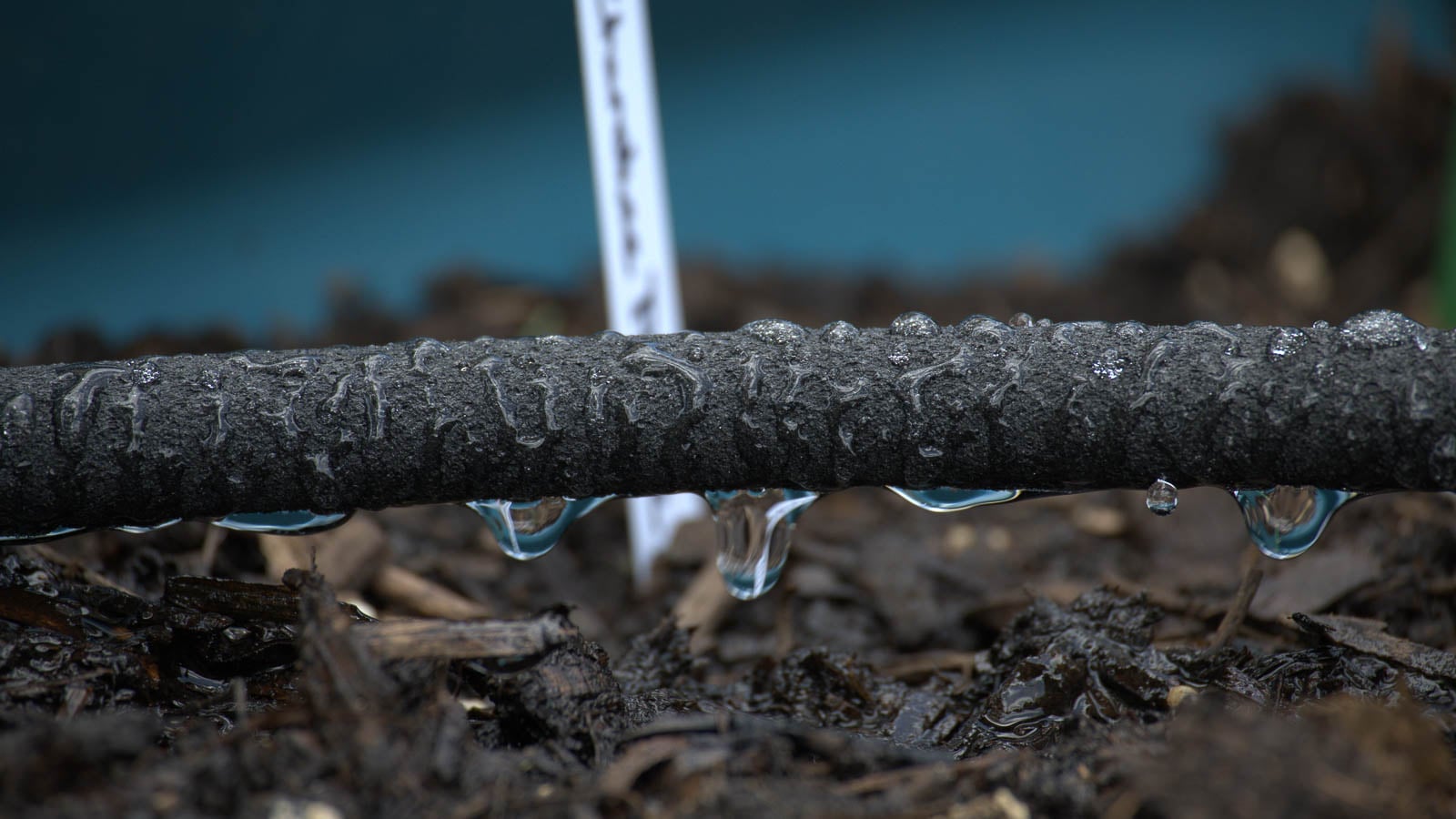
Particularly during the heat of summer, your okra will need consistent water to thrive. Most of the time, an inch of water per week is enough, but in very warm conditions, you will need to water more often. Water early in the morning so any leaves you accidentally splash have time to dry in the sun.
Mulch heavily at the base of the plant. Three to four inches of mulch will help retain moisture in the soil and significantly reduce weed growth.
Soil

Okra appreciates a fertile, well-drained sandy loam soil blend. This loose, rich soil allows the deep taproot to penetrate easily and gives the fine secondary roots space to spread.
Blend in plant-based compost or composted cow or horse manure to enrich the soil before planting. This provides a good supply of nutrients for the plant as it begins to develop.
Okra prefers slightly acidic soil but can tolerate neutral conditions. Aim for a pH range of 5.5 to 7.0. If you are unsure of your soil’s pH, use a reliable test kit to check it.
Temperature and Humidity

While it can tolerate nighttime temperatures in the 50s and 60s (between 10 and 20°C), okra is almost tropical in its preference for warm conditions. It is not tolerant of frost, so you must provide frost-free conditions at all times to avoid losing your plants.
Okra would not be the Southern cooking staple it is if it weren’t tolerant of humidity. These plants do just fine when the air feels swampy. Even so, always water at the base rather than over the leaves. This reduces the risk of mildew forming on leaf surfaces. A soaker hose is especially helpful.
Fertilizing

Side-dress your okra with a nitrogen slow-release fertilizer when it reaches about eight inches tall, and again a few weeks later. This supports strong early growth. If your soil already contains plenty of compost, you may be able to skip this first feeding.
Once the plants reach four feet tall, side dress them once with a balanced, slow-release 10-10-10 organic fertilizer. After that, avoid adding too much fertilizer, since excess nutrients will encourage lots of foliage and very few pods.
Pruning
A lot of southern old-timers talk about “whooping” their okra during the growing season. This old technique used a long switch to strike along the stem of the okra, knocking off lower branches and stressing the plant. The idea behind the technique was that by stressing the okra, it would produce more.
Strangely enough, this old method works, but you don’t need to go searching for the perfect wooden switch.
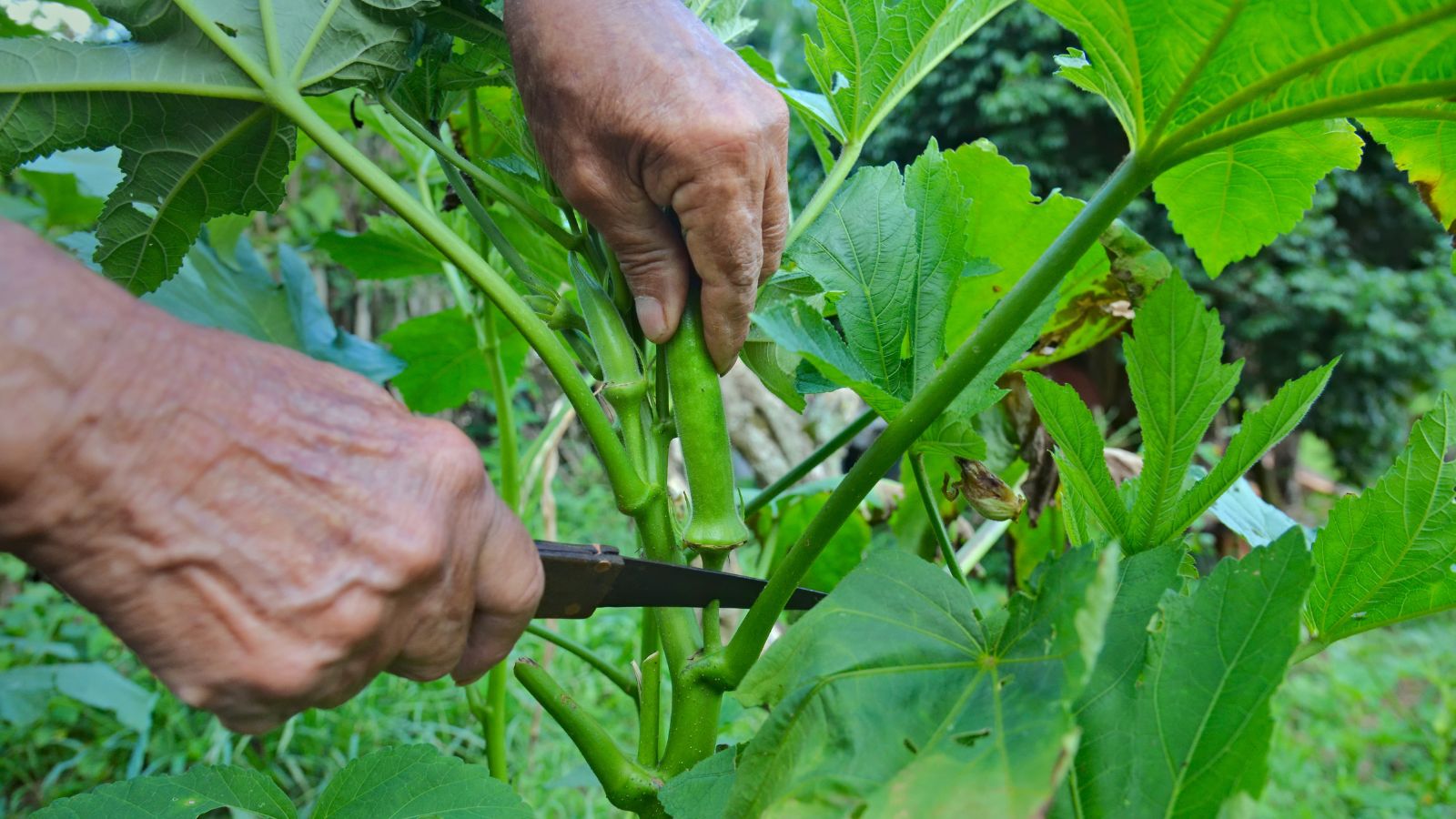
As your okra reaches at least three to four feet in height, start snapping off the lower lateral branches. This helps the plant focus on fruit development higher up on the stem and also reduces the likelihood of fungal spores splashing onto lower leaves.
Wear long sleeves and gloves when you prune your okra. Many varieties have hairy spines along the stems that can cause skin irritation. While you do not have to use pruning shears to remove the lateral branches, you can if you prefer.
Propagation
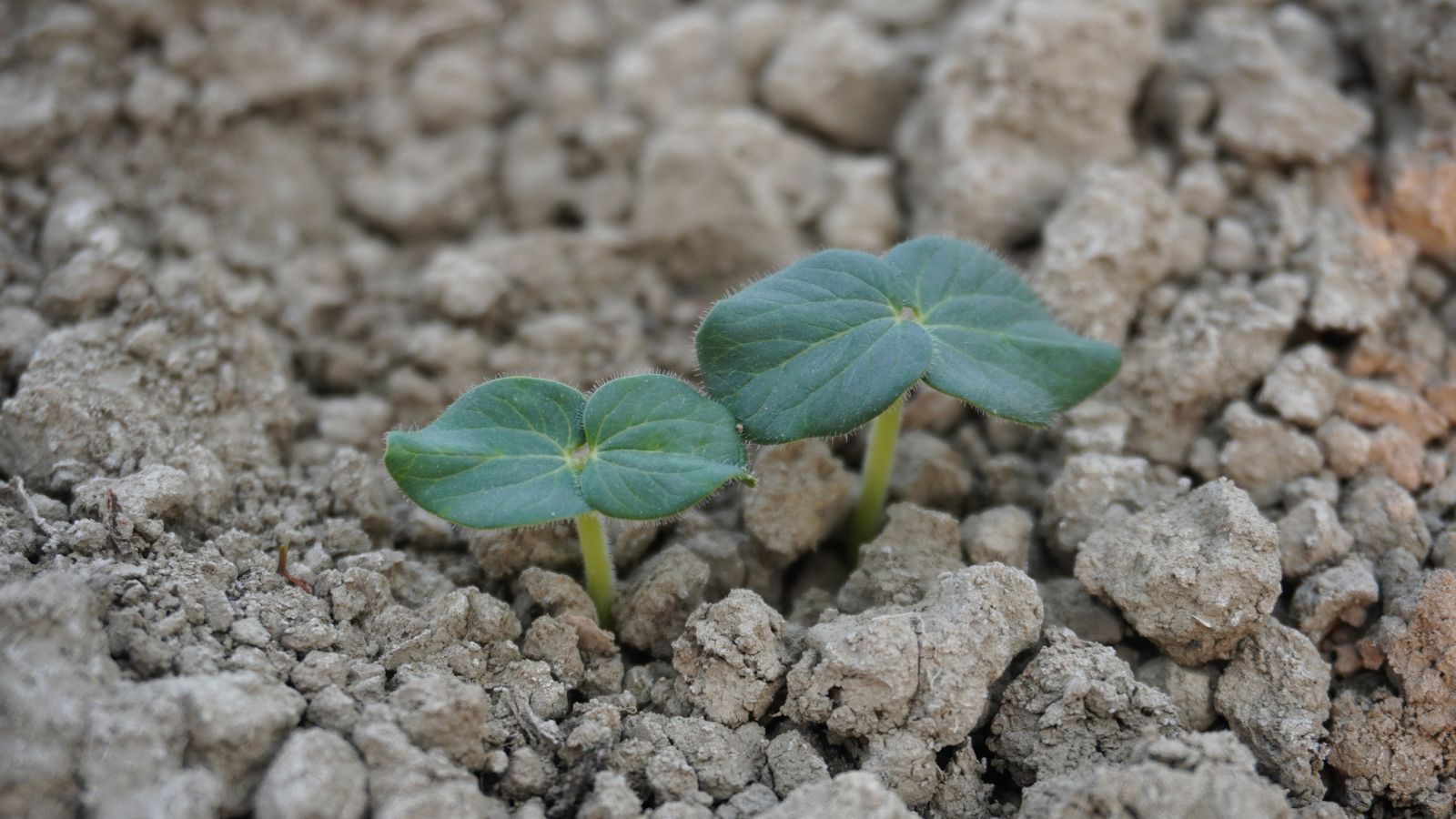
Okra plants are mostly propagated by seed, but cuttings can also be an effective method.
Soak seeds for at least 12 hours to allow them to rehydrate, then sow them a half inch deep and 12 to 18 inches apart. Make sure you sow after all threat of frost has passed.
Fresh stem cuttings can also be used. Choose a cutting about eight inches long from a very healthy plant. Strip off the lower leaves, keeping only a few at the tip. Dip the cut end in water, then in powdered rooting hormone, and place it into a pre-moistened potting mix. Keep humidity high around the young cuttings. After that, care is similar to other propagated plants.
Harvesting

So now you know how far apart to plant your okra, what soil it needs, and other key details. But how do you know when to harvest okra?
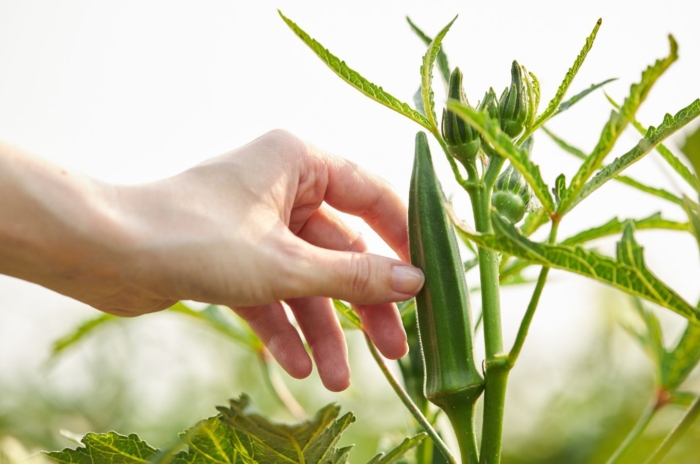
For most varieties, harvest pods when they are two to three inches long. Use a sharp knife to cut through the stem just above the top of the pod. If it feels difficult to cut, the pod may have become woody. Do not pull pods off, as this can damage your plants.
Wear long sleeves and sturdy gloves when harvesting to protect your skin from the plant’s spines. Some spineless varieties exist, but most okra has stem spines that can irritate skin.
Harvest every other day to keep your plants productive.
Storing
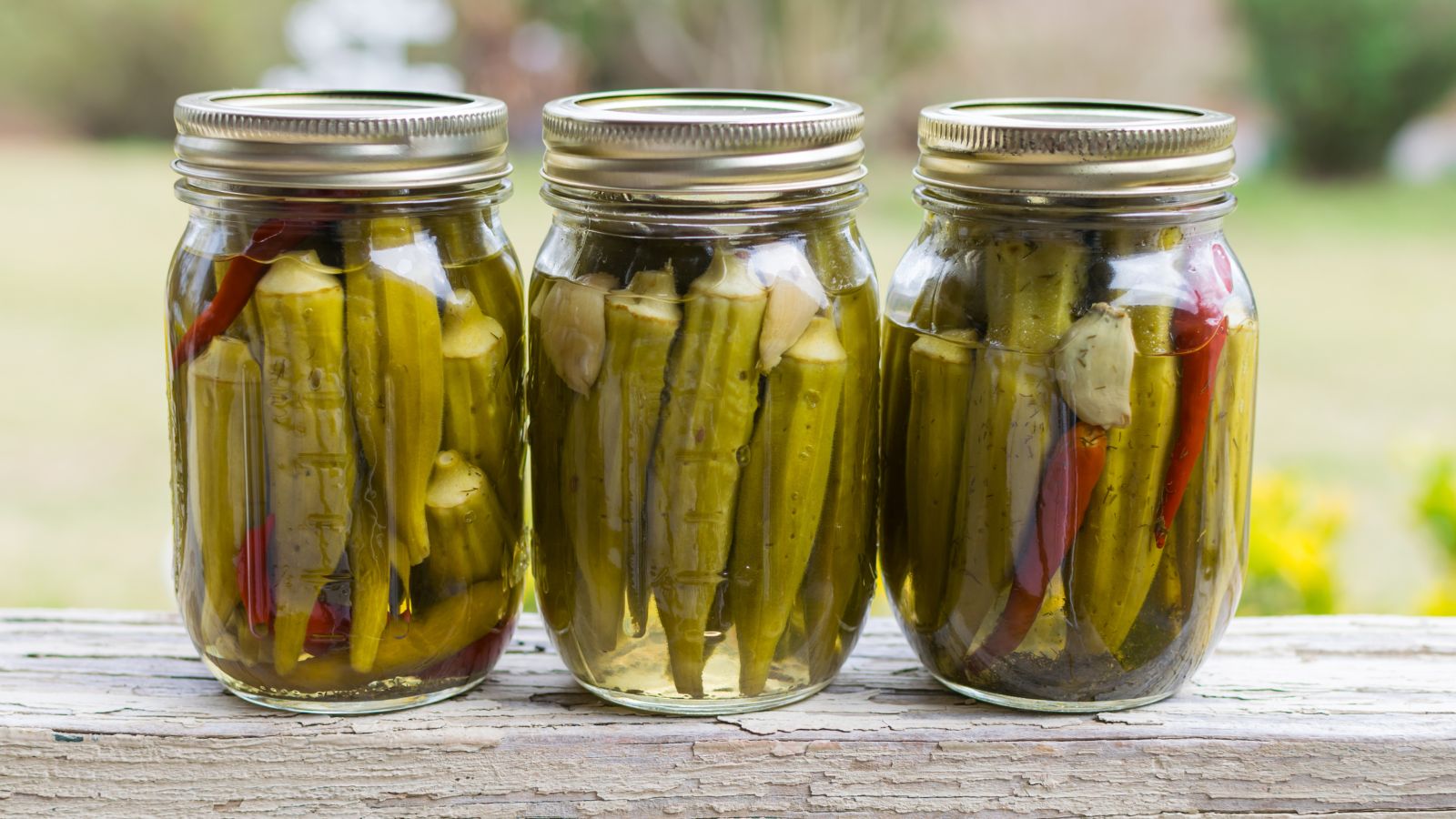
Okra pods can bruise or rot quickly after harvest, so once you pick them, process them as soon as possible. You can store them in the refrigerator for up to two days before they begin to soften.
For longer-term storage, rinse your okra and pat it dry. Once dry, place the pods in freezer bags. You do not need to blanch or cut the okra before freezing; in fact, whole pods tend to last longer.
Canning okra with a pressure canner is another option. Because okra is a low-acid plant, a pressure canner is required for safe processing.
You can also fry the pods and then dehydrate them to make a crunchy, delicious snack.
Troubleshooting
Now that you know how to care for it, let’s talk about problems you may encounter. These won’t ruin your harvest if you act on them quickly to remedy the issue!
Growing Problems

One of the most common growing issues for okra is flowers and buds drooping or falling off before fruit set. A temperature problem almost always causes this. Temperatures over 95°F or below 55°F can trigger bud drop. Pollination is also reduced at these temperatures, which further limits pod production. Avoid temperature fluctuations whenever possible and provide protection for your plants during extreme conditions.
If pods become woody and tough, they have been left on the plant too long. Try to harvest when pods are two to three inches long.
Pests

Okra is vulnerable to several pests, some easier to manage than others.
Aphids and whiteflies both suck sap from okra leaves. Treatment is straightforward. A spray of neem oil will eliminate most of them, and if the infestation continues, an organic pyrethrin spray can be used.
The corn earworm is a hairy caterpillar that can rapidly defoliate plants. Bacillus thuringiensis sprays are effective, as are organic spinosad sprays.
Southern green stink bugs are common in the South. They suck sap directly from okra pods, causing twisting or deformities. Insecticidal soap works well against them.
Root knot nematodes cause root knots or nodules. Combat these pests by applying beneficial nematodes to your garden and practicing regular crop rotation. The beneficial nematodes will attack and eliminate the harmful ones.
Diseases
Anthracnose is a fungal disease that causes black, water-soaked spots on leaves and can also damage stems. Copper fungicide sprays are usually effective against this and other leaf spot diseases. Remove damaged foliage before spraying to limit further spread.
Rust is also treatable with copper fungicide. Most common in humid regions, it produces black or rust colored pustules or blisters on leaves or stems. Remove affected foliage before applying the fungicide.
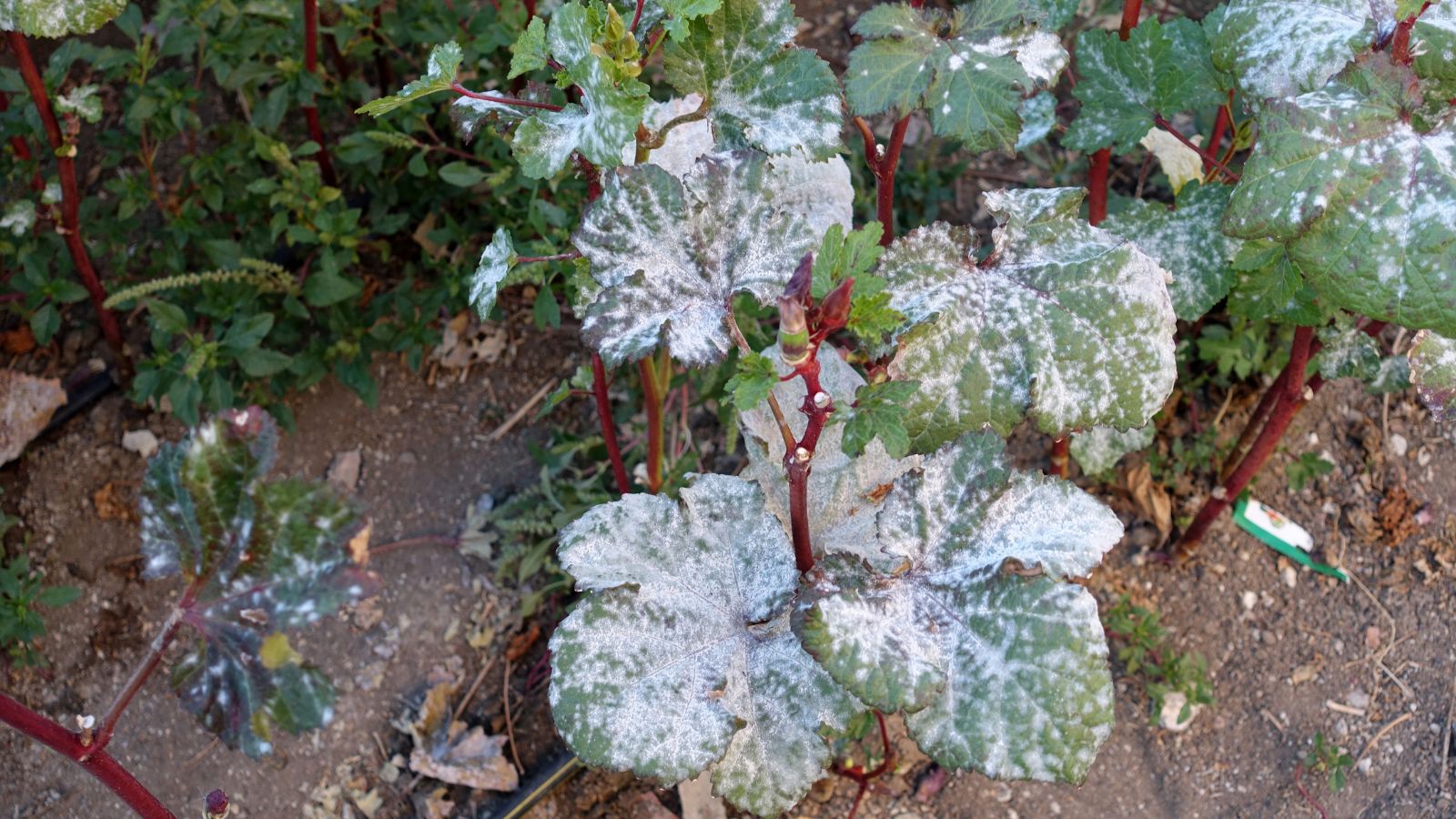
Powdery mildew is common in humid weather, especially if leaves stay damp. Neem oil is effective at keeping this issue under control. If it persists, apply a biofungicide or copper-based fungicide.
Fusarium root rot or stem rot is a soilborne disease that causes plant stunting, root decay, and severe yellowing or wilting. This disease can be difficult to manage, but some forms of mycorrhizae help reduce its spread. Avoid overwatering your plants.
Frequently Asked Questions
How long does it take for okra to grow?
It can take anywhere from 48-75 days for okra to mature, depending on its variety. After that, it produces for at least 10-12 weeks, or until weather conditions become too cold for it.
Does okra come back every year?
Okra is an annual and should not come back on its own. If a pod has spilled seed onto the soil, the seeds may germinate in the garden bed. Harvesting pods as they reach ripeness will prevent accidental seed drop.Pla
What is the best month to plant okra?
Since okra appreciates hot weather, you’ll want to plant substantial starts in late spring or right at the beginning of summer, depending on the region you’re in. Usually, this occurs in April or May.n
What can you not plant near okra?
Bad okra companions include eggplant, certain summer squashes, and a few other cucurbits. Unless you’re growing melons or cucumbers, keep cucurbits away from okra, as it tends to attract some pests.
How many okra will one plant produce?
Although it’s slow to start, once your plant begins producing, it will grow 20 to 30 pods per okra plant.t
Can you plant tomatoes next to okra?
Although other nightshades do poorly next to okra, tomatoes do very well!