How to Plant, Grow, and Care for Mizuna
Growing mizuna to add to salads, soups, or stir-fries is incredibly easy. With a few seeds and some extra room in your garden beds, you can grow plenty of these delicious leaves to harvest. Our complete growing guide provides you with our top tips!

Contents
Stir-fries in spring and salads in the height of summer have one thing in common: the peppery, versatile green known as mizuna. An easy addition to the vegetable garden, mizuna produces early in the season and tolerates the kind of weather fluctuations that give gardeners nightmares. These productive little plants deliver harvest after harvest of flavorful greens for months, making growing mizuna a smart choice for any household that loves to cook.
Native to the Kansai region of Japan, mizuna has since spread around the world and is now grown in USDA zones 3 through 10. It has even been grown in outer space as part of a vegetable production experiment aboard the International Space Station.
These distinctive greens seem to spring from the soil almost overnight and work beautifully in salads, stir-fries, and shabu-shabu, among many other dishes. Traditionally, chefs have also pickled mizuna’s tender leaves to create a range of side dishes. Some varieties produce purple-tinged foliage due to the presence of anthocyanin, the same compound responsible for the blue color in blueberries.
Often compared to arugula, mizuna can be distinguished by its noticeable mustard-like aftertaste. This plant performs especially well when grown in rotation with legumes. As a heavy nitrogen feeder, mizuna readily benefits from the nitrogen that legumes naturally fix in the soil.


Quick Care Guide

|
Scientific Name
Brassica rapa var. niposinica or Brassica rapa var. japonica
Days to Harvest
20-40
Light
Full sun to partial shade
Water
1 inch per week
|
Soil
Well-drained soil rich in nitrogen
Fertilizer
Seaweed or fish emulsion
Pests
Flea beetles; aphids
Diseases
Damping-off
|
All About Mizuna

Japanese mizuna greens have long been a staple of Asian cooking, as the plant originated in Japan. Like many leafy greens, mizuna goes by several common names, including Japanese mustard, potherb mustard, California peppergrass, shui kai, and spider mustard. Peppery and mildly spicy, this versatile vegetable can be grown year-round in some regions and is prized for its strong nutritional value.
A member of the brassica family, mizuna is closely related to cabbage. Unlike many other brassicas, however, mizuna tolerates both heat and cold more easily, making it a reliable crop across changing seasons.
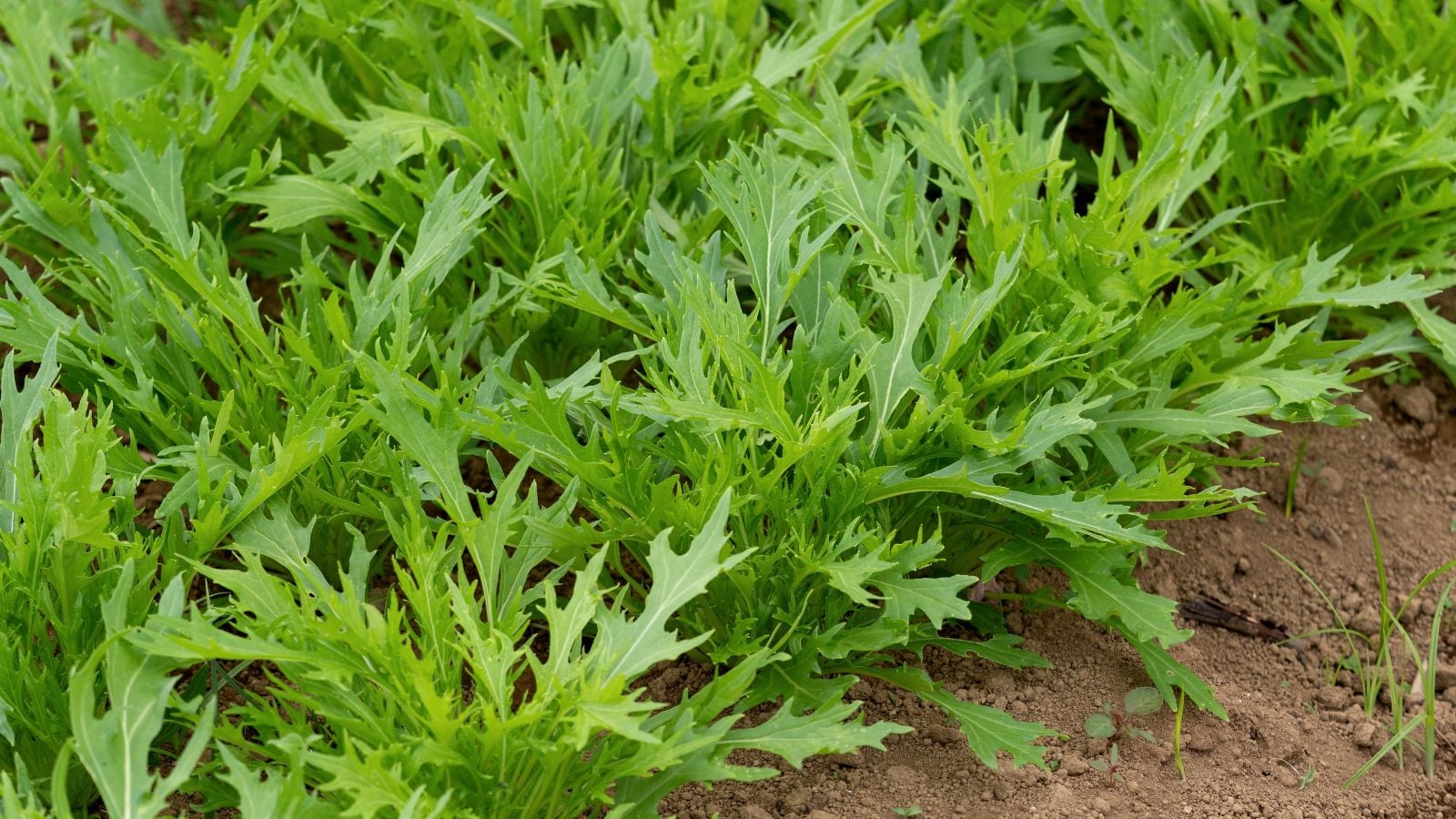
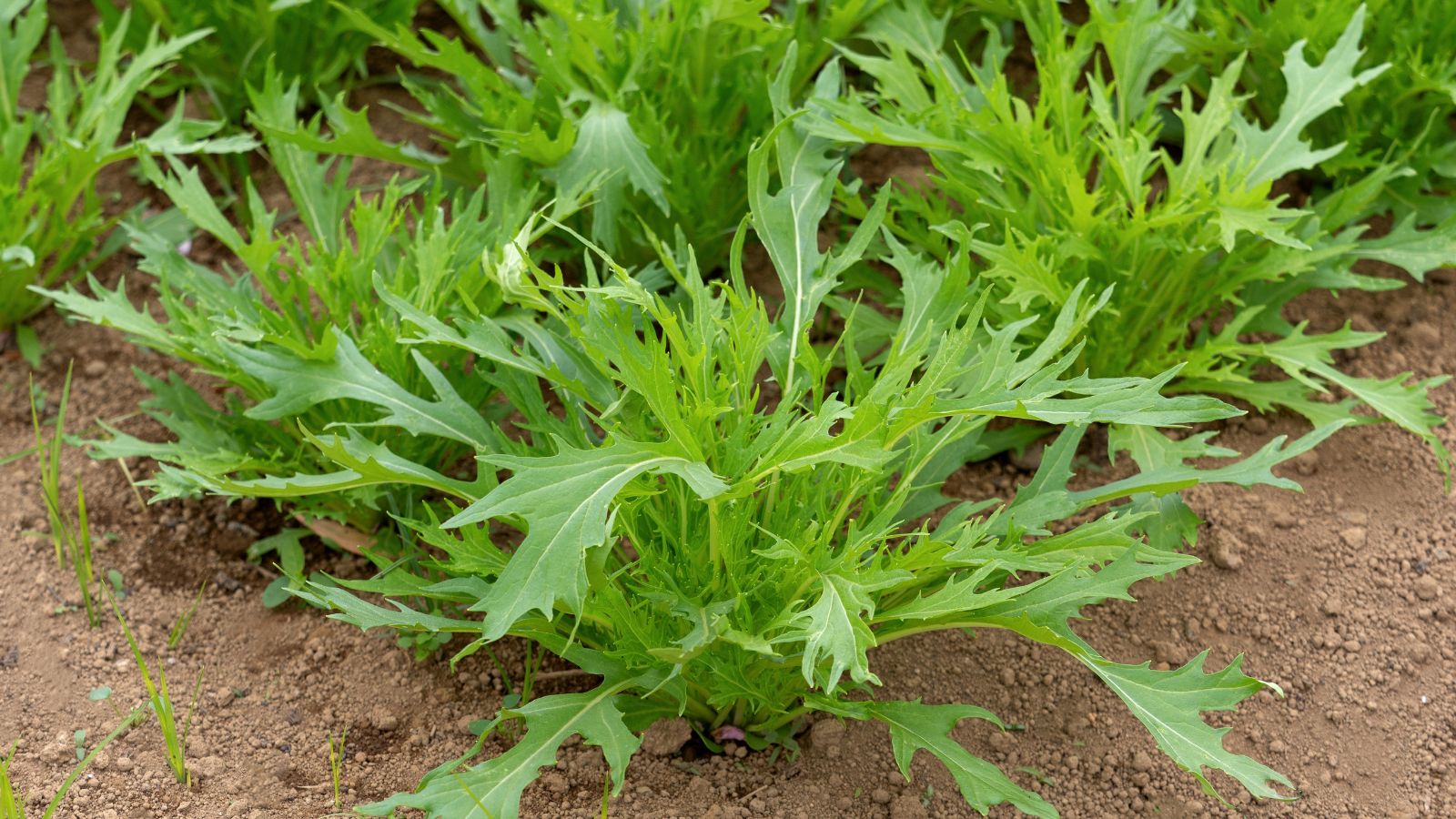
Mizuna greens grow in one-foot-tall clumps of serrated green leaves with thin stems. Some cultivars produce purple foliage, such as ‘Mizuna Crimson Tide’, but the plant is grown almost entirely for its edible leaves. A fast grower, small grey seeds sprout quickly into sturdy rosettes. Toward the end of the plant’s life cycle, mizuna will bolt and produce small yellow flowers on tall green stalks as it sets seed.

Planting
It is best (and easy) to grow mizuna from seed. The small, round, grey seeds are roughly the size of a lentil and simple to sow. Plant seeds one quarter to one half inch deep in well-drained, fertile soil, spacing rows 18 to 24 inches apart.
After sowing, seeds will germinate in four to seven days when temperatures are between 45 to 85°F (7 to 29°C). Once seedlings reach one inch tall, thin them to six inches apart. You can expect to begin harvesting three to six weeks after germination.
Plan to sow mizuna seeds about two weeks after the last frost. In regions without frost, mizuna can also be planted in the garden in late summer.
How to Grow
A hardy choice, mizuna has only a few basic growing requirements. Plant mizuna in a sunny location with well-draining, fertile soil, and you are already off to a strong start.
Light

Able to grow in USDA zones 3 through 10, mizuna performs best in full sun but can tolerate partial shade. Requiring 10 to 12 hours of sunlight, plant it in an area that receives little, if any, shade throughout the day. Space plants several inches apart so mature plants do not shade out younger growth that is regenerating after harvest.
Water

Moist soil is key to healthy mizuna. Its leaves contain a high amount of water, and if the soil dries out, the plant may bolt and go to seed. Mizuna should be watered in the morning, ideally using a drip system. Early in the plant’s life, water twice a week to keep the soil evenly moist. Once the leaves have grown large enough to shade the surrounding soil, reduce watering to once a week.
Aim to provide about one inch of water per week, and apply a light mulch of straw or fine wood chips around the seedlings to help retain moisture. In spring and fall, reduce watering if the soil becomes waterlogged. In summer, monitor soil moisture closely, especially during periods of heat or warm winds, as soil can dry out more quickly.
Soil

Mizuna greens grow best in well-drained, fertile soil. Ideally, amend the soil with compost or sterilized manure before sowing seed. While mizuna tolerates a range of soil types, it prefers a pH between 6.0 and 7.5.
When growing in containers, coco coir is a good option, as it improves drainage. Even so, avoid letting the growing medium dry out, as moisture stress can cause the plant to bolt and go to seed.
Temperature and Humidity

A great choice for northern gardens that experience occasional late frosts, mizuna is a hardy green that can tolerate sudden, unexpected cold once established. This resilience makes it one of the earliest crops you can grow in the garden. Likewise, in southern gardens, mizuna handles warmer conditions better than many other leafy greens.
Fertilizing

Mizuna greens have simple fertilization needs. Because these plants are grown for their leaves, they require plenty of nitrogen. When sowing seeds, work well-rotted manure into the soil to provide nitrogen early in the plant’s life.
After about one month, apply a liquid seaweed solution or fish emulsion to keep mizuna growing vigorously. Reapply every month or as needed, depending on growth and soil fertility.
Pruning

Mizuna greens are a very rewarding crop. Because mizuna is easy to grow, established plants will tolerate several rounds of cutting. Once the leaves reach 10 to 12 inches in length, cut the stems to about one inch above the ground. Use a sharp or serrated knife and cut parallel to the soil surface.
After harvesting, water the area thoroughly and keep the soil consistently moist. Within a few weeks, the plants will be ready for another harvest.
Propagation
Mizuna greens are grown exclusively from seed. This fast-growing crop can be started by direct sowing or by purchasing seedlings. The seeds themselves are quite hardy and maintain good viability when saved for up to four years.
Harvesting

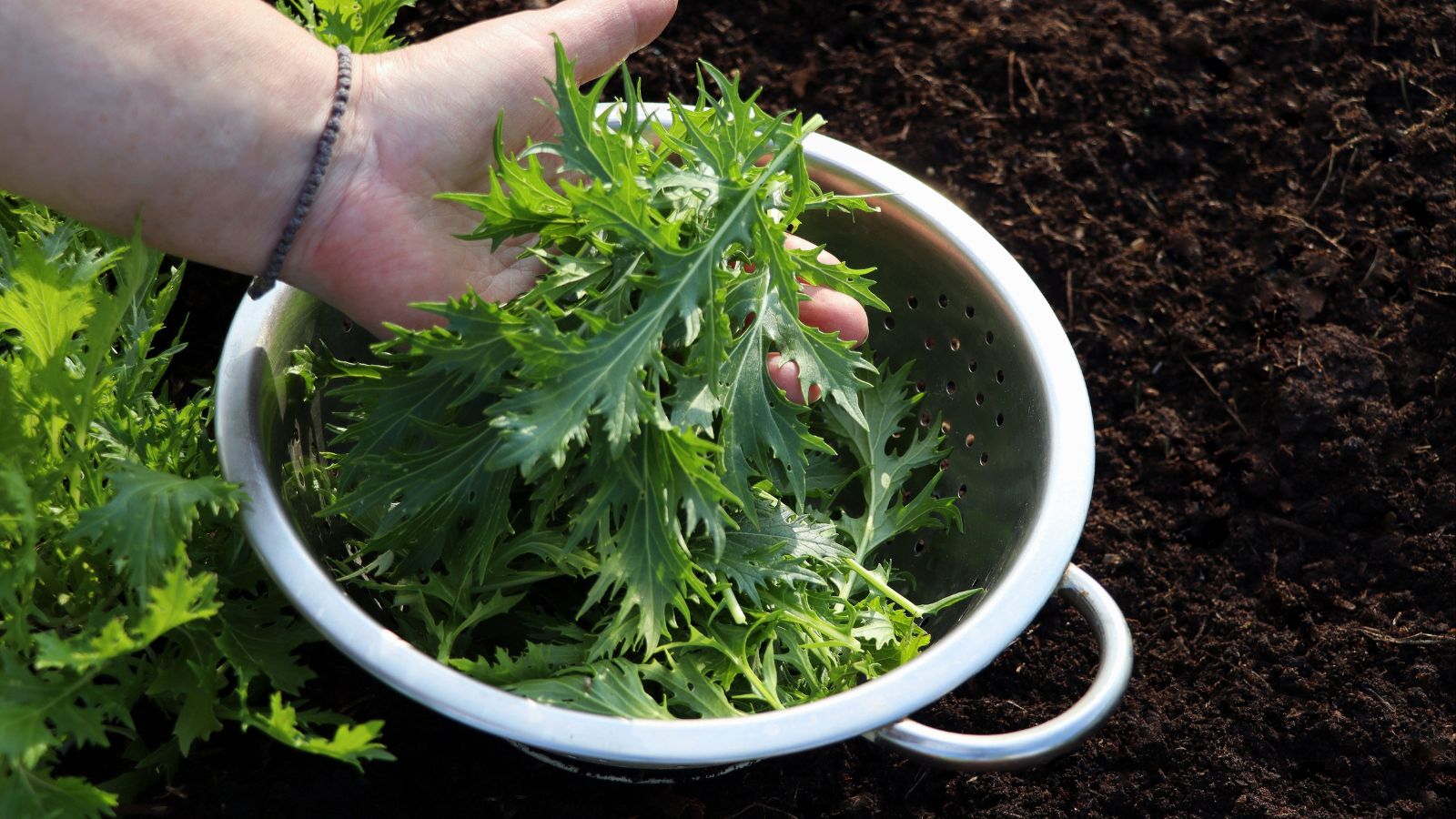
Harvesting mizuna is as simple as snipping individual leaves. A true cut-and-come-again crop, this Japanese mustard is a generous and reliable addition to the garden.
Mizuna, like most leafy greens, can be eaten at very early stages of growth. However, it is best harvested between 20 and 40 days after germination. Many gardeners prefer mizuna when it is still young and tender, while others allow the leaves to grow to around ten inches long before harvesting. Cut leaves at the base, taking care to leave the inner growth intact so the plant can continue producing.
Storing
Once harvested, store unwashed mizuna greens in a salad spinner or a breathable bag in the refrigerator. Avoid sealed plastic bags, as trapped moisture will cause the leaves to deteriorate quickly.
For longer-term storage, consider pickling your mizuna greens. Japanese chefs and home cooks have preserved these sturdy leaves this way for generations, often using them as a flavorful condiment. Pickling is a well-established preservation method in Asian cooking, and many recipes exist for turning mizuna into tangy, delicious side dishes.
Troubleshooting
Mizuna greens are a relatively easy plant to grow. Monitor outdoor temperatures, keep the soil consistently moist, and use a row cover when needed, and you will likely have a trouble-free crop within a month or so.
Growing Problems
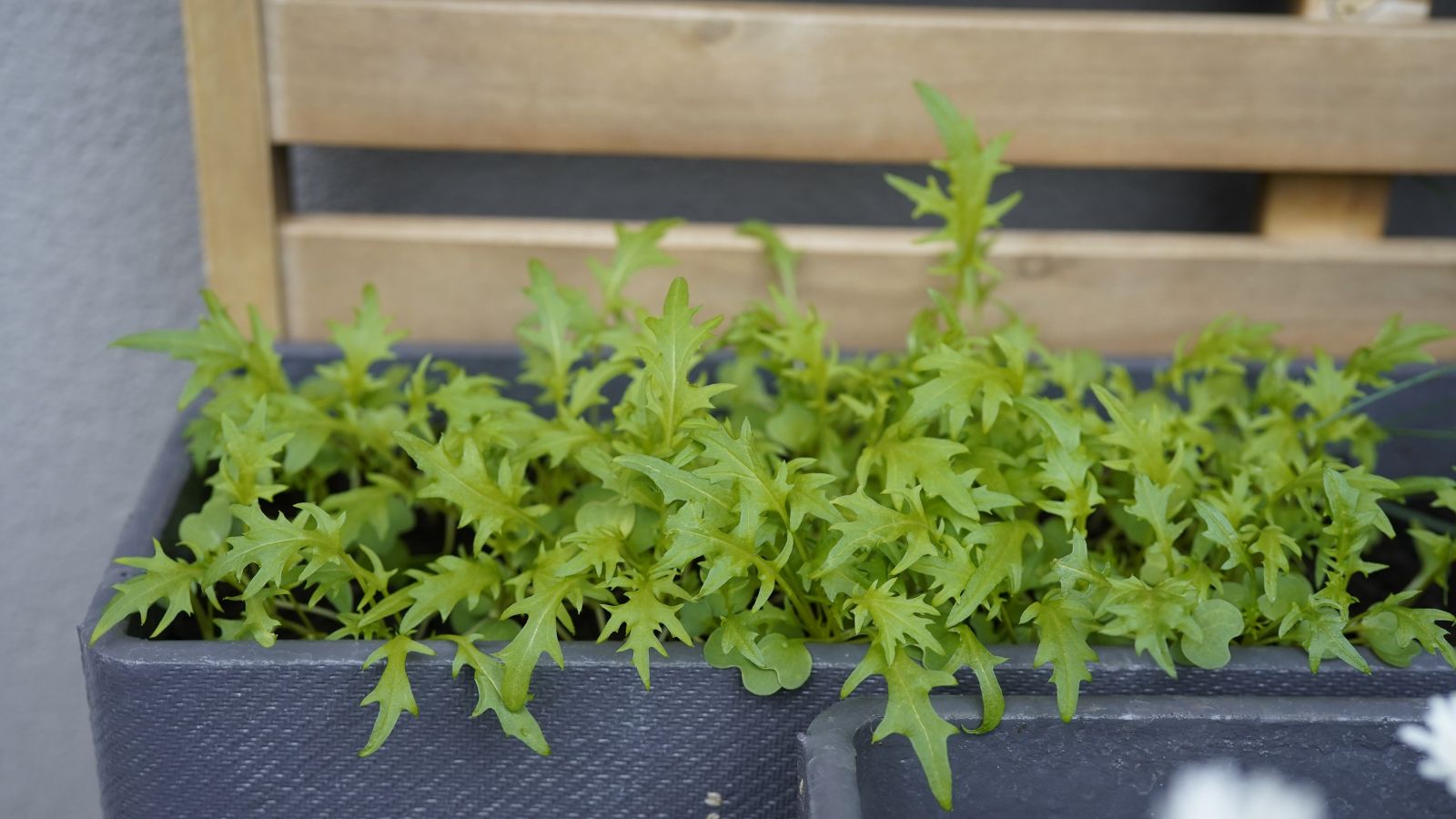
Mizuna greens are very hardy and tolerate warm summer weather better than most leafy greens. You can continue harvesting mizuna into the 80s°F (around 27°C). Keep in mind, however, that the plant can bolt. Bolting occurs when mizuna begins to reproduce and shifts its energy into producing seeds.
To reduce the risk of bolting, keep the soil around the base of the plant consistently moist, as dry conditions can trigger this response. If temperatures are expected to exceed 85°F (29°C), it is best to anticipate the end of the harvest period.
Pests

Flea beetles are the primary pest you are likely to encounter when growing mizuna. These beetles lay their eggs on the soil surface close to the plant stems. Once the larvae hatch, they chew small holes in both the stems and leaves. The most effective way to prevent flea beetles is to cover crops with a row cover, which physically blocks the beetles from laying eggs near your plants.
Aphids are another common pest. These small, light green insects are about one-eighth of an inch long and usually appear in clusters. They feed by sucking sap from the plant, weakening it over time. Aphids reproduce quickly and can cause significant damage, including spreading disease. Control infestations using insecticidal soap or pyrethrum.
Diseases
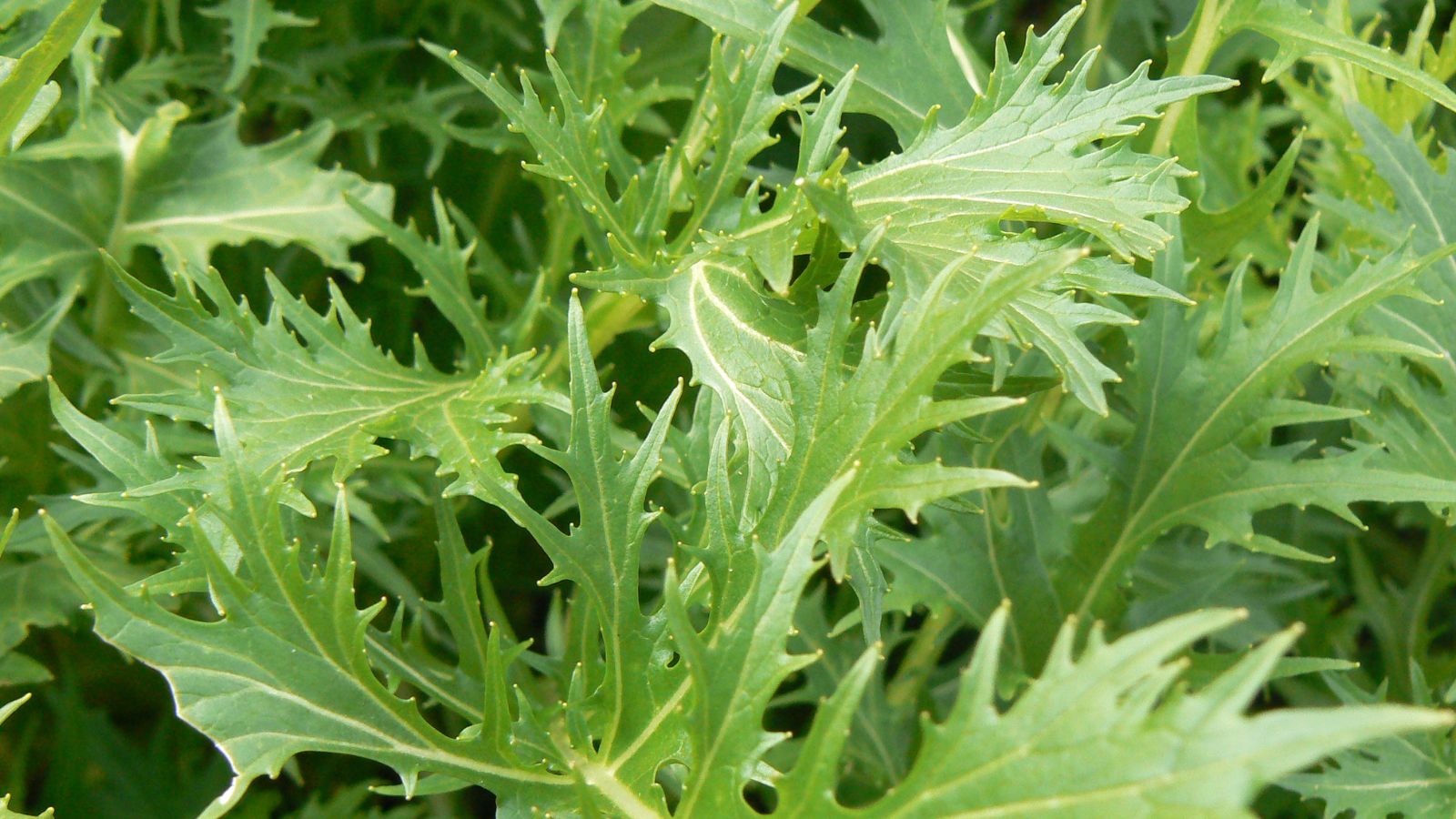
Mizuna greens are not highly susceptible to disease. The main exception is damping off, which most commonly occurs when seeds are started indoors in trays. Damping off appears as a fuzzy mold on the soil surface, along with stems that look shrunken or chewed through.
There is no cure once it occurs, but it can be prevented by improving air circulation or lightly dusting the soil with sulfur powder to limit spread to nearby seedlings.
Frequently Asked Questions
How long does it take to grow mizuna?
About 40 days.
Is mizuna a lettuce?
Mizuna isn’t lettuce. They come from different plant families but are used in similar ways in cooking.
Is mizuna the same as arugula?
No. These are two different plants, although both are peppery tasting greens.