How to Grow Mint Indoors Successfully
Growing mint indoors puts it within a moment's reach, no matter the weather! Our guide discusses everything you need to get growing.

Contents
All herbs in the Mentha genus have culinary uses and rich cultural histories. Whether you are growing spearmint, peppermint, or hybrid varieties like chocolate mint or apple mint, fresh mint can be enjoyed year-round. However, not everyone has access to a garden, and for some people, mobility issues can make outdoor gardening difficult. Growing mint indoors offers an accessible and practical solution.
Mint, botanically classified as Mentha, forms lush, aromatic, and highly productive herb gardens. Many gardeners who grow mint outdoors end up removing it because it spreads aggressively and can quickly take over. Growing mint indoors allows you to enjoy regular harvests throughout the year without the risk of it becoming invasive.
If you are new to indoor gardening, mint is an excellent place to start. It is forgiving, fast-growing, and reliable. Whether you plan to grow mint on a sunny windowsill, on a balcony herb shelf, or in a more advanced setup like a hydroponic system, these plants adapt well. With proper care, indoor mint provides a steady supply of fresh leaves all year.
One major advantage of growing mint indoors is avoiding the ecological challenges associated with planting a potentially invasive herb outdoors. Even when grown in containers, mint can escape into nearby beds and spread quickly. Growing mint indoors helps protect established garden spaces and preserves the work you have put into your soil. It is a practical and environmentally mindful gardening choice.


Ways to Grow Mint Indoors
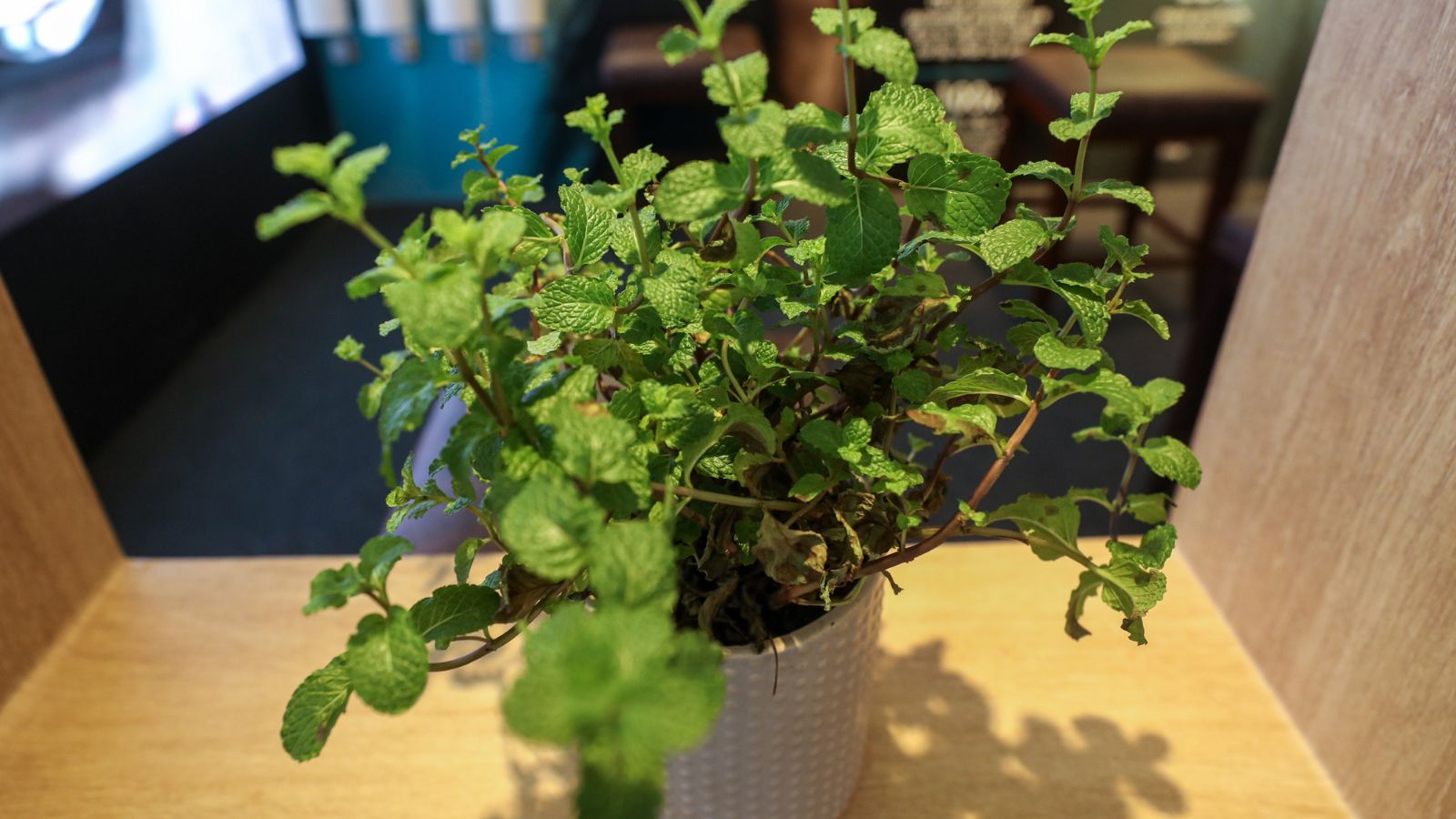
Grow mint indoors on a windowsill or enclosed balcony that receives a good amount of direct sunlight. If there are no obstructions from nearby trees or buildings, mint will thrive in this environment. But if sunlight is blocked, growing mint this way can be more challenging.
If your windows do not face the right direction or do not receive enough light, grow lights are an effective alternative. Move the container to a location where a fluorescent grow light can be easily plugged in. Fluorescent lights should remain on for at least 12 hours per day to support healthy indoor mint growth. Many grow lights include built-in timers, while others require manual operation. Choose an option that suits both your setup and the needs of your mint plant.
Grow tents are another option for indoor mint growing and can be especially effective. A grow tent allows you to control light, temperature, and humidity. This is particularly beneficial because mint prefers higher humidity levels. Grow tents are best suited to gardeners with enough available space. Smaller models typically start at two feet by two feet by four feet.
Mint also grows well indoors in hydroponic systems. In the past, hydroponically grown herbs were thought to lack flavor compared to soil-grown plants. Advances in hydroponic technology now provide plants with balanced nutrients that support strong flavor development. This option works well for gardeners with a few feet of counter space available.
There are many system options available, including aquaponic setups roughly the size of a small aquarium. Keep in mind that mint is a heavy feeder and can quickly deplete nutrients in both soil and water-based systems. Regardless of whether mint is grown in containers or specialized systems, Mentha plants are forgiving and perform well even with occasional neglect.
Caring For Indoor Mint
Growing mint indoors is straightforward, as this herb is not finicky. With just a few simple requirements in place, you can easily take your mint plant from setup to successful growth.
Lighting & Temperature
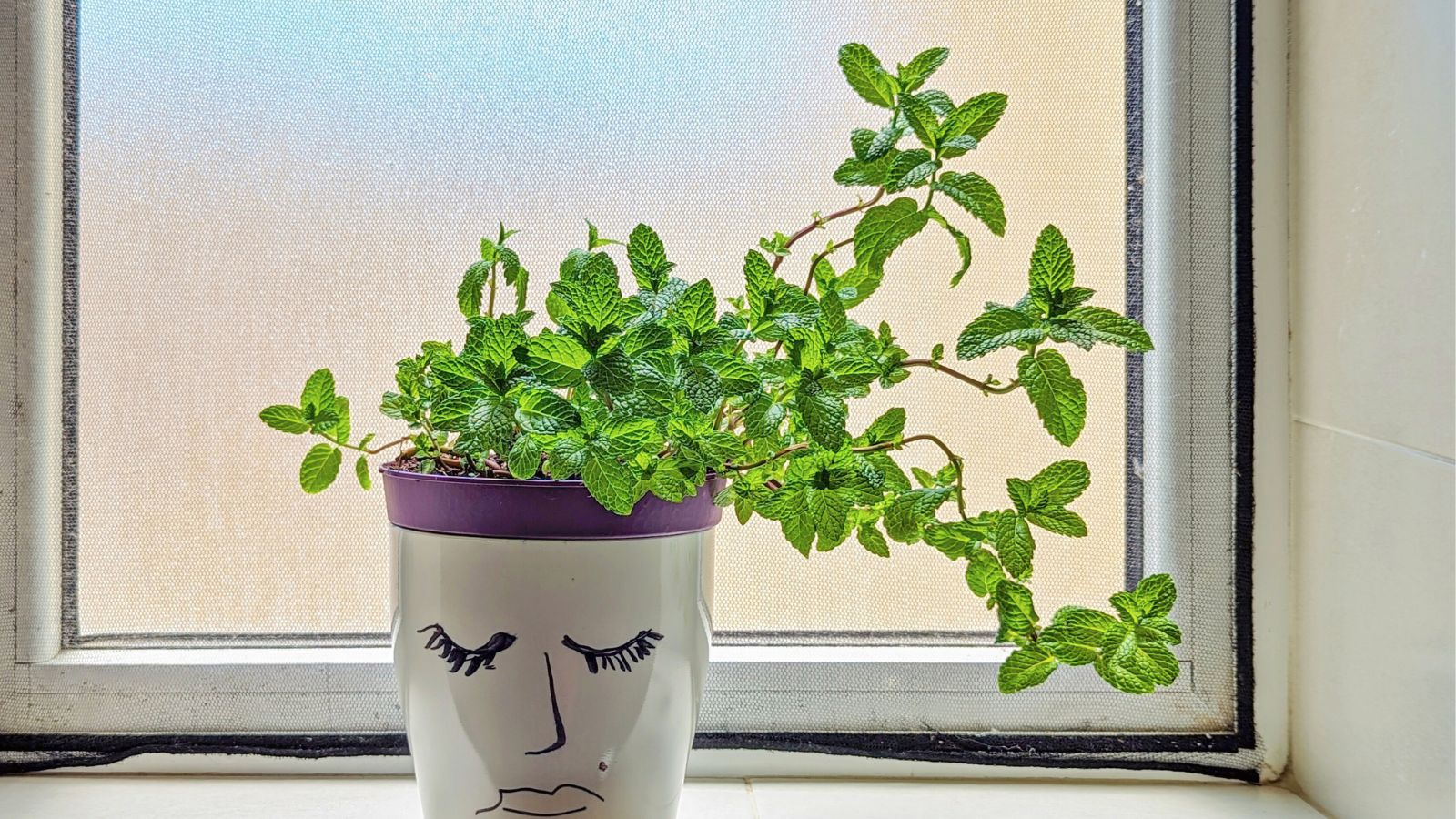
A mint plant needs at least six hours of direct sunlight per day. As mentioned above, fluorescent grow lights should remain on for at least 12 hours per day when growing mint indoors. In the northern hemisphere, a south-facing window provides the strongest light, while a north-facing window serves the same purpose in the southern hemisphere.
To prevent the plant from stretching toward the light due to shade, rotate it regularly whether it is grown in direct sunlight or under grow lights. This also encourages more balanced growth.
Fluorescent lights usually need a structure to hang from above the mint plants, so this should be factored into your setup. Position lights close to the plants to mimic natural sunlight conditions that mint prefers. When choosing a light, consider how much space you have available.
In small spaces, a single bulb may be sufficient. With more room, a setup around four feet long can significantly improve plant growth. Grow tents and hydroponic systems typically include built-in lighting, so follow the manufacturer’s instructions to ensure your mint plant receives adequate light.
Mint prefers temperatures between 55 and 70°F (13 to 21°C). Indoor growing works well because most homes naturally fall within this range. Although mint often thrives with minimal attention, indoor plants are more affected by household climate control. Avoid placing containers near air conditioner vents or heaters, as warm dry air can quickly dry out the soil and cool dry air can stress the roots and contribute to rot.
Water & Humidity

Mint is easy to grow, and it is difficult to overwater or underwater when basic care is followed. However, consistently soggy soil can damage the roots, while overly dry conditions can stress the plant. When the pot feels noticeably light due to a lack of moisture, it is time to water your mint.
When grown on a windowsill, direct sunlight causes moisture to evaporate more quickly than in other setups. Check the pot once or twice per week to determine whether watering is needed. When it is time to water, move the container to the sink and flush water through the soil thoroughly. Allow excess water to drain completely without a catchment tray underneath, then return the pot to the windowsill.
Mint enjoys higher humidity levels. Between waterings, lightly mist the leaves with a spray bottle. You can also place the container on a tray filled with pebbles and water to create ambient humidity as the water evaporates. This step is optional if regular watering is maintaining adequate moisture.
Grow tents and hydroponic systems typically provide sufficient humidity and usually do not require additional misting. Aim to keep humidity levels at or above 40%. In hydroponic systems, replace the water every five to seven days to maintain plant health.
Growing Medium & Container

For indoor mint growing, plant mint in a good-quality potting soil in a container large enough to support its vigorous growth. A pot at least eight inches in diameter and at least 12 inches deep will keep an indoor mint plant happy. Make sure the pot has generous drainage holes. Self-watering pots can work well for mint, especially if the soil tends to dry out quickly between waterings.
There are also options for gardeners who prefer soilless media. Mint grows well in an evenly mixed blend of vermiculite, perlite, and peat moss. If you want to avoid peat moss, coconut coir is an effective alternative. This mix can be used directly in containers, or you can start mint in a coir starter pellet and transplant it later.
In hydroponic systems, mint can be grown in lightweight expanded clay aggregate, which wicks moisture into small air pockets that roots can access easily. One advantage of LECA is that it is often more affordable than coconut coir or some premium potting soils.
The main takeaway is that mint needs good drainage. It tolerates moist soil but prefers it to dry slightly between waterings, paired with adequate humidity. Fortunately, mint is forgiving, and even indoors it grows well with a consistent routine of light and water.
Fertilizing

You will not necessarily need fertilizer for an indoor mint plant. However, mint does benefit from a liquid fertilizer applied every three weeks during warmer seasons and every six weeks in winter.
In hydroponic systems, use a high-nitrogen liquid fertilizer and adjust the pH of the nutrient solution as needed after fertilizing. The same feeding schedule applies to container-grown Mentha plants.
Pruning
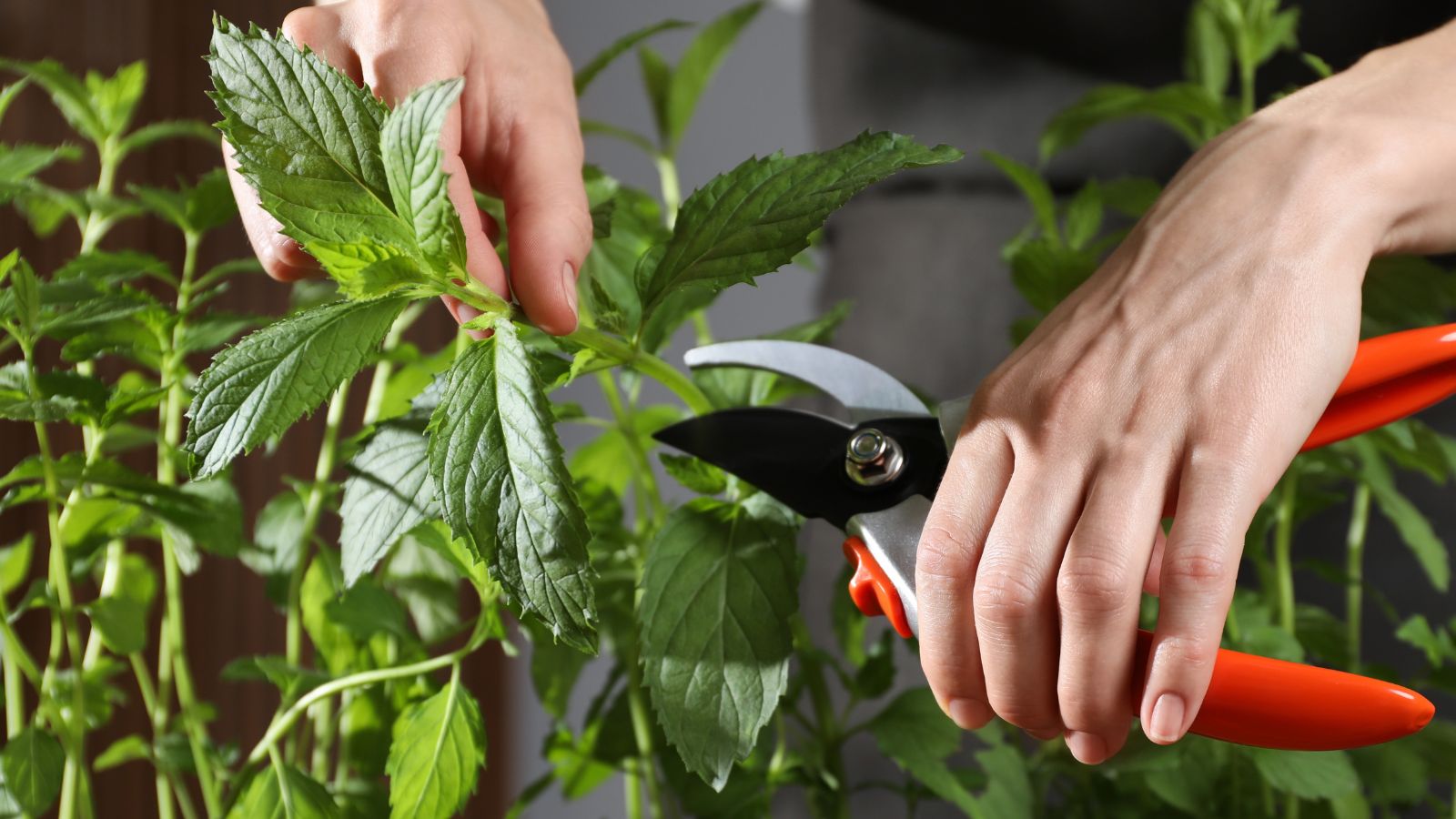
All aromatic herbs, mint included, appreciate regular pruning. Pruning mint encourages fresh growth, which leads to a fuller plant and more leaves to harvest. There is rarely such a thing as too much mint.
To prune, clip or pinch off the top few leaves just above the next growth point, where two leaves emerge on either side of the stem. Aim to take cuttings that are a few inches long so you are not removing stems that are still too young.
When growing mint indoors, flowering should be managed the same way as outdoors. Remove flower buds as they appear to prevent the plant from diverting energy away from leaf production. Snap off flowering stems just above the first growth point.
While mint flowers are valuable outdoors for pollinators, they are unnecessary indoors. Allowing mint to flower also encourages the plant to set seed, which is not desirable when your goal is steady leaf production.
Planting
Indoor mint growing can be started from seed or from cuttings. You can sow seeds directly into the soil of pots or containers and wait for them to sprout. Use only a few seeds per container, as mint grows quickly and can become overcrowded.
Each seedling needs about two feet of space to grow well, which usually means one plant per container. Proper spacing helps prevent competition for light, water, and nutrients.
You can experiment with different types of mint when growing indoors. Try spearmint and apple mint alongside Mentha piperita. Avoid overcrowding containers with too many seeds, and be sure to provide light, as mint seeds require light to germinate.
For hydroponic systems, start seeds in rooting plugs. In both containers and hydroponic setups, seeds typically germinate within one to two weeks. Keep the growing medium consistently moist and maintain temperatures around 70°F (21°C). Once roots begin to emerge from the plug and the seedling reaches a few inches tall, it can be transplanted into its final growing system.
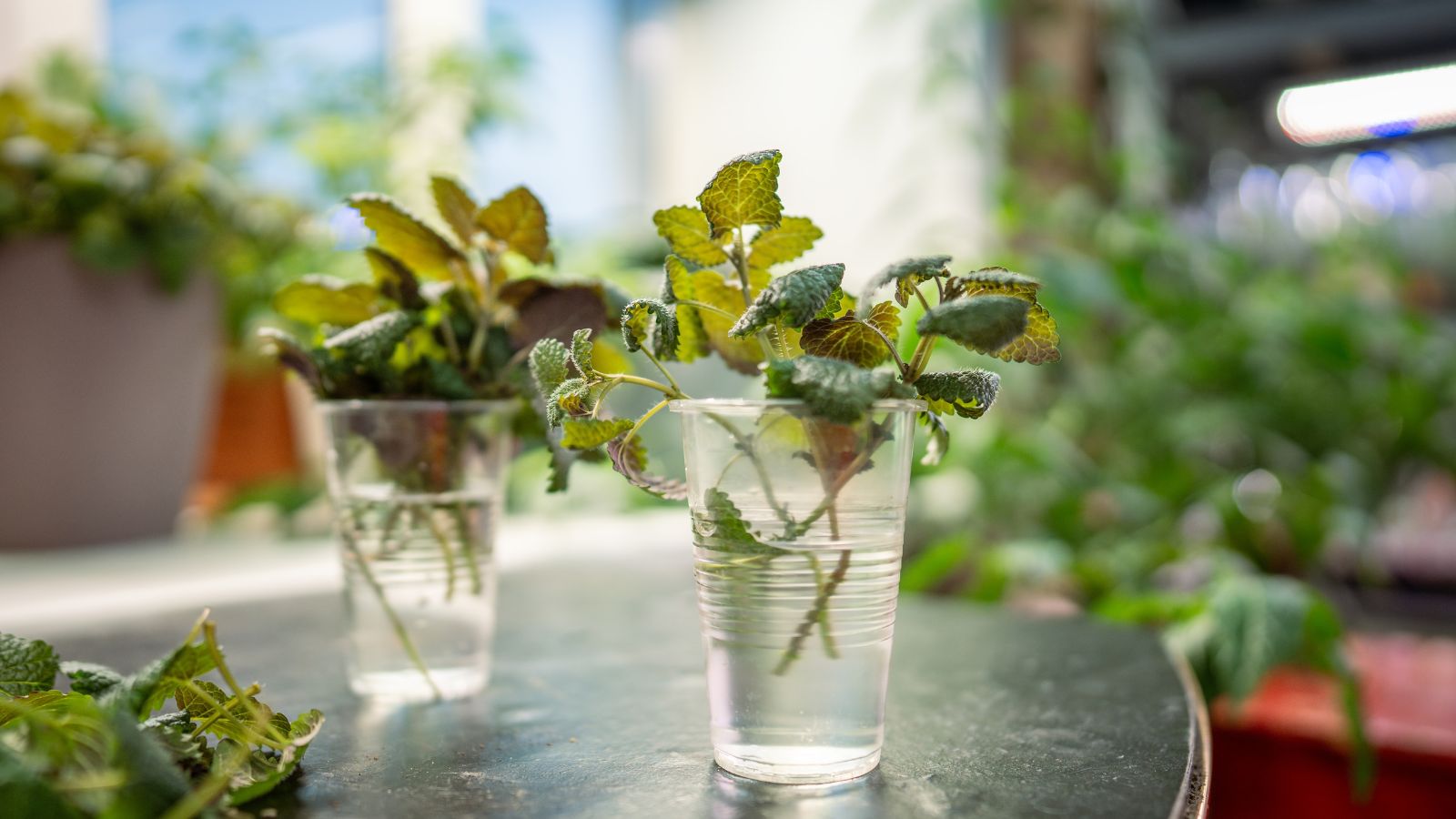
Mint is also very easy to propagate from an established plant, and this method is faster than growing from seed. Harvest stems from the fresh green growth above any woody sections. Place the cuttings in a cup of water and keep them out of direct sunlight. Within about a week, white roots should form, and the cuttings can then be planted in soil or hydroponic plugs.
You can also skip the water-rooting step by dipping fresh cuttings into rooting hormone and planting them directly into soil. In about a week, the cuttings will establish and begin growing as new mint plants.
Troubleshooting
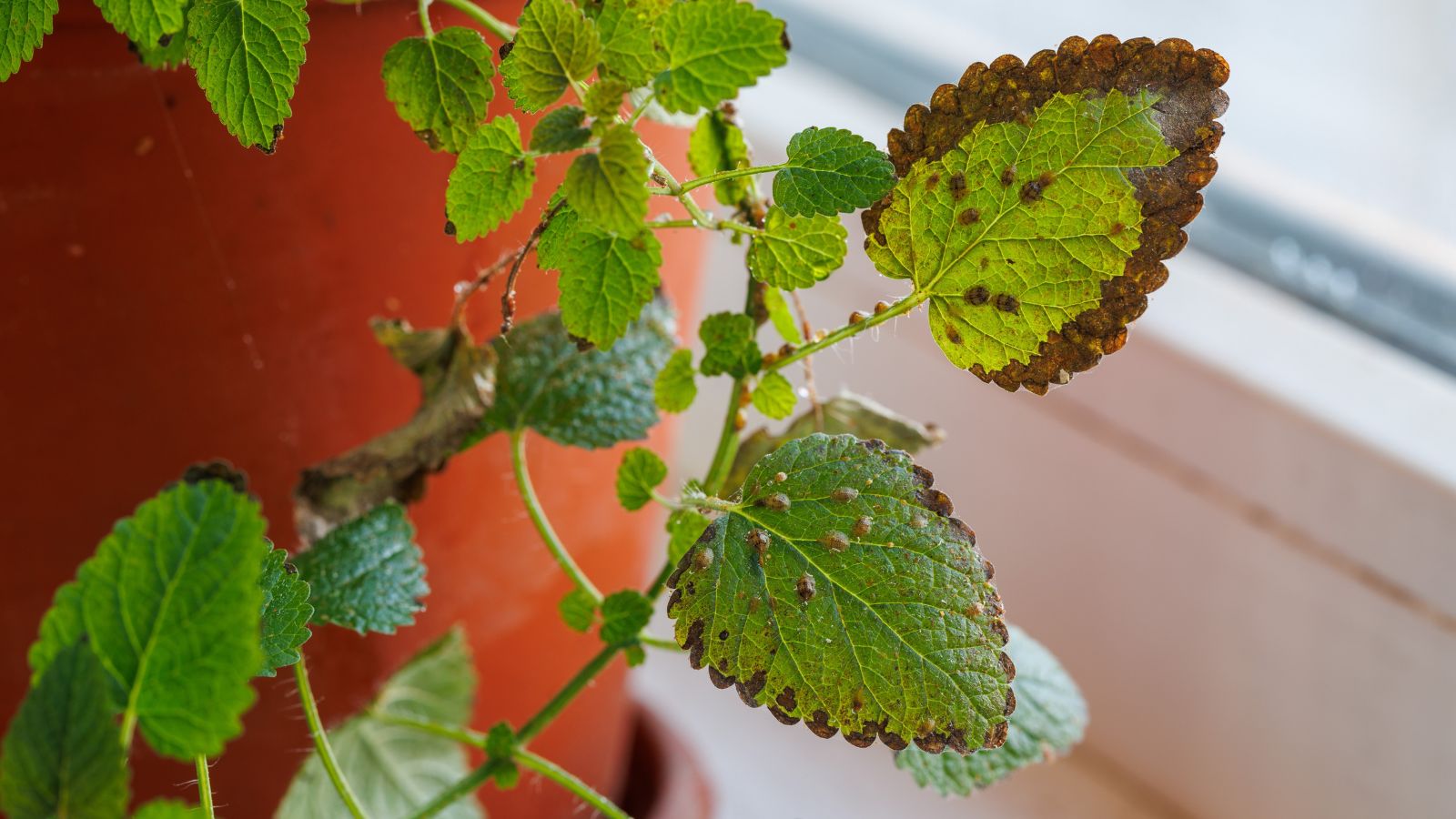
Thankfully, the menthol compounds found in most mint plants help deter many common pests, which is one reason mint is popular in companion planting and home gardens. When grown indoors, it is even easier to monitor plants closely and ensure growing conditions remain consistent.
Uneven soil moisture and inconsistent humidity are the most common challenges with indoor herb growing, including mint. While different species have slightly different needs, mint generally prefers evenly moist soil and relatively high humidity.
If the soil becomes too dry, add water promptly. Extended dryness can cause browning of the green leaves, which negatively affects flavor. In hydroponic systems, keep the nutrient solution fresh and well-balanced to support healthy growth.
As mint matures, some stem browning is normal. However, premature browning, mushy stems, and slowed growth often indicate overwatering. These symptoms may also point to fungal root rot, which can severely damage or kill a mint plant if left unaddressed.
Overhead watering can create ideal conditions for mint rust, a fungal disease that affects many species in the mint family. Water at the soil level whenever possible to reduce the risk of infection.
Conditions that favor fungal growth can also encourage fungus gnats, which damage roots when infestations are heavy. To control fungus gnats, set up apple cider vinegar traps. Pour a small amount of apple cider vinegar into a cup, add a drop of dish soap, and cover it with plastic wrap. Poke a few small holes in the wrap. The gnats are attracted to the vinegar, and the soap prevents them from escaping. Dispose of the trap once the infestation is gone.
Too little light or excessive indirect light can cause leaves to brown and become leggy as the plant stretches toward a light source. Mint does not tolerate deep shade well. If light levels are insufficient, remove damaged leaves and adjust your lighting setup. When growing mint on a windowsill, supplemental grow lights may be necessary to provide adequate light exposure.