How to Plant, Grow, and Care for Broccoli
Consider growing broccoli this year! This nutrient-dense green vegetable is easy to grow in the cooler months. This guide by gardening expert Rachel Garcia reveals how.

Contents
What’s the name of Bruce Lee’s vegan brother? Brocco Lee, of course! This veggie may not be into martial arts, but it is definitely a master in the garden. In this article, we’ll cover everything you need to know about growing broccoli at home.
Bad jokes aside, broccoli is surprisingly easy to grow. You may be amazed at how well these cole crops adapt to the garden. Once planted, they are fairly low maintenance, especially if you have an irrigation system in place.
Unlike cauliflower, which produces a single harvest, broccoli continues to form edible side shoots after the main head is cut. The leaves, opened flowers, and seed pods are also edible, so very little goes to waste. From a nutrition standpoint, broccoli provides Vitamins A, B, and C, along with fiber, calcium, iron, zinc, and more.
As an added bonus, broccoli is a cool-weather crop, making it especially easy to grow in northern climates. If you live somewhere warmer, there is no need to feel left out. Broccoli grows well as a winter crop in mild regions. By the end of this guide, you will be ready to grow and enjoy those tiny, tree-shaped florets straight from your own garden.


Quick Care Guide

|
Common Name(s)
Broccoli
Scientific Name
Brassica oleracea (Italica Group)
Days to Harvest
100-150 days
|
Light
Full sun
Water
Consistent; medium
Soil
Fertile, neutral soil pH
|
Fertilizer
Balanced, when needed
Pests
Cabbage worms, cabbage loopers, root maggots, aphids
Diseases
Blackleg, black rot, clubroot
|
All About Broccoli

If you look up the name Brassica oleracea, you’ll be met with a wide range of cruciferous vegetables. From kale to Brussels sprouts to kohlrabi, this single species includes many different plants commonly referred to as cole crops. To keep things organized, B. oleracea is divided into groups, which helps narrow things down.
The Italica group includes broccoli, with many variations ranging from the broccolini hybrid to the striking Romanesco broccoli. You’ll find a wide range of flower head shapes and sizes here. That said, sometimes sticking to the basics is best. The Calabrese type is the classic broccoli most people recognize from the grocery store.
Broccoli traces its origins to the Mediterranean and Asia Minor. It is believed to have been cultivated as far back as ancient Roman times, particularly in Italy. The vegetable did not reach England until the 1700s and arrived in America shortly after. Despite its long history, broccoli only became widely popular in the United States in the 1920s.
Characteristics
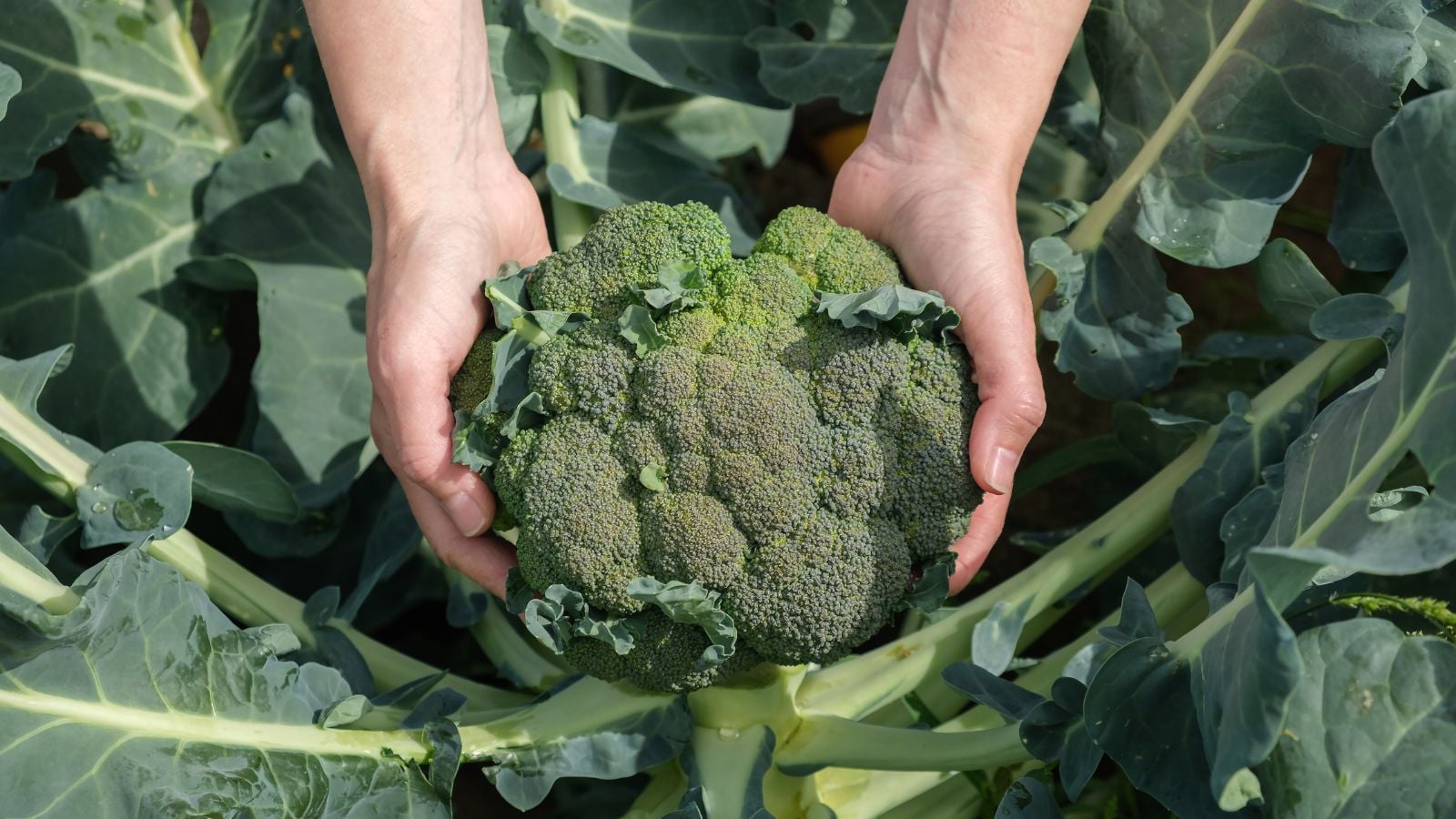
You may have heard that broccoli is a flower, and that is completely true. The edible head is made up of tightly packed, unopened flower buds supported by thick, sturdy stems. The goal is to harvest broccoli before those buds open. If left alone, they bloom into loose clusters of small, yellow, cross-shaped flowers, which is where the term cruciferous comes from.
The central head grows above a base of large, dull green leaves that closely resemble cabbage foliage. A mature plant typically reaches one to two and a half feet tall and one to two feet wide. Although broccoli is technically a perennial, it is usually grown as an annual, especially in cooler climates.
Planting

Because of the way broccoli grows, the timing is fairly flexible. You can plant broccoli for a spring harvest, a fall harvest, or both. If you live in a warm climate, you can also plant in fall and harvest in spring. Broccoli will overwinter as long as garden temperatures are not consistently below freezing.
For a spring harvest, start broccoli seeds indoors six to eight weeks before your last frost date, typically late winter to early spring. About three weeks before that date, harden off the seedlings and transplant them outdoors. You can also plant broccoli starts at this time. The heads should be ready to harvest toward the end of spring.
For a fall harvest, start broccoli seeds indoors in July. Plan to transplant them outdoors once temperatures drop below 75°F (24°C). Timing depends on your local climate, but mid-August is often ideal.
Plant broccoli seedlings in a sunny location with fertile soil. Fall crop rotation is especially important for cole crops, so avoid planting broccoli in areas that have grown other cruciferous vegetables within the last four years. Broccoli can also be grown in containers, as long as they are large enough, at least eight inches deep and wide.
Container growing has the added benefit of allowing you to move plants into shade during periods of extreme heat, and makes spacing much easier.
Because broccoli seeds are small, sow them only a couple of centimeters deep. Space plants about 18 inches apart, with rows spaced two to three feet apart. Germination takes four to seven days and occurs best at temperatures between 45 and 85°F (7 to 29°C). Transplants can be planted a few inches deeper than they were growing in their containers, which helps create a more compact, stable plant.
How to Grow
Your broccoli plant doesn’t need much work now that it’s planted. Keep up with the following care needs, and you’ll soon have a rewarding harvest.
Light

Broccoli needs full sun, which means six to eight hours of direct light per day. However, full sun combined with high heat can do more harm than good. If temperatures rise above 80°F (27°C), you may need to provide shade for your broccoli plants. Without protection, growth can become stunted, and broccoli heads may bolt prematurely.
Shade cloths are an effective way to protect broccoli and other cool-weather vegetables from excess heat. Look for a shade cloth with around 30% coverage to reduce stress while still allowing enough light for healthy growth.
Water
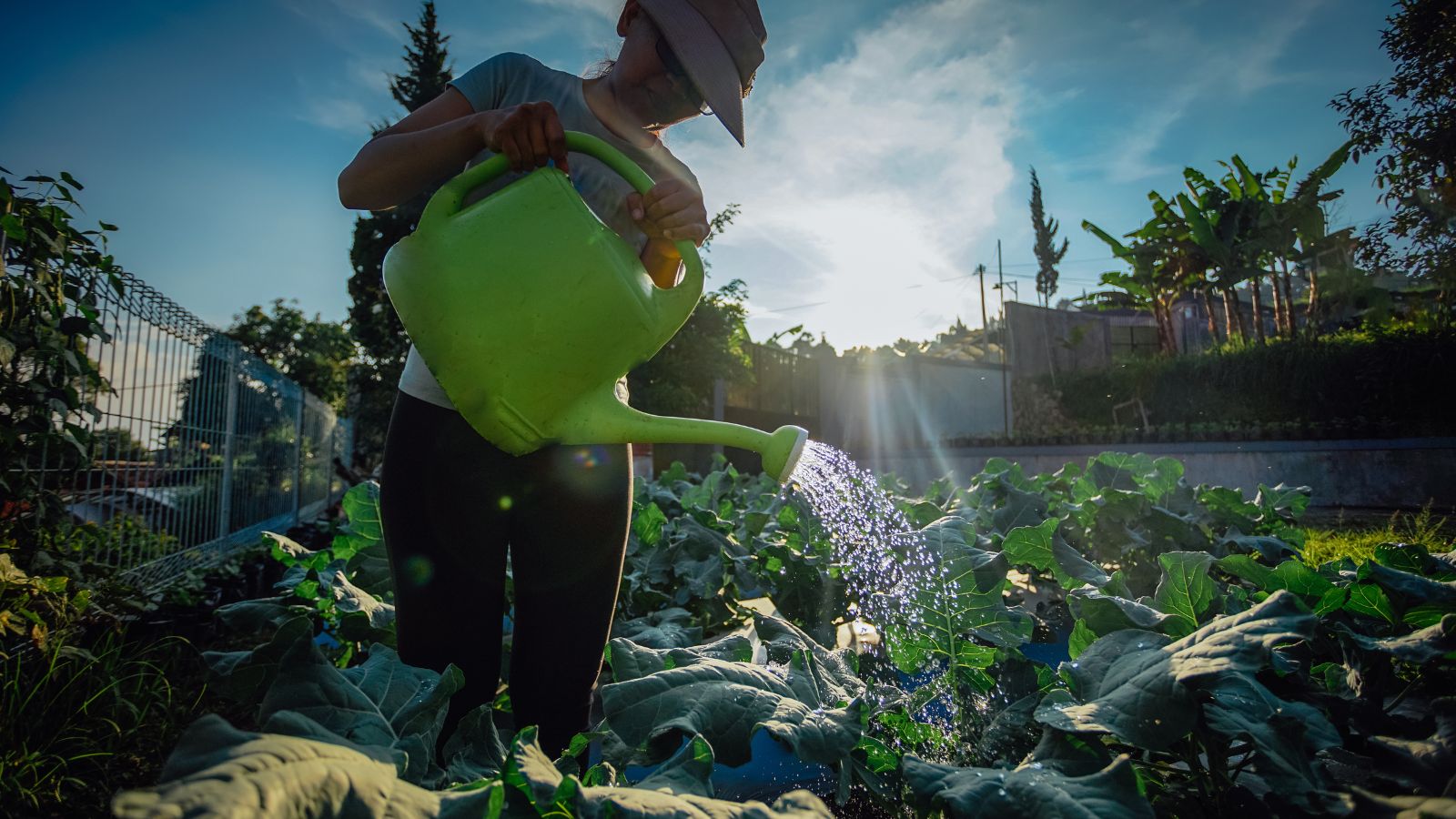
Broccoli plants love, love, love their water. They also have shallow roots, so consistent watering is essential.
Do not let the soil dry out, as this will stress the broccoli plant, disrupt growth, and can lead to a bitter flavor. Keep the soil evenly moist, but avoid overwatering. There should never be puddles left on the soil surface after watering. A soaker hose is an excellent way to deliver steady moisture and keep plants properly hydrated.
Mulch is highly encouraged for broccoli plants. It protects shallow roots while helping retain moisture and suppress weeds. Organic materials such as compost, chopped leaves, or grass clippings are all excellent mulch choices for the garden.
Soil

Loamy soil is best, but a range of soil textures will work as long as there is a good balance between drainage and moisture retention. The soil needs to stay consistently moist, but the roots should never sit in water. Even plants need air. Soil pH should be neutral to slightly acidic, ideally between six and seven.
Keep garden soil rich in organic matter, and your broccoli plants will respond well. A steady supply of nutrients helps them mature before the growing season ends. Add organic matter before planting and continue amending periodically as the plants grow.
Temperature and Humidity
These plants are somewhat vulnerable to frost but typically do fine if the temperature stays above 20°F (-7°C). Ideally, though, the garden temperature should be 45-75°F (7-24°C).
Fertilizing

The best way to supply your broccoli plants with nutrients is to add organic matter to the soil. However, fertilizer can be used to give your vegetables an extra boost. Starting after transplanting, apply fertilizer every few weeks until harvest.
Choose a balanced fertilizer such as 10-10-10 or 12-12-12. Slow-release options are often the most convenient since they provide nutrients over a longer period. To help the broccoli plants absorb the fertilizer, water it into the soil after application. When applying any fertilizer, be careful not to let it touch the plant directly, as this can cause burns.
Pruning

Broccoli doesn’t look like it needs it, but pruning can actually help you manage its growth. When left to its own devices, broccoli grows a central head along with a few side shoots. With pruning, you can decide whether to focus growth on larger heads or on more side shoots.
For larger broccoli heads, clip off the side shoots as soon as they appear. On the other hand, you can remove the central head about a month after transplanting. This encourages the plant to produce several medium-sized side shoots instead. As always, use a clean, sharp knife or sterilized pruning shears when making any cuts.
Be sure to space your broccoli plants at least 18 inches apart so they do not crowd each other. If your garden ends up short on space, it is better to transplant broccoli rather than rely on pruning to control its size.
Propagation

Since broccoli is usually grown as an annual, it is typically propagated by seed. Because plants cross-pollinate, seeds saved from your harvest may not grow true to type. Still, seed saving is a fun experiment that many gardeners enjoy trying.
You will need to sacrifice one broccoli head by allowing it to fully mature. Choose a healthy plant and let it bolt, which happens when the head breaks apart into loose bunches of yellow flowers. The blooms have a surprisingly wildflower-like appearance. After bolting, seeds begin forming inside the flower stems. You will notice the stems swelling and taking on a pea pod shape. This entire process takes at least a couple of months.
Once the seed pods have dried on the plant, pull the broccoli from the ground and allow it to dry for another two weeks. After that, remove the seed pods and crush or twist them to release the seeds. The small, round broccoli seeds can remain viable for up to five years, but they are best used sooner rather than later. Store them in a cool, dry place until you are ready to plant.
Harvesting

You put in all the work to grow broccoli, and now you get to reap the rewards. The process of harvesting broccoli is simple, so you’ll be enjoying those florets before you know it.
Harvest broccoli sooner rather than later, since you don’t want the plant to bolt. The head should be tight, firm, and fully colored. It is usually fist-sized or larger, although this depends on the variety.
Cut into the stem four to six inches below the head, or further down if you plan to eat the stem as well. You can also harvest the leaves and cook them the same way you would collard greens. Opened flowers and seed pods are edible too and are often used as a garnish or added to salads. Harvest broccoli in the morning when temperatures are cooler, and move the heads from the garden to the fridge as quickly as possible.
Most varieties will send out side shoots after the main head is harvested, which can provide a second spring or fall crop. Leave the plant in the ground for a while after harvesting to allow these shoots to develop. They will be smaller than the main head but just as flavorful. Be sure to leave enough stem and foliage so the plant has the energy to produce more broccoli.
Storing

After you’ve finished harvesting broccoli, store the heads in the fridge, unwashed, for three to five days. If long-term storage is more your style, blanch and freeze the heads for up to 12 months. When blanching, slightly undercook them so they do not turn mushy when thawed. As with any vegetable, the sooner you eat it, the better the quality.
Troubleshooting
As mentioned earlier, growing broccoli is fairly simple. Still, it’s important to be aware of potential problems that can make the process more challenging. Here’s a quick guide to what you should keep an eye out for.
Growing Problems
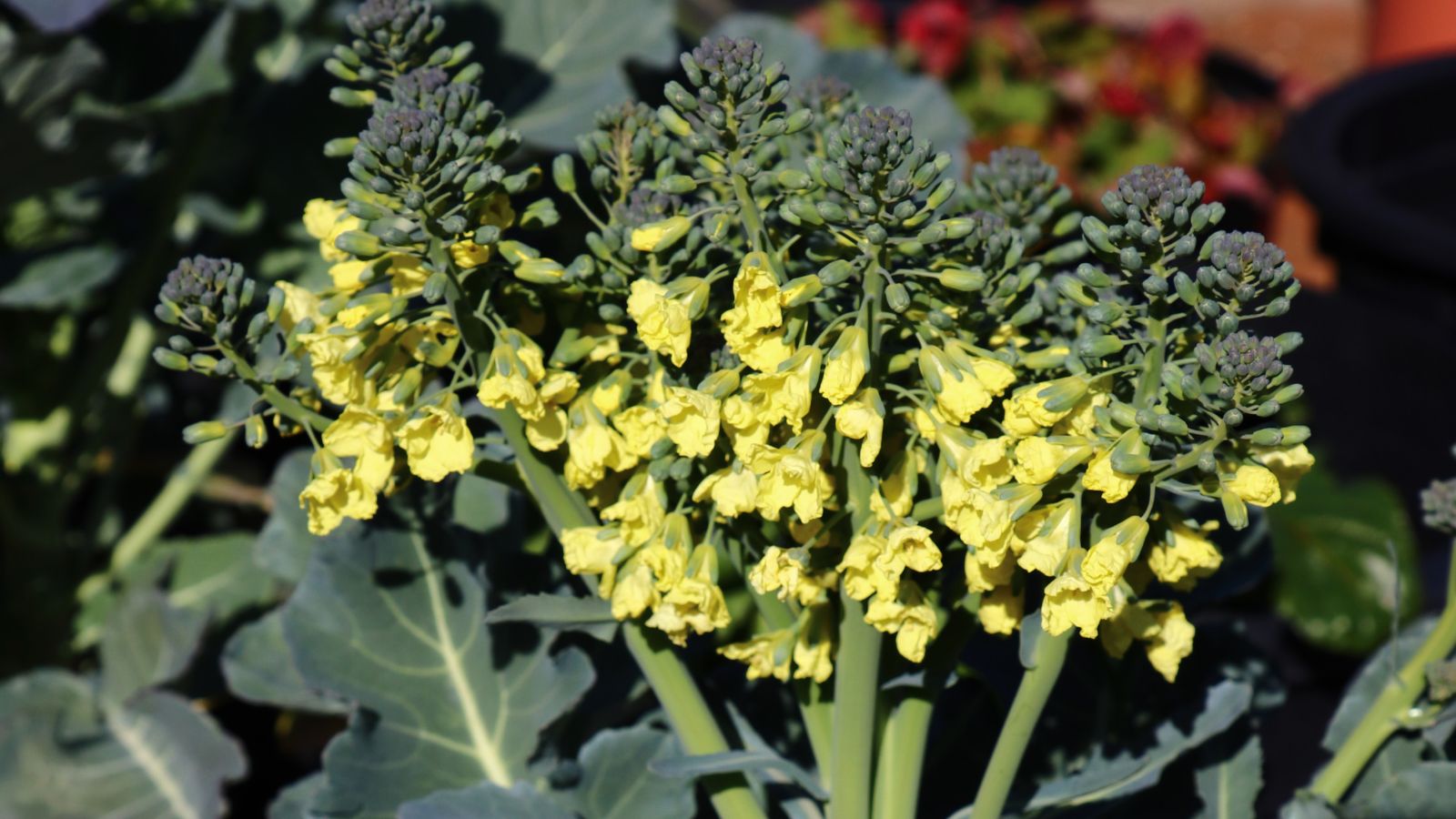
Bolting may be the goal when seed saving, but it can ruin a good harvest. When broccoli bolts, the head breaks apart and the blossoms extend upward. The yellow flowers may be attractive, but they are not ideal if you are aiming for a tight, compact broccoli head.
Hot weather is the most common trigger for bolting because it signals to the plant that the growing season is ending. You can help prevent this by shading broccoli during periods of high heat. Unfortunately, once a plant bolts, there is no way to reverse it, although the flowers are still edible.
Another common issue is leggy broccoli seedlings. This happens when seedlings do not receive enough light and stretch upward in search of it. If caught early, you can repot seedlings deeper in the soil to encourage sturdier growth. Be sure to increase light exposure at the same time, or the problem will continue.
Pests

Cabbage worms and cabbage loopers will go after a variety of cruciferous vegetables, including broccoli. They pose the biggest threat to seedlings and developing flower heads. These green caterpillars chew through leaves and florets and can eventually kill the plant. You can prevent infestations by using row covers until the plants begin flowering. For existing populations, apply BT spray or diatomaceous earth to protect your garden.
Root maggots are just as dangerous to the garden as they are unpleasant. These fly larvae overwinter in the soil and emerge to feed on broccoli roots. Beneficial nematodes will attack the larvae while they are still in the soil, along with other soil-dwelling pests. You can also help prevent root maggots by tilling the soil after harvest. Floating row covers are another effective preventative measure.
Aphids are a problem in almost every garden. Fortunately, they are fairly easy to manage on broccoli. Insecticidal soap is an excellent treatment for aphids and many other garden pests. You can also knock them off the plant with a strong spray of water. Aphids have several natural predators, including ladybugs, lacewings, and frogs. Frogs also feed on cabbage worms and loopers, so having them around is a big advantage.
Diseases
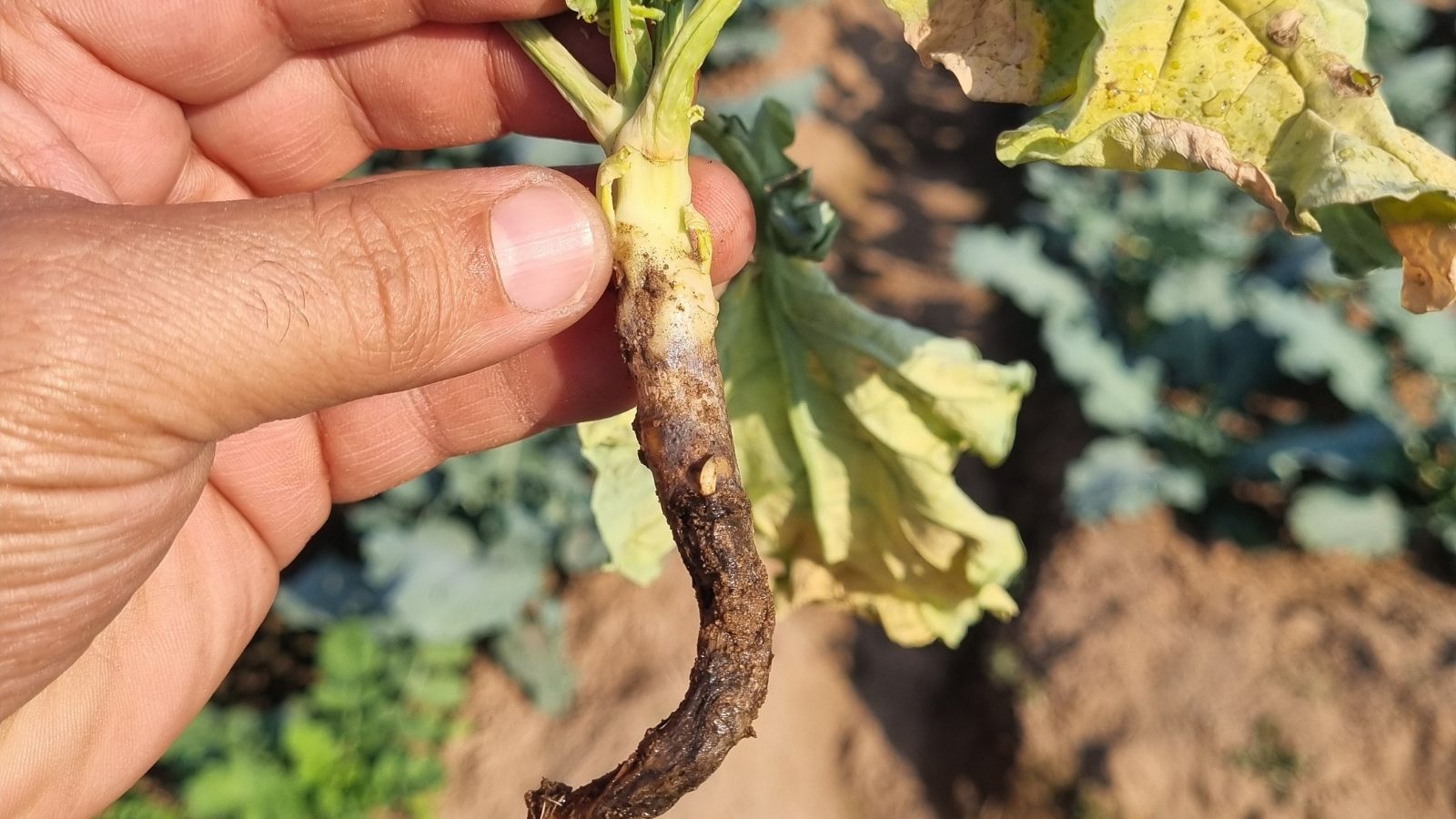
The deadly blackleg disease originates in the soil and can easily spread from plant to plant. It affects seedlings the most and can be very difficult to control. With this disease, you’ll notice brown lesions that eventually turn grey and develop reddish margins. Leaves will turn yellow without falling off. Blackleg can kill the plant quickly and cannot be cured, so prevention is essential. Use crop rotation and keep soil clean by removing dead plants immediately. After harvest each year, keep the soil dry and well aerated.
Black rot is another serious disease caused by bacteria. Symptoms first appear on the leaves as dull, yellow, V-shaped sections that spread outward. These areas eventually turn brown and die. The disease then moves into the stem, effectively killing the broccoli plant.
Unfortunately, black rot cannot be eliminated once it has taken hold. You can try to slow its spread with copper fungicide, and you may be able to harvest the main head or side shoots if all affected tissue is removed. Prevent black rot by maintaining healthy soil, rotating spring and fall crops, and ensuring adequate nitrogen levels. Avoid overhead watering, as sprinklers can spread bacteria.
Clubroot is another soilborne pathogen that can seriously damage broccoli. It attacks the roots, causing them to swell and become distorted. As with many soil diseases, prevention is key. Keep soil healthy through crop rotation and always use disease-free seeds and transplants.
Frequently Asked Questions
How long does it take to grow broccoli?
Most broccoli types are ready to harvest about 100 days after you sow seeds
How much broccoli do you get from one plant?
When growing broccoli, you’ll get one central head and possibly some smaller side shoots
Are coffee grounds good for broccoli plants?
Try using other less stringent sources of nitrogen for your broccoli. If you have compost that’s rich with coffee grounds, that works too.
How do I keep bugs out of my broccoli garden?
Give them a blast of water, or throw a floating row cover over your crowns to protect them.