13 Ground Cover Plants That Bloom Profusely
Add tons of beautiful color and pollinator power with flowering groundcovers. These wonderful plants bloom profusely, cheering up the garden and improving the soil, and fostering wildlife. Gardening expert Melissa Strauss shares some of the most floriferous groundcovers for your garden.


Contents
Turfgrass lawns, while they can be attractive, aren’t all that great for the environment. Non-native grasses require irrigation, fertilizers, and herbicides to maintain, which can be costly and harmful to wildlife. Instead of putting all that work and money into your lawn, why not plant a blooming ground cover?
Ground cover plants that bloom profusely are a joy to behold, and often, are great for wildlife, too. They tend to be great nectar sources and are often nitrogen-fixing. They prevent erosion, suppress undesirable weeds, and look beautiful doing it.
Once established, flowering ground covers tend to be low-maintenance and require little in the way of resources. They often tolerate heat and drought better than turfgrass, and sometimes foot traffic as well. They soften pathways and add tons of color with minimal effort. Here are some of our favorite ground cover plants that bloom profusely.


Perennial Peanut


|
botanical name Arachis glabrata |
|---|---|

|
sun requirements Full sun |

|
height 6”-17” |

|
hardiness zones 8-11 |
Perennial peanut is not native to the United States, but it’s well-suited as a ground cover in certain climates. In particular, this plant is great for Florida gardens, as it’s well-adapted to the local environment. It grows beautifully in zones 8-11, and has a quick, dense spreading habit.
From spring through fall, perennial peanut blooms beautifully. Golden, pea-like blooms cover a carpet of dense, green leaves, which is pretty even when it’s not in bloom. It handles foot traffic well and typically reaches from six to 12 inches in height. It doesn’t require mowing and is highly drought-tolerant.
Portulaca

|
|
botanical name Portulaca grandiflora |
|---|---|
|
|
sun requirements Full sun |
|
|
height 4”-8” |
|
|
hardiness zones 2-12 |
Portulaca, often called moss rose, are great little ground cover plants that blooms beautifully throughout the summer. In frost-free areas, you can grow it year-round. Elsewhere, plant this in the spring for a stunning summer display, and grow it as an annual.
As a succulent, portulaca needs little care. It’s exceptionally heat-tolerant and performs best in hot, dry conditions. It also prefers gravelly or rocky soils, so it’s great for arid climates. It needs no fertilizer or mowing and grows quickly, forming a mat of succulent foliage and brilliant blooms.
Blue Daze

|
|
botanical name Evolvulus glomeratus ‘Blue Daze’ |
|---|---|
|
|
sun requirements Full sun |
|
|
height 6”-18” |
|
|
hardiness zones 8-11 |
If blue blooms are your favorite, and you live in a warm climate, blue daze is a perfect ground cover for your garden. Even in cooler climates, you can grow this lovely ground cover as an annual. It’s particularly great for coastal gardens, as it appreciates sandy soil. It’s also salt-tolerant.
Its soft, silvery foliage and mass of sky blue blooms are what make these favorite ground cover plants. It’s heat-tolerant and low-maintenance. It doesn’t require mowing or deadheading to keep it flowering. This one offers nearly continuous color throughout summer and fall. It’s a great pollinator plant, too.
Creeping Thyme

|
|
botanical name Thymus serpyllum |
|---|---|
|
|
sun requirements Full sun |
|
|
height 1”-3” |
|
|
hardiness zones 4-9 |
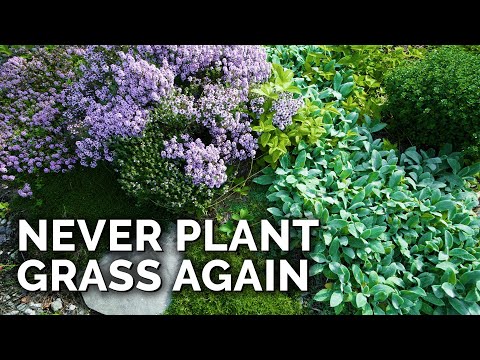
Creeping thyme is a magical plant that blooms profusely, creating a carpet of pink, purple, or white in the garden. In addition to the flowers, creeping thyme also has fragrant foliage, and tolerates foot traffic excellently. When you walk on it, it releases its aroma! It blooms in late spring and early summer.
Creeping thyme is a fantastic plant for temperate gardens. It’s cold-hardy and semi-evergreen as far north as zone 4. It’s also heat and drought-tolerant, and doesn’t mind poor soil. Plus, it’s a favorite for bees and butterflies, so it doubles as a pollinator attractor.
Sedum

|
|
botanical name Sedum spp. |
|---|---|
|
|
sun requirements Full sun |
|
|
height 2”-36” |
|
|
hardiness zones 3-9 |
Sedum makes an excellent ground cover for a wide range of climates. It’s sturdy, drought-tolerant, and requires little maintenance. It also boasts colorful foliage and beautiful clusters of blooms that pollinators appreciate.
Not every sedum works for every climate, so make sure you plant the right one. And not every one is a ground cover plant that blooms. Ensure you’re working with one of those before planting.
Sedums are succulents, so they perform well in hot, dry, sunny locations where many ground covers fail. They require little to no maintenance once established. Many varieties bloom in the fall. They provide late-season color and a valuable nectar source for bees and butterflies.
Ice Plant

|
|
botanical name Delosperma spp. |
|---|---|
|
|
sun requirements Full sun |
|
|
height 2”-6” |
|
|
hardiness zones 5-8 |
Ice plant is another succulent plant that blooms and makes an excellent ground cover. It’s great for sunny, dry areas, and has year-round appeal in warm climates. Don’t let that stop you from planting it in cooler regions, though; it’s hardy to zone 5.
The fleshy, succulent foliage has a glistening quality in the sunlight. This is where its common name comes from. It produces tons of brightly colored, daisy-like blooms from spring until fall. In warm climates, it can bloom nearly all year. It stays neat and attractive without much maintenance and doesn’t require fertilizer.
Trailing Lantana

|
|
botanical name Lantana montevidensis |
|---|---|
|
|
sun requirements Full sun |
|
|
height 12”-24” |
|
|
hardiness zones 8-11 |
Trailing lantana is a fabulous blooming ground cover for warm climate gardens. It naturally hugs the ground and works excellently on slopes and in sunny areas. The trailing stems root where they touch the soil, and the fine foliage fills in well, creating a dense carpet.
In terms of the blooms, trailing lantana is one of the longest-blooming on the list. It produces pretty clusters of flowers in lavender, white, yellow, or purple. Pollinators love them, especially butterflies. It needs little to no maintenance and is great at controlling erosion.
Moss Verbena

|
|
botanical name Glandularia tenera |
|---|---|
|
|
sun requirements Full sun |
|
|
height 4”-10” |
|
|
hardiness zones 7-11 |
Moss verbena is colorful and virtually carefree as a ground cover. This pretty plant has aromatic foliage and forms a veritable flowering carpet in the garden. It’s evergreen in frost-free climates, but the root will overwinter as far north as zone 7. Elsewhere, it’s an annual, but it’s fast-growing.
The foliage is soft, lush, and airy with fine, fernlike leaves. It has a mossy feel and fills in quickly, forming a dense mat. It grows well in dry, sandy soil and is heat-tolerant. Plant this in sloped areas where erosion is an issue; it’s great for stabilizing soil. It blooms from spring until fall, so there is no shortage of flowers.
Clover

|
|
botanical name Trifolium spp. |
|---|---|
|
|
sun requirements Full sun to partial shade |
|
|
height 3”-12” |
|
|
hardiness zones 3-10 |
If you want truly carefree, beautiful ground cover plants that bloom and are beneficial for the soil and pollinators, clover is perfect. All types work for this purpose, but white and red clover are particularly effective and low-maintenance.
They can be invasive, so check to ensure the plant you’ve chosen is not before planting in your garden. These are low-growing, so there’s no need for mowing, and they are nitrogen-fixing, so they fertilize your soil!
Many types of clover are frost-tolerant, so in many places, it will remain green over the winter. Most bloom from spring until fall, and various types thrive in a wide range from zone 3 through 10. The blooms are an invaluable source of nectar for all kinds of native pollinators.
Creeping Phlox

|
|
botanical name Phlox subulata |
|---|---|
|
|
sun requirements Full sun to partial shade |
|
|
height 3”-6” |
|
|
hardiness zones 3-9 |
Creeping phlox can turn a patch of soil into a fairy wonderland in no time. This is such a pretty and easy-going plant, it’s a wonder that it’s not the most popular plant at the garden center. The evergreen leaves form a dense mat that makes a perfect backdrop for thousands of tiny, star-shaped blooms.
It’s incredibly durable for such a delicate-looking ground cover. Creeping phlox needs little care once established. It’s drought-tolerant, stabilizes soil, and does a great job of feeding pollinators, too! It will grow in full sun or partial shade and is cold-hardy all the way to zone 3.
Sweet Alyssum

|
|
botanical name Lobularia maritima |
|---|---|
|
|
sun requirements Full sun to partial shade |
|
|
height 4”-8” |
|
|
hardiness zones 5-9 as an annual, 9-11 as a perennial |
For a fabulous, fragrant ground cover that blooms for months, sweet alyssum is a wonderful choice. This low-growing plant has fine, soft foliage that stays low to the ground and creates a beautiful carpet. However, it’s the flowers that make this a special plant.
Sweet alyssum is a profuse bloomer. The tiny blossoms are honey-scented and are exceptionally popular with pollinators. Native bees and honeybees adore them. While it’s only perennial in warm climates, it’s known to self-seed well. It blooms from spring until frost.

Creeping Zinnia

|
|
botanical name Sanvitalia procumbens |
|---|---|
|
|
sun requirements Full sun |
|
|
height 4”-8” |
|
|
hardiness zones 2-11 |
This cheerful little plant is an excellent ground cover for frost-free climates. Elsewhere, it is a fast-growing annual with a low, spreading habit. It forms a dense carpet and blooms from late spring right up until the first frost.
Creeping zinnia is one of the most floriferous low-growing ground covers you will find. It’s quite attractive to small butterflies, and blooms consistently, making it a great nectar source. Plant this in full sun, in well-draining soil. It tolerates poor and sandy soil types.
Snow-in-Summer

|
|
botanical name Cerastium tomentosum |
|---|---|
|
|
sun requirements Full sun |
|
|
height 4”-12” |
|
|
hardiness zones 3-7 |
Snow-in-summer is a European native that likes dry, sunny conditions. It’s cold-hardy and drought-tolerant, so it tends to be low-maintenance. In warm climates, it may struggle, but there are plenty of warm-weather alternatives. This is one of the best ground cover plants for blooms in cooler regions.
The foliage is silvery and semi-evergreen. It’s beautiful year-round in the southern reaches of its range. It’s an excellent erosion control, and doesn’t mind poor soil. Snow-in-summer isn’t a great nectar producer, but it blooms profusely in spring and summer.