How to Plant, Grow, and Care for Ginger
The sharp and zingy flavor of the ginger plant is popular in all cuisines worldwide. In this guide, horticultural expert Lorin Nielsen will explain how to grow this tropical plant in detail!

Contents
Ginger is a powerful anti-inflammatory herb that has been used in the culinary world for centuries. The ginger plant grows from a rhizome that develops into a dainty flowering perennial. If you want to add flavor and beauty to your food garden, growing the ginger plant is an absolute must.
Ginger plants offer numerous health benefits and have been used as medicinal herbs since the sixteenth century. The plant provides quick relief from indigestion and nausea and can ease common cold and flu symptoms. It is a truly versatile herb that deserves a place in your garden.
Read on for our in-depth guide on how to care for and maintain ginger plants. We will cover the botanical name Zingiber officinale, common look-alikes, and everything you need to grow this spicy garden favorite.


Quick Care Guide

|
Scientific Name
Zingiber officinale
Days to Harvest
8-10 months
Light
Partial shade
Water
Keep soil moist but not soggy
|
Soil
Well-drained sandy or loamy soil
Fertilizer
5-5-5 per manufacturer’s recommendation
Pests
Chinese rose beetle, root knot nematodes, aphids, scale insects, mealybugs, thrips, red spider mites, cutworms, armyworms, caterpillars, fungus gnats
Diseases
Bacterial wilt, root rot
|
All About Ginger
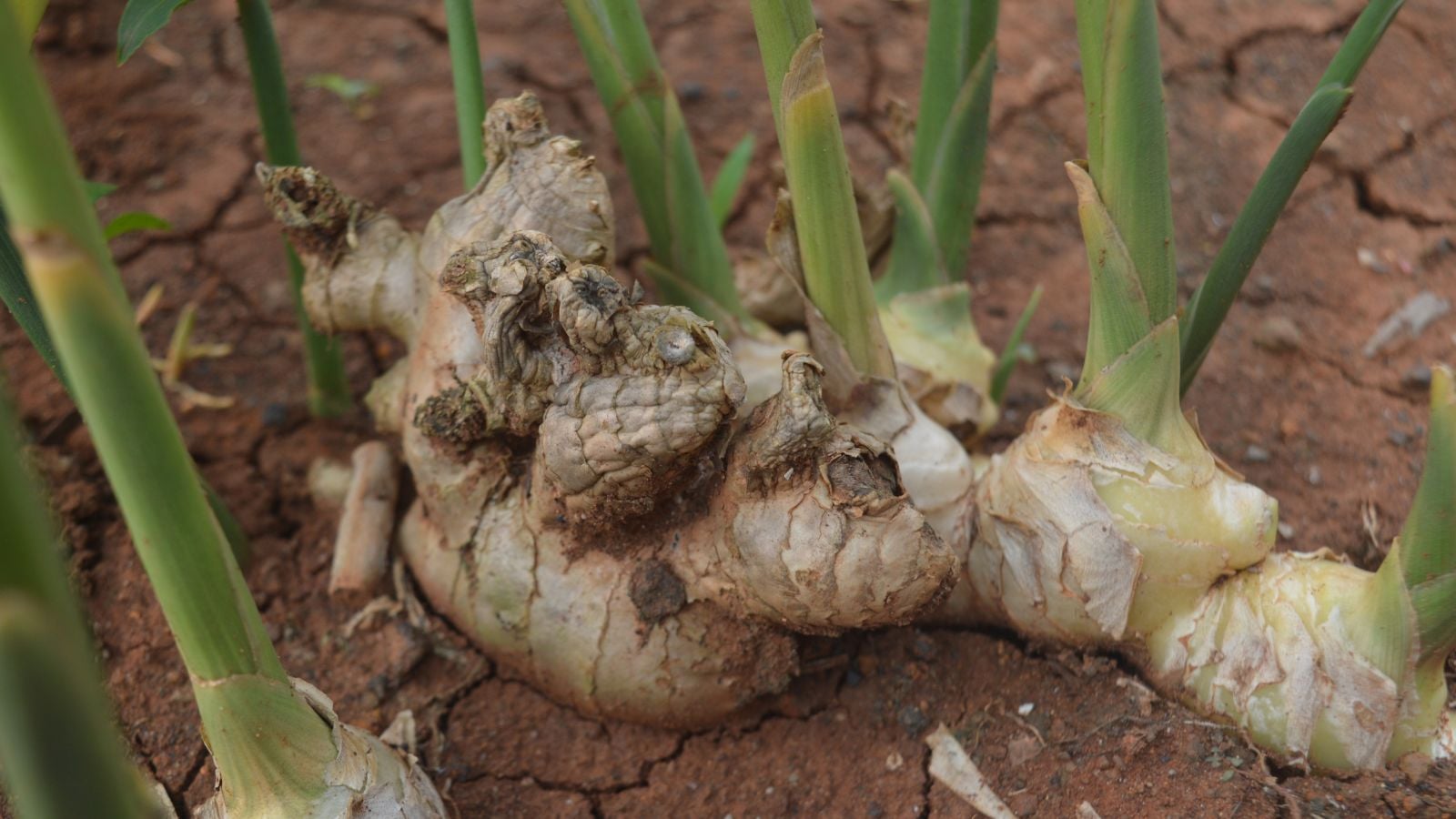
Ginger is a spicy and pungent tropical plant that goes by the botanical name Zingiber officinale. Ginger plants are also known as common ginger and cooking ginger.
Zingiber officinale belongs to the ginger family Zingiberaceae, the same family as cardamom and turmeric. The herb is widely grown in India, Haiti, Nigeria, and in the United States, particularly Hawaii. As for ginger origin, it is native to Southeast Asia.
Zingiber officinale is a true ginger that is sometimes confused with wild ginger (Asarum canadense), yellow ginger or kahili ginger (Hedychium gardnerianum), and white ginger lily (Hedychium coronarium). It has a completely different botanical structure and use compared to these three. Yellow ginger, for example, is an ornamental plant grown for its striking yellow flowers.
This perennial tropical plant can grow up to three to four feet tall and has sharp, narrow leaves that range from six to twelve inches long. The roots extending from the rhizomes are beige, tangled, and usually two to six inches in length.
The branched rhizomes are thick and warty with coarse golden to brown outer skin that can be peeled or abraded easily. The flesh is pale yellow with a lemony, citrus-like aroma. Ginger roots have a sharp and pungent flavor.
Young rhizomes have a milder taste, but as they mature, they become more fibrous and more intensely flavored. Edible ginger root contains a range of volatile and non-volatile compounds responsible for its spicy fragrance.
Is Ginger a Root?
Many people ask, “is ginger a root?” Contrary to popular belief, ginger is actually a rhizome. When growing ginger plants, you will see long, tendril-like roots sprouting from the rhizomes and spreading outward.
The shoots of the ginger perennial may look like stems, but they are actually leaf sheaths wrapped tightly around one another. The leaves are medium green, long, and narrow. They grow in pairs along each stem and reach two to three feet tall at full maturity.
One of the most interesting features of ginger is its yellow and purple flowers, which appear when conditions are ideal. As the blooms fade, they produce red fruits, each containing three seed pods. Inside these pods, black seeds mature and spread as the pods dry.
Growing Ginger at Home
Growing ginger plants can be extremely fun because this perennial also produces flowers along the leaf spikes. These blooms appear in shades of green and yellow with purple bases, and the petals are dotted with cream colored splotches that look beautiful when they open.
When a piece of sprouted rhizome is planted, it can take eight to ten months for the rhizomes to fully mature for harvest. After planting your seed ginger segments, you can expect sprouting within four to six weeks.
Many people use fresh ginger to add flavor and aroma to their dishes. It can be used to spice up meals, make teas, and prepare ginger beer or ginger ale. Fresh ginger is a signature ingredient in many ethnic cuisines thanks to its sharp, pungent taste.
Planting Ginger

Whether you are growing ginger indoors or adding it to your garden, these plants are easy to care for and maintain. As tropicals, though, they do have specific conditions they prefer.
When To Plant

When growing from seed ginger, also called rhizome segments, get your seed started early. You’ll want your young plants outdoors in well-draining soil from late February to early April, and germination can take some time before noticeable growth begins.
When you plant ginger, the soil must be warm for proper development. 50°F (10°C) is the minimum soil temperature needed for growth.
If you are growing ginger in a container, keep it in a warm location until frost has passed. This helps the ginger roots establish quickly once they are moved outdoors. A grow light can supply both light and warmth.
Where To Plant

The ginger rhizome is surprisingly delicate, so choosing the right planting location is essential. If the weather feels too cold for this tropical plant, you can always grow it in containers and move it indoors when needed.
In its natural habitat, ginger thrives in warm, humid, jungle-like conditions with sunlight filtered through overhead foliage. Aim to mimic this environment as closely as possible. Select a spot where you can prepare and loosen well-draining soil to a depth of eight to ten inches, with enough space for the rhizomes to spread.
How To Plant

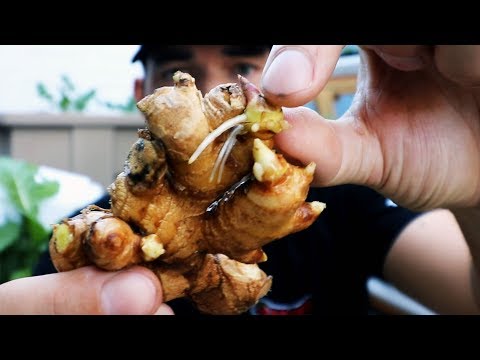
Begin by soaking your seed rhizomes overnight in room-temperature water. This activates the ginger rhizomes and helps bring them back to life. Supermarket ginger is often treated with a growth retardant, but if you have an older piece that has begun to sprout, you can plant it.
Plant the rhizomes at least three inches deep and about eight inches apart. If there are green growth buds, make sure they face upward toward the soil surface. If you are starting them in a container, place it on a seedling heating mat set to 70°F (21°C) to encourage strong sprout development. Rhizomes planted directly in the garden should go into the soil once temperatures remain consistently above 50°F (10°C).
How to Grow
Now it is time to look at how to grow ginger and the ideal conditions it needs. It is not difficult to coax new growth from a healthy ginger root.
Light

Young ginger thrives in filtered sunlight or partial shade. Aim for two to five hours of dappled or indirect light each day. Try to avoid exposing the plants to hot, direct sun for long periods.
Container-grown ginger still needs consistent light, even in winter. It does not require much, but a grow light and light partial shade will keep the plant healthy through the colder months.
Water

Water is an absolute necessity for growing ginger. Keep the soil consistently and evenly moist at all times, and do not allow it to dry out. Slow, steady watering is best because it gives the soil time to absorb moisture rather than letting it run off. A soaker hose system is usually perfect.
Soil

Ginger needs slightly acidic soil for healthy growth and full rhizome development. The ideal pH range is 5.5 to 6.5. Loamy and sandy soils are best, since both are loose, drain quickly, and still retain enough moisture for strong root establishment. A blend of the two works well.
The most important factor is consistent moisture retention. The soil must hold enough water to keep it available for the rhizomes. Add compost before planting, since it helps absorb and store moisture around the developing roots.
If your garden soil contains large amounts of hard clay, it can be difficult for ginger rhizomes to penetrate as they grow. Work in plenty of organic material to loosen the soil and create a better environment for your plants.
Temperature and Humidity

Ginger rhizomes can tolerate mildly cool conditions, but once the soil begins to freeze, the rhizomes are at risk. If you plan to overwinter your plants, carefully transplant them into a pot and bring them indoors where temperatures remain warmer.
Ginger prefers a humid environment. Ideally, it should have about 50% to 60% ambient humidity around the plant at all times. Outdoors, you can increase humidity by applying wet wood chip mulch around the plants, allowing moisture to evaporate slowly. Misting also helps. For container-grown ginger, place the pot on a pebble tray filled with water to raise the humidity around the plant.
Fertilizing

A balanced 5:5:5 NPK fertilizer is ideal for providing the essential nutrients ginger needs. Add fertilizer to the soil a few days before planting, and follow the manufacturer’s instructions for additional applications. For most slow-release fertilizers, this is usually every couple of months.
While liquid fertilizers can be used occasionally, granular organic fertilizers are generally more effective for ginger. If you choose a liquid option, apply it every two to four weeks.
Pruning

As with most perennials, ginger should be pruned in early spring. This timing provides the warmth and humidity needed for the stems to recover quickly. Remove any dead or dying stems before new growth begins.
The best approach is to cut back the stems that flowered the previous year. Most ginger blooms only on two-year-old canes. Use clean, sterile pruning shears and snip each spent stem at the base of the plant. Since these canes produce flowers only once before they die, removing them will help keep your ginger plants looking healthy and attractive.
Propagation

Ginger propagation is done by dividing rhizomes. When you harvest ginger, choose a healthy rhizome with plenty of nodes, since these nodes are where new stalks will sprout.
Examine the rhizome carefully and cut it into smaller sections with two to three nodes each, using a clean, sharp knife. Place the pieces in a cool, dry location for at least two days. As they sit, the cut edges will callous over, which reduces the risk of rot.
Once dried, choose a spot in your garden with partial to full shade and plant the ginger pieces. Water the rhizomes thoroughly. Continue watering regularly until the ginger begins to sprout.
Ginger cannot be grown from seed. It reproduces only through rhizome pieces.
Harvesting

Your fresh ginger should be ready in the fall if you planted in the spring. Carefully loosen the soil around your edible ginger plant and lift it up. You may see slender roots growing between the rhizomes. You can harvest the fresh ginger you need right now and leave the remaining roots to continue growing, or remove all the rhizomes at once.
When you’re harvesting ginger, it should be firm to the touch. If it is mushy, it may have succumbed to rot or a pest infestation and should not be eaten or stored.
Storing

A large piece of ginger can be stored as a hand in a dry, cool location as long as it still has its skin. Be sure to keep it completely dry for the best storage. It will last for a couple of weeks this way as long as it is kept dry and in the dark. A paper bag works very well for this.
For longer-term storage, peel the skin off the roots and either grate them or slice them into thin pieces. These can be stored in the freezer. I like to grate teaspoon-sized amounts into a small ice cube tray and freeze them with just a tiny bit of water to bind them together, as this makes them easy to use in recipes. Once fully frozen, place the ginger cubes into a freezer bag.
Troubleshooting
Growing ginger is quite easy, but there are a few problems you might want to avoid. Here’s what you should know.
Growing Problems

Avoid overwatering your ginger. Excess moisture can cause root rot, and even if the roots do not rot, they will be less flavorful if the plant receives too much water.
If you live in a colder climate, bring your plants indoors or harvest before temperatures drop below 50°F (10°C). This species is not tolerant of frozen soils at all.
Pests

We find ginger delicious, and unfortunately, so do many pests.
One of the most serious threats is root knot nematodes. These pests can cause extensive damage to your rhizomes. Add beneficial nematodes to the soil to help eliminate the harmful ones.
Chinese rose beetles are large brown beetles that will eat all of your plant’s leaves. They are nocturnal, so you will not usually spot them until dusk. You can pick them off by hand using a headlamp, or spray the plant with neem oil to make the leaves less appealing.
Mealybugs and soft scales often settle on stems and under the leaves. Remove them with a cotton swab dipped in alcohol.
Armyworms, cutworms, and yellow woolly bear caterpillars cause leaf damage similar to Chinese rose beetles. A Bacillus thuringiensis (BT) spray will take care of these caterpillars.
Sucking pests such as aphids, red spider mites, certain thrips, and fungus gnats can invade the leaves or soil around ginger plants. Neem oil is often the most effective treatment. If these pests persist, use an insecticidal soap with pyrethrin to eliminate them.
Diseases
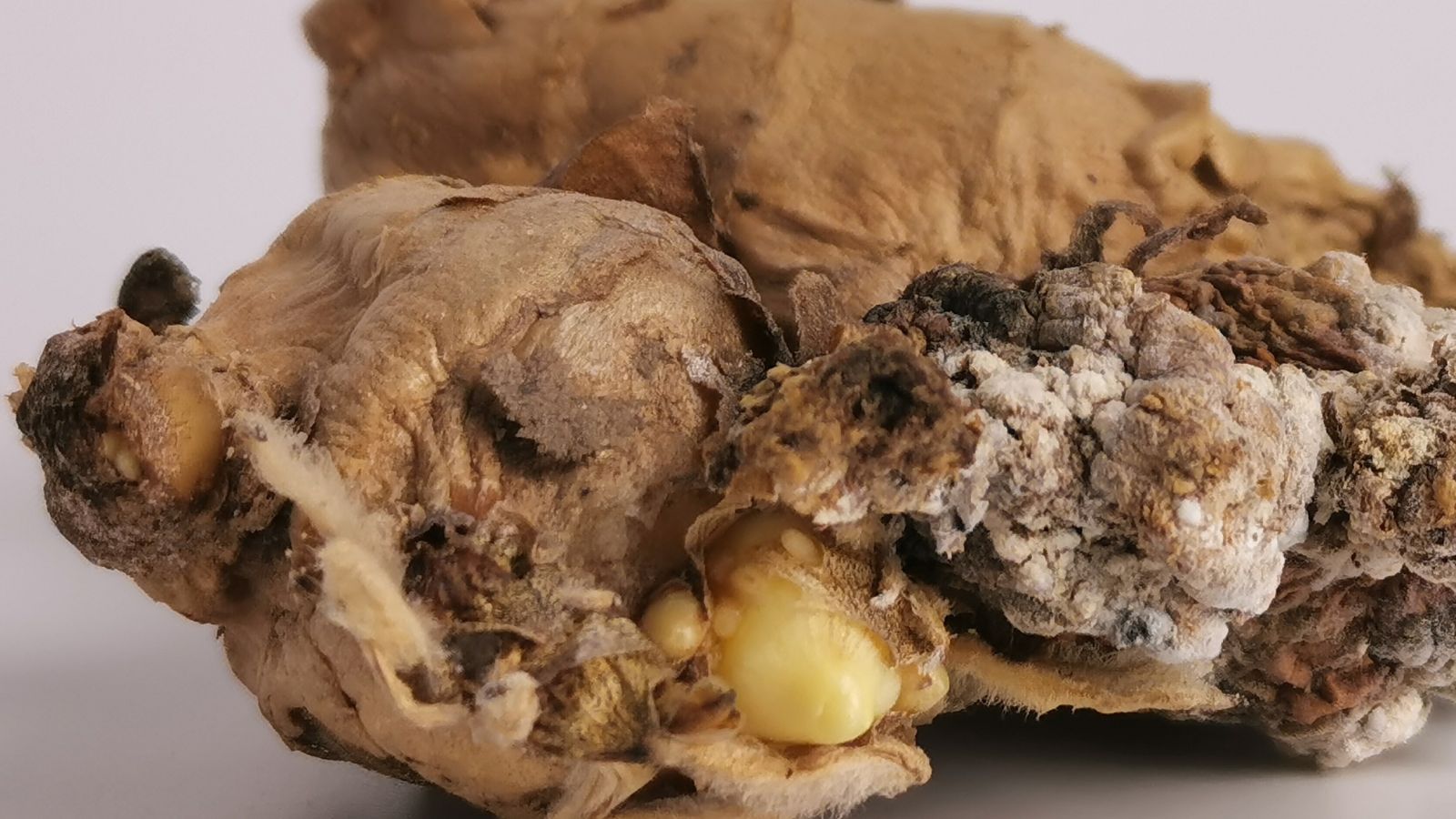
Ginger is also susceptible to bacterial wilt and root rot. Bacterial wilt causes water-soaked spots and curled leaves. The only way to treat it is to remove damaged leaves and stems and carefully inspect the entire plant for additional symptoms. Apply an organic fungicide or bactericide as needed.
Once root rot begins, there is no saving the rotten part of the rhizome. This fungal issue is common in soil that stays too wet. Cut off the rotten areas, allow the remaining rhizome to dry, and plant it as you would a new piece. Then monitor it to see if new sprouts develop.
Frequently Asked Questions
How long does it take to grow ginger?
After planting your rhizome segments, it can take 8-10 months for the plant to grow and mature.
How tall does ginger grow?
It can reach heights of 3 feet on its cane-like flower spikes.
Can you grow ginger in pots?
Absolutely! Grow them in well-draining soil in pots rich with organic matter, and keep them out of cold. You’ll have ginger rhizomes in no time.
Are ginger leaves poisonous?
No! In fact, you can harvest and consume them while you’re waiting for rhizomes. They’re slightly less spicy, but similar in flavor.





