Fruit Tree Chill Hours: What Are They?
What are fruit tree chill hours, and why do they matter? We're explaining how chill hours work so you can plan your food forest!


Contents
For many gardeners, the idea of having a lovely small orchard of nut and fruit trees is a major enticement. But before you can start that food forest, you have to do a little extra planning so that you know the fruit tree chill hours for the varieties you want.
Why do the chilling hours matter? Are chill hours important? Is there a reason that you couldn’t just plant any tree anywhere? Are people in very cold or warm temperatures going to have problems with their trees? And how can you guarantee good fruit production in low chill regions?
Let’s explore the concept of annual chill hours and provide some insight for you to use when you plot out your future grove of tasty delights!



What Does “Chill Hours” Mean For Fruit Trees?

For both fruit and nut trees, there is a period of dormancy over the winter. During that dormant period, most fruit or nut varieties need a certain amount of winter cold. “Chill hours” describes the number of hours of cold temperatures that a tree will get between October 1st and late February. The “below 45” standard is what most nurseries use to set chill hours and consists of cold weather that drops below 45°F (7°C). Optimal “below 45” weather would be between 32 and 45°F (0-7°C) when there’s no risk of frost or freeze damage to the tree itself, but in areas that do get annual snow, the cold winter weather is included in the chill hours.
As you can imagine, this means that chill hours can rapidly start to increase the further north in the United States you go. Somewhere like sunny San Diego typically is considered to have low chill hours at usually 500 or less between October 1st and February 28th, and will usually be in the optimal range of the “below 45” scale, but it’s rare to have more than the occasional frost there. In contrast, somewhere like Seattle is likely to have closer to 1200-1400 chill hours in that same period of time. Orlando, Florida will likely have under 100 chill hours most winters!
What Happens If A Fruit Tree Doesn’t Get Enough Chill Hours?

Fruit trees can thrive in both cold and warm temperatures. But if you want good fruit production, you need to make sure you get enough annual chill hours for the varieties that you’re growing.
The number of chill hours has to do with the dormant season and plant hardiness. As fall sets in, a deciduous fruit tree absorbs the nutrition stored in its leaves. This causes the lovely fall display of dropped leaves that occurs every year as those leaves, no longer needed, fall off the branches. That tree will weather the winter cold on a limited amount of nutrition until the warmer temperatures return.
Because of this, the plants have adapted to a certain schedule. They will need enough energy to survive through a certain number of chill hours over a period of months before it’s time to break dormancy and spring back to life in the spring. If they don’t reach the expected number of chill hours at those minimum temperatures, the fruit trees will be confused and bud break for the next season’s foliage may be delayed. If flowering doesn’t happen when it’s supposed to, the tree may not have a very productive year. Alternately, they may still produce, but considerably later than other trees that do have low chill hour requirements.
There are also many fruit trees that aren’t deciduous, like citrus. These fruit trees go somewhat dormant for the winter but still have passive nutrients coming via photosynthesis through their leaves. Many citrus varieties such as clementines or mandarin trees have produce still on the tree well into the winter, in fact! Typically, non-deciduous fruit trees have lower necessary chill hours than other trees, and as a result, they grow extremely well in areas like Southern California or other southern region locations across the United States. While these low chill varieties are an option, you definitely don’t want to put those outdoors in a high chill area!
Chilling requirements vary widely between species of trees. It’s important to check your average chill hours in your region before you select your fruit trees as a result, just to be sure you have enough chill hours to satisfy their specific needs. Trees that need higher chill hours than your region can supply may or may not grow as well in your area. There are trials on growing high chill hours varieties in low-chill hours locations underway, and there may be some potential for that in the future.
Can Cooler Temperatures Affect Fruit Set?

One might assume that if they have enough chilling hours for a tree, then they’re going to have an abundance of produce. But it’s not quite that simple, unfortunately.
Remember how we explained that different varieties are adapted to certain periods of cold weather? If you take a tree that’s used to chill hours of about 700 throughout the winter, it’s not going to perform great in Florida. But it may also struggle in cold climates like Seattle, where there are a lot more chill hours.
If low chill temperatures are met in the early winter in the cooler northern climates, and yet there are still months of chilling hours yet to happen, the tree may believe that the worst of the cold is already over. An early warm spell can cause it to spring into life and start popping out flower buds and fruit buds. If suddenly the weather turns back toward cold temperatures again, all set fruit can be damaged by frosts and freezes. Flowers can drop off trees, set fruit can blacken and fall, and other damage can happen from the tree trying to come out of dormancy too early. Tender new growth will be seriously impacted. Fruit and nut production can decline from this too.
There are always years when you’ll have a freak frost that comes through during the wrong season. As an example, 2022 had a sudden frost come through at the time that many of the commercial growers of almonds in northern California were seeing bud break and flowering on trees. This caused a severe blossom drop and as a result a much smaller fruit set than in prior years. This will likely have at least some impact on the eventual harvest for many nut tree growers in the region this year. The nut trees themselves are fine, but they just didn’t set fruit at the same high levels as they did last year.
It can’t be stated strongly enough that the chill hour requirement is important. It’s critical to pick a fruit tree variety that can handle the winters in your area. Areas where freezing temperatures are common every year will require higher chill hours varieties than warmer climates. Even then, there’s always a chance that if the weather warms up above 45°F (7°C) unexpectedly early one year, you may still have a problem if a freak cold burst happens.
We can’t control the weather… but we can control what trees we plant! In addition, it’s not just the tree fruit variety to take into consideration. Other plants such as cane fruit like raspberries can also have chilling requirements to take into account. Pay attention to the fruit variety you’re considering, and whether it’s generally considered to perform well in your USDA zone.
Popular Nut And Fruit Trees And Their Chill Hour Requirements

With all fruit and nut trees, we highly recommend checking your zone and making sure you have varieties with the right chilling requirements for your region. While a low chill tree will perform well in most of the southernmost United States, it may have serious issues in areas that are significantly colder in the central or northern US.
We’ve provided a list of a handful of some of the most popular varieties and their approximate chill hours, but remember, different cultivars have different needs!
Low Chill Hours (500 and below)
Apples

- Granny Smith: 400
- Fuji: 350-400
- Pink Lady: 200-400
Peaches

- Garden Gold: 400-500
- Honeybabe: 400
Plums

- Chickasaw: 250-300
- Santa Rosa: 300-500
Apricot

- Autumn Glo: 500
- Early Golden: 450
- Blenheim: 300-500
Avocados

- Hass: 0
- Reed: 0
- Choquette: 0
- Pinkerton: 0
Cherries

- Stella: 400-500
Oranges

- Valencia: 0
- Navel: 0
- Blood: 0
- Mandarin: 0
Lemons

- Meyer: 0
- Bearss: 0
- Eureka: 0
- Libson: 0
Limes

- Persian: 0
- Key: 0
- Kaffir: 0
- Mexican: 0
Grapefruits

- Ruby Red: 0
- Rio Red: 0
- Duncan: 0
- Whitney Marsh: 0
Mulberries

- Dwarf Everbearing: 200
- Red: 200
- Black: 200
- Himalayan: 400
Nectarines

- Honey Kist: 500
- Fantasia: 500
Figs

- Desert King: 100
- LSU Gold: 100
- Chicago Hardy: 100
- Common: 100-300
Almonds
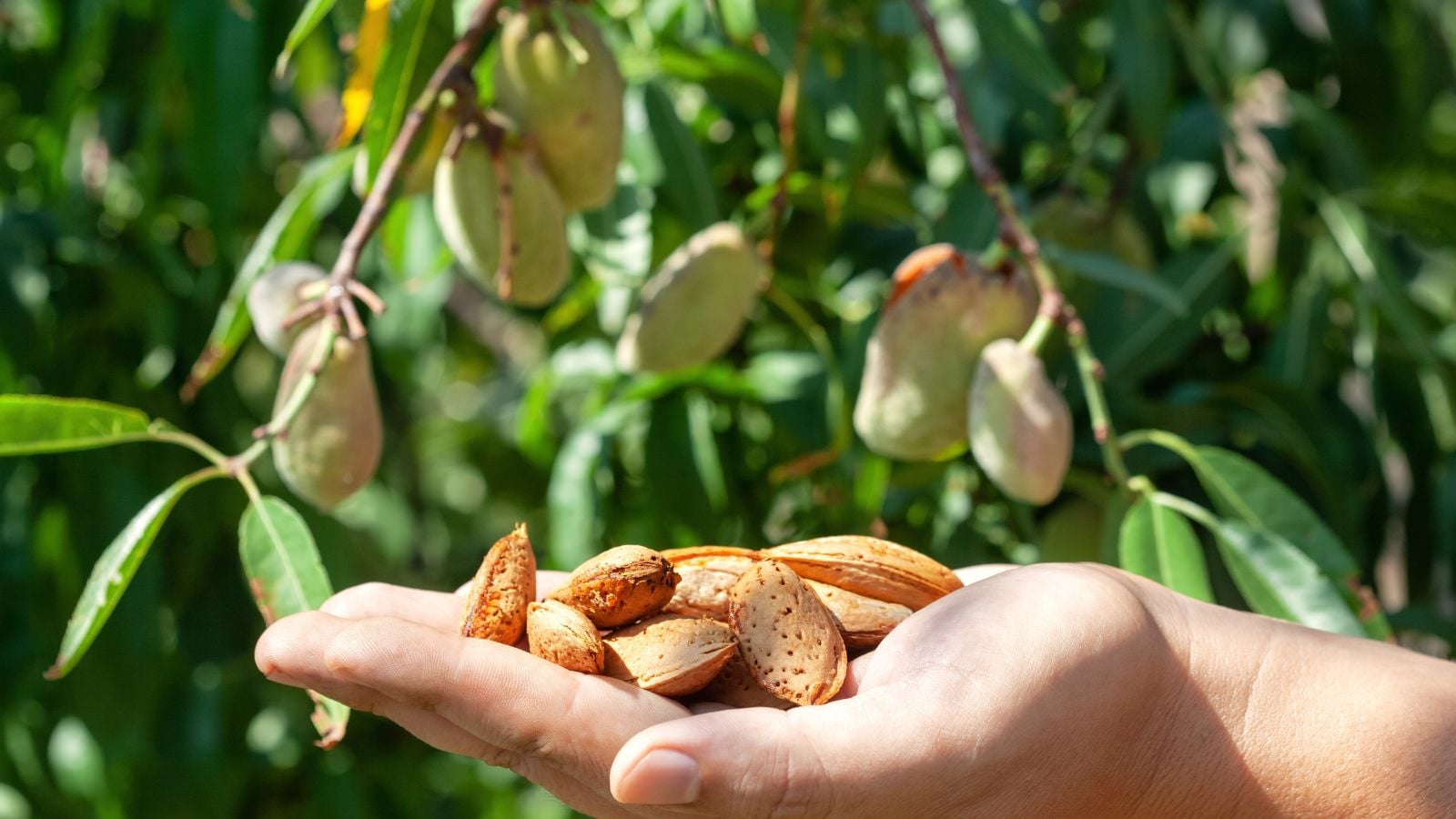
- Mission: 500
- Carmel: 400
- Ne Plus Ultra: 250
- Monterey: 250
Pecans

- Elliot: 400
- Amling: 300-500
- Oconee: 300-500
- Caddo: 300-500
High Chill Hours (>500)
Apples

- Gala: 550
Peaches

- Elberta: 800-950
- O’Henry: 700-750
Plums

- Japanese: 500-900
- Blue Damson: 600-800
Apricots

- Goldcot: 600-800
Pears
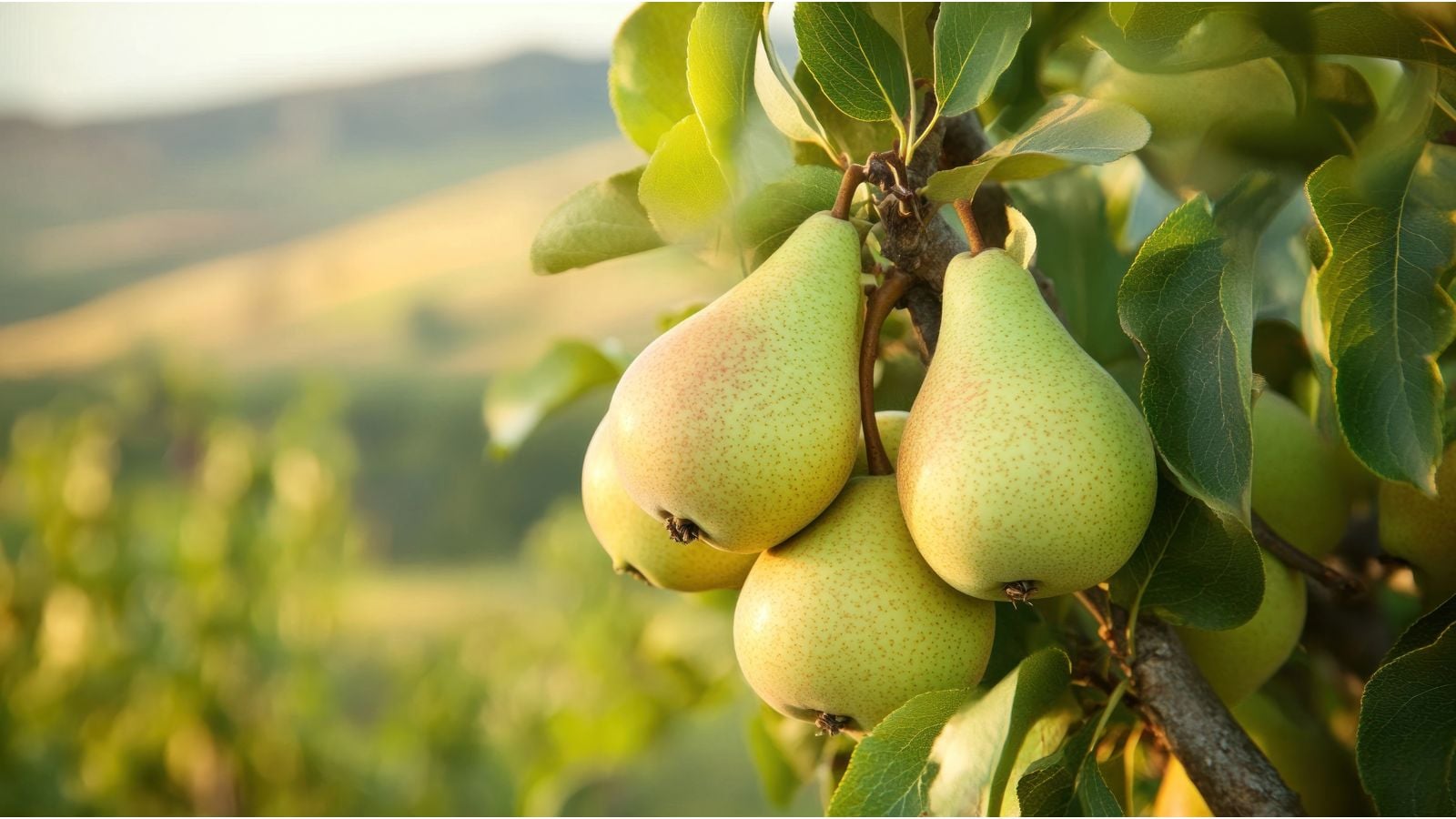
- Bartlett: 800
- Anjou: 800
- Asian: 300-600
- Bosc: 500-600
Cherries

- Rainier: 700
- Bing: 700-900
- Vandalay: 700-900
Nectarines

- Sun Glo: 800
- Heavenly White: 650
Walnuts

- Eureka: 600
- Chandler: 700
- Howards: 1015
- Hartley: 700
Hazelnuts

- York: 800-1300
- American: 700-1000
- European: 800-1600
Pistachio

- Kerman: 700-800
- Lost Hills: 900
- Golden Hills: 900