31 Beautiful Flowers That Will Bloom All Season Long
There are many different flowers that will bloom all year depending on your climate and geographic location. But choosing the perfect fit for your garden can be a bit of a challenge! In this article, we look at our favorite annuals and perennials that will keep blooming in your garden all year long!


Contents
Thinking of adding more flowers to your garden but want to make sure they’ll bloom all year long? While year-round blooms depend largely on your local climate, there are many types of flowers to choose from, especially if your growing zone supports them.
From annuals to perennials, you’ll find plenty of options that offer consistent color across the spectrum. One thing’s for sure: a garden full of flowers will attract a variety of pollinators and bring joy throughout the season as your colorful plants flourish.
While some flowers can bloom nearly year-round in the right conditions, that may not be the case in colder regions. That’s why we’ve put together a comprehensive guide full of flowering plants for every hardiness zone. These plants are known to bloom as long as possible, often right through the first frost!


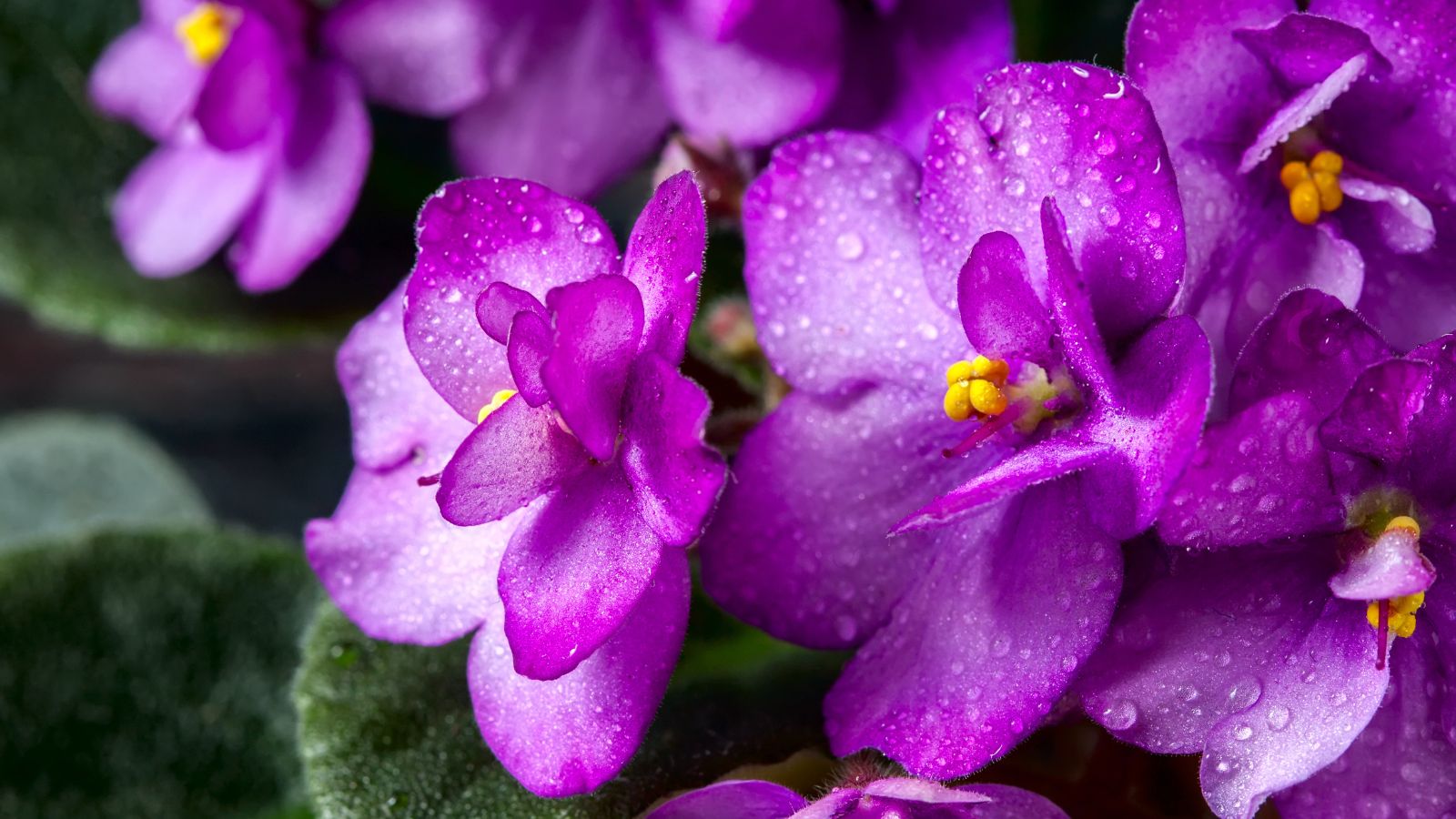
African Violet

|
botanical name Streptocarpus ionanthus |
|---|---|

|
plant type Perennial |

|
sun requirements Bright indirect light |

|
height 2-9 inches |

|
hardiness zones 11-12 |
These low-maintenance plants are known for their ability to bloom year-round and can live for many years with the right care. Their fuzzy, succulent-like leaves help retain moisture, making them well-suited to indoor environments.
African violets produce blooms in a variety of colors, including purple, pink, red, violet, and white. They make excellent houseplants due to their sensitivity to outdoor climate conditions. They thrive in high humidity and benefit from occasional fertilizing to encourage continuous blooming.
Ajuga

|
|
botanical name Ajuga reptans |
|---|---|
|
|
plant type Perennial |
|
|
sun requirements Full sun to full shade |
|
|
height 0.6 inches to 1 foot tall |
|
|
hardiness zones 3-10 |
Ajuga is an excellent choice for ground cover in open areas, such as slopes or natural woodland settings. Because it spreads quite vigorously, it’s best planted in spots where you’re comfortable with it potentially taking over.
The tiny purple or blue flowers grow vertically around a central stalk and can reach up to a foot tall. Ajuga blooms from spring into summer, though its attractive foliage provides visual interest even when it’s not in bloom. The low-growing leaves are light green, often mixed with newer foliage that has a subtle purple hue.
This plant also attracts songbirds, bees, and hummingbirds, making it a great addition to any pollinator-friendly garden.
Alpine Violet

|
|
botanical name Cyclamen spp. |
|---|---|
|
|
plant type Perennial |
|
|
sun requirements Partial shade |
|
|
height 6-12 inches |
|
|
hardiness zones 4-11 |
Cold-tolerant alpine violets are commonly found in woodland areas and often grow wild beneath trees and shrubs. Because of this, they make an excellent addition to natural landscapes or shaded garden beds.
These violets bloom in spring and winter, going dormant during the summer months. Their heart-shaped leaves also make them a popular potted plant for Valentine’s Day. The fragrant flowers come in shades of purple, burgundy, pink, and white.
It’s important to note that the tubers are highly poisonous if eaten raw.
Alyssum

|
|
botanical name Lobularia maritima |
|---|---|
|
|
plant type Warm Climate Perennial or Annual |
|
|
sun requirements Full sun to partial shade |
|
|
height 3-10 inches |
|
|
hardiness zones 5-9 |
Alyssum produces tiny white, purple, or lavender flowers that grow in delicate, spherical clusters. While technically an annual, it can bloom year-round in warmer climates. Alyssum prefers full sun but can tolerate some light shade.
These plants thrive in moist, well-drained soil and are a popular choice for borders around patios, walkways, or garden beds. Alyssum also makes an excellent ground cover and attracts birds, pollinators, and butterflies, adding both beauty and biodiversity to your garden.
Anise Hyssop

|
|
botanical name Agastache foeniculum |
|---|---|
|
|
plant type Perennial |
|
|
sun requirements Full sun to partial shade |
|
|
height Up to 5 feet |
|
|
hardiness zones 4-8 |
This long-blooming plant features exquisite purple-blue flowers that give off a pleasant minty fragrance. The flowers grow vertically on tall stalks and are highly attractive to bees, hummingbirds, butterflies, and birds.
As a member of the mint family, the leaves can be used to make tea. These blooms are great for cutting and displaying, and the plants make a striking addition when planted in bulk along borders or fences to add height and interest to your garden.
Begonia

|
|
botanical name Begonia spp. |
|---|---|
|
|
plant type Warm Climate Perennial or Annual |
|
|
sun requirements Partial to full shade |
|
|
height 1 foot to 1ft 6 inches |
|
|
hardiness zones 10-11 |
Begonias have a long blooming season and come in a variety of colors, including pink, red, white, yellow, and multicolored. They feature thick, succulent-like leaves and stems and can be grown indoors in bright, indirect light or outdoors in shaded areas.
These plants do not tolerate temperatures below 50°F (10°C) and require moist, well-drained soil. They typically grow in rounded mounds. While the roots are the most toxic part, the flowers and leaves can also cause vomiting in horses, cats, and dogs.
Begonias make excellent houseplants, and with many varieties available, they offer a wide selection of colors and forms to suit any space.
Black-Eyed Susans
|
|
botanical name Rudbeckia spp. |
|---|---|
|
|
plant type Perennial |
|
|
sun requirements Full sun to partial shade |
|
|
height 2-4 feet |
|
|
hardiness zones 3-9 |
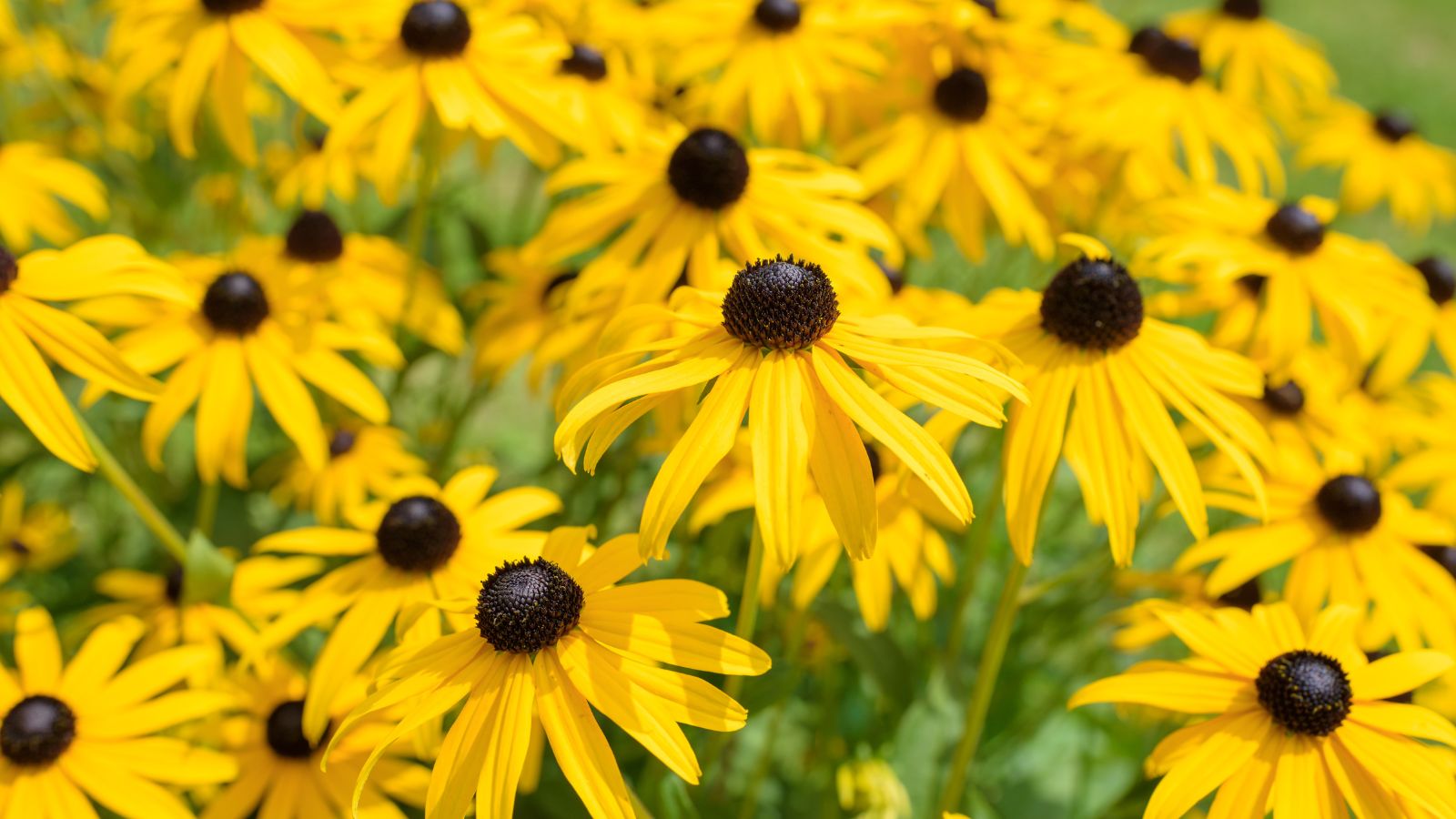
Black-eyed Susan is a hardy, moderately drought-tolerant plant. It blooms from early summer into fall, especially if regularly deadheaded. Some varieties are annuals and won’t return the following year. However, perennial types can grow year-round in suitable climates, such as the southern United States.
The flowers are golden and shaped like the sun’s rays, with a distinctive black center. You’ll often spot them growing wild in fields or along hillsides.
Blue Salvia
|
|
botanical name Salvia guaranitica |
|---|---|
|
|
plant type Perennial |
|
|
sun requirements Full sun |
|
|
height Up to 5 feet |
|
|
hardiness zones 7-11 |
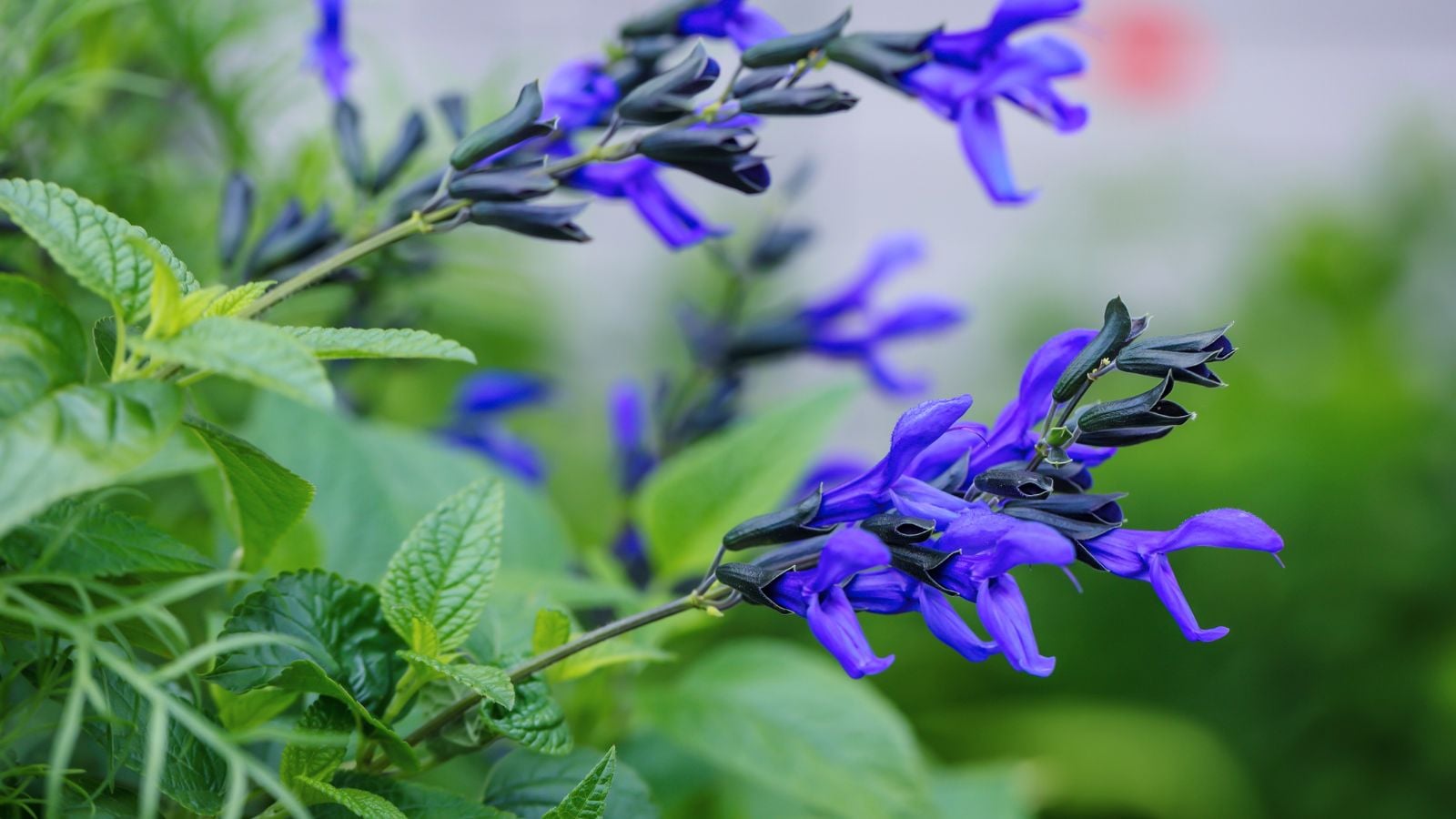
A type of sage from Australia, blue salvia blooms year-round in warmer climates like California. It features striking neon blue flowers and is an excellent choice for borders or edges where a bit of height is desired.
This drought-tolerant plant is ideal for xeriscaping, requiring only occasional to moderate watering. Blue salvia attracts bees and butterflies while helping to deter deer from your garden.
Bougainvillea

|
|
botanical name Bougainvillea spp. |
|---|---|
|
|
plant type Perennial |
|
|
sun requirements Full sun |
|
|
height 15-40 feet |
|
|
hardiness zones 9-10 |
Bougainvillea is a vine-like plant often seen climbing trellises or lining fences. With regular pruning, it can also be shaped to grow more like a shrub in a contained space. Tiny white flowers are surrounded by brightly colored bracts in vibrant shades of pink or purple.
This plant does have thorns and can be challenging to cut back or thin out. However, it’s an excellent choice for coastal locations, as it tolerates both salt and drought.
Butterfly Pea

|
|
botanical name Clitoria ternatea |
|---|---|
|
|
plant type Perennial |
|
|
sun requirements Full sun to partial shade |
|
|
height 10-15 feet vines |
|
|
hardiness zones 10-12 |
The butterfly pea is a great choice for wooded areas, as it naturally grows wild in similar habitats. As a vining plant, it works beautifully on arbors or trellises. A member of the pea family, it gets its common name from the shape of its flowers and the plant’s overall structure.
Butterfly pea is a popular flowering vine, known for its striking blooms. While it can be considered invasive in some regions, it’s easy to manage with regular maintenance. The flowers come in a variety of colors, but are most admired for their rich purple and deep blue hues.
Calibrachoa

|
|
botanical name Calibrachoa x hybrida |
|---|---|
|
|
plant type Perennial or Annual |
|
|
sun requirements Full sun to partial shade |
|
|
height 3-9 inches |
|
|
hardiness zones 7-11 |
Calibrachoa, also known as million bells or mini petunias, comes in many colors and produces small blooms. They can be either perennials or annuals and will bloom in the spring until frost.
Great for hanging baskets or borders, these flowers only grow about 3 inches tall but can spread significantly in width. They are drought-resistant and require well-drained soil.
Celosia

|
|
botanical name Celosia spp. |
|---|---|
|
|
plant type Perennial |
|
|
sun requirements Full sun |
|
|
height 0.6 inches to 3 feet |
|
|
hardiness zones 10-11 |
The name celosia comes from the plume-shaped flowers that resemble fiery flames. These tall, narrow blooms have a soft, almost furry texture and come in a wide range of colors, including yellow, orange, pink, white, purple, and deep maroon.
Celosia is a long-blooming annual or warm-weather perennial that’s easy to maintain. It often reseeds itself, making it a reliable choice for seasonal color. The abundant, showy flowers create a striking display along walkways or in garden beds. As a bonus, the young leaves are edible and have a flavor similar to spinach. Plant in full sun with well-drained soil for best results.
Christ Plant

|
|
botanical name Euphorbia milii |
|---|---|
|
|
plant type Perennial |
|
|
sun requirements Full sun |
|
|
height 3-6 feet |
|
|
hardiness zones 9-11 |
Christ thorn is a shrub with small pink or red flowers on a stalk of thick black thorns. It is often grown indoors in a sunny location or outdoors in full sun with moderate heat. Christ thorn is drought-tolerant and prefers drier climates and well-drained soil.
This plant gets its name from the belief that it was used to make the crown of thorns placed on Christ’s head. Christ thorn can resist deer and rabbits. It is considered mildly poisonous.
Hardy Chrysanthemum

|
|
botanical name Chrysanthemum spp. |
|---|---|
|
|
plant type Perennial |
|
|
sun requirements Full sun to partial shade |
|
|
height 2-3 feet |
|
|
hardiness zones 3-9 |
Hardy chrysanthemums, also known as mums, are members of the daisy family. Chrysanthemums from the Rubella group are perennials that will bloom in the summer and fall. Most chrysanthemums are annuals, so be sure to choose the right type if you want your plants to come back year after year.
These are an excellent choice for borders and containers, available in many colors, and produce blooms in high density.
Coral Drift® Rose

|
|
botanical name Rosa ‘MELdrifora’ |
|---|---|
|
|
plant type Woody Perennial |
|
|
sun requirements Full sun |
|
|
height 1-2 feet |
|
|
hardiness zones 4-11 |
These roses come in shades of coral and will bloom from spring until the first frost. These flowering shrubs are low-growing, cold-hardy, disease-resistant, and attractive to pollinators. The dark green foliage contrasts with the blooms.
These beautiful roses come in shades of coral and will bloom from spring until the first frost. These are low-growing shrub-type roses that are cold-hardy and disease-resistant. They are attractive to butterflies and other pollinators.
Golden Trumpet

|
|
botanical name Allamanda cathartica |
|---|---|
|
|
plant type Perennial or Annual |
|
|
sun requirements Full sun |
|
|
height 10-20 feet |
|
|
hardiness zones 10-11 |
Golden trumpets are a sprawling vine and happily wrap around trellises or other supports. They can be grown outdoors in the summer and brought inside for winter.
The large flowers are bright yellow and shaped like a trumpet, hence the name. They will bloom from spring into late fall. Trumpet vines can be considered invasive in certain areas, so plant with care.
Hibiscus

|
|
botanical name Hibiscus rosa-sinensis |
|---|---|
|
|
plant type Woody Perennial |
|
|
sun requirements Full sun to partial shade |
|
|
height 10 feet |
|
|
hardiness zones 9-11 |
Many types of hibiscus have sizable, gorgeous pink, yellow, red, or white flowers. This tropical plant can be grown outdoors in warmer areas like California, Hawaii, Florida, and Texas. Flowers can be up to 6 inches, and plants grow into shrubs or trees of up to 10 feet.
These plants attract bees, hummingbirds, and butterflies, making them a fun addition to your landscape. It’s an eye-catching bloom to plant along walkways, hedges, or even indoors.
Hybrid Astilbe

|
|
botanical name Astilbe x arendsii |
|---|---|
|
|
plant type Perennial |
|
|
sun requirements Full sun to partial shade |
|
|
height 1-5 feet |
|
|
hardiness zones 3-9 |
Astilbe is also commonly known as false spirea. It has large, bright vertical blooms and feathery foliage reminiscent of ferns. These perennials can handle shadier areas as well as moist areas, so they are excellent for planting around ponds, shaded walkways, or under trees.
Planting a bunch of them gives a garden bursts of color. They come in pink, peach, purple, red, and white and bloom from spring until late fall.
Jungle Geranium

|
|
botanical name Ixora coccinea |
|---|---|
|
|
plant type Perennial |
|
|
sun requirements Full sun |
|
|
height 1-5 feet |
|
|
hardiness zones 10-11 |
From the genus that is also known as West Indian jasmine, jungle geranium is a tropical plant with brilliant blooms that grow year-round in warmer climates like Florida. Dozens of smaller blooms make up one flower. The flowers can be bright orange, red, pink, and yellow.
These plants are woody shrubs that can grow into thick, medium-sized bushes. Geraniums can be grown outdoors in the warm summer sun and wintered inside in containers.
Dwarf Gardenia

|
|
botanical name Gardenia jasminoides ‘Radicans’ |
|---|---|
|
|
plant type Perennial |
|
|
sun requirements Full sun to partial shade |
|
|
height 6-12 inches |
|
|
hardiness zones 8-11 |
This intoxicatingly fragrant plant blooms from early spring to late summer. It is a low-growing plant great for a hillside, groundcover, or hedges. The blooms are typically white, though other varieties come in different colors. Though heat and drought-resistant, it does not bode well in cold temperatures.
It is a member of the coffee family, and, like coffee plants, it produces golden-colored fruit when mature, which attracts birds.
Kalanchoe
|
|
botanical name Kalanchoe spp. |
|---|---|
|
|
plant type Perennial |
|
|
sun requirements Full sun to partial shade |
|
|
height Up to 4 feet |
|
|
hardiness zones 9-12 |
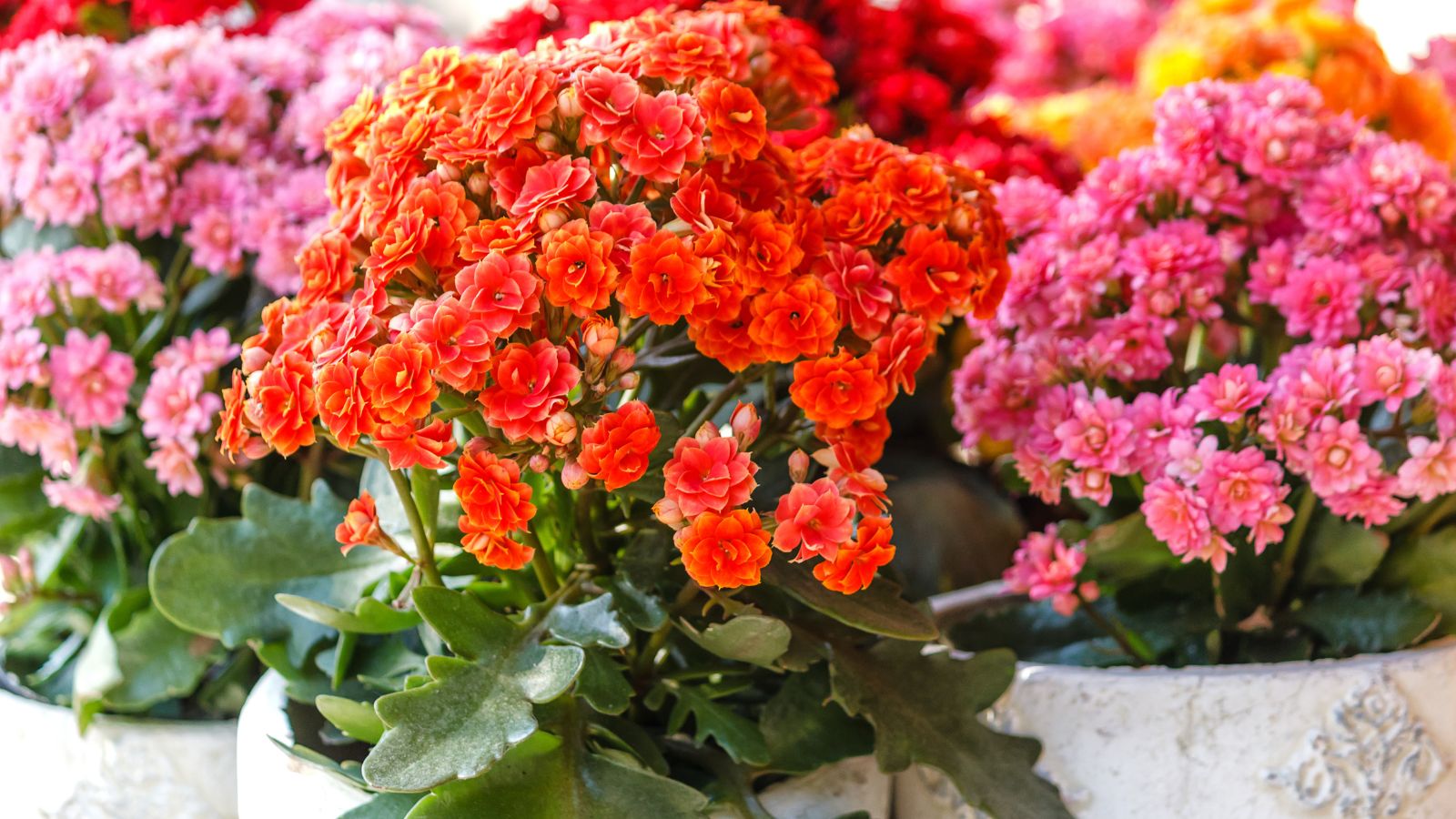
Kalanchoes are a type of succulent mostly grown indoors as a houseplant. Tiny blossoms of various colors grow in clusters amidst the dark green, shiny leaves. They are low-maintenance and can be grown in bright indirect light with little water. They will bloom for a long time each year.
Kalanchoes need 12- 14 hours of complete darkness every night for six to eight weeks to rebloom. You can put them in a closet or elsewhere to achieve this. You can plant them outside as long as temperatures do not get close to freezing. Then, they will act as a perennial and come back each year.
Lantana

|
|
botanical name Lantana camara |
|---|---|
|
|
plant type Perennial |
|
|
sun requirements Full sun to partial shade |
|
|
height Up to 6 feet |
|
|
hardiness zones 7-11 |
Found growing in tropical and coastal climates due to their salt tolerance, lantanas have multi-hued yellow, orange, red, white, purple, and pink blooms. It is grown as a houseplant or outdoors in warmer, humid climates.
Growing low to the ground, lantana sprawls, making it perfect for planters and groundcover. However, it can become invasive in temperate climates. In addition, it is toxic to livestock. If you’re in the south, there are native lantanas that work even better than this one.
Calendula

|
|
botanical name Calendula officinalis |
|---|---|
|
|
plant type Annual |
|
|
sun requirements Full sun |
|
|
height 1-2 feet |
|
|
hardiness zones 9-11 |
These cheery and bright golden-colored flowers are easy to grow and bloom from spring until frost. Cutting dead flowers helps them to rejuvenate, and blooms will be plentiful.
These are a gardener’s choice to plant around vegetable gardens as they are a natural pest deterrent. They also attract bees, butterflies, and other pollinators. Calendula blooms are edible and are a colorful addition to salads, and the petals make a bright yellow dye.
Nasturtium

|
|
botanical name Tropaeolum majus |
|---|---|
|
|
plant type Annual |
|
|
sun requirements Full sun |
|
|
height Up to 10 feet |
|
|
hardiness zones 2-11 |
With their multicolored blooms, nasturtiums add flair to your herb garden. The whole of the plant is edible with a spicy flavor. This plant attracts butterflies and is drought-tolerant. It has a long blooming season, is easy to grow, and comes in vine or bush form.
The flowers are red, yellow, orange, pink, and cream. They are resistant to deer and do not cause harm to pets that may ingest.
Pansy

|
|
botanical name Viola tricolor |
|---|---|
|
|
plant type Annual |
|
|
sun requirements Full sun to partial shade |
|
|
height 3-10 inches |
|
|
hardiness zones 2-9 |
Pansies are native to North America and prefer lots of sun and sandy soil. They grow rampantly, blanketing fields, and can even serve as an alternative to grass in a backyard with light traffic.
It is self-pollinating and considered to be invasive in some places. Don’t place pansies in small planters or areas where you would like the plants to stay contained.
Purple Coneflower

|
|
botanical name Echinacea purperea |
|---|---|
|
|
plant type Perennial |
|
|
sun requirements Full sun to partial shade |
|
|
height 3-4 feet |
|
|
hardiness zones 3-8 |
Purple coneflower, often referred to as echinacea, is a tall, skinny plant producing large purple flowers. It blooms from summer into fall, and the flowers are great to cut and use for display.
It is perhaps most well-known for its beautiful and brightly colored flowers. It’s also often consumed in tea form, as coneflower helps soothe the common cold and boost the immune system.
Snapdragons

|
|
botanical name Antirrhinum majus |
|---|---|
|
|
plant type Perennial |
|
|
sun requirements Full sun to partial shade |
|
|
height 6 inches to 3 feet |
|
|
hardiness zones 7-10 |
This plant gets its name from the shape of the petals, reminiscent of a dragon’s mouth. This plant will come back each year as a perennial in the wild, but if grown in a garden, it’s a long-season annual.
These tall plants produce multiple blooms vertically at the top of each stalk. Many color variations attract hummingbirds and butterflies. Snapdragons make a gorgeous addition to any garden and can be used along fences, adding height and depth to a landscape.
Threadleaf Tickseed

|
|
botanical name Anacis verticillata |
|---|---|
|
|
plant type Perennial |
|
|
sun requirements Full sun to partial shade |
|
|
height 6 inches to 3 feet |
|
|
hardiness zones 3-9 |
The bright yellow flowers of the threadleaf tickseed are abundant on these plants and bloom throughout spring to fall. The plant grows in a bush-type mound and is an excellent choice for a xeriscape or native garden.
Low-maintenance and self-seeding, these plants will also attract butterflies, bees, and songbirds to your yard. They grow well near the coast because of their salt tolerance.
Twinspur

|
|
botanical name Diascia barberae |
|---|---|
|
|
plant type Perennial |
|
|
sun requirements Full sun to partial shade |
|
|
height Up to 12 inches |
|
|
hardiness zones 8-11 |
These purple flowering plants are named for the pair of spurs on the back of each flower. These spurs contain a substance that attracts bees. It is a perennial in warmer climates but can also be grown as an annual.
It will bloom from spring well into fall and is great for planting along walkways and borders. Blooms grow in small clusters in shades of purple and pink.
Yellow Bush Daisy

|
|
botanical name Euryops pectinatus |
|---|---|
|
|
plant type Perennial |
|
|
sun requirements Full sun to partial shade |
|
|
height 4-6 feet |
|
|
hardiness zones 8-11 |
As the name implies, these plants grow in bush-like formations with many blooms. The foliage is long and feathery and of a silvery green color. The flowers will come back pretty much all year in warm climates.
Yellow bush daisies make great additions in a natural or urban garden because once established, they need little water. They work well as a groundcover to quickly fill in bare spaces or cover a large area.
Zinnia

|
|
botanical name Zinnia spp. |
|---|---|
|
|
plant type Annual |
|
|
sun requirements Full sun |
|
|
height Up to 4 feet |
|
|
hardiness zones 2-11 |
Zinnias are fun to grow because there are so many different zinnia varieties to choose from. They come in all different shapes, colors, and sizes. These flowers may be in a beehive, button, or cactus shape, and different types may have one row or many rows of petals.
They are easy to grow, low-maintenance, and deer- and rabbit-resistant. Great to fill an entire planter and create a blanket of multicolored flowers. Attractive to hummingbirds, bees, birds, and butterflies.