February Crops: What to Direct Sow and Start Indoors
As winter winds down, you might wonder what February crops to grow. You’ll be delighted to learn that there are many you can direct sow and many you can start indoors, depending on your climate. Experienced gardener Sarah Jay lists which crops to sow indoors and outdoors here.


Contents
There is much to do ahead of the verdant spring season. This month, you can get your seed starting station set up and decide which plants you want to grow. Make a list of February crops and split them into direct sowers and indoor starts.
If you live in a very cold region, you can start some of the plants on this list directly. They’ll need a protective covering, though, to weather the last bits of frost and cold that linger in winter. No matter where you are, it’s an ideal time to get a head start indoors on slower-growing plants.
Of course, before you sow your first seeds of the year, consider how much space you have in your garden and where you’ll grow them. Most of the plants we include here are full sun lovers and require medium moisture to thrive. If you don’t have room in your raised beds, try growing in grow bags or reused containers. Many of the options we mention are suitable for container growing.
The Container Collection Seed Bundle

The Container Collection Seed Bundle


February Crops to Direct Sow
Remember, if you live somewhere with frost that persists for another couple of months, direct sow your crops under the cover of a cold frame, low tunnel, or ideally in a greenhouse. Once conditions improve and warm up, remove the cover or vent the greenhouse.
Radishes


|
botanical name Raphanus sativus |
|---|---|

|
sun requirements Full sun |

|
height 6-12” |

|
hardiness zones 2-11 |
Root vegetables are only good candidates for indoor sowing if you’re sowing in biodegradable containers. Otherwise, plant them directly in the ground. Within a month or two, you’ll have lovely radishes to enjoy at home with your favorite taco or on your salads. As long as your seeds are in-date, you’ll have plenty to pull when your radishes are ready.
I love growing ‘French Breakfast’ radishes every year. They sprout readily, and they produce quickly, within just one month. If you prefer a larger radish, try the ‘German Giant‘, which is ready in the same amount of time. Regardless of the type you grow, sow successions every week or two for maximum harvests.
Peas

|
|
botanical name Lathyrus oleraceus |
|---|---|
|
|
sun requirements Full sun to partial shade |
|
|
height 1-3’ |
|
|
hardiness zones 2-11 |
For nitrogen-fixing action accompanied by the sweet fresh taste of spring, fill your garden with delicious peas. Skip the frozen peas, and sow rows of shelling peas, like ‘Green Arrow‘, four to six weeks before your last frost. If you don’t have room in your garden, try ‘Patio Pride’ snap peas instead.
Soak your pea seeds for 12 to 24 hours before sowing them to give them a little boost and improve germination. You can succession sow these just like your radishes, too.
Carrots

|
|
botanical name Daucus carota subsp. sativus |
|---|---|
|
|
sun requirements Full sun |
|
|
height 3”-3’ |
|
|
hardiness zones 2-11 |
Delicious carrots are best sown directly in the garden. You can sow rows of these February crops, or you can combine them with our next entry and chaos garden away (more on that in a bit!). If you like carrots with substantial girth, grow ‘Shin Kuroda‘, which develops into five-inch-long roots with wide shoulders.
There are also assortments out there, like the popular F1 hybrid Rainbow carrots. Soak your carrot seeds ahead of planting them, or keep the soil moist throughout the germination process for best results.

Beets

|
|
botanical name Beta vulgaris (Garden Beet Group) |
|---|---|
|
|
sun requirements Full sun |
|
|
height 12-18” |
|
|
hardiness zones 2-11 |
Combine your carrot and beet seeds and throw them all in the garden bed. They’ll flourish together! You can grow cute and small ‘Robin’ beets in a short month and a half-long period, or wait for two months for the gorgeous ‘Ruby Queen’. Both are packed with fat-soluble vitamins and earthy flavor.
Beet seeds can go in the ground two to four weeks before your last frost. Sow successions until it’s too warm, and then plant more directly six to eight weeks before your first frost for a fall crop.
Spinach

|
|
botanical name Spinacia oleracea |
|---|---|
|
|
sun requirements Full sun to partial shade |
|
|
height 6-12” |
|
|
hardiness zones 2-11 |
As it’s prone to bolting in heat, spinach is a great February crop. I like to sow spinach en masse in early spring while some frost still lingers. It acts as a cover crop, protecting the soil and building biomass as the last of the cold rolls through.
The great thing about spinach is its quick maturation rate. ‘Matador’ is ready in just 28 days, while ‘America’ spinach takes a couple of months. Regardless of the type you grow, you can always harvest outer baby leaves while you wait for fully mature ones.
Start These February Crops Indoors
Here are a few crops that you’d be wise to start indoors this month. Most of these are slow-maturing plants that need lead time before they’re planted outdoors. Having them readyto go as soon as the soil can be worked is always good! Then all you have to do is tend them through summer.
Tomatoes

|
|
botanical name Solanum lycopersicum |
|---|---|
|
|
sun requirements Full sun |
|
|
height 2-20’ |
|
|
hardiness zones 3-11 |
Because they take a long time to mature, tomatoes are good February crops. If you live in a cold region, keep larger starter pots handy to ensure you have something to repot your seedlings into as they grow. They can handle multiple up-potting sessions if necessary.
If you want a crop with a small footprint that will mature and be ready for harvest all at once, grow ‘Container’s Choice‘. This determinate F1 hybrid is perfect for small spaces and grows lovely beefsteaks. If low-acid indeterminate cherries are more your style, try delicious ‘Sungold’.
Peppers

|
|
botanical name Capsicum annuum |
|---|---|
|
|
sun requirements Full sun |
|
|
height 1-4’ |
|
|
hardiness zones 3-11 |
Tomatoes take a long time to mature, but peppers take longer. Both crops need a heat mat in the indoor germination process, but once they’re planted out, they tend to thrive. Give young plants and more mature ones a liquid tomato fertilizer diluted to half strength once per week during the growing season.
I like to grow ‘Shishito’ peppers every year because they’re easy to start, and they produce tons of little peppers that are mostly mild (though every fifth pepper tends to pack a punch). If the roulette of spice is not your thing, there’s always a mini red bell sweet pepper plant.
Lettuce

|
|
botanical name Lactuca sativa |
|---|---|
|
|
sun requirements Full sun to partial shade |
|
|
height 6-12” |
|
|
hardiness zones 2-11 |
Easy to grow and easy to eat, lettuce is a fun plant to tuck in between various crops. Due to its shallow roots, it doesn’t take up space or nutrients that most other plants need. Keep it close to tomatoes and onions, and away from brassicas, which share the same pests with the supple leaves of lettuce.
Leaf lettuces are the easiest to grow, and they tend to come again after they’ve been cut. For a good head of lettuce that handles cold and heat, try ‘Marvel of Four Seasons‘. Heirlooms like ‘Prizehead‘ offer reliable production coupled with interesting leaves with red margins.
Kale
|
|
botanical name Brassica oleracea (Kale Group) |
|---|---|
|
|
sun requirements Full sun |
|
|
height 2-4’ |
|
|
hardiness zones 2-11 |
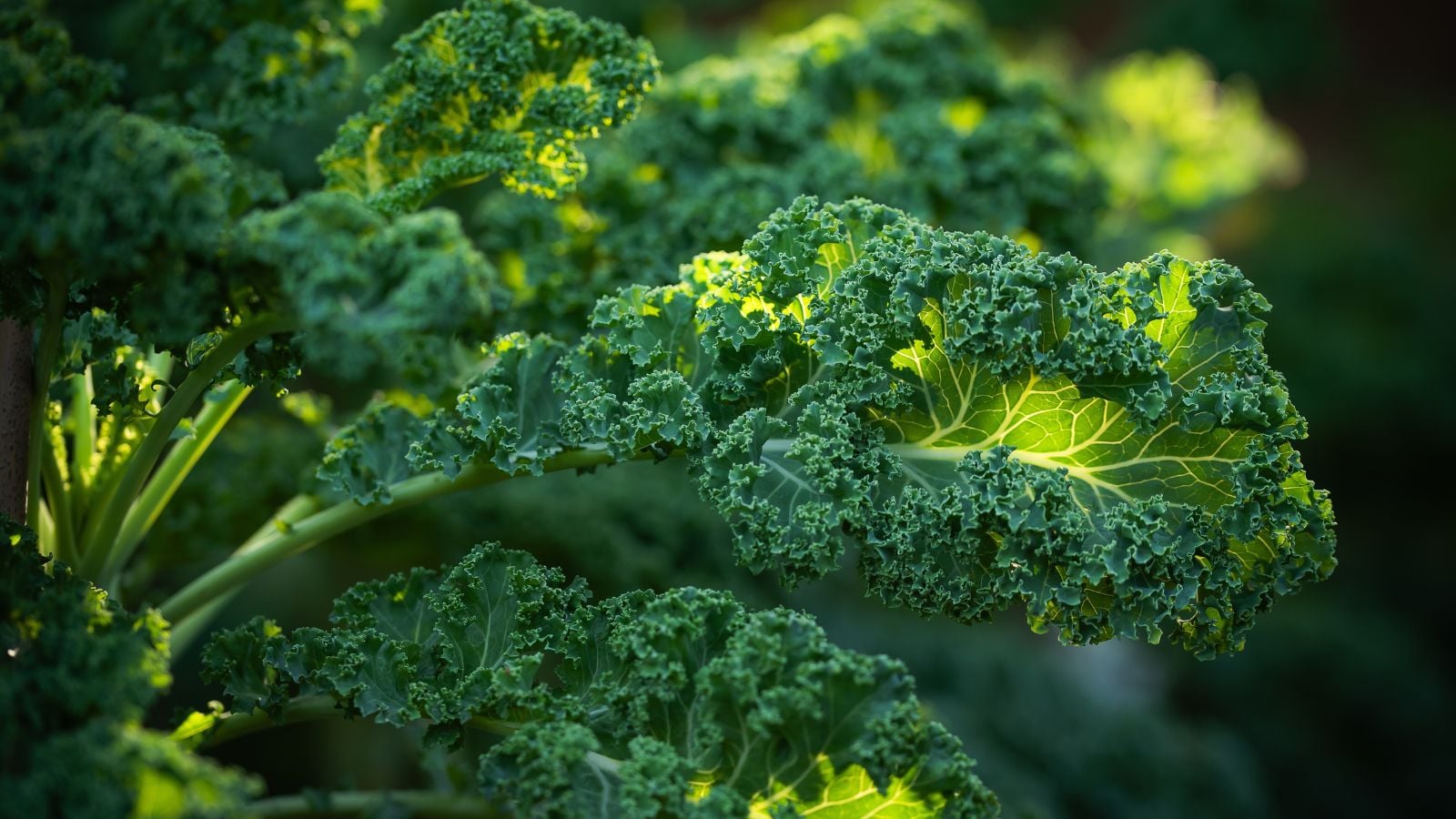
Growing kale is one of the easiest things to do from seed. Seedlings emerge within a few days of sowing, and the plants produce tons of leaves through spring. If you have a mild summer season, the leaves remain sweet and tasty. You can keep them growing into fall, and in mild areas, perennialize them to keep growing for multiple years.
In cold areas, grow frost-tolerant ‘White Russian’ kale, which was introduced by Wild Garden Seeds in 1994 as a cross between ‘Red Russian’ kale and Siberian kale.





