13 Easy Perennials You Can Plant in July
For a late-summer garden bursting with life and beauty, perennials are the best way to achieve it. In this article, gardening expert Melissa Strauss discusses some easy late summer perennials you can add to keep things looking lively in the heat.


Contents
The late summer garden can rival spring for the most beautiful time of year. If you plant the right things in July, this transition from summer to fall is divine. To take the simplest route to a glorious late summer and fall garden, plant some easy perennials this July.
We typically think of flowering annuals as the biggest bloomers, but that’s not always the case. From an ecological standpoint, native perennials are the plants that pollinators and other wildlife depend on the most. When they’re in the right environment, many of these plants are both easy to care for and incredibly floriferous.
For a combination of ease of care and best performance, I always recommend native plants. Many non-native flowering perennials can be invasive, which is never good. Here are some hearty perennials that shine in late summer.


Purple Coneflower


|
botanical name Echinacea purpurea |
|---|---|

|
sun requirements Full sun |

|
height 2’-4’ |

|
hardiness zones 3-9 |
Coneflowers are hardy perennials native to the Eastern and Central United States. They are drought-tolerant and sturdy plants that thrive in hot July weather and continue to bloom. In fact, they can bloom from early summer until frost under the right circumstances. They are incredibly resilient and popular with pollinators.
The most common color for coneflowers is purple, but they also come in a range of colors, including white, orange, yellow, pink, red, and green. They need good drainage and tolerate poor, sandy, and rocky soil types. Leave the seed heads intact, and they will re-seed if the birds leave any behind.

Blanket Flower

|
|
botanical name Gaillardia spp. |
|---|---|
|
|
sun requirements Full sun |
|
|
height 12”-36” |
|
|
hardiness zones 3-10 |
Blanket flower is an easy, late summer blooming perennial. In fact, it blooms all summer and fall, too! The bright red and yellow flowers are cheerful and loved by pollinators of all kinds. They colonize nicely, which is where their common name comes from. When they bloom, they resemble a colorful blanket spread across the ground.
These easy perennials are drought and heat-tolerant, perfect for long July days. They’re also native to most of the United States. Find a species native to your region, and it practically takes care of itself. They are a short-lived perennial, but they self-seed, so once you’ve got them in the garden, they return reliably.
Tickseed

|
|
botanical name Coreopsis spp. |
|---|---|
|
|
sun requirements Full sun |
|
|
height 1’-4’ |
|
|
hardiness zones 4-9 |
Tickseed is another North American native that is an easy July perennial. They’re known for their long bloom time, which lasts from late spring until about October. They have a clumping habit and self-seed. Consider dividing clumps every few years to maintain their health and vigor.
This plant pairs well with other drought-tolerant native species. If you shear them back after their first bloom, they will have a better bloom later in the season. Pollinators love these, especially butterflies, and overwintering finches will appreciate the seed heads.
Black-Eyed Susan

|
|
botanical name Rudbeckia hirta |
|---|---|
|
|
sun requirements Full sun |
|
|
height 1’-3’ |
|
|
hardiness zones 3-9 |
If you want a ton of color from an easy, late summer-blooming perennial, there is no topping black-eyed Susans. These native plants produce numerous cheerful, summery yellow flowers from midsummer to early fall. They are adaptable and tolerant of clay-heavy and sandy soil types.
Few plants attract more native bees than this one does. If you leave the seed heads, you’ll provide food for finches in the fall. Few pests affect the vigor of black-eyed Susans, even aphids. They self-seed freely, but they’re easy to pull up if they spread too far.
Joe Pye Weed

|
|
botanical name Eutrochium maculatum |
|---|---|
|
|
sun requirements Full sun to partial shade |
|
|
height 3’-7’ |
|
|
hardiness zones 3-9 |
This easy July perennial has a name that simply doesn’t befit it. Joe Pye Weed is a statuesque native plant that produces clouds of tiny pink flowers late in the season. These blooms attract scores of butterflies and other beneficial insects.
Joe Pye Weed is tolerant of clay and sandy soil, but it’s not exceptionally drought-tolerant. It does tolerate areas with less-than-ideal drainage. There are species native to nearly all of North America. It’s showy and dramatic, and is a rather large plant that provides a lot of late-season interest.
Bee Balm

|
|
botanical name Monarda spp. |
|---|---|
|
|
sun requirements Full sun to partial shade |
|
|
height 1’-4’ |
|
|
hardiness zones 3-9 |
Bee balm is another excellent late summer blooming perennial. The flowers bloom in shades of pink, purple, red, and white, attracting pollinators. This plant belongs to the mint family, so it can be aggressive. I keep this in a raised bed, and it looks lovely there, but it can’t take over the entire garden.
Being in the mint family, bee balm has aromatic foliage. It’s edible and commonly used in teas or as a garnish. It has a history of medicinal use by Native Americans and early colonists. The strong scent is repellent to many nuisance insects and deer.
Blue Mistflower

|
|
botanical name Conoclinium coelestinum |
|---|---|
|
|
sun requirements Full sun to partial shade |
|
|
height 1’-3’ |
|
|
hardiness zones 5-10 |
Blue mistflower is so easy it commonly shows up without any effort from the gardener. It adds incredible beauty and texture, especially to naturalistic gardens. It starts blooming around August, producing clouds of fuzzy blue flowers.
I find this plant to be incredibly easy-going. It self-sows, though not excessively. It typically won’t outcompete other plants in the garden. It’s great for attracting butterflies. I see Monarchs on this perennial regularly. It’s native to the Eastern United States.
Yarrow

|
|
botanical name Achillea millefolium |
|---|---|
|
|
sun requirements Full sun |
|
|
height 1’-3’ |
|
|
hardiness zones 3-9 |
For a wealth of easy, July perennial color, yarrow is an excellent choice. With feathery foliage and dense, bountiful, flat-topped flower clusters, it’s a lovely addition to any space. It’s especially well suited to cottage gardens, prairies, and meadows. It has a wildflower look but blooms prolifically with conspicuous color.
Wild yarrow has white flowers, but there are other cultivars with blooms in shades of yellow, red, pink, orange, and lavender. The finely cut foliage is aromatic, and the flowers are attractive to pollinators. Yarrow is incredibly easy to grow and establishes quickly in different environments.

Stonecrop

|
|
botanical name Sedum spp. |
|---|---|
|
|
sun requirements Full sun |
|
|
height 2”-2’ |
|
|
hardiness zones 3-10 |
Stonecrops, also known as sedums, are late summer blooming succulents. Many are native to North America, though not all. They are heat and drought-tolerant, and wide-ranging in size and form. From low-growing ground covers to tall, upright varieties, it’s versatile and varied.
Most gardeners don’t think of succulents as pollinator plants, but stonecrop certainly is. Beneficial insects love its bountiful, late summer blooms. Flowers come in a variety of colors, including shades of red, pink, white, yellow, and purple.
Anise Hyssop

|
|
botanical name Agastache foeniculum |
|---|---|
|
|
sun requirements Full sun to partial shade |
|
|
height 2’-4’ |
|
|
hardiness zones 4-8 |
Anise hyssop is a beautiful, perennial member of the mint family. Its name comes not from a relationship to true anise but from the aroma of the crushed leaves. It’s a charming and beautiful plant that produces spikes of fuzzy lavender flowers from midsummer through fall.
At two to four feet tall, this makes a nice midground addition to your borders and beds. It tolerates some shade and will be more drought-tolerant as a result. In hotter climates, afternoon shade is beneficial. It’s easy to care for, and pollinators love it, of course!
Sneezeweed

|
|
botanical name Helenium spp. |
|---|---|
|
|
sun requirements Full sun |
|
|
height 1’-5’ |
|
|
hardiness zones 3-8 |
Sneezeweed doesn’t get nearly enough recognition, in my opinion. Native to most of North America, this easy, late summer blooming perennial is happy as long as it has moist soil. While it’s not drought-tolerant, there are not many other complications to overcome here. It can grow up to five feet tall and produces numerous flowers in late summer and early fall.
Few people are allergic to sneezeweed, as the name would imply. It’s a simple, clumping, upright perennial that provides a great source of late-season nectar. Beneficial insects love it. Deer are unlikely to bother it. It’s ideal for a rain garden.
Aster
|
|
botanical name Aster spp. |
|---|---|
|
|
sun requirements Full sun |
|
|
height 6”-6’ |
|
|
hardiness zones 3-8 |
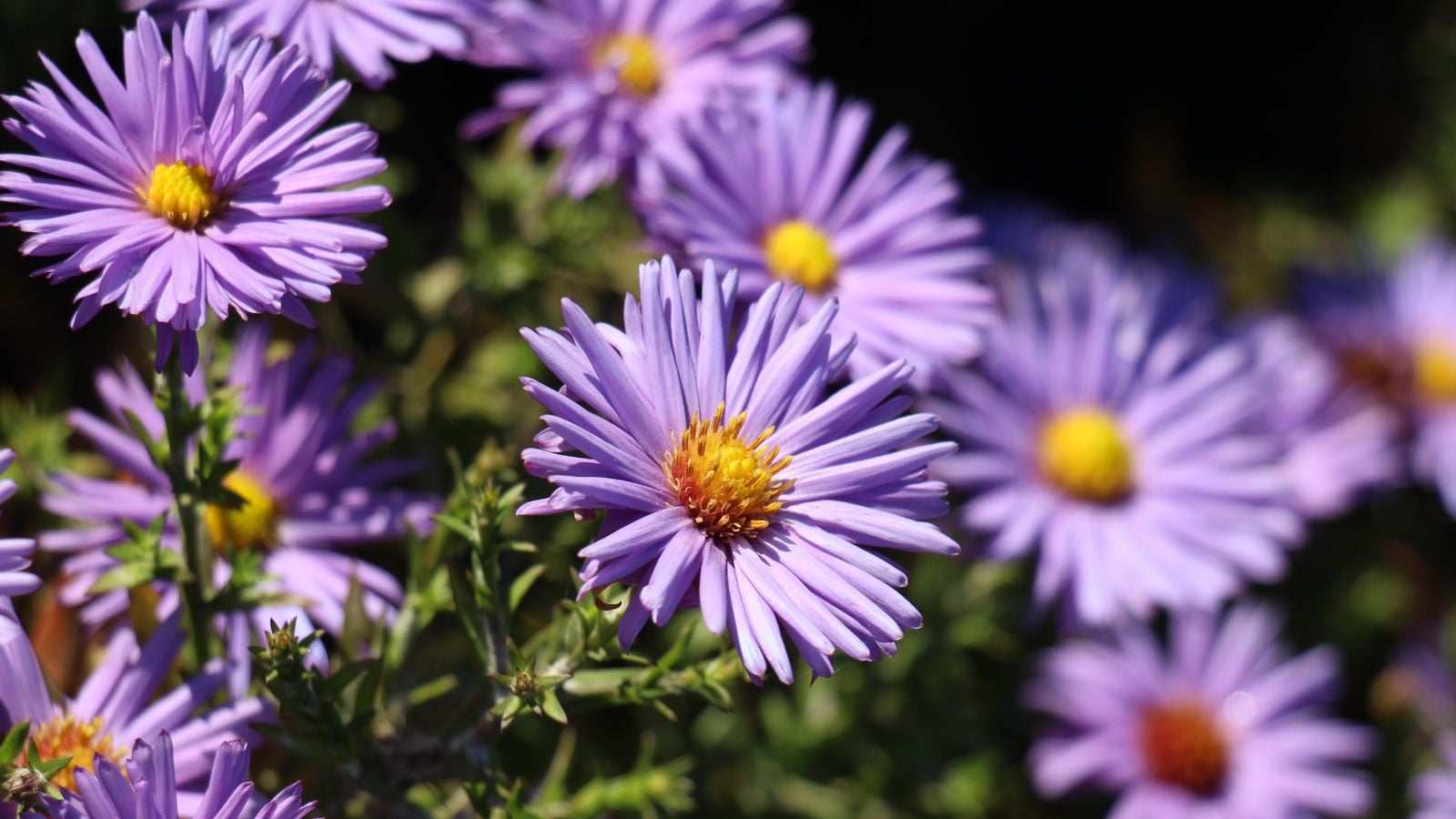
Asters are stars of the late summer garden. These bloom right before the chrysanthemums and create a lovely overlap. They tolerate partial shade, but won’t flower as heavily without full exposure. They are tolerant of sandy soil and clay, but loam is the ideal soil type.
Many beautiful species of aster span a wide range of sizes. The flowers are typically blue or purple, but white and pink are not uncommon. Choose between short, medium, and tall varieties for any part of the garden.
Goldenrod

|
|
botanical name Solidago spp. |
|---|---|
|
|
sun requirements Full sun |
|
|
height 1’-6’ |
|
|
hardiness zones 3-8 |
Goldenrod is another plant with native species found in nearly every part of North America. You can even find it in Alaska! When it comes to showy plants in the late summer and early fall garden, this one has few rivals, if any. The large plumes of golden flowers are incredibly attractive to bumblebees.
Many people believe that goldenrod is responsible for their seasonal allergies. However, few people are actually allergic to it. It blooms at the same time as giant ragweed, which is a common allergen. Add this to your garden with confidence that it won’t make you sneeze!