The Easiest Vegetables To Grow For New Gardeners
What are the easiest vegetables to grow? If you're a new gardener, there is a wide selection of vegetables to choose from. We dive in and give our top picks for great starter veggies for both new gardeners and old!

Contents
Beginner gardeners often assume growing vegetables is too big a step and that they should start with something “easy,” without realizing that many vegetables are actually very easy to grow. While some crops need extra attention, the list of easy vegetables is surprisingly long. This list only scratches the surface of what you can grow successfully with minimal effort.
When it comes to gardening, understanding good growing conditions matters more than mastering any single plant. People have grown their own food for thousands of years, long before garden centers existed. They succeeded by choosing rich, well-drained soil, waiting until after the last spring frost to plant sensitive crops, and growing a diverse mix of vegetables, flowers, herbs, and tubers. Seeds were often traded to improve genetic diversity and crop success.
We have highlighted some of the easiest crops to grow at home. Cherry tomatoes and basil made the list because many gardeners already buy them regularly at the grocery store. Green beans and leaf lettuces earn their place because they are highly productive and rewarding to harvest. Radishes and bok choy round out the list since they mature quickly, allowing you to enjoy a harvest within a few weeks and see firsthand how simple vegetable gardening can be.
All of these plants are well-suited to outdoor growing. We have divided the list into two categories: cool-season crops that grow best at temperatures below 70°F (21°C) and warm-season crops that thrive when temperatures rise above 70°F. Always consider temperature when deciding what to plant and when to plant it.
Yellow Sweet Spanish Utah Bulb Onion

Yellow Sweet Spanish Utah Bulb Onion Seeds


Cool Season Crops
Several cool-season crops are easy for beginners to grow. Check your zone to determine when to start seeds.
Radish

Radishes are among the easiest vegetables to grow and deliver big flavor in a short time. These crisp, fast-growing roots mature in as little as 30 days, with some varieties taking slightly longer.
As a cool-to-mild season crop, radishes can be ready to harvest in as little as three weeks after sowing. They grow well in spring and fall but do not tolerate frost. For beginner gardeners, radishes often become the first crop they direct sow straight into garden soil. If you also grow lettuce, plant a row of radishes between rows of leaf lettuce to make efficient use of space.
Many interesting radish varieties are available to try. Popular options include watermelon radish and daikon radish, both of which work especially well for pickling when harvests exceed expectations. Both the roots and the leaves of radish plants are edible, adding even more value to this easy, rewarding crop.
Bok Choy

Another cool-season crop, bok choy is an excellent vegetable for stir fries and soups and is a good choice for anyone looking to add more fiber to their diet. A wide range of varieties is now readily available. This is often one of the first crops planted as seasons shift in late summer, when gardeners begin a new round of planting.
Bok choy performs well when direct sown, but in regions with shorter growing windows, starting seeds indoors and transplanting once cooler temperatures arrive works well. It prefers consistently moist soil and full sun during cool weather, or partial shade when planted in spring. Bok choy is ideal for succession planting. Sow seeds every two to three weeks to maintain a steady harvest.
Harvest bok choy as soon as the leaves are large enough to pick or cut, and continue harvesting until the plant begins to flower. Notable varieties include purple types, tender green pak choy, and sturdy white stemmed selections.
Onions

While onions are slow to start from seed, you can easily grow them from what are known as sets. These are small immature onions grown from seed during the previous season. Plant sets in the ground at the start of the cool weather season and allow them to grow for three to five months before harvest.
Depending on the variety and your climate, onions can produce a generous harvest in a relatively short time. This is a cool-season crop that cannot survive snow. As spring approaches, pay close attention to selecting the correct onion type for your growing zone. Onion varieties are grouped by the number of daylight hours required to form bulbs, so check the average daylight hours in your area before purchasing.
Good varieties to look for include the day-neutral ‘Red Cabernet’. For short-day regions, try ‘Yellow Granex’, often considered a Vidalia type. Long-day growers should look for ‘Walla Walla’ or ‘Rossa di Milano’.
Peas

One of the easiest vegetables to grow, peas are extra sweet nuggets that taste even better when harvested straight from the garden. Once pods are picked, the sugars in peas begin to break down, which is why garden-fresh peas are noticeably sweeter than those from the grocery store.
There are three main types of peas to choose from at planting time. Shelling peas and snap peas grow to full maturity before harvest, while snow peas are picked when the inner peas are still immature and only partially formed.
Depending on how you plan to use them, you can grow different varieties of this prolific, beginner friendly crop that quickly fills garden beds. For shelling peas, try ‘Green Arrow’. For snap peas, look for ‘Cascadia Sugar Snap’. For snow peas, ‘Carouby de Maussane’ is a reliable choice.
Potatoes
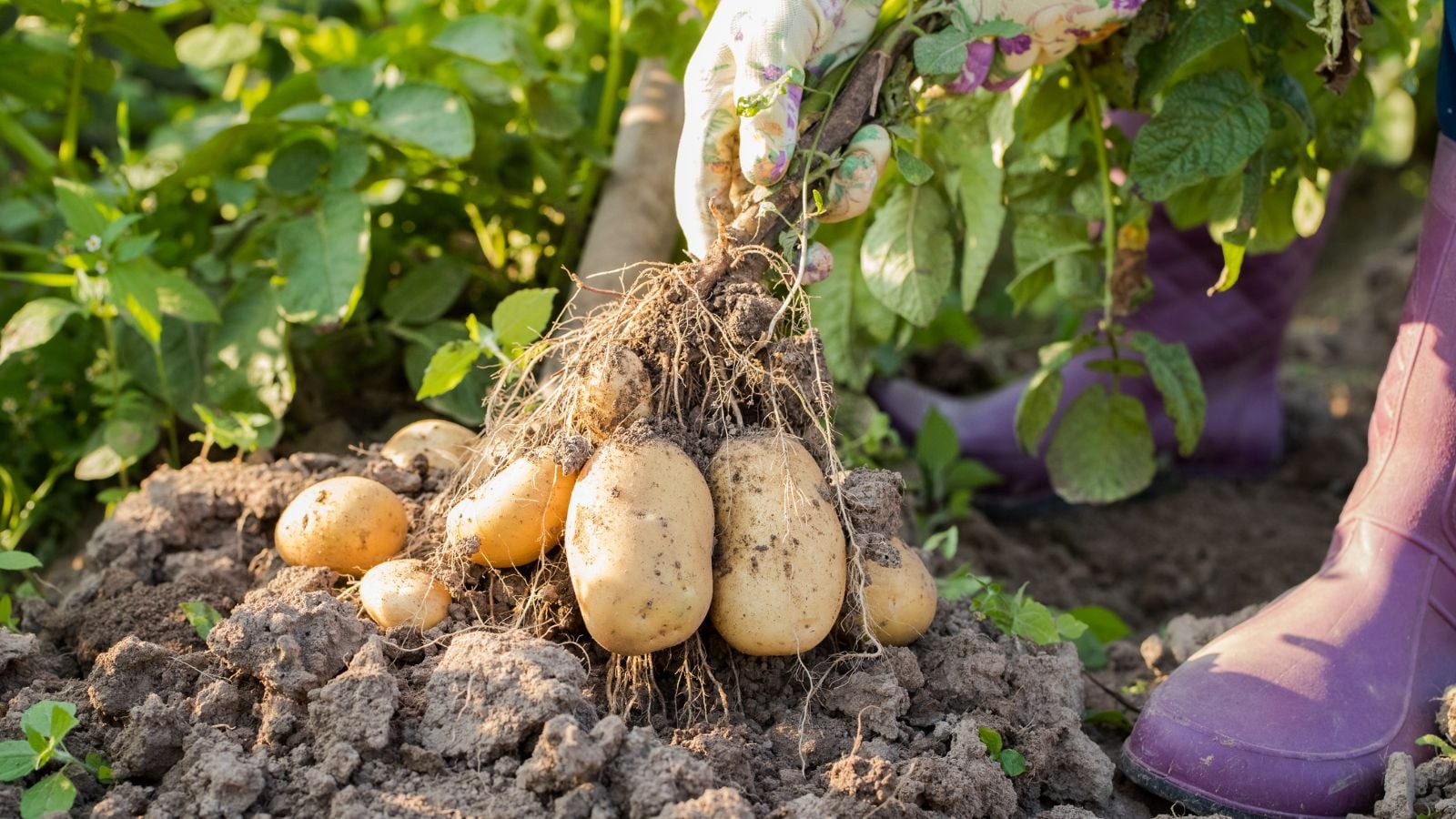
Once you plant potatoes, you may find you have them for years to come. This vegetable is incredibly easy to grow and often keeps producing with very little effort. Potatoes perform best in soft, loose soil with good drainage and can even be grown from older sprouting potatoes you find at the back of a cupboard.
To plant, place a potato ‘eye’ or sprouted section about four inches below the soil surface and cover loosely with soil. After the plants sprout and reach around six inches tall, hill the potatoes by adding soil around the base of the plant. Cover the lower stems and leaves, leaving the top few inches exposed. Additional tubers form along the buried stems, resulting in a larger harvest.
Potatoes are a cool-season crop. Depending on the length of your cool growing season, choose early, midseason, or late-season varieties that suit your area. Potatoes struggle in hot weather, so timing your planting correctly is key to success.
Lettuce

A fast-growing leafy green, lettuce is one of the easiest vegetables to grow from seed. Because lettuce seed is inexpensive and produces a high number of plants, it is easy to scatter seed in garden areas already planted with bulb crops such as onions, beets, or garlic and use companion planting to maximize space.
Fresh lettuce adds immediate value to the kitchen, and salad greens always taste best when harvested straight from the garden.
For an extended harvest, grow lettuce varieties that mature at different rates. This approach allows for continual picking over several weeks. Plant lettuce in rows six to ten inches apart and sow seed at a depth of one-eighth of an inch. In many cases, lightly pressing leaf lettuce seed into the soil and watering it in provides enough coverage for germination. Reliable varieties to try include ‘Bronze Beauty’, ‘Little Gem’, and ‘Tom Thumb’.
Kale

From the brassica family, kale is a prolific and easy-growing vegetable. Whether started from seed or transplanted, kale can be harvested repeatedly for months and, in mild climates, for years. Kale is rich in vitamins and nutrients and continually produces new leaves along a thick central stalk.
When growing kale from seed, sow at a depth of one-quarter inch in seed starting trays and transplant seedlings once they reach about four inches tall. Space plants at least one foot apart, with rows set eighteen inches apart. Although this spacing may seem wide at first, kale plants grow vigorously and produce large leaves.
Leaf forms range from the curly, greenish purple foliage of russian kale to the long, dark green leaves of lacinato kale. Kale grows well in raised beds and containers and generally takes up less space than many other leafy greens.
Beets

Beets are a simple crop that grows better from seed than from transplants. The edible portion is an enlarged taproot that becomes especially flavorful when roasted or pickled. Both the roots and the greens are edible. Because beet seed is relatively large, it is easy to space seeds evenly at planting time. Direct sow seeds four to six inches apart, in rows about eight inches apart, at a depth just under one inch.
Beets are high in vitamin C, folate, iron, and potassium, making them a valuable addition to the vegetable garden. They companion plant well with lettuces, brassicas, and other shallow-rooted crops. These fast-growing root vegetables offer a reliable harvest with minimal effort. For a classic red beet, try ‘Bull’s Blood’. For a golden option, choose ‘Golden’.
Beets also work well as an intercrop. Many of the easiest vegetables to grow pair well together, allowing you to harvest both above and below ground from the same garden space.
Warm Season Crops
In summer, these are the easiest vegetables to grow that will give you delicious harvests.
Beans

Beans are tender annuals that often reseed and return year after year. As a quick-growing crop, beans work well harvested fresh as green beans or left to mature and dry on the plant. The way you plan to use your harvest determines which varieties to grow.
Beans fall into two main growth types: bush and pole. Bush beans grow quickly and produce one concentrated harvest over about two weeks. Pole beans climb vigorously and can reach 8 to 10 feet tall when given support. They produce steadily over a longer period, often for more than a month from a single plant.
Some Asian varieties produce exceptionally long pods, sometimes close to one meter in length, making harvest especially fun for kids throughout the season.
For green beans, good options include yard-long beans, ‘Kentucky Wonder’, and ‘Dragon Tongue’ bush bean. If you plan to grow beans for drying, try ‘Jacob’s Cattle’ bush bean or cave bean.
Summer Squash

Looking for a prolific addition to the vegetable garden? Summer squash fits the bill perfectly. This diverse group includes zucchini, crookneck squash, and the many varieties of pattypan squash, all known for their heavy yields and ease of growing.
Plant summer squash from seed in early spring once the soil is warm and moist. The large seeds make direct sowing simple. Check the seed packet for spacing, as mature plants can spread quickly and take over garden beds if given the chance. Summer squash plants produce both male and female flowers, and once pollinated, fruit develops rapidly. Throughout the growing season, a single plant can supply an impressive amount of fresh vegetables.
For classic zucchini, try ‘Black Ball’ or ‘Dark Green Zucchini’. For something more unusual, experiment with ‘Lemon’, ‘Early Golden Crookneck’, or ‘Kamo Kamo’ squash for variety in shape, color, and flavor.
Cherry Tomatoes

Cherry tomatoes come in thousands of varieties worldwide and are among the easiest tomatoes to grow. Their vigorous stems spread quickly through the garden and often need regular training to stay contained. Dozens of small fruits form along each stem, and cherry tomatoes self-pollinate, avoiding pollination issues that sometimes affect larger tomato types. Plants often produce steadily for several months.
Plant cherry tomatoes in full sun and provide sturdy support such as a tomato cage or trellis. They need consistent watering and ample root space to thrive. Cherry tomatoes perform especially well in containers and rank among the hardiest tomato types. Many gardeners consider them closer to the original tomato form, as larger beefsteak types only appeared through hybridization a few hundred years ago. Fruit typically begins to mature after 80 to 100 days, delivering a relatively quick harvest.
For outstanding flavor, try the classic golden ‘Sun Gold’ or the reliable ‘Supersweet 100’. If you want a dark red cherry tomato rich in anthocyanin, choose ‘Indigo Cherry’. ‘Brad’s Atomic Grape’ also contains anthocyanin and offers striking multicolored fruit for gardeners looking for something unusual.
Basil

Not quite a vegetable but close enough for most gardeners, basil is a fast-growing herb prized for its flavor and versatility. Basil thrives in summer heat and full sun and grows quickly as a leafy green. You can easily start it from seed in seed starting trays and transplant it outdoors, or sow it directly in place.
Basil adapts well to many conditions and grows happily in window boxes, loose soil, rocky ground, or large containers. Unlike many vegetables with strict requirements, basil mainly needs direct sunlight, regular watering, and well-drained soil to grow vigorously.
Plant seeds about one-eighth to one-quarter inch deep in mid-June, or whenever you have several months of warm weather ahead. If planting in the ground, space rows eighteen inches apart. For containers, plant one to two basil plants per twelve-inch pot. Basil is an excellent choice for small gardens and limited spaces and starts easily indoors. While many basil varieties exist, the reliable and classic choice is ‘Genovese’.
Peppers

Pepper plants are easier to grow than many gardeners expect. When grown in the right conditions, with well-rotted manure or compost worked into the soil, peppers grow vigorously in warm weather and full sun.
Aim for at least eight hours of direct sunlight per day. Keep the soil consistently moist, and plants will begin producing quickly. You can sow seeds directly into the soil and lightly cover them, or transplant young starts.
Choose sweet pepper varieties from seed catalogs rather than relying on transplants from large garden centers, which often lack the flavor of heirloom types. For example, ‘Jimmy Nardello’ sweet pepper seeds are known for their exceptional taste. Other reliable and flavorful options include ‘King of the North’, ‘Ajvarski’, and ‘Manganji’ sweet pepper.
Frequently Asked Questions
What vegetables can grow in 30 days?
Radishes and many leafy greens can grow in as little as 30 days.
What are the easiest and most nutritious vegetables to grow?
Salad and stir fry greens are the easiest and most nutritious vegetables to grow. Anything from head lettuce to bok choy and kale grows easily while packing that nutritional punch!





