Why Your Dieffenbachia Has Yellow Leaves (and How to Fix it)
Yellow leaves are common in Dieffenbachia houseplants. Luckily, if you catch the causes early, you can stop the problem from getting worse. Epic Gardening founder Kevin Espiritu shares seven possible causes and how to fix them.

Contents
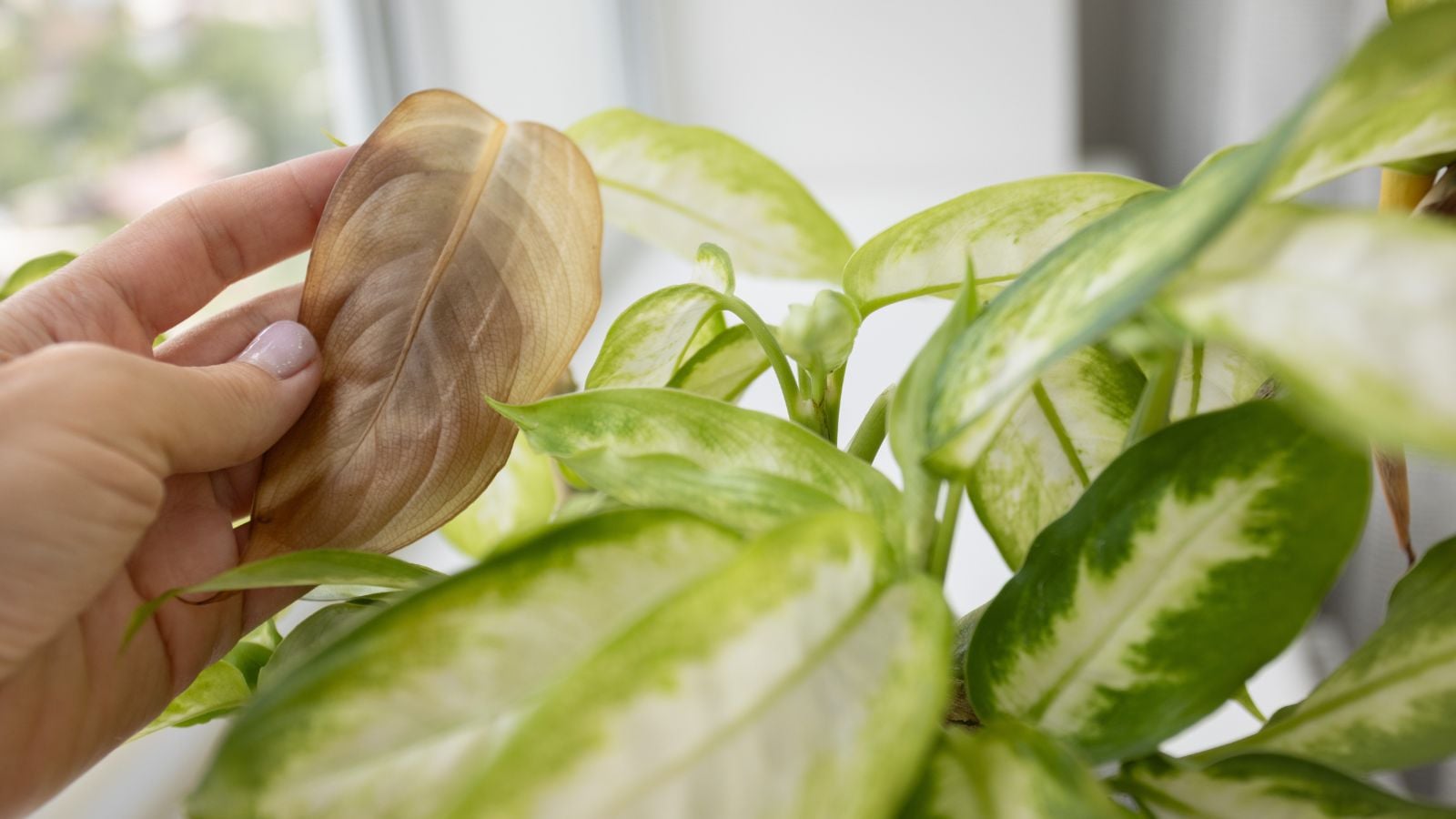
Dieffenbachia, also known as dumb cane, is one of the most common houseplants because it is easy to care for. However, dieffenbachia yellow leaves can develop when the plant’s needs are not met.
Most of the time, it is simple to identify the problem and fix it before it becomes serious, but there are situations where the cause is less obvious. If your dieffenbachia has yellowing leaves, there is no need to panic.
Read on to learn the most common reasons for dieffenbachia yellow leaves and how you can bring your plant back to good health.

Moisture Stress

Dieffenbachia yellow leaves often occur when the plant is either underwatered or overwatered. Since dieffenbachia grows in containers, it relies entirely on you for the right amount of moisture, rather than getting water from rain or in-ground soil.
A root-bound plant may also experience water stress, which can lead to yellowing or brown leaves. To fix this, repot your dumb cane into a container a couple of inches wider than the current one. Use fresh potting medium and gently loosen the roots before planting in the new pot.
If the leaves have lost their green color, check the pot to see whether the soil is dry or wet. If the soil is wet, reduce the number of times you water. Alternatively, if the soil is dry, start watering it more regularly.
Aging

Dieffenbachia is one of the most popular houseplants because it lives for a long time. Like all living things, it eventually begins to age. As the plant grows, some of the green leaves will turn yellow. This process is completely normal. In time, those leaves will fall off on their own.
When all the older leaves have dropped, it can be helpful to trim the stems and cut back the foliage to encourage fresh growth.
Weather

Another common reason for dieffenbachia leaves turning yellow is temperature stress. Houseplants prefer warm conditions, and when it gets too cold, the leaves can be affected. If your plant sits on a window ledge or near an air conditioner during winter, move it to a spot that still gets bright light but stays warm and free from drafts.
Insufficient Sunlight
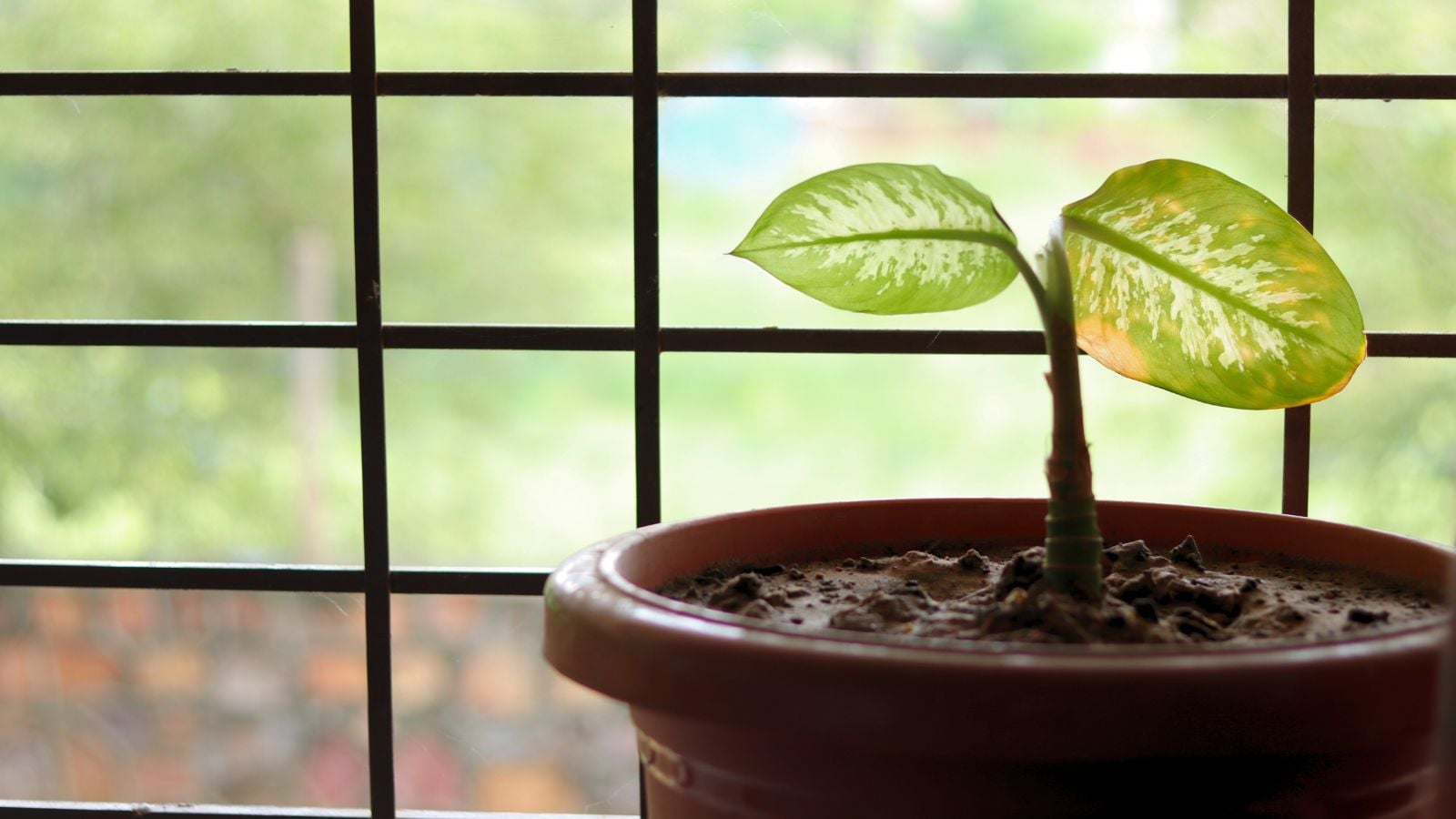
Unlike plants growing outdoors, houseplants do not receive consistent sunlight throughout the day, even in bright indirect light. Too much direct sun can scorch the leaves, causing them to yellow and droop. If this continues, the entire plant may begin to yellow.
If your plant sits in the middle of a room away from a light source, move it closer to a windowsill where it can receive softened, indirect light. If it is already on the sill, add a sheer curtain or shift it slightly away from the direct rays. During winter, supplementing with artificial light can help prevent color changes in the leaves.
Infection

Yellow patches on the leaves can also be a sign of infection. Infections may not only cause yellow dieffenbachia leaves but can also discolor flowers and deform stems. If the problem has spread throughout the plant, move the container away from your other houseplants or repot it completely. Remove yellow leaves and sterilize your tools before using them on any other plants.
Root rot is a common fungal disease that develops when a plant experiences water stress from overwatering. One of the main symptoms is yellowing leaves that become mushy at the base. The fungus enters through the roots and moves upward into the foliage.
To treat root rot, remove the damaged parts and stop watering for a while to see whether the plant stabilizes. If the issue continues, repot your dumb cane into a clean container with fresh potting mix. Trim away the damaged roots during the transfer and wait for new growth to confirm that the plant has recovered.
Nutrient Deficiency

This cause can be harder to recognize, since you may not realize it is happening at first. Your dumb cane may start changing color when it lacks essential nutrients, especially nitrogen. Fertilize your plant regularly with a diluted houseplant fertilizer to help prevent yellow dieffenbachia leaves.
Pests

Spider mites are one pest that feeds on dumb cane. As they feed, you may notice dieffenbachia leaves turning yellow. They draw sap from the foliage, which leads to curling and discoloration. In heavy infestations, they may even weave fine webs around the leaves.
You can manage spider mites with neem oil, by wiping the leaves with a damp cloth, or by using insecticidal soap.
Frequently Asked Questions
Does overwatering affect dieffenbachia?
If you water the plant too much, your plant can suffer. It may become hard for the roots to absorb all of the water, which can lead to the death of your plant via root rot.
Can brown or yellow leaves turn green again?
Once your dieffenbachia plant is dry and the leaves change color, they will not turn to their original color again. Simply cut them off so they don’t affect others.
Should I cut yellow leaves off dieffenbachia?
Most of the time, removing leaves that are turning yellow is the best course of action. The only time to forego leaf removal is when there aren’t many leaves on the plant to begin with.
How do you tell if yellow leaves are from overwatering or underwatering?
Overwatering causes limp, slightly moist brown or yellowing leaves. Underwatering causes crispy ones.





