11 Flowers You Should Deadhead Right Now
Deadheading is a productive August garden task that prompts the next flush of flowers in repeat bloomers. This month is the last opportunity for many of us to clip faded blooms for a final round of color before frost, and before encouraging reseeding. Gardener Katharine Rowe outlines the top flowers to deadhead now and why it benefits the selection.


Contents
In August, a final round of deadheading before letting blooms go to seed keeps everything colorful and fresh. Many of our favorite blooms show another flush as temperatures moderate toward fall, and deadheading these flowers now lets the new buds shine.
Plants don’t rely on deadheading to grow, but it can promote further flowering and improve form. Removing spent blooms redirects energy from seed production into producing more flowers. For flowers that last into fall, the extended bloom season enlivens the display and provides nectar and pollen to support beneficial insects.
Removing faded blooms now allows time for another round of color before frost. Stop deadheading by late month or early September to let fall blooms go to seed.


Lupine


|
botanical name Lupinus spp. |
|---|---|

|
sun requirements Full sun to partial shade |

|
height 1-5′ |

|
hardiness zones 3-8 |
When it comes to cutting back lupines, deadheading is one of the most valuable maintenance practices. There are two main reasons to deadhead flowers now for this short-lived perennial: to promote a second flush of flowering and to prevent reseeding.
Lupines flower most heavily in spring and summer, with the timing depending on the variety and climate. After blooming, they produce seeds that ripen and dry for natural dispersal later in the season. With deadheading, it’s possible to get another round of color later in the season.
Deadheading also serves to remove the ripening and drying seeds. If you don’t want natural reseeding, clip the stems before they go to seed, or while seedheads are green. They’ll be dry and brown when mature.
While lupine species are stable, their hybrids won’t come true to type from seed. They may pop up in different colors for a surprise blend. If you don’t want surprises or to limit the spread, reseeding may not be a fit. This is especially the case with L. polyphyllus and its cultivars outside of their native Western range, where they can escape garden cultivation. Limiting the spread helps keep the perennial in check.
If you want to promote reseeding for successional seasons of color, let late-season blooms go to seed.
Delphinium

|
|
botanical name Delphinium spp. |
|---|---|
|
|
sun requirements Full sun |
|
|
height 1-6′ |
|
|
hardiness zones 3-7 |
Elegant and stately, Delphinium stuns with large, deep blue bell-shaped flowers on tall stems, with cultivars in a range of hues. The perennial (often treated as a cool-season annual) benefits from deadheading post-bloom to increase air circulation and stave off powdery mildew.
Deadhead flowers now post-bloom, cutting them back to the basal leaves or to side shoots, if present. Let any side shoots flower before giving them a cut, too.
Deadheading promotes a possible rebloom in late summer and early fall. It also prevents reseeding, as some delphiniums are vigorous spreaders that can take over a space. Hybrids won’t come true to type from seed, differing from the parent plant. However, to encourage reseeding, leave the late-season stalks in place to let those go to seed.
Rose

|
|
botanical name Rosa spp. |
|---|---|
|
|
sun requirements Full sun to partial shade |
|
|
height 3-50′ |
|
|
hardiness zones 4-11 |
Many roses, including climbing and shrub roses, are self-cleaning and rebloom happily without deadheading. But, to encourage a final big show from repeat-blooming varieties, removing aged flowers now channels the plant’s energy. The quicker we deadhead flowers now, the faster they reflower.
Stop deadheading by late August or September to let rose hips develop. Rose hips last well into fall and even winter, and add ornamental interest. Songbirds and wildlife use them for forage. We also want the rose to prepare for winter dormancy, rather than promoting new growth and flowering late in the season.
Allow six to eight weeks before the anticipated frost date as roses prepare to overwinter.
Hydrangea

|
|
botanical name Hydrangea spp. |
|---|---|
|
|
sun requirements Partial shade |
|
|
height 2-20′ |
|
|
hardiness zones 3-9 |
Hydrangeas, the stunning summertime showpieces, bloom either on old wood (the previous year’s growth) or new wood (the current year’s growth).
Species that bloom on old wood set their buds in late summer, just after flowering, for blooming the following year. Hydrangeas that bloom on new wood set their buds in the spring and all season on fresh stems.
Cutting off spent blooms with repeat-flowering varieties during the growing season helps promote faster reblooming. Leading into fall, consider leaving aging clusters in place for added winter interest. Many varieties transition to vintage tones and finally a buff tan, with a dry, papery texture that persists into winter until naturally dropping.
If leaving the dried blooms doesn’t appeal, deadhead flowers now post-bloom and in early fall by clipping the flowerhead to a healthy set of leaves. Avoid major cuts to prevent disrupting the bud set of old wood varieties.
Salvia
|
|
botanical name Salvia spp. |
|---|---|
|
|
sun requirements Full sun to partial shade |
|
|
height 1-3′ |
|
|
hardiness zones 5-10 |
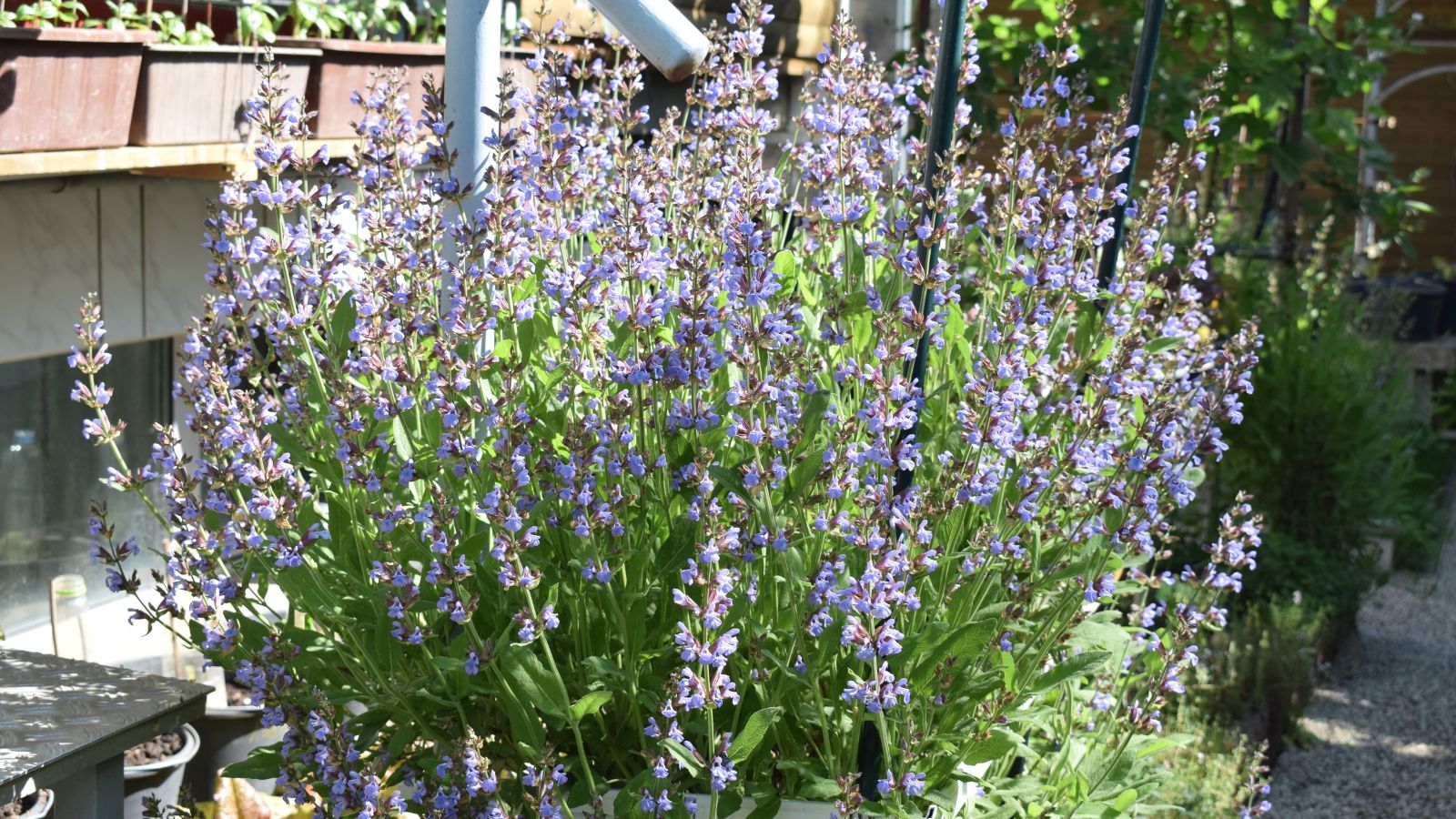
Salvias are easygoing perennials or annuals, depending on the species, that don’t require deadheading. But the pollinator favorites usually experience a resurgence of blooms in fall as seasonal conditions moderate. So for quicker reblooming and to tidy the plant, cut off spent bloom spikes down to a healthy leaf node.
Salvia is a top performer in the fall with seasonal color and provides pollinator support to bridge the warm and cool seasons. Salvia guaranitica is a late-summer native with deep blue, tubular flowers through the fall. Trim any spent stalks to promote another round of color.
Salvia leucantha, or Mexican bush sage, has velvety purple and white bicolor blooms in late summer and fall in warm climates. Its silvery gray and aromatic foliage persists year-round. Cut stems back after flowers fade to highlight the velvety leaves.
Yarrow

|
|
botanical name Achillea millefolium |
|---|---|
|
|
sun requirements Full sun |
|
|
height 1-3′ |
|
|
hardiness zones 3-9 |
Yarrow is another adaptable North American native perennial that thrives with a bit of neglect. While deadheading isn’t necessary, it serves to tidy up browning blooms and curtail weak stems. Removing spent stalks may lead to another round of flowers and seedheads.
Pollinators find the landing-pad flower clusters of yarrow irresistible, and a fresh nectar supply, as well as a show of color, is welcome in the late summer garden. Let the last round of blooms go to seed as forage and to expand the colony for future seasons.
Daylily

|
|
botanical name Hemerocallis spp. |
|---|---|
|
|
sun requirements Full sun to partial shade |
|
|
height 1-4′ |
|
|
hardiness zones 3-9 |
Daylilies are tough perennials that produce prolific blooms, one after another, and long-lasting color. They benefit from deadheading anytime, eliminating seed production and enhancing continual production.
By August, the flower stems that rise tall above strappy blue-green leaves get a refresh from trimming aged stalks. Deadhead flowers now and any leaves that show yellowing, withering, or drying. The large, frilly blooms may show for another round and prepare to overwinter with a healthy foundation.
Tall Garden Phlox

|
|
botanical name Phlox paniculata |
|---|---|
|
|
sun requirements Full sun to partial shade |
|
|
height 2-4′ |
|
|
hardiness zones 4-8 |
Phlox is an old garden favorite and a staple in the perennial border. Its domed flower clusters rise in rich, saturated hues. Because of its susceptibility to powdery mildew, deadheading, thinning, and removing any diseased portions help in late summer. Improving air circulation and reducing damp conditions this time of year contributes to overall vigor.
The fragrant native attracts butterflies and hummingbirds and has an extended flowering season. Deadhead flowers now to encourage reblooming, and remove debris as you go to prevent harboring fungal spores over the winter.
Removing aged flowers also limits reseeding in those that produce seeds (some newer varieties are sterile). Hybrids from seed won’t mirror the parent species, often showing pale magenta petals. Even if your variety doesn’t produce seeds, cutting away old flowers helps retain a neat look and reduces diseases.
Lavender

|
|
botanical name Lavandula spp. |
|---|---|
|
|
sun requirements Full sun |
|
|
height 3′ |
|
|
hardiness zones 5-9 |
After an early-season flush, cutback, and harvest of invigorating lavender, the perennial herb may rebloom in mid-summer. By late season, it’s ready for another trim.
When clipping the flowering stems for a final harvest, clip above a leaf node (where two leaves meet the stem) when feasible. Depending on your growing season, it may promote further flowering. Avoid cutting into the brown, woody section near the crown. Make any heavier cuts into a portion of the green stem two to three inches above the woody branch.
In the fall, cut back plants up to one-third to promote a full, mounded form the following spring.
Hardy Geranium

|
|
botanical name Geranium spp. |
|---|---|
|
|
sun requirements Full sun to partial shade |
|
|
height 1-2′ |
|
|
hardiness zones 3-8 |
Hardy geraniums, or cranesbill, begin flowering in spring with many varieties continuing intermittently through frost.
Most benefit from shearing after flowering to promote a flush of new growth. But these low-maintenance perennials don’t require deadheading to bloom. Many hybrids are sterile, resulting in a longer flowering season without seed production. Deadheading still tidies the look and makes for more leafier stems.
Continue to deadhead flowers now and throughout August for a late resurgence. If you have a variety with good fall color, avoid cutting the foliage back too much.
Under optimal conditions, hardy geraniums naturalize. They spread slowly by rhizome, and some by seed, for a gentle spread that doesn’t compete with nearby plantings.
Feverfew

|
|
botanical name Tanacetum parthenium |
|---|---|
|
|
sun requirements Full sun |
|
|
height 1-2′ |
|
|
hardiness zones 5-8 |
Now is the prime time to deadhead flowering herbs that reseed aggressively. Harvest the blooms to dry for teas, catching them before the seeds dry and drop. Herbs that reseed readily include mint, lemon balm, oregano, chamomile, and feverfew.
Feverfew is an old garden favorite for its bushels of petite daisy-ray flowers from early summer through frost. White flowers with yellow centers cover mounding, feathery, aromatic foliage.
The short-lived perennial grows for about two to three years, with seedlings to continue the colony.
It self-seeds hardily, so clip away spent blooms to prevent unwanted seeding and pull any unwanted volunteers. Deadheading also encourages more blooms. You can also employ feverfew in naturalized areas, borders, and rock gardens where it can reseed freely.