How to Plant, Grow, and Care For Creeping Jenny
Are you thinking of adding some Creeping Jenny as ground cover to your home gardening space? Creeping Jenny can make an excellent plant for just about any home gardening space. But getting it to grow properly can be a bit tricky. In this article, gardening expert Madison Moulton explains how to plant, grow, and care for Creeping Jenny.

Contents
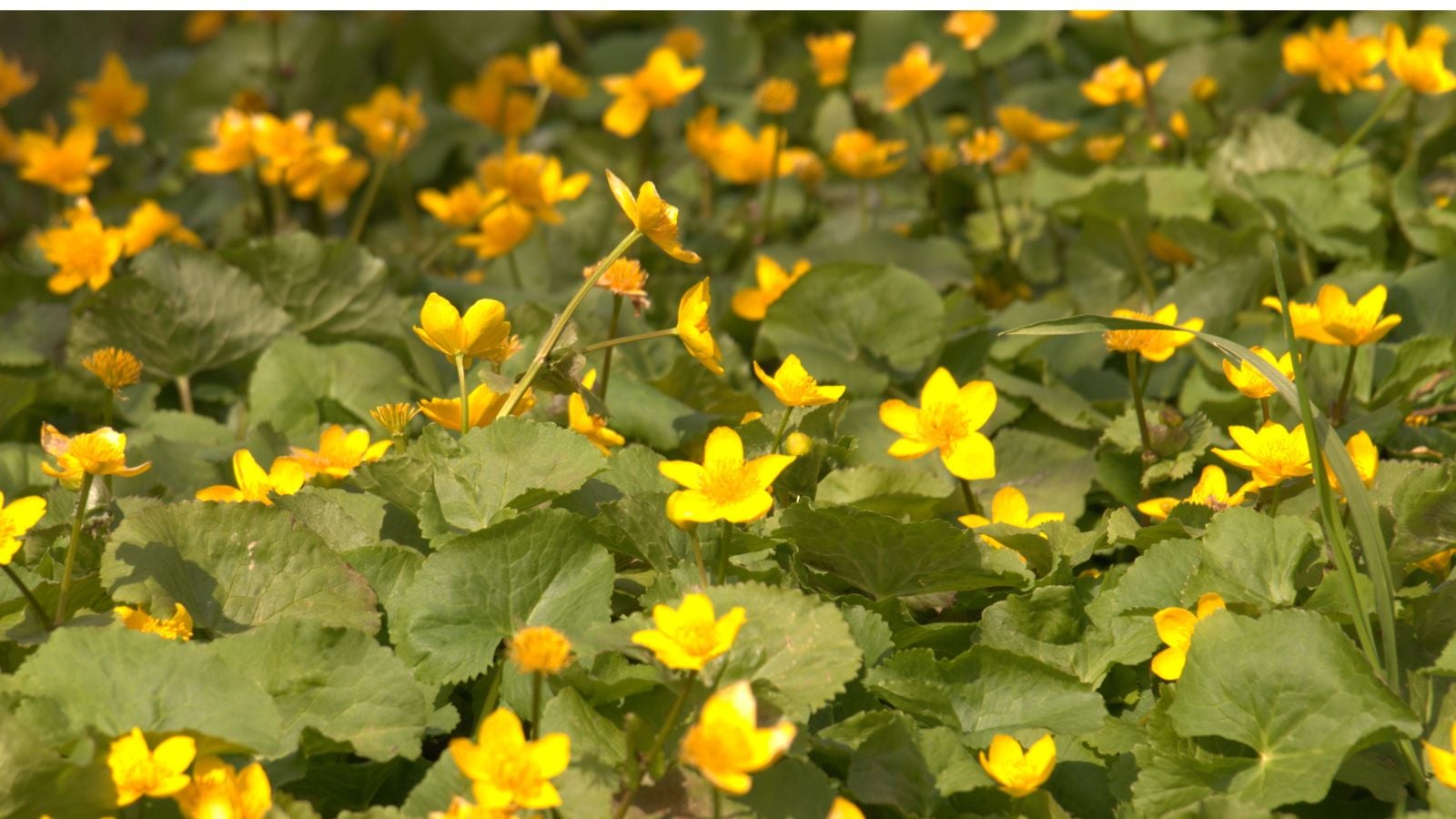
Lysimachia nummularia, also known as creeping jenny, is a popular garden ground cover. It spreads quickly, covering wide areas with dense carpets of almost luminescent green foliage, making it ideal for filling garden beds or replacing bare soil with lush growth.
Like many vigorous ground covers, this plant often takes up more space than intended. While it has a reputation for being invasive, it becomes a highly useful and attractive plant when gardeners keep it properly controlled.
This ground cover stays lush throughout the year and produces small yellow flowers in summer, adding a bright seasonal accent. Grow it in containers or plant it in hanging baskets, where it cascades beautifully over the edges.


Medium Modular Metal Raised Garden Bed Kit
Medium Modular Metal Raised Garden Bed Kit – 15” Tall

Creeping Jenny Plant Overview

|
Plant Type
Groundcover
Family
Primulaceae
Genus
Lysimachia
Species
Lysimachia nummularia
Native Area
Europe
Hardiness Zone
USDA 3-9
|
Season
Summer
Exposure
Full Sun to Partial Shade
Growth Rate
Quick
Plant Spacing
12 inches
Planting Depth
Shallow
Height
5 inches
|
Watering Requirements
High
Pests
Slugs, Caterpillars, Aphids
Diseases
Rust, Leaf Spot
Maintenance
Low to Medium
Soil Type
Rich, Moist
Plant With
Keep Isolated
|
What is Creeping Jenny?

Creeping jenny originates from Europe but has become a common garden plant worldwide, particularly in North America. Its botanical name, Lysimachia nummularia, and the common name ‘moneywort’ refer to the small, round leaves that resemble tiny coins, especially when they develop their signature glossy sheen.
Horticultural confusion has surrounded this plant’s family classification in the past. Botanists originally placed it in the Primulaceae family before moving it to Myrsinaceae. Today, Myrsinaceae is classified as a subfamily within Primulaceae.
These taxonomic shifts rarely concern home gardeners. Instead, the most important details to check are the botanical name and the cultivar, as these help determine whether the plant may behave invasively.
This plant also shares a common name with another invasive species, creeping charlie. A quick look at the botanical name Glechoma hederacea makes it clear that these are entirely different plants.
Cultivar selection plays a major role in garden suitability. Lysimachia nummularia ‘Aurea’, known for its golden foliage and slower growth habit, is generally considered suitable for home gardens when kept under control. More aggressive cultivars, typically those with deeper green leaves, are not recommended for planting or should only be grown in highly controlled areas.
Although gardeners usually grow these plants in cultivated spaces, and some cultivars have earned a Royal Horticultural Society Award of Garden Merit, they also appear in the wild along streams and bogs. In many cases, plants escape from nearby gardens and displace native vegetation. If you plan to grow moneywort, regular maintenance is essential to protect your local environment and surrounding plant life.
Plant Uses
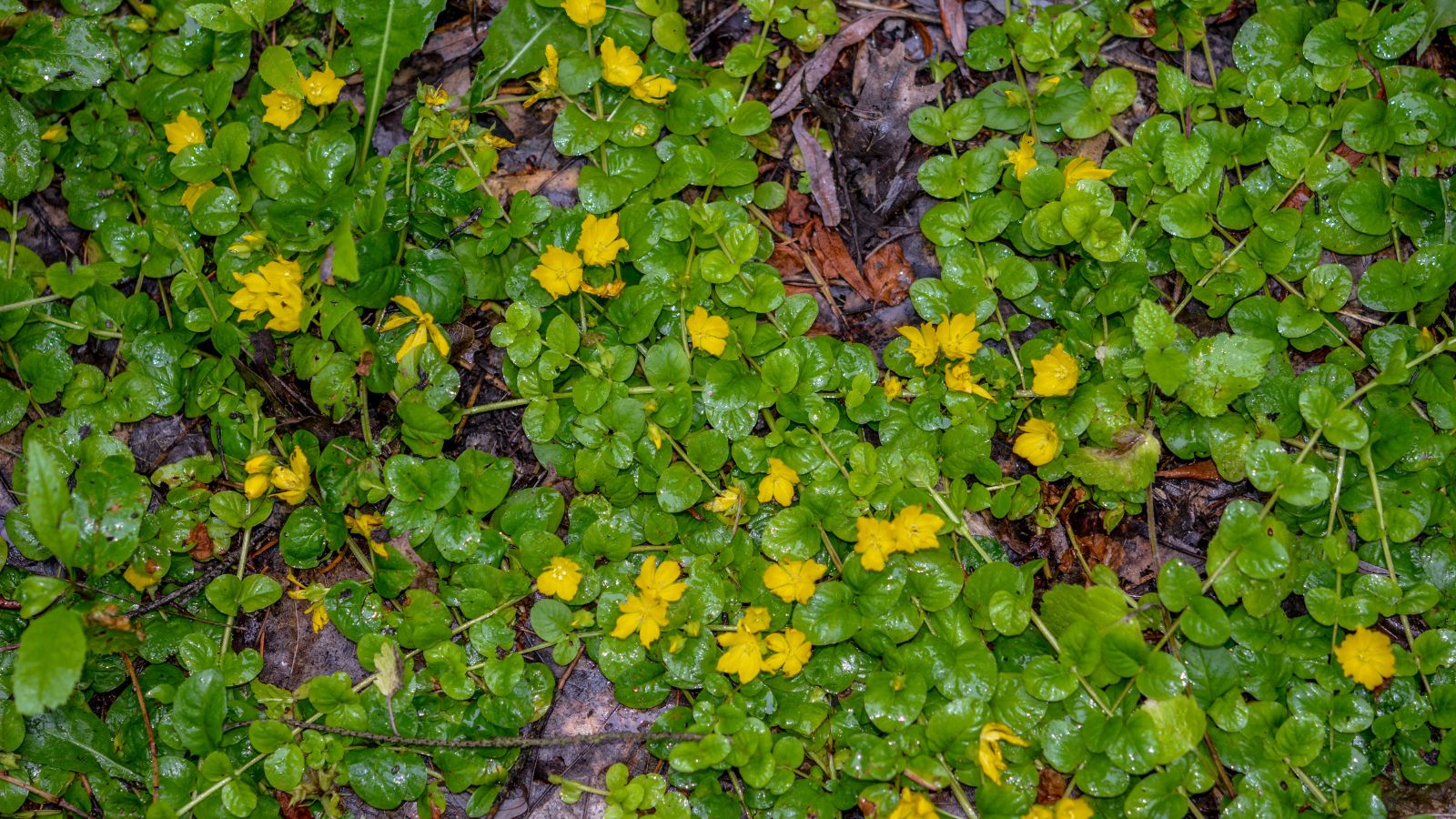
Creeping jenny is used primarily as a ground cover. It spreads horizontally very quickly, filling empty spaces with dense layers of compact five-inch-tall foliage. This growth habit makes it ideal for filling garden beds with greenery or replacing high-maintenance lawns.
Unfortunately, these plants do not coexist well with other species, particularly low-growing plants such as other ground covers, and perform best when planted alone. Use them to cover consistently moist areas where few other plants will grow, and they will thrive with minimal competition.
This vigorous growth habit also makes creeping jenny well-suited to container planting, which is the best option for both the plant and the surrounding ecosystem. In pots, when paired with plants that can withstand aggressive spreaders, the long stems trail over the edges to create an attractive cascading effect. This growth pattern makes creeping jenny a natural choice for the spiller role in container design.
When planted alone in containers, these plants perform especially well in hanging baskets. Position them on a patio or balcony where the foliage can cascade downward while remaining fully contained, preventing invasive spread.
Because creeping jenny tolerates shallow water, it also works well in ponds or when planted in pots and placed within water features. The stems trail along the water’s surface or float gently on top, moving naturally with the water.
Planting

Lysimachia nummularia is a vigorous grower that you can plant almost any time of year when conditions are suitable. Avoid planting in winter. Early spring is the ideal time to plant, as this allows the plant to establish before summer, when it produces carpets of small yellow flowers.
Select a garden location where water naturally collects. Low-lying areas where rainwater flows or settles suit this moisture-loving plant well.
Place the planting site well away from other plants. As creeping jenny spreads, it can smother tender plants and compete aggressively with other low-growing species. It can also creep into lawn areas and disrupt a neatly maintained lawn if left unchecked. Plant it in a clearly defined bed where you can easily trim back any escaping stems.
For the same reason, keep this plant away from areas you cannot easily access, especially near natural spaces with high biodiversity. If moneywort escapes cultivation, it can spread rapidly and overwhelm native plants in the surrounding environment.
To cover large areas, give creeping jenny plenty of room to grow. Space plants at least 12 inches apart. Even when planted farther apart, they spread quickly and fill gaps with ease.
When growing creeping jenny in containers, position plants close to the edge so the stems can trail over the sides. Avoid planting too deeply, as buried stems may rot. Use high-quality, well-draining potting soil to keep the plant healthy and contained, preventing unwanted spread into other areas.
How to Grow
To grow creeping jenny successfully, provide the right balance of light, water, and soil. Climate and temperature also play a role, and choosing an appropriate fertilizer supports healthy growth. The following sections break down each of these care factors in detail.
Light

Creeping jenny grows best in full sun or partial shade. Full sun brings out the most vibrant leaf color, especially in the popular ‘Aurea’ cultivar. The plant also grows well with some shade during the day, but the foliage typically deepens to a darker green.
This color shift relates to chlorophyll levels in the leaves. When the plant receives ample sunlight, it requires less chlorophyll to convert light into energy during photosynthesis. In lower light conditions, the plant produces more chlorophyll to maximize available light, which causes the leaves to turn a deeper green.
In regions with harsh summers, creeping jenny benefits from some protection during the hottest part of the year. Just as insufficient light affects leaf color, excessive sun exposure can scorch or bleach the foliage.
To encourage summer flowering, avoid planting in deep or heavily dappled shade. In these conditions, growth may become uneven and foliage along the stems may thin out, reducing its effectiveness as a ground cover.
Water
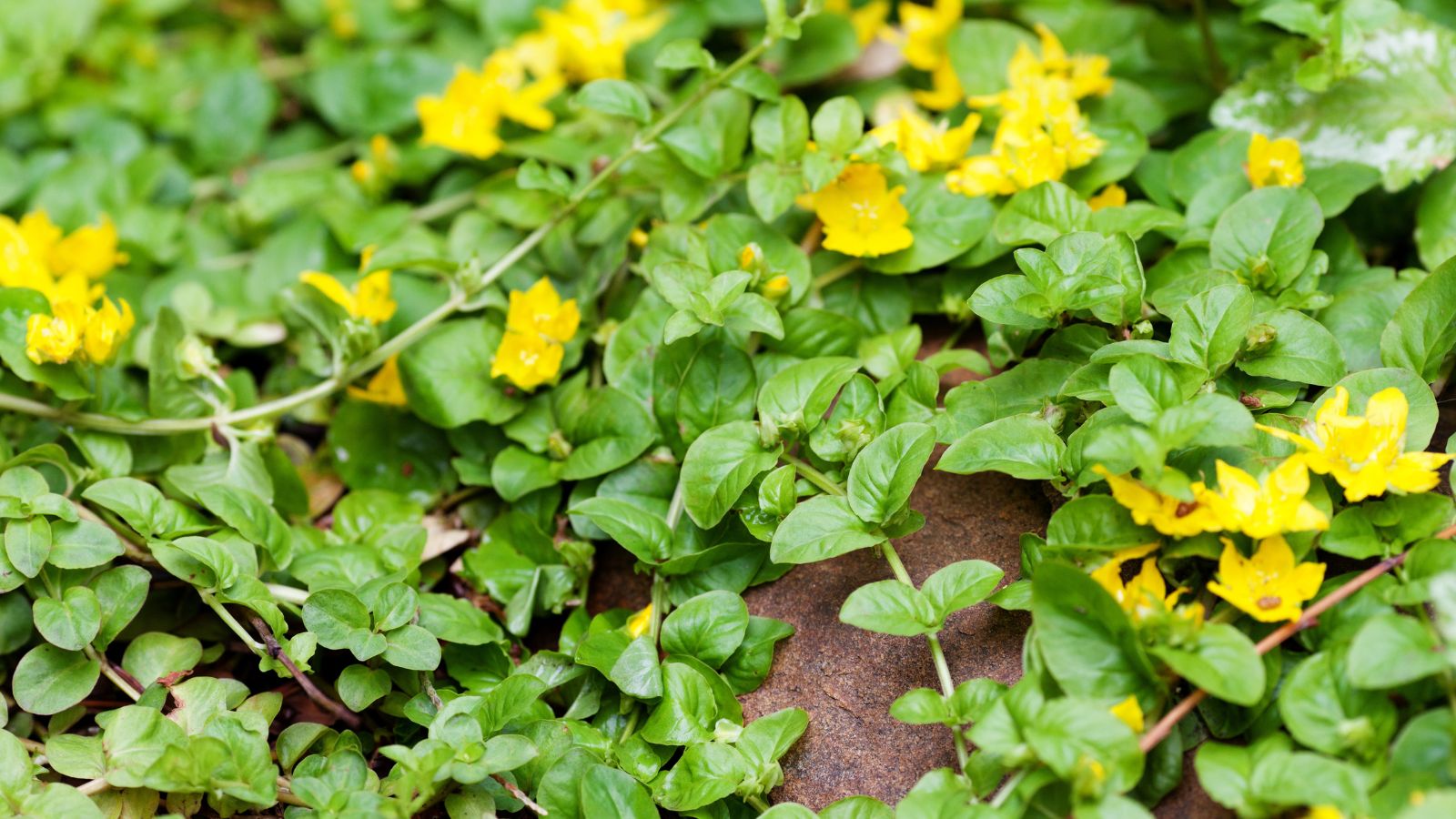
Moneywort naturally grows near water sources such as streams, riverbanks, and bog gardens, which indicates its high water needs. This plant prefers consistently moist soil that never dries out, making regular watering essential.
Plant placement can help manage watering demands. If your garden has areas where rainwater naturally collects, plant creeping jenny there to reduce the need for supplemental watering. In regions with low rainfall, place the plant near a drain or another clean water source and direct runoff toward it, avoiding areas exposed to harsh chemicals.
When growing moneywort in containers, watering becomes even more critical. Container soil dries out much faster than garden soil, so plants often need frequent watering, sometimes up to twice a day during hot summer weather. Do not allow the soil to dry out between waterings, even in deep pots, as the plant’s shallow root system may not reach moisture stored lower in the container.
Soil

As long as the soil stays moist and drains reasonably well, moneywort tolerates a wide range of soil conditions. Extremely sandy or rocky soils are not ideal, as they fail to retain sufficient moisture. In most other soil types, the plant grows without issue.
Moneywort is not particularly sensitive to soil pH, but it performs best in nutrient-rich soils that reflect its natural growing habitat.
Climate and Temperature
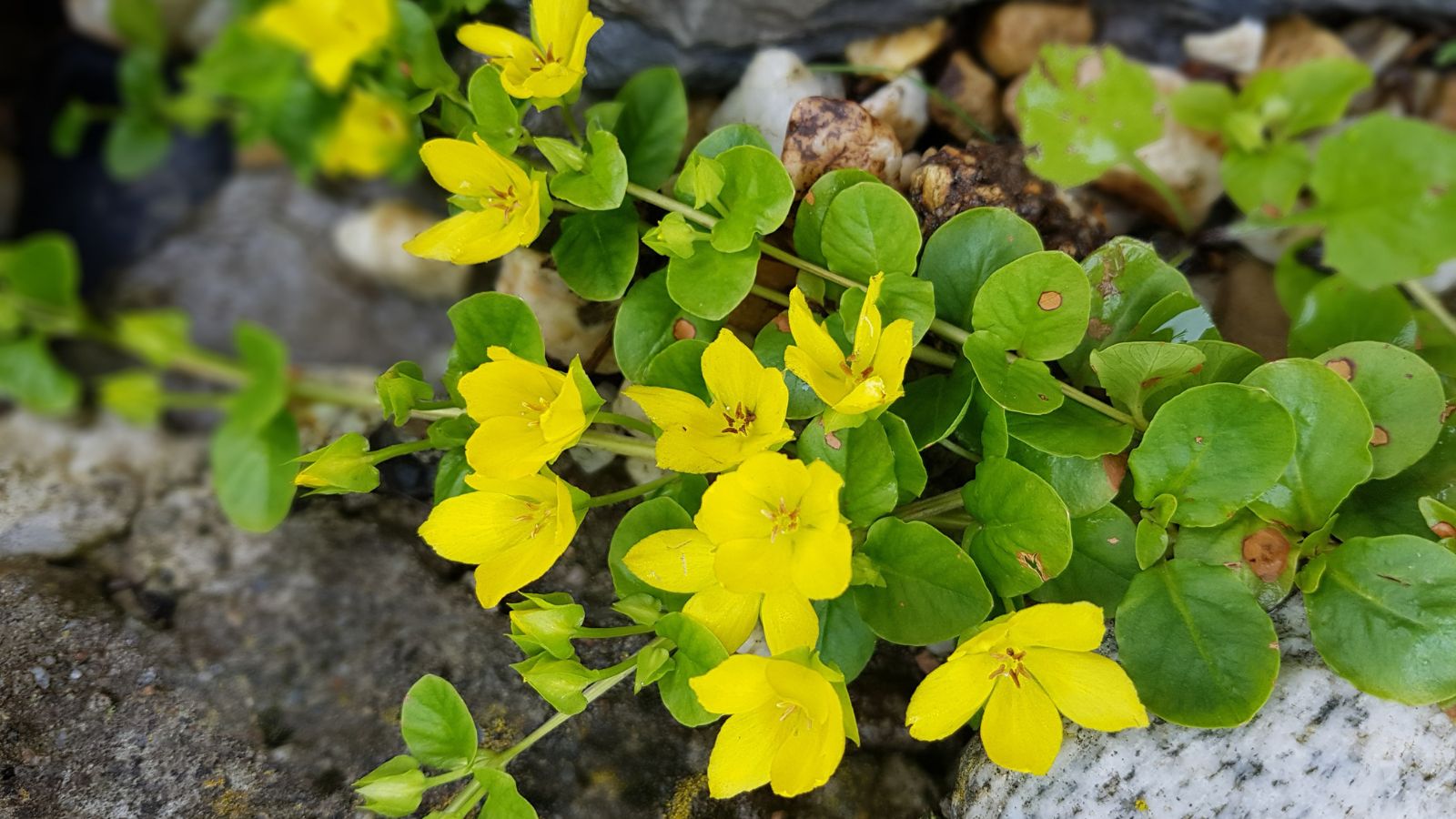
These plants thrive across USDA Zones 4-9 and can also grow in Zone 3, depending on the region. In extremely cold weather, they may die back slightly and appear patchy, but new growth typically returns the following spring.g.
Fertilizing

These vigorous growers usually thrive without heavy fertilization when grown in suitable soil conditions. However, an annual application of a balanced fertilizer in spring, just before active growth begins, can improve foliage density and encourage flowering, which may become sparse if nutrients are lacking.
Maintenance

Maintenance supports plant health and helps prevent unwanted spread throughout the garden.
Begin pruning in fall by cutting back stems that encroach on other plants or escape their designated beds. Remove any dying or damaged growth at the same time to encourage vigorous regrowth the following season.
Deadhead flowers regularly before they begin setting seed. This prevents spread by wind to other parts of the garden or nearby areas. If you want to collect seed for propagation, leave only a few flowers and remove the rest.
Every three or four years, divide the plant once growth becomes dense. Division encourages fresh growth and prevents the shallow root system from crowding itself or competing for nutrients. Lift the entire plant, separate it into sections, and replant them 12 inches apart to allow space for renewed spreading.
Propagation
Creeping jenny spreads extremely quickly and rarely needs propagating if you plan to keep it in the same location. It will fill empty garden beds in a short time. However, if you want to grow it in containers or move part of the plant to another area of your garden, you have three propagation options: cuttings, seeds, or division.
Propagating From Cuttings

Moneywort spreads by producing roots from nodes along the stem. As the stem extends, each node, the point where leaves emerge, develops roots that grow into the soil and anchor the plant. This growth habit makes the plant very easy to propagate from cuttings.
Begin by taking a cutting at least four inches long. Use clean, sharp pruning shears to avoid damaging the stem or spreading disease. Make the cut just below a leaf node at a 45° angle to increase surface area and improve water and nutrient uptake.
Remove the leaves from the bottom half of the cutting. Leave at least one node free of foliage, although two or three nodes improve the chances of successful root development. You can root the cutting in water or plant it directly into a soilless propagation medium.
For water propagation, place the lower portion of the stem into a clean glass filled with room-temperature or lukewarm water. Filtered water works best, as tap water may contain excess chemicals. You can also boil tap water and allow it to cool before use. Change the water every couple of days, or sooner if it becomes cloudy, until roots reach about one to two inches long. Once roots develop, transplant the cutting into a pot or directly into the garden.
For soil propagation, fill a pot with a mix of coconut coir and perlite to improve drainage. Create a hole in the medium and insert the cutting so the first set of leaves sits just above the soil surface. Water thoroughly and keep the medium consistently moist while roots form. The cutting is ready to transplant once it resists gentle pulling.
Propagating From Seed

Creeping jenny can also be propagated from seed. This method works best when using seeds from a certified grower, as this helps ensure you receive the correct cultivar. You can also collect seeds from an existing plant in your own garden or a neighbor’s garden. However, seeds harvested this way will not reliably produce the same cultivar as the parent plant and may result in more invasive growth, so proceed with caution.
After collecting the seeds, sow them into trays or directly into the ground. Sprinkle the seeds lightly over the soil surface and water gently to mimic natural dispersal. Once the seeds germinate, thin the seedlings by removing the weakest growers.
When starting seeds in trays, transplant them into the garden once the first few sets of leaves develop. Depending on your climate and growing conditions, seedlings are usually ready for transplanting within a month or two.
Propagating by Division

Because this plant forms roots along its stems, you can dig up almost any section and replant it elsewhere. It tolerates root disturbance well, so new divisions usually establish quickly.
To begin, dig up the entire plant if it is small, or lift a section if it covers a larger area. Separate the plant into sections by gently pulling it apart or cutting through the stems and roots with sharp, clean trimmers. Replant each division farther apart to expand ground coverage, or place them in different areas of the garden. You can also pot up divisions in separate containers or hanging baskets to create a contained garden feature.
Varieties
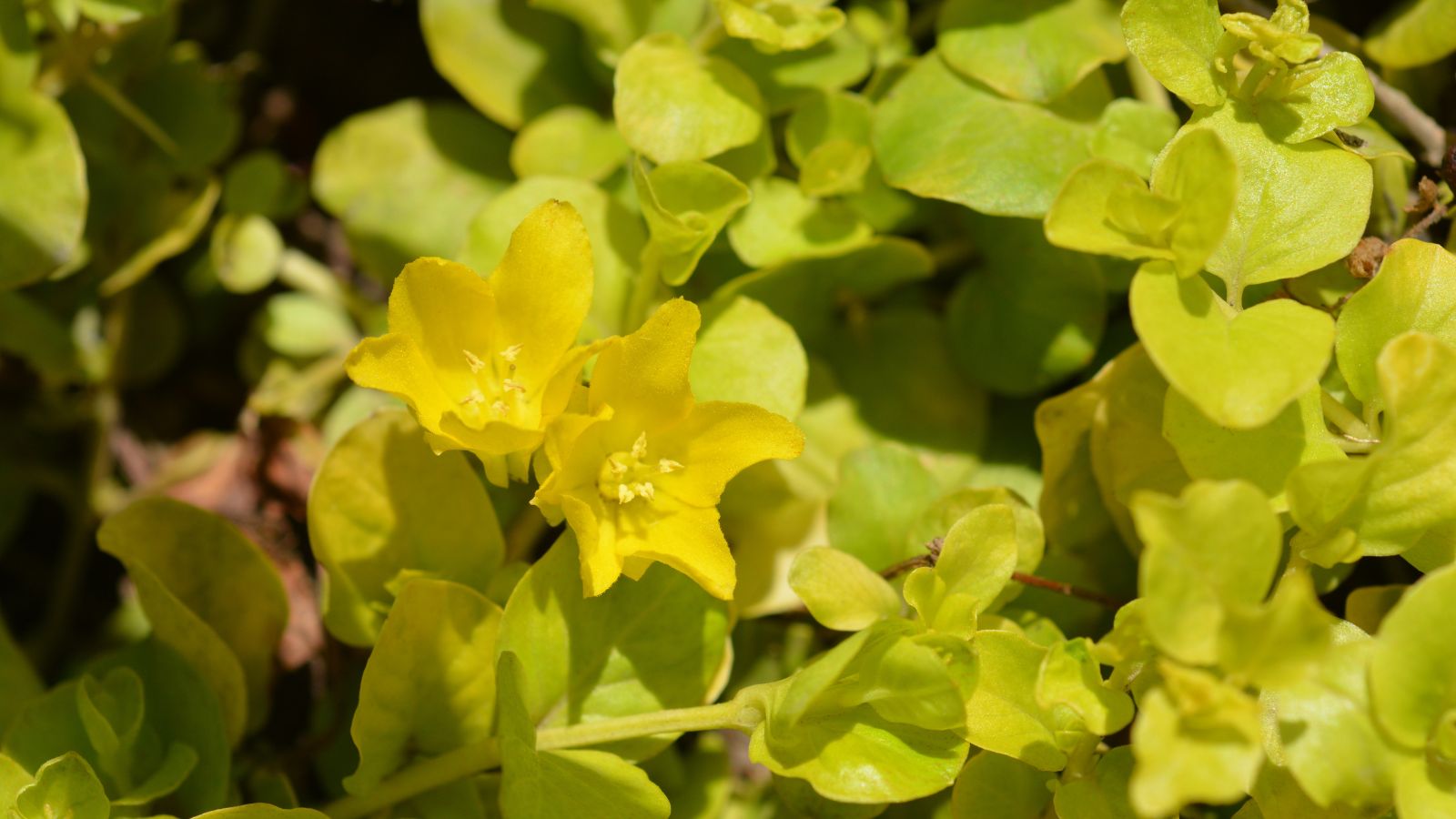
The most popular and least invasive creeping jenny variety is Lysimachia nummularia ‘Aurea’. This cultivar features golden chartreuse leaves that brighten garden beds in full sun. It grows less aggressively than other forms, making it a safer choice for home gardens without posing a risk to the surrounding environment.
Common Problems

Moneywort is not especially prone to pests or diseases. When grown in the right environment with proper care, it can thrive for several years without issues. However, its preference for moist conditions can occasionally lead to a few problems.
In wet weather, fungal diseases may develop. Rust and leaf spot are the primary concerns for creeping jenny. Although uncommon, these diseases can detract from the plant’s glossy foliage, leaving ground cover looking untidy.
Planting in full sun, pruning regularly to improve airflow, and removing diseased or dying stems as soon as you spot them will reduce the risk of infection. If fungal issues persist and you do not want to remove the plant, you can apply an organic fungicide. Always consider the potential impact on nearby plants and the surrounding environment before treatment.
Pest problems are rare, but aphids or caterpillars may occasionally appear. These insects usually prefer more tender plants elsewhere in the garden. If you notice them, remove them by hand and drop them into a bucket of soapy water. You can also apply horticultural oil to the foliage to smother pests and prevent eggs from hatching.
Slugs and snails may hide among the dense foliage and feed on the leaves. Remove them by hand during evening checks with a torch, when they are most active, or set traps. Beer traps are effective and attract snails from surrounding areas. Sink a shallow container into the soil at ground level and fill it with beer. The scent draws snails away from plants and into the liquid, where they drown.
Frequently Asked Questions
Can creeping jenny grow underwater?
Thanks to its natural wetland habitats, creeping jenny grows well in shallow water. It can also grow completely submerged and is a popular plant for fish tanks. This plant absorbs excess nitrates and phosphates in the water and helps stabilize the pH, all important factors to consider when keeping aquatic animals. It may not flower underwater, but the golden foliage makes enough of a statement on its own.
Can creeping jenny survive winter?
This plant can grow in zones as low as 3, surviving very cold temperatures. When there is frost or snow, the foliage may die back slightly, but it should return again the following spring.
Are creeping jenny and creeping charlie the same?
Their growth habits may be similar, but they are not the same plants. Creeping Charlie, also known as ground ivy, has the botanical name Glechoma hederacea. These plants are from a completely different genus, despite their similarities. Creeping Charlie is far more invasive and is classified as a weed in most regions.
Will creeping jenny root in water?
Creeping jenny develops roots along nodes in the stem, similar to other popular propagated plants like pothos. This makes it incredibly easy to root these plants in water. Simply cut along the stem just below a node, remove the leaves, and pop in a glass of water. You should see roots starting to emerge within a few weeks.
Why is my creeping jenny yellow?
For some creeping jenny, yellow leaves are a great sign. If you’re growing the popular Aurea variety, the leaves should turn yellow when the plant is receiving enough sun.
While yellow leaves may be a sign of distress in some other plants, yellow leaves do not indicate any problems. To change the color to a darker green, you can move the plant to a spot with more shade, although it may not grow as vigorously or flower in summer.
Why does creeping jenny turn brown?
The foliage of this plant can turn brown for a number of reasons. If you live in a climate with cold winters, this drop in temperature will cause the foliage to turn brown. However, this should not be a concern as it will return again in spring as green as it was before.
Other more serious issues can cause the leaves to turn brown. The first is disease. If there are brown circular spots on the foliage, you may be dealing with a fungal disease. Remove all affected branches and look out for signs of spread. You can also apply an organic fungicide, keeping the impact on the surrounding plants in mind.
The second potential issue is underwatering. When creeping jenny is severely underwatered, the edges of the leaves may turn brown. Ensure you water consistently and increase your waterings in warm weather to prevent these issues.
Why is my creeping jenny not blooming?
Moneywort not blooming is typically a sunlight problem. The plants need plenty of sunlight to produce flowers, and too little will slow growth, preventing the plant from blooming. Older plants established for several years may also begin to underperform without some maintenance. Prune older plants to give them a revival or divide plants that are not flowering as much to encourage new growth.





