Corsican Mint: Grow And Care For Mentha Requienii
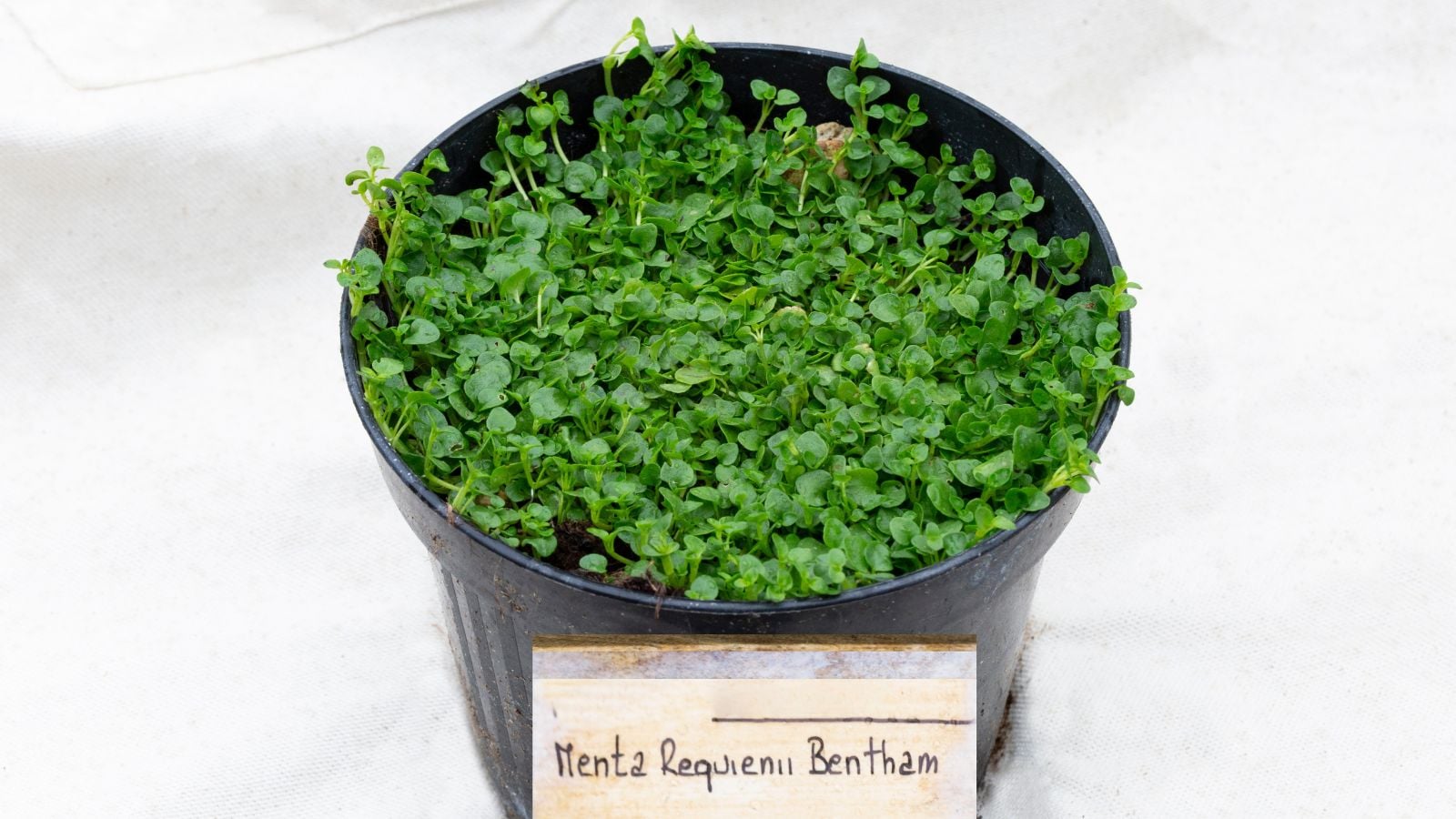
Corsican mint, or Mentha requienii, is an incredibly green and fragrant ground cover plant, perfect for garden paths and walkways.

Contents
Tempted to plant a mint ground cover in your garden, but not sure how to care for it? Do you live in USDA plant hardiness zones 6, 7, 8, or 9?
Put those worries to rest! Corsican mint plants are the easiest ground covers to plant and care for. They form a flat carpet of tiny bright green leaves, the smallest of mints and have a desirable mint smell that will follow you as you walk in the garden.
To know how to take care of this lilac-bearing plant and what problems you might encounter in the process, check out our complete care guide.
Quick Care Guide

|
Scientific Name
Mentha requienii
Common Name(s)
Corsican mint
Family
Lamiaceae
Height and Spread
4″ tall, 6-12″ wide
|
Light
Partial shade
Soil
Moist, well-draining
Water
1 inch per week
Pests & Diseases
Spider mites
|
All About Corsican Mint

Mentha requienii is the scientific name for Corsican mint. It is a low-growing mint ground hugging plant native to Corsica, Sardinia, France, and mainland Italy.
If you’re looking for a bedding plant or a very low growing species to use in landscaping, Corsican mint is a low, spreading groundcover that’s an ideal option. It’s appealing to look at and has a wonderful minty aroma. Corsican mint can easily handle foot traffic and thrives in shady areas.
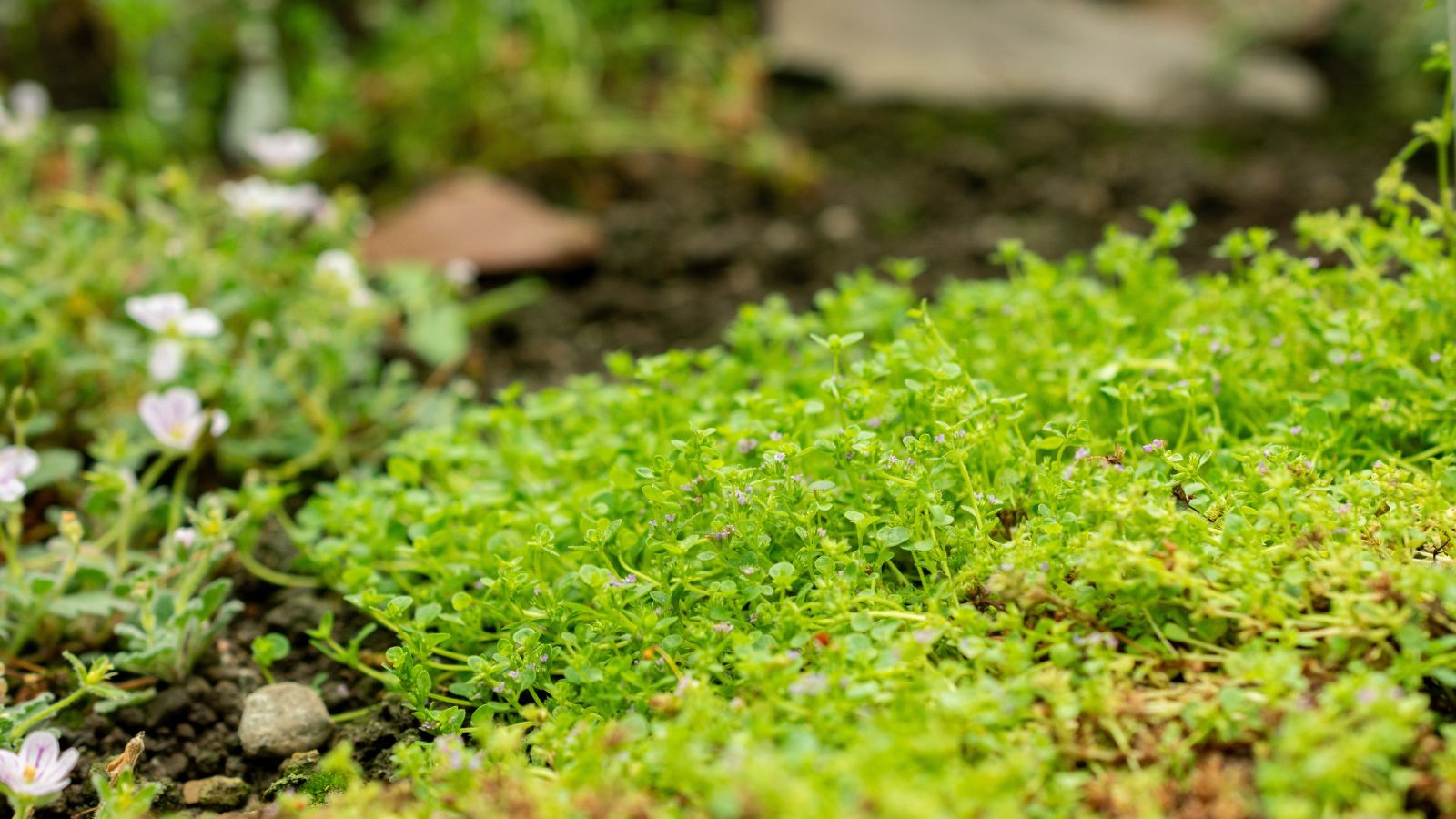
Mentha requienii is well-suited for filling in around stepping stones and pathways. The groundcover may freeze in harsh climate but it self-seeds in spring.
Corsican mint has bright green leaves that cluster together to give a moss-like appearance. Its small height makes it look like a carpet around your stepping stones. Tiny mauve flowers appear in early summer months from June to August, giving out pepper-minty aroma to refresh you on a hot day.
If you plant Corsican mint groundcover in partial shade with well-draining soil, it will continue to thrive without giving you any trouble. You can grow Corsican mint in containers and use for culinary purposes or a splash of green, minty indoor décor. It’s considered a valuable culinary plant! Snip some leaves to add to flavor hot and cold drinks and baked items to give them an intense minty flavor.
Corsican Mint Care
Mint plants in general don’t require much effort other than taking care of the basic needs like watering and fertilizing. Most other cultivated mints are vigorous growers, often spreading like crazy on their own. Let’s talk about what Corsican mint needs to thrive.
Light and Temperature
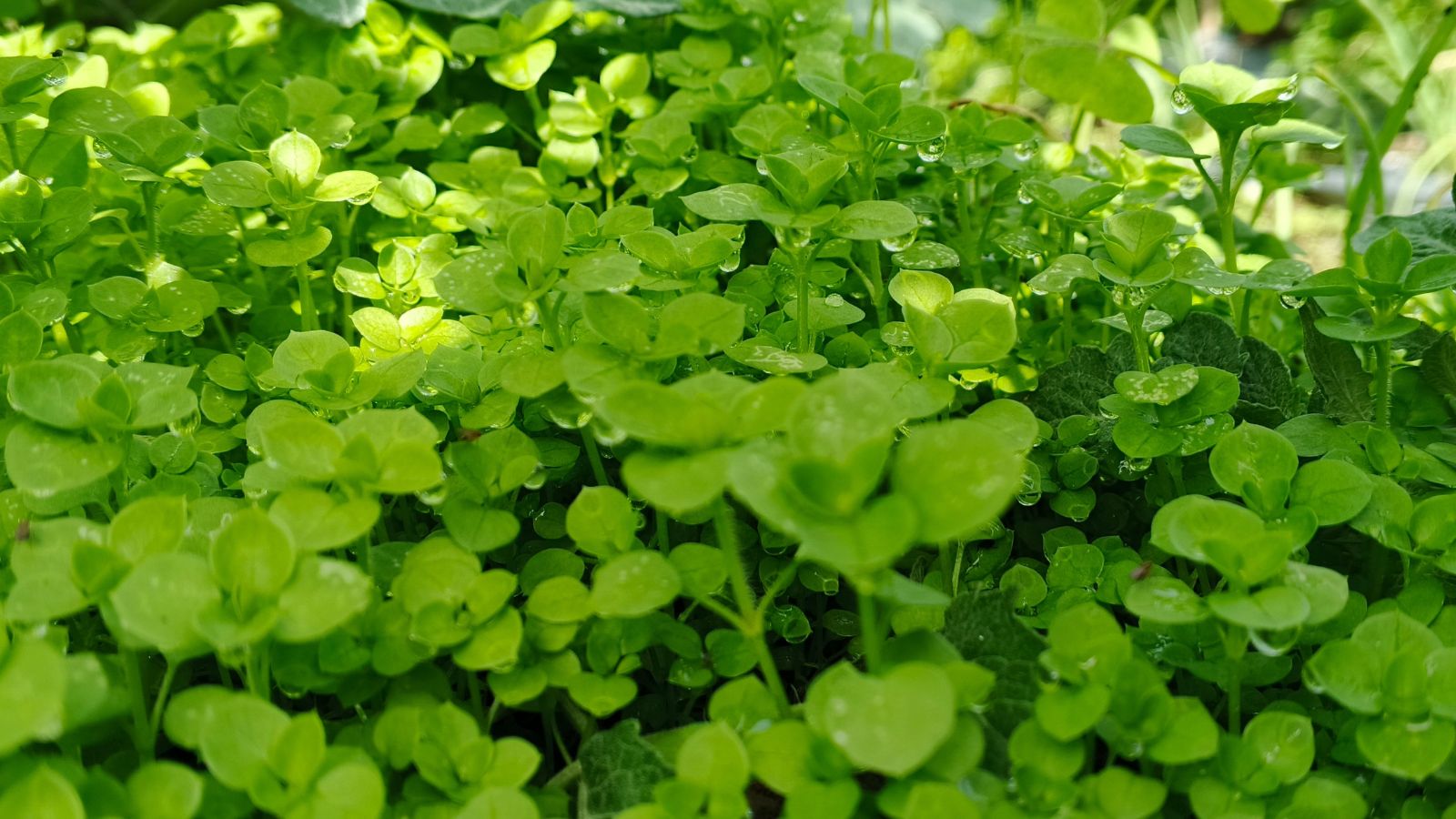
The Corsican mint ground hugging plant can grow well in partial shade. While it can tolerate full light, dappled light is preferable. If you live in an area that has heavy snowfall and low temperature, your Corsican mint groundcover will freeze. But as spring approaches and the ice starts to melt, it self-seeds itself and grows again.
You can also protect it from freezing temps by lightly covering it with mulch. Corsican mint thrives in USDA plant hardiness zones 7 to 9, where winters aren’t too cold, and summers get fairly warm.
Water and Humidity

The Corsican mint plant has medium water needs. You have to water it regularly to keep the soil moist, especially in between stepping stones during hot, dry summers. In winter, cut down the watering level as the Corsican mint goes dormant. Moreover, less watering during winter can help the soil to dry slightly, preventing a more severe, icy freeze.
Overwatering can expose the roots to fungal attacks. When you garden Corsican mint, you have to be right in the “sweet spot” of watering – not too little, not too much.
Soil

The beauty of creeping mint plants, and Corsican mint specifically, is their ability to grow in diverse soil types, i.e. normal, sandy or clay. That’s what makes Corsican mint such a vigorous spreader – it can tolerate soils that many plants cannot, leading it to take over most of the garden if left unchecked.
Fertilizer

The best time to fertilize when you garden Corsican mint is early spring. You can use one teaspoon of water-soluble, slow-release fertilizer. Make sure to water well after you fertilize Corsican mint. Be careful with the frequency and quantity of your fertilizing…too much can kill your Corsican mint plant. It doesn’t need a lot to thrive.
Repotting Corsican Mint
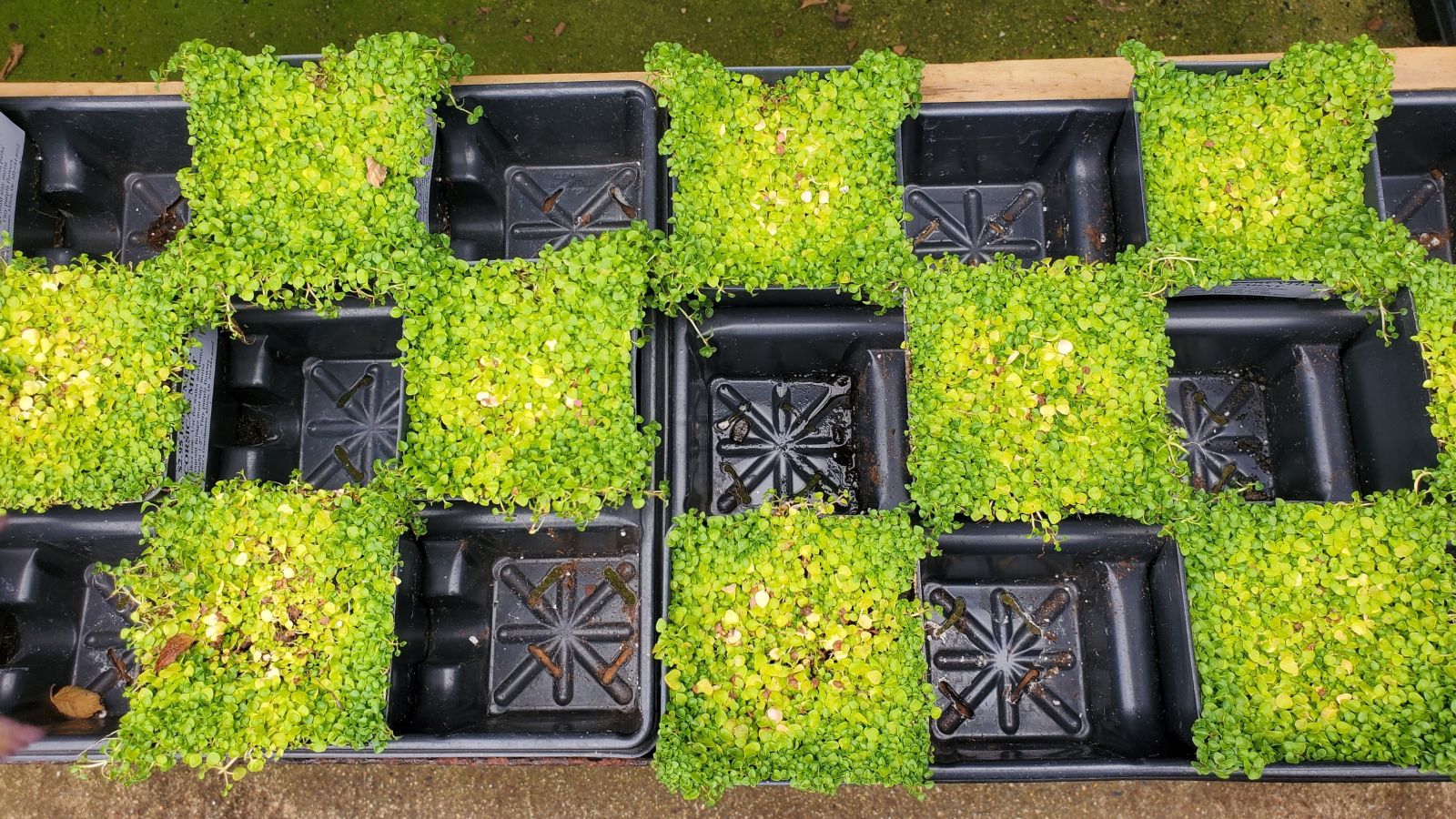
When you garden Corsican mint in containers, repotting is relatively straightforward. In fact, most culinary gardeners only grow mint in containers due to its tendency to spread. Of course, as a groundcover plant, that’s exactly the result we want! To repot, simply size up by one inch and fill the empty space in with fresh, high-quality potting mix.
Propagation
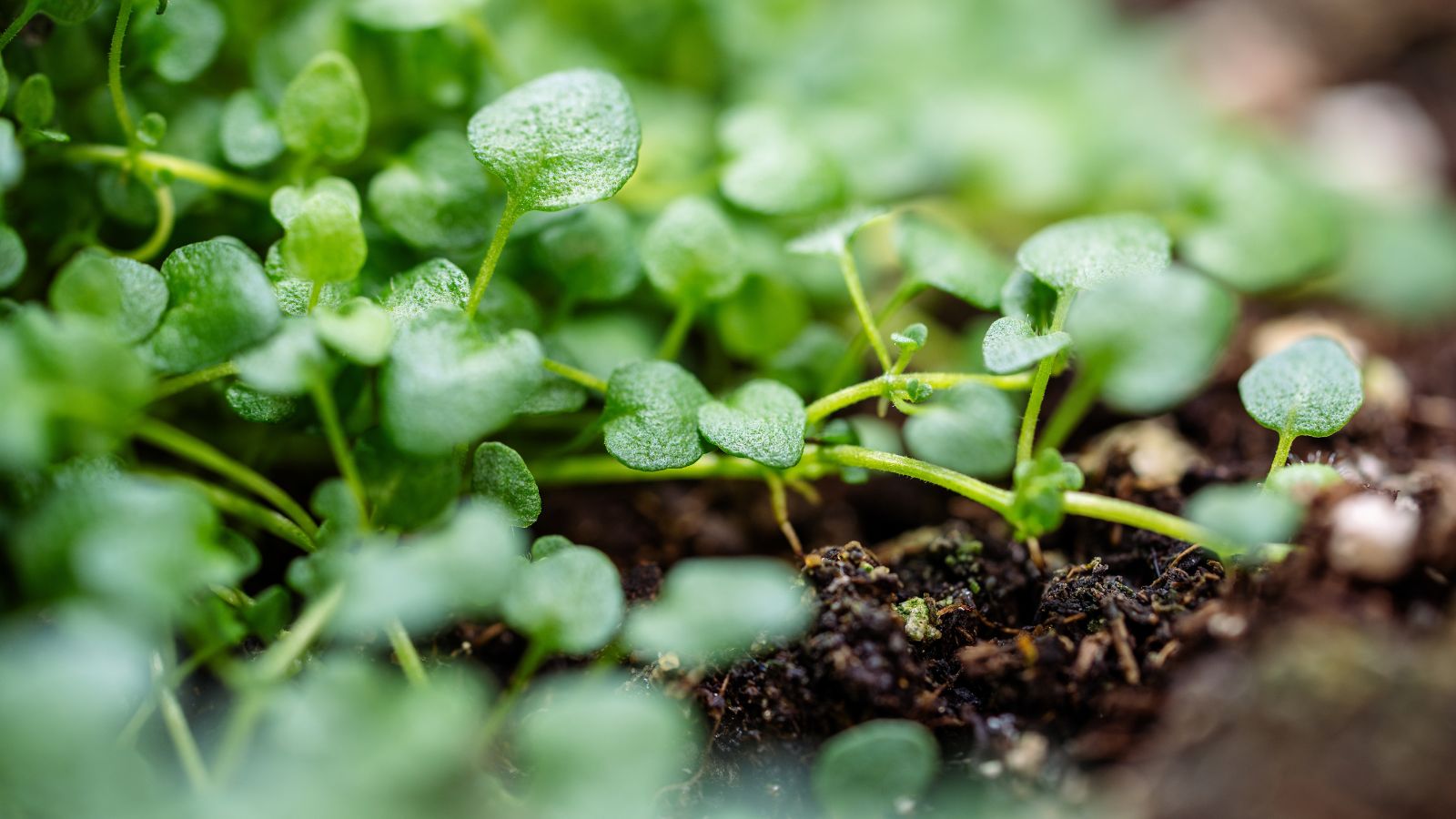
Propagation by division is the easiest method for Corsican mint. You can divide the carpeting plant into smaller pieces and plant in different locations. Moreover, Corsican mint self-seeds as it’s an invasive species in nature. So you don’t have to fully cover an area when first planting out – it will grow on its own and fill the space.
Pruning Corsican Mint Plants

Pruning or trimming when you garden Corsican mint groundcover is best achieved through two techniques: hand pruning and mowing. If you have a ton of growth over a large amount of land, simply mowing it with a lower setting on your lawn mower will do the job nicely.
If you have a smaller, more manageable area, go with a pair of snipping scissors to trim the overgrown or unwanted Corsican mint leaves from the container. Then you can add them to flavor hot and cold drinks or enjoy their minty aroma elsewhere.
Troubleshooting
Mentha requienii rarely gives you any problem when it comes to pests, as it’s a natural pest repellent! It does have an invasive tendency but you can easily control the growth of the plant
Growing Problems
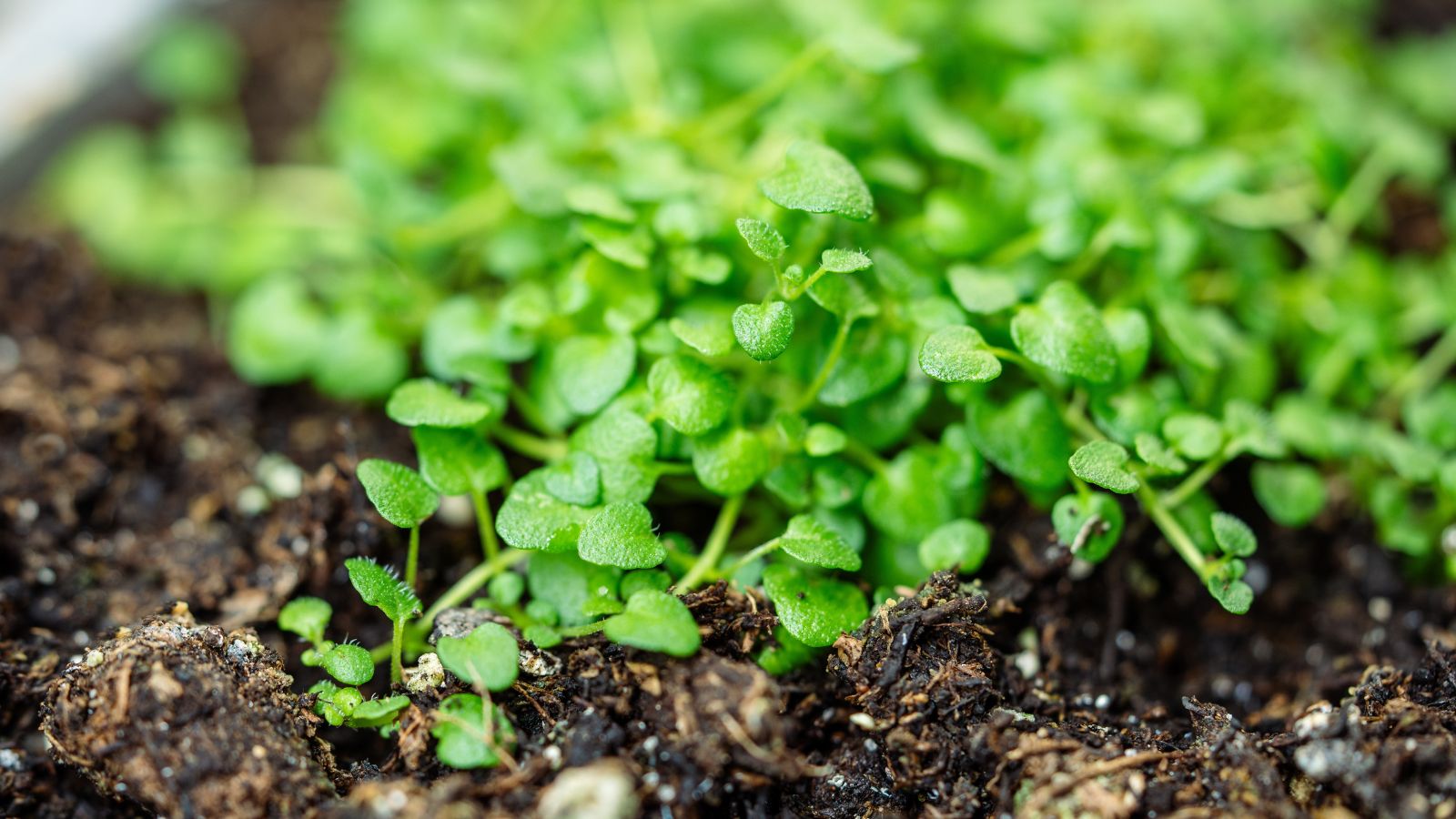
Both climate and watering practices can affect growth. The lilac-bearing Corsican mint groundcover requires moist soil, meaning you must water it regularly. But if the soil gets soggy, it can give you trouble with the roots. They’re likely to suffer from fungal attacks that may hinder the growth of the plant.
Similarly, cold weather can halt the growth of the groundcover, leaving you with a frozen Corsican mint. You can either protect with a thin layer of mulch, or simply wait until the weather warms up and it self-seeds for spring. That’s the natural life cycle of this plant, after all!
Pests

The strong peppermint scent of the Corsican mint helps keep most pests and insects away. You may encounter spider mites in the moss-like carpet from time to time. To address mites, use the manual technique of spraying down your mint plants rather than using a pesticide.
You can also use neem oil to eliminate spider mites.
Diseases

Corsican mint is not susceptible to most diseases. You simply have to look out for the roots. They can get damaged due to excess watering and soil with poor drainage. Conditions like these can be ideal for the fungal pathogens that cause root rot, and root rot can be a problem for your plant.
Frequently Asked Questions
How often should I fertilize Corsican mint?
Corsican mint is a light feeder. You should only fertilize it in limited quantity in spring. You can use a balanced, water-soluble fertilizer.
Is it foot traffic tolerant?
Yes, it can tolerate a medium level of foot traffic.
Can it dry out if I don’t water the plant often?
Yes, it’s water sensitive. It needs regular watering to survive, even in USDA plant hardiness zones 7 through 9.
If you’re looking for a groundcover with less intense watering needs, try baby tears plant…it’s beautiful and a bit easier to care for.
What is Corsican mint used for?
It’s a valuable culinary plant that’s used to add strong mint flavor to hot and cold drinks, like teas. Baked goods and cooked meals benefit from the punchy mint flavor. It’s also a great container plant or ground cover.
Does Corsican mint repel mosquitoes?
While the oils in the plant can repel mosquitos, these creeping mint plants on their own don’t. You won’t find mosquitos living in Corsican mint, but they’ll happily live nearby. You’ll have to extract the oils from the plant to have a mosquito repellent.
Is Corsican mint toxic to dogs?
The compounds in the plant are only toxic to dogs in large amounts. Sadly they won’t get to use it to flavor hot and cold drinks.
Will Corsican mint choke out other plants?
Like other creeping mint plants, this ground hugging plant can aggressively push out other plants. Give it space to spread, or plant it in a container.
What does Corsican mint smell like?
It has a strong mint fragrance, akin to peppermint, another valuable culinary plant!